
insight for executives on the move

april 2026

Skukuza Airport is a unique gateway to adventure

Introducing Upington • Nacala • Incentive travel • Choosing a trade • Discover Velddrif • Wild swimming • Financial wellbeing •

Table of Contents


Multiple storylines

There’s a resurgence in the idea of choosing a trade – if not to replace academic pursuits, then at least to supplement them (see story on page 72) – which underlines something a little more esoteric: that the practical and the poetic don’t have to be separate entities.

Travel is an area in which this is perhaps truer than any other. Book a flight to somewhere and you could be doing that for a number of official reasons – to attend a conference or an important meeting, to have a restful break from routine or to invest all your energy in an adventure you’ve always dreamt about. But whatever the specific plans, regular travellers will know that there are multiple facets to such endeavours. Networking might result in new business – and perhaps also the making of a new friend. Discovering an unknown culture could turn you onto a different diet or a hobby you’d never considered before. And being away at all might deepen your appreciation for what you’ll soon be heading back to.

Whatever the case and wherever you’re headed as you read this: look up from the itinerary at some point and take in what’s around you.

Have a wonderful journey.

Bruce Dennill

Editor

Read more

PUBLISHER: Urs Honegger
EDITOR: Bruce Dennill
SENIOR SUB-EDITOR: Claire Rencken
SUB-EDITOR: Gina Hartoog
OPERATIONS AND PRODUCTION MANAGER: Paul Kotze
SENIOR DESIGNER: Annie Fraser
DESIGNER: Perpetua Chigumira
ADVERTISING: sales@panorama.co.za, +27 11 468 2090
NATIONAL SALES MANAGER: Gillian Johnston, +27 83 455 2397, gill@panorama.co.za
SUBSCRIPTIONS: subscriptions@panorama.co.za, Tel: 011 468 2090, Fax: 011 468 2091
Digital ezine available from skywaysmagazine.co.za
COMMENTS AND SUGGESTIONS: skyways@panorama.co.za
We value reader feedback. Please get in touch.
FINANCE: accounts@panorama.co.za
ISSN 1025-2657

Skyways magazine is published monthly and distributed via Airlink. All rights reserved. Reproduction of this magazine in whole or in part is prohibited without prior written permission of Panorama Media Corp (Pty) Ltd. Copyright © 1994-2024 Panorama Media Corp (Pty) Ltd. The views expressed in Skyways magazine are not necessarily those of Panorama Media Corp or Airlink, and the acceptance and publication of editorial and advertising material in Skyways magazine does not imply any endorsement or warranty in respect of goods or services therein described, whether by Skyways magazine or the publishers. Skyways magazine will not be held responsible for the safe return of unsolicited editorial contributions. The Editor reserves the right to edit material submitted and in appropriate cases to translate into another language. Skyways magazine reserves the right to reject any advertising or editorial material, which may not suit the standard of the publication, without reason given. Editorial material accepted for publication in Skyways becomes the property of Panorama Media Corp. Executive Briefs, Corporate Briefs, and Knowledge Profiles™ are solicited and paid for advertorial features in this magazine. Skyways magazine is published by Panorama Media Corp on behalf of Airlink.

Dedication rewarded

Among the standout performers is Lusango Mbongo, who achieved an extraordinary seven distinctions with an overall average of 88%. His accomplishment as the top historically disadvantaged individual (HDI) performer in Buffalo City further highlights his academic strength. Mbongo’s journey at The Link has been one of continuous growth, and he now looks forward to pursuing Mechanical and Mechatronic Engineering at the University of Cape Town. Asanda Mhlom also achieved exceptional results, earning three As, four Bs and an impressive 81% average. Mhlom plans to study for a Bachelor of Science in Actuarial Sciences at the University of the Witwatersrand, a field that aligns perfectly with his academic strengths and ambition. Mineon Sitonga achieved four As, three Bs and an average of 78%, in doing so demonstrating both commitment and capability. Her passion for the financial sector has led her to pursue a Bachelor of Accounting at Stellenbosch University. Somila Teto rounds off this impressive group, achieving two As and five Bs. Her determination and consistent effort over the years have been evident in her academic growth. She will take the next step in her journey by studying Electrical Engineering at the University of Witwatersrand.

Celebrated group

The achievements of The Link Class of 2025 demonstrate the power of hard work, mentorship and perseverance. Since their induction, these young people have developed academically, emotionally and professionally, emerging as confident leaders ready to meet the demands of higher education with purpose and drive.

The Link proudly celebrates their outstanding accomplishments and looks forward to the positive impact this East London group will make in South Africa and beyond. Their journey is a testament to what can be achieved when talent is nurtured and given the space to thrive.

Text and photography | Keamogetswe Masango

For more information, go to flyairlink.com

Read more

Programme to prosper

The Link is a programme created by Airlink in 2016. It identifies bright young minds that have the potential to become excellent science, technology, engineering and mathematics (STEM) mavericks, who are mentored by Airlink while in high school for a period of three years before standing the chance of being awarded an Airlink bursary for completion of their tertiary studies

Automotive anniversary

MOTORING

On 29 January 1886, Carl Benz applied for a patent for his motor car. Shortly afterwards, Gottlieb Daimler built his motor carriage. Together, the two vehicles formed the first link of an unbroken chain of innovation for what is now known as Mercedes-Benz.

Bertha Benz, Carl’s wife, business partner and investor, embarked on the world’s first long-distance automobile journey in 1888. She drove from Mannheim to Pforzheim, demonstrating the potential of the new invention. Today, she would most likely be a mobility influencer.

Bertha’s adventure also meant overcoming obstacles along the way. Some of them were tiny – yet with a major impact, including cleaning a blocked carburettor on the road with her hatpin.

Source: mercedes-benz.co.za

Read more

New to Neto

TRAVEL

Airlink moved its Luanda flights to the city’s new Dr Agostinho Neto International Airport (IATA code: NBJ) from Sunday, 1 March 2026. The airline used to operate to Luanda’s 4 de Fevereiro International Airport. The move is in line with the transfer of international and domestic flights to the newly commissioned airport, which is located approximately 45km east of Luanda.

“With Angola’s economic diversification and growth strategy, the country is rapidly emerging as an important Airlink market for business travel, with Luanda as the primary gateway. The state-of-the-art new airport promises to facilitate smooth and efficient passenger, baggage and cargo flows, and a comfortable experience for our travellers,” said Airlink CEO, de Villiers Englebrecht.

The new airport is well signposted with signage in both Portuguese and English. Airlink flights will arrive and depart from gate B20 at the International Terminal. Although electronic ‘e-gate’ scanners have been installed at the airport’s immigration checkpoint, passengers are required to have their passports physically inspected and stamped. All passenger airport charges and taxes are included in the ticket price.

Source: flyairlink.com

Read more

Swazi safaris

TRAVEL

Eswatini’s network of protected areas showcases the diversity of the kingdom. Mlilwane Wildlife Sanctuary, the country’s pioneering conservation success, has serene landscapes and immersive walking, cycling and horseback safaris, with accommodation options including beehive huts reminiscent of traditional EmaSwati homesteads. The sweeping bushveld of Hlane Royal National Park, home to elephants, white rhinos, lions and other majestic wildlife, provides classic big-game encounters. At Mbuluzi Game Reserve, travellers can stroll alongside giraffes and explore the skies with over 300 recorded bird species, while Mkhaya Game Reserve is widely regarded as one of the best places in the world for rhino experiences.

Source: bradtguides.com

Read more
7 The number of days a week Airlink flies to Hoedspruit. 400,000 The number of people employed by NASA’s Apollo programme. 98 The number of seats in one of Airlink’s Embraer E-190 E-Jets.

Island increase

TRAVEL

Zanzibar’s tourism growth is accelerating at a pace that is now reshaping the island’s investment landscape, with official data showing demand is beginning to outstrip the breadth of experiences available to visitors beyond hotels and beaches.

According to the Tourism Statistical Release for December 2025, Zanzibar welcomed 100,729 international visitors, a 10% year-on-year increase and a 38.3% rise from November. For the full year, international arrivals reached 917,167, up from 736,755 in 2024, confirming a sustained upward trajectory rather than a post-pandemic rebound. Accommodation performance points to growing capacity pressure, with bed occupancy levels reaching close to 89% in December and more than 815,000 bed nights sold in a single month. 

The average intended length of stay stood at just over eight nights.

“These figures confirm that Zanzibar is firmly in a growth phase, with longer stays and rising demand placing increasing pressure on tourism infrastructure,” said Dr Aboud Suleiman Jumbe, Principal Secretary of the Ministry of Tourism and Heritage. “This growth creates clear opportunities for strategic investment that deepens the visitor experience while supporting national development priorities.”

Source: zanzibartourism.go.tz

Read more

Learning to save

ENVIRONMENT

Lions Cricket and hospitality group Extraordinary recently announced a partnership to strengthen conservation education across South Africa. This collaboration introduces a series of educational programmes designed to grow awareness and empower the next generation of wildlife custodians.

The partnership will transform real conservation work into accessible learning for children, families and wider communities. By combining the entities’ community reach and expertise in conservation storytelling, the initiative aims to make wildlife preservation tangible, relevant and inspiring for young audiences.

“This collaboration brings together two organisations that believe deeply in the role of education in shaping our future,” said Jono Leaf-Wright, CEO of Lions Cricket. “By taking real conservation stories directly into schools and stadiums, we hope to spark curiosity, build understanding and empower young people to see their own role in protecting South Africa’s wildlife.”

Source: extraordinary.co.za

Read more

Airlink adds extra flights

TRAVEL

To better serve demand on popular routes, additional Airlink flights were introduced from the end of March, including:

  • An extra daily return flight between Johannesburg and Cape Town.
  • An extra daily return flight between Johannesburg and Durban.
  • An additional Tuesday flight to Richards Bay.
  • Additional Tuesday and Thursday flights to Harare.
  • Early morning flights between Ndola and Johannesburg, enhancing connectivity to other local and regional destinations.

Whether you are planning a short break or a longer journey, these updates offer even more choice and flexibility when travelling with Airlink.

Source: flyairlink.com

Read more

Mapped for protection

ENVIRONMENT

Across Botswana’s vast landscapes, roads increasingly intersect some of the most densely wildlife-populated areas left on the continent – often with fatal consequences. The Botswana Wildlife Roadkill Project is a nationwide research initiative using citizen science to understand the true scale and impact of wildlife-vehicle collisions. Since July 2024, members of the public have been reporting roadkill incidents via iNaturalist, WhatsApp and email, helping researchers determine which species are most affected and where high-risk ‘hotspot’ roads exist.

The project has already recorded over 300 reports, including threatened wildlife such as African wild dogs and even elephants. By combining public participation with scientific analysis, the research provides critical baseline data to guide targeted, cost-effective road safety mitigation measures. Ultimately, this initiative empowers communities, raises awareness and helps protect Botswana’s wildlife, one reported observation at a time.

Source: drtempeadams.com

Read more

Let us praia

Mozambican beach lodge is a superb centre for exploring natural beauty and complex histories

The first view of Nacala from the aircraft is of the huge cranes on the quay of the deep-water harbour and the long stretch of Fernao Veloso Bay beyond. The transfer to Coral Lodge, on the other side of the Nacala Peninsula, where the beaches face the Indian Ocean, is an adventure itself, especially close to town, where the trucks carrying materials to and from the port share the roads, on which tar and potholes often share top billing.

Visiting just after the rainy season means green lushness is everywhere, with the roadside farms – rice, cassava (a starchy root vegetable) and cashews in plentiful supply should visitors come around. Ironically, for generous sorts, both Ramadan and Lent are in full swing…

Towards the end of the drive, the busy shopping street in the village of Lumbo simply ends in a boom, beyond which extends the 3km-long, one-lane bridge to Ilha de Moçambique, the country’s timeworn ex-capital city. As you pass under the boom, you switch instantly from a bustling, contemporary African town to the essence of Mozambique: fishermen in pirogues and dhows on either side of the bridge, heading straight into 500 years of crumbling colonial history, where you are greeted by ancient banyan trees, residential areas almost below the level of the road because rock and sand was removed there to build the massive Fort of São Sebastião at the other end of the island. But there will be time to explore all of this later. For now, the Coral Lodge dhow is waiting at the end of a long pier…

In good taste

The welcoming party on arrival includes manager Fernando Crux and a couple of the five friendly dogs that pad around the property. Guests pass a pool bordered by sun loungers and go through the dining and bar areas before reaching the villas, spread out in two diverging lines – one along the beach and the other looking out over mangroves and back towards the mainland.

The villas are large, figure eight-shaped spaces with a lounge and a two-seater table for in-room meals in one bulb and a four-poster bed shrouded in a mosquito net in the other. There is no glass in the windows, which are open spaces filled with fine mosquito protection, so air flow is controlled with adjustable shutters.

The first dinner sets the tone for the dining offering for the rest of the stay – high-spec cooking without the haute cuisine fuss. Flavourful picanha steaks, black beans, rice and salad, followed by passion fruit mousse, are a tasty final chapter in a day that ends with dropping off to sleep to the sound of the surf, just 20m away.

Happiness and heartache

Early morning cons: the sun is bright at 4:45am – and genuinely hot by 5:30am. Early morning pros: the beach is empty, the wind is gentle and the shell bank is prodigious. There’s no need to search for your favourites. Simply stop and crouch down and you’ll find an array of cowries, cone and slipper shells, parts of conches, sea urchins, scallops and much more. Overhead in the casuarina trees, olive bee-eaters keep you company. On the beach, godwits (migratory waterbirds with upturned beaks) skim over the shallows. And the Coral Lodge property extending a couple of kilometres down the coast means all of this can be achieved in private – a rare privilege.

Adding historical to natural exploration means stepping into a little 4×4 that looks modest but handles the considerable furrows and challenges of the roads with surprising ease. The road out of the lodge runs along the edge of a large mangrove swamp on one side and the land side of Chocas Mar, a long, beautiful beach, on the other. The area directly off the beach, until recently relatively pristine, has now become a hotspot for Mozambique’s politicians and well-to-do citizens and businesspeople, who have already built or are busy building holiday homes.

This insight into one extreme of the country’s society is followed by another. In nearby Mossuril, just behind an area in which a number of schools are situated, there’s a long concrete ramp down to Mossuril Bay, where a couple of kids are having a casual swim. A small red sign at the top of the incline recognises that this was the ramp down which slaves were led to small boats before being ferried out to large ships that transported them to Brazil, Cape Verde and other markets. It’s hard to shake the feeling that ghosts are still watching from the railings above.

Old-school elegance

On the return journey, the village of Cabeceira Grande has a couple of notable centrepieces. The former Governor’s Palace was also a holiday or weekend residence (away from the bustling busyness of Ilha de Moçambique). Now a hollowed-out ruin, it’s still an incredible structure, with walls four feet thick, burrowed into in one spot where someone was hunting for a rumoured treasure.

Today, tree roots are spreading over the walls, in equal parts holding the 300-year-old structure together and pushing segments of it apart. Inside the governor’s old bedroom, it’s probably 10–15 degrees cooler than it is outside, with a magical view over the mangroves and the ocean beyond. He knew what he was doing, choosing this spot to escape to.

Literally just around the corner, a church built in 1579 still serves the community, even after 2025’s cyclones caused a beam to fall near the door of the building. Nossa Senhora dos Remédios (Our Lady of Remedies) still, however, has a healing peace that gives its name some credence.

Reasons to relax

Resting back at the lodge involves stepping into the blood-warm pool and enjoying the view of the lagoon as you swim. Watch where you stand – it’s a saltwater pool, and what you thought was a casuarina seed might be a crab that wandered up from the beach for a change of scene. Speaking of which, there is a massage plinth on the sand just below the beach, surrounded by shell mobiles and strings of cowries that move in the wind, making a lovely rippling sound. This soundtrack is infinitely preferable to the usual spa ‘music’, which is generally whales with indigestion or similar. There are gentle aural changes as the tide comes in and subtle shifts in light as the sun descends.

It is only left to meander up to a raised deck near the bar area or a new games room (with a huge billiard table, among other activities) towards the gate for a sundowner with other guests or perhaps lodge management, swapping stories about the complexities of running a resort and the dreams of what is to come. And once your thirst is quenched, a bonfire-lit meal under the pair of baobabs, entertained by a local dance troupe and their trio of drummers, serenades you towards sleep with lyrics that run the gamut from social histories about the actions of Vasco da Gama to statements of appreciation for the lodge and its management and what they have contributed to the community. Like the whole cultural experience here, it is entertaining, fascinating – and significant.

Text and photography | Bruce Dennill

For more information or to book a stay, go to corallodgemozambique.com.

Read more

Buffalo soldiers

Predator meets prey in Nature’s eternal dance at safari lodge in northern Botswana

The unforgiving landscape stretches as far as the eye can see. As we approach, seated in a comfortable Robinson R44, Helicopter Horizons line pilot Cole points his aircraft towards a patch of grass. Thinking out loud as to why he is not landing on the ‘helipad’ (a large wooden platform), he explains that there is another flight a mere two minutes behind us. In the absence of an airstrip, the only way to get to Wilderness Mokete is via helicopter, adding an exciting entrance to this ambitious project.


A few adjectives spring to mind when describing the terrain – raw, wild and completely untamed. In this part of Botswana’s Mababe Depression, the camp was constructed with no unnecessary frills so as not to detract from the vastness of the topography. Only nine identically designed oversized tented suites are positioned on either side of the main area in a semi-circular fashion. Winding wooden walkways lead to the suites, pathways to an exceptional adventure.

Creature comforts

The camp has deliberately been built using natural materials, with timber, canvas and rope giving way to muted textiles. Melding beautifully with the surrounding wilderness, the generosity of space is felt when relaxing in the tents or dining in the main area. Trees have been strategically planted to flank the suites, casting cooling shade when and where most needed.

In what is best referred to as an interaction between African and European influences, the design details honour both continents.

Heritage and innovation can be seen through the merging of architectural finesse and the creation of a harmonious immersion in being one with nature. Opting to leave the outside canvas of the tented suite open allows for the drama of listening or looking out for nocturnal creatures – or anything that might decide to brush up against the exterior confines of the netting. Cream-coloured curtains that double up as a mosquito net can be pulled closed to keep unwanted critters out, forming a welcome cocoon that works well with the air conditioning, a luxurious rarity in a safari lodge. With temperatures soaring in summer and plummeting during the winter months, guests are ensured a pleasant in-room climate. When the heat gets a bit much, take a dip in the private plunge pool on the outside deck while surveying your surroundings for any wildlife that might meander in the immediate vicinity. A family of banded mongooses seems to favour the area to the right of my tented suite, scurrying off under the deck for a shielded respite.

Treacherous menu

It’s a game as old as time – the spirited dance between predator and prey. Giant herds of buffalo in their hundreds make their presence known as they converge on the plains. Through a cloud of dust, they stampede in unison in an attempt to steer clear of the resident Mokete pride. The 14-strong group of lions consists of two males, six females and six cubs, and their sustenance of choice is buffalo. And not just any old buffalo. The odd ‘dagga boy’ (elderly male buffaloes that get kicked out of the herd) could pass as a filling snack that will last a few days, but instead, the pride takes down the big boys. According to guide Emmanuel, the cubs will learn from their parents, and they too will only arrange their hunting around buffalo. In the meantime, the youngsters enjoy the spoils that their parents (mostly their mothers) provide for them.

Witnessing a kill isn’t for everyone. The circle of life is never easy to watch. We get to the sighting as the one female is still suffocating a buffalo. She is clearly exhausted, panting heavily and doesn’t even make an effort to start feeding. All her energy has gone into securing a meal that should sustain the pride for more than a day.

The females and cubs begin devouring the buffalo, which isn’t as simple as it sounds. When it comes to predators feeding, there is zero etiquette, let alone table manners. Claws are being dug into the carcass to try to break through the buffalo’s thick skin. The cubs aren’t very successful yet, clearly still lacking the skill. Suddenly, pandemonium erupts as one of the cubs is getting too close for comfort to one of the other female’s portions. The lioness lets out a loud snarl, followed by an aggressive smack at the cub. After retaliating by showing his teeth, the smaller cat cowers away, seeking out his mother, who pacifies him with a gentle grooming.

We return just after sunrise and find that the male has now made an appearance. He is absolutely gorgeous, with a full mane that is glistening in the early morning sunlight. What follows is a surprising display of fatherhood – he allows his sons to feed with him. Looking for his approval, the one cub climbs on top of the carcass, but his father doesn’t look too impressed. It takes just one stare to indicate to the cub that he needs to move away. The females and other cubs have ventured off to the marsh for some liquid refreshment. Joining them a while later, the female seems nonplussed by the male, baring her canines and reaching over to assert her dominance. He retreats, knowing not to mess with the provider of his food.

Text and photography | Heléne Ramackers

For more information or to book a stay, go to wildernessdestinations.com.

Read more
2 The number of animal species known to seek out spice – humans and tree shrews. 25cm The diameter of a giant squid’s eye. 105 The number of known mistakes in the final cut of the film Pirates of the Caribbean: The Curse of the Black Pearl.

Meet in the middle

Sandton hotel offers proximity to business travellers’ every need

For business hotels, location is as important as it is for safari lodges (though obviously – as all the wildlife would agree – for different reasons). Traditional business still often takes place in boardrooms and conference centres. Airports and train stations are necessary steps in terms of getting to where the business is, so those need to be accessible.

And if you’re lucky, as a business traveller, there’ll be good options for activities to enjoy outside of business hours – again, without having to go too far.

Katherine Street runs right through Sandton – walking distance from the Sandton Convention Centre, the Sandton Gautrain Station, the M1 highway (a car’s a better option there…) and half of the headquarters of South Africa’s top blue-chip companies. When the suits and pencil skirts have been hung up for the day, it is similarly close to massive shopping mall Sandton City, a dozen or more world-class restaurants, an excellent theatre and even a range of sky bars from which to peruse the horizon over a cocktail. All of which makes Mint Hotel 84 on Katherine well placed to provide a base for visitors to the area.

Private luxury

In line with what will likely be the bulk of the hotel’s guest base, every room in the place offers facilities for storing and cooking your own food. Elsewhere, though, there is plenty of range, from compact standard rooms to a range of themed suites.

In the Moulin Rouge suite, which trades relative silence and privacy for considerable distance from the common area – a pool and the Pablo restaurant and its bar – the Paris landmark’s famous red branding and music and dance heritage are oddly absent. Instead, the decorators have aimed to capture some of the mood of a night out in Paris (or a guest role in Baz Luhrmann’s famous film) with lush golden and purple furnishings, reassuringly heavy wine, whiskey and cocktail glasses and – if it’s your thing – a shower and free-standing bath in the same room as the bed.

It is an oasis to which you can retire for part or all of your stay, with a strip of garden and a private patio where you can put your feet up or enjoy the breeze with your partner. The friendly staff can shuttle food up to you from the restaurant, or you can wander down the corridors and sit outside at Pablo’s, watching the locals head to and fro and the sun splintering off Sandton’s glass facades.

Text | Bruce Dennill

Photography | Jess Sterk

For more information or to book a stay, go to minthotels.co.za.

Read more

Net value

West Coast town built on its fishing industry offers much more than that to today’s visitors

Velddrif isn’t a place you pass through – it’s a place you feel. Where the tang of salt on your skin mingles with woodsmoke and bokkoms drying in the sun. Where every footstep echoes with generations of fisherfolk, artists and storytellers. And where history and heritage aren’t confined to a museum but woven into daily life – in community markets, dairy farms and riverside fisheries – all generously shared with visitors.

Visitors can take a journey into a past that’s still very much alive. Whether you’re watching fish dry in the sun, listening to stories from lifelong local inhabitants or sipping drinks by the riverside, this place invites you to step into a story that continues to unfold.

There are a number of reasons why this humble riverside town is one of the West Coast’s most rewarding heritage gems. Velddrif’s most iconic road is also its oldest. Bokkomlaan runs along the Berg River in a nostalgic loop of weathered jetties, whitewashed cottages and historic vishuise (fish sheds). The air carries the scent of salt and tradition as harders (mullet) are brined, pressed and sun-dried into bokkoms – the West Coast’s oldest delicacy and a staple of the local diet.

Once the industrial hub of the bokkom trade, Bokkomlaan has evolved into a blend of old and new. You can still watch fishermen preparing their catches by hand, but now you can also enjoy a riverside coffee or join a sunset boat ride. Don’t miss the chance to sample bokkoms served with moskonfyt (grape-must jam), a slab of homemade bread and a glass of chilled West Coast chenin.

Living history

A short distance from Bokkomlaan is Laaiplek, where the South African Fisheries Museum offers a deeper dive into the area’s seafaring history, showcasing everything from old canning tools and fishing gear to model boats and oral history recordings. It’s a compact but compelling stop that brings the ocean’s role in the area’s past to vivid life.

The working harbour in Laaiplek is well worth a visit to watch the colourfully painted trawlers return from sea with their silver bounty. This is where the community’s maritime roots are most visible, where nets are mended by hand and the scent of fresh fish drifts on the breeze.

Velddrif isn’t just a fishing town – it’s also home to one of the region’s oldest family-run farms. Langrietvlei has been in the Kotzé family for seven generations, and today, they specialise in creamy, A2 Guernsey milk, which forms the base of the award-winning locally produced Kokerboom Kaas.

The farm homestead is a declared provincial heritage site, and visitors are welcome to explore the farm and learn more about the dairy-making process. To sample Kokerboom Kaas, visit them in Waterkant Street in Velddrif and try the cumin-spiced gouda, tangy blue or soft white cheese paired with local preserves. It’s a flavorful tribute to the region’s agricultural roots – and a must-stop for any heritage food lover.

Creativity and creation

Every Saturday, the Velddrif Village Market brings the town to life with local flavour. Stalls brim with homemade jams, hand-stitched crafts, vintage gems and slow-cooked West Coast fare. It’s a warm and welcoming space where community, creativity and culture meet.

During winter, occasional heritage-themed pop-ups add even more richness, shining a spotlight on traditional recipes, local storytelling and live West Coast music.

The heritage isn’t just cultural – it’s ecological too. The town is part of a Ramsar-listed wetland and seasonal home to over 30,000 birds. In winter, the skies fill with flamingoes, pelicans, spoonbills and the endangered black harrier. Birdwatchers will find no shortage of hides, jetties and benches to settle in with a pair of binoculars and a camera.

Around August, flower fans get excited as the surrounding Sandveld begins to stir in preparation for its famous spring bloom. The town makes a wonderful base for scenic drives inland to catch the early colours.

Star turn

Travel 30km inland to the peaceful Sandveld village of Aurora, and you’ll uncover a remarkable scientific landmark: a granite monument honouring 18th-Century French astronomer Abbé Nicolas-Louis de La Caille. In 1751–1752, La Caille conducted the first geodetic (triangulated) survey in South Africa, charting a segment of the meridian arc between Cape Town and Klipfontein Farm near Aurora. His work helped determine the true shape of the Earth, and this quiet site, now a national monument, stands as a tribute to a time when even the stars were measured from West Coast soil.

The journey to Aurora is part of the experience – rolling countryside, rust-red soil and a sense of stepping back in time. It’s a scenic detour that highlights how history, science and nature intersect in unexpected corners of Bergrivier.

Velddrif lives its heritage every day. It’s in the netted hands of the fishermen. In the salty snap of a bokkom. In the gentle clang of a bell on an old wooden boat. And in the stories passed down, not just through books, but through food, friendship and the rhythm of the river. The culture isn’t put on for show – it’s part of who the people are.

Text | Supplied

Photography | Grobler du Preez, Werner Lehmann and supplied

For more information or to book a stay, go to bergriviertourism.co.za.

Read more

There’s nothing like nougat

Delicious dessert requires craft and care to make it right

There’s something about being between places that makes you notice small things more. Nougat is one of those things. Familiar by taste, yet more complex than it first appears. In reality, it behaves less like a sweet and more like a craft. One that asks for patience, attention and a steady hand. It’s something you learn by watching it made over time.

It begins with honey and sugar, gently warmed until they reach a very particular point. A few degrees either way and the result changes entirely. Egg whites are whipped separately until light and stable before the hot syrup is poured in slowly by hand. This moment defines the texture, the mixture thickening as air is folded in and structure begins to form.

Nuts are added last. Almonds, pistachios or macadamias are lightly toasted first, not for show, but for depth. From there, the nougat is worked, rested and cooled. Nothing rushed. Nothing forced.

This is the slower, traditional French method. The recipe used by 1701 Nougat was first developed over 20 years ago and refined through countless attempts when the brand launched. Easier methods exist, but they were never the point.

The result is a nougat with a texture that lingers. Soft but structured. Chewy without effort. Not too sweet. Just balanced. Proof that when something is made with care, you can feel it.

Text | Nick Scher

Photography | Supplied

Nick Scher is the founder of 1701 Nougat. For more information, go to 1701luxury.com.

Read more

1701 Roasted Macadamia Nougat and honey-spiced hot chocolate

Rich, comforting and gently spiced, this hot chocolate is made for slow evenings and good company.

Makes about 600ml. Serves 6–8.

Ingredients

  • 450ml full-cream milk
  • 80ml fresh cream
  • 150g 70% dark chocolate, roughly chopped
  • 125g 1701 Roasted Macadamia Honey Nougat, roughly chopped
  • 20ml cocoa powder
  • 30ml honey
  • 2.5ml ground cinnamon
  • 1.25ml mixed spice
  • A pinch of nutmeg
  • 1 egg yolk, lightly whisked

To serve

  • Lightly whipped cream
  • Cocoa powder, for dusting
  • Chopped dark chocolate
  • Cinnamon sticks

Method

  1. Place the milk, cream, dark chocolate and nougat in a saucepan over medium heat. Warm gently, stirring often, until the mixture begins to bubble. Whisk well to help the nougat melt and blend smoothly into the milk.
  2. Sift in the cocoa powder, then add the honey and spices. Whisk until fully combined.
  3. Pour about half a cup of the hot chocolate into the egg yolk, whisking continuously to temper it. Return this mixture to the saucepan and bring gently back to the boil. Simmer for a few minutes until the hot chocolate thickens slightly.
  4. Strain through a fine sieve to remove the macadamia nuts, then pour into warm mugs. Top with whipped cream, dust with cocoa powder and finish with a scattering of chopped chocolate. Serve with cinnamon sticks for stirring.
4 The number of pigs who played the title character in the film Babe. 32 The number of languages spoken by Greek translator Iaonnis Ikonomou. 7 The number of times a park ranger in Shenandoah National Park in the US was struck by lightning between 1942 and 1977.

A wild ride

Airlink founder Rodger Foster looks back at the airline’s relationship with Skukuza Airport

I visited Skukuza Airport (SZK) when it was operated by South African National Parks (SANParks) in the late 1980s and early 1990s during my days as a freelance part-time charter pilot. I then had the fortune of a weekly flight into SZK at dawn and out at dusk (by special permission) in order to conduct site visits to the Biyamiti Camp and Pretoriuskop Camp, both of which were under construction – Biyamiti holistically and Pretoriuskop with significant alterations. The potential for SZK to be developed into more of a tourist gateway than it was at the time was palpable.

During my frequent visits, I enviously noted the infrequent Comair operations, initially with a DC3 Dakota, then a Fokker F27 and then eventually an ATR42 aircraft around 1995 until around 1998, when Comair handed the commercial scheduled public transport role at Skukuza to SA Express using a Dash8-300B aircraft. This operation was halted when both Skukuza Airport and the Nelspruit Municipal Airport gave way to Kruger Mpumalanga International Airport (KMIA) at Primkop, which was an industrial offset initiative funded by [global technology company] ABB.

The purpose of closing Skukuza to all commercial air traffic was that this traffic would be redirected to KMIA. While a small portion of air traffic was rerouted, in essence, the closure of Skukuza spawned an increase in charter traffic, which ultimately took the form of a ‘programmed’ charter, which was de facto scheduled public transportation. In any event, all commercial traffic should have been redirected, but wasn’t.

Facing headwinds

It became clear that the traffic visiting hospitality destinations within the SZK catchment preferred accessing their destinations via SZK. Airlink launched a legal challenge with the aim of having the ban on commercial traffic rescinded or, alternatively, to totally close SZK to all commercial air traffic – charters included. While this challenge was underway, recognising that the lodges within the Sabi Sand Reserve were within the catchment, Airlink launched air services to MalaMala in anticipation that lodges such as MalaMala, the Lions Sands lodges, Kirkmans, Londolozi and Singita would all benefit from the scheduled public air services that were emplaced at MalaMala.

Airlink prevailed with its litigation and succeeded in having the ban lifted in 2011. Pressurised by Airlink, SANParks initiated a request for proposal (RFP) for the Skukuza Airport to be rebuilt and then operated by a private sector operator in a public-private partnership.

The bids closed in July 2013, and in August 2013, SANParks announced that Airlink was the successful bidder. Our architect, Oliver Wills, presented the spectacular concept design that was embodied in the bid, and he transformed the concept into submission and working plans between August and November 2013. The airport site was handed over to Airlink on 1 December 2013.

The entire terminal infrastructure, other than the skeleton of the main rotunda, was razed to ground zero and the site was cleaned during December 2013, ready for reconstruction to an all-new design, with the building works commencing in January 2014. Under the project management leadership of a Nelspruit-based quantity surveyor, Jacques Hoffman, the building works were fast-tracked to completion with the official opening being on 2 June 2014, when the first scheduled Airlink flights arrived and departed, despite the building works still being in the final throes of completion and defect rectification.

It has subsequently taken Airlink more than 10 years to develop route traffic between Johannesburg and Skukuza and Cape Town and Skukuza to the point of sustainable viability. There have been myriad speed bumps and potholes that have manifested along the journey, the most significant of which have been the perennial security fence breaches by elephants lured by marula fruit inside the airport precinct and, of course, the October 2024 fire, after a runaway controlled burn in the Kruger National Park ignited the roofing thatch, which gutted the main rotunda.

Integrated vision

Why include the trees within the architecture? We wanted the building to emulate an upmarket game lodge as being the most inviting access gateway to and from our customers’ hospitality destination. Integration of the building holistically within the environment was an imperative, and the trees that have been included in the design as natural features are spectacularly beautiful.

Under my stewardship as CEO of Airlink, the redevelopment of Skukuza Airport was not merely an infrastructure project – it was a strategic vision to redefine the arrival experience into the Kruger National Park. In 2013, Airlink successfully secured the bid to redevelop and operate the airport, following our direct engagement with SANParks. Recognising both the tourism potential of seamless air access into the Park and the inadequacy of the previous facility, we were instrumental in persuading SANParks to initiate the RFP process. The objective was clear: create an airport worthy of its setting – one that would serve as a gateway, not an intrusion. It was intentional that the building should not compete with the bush but emerge from it. In appointing architect Oliver Wills, we guided a design philosophy rooted in environmental sensitivity, sustainability and authenticity.

The decision to incorporate indigenous timber elements was neither decorative nor incidental – it was foundational. The striking living tree timber columns that define the terminal interior were inspired by and purposefully included to evoke (and harmonise with) the surrounding woodland savannah. The structural design draws on the natural vertical rhythm of indigenous trees found in the Kruger ecosystem – tall, textured, organic forms that filter light and create dappled shade.

The building form uses natural fabric, including timber beams, and the living tree columns blend with the concept of a forested interior canopy. This achieves several deliberate outcomes:

  • Contextual integration: The terminal feels like an extension of the bushveld rather than a man-made imposition.
  • Psychological transition: Arriving passengers experience a seamless shift from aircraft to wilderness; the architecture begins the safari before the vehicle does.
  • Natural light and climate sensitivity: The living tree structures support wide overhangs and shaded canopy, reducing heat load while maximising natural light.
  • Sustainability ethos: The use of the trees, timber and natural materials aligned with SANParks’ environmental mandate and Airlink’s long-term operating philosophy.

The result is an airport that is not only operationally efficient, having functioned faultlessly since becoming fully operational in June 2014, but emotionally resonant. It captures a sense of place. The building does not announce itself: it belongs.

Text | Rodger Foster

Photography | Courtesy of Airlink

Skukuza Airport is a public-private partnership between the Skukuza Airport Management Company Pty Limited (which is owned by Airlink and Lion Sands) and SANParks, alongside the Sabi Sand Pfunanani Trust and Conservation South Africa.


Read more

Acting on impulse

Medical condition recognised across generations, rather than as affecting mostly children

Procrastination, risk taking, impulsivity, difficulty completing tasks and problems maintaining focus are among the features of attention deficit disorder (ADD) in adults. In children, these symptoms often – though not always – come with noticeable hyperactivity and fidgeting, which are typically associated with attention deficit/hyperactivity disorder (ADHD).

In the past 30–40 years, what was once considered a fringe condition affecting only children and adolescents has become widely recognised in mainstream medicine as a condition that can affect both children and adults. Children were often thought to ‘grow out of’ ADHD, but we now know that many continue to experience symptoms into adulthood. Adults with this predominantly genetic brain condition may not display obvious hyperactivity and can appear calm or relaxed, but they often struggle with concentration, planning, task completion, procrastination and varying levels of impulsivity.

Children with ADHD may display excessive energy combined with risk-taking behaviours. They are often overly talkative, constantly on the move ‘like the Duracell Bunny’, climbing to dangerous heights, jumping off roofs or engaging in other risky activities. In the classroom, they may leave their seats, be disruptive, fail to listen or be easily distracted. Their impulsivity can increase the risk of broken bones or other accidents beyond typical childhood play.

Impulsivity may also appear as difficulty waiting their turn, blurting out answers or lashing out easily. By contrast, children with ADD without hyperactivity are often quiet daydreamers, inattentive and unable to complete their work, which can have significant academic consequences.

Teachers may observe that such children are easily distracted, struggle to follow instructions and underperform academically despite potential ability. This can affect self-esteem and future prospects if not addressed.

Behavioural challenges

Individuals with ADD or ADHD often struggle with executive functioning, controlled by the brain’s prefrontal cortex. This includes planning, organising, problem solving, time management and regulating emotions and behaviour. Working memory is also impaired, making it difficult to hold and manipulate information – for example, remembering a list of names and putting them into alphabetical order. Flexible thinking is often compromised as well.

Difficulty with impulse control can have serious consequences for adults. There may be a constant need for instant gratification. Instead of budgeting for a purchase at the end of the month, the urge to buy immediately can lead to long-term financial problems. Impulsivity can also manifest in gambling, promiscuity or reckless driving.

Motivation is another challenge. The condition should not be mistaken for laziness: many adults with ADHD may begin projects with intense focus and enthusiasm but lose momentum before completion, creating frustration for themselves and those around them. Procrastination further compounds these issues, as bills go unpaid and tasks are delayed until the last minute, adding stress to relationships and work.

In the distant past, impulsivity and risk taking may have been advantageous for survival. But in today’s information-driven, high-demand society, these same traits often make daily functioning more difficult. Someone who managed mild ADHD symptoms 20 years ago may now struggle significantly due to the pace of modern life, necessitating professional support.

Invest in treatment

Without proper diagnosis and treatment, ADHD can have lifelong repercussions. At school, children may be mislabelled as disruptive or lazy, leading to feelings of rejection, low self-worth and heightened sensitivity. Untreated ADHD in children can be exhausting for parents and teachers, increasing the risk of anxiety, depression and other mental health conditions later in life.

Individuals with untreated ADHD are at higher risk of anxiety, depression and substance use disorders. In fact, research shows that effective treatment with medication significantly reduces the risk of developing substance abuse problems. Many individuals with undiagnosed ADHD attempt to self-medicate with drugs or alcohol. Combined with their natural impulsivity, this raises vulnerability to addiction. Other risk-taking behaviours, such as reckless driving or unsafe sexual activity, are also more common.

Medication remains the cornerstone of ADHD management. It is highly effective in improving concentration and impulse control. However, psychotherapy and behavioural strategies are also valuable in creating structure, establishing routines and improving planning skills. This could be as simple as setting reminders for deadlines or scheduling a fixed date each month to pay bills.

For those who cannot tolerate medication, psychotherapeutic interventions can be particularly useful. Structured routines, lifestyle adjustments and coping strategies play an essential role in improving quality of life.

It is vital that we train more teachers, counsellors and healthcare workers to recognise ADHD. With the right skills and early medical intervention, the condition can be managed effectively within primary healthcare. By improving awareness of the many faces of ADD and ADHD, we can help people lead safer, more stable lives while reducing the strain on health systems by preventing the avoidable complications of untreated ADHD.

Text | Ulli Meys

Photography | Berit Kessler

Dr Ulli Meys is a psychiatrist at Netcare Akeso Kenilworth. For more information, go to akeso.co.za.

Read more

Come to the table

Acclaimed cartoonist shows off another, unexpected talent

Jonathan Shapiro, aka Zapiro, releases a collection of his political cartoons every year, so a fresh angle adds interest to a chat with the talented artist and satirist. As a precursor to this interview, Shapiro donned shorts and sports shoes, took his personal table tennis bat out of its bespoke cover and, ever the professional, managed to not look smug as he won five straight games before sitting down to answer questions.

So: you and… table tennis?

Jonathan Shapiro Yes! I made the South African Junior table tennis team and was awarded full colours at school. It was also part of my first experience of meeting a banned person – [trade unionist] Willie Hofmeyr. He was playing for the University of Cape Town while I was playing for Gardens. As a banned person, he could only speak to one person at a time.

In 1988, I was detained without trial because they thought I was on a committee organising a birthday celebration for Nelson Mandela – it was another Jonathan Shapiro; a case of mistaken identity. When I was being interrogated, I was put in a cell next to Willie in solitary. We were kept in the cells for 23 hours of each day, but somehow, through a visitor, we were able to get beach bats, so we’d spend 45 minutes of that free hour playing in the exercise area at Pollsmoor.

This is the 30th collection you’ve released – your pearl anniversary. What wisdom do you have to show for it?

I conceived of releasing my work as an annual right from the start, influenced by [British political cartoonist] Giles. In 1996, I managed to get an annual together, and it’s stayed in the same format since. The publisher initially offered to print 1,500 copies, but I wanted nothing less than 5,000. After some market research, we ended up printing 11,500, and we were able to get a quote from Madiba, a foreword from Evita Bezuidenhout and Desmond Tutu to do the launch.

Ever since, I’ve tried to find a story and a title with resonance. If you look at the titles without the artwork, it tells the story of our strange, quirky history. Now I always have schoolkids coming up to me and saying, “I have your stuff in my exams!”

With the Government of National Unity, the GNU, in place, was it a different sort of year for you, inspiration-wise?

The GNU wildebeest character was developed for the original GNU in 1994. This government is a coalition, not a real government of national unity, but I like the character. The temptations of being in power can make you beholden to lobby groups, and there’s a fine line between kowtowing and being corrupt – that kind of politics is different.

Having big personalities come and go: does that get annoying when they’re providing great material and then they leave the news cycle – Elon Musk, for example?

It was key when the focus was on ‘white genocide’ to have Musk in the spotlight, but using that phrase is triggering for a number of organisations. Some of the issue with taking satire as 100% fact is that a cartoon doesn’t have to be 100% correct. Rather, it was that their idea of what was behind the phrase was the issue.

Can you allow yourself a little satisfaction, as an observer, when it looks like justice has been served on someone you’ve included in your cartoons?

Very much so – cartoonists are allowed schadenfreude! It’s almost never a direct result of what you’ve done, but being part of a discourse is important.

Clarifying confusion – as you help to do regarding the National Dialogue in your latest collection: is that part of what you hope to achieve, or is it just a happy by-product?

I think the latter. The biggest point I was making was that the idea of talking – when we have already talked so much – was a waste of money and time when everybody already knows what needs to be done. Where we are now, we need to fill up what has been hollowed out by Jacob Zuma and others.

Text | Bruce Dennill

Photography | Janine Daniel and supplied

What Else Could Go Wrong? by Zapiro, published by Jacana, is available now. For more information, go to jacana.co.za.

Read more
40 minutes The length of time a sloth can hold its breath for. 5 The number of Airlink flights every week etween Upington and Cape Town. 75 The number of McDonald’s burgers sold worldwide every second.

First flight

Threatened bird species gets a conservation boost from Airlink

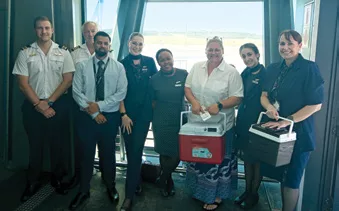
On 2 February 2026, a tiny thunderbird took its first flight with Airlink. A newly hatched southern ground hornbill chick was flown from Umgeni River Bird Park in Durban to OR Tambo International with its new human parent.

Its destination was the Baobab Conservation Rearing Centre, a collaboration between the Mabula Ground Hornbill Project and the Mpumalanga Tourism and Parks Agency. This centre is a bush-based, state-of-the-art rearing facility for these chicks at Loskop Dam Nature Reserve in Mpumalanga.

It all started when the call came in late in the afternoon on 30 January that an egg laid by a pair of ground hornbills at Umgeni River Bird Park had started to ‘internally pip’, meaning that the little chick had pushed through the inner membrane of the egg. It was coming whether we were ready or not! All the earlier plans and arrangements made for this chick had to be discarded, and it was time for an urgent Plan B. Calls were made to Airlink Marketing Manager Karin Murray for help, as there was a narrow window of time in which this chick could be transported safely. Flights were rebooked, airport security was notified and the cabin crew was informed and ready to help.

Into the air

The chick was transported from Umgeni River Bird Park to King Shaka International Airport on Monday morning, 2 February, where Umgeni management met Airlink’s Sharon Porter. She swiftly escorted them through the airport to the gate. A flight had just landed from Johannesburg and was waiting to return. The chick was handed over to Michelle van Sittert, who would become the chick’s new mum, and transferred to a cooler box that had been transformed into a mobile brooder. This enabled Van Sittert to manage temperature and humidity for the little chick. Both the flight crew and ground crew were amazing, making sure that the little one was cared for, strapped in and ready for take-off.

The Mabula Ground Hornbill Project’s mission is to slow and then reverse the decline of the endangered southern ground hornbill in southern Africa. There are many ways to tackle this, and reintroductions are one of these. Ground hornbills only rear one chick, so a second egg is doomed. By harvesting the second egg, both from captive breeding institutions like Umgeni River Bird Park and wild nests, a sustainable stock of chicks is available to start reversing the decline. This journey was the start of a new and vital step in the reintroduction of this endangered species to areas where it has already become locally extinct. It is partnerships like this one with Airlink that make this possible. Each of these chicks has a vital role to play in the future of its own species.

Text and photography | Supplied

For more information, go to ground-hornbill.org.za

Read more

Diving into beauty

New book is both a love letter to nature and a practical companion for those who like to go swimming in the wild

Kalk Bay Harbour

Kalk Bay Harbour is not your typical wild swimming spot, but for many Capetonians, it defines the experience of being in the sea. Maybe it’s nostalgia, maybe it’s the full sensory overload: the sound of chattering voices, clinking cutlery, music from Brass Bell, the rumble of passing trains, the bustle of boats. The smell of salt and diesel, frying fish, fresh catch and deep-fried calamari. And yet, despite all this activity, when you slip into the water, you find yourself floating in a pocket of stillness at the centre of it all – surrounded by streaks of colour, rusted lines, ropes, nets, textures, movement.

This isn’t wilderness, but it is wild in its own way: gritty, joyful, layered. It’s not the place to come for peace and quiet or untouched reefs. It’s where you swim to feel alive and part of the Cape, a place where generations of families have come to fish, eat, jump into the harbour and spend time together. There’s a kind of democracy to it: kids bombing off the edge while their grandparents queue for snoek and chips, divers clambering up ladders beside barefoot swimmers, laughter echoing off the walls of the old breakwater.

You can access the harbour either through the stone arches off Main Road or by winding your way through the Brass Bell restaurant complex. The usual swimming spot is on the far side of the working harbour, near the slipway, although it’s worth exploring the protected corner near the old pool walls and the ladders bolted to the quay. The water here is sheltered and deep, with a dramatic sense of place. Be mindful of boat traffic and slippery surfaces and check the tides before you jump in – access can be trickier at low tide.

  • Things to think about

The Battle of Muizenberg took place in 1795, when the British seized control of the Cape from the Dutch East India Company (VOC) at the outset of the Napoleonic Wars. The Dutch had aligned with the French and the British, wanting to secure the Cape as a strategic stop on the route to India, sent a fleet and soldiers.

The actual ‘battle’ was small and brief – more of a skirmish. British naval guns fired from ships anchored in False Bay, bombarding the Dutch garrison stationed in what is now the Muizenberg area. The Dutch were quickly overwhelmed and retreated, allowing the British to take the Cape. A few cannon remnants and plaques still remain in the area as reminders.

Venus Pool

Tucked into the far reaches of Cape Point Nature Reserve, Venus Pool is one of the most beloved tidal pools on the peninsula, not for its size, but for its exquisite balance of drama and calm. Framed by jagged cliffs and backed by the roar of the open sea, the pool itself remains serene: a shallow, clear basin perfect for a cooling dip, a child’s first snorkel or a few contemplative moments floating in the tide.

To get there, start your journey at the Cape Point entrance gate and follow the tarred reserve road. Turn left at the Bordjiesrif turn-off, then take another immediate left, ignoring the sign to Bordjiesrif itself. Continue to the end of the road, passing old lime kilns and fynbos ridges, and park where the road runs out. From here, it’s a roughly 15-minute walk along a narrowing paved track that eventually becomes a footpath. A wooden sign marks the descent. Scramble down a series of flat rocks, and you’ll arrive at the pool’s edge, protected by a wall of black boulders that buffer the ocean beyond.

The pool is only about 10m across but full of magic. Snorkellers will find starfish the size of open hands, jewel-coloured urchins, green seaweed, tiny anemones, mussels, crabs and shoals of darting fish. On calm days, the surface is glassy and clear. 

On wild ones, waves slam the outer rocks with dramatic force, crashing into the air with a resonant boom while Venus, protected within, holds its stillness. It’s a pool for dipping, not distance. For gazing, floating and remembering how to slow down.

There are no facilities here, so bring everything you need, including sunscreen and plenty of drinking water. Water shoes are highly recommended; the rocks are uneven and the urchins, though beautiful, are not friendly to bare feet. While swimming here is generally easy, the surrounding ocean is another story. Adventurous swimmers sometimes leap from the outer rocks into the open sea, but the return is difficult, the barnacles unkind and the current unforgiving. It’s not something to attempt lightly.

Venus Pool is a year-round joy and sunrises or early mornings offer something particularly special: soft golden light spilling across the rocks and the pool often empty save for a heron or a solitary swimmer. On days when the swell is low and the sea is playful, there’s even the possibility of coasteering 4km northward toward Smitswinkel – a slow scramble-swim along the cliffs and ledges that, while entirely condition-dependent, offers the kind of adventure that feels like a secret between you and the coastline.

  • Things to think about

Just above Venus Pool stands one of the Cape’s oldest signal cannons, once part of a chain used to alert the garrisons of incoming threats. Stationed here in the 1800s, one signalman – bored by the long hours and isolation – reportedly fathered nine children during his time at the post. The nearby lime kilns tell another story: before the peninsula became a protected park in the 1930s, this stretch of coast was an industrial site. Shells and calcrete were hacked from the cliffs and burnt in these kilns to make white lime, which was used to coat and preserve homes across the Cape. Today, the kilns are all that remain, crumbling quietly beside the road.

Text | Matthew Dowling

Photography | Jay Caboz

A Guide To Wild Swimming In The Western Cape by Serai and Matthew Dowling is published by Rockhopper Books and is available now. This excerpt is published by permission.

Read more

Light is right

Small carry-on bags are gaining increasing popularity among travellers

Remember when travel meant bulky checked luggage, three pairs of shoes and ‘just in case’ outfits? Those days are over. What started as a workaround for airline baggage fees has become a bragging right. Travelling with nothing more than a compact, airline-approved backpack is now a sign of being a savvy, flexible, modern traveller who values mobility and freedom.

Small-bag travel looks less like a fleeting trend and more like a growing movement. The smartest travellers are no longer the ones who bring everything – they’re the ones who bring only what they need, in the best quality, and nothing more. Travelling compact is no longer niche. The market has exploded with smart backpacks and zip-flat cabin cases designed to compress and expand. Bags that hold your clothes, toiletries and laptop with strategic compartments are now widely available online. The five-day backpack has become the default way to travel, whether for work or pleasure.

This trend has not come out of nowhere. Rather, it’s due to evolving travel habits after the COVID-19 pandemic.

Airlines have gradually changed the rules. 

Although flights might be appearing cheaper, once you add checked luggage, the price rises. In response, travellers are bypassing the system by avoiding the extras and packing smarter. In addition to saving costs, they are skipping the queues with everything kept close as carry-on.

Always ready to go

Today’s travellers are far more spontaneous. Rigid, hyper-planned itineraries are giving way to trips that favour adaptability, spontaneity and freedom. If your bag fits under a seat, you can hop between destinations, jump in a rideshare, travel at your own pace and always keep it close. Packing light is also about peace of mind, with no delays at the carousels and no lost or damaged luggage. The shift reflects a broader desire to cut the excess, not just in luggage, but also in life.

Remote and hybrid work have also blurred the lines between work and holiday. Many travellers pack for both meetings and downtime, leading to simplified packing formulas to include one smart outfit and leisure outfit that can interchange, laptop, power bank, sneakers and essentials. If it doesn’t fit, it stays behind. With so many clever travel accessories available, like vacuum bags, fold-flat toiletries and portable tech pouches, the small bag life feels more achievable than ever.

There’s also a performance aspect. ‘Pack with me’ video content has become a genre of its own. Social feeds are full of tips, hacks and visual bragging rights, that can include anything from three-in-one toiletry kits to folding styles and minimalist must-haves. Travelling light is no longer limiting and has become a kind of competition to see who can pack the smartest and the most creatively.

Text | Madri van der Westhuizen

Photography | JLco Julia Amaral

Madri van der Westhuizen is Campaign and Social Media Manager for ANEW Hotels & Resorts.

For more information, go to anewhotels.com.

Read more

Volume control for your appetite

Can we turn down ‘food noise’ to make healthy eating easier?

Of all the myriad mysteries of science, the one that’s currently got my neurons in a twist concerns a Toffee Crisp stashed away in my kitchen cupboard. I’m entirely preoccupied by it – it’s like being pulled by some metaphysical tide.

The question is, how? How can a chocolate bar scrape away at my willpower when – the last time I checked – I was a halfway-intelligent adult who should know better?

The answer may have something to do with ‘food noise’: those persistent, intrusive thoughts about food and eating between mealtimes. In the case of my bewitching Toffee Crisp, these thoughts are probably a short-lived distraction that I’ll give in to within the hour.

For some people, however, food noise is a more serious problem – that’s according to Daisuke Hayashi, a doctoral researcher at Pennsylvania State University. He says that when the volume is dialled up, food noise is a feed of “constant and obsessive thoughts that detract from a person’s wellbeing and make it difficult for them to make healthy choices”.

Very little research has been done on food noise, but in 2023, Hayashi and his colleagues authored a paper that tried to marry anecdotal accounts of food noise with what we already know about how humans respond to food cues. His team is now working on a number of studies to delve into it further.

“I’d say the research on food noise is at a stage where asking the right questions and seeking empirical data is more important than making confident assumptions,” Hayashi points out. “One thing I can tell you from our preliminary data is that the majority of reports on social media describe food noise as a source of suffering and something people would rather live without.”

Hayashi believes food noise occurs as a constant and intense response to food cues – anything from an ad on social media to the smell of somebody’s cooking to the internal processes that control our appetite-regulating hormones. Responding to those cues is what keeps us nourished, but some people’s responses are heightened.

“It’s likely that a combination of individual characteristics – genetics, lifestyle, stress – and environments that are specifically designed to constantly expose us to powerful external food cues is what leads to someone experiencing food noise.”

One interesting line of research comes from work on GLP-1 agonists, the class of weight-loss drugs that includes Ozempic.

“Anecdotal reports seem to indicate many people use the term ‘food noise’ to describe their obsessive thought patterns around food before receiving such treatments,” Hayashi says. “My hypothesis is that one of the effects of these drugs, which might explain their effectiveness in treating obesity, is that they make people less responsive to food cues, thus making them less susceptible to food noise.”

More research will answer that question, as well as others, such as which people are most susceptible to food noise.

In the meantime, if you’re looking for strategies to deal with intrusive thoughts about food (or rogue Toffee Crisp cravings), Hayashi recommends speaking with a dietician. They can help you look for patterns in your eating and plan strategies to build resilience against food cues. These may include things like slow, mindful eating or eating more at mealtimes to avoid hunger pangs between meals.

More importantly, Hayashi says, you have to avoid the guilt trap of thinking that struggles with food are some kind of personal failing.

“We’re living in a paradoxical society where our culture constantly bombards us with messages glorifying thinness and muscularity, while also presenting us with non-stop exposure to external food cues that persuade us to make poor dietary choices,” he says. “That – combined with social structures that make accessing healthy foods more difficult than eating convenient, highly processed foods of low nutritional value – is a perfect formula for struggling with food noise.”

Text | Ian Taylor

Illustration | Rosie Roche

Ian Taylor is a freelance science writer and the former deputy editor of BBC Science Focus.

This article appears in Very Interesting #85.

Please click here to receive the current VI issue digitally for FREE!

Read more
11% The percentage of Americans who think ‘HTML’ is a sexually transmitted disease. 350 million The number of first-language English speakers out of a total of two billion people who speak the language. 90m The length of the longest cigar ever made.

freeze frame

National Geographic filmmakers and explorers at large Beverly and Dereck Joubert showcase 40 years of incredible wildlife photography and storytelling in their book Wild Eye

You’ve spent the past four decades documenting and photographing wildlife all over Africa. As you have gained experience creating books, how has your writing process changed?

Dereck Joubert For me, I find I have to edit my writing less and am more precise with my words and intention each time. More and more, I want to write about the essence of life without rambling, so I get right to it.

You must have thousands of photographs, if not tens of thousands. How do you decide which of them are book-worthy?

Dereck Joubert Similarly, it’s now a process of finding the essence in the selection, each one telling a story of the era it represents and then leaving it at that. Our first selection is now not very long, but we trust those instincts much more now.

Does collaborating on a book as a couple make it easier and why?

Dereck Joubert Much easier, but only if you trust the judgement of your collaborator and that the opinions come honestly without an agenda. To clear that out of the way, Beverly takes all the photographs, and I do all the cinematography and writing. That way, it’s not about who made or took a certain image, but what the best image is. No agenda. No ego.

Early on in our careers, we were strategic about this and kept to our roles. That said, sometimes the direction, not the selection, can be driven by a narrative – as in this book – and that takes some writing as an early but interlaced step in the process.

What was the experience like reliving memories through these photos?

Dereck Joubert It’s like walking through an old house full of ghosts in some cases or going to a reunion with old friends in others. We’d say, “This is the only image we got of this great scene,” and recall the agony of missing the moment, and at other times linger on one much longer than it deserved just because it was one of the happiest times of our lives. Ultimately, we were clinical about the process, selecting great images no matter what the heartache or backstory because each image needed to stand on its own in the spotlight of time.

Beverly, is that Legadema on the cover of the book? Please share the special bond you had with this extraordinary leopard cub.

Beverly Joubert It is Legadema, and she was probably mid-teenager equivalent when I took this cover image.

We found her in the wild when she was eight days old and followed her for the next four years, getting to know her intimately – as intimately as you can get to know a wild predator without touching it or altering its life. That is a rule of ours: non-interference or intervention.

She, however, adopted us in one of the most unique wild animal/human ways we’ve ever heard of, where she’d wait for us and greet us each morning, and then we’d go out hunting together. She changed our lives in another way when we looked at leopard numbers remaining in the world and saw the declines, from over 700,000 to about 50,000 in 50 years. That is why we started the Big Cats Initiative and our own Great Plains Foundation – to save as many as we can.

While out in the field, have there been any harrowing tales you’d like to share?

Dereck Joubert A good number of snake bites and large wildlife run-ins. We were once settling in to sleep past midnight in the back of our truck, and we got smacked by a large female elephant who tipped the vehicle up and nearly over half a dozen times, smashing the windscreen and denting the front end. I was able to turn her away peacefully by using a spotlight, while Beverly basically had to ride out the attacks inside, but then we found out why she was so aggressive.

She’d only just given birth to a baby next to us in the dark, and when he stood and took his first steps, he imprinted on us instead of his mother and came to us. I wish he hadn’t. After some careful but quick thinking, we managed to drive away from him – although he followed us, not his mom – and then, when I saw her, I turned immediately, sped off and stopped. She finally came out of the dark and dust and collected her baby. We were a little shaken, and when we sorted ourselves out, we found shards of her ivory snapped off and in the back of our vehicle, as she’d hit us so hard.

What is the most important takeaway you are hoping to bring across in the book?

Dereck Joubert Maybe that time changes everything, so we must soak up every minute, either behind the cameras or just being focused and present – with each other, with time and space. The moment is already gone. This book captures those moments, but also that time for us.

Text | Heléne Ramackers

Photography | Rebecca Hale

Wild Eye by Beverly and Dereck Joubert is available now through beverlyjoubert.com/wild-eye-a-life-in-photographs/.


Read more

A taste of home

Young winemaster’s ideas have travelled from Zimbabwe to Washington, DC

A lazy 10-minute stroll from the Capitol and Washington’s National Mall, Chat’s Liquor is easy enough to miss (I did the first time around). But if you’re a wine drinker, then DC’s only black-owned liquor store is a worthy addition to the city’s long list of attractions. Owner Burnie Williams curates a wide and exciting selection, including some standout wine from Zimbabwe. Well, sort of…

When Blind Ambition was released in 2021, the charming story of the Zimbabwean team travelling to the World Blind Wine Tasting Championships in France made international stars of an unlikely quartet of entrants. Joseph Dhafana, Marlvin Gwese, Pardon Taguzu and Tinashe Nyamudoka shared similar backgrounds, having arrived in South Africa years earlier as refugees, found jobs in the hospitality industry and from there discovered their true calling as sommeliers. Spoiler alert: Team Zimbabwe didn’t win the competition. However, it did firmly establish their wine credentials in the documentary fondly described as ‘the Cool Runnings of wine’.

Ambitions achieved

Blind Ambition also proved the catalyst for all four sommeliers to expand their wine journeys into producing their own labels. But it’s Nyamudoka whose focus on producing wine has been the most complete. In the Shona language of Zimbabwe, kumusha refers to the place you come from – your home, your village, the area to which you return to see family and reconnect with your roots. It’s thus a deeply meaningful name for Nyamudoka’s wine range, one that started out in 2017 as a small partnership with acclaimed winemaker Attie Louw from Opstal Estate in the Slanghoek Valley, 90 minutes from Cape Town.

At that point, Nyamudoka was still firmly in the sommelier world. Having previously spent time at One&Only in Cape Town and Durban’s iconic The Oyster Box, he’d moved on to head up the wine team at The Test Kitchen, the Luke Dale-Roberts restaurant that regularly featured in The World’s 50 Best Restaurants list. That was when I first met him, a young man with a compelling story, a clear passion for and an understanding of wine and an unmissable sense of ambition. His new wine project was never just an indulgent side hustle.

In the years since, helped by the success of Blind Ambition but driven primarily by the quality of wine and a relentless work ethic, Nyamudoka has walked the streets of cities around the world, knocking on doors, visiting restaurants and sharing his story and his wine wherever he can.

Burnie Williams is just one of many seduced by Kumusha, now eight wines produced from across the Western Cape, as America, in particular, has proved particularly receptive to the uplifting tale of terrific South African wine, produced by a former refugee from Zimbabwe, now finding favour around the world.

Text | Dan Nicholl

Photography | Tinashe Nyamudoka

Dan Nicholl is the founder and host of Dan Really Likes Wine. Dan is a former PICA Magazine Columnist of the Year and has worked on television and radio and in print and online journalism.

Read more

Better if balanced

Monitoring and managing testosterone levels is important for quality of life

Testosterone – the hormone associated with strength and performance – tends to evoke images of buff men building muscles at the gym. Yet, testosterone plays a far broader role in a man’s health. Many men chalk up fatigue, low mood or a fading sex drive to stress and the natural effects of ageing. But for some, these subtle changes may point to a deeper issue – low testosterone (also called male hypogonadism).

Testosterone underpins much of what men take for granted – strength, drive, focus and mood. When it dips, the effects ripple across body and mind. Sexual health is often among the first red flags. Low libido, erectile dysfunction (ED) and reduced spontaneous erections are well-documented in hypogonadal men.

Men with low testosterone often report reduced muscle mass and strength, greater fat accumulation and slower recovery from exercise or injury. It also contributes to bone health; low levels are linked with lower bone density and higher fracture risk.

Mentally, low testosterone is associated with depression, irritability, fatigue, poor concentration and diminished motivation. Beyond quality of life, observational studies also suggest low testosterone may correlate with higher cardiovascular risk and greater mortality in men.

Slow slip

While testosterone levels naturally decline with age – typically by about 1% per year from the time a man reaches his 30s – the hormone never depletes completely. There are two main categories of causes. Primary hypogonadism originates in the testes themselves, where the glands are unable to produce adequate testosterone. Secondary hypogonadism, on the other hand, occurs when the brain – specifically the hypothalamus or pituitary gland – fails to send the proper signals to trigger testosterone production.

These can be caused by a myriad of factors including obesity, type 2 diabetes, HIV, chronic illnesses, certain medications, poor sleep and lifestyle elements like excessive alcohol use and major stress.

There is also what’s known as late-onset or adult-onset hypogonadism, which tends to develop gradually as men age. This form is more common in those who are overweight or obese or who live with chronic conditions such as type 2 diabetes and cardiovascular disease.

You may not prevent all cases of testosterone deficiency, but several strategies can reduce the risk or slow the decline. Maintaining a healthy body weight helps minimise hormonal suppression. Regular exercise, particularly strength training, supports muscle mass and may help maintain testosterone levels, while good sleep hygiene and treatment of sleep disorders like sleep apnoea are equally important. Managing chronic conditions, reducing stress, limiting alcohol intake and following a balanced diet all contribute to better hormone balance.

Treatment depends on the cause, other health conditions and the patient’s health goals. For men with confirmed low testosterone and noticeable symptoms, testosterone replacement therapy (TRT) is the most direct option. It comes in different forms, like gels, patches, injections (both short- and long-acting) and implants. Long-acting injections, for example, can provide stable hormone levels for weeks or months, which helps avoid fluctuations and makes it easier to stick with treatment.

Text | Ingrid Singels

Photography | SORN340 Studio Images

Ingrid Singels is Associate Director of Pharma Dynamics’ Scientific Division. For more information, go to pharmadynamics.co.za.

Read more

Investing in insight

How you interrogate your strategies makes a difference to the outcomes of your work

The power of a big question

We’ve established that big questions are catalysts for meaningful introspection and group cohesion. But that’s just the beginning. Here are five more reasons I believe big questions are game changers for modern leaders.

Reason 1: The world is too complex for quick, easy answers

We live in an interesting, complex world at a fascinating time in history. Information is cheap and almost everyone has ready access to it. As British author and tech philosopher Tom Chatfield puts it, “We’re entering a world of infinite, instant answers, so there’s even greater emphasis on which questions we should be asking.”

Old models of having (or pretending to have) all the answers no longer apply. Consultants and tech gurus will tell you that data is the new oil. But everyone has data. Nobody is short of information. Nobody hopes for more notifications, emails, WhatsApp groups or reports.

What we crave more of is insight. If anything, data is the sand and insight is the oil we extract from it. In an increasingly competitive information economy, your ability to extract and distil insight is your differentiator.

Great questions are the key to distilling and extracting great insights. Big questions help leaders navigate complexity by uncovering nuance, assumptions and perspectives that quick answers often bypass.

Reason 2: Big questions spark innovation

Asking thoughtful, open-ended questions encourages exploration and creative, lateral thinking. Innovation rarely comes from default answers – it comes from reframing problems and challenging the status quo.

I have fond childhood memories of wrestling endlessly with levels and problems in PC games like Space Quest, Myst, Tomb Raider and Prince of Persia (giving away my age), only to experience the sheer joy of breaking through after the hundredth attempt at the same obstacle. If only I applied the same deliberation and consistent effort to the challenges I face in business today. We’ve grown lazy in our thinking. Pursuing better insight by asking deep questions builds problem-solving cardio.

Our brains are remarkable, marvellous problem-solving organs, but the downside is that they are also evolutionarily adapted to heuristics.

Heuristics are mental shortcuts that help us make quick decisions and judgements, simplifying complex problems and reducing the need for extensive analysis. These shortcuts are useful when a cricket ball is hurtling toward your face or a car in front of you suddenly brakes, but they can be extremely unhelpful when tackling complicated problems like choosing which team members should work together, evaluating why a marketing strategy isn’t working or brainstorming a new product line. HL Mencken put it better than I can when he said: “For every complex problem, there’s a solution that is simple, neat and wrong.”

Reason 3: Big questions foster curiosity and continuous learning

Leaders who model curiosity signal to their teams that learning never stops. Fostering and encouraging a culture of curiosity and questioning is, in itself, a competitive advantage. Cultures of curiosity keep teams adaptive and open to change rather than locked into rigid solutions or outdated playbooks. I like the idea of leaders maintaining a careful balance between respecting everybody while also questioning everything.

I don’t mean you should question things in a deliberately obtuse manner or enforce some unhealthy power dynamic. I mean questioning in a way that reflects a curiosity about your own ideas and assumptions as much as anyone else’s. Tim Minchin, the mercurial Australian musician, composer, actor and comedian, put this beautifully in his seminal 2013 commencement speech to graduates at his alma mater, UWA (search for it on YouTube; it’s required viewing).

Curiosity is a muscle. Flex it.

Reason 4: Asking big questions empowers and enables others

Instead of positioning themselves as the only source of truth, leaders who ask big questions of themselves and others empower their teams to think critically and contribute. Critical thinking is a habit and it can be contagious.

The problem solving that results from great thinking is also contagious. When team members see the fruits of spending cognitive calories on intractable problems, they spend more. Why wouldn’t you want to harness the collective intelligence of your best people to address your most difficult issues?

Big questions also open the door to alternative ideas and views from team members with different backgrounds, cultures and belief systems. The topic of diversity and inclusion has been reduced by many to a conversation about representation. This simplification of a complex subject is a shame. As much as representation is important, diversity and inclusion should be more about diverse perspectives and including dissenting voices. It’s just good business.

In his influential book The Wisdom of Crowds, James Surowiecki outlines four key conditions that must be met for a crowd to produce wise, reliable outcomes when solving problems, making predictions or reaching decisions. The first condition his research reveals is diversity of opinion (followed by independence, decentralisation and aggregation). Read the book; it’s a banger.

Reason 5: Big questions slow us down to speed us up

Pausing to ask profound questions helps avoid the temptation of impulsive decisions based on incomplete information or dodgy data. Slowing down to ask better questions forces us back into the facts.

What are we certain about?

Why are we certain about it?

Is it possible that we could be wrong?

What would need to be true for us to change our minds?

Asking great questions is like opening up a tightly sealed box, only to discover three smaller boxes inside, ready to be opened in turn. Great questions lead to more great questions.

Here’s one of my favourite examples. The first question is borrowed liberally from author Tom Goodwin’s brilliant book Digital Darwinism. The follow-up questions are mine.

What would our company look like if we built it today?

Then we might ask: In what ways would it be different from the company we have?

We could follow that up by asking: What are the reasons for those differences? Which are the good ones? Which ones have shaky foundations?

Big questions seldom present a direct route to neat, immediate answers. That’s what makes them powerful – and uncomfortable.

Text | Mike Stopforth

Photography | Supplied and Roman Samborskyi

52 Big Questions for Business Leaders by Mike Stopforth is published by Tracey McDonald Publishers and is available now. This excerpt is published by permission


Read more
R150,000 The amount paid for an ‘invisible’ sculpture called Fresh Air, ‘created’ by actor James Franco. 48% The percentage of British teens answering a UK survey who believe that Sherlock Holmes is a real person. 2020 The first year in which a master’s degree in ‘Ninja Studies’ was offered by a Japanese university.

Consistency is key

Rules must be followed in the same way every time to avoid legal issues later

Item 3(1) of the Code of Good Practice: Dismissal (the Code) requires all employers to adopt disciplinary rules that “create certainty and consistency in the application of discipline”. This means that the employer’s rules should be enforced strictly, perpetually and equally unless deviation from such consistency can be fully justified due to genuine operational or other existing circumstances.

In the case of SACCAWU obo Lentsha vs Boxer Superstores (Pty) Ltd (2010, 12 BALR 1294), the dismissal of a cashier was found to be unfair. The cashier had given R1,000 to a customer despite the fact that the electronic banking system located at the cashier’s till had rejected the customer’s debit card cash withdrawal request.

The employee’s dismissal was found to be inconsistent and therefore unfair because another employee who had made a similar mistake had not been dismissed and because of the dismissed employee’s long service and expression of genuine remorse. The arbitrator ordered the employer to reinstate the employee.

In the case of Westonaria Local Municipality vs SALGBC and others (2010, 3 BLLR 342), the employee was dismissed for having falsely claimed, at her pre-employment interview, that she had achieved matriculation. However, it was established that another employee had been forgiven for having submitted a false matriculation certificate as part of her job application.

The bargaining council arbitrator found that:

  • This constituted inconsistency on the employer’s part.
  • The failure to dismiss the other employee indicated that such dishonesty does not necessarily destroy the trust relationship.
  • The dismissal was therefore unfair.

The employer was ordered to reinstate the employee. The employer then took the matter on review to the Labour Court, which upheld the arbitrator’s finding.

One directive for all

In the case of Europcar South Africa vs Pumeza Glenn-Poswa (Lex info, 10 December 2025; Labour Court case number JR699/23), the employer fired the employee for using a company vehicle for private purposes. The disciplinary code provided for dismissal for such dishonest conduct.

The arbitrator found against the employer, despite the fact that the employee had not denied using the vehicle for private purposes. This was because the employee had a clean disciplinary record, and the offence had not destroyed the employment relationship. The rule was that employees could only use company vehicles privately if they had received permission. However, the evidence had shown that past application of this rule had not been entirely consistent. The arbitrator had also found that the employer had not lost anything due to the employee’s conduct because the vehicle had not been needed for business purposes at the time the employee had misused it. The Court therefore upheld the arbitrator’s finding that the dismissal had been unfair.

Employers should train their workplace managers in ensuring that the lines of rule implementation do not get so blurred that consistency and clarity suffer.

Text | Ivan Israelstam

Photography | Master1305

Ivan Israelstam is Chief Executive of Labour Law Management Consulting. Contact him on 011 888 7944 or 082 852 2973, or at ivan@labourlawadvice.co.za.
For more information, go to labourlawadvice.co.za.

Read more

Seeking safe spaces

New strategy takes employees away from where their stress is most concentrated

The way we work has changed dramatically over the past few years. Remote work, flexible schedules and a growing awareness of the importance of mental wellbeing have reshaped how businesses approach everything from day-to-day operations to corporate events. One of the most exciting trends to emerge from this shift is the ‘workcation’ – a blending of business and leisure designed to reinvigorate teams, boost productivity and foster meaningful connections.

No longer satisfied with windowless conference rooms and rushed coffee breaks, companies are seeking destinations that offer much more than just a space to meet. They’re looking for places where employees can step away from the stresses of the office, immerse themselves in a beautiful environment and return to work feeling inspired and refreshed. This growing movement is changing the way conferences, workshops and team-building events are planned – and it’s having a profound impact on business outcomes.

The rise of the workcation is closely tied to the modern workforce’s changing priorities. After years of disruption and uncertainty, businesses are increasingly focused on employee wellbeing. Burnout, stress and disengagement have become pressing issues, prompting leaders to rethink how they bring their teams together.

Workcations are a natural solution. By combining work-focused sessions with relaxation, wellness activities and opportunities to connect in meaningful ways, companies can achieve a balance that traditional corporate events often lack.

Sound the retreat

Studies show that changing your environment can spark creativity and improve problem-solving skills. A retreat-style setting encourages people to think differently, collaborate more effectively and return to the office with renewed energy. It also provides an opportunity for colleagues to build stronger relationships outside of their usual roles, which can translate into improved communication and team cohesion back at work.

One of the key benefits of a workcation is that it acknowledges employees as whole people, not just workers. By integrating wellness elements, businesses can create events that support both professional development and personal rejuvenation.

For instance, a typical workcation might include:

  • Productive strategy sessions in the morning when minds are fresh.
  • Team-building activities like guided nature walks or cooking classes to encourage collaboration.
  • Wellness experiences such as yoga, massages or spa treatments to relieve stress and prevent burnout.
  • Unstructured downtime that allows individuals to rest, reflect or explore their surroundings.

This balance ensures that participants don’t leave the event feeling drained, as can happen with traditional back-to-back meeting schedules. Instead, they return home motivated and ready to perform at their best.

Finding peace

The success of a workcation depends heavily on its environment. Venues surrounded by natural beauty are particularly effective because they offer a genuine escape from the noise and distractions of city life. Imagine starting the day with a strategy session in a light-filled space overlooking rolling hills, followed by a team lunch made with fresh, local ingredients. In the afternoon, the group might take a break with a guided walk along a riverbank, or individuals could unwind with a spa treatment before reconvening for an evening brainstorming session.

For many businesses, adopting the workcation model is about more than just hosting a single event. It represents a broader cultural shift towards valuing balance, wellness and employee engagement.

Companies that prioritise these elements tend to see benefits far beyond the event itself. Teams return to work with improved morale, a stronger sense of connection and a renewed commitment to shared goals. Over time, this can translate into increased productivity, lower turnover and a more positive workplace culture.

As the world of work continues to evolve, so too should the way we gather, plan and collaborate. Workcations offer an exciting alternative to traditional corporate events, one that recognises the importance of both business outcomes and personal wellbeing.

By choosing environments that inspire and uplift, companies can create experiences that not only achieve their professional objectives but also leave their teams feeling valued and energised.

Text | Supplied

Photography | People Images

For more information, go to grannymouse.co.za.

Read more

Reshape and advance

Awareness of what can be changed to support good progress is part of effective leadership

When high achievers hit a wall in business, relationships or personal fulfilment, the instinct is often to push harder, chase new strategies or change direction entirely. But those moments of frustration often signal something deeper.

They’re not failures. They’re identity edges, moments that challenge who we believe ourselves to be. Once you understand that, every setback is an invitation to evolve.
The brain doesn’t just record reality, it creates it. When your beliefs and goals align, you stop chasing success and start attracting it. True transformation isn’t about forcing change through discipline or sheer willpower; it’s about consciously reshaping how you see yourself so that your actions naturally align with your true values. Success isn’t just strategy, it’s about identity. When you upgrade who you are, everything you lead transforms to success.

Consciously rebuilding who you are when life calls for a new chapter can reconnect you with your values, beliefs and direction.

Ongoing upkeep

It’s important to check in with yourself – revisit your beliefs, values and daily choices. Are they aligned with who you say you are? Get clear on that: identify what fuels and drains you. Awareness is the starting point for growth.

Picture your future self. Visualise who you want to become; not just what you want to achieve. There may be gaps, so compare your current self with your ideal self to reveal what’s out of alignment. Letting go of old beliefs means replacing outdated narratives with ones rooted in authenticity and truth.

Count your wins by recognising what’s already working. Progress begins with awareness of strength. Learning from role models matters – study the mindset and habits of those who embody the traits you value. Also, rethink how you handle emotions. View them as data, not disruptions, as they reveal where change is required.

Building the whole you involves strengthening each of the seven areas of your life – mental, physical, spiritual, financial, vocational, social and family – to create balanced self-worth. Committing to these changes helps everything settle in, as transformation becomes tangible when every thought and action aligns with your upgraded identity.

Modern leadership demands transformation, because success isn’t about doing more, but becoming more. Neuroscience shows that our sense of identity is malleable, shaped by the thoughts we repeat and the stories we believe. By consciously rewriting that story, we reshape the reality we live in.

Text | Grant Sherwood

Photography | Fizkes

Grant Sherwood is CEO of La Granson International.

For more information, go to grantsherwood.co.

Read more

Which worker?

Choosing between contractors or employees can have significant effects on small businesses

Small- and medium-sized enterprises (SMEs) often face an important question when expanding their workforce: should they engage workers as contractors or employees? This decision affects legal compliance, cost management and the overall success of the business. Understanding the distinction is crucial to avoid costly mistakes and maintain a productive working environment.

Employees are typically integrated into the business with fixed working hours, direct supervision and access to company tools or premises. They benefit from statutory rights such as annual leave, sick leave, UIF contributions and protection against unfair dismissal. The employer has significant responsibilities, including deducting and remitting payroll taxes, contributing to unemployment insurance and adhering to labour legislation.

Contractors operate differently. They usually provide services independently, often to multiple clients. They determine how, when and where they work, supply their own equipment and are responsible for their own taxes and benefits. Engaging contractors allows SMEs greater flexibility and potentially lower costs because employers do not have to provide employment benefits or make statutory contributions.

Blurred line

Despite these differences, the distinction is not always clear-cut. Misclassifying employees as contractors to reduce costs or obligations can lead to serious legal consequences. The courts and labour authorities look at several factors to determine the true nature of the working relationship. These include the degree of control the employer has, whether the worker is economically dependent on the employer, integration into the business and the level of supervision.

For example, a worker who performs duties under strict instructions, works regular hours and cannot subcontract the work is likely to be classified as an employee – even if labelled a contractor. Misclassification can result in back taxes, penalties and claims for unpaid benefits, which may be financially damaging to SMEs. To manage these risks, SMEs should have clear, written contracts that define the relationship, roles and responsibilities. Contracts should reflect the reality of how work is performed rather than just the labels used. Regular reviews of contracts and working arrangements are also advisable, especially if roles evolve.

Legal advice can be invaluable in assessing worker classification and ensuring compliance with South African labour laws. Proper classification protects SMEs from disputes and builds better working relationships. Choosing between a contractor and an employee involves careful consideration of how the work is done and the legal obligations involved. SMEs that take a thoughtful and informed approach will reduce risk, control costs and create a sustainable workforce aligned with their business goals.

Text | Molisa Cheda

Photography | Jack_the_sparow

Molisa Cheda is Founder and Managing Director of Vanguard Legal.

For more information, go to vanguardlegal.co.za.

Read more
4.5m The height of a top hat made by Abraham Lincoln fan Odilon Ozare. 608 The number of hours, on average, it’d take to read all the online privacy policies we’re asked to check annually. 5 The number of villages called ‘A’ in Norway.

Time to disengage

Being connected is convenient, but keeping your devices safe requires not being available all the time

Connectivity has become as much a part of society and everyday living as same-day deliveries and WhatsApp calling. So much so that most people don’t think twice before joining a free WiFi network or switching on Bluetooth in the car. These are everyday conveniences that connect people to cars, music, shopping, taxis and each other, but they also connect cyber criminals to bank accounts, systems and devices. The overlooked risks of WiFi, Bluetooth and smart devices can quickly turn convenience into compromise.

In 2025, cheap Bluetooth chips used in a wide variety of devices, from mobile phones to medical equipment, were shipped with undocumented commands in the chips themselves; commands that introduced a vulnerability to all devices using them by potentially opening a back door into their systems. It’s not the only Bluetooth issue on the market either: the BlueSDK used in millions of modern vehicles permits remote code execution by attackers. Translated, this means that hackers can get into systems and remotely control a person’s car.

The technology itself is designed to be as convenient and accessible as possible. It is also very easy to hack. Most forms of Bluetooth compromise tend to be from man-in-the-middle (MITM) attacks, BlueBorn attacks, device impersonation, human error and the exploitation of outdated Bluetooth protocols. And the technology can misfire, even without criminal intent. Calls can swap cars and music can stop playing in one and start in another – and these are the most innocuous examples. The George Mason University USENIX Security Symposium 2025 published research on the nRootTag Bluetooth location-tracking vulnerability, which showed how the technology could be weaponised for mass device tracking. Imagine hackers knowing where you live, having access to your smart home or following your activities on your device?

Stop sniffing

Best practice for Bluetooth, despite its convenience, is to switch it off when it’s not in use. The same goes for public WiFi. Free connectivity is supposed to be a benefit, but it has become more of a lure. If you scan for networks and connect to, for example, a WiFi that has the same-sounding name as the café you’re sitting in without verifying the address with the store manager, you could be connecting to a criminal’s laptop instead. They’re providing a free and accessible connection using a 3G card while quietly running a sniffer, which is monitoring everything you do, from passwords to banking transactions. It’s the classic free bandwidth trap, which can have a devastating impact.

These sniffers, which are essentially network security tools, are capable of intercepting and analysing data travelling across a network. They’re useful for cyber-security teams, as they play a pivotal role in identifying potential malicious data theft, but are also very much used by cyber criminals to get the data they want. According to the World Economic Forum Cybersecurity Outlook 2025, free and public WiFi locations are among the riskiest for credential and data theft incidents using sniffers for MITM and session hijacking.

These risks are growing for people using smart devices or building smart homes. Cameras, doorbells and IoT devices are meant to add security, but when they are misconfigured or poorly secured themselves, they can create the opposite. There have been multiple incidents where camera manufacturers have experienced hosting outages or platform flaws, resulting in users being able to access video feeds from cameras belonging to other customers. One of the most well known is the Wyze camera glitch where a third-party caching error during the restoration of AWS services led to a mix-up across user and device authentication. Approximately 13,000 users got thumbnails of other people’s cameras.

Increase awareness

These incidents highlight how something as simple as a design flaw or an unexpected vulnerability can have potentially damaging consequences. They also underscore the importance of being aware and of recognising where the risks lie and understanding how to manage them proactively, not just after something has gone wrong. Turn Bluetooth and WiFi off on your devices when not in use. Always verify WiFi networks directly with a company or staff before connecting and add a privacy screen for both your phone and your laptop, so that you don’t have people shoulder surfing while you work. Check your devices – all of them – to ensure that they are correctly configured, updated and that any cloud storage solutions you use have strong security practices.

The lesson is simple. Convenience without control is a security risk. The same tools that make life easier also create vulnerabilities because people rarely realise how much management they actually need. The smallest habits, be it toggling a switch, covering a lens, questioning a network name, can make the difference between staying connected and being compromised.

Text | Richard Frost

Photography | Roman Samborskyi

Richard Frost is Head of Technology Solutions and Consulting at Armata Cyber Security. For more information, go to armata.co.za.

Read more

Exit strategy

It’s important to understand how the way in which you leave a company influences your reputation

Employees planning to resign should prioritise leaving with grace, as resignations today are far more than a mere formality – they’re a defining moment in a professional’s career. The temptation to blow up on the way out is increasingly common, as most people are facing unprecedented pressures from all sides. Many resignations occur in emotionally charged moments, often when unresolved frustrations bubble to the surface.

However, while venting pent-up grievances or storming out in a blaze of glory might feel cathartic, it’s a self-defeating move that will severely impact future options.

Emotional outbursts during resignation can torch bridges, damage your professional reputation and limit future opportunities in ways that are hard to repair. Your reason for leaving, whether it’s burnout, a better offer or a career pivot, is less significant than the way you leave. Choosing professionalism over impulsivity will ensure you leave behind a positive legacy and don’t firmly shut any doors on which you may need to knock again in future.

There are two reasons why burning bridges today is even more harmful than in the past: the world is now much more inter-connected and the talent search mechanism called ‘back-channelling’.

Leave well

Candidates are aware that hiring managers will likely conduct a social media scan during the recruitment process. During this process, they will sometimes find links with former managers and colleagues known to them and possibly reach out for an informal, ‘back channel’ check.

It is these conversations with former colleagues, managers, clients, suppliers or service providers – the people who show up on your online footprint and who can share candid insights about your tenure and how you left – that can carry weight in recruitment decisions.

Exit interviews, often seen as a chance to ‘set the record straight’, also require careful navigation. Constructive feedback regarding processes or procedures is fine, but exit interviews are not to be confused with a session on a therapist’s couch or the chance for brutal honesty about your experience with the company.

These conversations are not the place for personal vendettas or emotional unloading but rather for constructive, process-orientated feedback that might benefit the organisation. For example, suggesting improvements to workflows or communication shows maturity and leaves a positive impression. Personal attacks or airing grievances, on the other hand, rarely lead to change and will most likely just reflect poorly on the departing employee.

A graceful exit reinforces your integrity (also in your own mind) and strengthens your professional network for the long haul. It’s a moment to showcase emotional intelligence and foresight. A professional resignation is about more than keeping the peace – it is about protecting your future.

Text | Advaita Naidoo

Photography | Migma Agency

Advaita Naidoo is Africa MD at Jack Hammer Global.

For more information, go to jhammerglobal.com.

Read more

Put stock in trades

Training as a technician can offer solid security

Some matric learners want to study law, others dream of a career in medicine, while others just want to ‘make money fast’. But someone might also say: “I don’t want to spend years studying and still be unemployed. I want something solid, something real.”

That honesty is rare, but it speaks to a growing truth in South Africa. Many young people are questioning whether the traditional university route is the only way to success. And more are beginning to look at trades and apprenticeships, not as a fallback plan, but as a wise, deliberate choice.

Think about the last time your car broke down, your geyser burst or your lights flickered out. Who came to the rescue? It wasn’t a lawyer. It wasn’t a consultant. And it was undoubtedly not AI. It was a skilled tradesperson – a mechanic, an electrician or a technician. These careers don’t always make glossy career brochures, but they are the backbone of our country. They keep homes safe, businesses running and industries alive. Without them, our lives grind to a halt.

And while we don’t always say it out loud, the truth is this: trades are some of the most intelligent career choices a young person can make today.

Strong argument

There are plenty of reasons why trades are more than ‘just jobs’. They’re future proof: AI and automation are reshaping office jobs, but no robot can fix a burst pipe or wire a solar system. Skilled trades will always be needed. They’re in demand: South Africa has a critical shortage of electricians, welders, mechanics and renewable energy technicians, which means strong job security and opportunity.

They can offer faster entry into work: many apprenticeships and certifications take 2–3 years, not four or five. And qualified artisans often out-earn entry-level graduates, with self-employment a strong option. Many artisans go on to start their own businesses, employing others and building family legacies.

Trade skills are recognised worldwide, creating opportunities to work abroad, and South Africa’s renewable energy transition needs solar installers, electricians and technicians more than ever.

As a technician, you can literally see and touch the results of your work, whether it’s a lit-up school, a repaired vehicle or a welded structure that lasts generations.

For years, trades were dismissed as second best. But that narrative is crumbling. The truth? Choosing a trade isn’t about settling for less. It’s about making different choices. Apprenticeships and trades offer a direct and respected route into careers.

Text | Gideon Potgieter

Photography | Anon Tae

Gideon Potgieter is CEO of Resolution Circle.

For more information, go to resolutioncircle.co.za.

Read more

Let it go

Rental niche can provide excellent returns for investors

South Africa’s buy-to-let property sector offers attractive opportunities. For investors looking to maximise returns while ensuring long-term tenant demand, choosing the right property type and location is crucial. Entering the buy-to-let market requires considering who the rental market is geared towards, the potential rental that can be secured, as well as the region’s future growth prospects.

The most important rule of property investment is location. Regions with good infrastructure, proximity to towns and access to modern amenities such as shops, healthcare and schools tend to hold value and attract consistent tenant demand – particularly along the coast.

Investment properties within secure lifestyle estates consistently achieve higher rental yields. Levies typically cover external maintenance, building insurance, gardens and security services – all factors that contribute to tenant satisfaction. Importantly, a well-managed estate ensures harmonious living through conduct rules and consistent aesthetic standards.

With increasing concerns about power outages and water shortages, properties that offer alternative water supply, backup power systems such as inverters and batteries to shield against loadshedding and sustainable sanitation solutions are more attractive to tenants. These features are rapidly becoming non-negotiable in the rental market, especially in the mid- to upper-end sector.

Looking out

Modern tenants are often drawn to lifestyle estates that offer more than just a property. Communal facilities such as clubhouses, sports facilities and recreational areas enhance the sense of community and improve tenant retention.

Spending time outdoors can be a priority. This is why more tenants are seeking homes that integrate nature and outdoor living. Properties with access to nature trails, coastal forests or landscaped gardens deliver an enhanced lifestyle, increasing rental appeal and long-term value.

Apartments are a great starting point. Anything from one to two bedrooms promises great entry-level appeal, with a garage or parking bay a must. Affordability also remains a driving factor in South Africa’s buy-to-let market, with properties priced below R2 million aligning with a stronger rental yield bracket.

Text | Barto van der Merwe

Photography | Drazen Zigic

Barto van der Merwe is MD of Renishaw Property Developments.

For more information, go to renishawhills.co.za.

Read more

Do it yourself!

Self-service portals give customers extra options when seeking extra action or information

Modern customers no longer compare their experience with one help centre against another – they benchmark their engagements against the best digital interactions they’ve had anywhere. This means that if a self-service portal isn’t intuitive, easy to use and available 24/7, customers will notice and they might be inspired to go elsewhere.

In fact, a 2017 McKinsey & Co study found that companies that implement a comprehensive, analytics-based approach to managing their customer base – which means that they’re using customer data to improve how they address customers’ needs and provide better experiences – can reduce churn by as much as 15%.

Across Africa, especially among younger demographics, customers now expect digital-first interactions, making it essential for brands to offer portals that facilitate these experiences. Now more than ever, forcing customers to interact with your business in a specific way puts your convenience ahead of their experience. This is no longer good enough. If you force customers to contact a call centre or visit a retail outlet to complete routine tasks, it is a surefire way to lose customers.

Smart, self-service portals enable complete customer lifecycle management without any need for human intervention. So a customer can activate a new service, make changes to their plan, pay bills and restore or suspend a service without having to interact with anyone else. As part of this, customers expect uniform experiences whether they’re accessing services through web browsers, mobile apps or third-party applications. Inconsistent features or user interfaces across different channels create confusion and can leave customers dissatisfied.

One of the clear benefits of this approach is that customers can immediately log in to such portals and sort things out themselves as and when it suits them, as opposed to call waiting times, call transfers and unreliable service levels.

Data insights

Modern, self-service tools, particularly those that incorporate AI, can also benefit the business. The leaders in AI-enabled customer engagement are using these channels to handle more than 95% of their customer service interactions, which dramatically reduces costs, while also providing around-the-clock availability, additional McKinsey & Co research shows. By automating the processes for common requests like plan changes and basic troubleshooting, operators can not only improve response times but also free up customer service representatives to focus their attention on resolving more complex issues.

A few additional benefits of self-service tools include the ability to handle large volume spikes of requests without needing to scale up headcount, being able to address a customer’s need at any time, even outside business hours, and being able to provide standardised, accurate responses to common questions. And the data insights a business gains by tracking customer behaviour and interactions makes it easier for businesses to improve products and services.

In a world where consumers are hungry for digital-first experiences, operators can no longer think of a self-service portal as a ‘nice to have’. Today, these platforms are essential and are at the core of any successful customer relationship.

Text | Damian Burnett

Photography | Dima Berlin

Damian Burnett is Sales Director at VAS-X.

For more information, go to vas-x.com.

Read more
3 The number of tonnes of food served to monkeys in the annual Monkey Buffet Festival in Lopburi, Thailand. 10,000 The number of beaches in Australia. 50% The approximate percentage of the world’s gold that was mined along the Witwatersrand.

Protect your business, protect your mental health

Comprehensive business insurance helps safeguard a business and its people

No matter the size of a business, the impact of an accident, theft or any other incident that affects operations takes a personal toll on the person on whom the responsibility falls. Mental and even physical health can take a knock if the business isn’t able to operate as usual for a period of time.

For a small business owner, this can have a direct impact on their day-to-day livelihood and for the head of a global corporation, the impact of an incident on the business can affect hundreds, if not thousands, of people and invite pressure from the board and shareholders – putting them under immense stress.

Protect your business, protect yourself

Financial strain – such as the fear of debt, loss of personal assets or bankruptcy – and loss of control including limited ability to control daily operations, supply chains or customer flow can contribute to increased stress levels. While stress has many physical manifestations, it’s the mental toll that stress takes that may adversely affect long-term wellbeing.

Business owners are fiercely protective of what they’ve built or what they’ve been entrusted with running, so the mental toll of a challenge can feel personal. There are many techniques and interventions that can help manage stress, but comprehensive business insurance is one of the best ways to ensure that the business and its people are protected as much as possible.

Having the right business insurance in place can help alleviate much of the stress around the impact on operations and allow the owner to focus on the nuts and bolts of re-establishing operational normality.

What could possibly go wrong?

Business insurance is a strategic risk management tool that helps protect a business against the impact of financial, operational, legal and reputational risks that can threaten its survival.

Every business’s assets come under threat from a range of risks and there are a range of business insurance types that can protect a business from events that the owner would never have thought could impact it.

Public liability insurance is just one example, which offers an option to protect the business against claims from a third party if they get injured or their property is damaged as part of a business relationship. Auto&General’s public liability insurance protects the business, whether the incident happens at the business premises or while employees are working at a client’s location, ensuring that there’s support when a claim arises from negligence during the normal course of your insured business activities.

Read more

Get an Auto&General business insurance quote

Protect your business with Auto&General business insurance. For more information or a quote, visit www.autogen.co.za or contact us on 0861 333 877 to speak to a dedicated team who will build a policy to take care of what you’ve built.

Protect your people

Managers must ensure that workplaces are safe and fair when processing complaints

Harassment in the workplace, particularly sexual harassment, continues to challenge organisations across industries. While laws and policies provide a framework for handling complaints, the way cases are managed in practice often determines whether employers truly protect their people and themselves.

A recurring pattern has been observed in harassment matters. Accused employees and their representatives often focus on technical defences or adopt aggressive strategies, while the lived experience and trauma of the complainant are minimised or overlooked.

Defending an employee is a fundamental right, but this right should never be exercised in a way that re-traumatises victims. Too often, alleged perpetrators have been able to intimidate complainants or witnesses, with cross-examination tactics disguised as ‘robust questioning’ ultimately forcing victims to withdraw, even when their claims were credible. Ironically, such combative approaches frequently do more harm than good, often damaging the credibility of the accused rather than strengthening their defence.

Lead the way

Employers set the tone for how harassment cases unfold. Handling these matters effectively requires more than procedural fairness; it requires a trauma-informed, sensitive approach.

Seasoned chairpersons should be appointed to oversee hearings, creating a safe and respectful environment where complainants feel supported and protected. At the same time, the process must remain fair to the accused. Striking this balance is not easy, but it is essential. Employees bringing genuine complaints should never feel punished by the process itself.

False accusations, while rare, do occur. Employers must act decisively in such instances to protect individuals and organisational integrity. However, the possibility of malicious claims should never justify a culture of hostility or insensitivity.

When harassment cases are mishandled, the consequences are severe. Employers face exposure to vicarious liability, where the organisation is held responsible for the actions of its employees if it failed to act reasonably. The Commission for Conciliation, Mediation and Arbitration (CCMA) and Labour Courts have consistently emphasised that employers must create an environment free from harassment and discrimination and failures in this regard attract costly awards and damages.
Beyond legal liability, the reputational impact can be devastating. An organisation seen as indifferent or hostile to complainants risks losing talent, undermining trust and damaging its employer brand. In contrast, companies that deal with complaints fairly and sensitively not only protect individuals but also reinforce their values and credibility.

Keep it clear

Across sectors, there are clear practices that make the difference between a defensible, credible process and one that leaves organisations exposed. Some of these practices include:

  • Maintaining a clear, well-communicated harassment policy that is more than just words on paper.
  • Training managers and human resource professionals to recognise signs of harassment and respond appropriately.
  • Appointing independent, skilled chairpersons to oversee sensitive hearings.
  • Providing complainant support measures, such as counselling and a safe reporting structure.
  • Acting swiftly but fairly, ensuring that neither party feels prejudiced by the process.

Harassment cases are not just legal matters; they are a test of an organisation’s values and its commitment to its people. Protecting employees and protecting the organisation are not opposing goals. When handled thoughtfully, they reinforce one another.

As labour lawyers have observed, the right approach can make all the difference. Employers who act with both fairness and sensitivity build stronger, more resilient workplaces. Those who neglect this responsibility risk legal battles, reputational harm and, most importantly, the wellbeing of their people.

Getting it right is not optional. It is a leadership responsibility and a legal imperative. If your organisation is facing a harassment complaint or wants to strengthen its policies and processes, now is the time to act. With the right guidance, employers can navigate these matters effectively, protect their people and safeguard their businesses.

Text | Dumisani Ndiweni

Photography | People Images

Dumisani Ndiweni is a Partner at Webber Wentzel.

For more information, go to webberwentzel.com.

Read more

Core strength

New skill sets are needed to succeed in the transition to the working world

As the world hurtles toward a more digital, automated and interconnected future, the question that should be on our minds as a nation is: are graduates being adequately prepared with the right skills to survive and thrive, now and in the future?

According to the World Economic Forum’s Future of Jobs Report 2025, employers anticipate that 39% of core skills required in the job market will change by 2030. Technological proficiencies such as AI and big data, networks and cyber security and technological literacy are projected to see rapid growth in demand. Human skills like creative thinking, resilience, flexibility, curiosity, social influence and environmental stewardship are also expected to rise in importance, underlining the importance of thinking about the increasing rise of AI in terms of a human-in-the-loop approach.

Most universities are still largely geared toward traditional academic disciplines and theoretical learning and while these remain important, they don’t always translate into employability. What’s needed is a mindset shift, from qualification-first thinking to skills-first education.

To bridge this growing gap between what the world of work demands and what education currently provides, South Africa must urgently reassess how and what is being taught in classrooms and lecture theatres alike. A future-focused education system can no longer be built solely on rote learning or memorisation and limited application of theoretical knowledge but must equip young people with the skills to think critically, adapt quickly and engage meaningfully, particularly in uncertain and rapidly evolving environments.

Analyse this!

Analytical thinking, resilience and emotional intelligence are no longer nice-to-haves but are the qualities employers now prioritise alongside technical skills like data literacy, AI proficiency and digital communication. Yet, in a country where youth unemployment remains stubbornly high and nearly half of 15–24-year-olds are not in employment, education or training (NEET), too many young South Africans are still entering the job market underprepared.

This is not a problem unique to South Africa, but it is one that must be tackled head-on. It requires a shift in the philosophy of teaching itself. That means moving from qualification-first models to skills-first thinking, where knowledge is contextualised, debated and applied. It means placing more value on curiosity, creativity and problem-solving than on reproducing and applying facts in limited contexts.

Some local institutions have started responding to this challenge by reimagining what higher education looks like. This is seeing teaching models being adapted to centre learning on dialogue, engagement and real-world problem-solving. Students are encouraged to explore multiple perspectives and to test theory through diverse applications, whether in collaborative projects, simulated work environments or industry engagements.

Text | Gill Mooney

Photography | Carlos Barquero

Dr Gill Mooney is Dean of Academic Development and Support at the Independent Institute of Education. For more information, go to iie.ac.za.

Read more

Family, finance and foresight

Supporting loved ones requires seeing a number of different angles

For many professionals, the act of supporting extended family is a deeply ingrained and non-negotiable part of life. Often referred to colloquially in South Africa as ‘Black Tax’, this financial commitment is a powerful expression of love, duty and cultural respect.
However, navigating these obligations without sacrificing your own financial stability – and crucially, the future of your immediate family – is a conflict affecting many households. The solution lies not in stopping the support but in strategic planning, healthy boundaries and professional advice.

The key to the ability to provide ongoing support is setting a fixed, sustainable budget and communicating it clearly and with respect. This transforms an open-ended obligation into a manageable monthly commitment.

Budget with a boundary in mind. Incorporate your own savings and essential expenses into your budget first. Only then, allocate a fixed, realistic amount for extended family support. This non-negotiable maximum acts as your financial boundary. Work with your family to identify essential support, such as medical aid and education fees, versus non-essential ‘wants’. Focus your contribution on the necessities to maximise impact and control costs.

Have an empathetic yet firm conversation about the new budget. Explain that this boundary is necessary to ensure you can provide long-term, sustainable support, rather than only short-term relief. Promote self-sufficiency – instead of only giving cash, invest in upskilling or small business ventures for extended family members who are able to work. The ultimate goal should be empowering them to lessen their reliance on you over time.

Use a separate bank account or budgeting tool specifically for family support. This provides immediate, clear visibility on how much you have contributed and ensures you don’t accidentally overspend from your primary accounts.

Showing love

By securing your own financial future, you deliver the ultimate act of care, ensuring you don’t become a burden to the children you’re working to protect. Success favours the focused, and the most effective way to protect your children is to secure your own retirement plan. Failing to adequately save for your golden years means you risk becoming a burden to the next generation, continuing the cycle. Proactive retirement planning – maximising contributions to retirement annuities, pension or provident funds – is a non-negotiable step. When you are financially independent in retirement, your children are free to focus on their own families and goals, thus breaking a potential intergenerational cycle of financial strain.

While you are alive, financial support is an emotional and budgetary challenge. After you are gone, it becomes a legal one. This is where a legally sound will – and potentially a trust – serves as the final, non-negotiable boundary. A will shields your spouse and family from potential pressure or unexpected claims from your extended family after your death. A trust can ring-fence assets for your minor children, ensuring their inheritance is managed according to your wishes.

Objective professionals can model various scenarios to showcase the tangible, long-term impact of various levels of family support on your retirement date.

Text | Cebile Zibi

Photography | Lordn

Cebile Zibi is Head of Trade Marketing at Momentum Advice.

For more information, go to momentum.co.za.

Read more

Worth more than stress

The link between mental health and financial planning cannot be ignored

Money concerns do not stay on a spreadsheet. They show up in our sleep, our relationships and our confidence. The good news is that small, steady financial habits can restore a sense of control, which is the foundation of calmer decision making.

Financial stress often feels like uncertainty. You are unsure what is going out and are uncertain about what is coming in next month. Additionally, you are unsure what would happen if the car broke down or if you were faced with an unexpected medical bill. That uncertainty creates pressure. It is hard to think long-term when you are putting out fires every week. When people regain visibility and control over their cash flow, their stress levels tend to decrease. They do not feel ‘rich’, but they feel more comfortable. That is the goal.

When someone says ‘budget’, many people hear ‘restriction’, but think of it as self-care. A simple plan for your money is a plan for your wellbeing. It protects your attention from constant worry and your future from avoidable shocks. Start with three questions: What do I earn, what do I spend and what can I set aside every month with confidence? If those answers live only in your head, write them down.

Form good habits

Do a weekly money check-in – 15 minutes on the same day of the week, at the same time. Look at your balances, upcoming debits and any unplanned spend. Close the loop quickly. Track what matters for one month. You do not need a perfect system. A notes app or simple spreadsheet will do. The point is to gain awareness of your finances.

Set one near-term cushion. Aim for a small emergency buffer, even if it starts at a few hundred rand. Momentum matters more than size at the start. Tidy your accounts. Rename an account ‘School Fees 2026’ or ‘Home Deposit’. Having such focus reduces the temptation of impulse purchases. Automate small transfers on the day you are paid. Make a debt plan. Choose a method you can stick to, regardless of whether you pay the smallest balance first or the one with the highest interest.

Investing or trading should build on that base. It is not a shortcut and it certainly is not a gamble. Begin by learning how markets move and how risk works. If you are curious about trading, practise first. A demo environment lets you test ideas, learn a platform and build confidence without risking money. When you do go live, use simple rules you can stick to. For instance, risk a small, defined percentage per trade, use stop losses and keep a written plan, so that emotions do not make the decisions for you.

Connection and control

Tools help, but people help more. Some of the best breakthroughs happen when someone asks a real question and gets a clear answer in plain language. That is why emphasis should be placed on education and human support. Technology should be intuitive and secure, so that it fits your level.

Everyone deserves the peace of mind that comes from feeling in control of their money. Removing barriers to participation is part of that. Lowering costs, reducing jargon and offering opportunities to learn before risking capital all help first-time investors and traders find their footing. Financial literacy is not a nice-to-have but a form of care for yourself and your family.

If money has resulted in undue stress, choose one small change you can keep to for the next four weeks. Do the weekly check-in. Rename one account and automate a tiny transfer. Watch one beginner session and take notes. The aim is progress you can feel.

When your money is organised, your mind has room to breathe. That is why budgeting belongs in the mental health conversation and why steady financial habits are one of the most practical forms of self-care we have.

Text | Zihaad Israfil

Photography | Andrii Iemelianenko

Zihaad Israfil is CEO of CFI Financial Group South Africa.

For more information, go to cfi.trade.

Read more
1,156,627 The number of wooden pilings on which Venice’s Santa Maria della Salute church has rested for 300 years! 23 The number of vending machines per person in Japan. 173 The number of volcanoes in the USA.

Fixing the flow

Water security is an important contemporary concern

South Africa is ranked as the 33rd driest country in the world, receiving just half the global average rainfall. Gauteng, South Africa’s economic hub, depends on strategic water source areas for 67% of its supply – areas now threatened by invasive species, poor land management and pollution, according to the World Wildlife Fund (WWF).

This crisis is further compounded by mounting pressures from climate variability and rapid urbanisation and systemic inefficiencies, where nearly half (47%) of the country’s clean, treated water is lost through leaks, bursts, faulty meters or illegal connections.

Rising to the challenge of securing future water resources is no small feat. The Department of Water and Sanitation estimates that over R90 billion a year is needed for the next decade to repair and upgrade the country’s water infrastructure. But short-term fixes won’t be enough.

South Africa’s water sector has long operated in reactive mode, responding to droughts, floods and pollution events as they arise. But this approach is no longer viable. Increasingly erratic rainfall and intensifying extreme weather demand a shift toward proactive, climate-resilient planning.

The main challenge in water resource planning is adapting to climate variability and changing rainfall patterns. Where predictable wet and dry seasons once enabled straightforward storage strategies, today’s intense rainfall often occurs over shorter periods, making it difficult to capture and store water effectively, where much is lost to runoff or discharged into the sea. This disrupts water management, as climate variability and extended drought cycles make it harder to predict and secure reliable supplies.

Combined concerns

South Africa’s water governance is guided by the progressive and comprehensive National Water Act (1998). Yet the real challenge lies not in policy design but in implementation, compliance and enforcement. Encouragingly, signs of renewed focus are emerging – most notably through the establishment of the National Water Resource Infrastructure Agency, tasked with managing bulk water infrastructure, including dams and pipelines.

Water management is currently split across three core functions: infrastructure, water services and regulation. For meaningful impact, greater integration between these branches is essential.

Additionally, decentralisation and collaboration across the public sector, the private sector, civil societies and communities are equally critical. Water must be embedded in all levels of planning, from mining and agriculture to the consistent delivery of safe, drinkable water.

A growing concern is the deterioration of water quality. Wastewater treatment capacity and technical competency at the municipal level, compounded by rapid urbanisation, are factors that threaten the reliability of supply. Industrial and mining pollutants further degrade water quality, driving up treatment costs and harming ecosystems. Land use changes and habitat loss also erode biodiversity and river system integrity.

Another critical barrier is the undervaluation of water. In South Africa, water is generally underpriced, especially in agriculture, which consumes 60–65% of available resources. This imbalance between price and true cost – including transfer, treatment and environmental impact – undermines incentives for conservation and infrastructure investment.

To shift this paradigm, public awareness must grow. Transparent communication about water’s finite nature and true value builds trust, supports behavioural change and lays the foundation for long-term resilience.

Text | Priya Moodley

Photography | Mayy Contributo

Priya Moodley is Technical Director: Water Resources at WSP in Africa.

For more information, go to wsp.com.

Read more

Adding meaning

Purpose is becoming the main driving factor in offering travel as motivation

Incentive travel is making a strong comeback – albeit in a different way. Once defined by lavish getaways and luxury perks, it’s being reimagined as a strategic business tool aligned with employee wellbeing, sustainability and company culture.

Organisations are turning to meaningful, value-driven travel to attract, engage and retain top talent in an increasingly competitive market. According to the Southern Africa Tourism Services Association (SATSA), 74% of South African corporates currently favour domestic incentive travel, while nearly half of planners reported a growing demand for wellness-focused incentive travel, including yoga retreats, spa stays and nature immersion.

There’s greater thought being put into what the travel experience represents for both the individual and the organisation. Incentives are not just about lounging poolside anymore; people want to come back with stories worth telling, not just photos. Workers, particularly younger generations, are seeking experiences that align with their personal values. In response, South African organisations are reimagining their incentive travel programmes.

Positive personalisation

This could look a number of different ways on the ground. There’s heightened interest in exploring South Africa’s own richness – from conservation centres in Limpopo to cultural exchanges in KwaZulu-Natal – minimising travel distances while maximising impact. Hybrid incentive experiences involve combining business strategy sessions with leisure activities, encouraging both productivity and connection.

Smaller, personalised group trips place the emphasis on curation over scale, ensuring that rewards feel exclusive and tailored. Team-centric adventures see more companies booking adventure-based itineraries to foster collaboration and trust – hiking trails, escape rooms and even eco-challenges are making a comeback.

Environmental, Social and Governance (ESG) principles are increasingly at the forefront of corporate decision making, and incentive travel is no exception. Clients want to know how to make their incentive programmes greener and more responsible. There is a rise in demand for travel options that are environmentally sustainable – think carbon offsetting, eco-certificated hotels and choosing destinations that allow groups to give back in meaningful ways.

In fact, experiences that promote social responsibility are taking centre stage. Whether it’s assisting in wildlife conservation efforts in the Eastern Cape or participating in skills development programmes in rural communities, the focus is no longer just on team bonding – it’s also about making a positive impact.

Be well

In a post-pandemic world where burnout is all too common, wellness-focused experiences are quickly becoming one of the top-booked forms of incentive travel. The appetite for wellness retreats in destinations like the Western Cape or Garden Route is significant. Many companies are looking to reward teams with serenity and rejuvenation. It’s about showing employees that their wellbeing matters – physically, emotionally and even spiritually.

Here, you can consider yoga sessions overlooking vineyards, digital detox getaways and immersive nature experiences that allow teams to reset and recharge. These are increasingly the kinds of programmes favoured by both employers and employees.

As incentive travel becomes more purposeful and multifaceted, many organisations are seeking expert support to navigate the shift. It’s no longer just about booking flights and hotels. There’s a greater need to understand what the incentive is really aiming to achieve – whether it’s supporting sustainability goals, contributing to local communities or focusing on employee wellbeing.

This kind of strategic planning is especially important in diverse markets like South Africa, where considerations such as safety, cultural fit and meaningful engagement add layers of complexity to incentive travel planning. People want their work to matter and they want their rewards to mean something. Incentive travel, when done thoughtfully, has the power to inspire on a much deeper level.

As incentive travel continues to evolve, the next wave of innovation is already on the horizon. There are the first signs of AI-powered personalisation; programmes that adapt to the wellbeing needs of each participant, even in real time. Regenerative tourism is also gaining ground, with companies looking not just to minimise their impact, but to leave destinations better than they found them. And as hybrid work becomes even more entrenched, digital-physical incentive experiences, where virtual platforms extend the reach and return on investment of travel, may well become the new standard.

For South African organisations, the message is clear: the future of incentive travel will belong to those who combine purpose with creativity, forging experiences that inspire, connect and deliver real value, no matter how the landscape shifts.

Text | Simone Seiler

Photography | Fizkes

Simone Seiler is General Manager of FCM Meetings & Events.

For more information, go to fcmtravel.co.za.

Read more

Playing the long game

Academic training builds ways of thinking that can add to effective management in the office

Quick fixes are failing. Businesses invest in short courses and certificates, expecting transformation, yet return to the same problems months later. This cycle reveals a fundamental misunderstanding about what prepares leaders for complexity.

The greatest threat to business during periods of disruption is relying on surface-level solutions when depth is required. Markets shift overnight, technologies advance faster than policies can adapt and global instability reverberates across every sector. Faced with this volatility, many organisations turn to short bursts of training, quick courses, workshops or technical certifications that promise immediate answers.

These interventions have value, but their impact is often fleeting. The reality is that businesses cannot thrive on quick wins alone. Resilience, innovation and leadership are not built in a weekend; they are cultivated through rigorous study, critical thinking and the ability to connect learning to long-term practice. This raises a pressing question: are we preparing leaders for the complexity of tomorrow or merely equipping them to manage the urgency of today?

Build capacity

Short courses, certificates and executive workshops have undeniable value. They allow employees to plug skills gaps quickly, update knowledge and gain exposure to new tools or regulations. For example, a one-week data analytics course can sharpen technical fluency, while a leadership workshop may provide useful frameworks for managing teams. Yet, the strength of such training is also its weakness: it is transactional. It delivers content, but not necessarily context. It equips for tasks, but not for transformation. Once the course ends, the momentum often fades, leaving participants with isolated techniques that struggle to integrate into broader organisational strategy.

Most importantly, short courses cannot easily cultivate the enduring qualities required of leadership in volatile environments, such as critical thinking, strategic foresight, ethical reasoning and the ability to innovate in ambiguity. These qualities demand time, immersion and structured reflection, the very qualities embedded in higher education.

Higher education is where training ends and insight begins. Structured programmes such as postgraduate diplomas, MBAs or even doctoral studies are not designed to fill a single skills gap – they are designed to rewire the way leaders think, analyse and act.

At the heart of academic study is critical thinking. Unlike short training sessions that present ‘answers’, academic programmes train leaders to interrogate assumptions, question evidence and construct arguments. This intellectual discipline translates directly into business practice; a leader evaluating a new market entry, for instance, can separate noise from signal and design strategies grounded in evidence rather than intuition alone. Equally, higher education nurtures innovation. By engaging with research, case studies and cross-disciplinary theories, students encounter new ways of framing problems. Consider South Africa’s persistent energy challenges. A short technical course may outline efficiency measures, but an academically trained leader is more likely to connect insights from economics, sustainability and operations management to reimagine the organisation’s long-term energy strategy.

At the same time, higher education embeds leadership capacity. Academic learning is not passive absorption; it demands participation, debate and collaboration. These experiences mirror the dynamics of organisational leadership, where decisions are rarely unilateral but forged through dialogue and collective insight.

While training answers ‘how’, academic education asks ‘why’ and ‘what next’. That difference is profound and transformative.

Practical theory

The value of academic thinking is not theoretical. Leaders who pursue structured education consistently report that their studies reshape the way they approach daily decisions. Instead of reacting to problems with piecemeal fixes, they begin to apply frameworks that connect short-term actions with long-term outcomes. For example, a supply chain manager studying towards a master’s degree may approach a logistics disruption differently. Rather than simply rerouting shipments (a short-term fix), they draw on their studies of risk management and financial analysis to redesign the supply chain, balancing resilience with cost efficiency. This is not knowledge sitting on a shelf; it is insight translated into measurable business results.

Similarly, HR directors who have engaged in postgraduate study often return to their organisations with sharper tools for cultural transformation. Instead of introducing generic employee engagement activities, they understand how to embed organisational learning, truly inspire inclusive leadership and align people strategy with business strategy. These are shifts that cannot be achieved through a weekend workshop.

The hallmark of effective leadership is not certainty but adaptability. Global inflationary pressures, climate change, political instability and rapid digitalisation all create an environment where leaders must constantly pivot. In such conditions, the difference between those who thrive and those who falter often lies in the depth of their thinking.

Academic education equips leaders to withstand volatility by cultivating resilience. This resilience is not just personal grit; it is systemic insight. Leaders trained to see beyond symptoms can design organisations capable of absorbing shocks, whether through diversified supply chains, agile decision-making structures or sustainable growth strategies. At the same time, higher education fosters bold innovation. 

By encouraging learners to draw from diverse disciplines, engage in evidence-based problem-solving and test ideas in structured ways, academic study unlocks creativity grounded in rigour. Innovation becomes not just a flash of inspiration but a disciplined process that can be scaled and sustained.

Text | Pamela Nomzaza

Photography | Ollyy

Pamela Nomzaza is an Academic at Regent Business School.

For more information, go to regent.ac.za.

Read more

Accelerating towards automation

The robots might be on the way, but the process is complex

Artificial intelligence (AI) and robotics are no longer abstract concepts in South Africa’s business community. They are here, changing how industries operate and reshaping workforce expectations. Studies show that the next frontier is not about replacing humans with machines but about designing a ‘human+’ workforce – one that combines the strengths of human creativity and adaptability with the precision, scale and speed of digital and robotic agents. For South African executives, this presents both opportunity and challenge.

Across sectors, there is a quiet but accelerating shift towards automation. South African banks, for instance, are deploying AI-powered chatbots to manage customer service, reduce waiting times and free up staff for higher-value work. Mining companies, traditionally reliant on intensive human labour, are piloting robotic inspection systems to reduce safety risks in deep-level mines. Even in agriculture, AI-driven drones and sensors are being tested to optimise crop yields, helping farmers mitigate the effects of erratic weather patterns linked to climate change. These are not experiments for tomorrow – they are operational realities today, influencing decisions on cost, risk and workforce planning.

The South African context, however, adds layers of complexity. Unemployment remains stubbornly high, sitting above 32% in the first half of 2025, with youth unemployment still exceeding 43%. Against this backdrop, conversations about automation inevitably raise concerns about job losses. Business leaders need to acknowledge this tension while also recognising that AI and robotics, when applied responsibly, can unlock new types of work and stimulate growth. The challenge lies in balancing efficiency with social responsibility, ensuring that technology augments rather than sidelines human potential.

Expanding skill sets

Accenture research – Humans, AI And Robots: The Economics Of Reinventing Work And The Workforce – highlights that blending human and machine work is not universally beneficial. In areas where AI decisively outperforms humans, such as pattern recognition or classification, autonomous systems may be more effective. Conversely, where human judgement, empathy or creativity are crucial, augmentation works best. For South African businesses, this means mapping functions carefully. In healthcare, AI tools are already assisting radiologists by flagging anomalies in scans, but the ultimate diagnosis still requires a doctor’s expertise. In retail, automated warehouses can handle inventory management, but human staff remain central to customer-facing interactions.

Economically, the integration of AI and robotics compels a rethink of business models. Local firms are already experimenting with different pricing structures for AI-driven services. Some financial institutions are testing outcome-based models, where costs are tied directly to the results delivered by AI systems, such as fraud detection success rates. Others prefer subscription-style arrangements for predictability.

For businesses under pressure from rising electricity tariffs and fluctuating logistics costs, the ability to calibrate technology investments against return on invested capital is a differentiator. Leaders who understand not only the capabilities but also the economics of AI adoption will be better positioned to extract value without eroding margins.

Yet, technology adoption is not only about costs and profits. It has profound implications for workforce skills and societal equity. South Africa’s education system already struggles to produce enough graduates with advanced technical skills, particularly in STEM fields. Without urgent investment in reskilling and upskilling, there is a real risk of widening inequality, where a small segment of the workforce thrives in high-tech roles while many are excluded from meaningful employment. Encouragingly, initiatives are emerging to close this gap. The Department of Higher Education and Training has begun partnering with private sector players to expand digital skills academies. At the same time, multinational firms operating in South Africa are leveraging global capability centres to provide training not only for their own staff but also for local small businesses that form part of their supply chains.

Bionic bias?

Trust remains central. Recent surveys of South African executives suggest that while optimism about AI’s potential is high, concerns about bias, data security and governance persist. This reflects global findings, where leaders emphasise that the full benefits of AI will only be realised if the technology is deployed transparently and responsibly. For businesses in South Africa, building this trust is particularly important given historical inequalities and sensitivities around fairness. Ethical frameworks must therefore move from theory into practice, guiding not just compliance but everyday decision-making in recruitment, performance evaluation and service delivery.

The pace of change is another pressing consideration. Unlike previous industrial shifts, today’s wave of AI and robotics is unfolding at unprecedented speed. South African companies that wait for regulatory clarity or perfect certainty risk falling behind. Consider logistics: global competitors are already deploying AI-powered digital twins to simulate warehouse operations, dramatically reducing inefficiencies. If local logistics providers do not adopt similar innovations, they may find themselves outpaced by multinational entrants who can offer faster, cheaper services. The same applies to financial services, where fintech disruptors using AI-driven risk models are expanding access to credit at lower cost. Incumbent institutions cannot afford complacency.

Despite these risks, there is a unique opportunity for South Africa to leapfrog. With its dynamic entrepreneurial ecosystem, the country can become a testbed for AI applications that address distinctly local challenges. In healthtech, AI-driven mobile platforms can expand access to rural patients who struggle to reach urban clinics. In education, adaptive learning platforms powered by AI can help bridge gaps in under-resourced schools. In agriculture, combining robotics with indigenous knowledge could offer sustainable solutions to food security.

For business leaders, the imperative is clear. AI and robotics should not be viewed as a future inevitability but as a present strategic choice.

Text | Shiksha Benimadho

Photography | Taris Tonsa

Shiksha Benimadho is Accenture Development Partnerships and Talent & Organisation Lead for Africa. For more information, go to accenture.com.

Read more
R3,000 The hourly rate for the fake ambulances some wealthy Russians hire to get through traffic quickly. 124 The number of years by which Charles Darwin was outlived by his pet tortoise, Harriet.

What sets our onboard catering apart

At Siyathemba, we believe great food brings comfort, enjoyment and a sense of care – even at 35,000 feet

Everything we do at Siyathemba Catering is guided by one simple goal: to serve quality, good-tasting food that passengers genuinely enjoy. All our meals are prepared shortly before departure and handled through a carefully managed cold-chain process.

This keeps food fresh, safe and full of flavour from our kitchens to the aircraft. It’s our way of showing care in every step of the journey.

Today, our Johannesburg operation alone produces almost 300,000 meals per month, averaging close to 10,000 meals per day across Economy Class, Business Class and crew. Behind every one of those meals is a passionate team that takes pride in doing things properly.

Business Class

Our Business Class meals are designed to feel special, modern and thoughtfully prepared:

  • Premium cold dishes made with free-range chicken and beef.
  • Fresh, chef-created salads with vibrant garnishes.
  • Beautifully plated meals that look as good as they taste.
  • A dedicated team of skilled chefs who prepare, cook and plate each dish.

We produce over 13,000 Business Class meals per month in Johannesburg alone. While volumes are lower than Economy Class, our Business Class production team focuses on detail, presentation and consistency – producing around six meals per staff member per hour, allowing for the extra care these meals deserve.

Every plate is created to hold its flavour, texture and visual appeal at altitude.

Economy Class

In Economy Class, our focus is on simple, fresh and satisfying food that passengers can rely on:

  • High-quality cold proteins from trusted, sustainable suppliers.
  • Crisp salads and fresh produce.
  • Seasonal fruit and tasty bakery selections.

Our unique Siyathemba approach of under-catering against daily forecasts ensures that meals are made fresh on the day of departure. We produce more than 260,000 Economy Class meals per month in Johannesburg, delivering consistent quality at scale without compromising freshness.

Special meals

We also prepare approximately 3,800 special meals per month (around 125 per day), including:

  • Vegetarian (VGML)
  • Kosher (KSML)
  • Muslim (MOML)

Each special meal receives the same attention to quality, food safety and taste as our standard menus.

Our people and our scale

Siyathemba employs approximately 180 people within our Johannesburg production operation alone.

That means, on average:

  • Around 1,655 meals per person per month.
  • Approximately 54 meals per person per day.

Our production teams achieve roughly:

  • 32 meals per staff member per hour.
  • 256 meals per production staff member per day.

All of this is supported by three Johannesburg kitchens with a combined footprint of over 3,500m².

Quality ingredients and big volumes

Great taste starts with great ingredients:

  • Up to two tonnes of chicken breast per week during busy cycles.
  • Approximately three tonnes of cold meats per month (roast beef, silverside and pastrami).
  • No margarine or butter on sandwiches, only cream cheese – about 700–800kg per week, or 3.2 tonnes per month.

At Siyathemba, these numbers tell a bigger story – one of care, teamwork and pride. We don’t just produce meals at scale; we produce food we’re proud to serve. And every day, we work to make sure passengers experience what matters most to us: quality, good-tasting food made with care.

Text and photography | Supplied

For more information, go to siyathemba.co.za.

Read more

Spicy chicken kebabs and feta chilli dip

A quick, easy, tasty go-to meal

Mediterranean food is a wonderful choice, as it’s easy to make, looks fabulous and, most importantly, it’s healthy! Makes two kebabs.

Ingredients

Marinade

  • 2 tbsp olive oil
  • 1 lemon’s freshly squeezed juice
  • 1 garlic clove, crushed
  • 1 tsp cumin, ground
  • 1⁄4 tsp allspice, ground
  • 1⁄4 tsp sumac, ground
  • Sea salt and crushed black pepper to taste

Spicy chicken kebabs

  • Small red onion, quartered
  • 250g boneless chicken, cut into large cubes
  • Red or yellow peppers, deseeded and sliced into eight squares
  • Kebab sticks soaked in warm water (this helps to prevent burning when you grill or cook in an air fryer)

Feta and chilli dip

  • Fresh green chilli
  • Green pepper, deseeded and cut into pieces
  • 250g feta cheese – any decent Greek feta
  • 4 tbsp olive oil
  • 1 lemon’s freshly squeezed juice
  • 25ml milk
  • 100g Greek yoghurt
  • 1 tbsp flat-leaf parsley, chopped
  • Ground black pepper, to taste

Garnish

  • Freshly chopped Italian parsley

Method

  1. To make the marinade, put all the ingredients in a large bowl and whisk well. Add the chicken cubes and turn to coat well. Cover and chill in the refrigerator for four hours.
  2. Pull the onion quarters into layers of two or three. Starting with a piece of chicken, thread pieces of chicken, onion and pepper onto a skewer.
  3. Grill over high heat in a griddle pan for 4–6 minutes or until grill-marked on all sides. Transfer to a heat-proof oven dish and roast for about eight minutes at 170°C or until cooked but still tender.
  4. For the dip, place all the ingredients into a food processor and blend until smooth. If too thick, add a little extra milk.
  5. Serve with freshly toasted mini pita breads.

Text and photography | Supplied

For more information, go to siyathemba.co.za.

Read more
travel | leisure | lifestyle
REVIEWS

Media

This issue: Senses, surliness, spies and singers

Upstairs Downstairs: A Musical Memoir

by Karina Marais

Karina Marais is an educator (she founded an educational NGO and uses creative means, including board games and television, to teach about finance and other topics). She brings that same inventiveness and a range of unconventional perspectives to her life outside of work, meaning that her memoir is already probably unlike what fans of mainstream biographies are expecting, and then adds further multi-sensory dimensions by including links for songs and videos she has recorded about her life, either introducing or embellishing various vignettes in that way. As if all of that was not enough, Marais, a non-executive director at the Forum Homini Boutique Hotel in Muldersdrift, also created a beautiful, dreamy restaurant in which to serve an 11-course meal featuring meals that speak to moments in or periods of her upbringing and adult life – telling her tale through taste as well.All of these innovations make Upstairs Downstairs an interesting product (it’s more than a traditional book), regardless, but with nothing to actually read between all the ideas, it’d still fall flat. Happily, Marais’s gentle, generous eccentricities mean there is much to provoke at least consideration of, if not immediate investment in, completely new ways of handling everything from romance to business via everyday living arrangements and ways of reacting to failure.

Read more

Pocket Guide: Birds of Botswana by Dominic Rollinson

Botswana is the sort of place where visitors might not be in their own vehicles while on safari, and while on a guided game drive or in a mokoro, a giant tome detailing all aspects of the creatures you’re sharing the space with is impractical. This genuinely pocket-sized bird book, featuring three species to a page in reasonable but not exhaustive detail, is a sensible, well-designed companion for ventures out into Botswana’s wilderness areas. Well-chosen photographs make plumage features clear and recognisable, and distribution maps alongside short descriptive paragraphs mean that it should be possible to make positive identifications after any reasonably unobstructed sighting.

Read more

Mr Mercedes (16VL)

Based on a trilogy of novels by Stephen King, Mr Mercedes is a Netflix thriller series centred around cantankerous retired detective Bill Hodges (a perfectly cast Brendan Gleeson), who finds something to focus his surly energy on when the eponymous killer starts taunting him digitally. The combination of King’s proven storytelling and comfort with unexpected and intense violence, excellent all-round acting (Harry Treadaway’s as Brady Hartsfield is downright unnerving), and dialogue that consistently adds texture to characters means that very different storylines in each of the three seasons so far all stand alone brilliantly and create a top-notch crime investigation brand when considered together.

Read more

Mission: Impossible – The Final Reckoning (16VL)

Streaming on Showmax, this final instalment in the Mission: Impossible franchise (and the accompanying parallel Hollywood universe ruled by Tom Cruise) does what all the other films in the series have done – to reasonable effect. There are the usual convoluted plotlines and the usual unhinged stunts, along with the screen presence of Cruise, the nervous humour of Simon Pegg and the edginess of Hayley Atwell, Pom Klementieff and others. For South Africans, there is also the excitement of playing ‘spot the location’, after parts of the movie were famously filmed here. A strong spy/action thriller, even if it doesn’t take the series out on a high.

Read more

Springsteen: Deliver Me From Nowhere (PG13)

Bruce Springsteen didn’t take the mainstream path to stardom, and he remains outside the red carpet and limousines celebrity style guide, so perhaps it isn’t surprising that this biopic, streaming on Disney+, doesn’t conform to cliches either. Jeremy Allen White doesn’t particularly look like Springsteen and plays the Boss with enough stylistic overlap to suggest the real thing rather than trying to match every tic. This helps to leave the focus on the storyline – another left-of-centre choice – which covers only that part of Springsteen’s career when he was struggling with fame, fatigue and the meaning of life while making the Nebraska album. Thoughtful and considered.

Read more

Web experts

Spiders set the gold standard for bumping into things on game trails

If you’ve ever wandered along a game trail and suddenly found yourself doing a flailing interpretive dance, chances are you walked straight into the shimmering web of a golden orb spider.

With a name that sounds like a mythical treasure and silk that literally glows in sunlight, this eight-legged marvel is one of nature’s most dazzling – and misunderstood – architects. These spiders are also the reason guided bush walks are led by trained field guides. It’s practically tradition that the guide gets to do the first web-swatting dance of the day, usually while explaining how golden orb spiders spin their magical creations.

Golden orb spiders belong to the genus Nephila, a name that loosely translates to ‘fond of spinning’ – and they live up to it in grand fashion. Their webs can span over a metre in diameter and are woven with golden-hued silk. This isn’t just for show; the gilded tint helps camouflage the web in dappled light and may even lure prey by mimicking sunlight glinting off flowers. Ask anyone who’s blundered into one: this illusion works remarkably well.

While both sexes are capable of web-spinning, it’s the female that steals the show. She is far larger than her male counterpart – sometimes 10 times his size! In fact, people often mistake the tiny males for insects caught in the web rather than the spider’s romantic interest.

Unfortunately for the male, romance is a high-stakes affair. After mating, he often becomes the female’s post-coital snack. Occasionally, while she’s distracted with her meal, a second male will sneak in for his turn. It’s survival of the quickest – and perhaps the bravest.

Despite their intimidating size and vivid appearance, golden orb spiders pose no threat to humans. They are non-aggressive and while their venom is potent enough to subdue their prey, it’s harmless to us. In fact, they’re considered beneficial, keeping fly, beetle and even small bird populations in check. Yes, their webs are that strong.

Their silk rivals steel in tensile strength, gram for gram. Scientists have studied it in the hopes of developing medical sutures, biodegradable fishing lines, parachutes and even components for bulletproof vests.

The spiders themselves are a visual spectacle – sleek, often adorned with black, red and yellow markings. They look like they belong on a high-fashion runway rather than in your garden.

Yet, even these resilient weavers aren’t immune to modern threats. Habitat destruction and climate change are impacting their populations. It’s a sobering reminder that even the most adaptable species can be vulnerable.

So, the next time you walk into a web and flail like you’re swatting invisible bees, take a moment. Laugh, but then pause and admire the brilliance of its builder.

Text and photography | David Batzofin

For more information, go to travelandthings.co.za.

Read more
Scroll to Top

Skyways delivers bespoke advertising campaigns for brands to real people. We connect the brand to the passenger at a unique moment in the sky where they have 50% higher recall. These campaigns sit across our award-winning magazines, digital, video and targeted digital solutions.

For all advertising Inquiries, contact Gill Johnston
at +27 83 455 2397 or gill@panorama.co.za