



insight for executives on the move

august 2025

Smaller islands close to Nosy Be offer a wide palette of options for holidaymakers

Snake venom • Mining and wildlife • Nicky Greenwall • Asking for a raise • Health hospitality • Job mindsets • Modular housing •

Table of Contents

Knowledge and community

The Link Winter Camp 2025 saw a vibrant group of young minds come together for a week filled with learning and exploration.

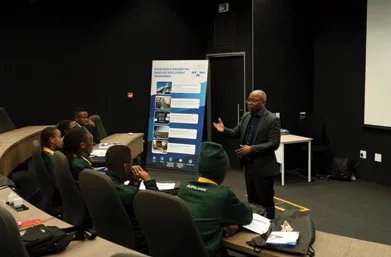
Learners attending the Link Winter Camp 2025 from 20–26 June 2025 visited the Airlink Aircraft Maintenance Organisation (AMO). The new Grade 10 Linker cohort learnt how aircraft are inspected, repaired and maintained to meet strict safety standards.

The tour included demonstrations of diagnostic tools, maintenance procedures and safety checks performed by certified aviation technicians. The Linkers were fascinated by the complexity and precision required to ensure aircraft are airworthy, and many expressed newfound interests in aviation careers.

Next was a visit to the Aviation Training Academy (ATA) in collaboration with Air Traffic and Navigation Services (ATNS), where Grade 11 Linkers gained insight into the critical role of air traffic controllers. They explored the control room environment, learnt how flight paths are coordinated and saw how radar and communication systems are used to ensure safe and efficient air travel. The ATNS team explained how they monitor aircraft movements, prevent collisions and respond to emergencies, all in real time. Linkers were amazed by the level of coordination and technology involved, gaining a deeper appreciation for the invisible systems that keep air travel running smoothly.

In addition to the excursions, Linkers also explored the Autonomous Runway Safety Bot, a smart innovation designed to enhance runway safety, and interacted with a scaled 3D-printed airport model, which brought airport operations to life in a hands-on, visual way.

Seen and heard

Graduation Night celebrated the achievements of Link alumni graduating from university. A highlight of the night was the keynote address by Ayanda Nyathi, who spoke about the consumption of current affairs and the dangers of disinformation in the age of social media. He encouraged Linkers to be critical thinkers, responsible digital citizens and to seek truth in a world where information is abundant but not always accurate.

Linkers participated in mental fitness workshops that focused on emotional wellbeing, resilience and mindfulness. These sessions helped build self-awareness and provided practical tools for managing stress and staying focused.

Facilitators provided personalised career counselling, helping Linkers understand the pathways to various professions, the skills required and the opportunities available in different industries.

A particularly powerful moment at The Link Winter Camp 2025 was the Fire Chat, a guided conversation led by Siya Sangweni. Current Linkers and alumni shared their personal experiences within The Link programme and ideas for its continued growth. Sangweni’s facilitation created a safe space where stories flowed freely. Alongside this, Linkers took part in YOU-niversity, an interactive talk session focused entirely on self-discovery, exploring who they are, where they’ve been and where they’re headed.

In the final two days, Linkers participated in an App Building Workshop, working in teams to design and develop mobile applications. This hands-on experience combined creativity, coding and collaboration, and several teams presented innovative ideas aimed at solving real-world problems.

Follow us on our social media pages:

Read more

Exploring the Shire

Spend ages walking in the woods and see spectacular creatures – sounds like a classic novel…

The approach to the western gate of the Liwonde National Park gives your car’s suspension a workout but, once inside the reserve, the going is easy. A short drive through green, leafy scrub brings you to a jetty at which a sturdy, stylish wooden motorboat is moored.

A lone elephant emerges from the foliage as our luggage is being transferred, a reminder of how wild this place is. And just metres from the jetty, a pod of hippos becomes the first wildlife to be sighted from the boat – just a handful of the dozens you’ll see on any excursion on the Shire River, it turns out.

Landing at Kuthengo, a tented camp on the opposite bank and half an hour’s easy cruise up the river, you are led through a bushy area to the petite hub of a compact set-up – two small open-sided tents functioning as the camp’s reception, lounge, bar and dining area. On the grassy area between them and the river, like it’s the most natural thing in the world, stand a family of hippos – mom, dad and a year-old youngster – grazing on the grass and the water hyacinth along the banks. The staff are not stressed (apparently this trio is there all the time and have never made any effort to come closer to guests), so, with one wary eye open, visitors settle in as normal.

The rooms are similarly close to nature. As I approach my tent, a young water monitor scurries along the wooden walkway, plopping into the water just next to the zip door that offers access to a large open-plan bedroom and bathroom with an outside shower. With the water level high, the small patio out front is actually over the water, adding a houseboat or waterfront feel that will change when the level reverts to normal (the high water mark is usually 4 or 5m away).

Marvellous menu

High tea at 3pm ushers in the afternoon interaction with the wilderness, either in a game vehicle or on the motorboat. The national park is long and thin, with the Shire River running all the way along one side, so the driving option involves criss-crossing the wider bush area – mopane woodland, grassland, riverbank, back to the woods, rinse and repeat.

At the water’s edge, there is rich birdlife, a herd of elephants and scatterings of antelope, plus a giant crocodile sunning itself. The mopane trees here are much taller than their equivalents in the Kruger Park and with a relatively open, sandy floor between the trunks, the area feels more like a European forest than the thick brush traversed on the other side of the river.

It seems unlikely that a post-sundowners night drive can match the variety of creatures seen on the outward ride, but this one does. A spotted eagle-owl, a marsh mongoose, a side-striped jackal, a civet and a porcupine are just some of the wishlist creatures safari regulars would be happy to see and, here, they all appear in less than an hour.

Dinner is enjoyed communally, with guests sharing sightings but also recommending their secret favourite places – restaurants, museums, spots of particular natural beauty – to visit in Malawi. Mulling over that intriguing information, it is only once I’m alone inside my room that the piercing metallic clanking (there’s no other way to describe it) of the combined frog and cricket calls in the water and greenery around the tent really asserts itself. Initially, it feels deafening but, somehow, it becomes first bearable and then just natural background noise. The creatures have limited stamina, too, so it does quieten down a bit later.

Walk of life

After the quietly cacophonous night, the early morning reveals a quiet space before the animals wake up. A quick continental breakfast puts fuel in the tank before a three-hour bush walk. A vehicle takes us to a point a few kilometres away from camp – coincidentally, within sight of where yesterday’s giant crocodile was lying.

The stillness of the morning, the flat water and the palm trees on the opposite bank create a peacetime Apocalypse Now mood in which anything as violent and cynical as that story feels like the furthest thing from reality.

Like the drive, the walk meanders from the riverbank to the mopane forest, the latter providing a shady coolness and easy, hard-packed walking surface at odds with the average hiking trail and its rocks, grass tussocks and all the rest. This makes three hours on foot little more than an easy trot.

The interesting regional hippo behaviour patterns – they’re happy to wander about on land during the day, perhaps because of the cool shade from the trees – means that potentially encountering one while walking around is possible. This awareness is not helped by many of the paths you’re walking on literally being called ‘hippo highways’ because of their genesis as thoroughfares used by the giant animals when moving from one feeding area to another during the night. And the fact that their generational memory might mean that they’re on autopilot, making it very much our responsibility to take a wide berth around them, rather than the other way around.

Up close and primordial

The plant life is fascinating. Python vines shin up stronger trees to get access to sunlight. Euphorbias secrete sticky sap that is a hazard to unwitting bugs landing on their branches. And wild basil, crushed in your hand, smells like a herbal tea you really want to try.

There’s also plenty of proof of predator passage. Lion spoor crosses tracks left by hyenas and a civet midden proves that these omnivores like fairly large meat dishes – the fur of a scrub hare lies in a messy clump – along with their fruit and vegetables, in this case a large number of berries that didn’t suffer much from the digestive process. Some animals are heard but not seen (a ground hornbill booms from across the river) or sensibly walked away from (a distant herd of elephants with young).

In addition, there’s evidence of everything that used to be there, including a range of carcasses – impala, warthog, hippo – stripped immaculately clean by scavengers. Humans have also left remains, with pottery shards marking where Stone or Iron Age villagers used to co-habit with the wildlife.

A sunset cruise offers a smoother experience than a drive in every way. Obviously, there are no bumps or potholes, but it’s also much more relaxed, if less dynamic. The details of what you see are different, as the foliage changes along the bank, sometimes replaced by tall mud banks. The spotting list changes too, with crocodiles as the new headliners, joined by terrapins and waterbirds. The crocs, once they know they’ve been spotted, lower themselves into the water and simply vanish, leaving onlookers feeling a primordial fear of what now cannot be seen. This might explain, though, the way fish jump out of the water, often so close to the boat that it seems they’re trying to give themselves up…

Text and photography | Bruce Dennill

For more information, go to robinpopesafaris.net and visitmalawi.mw.

Read more

Footprints in the Sand

Leopards are a prime attraction at luxury Lowveld lodge

Time with a leopard is never time wasted. Whoever uttered those words knew what they were talking about. And what is better than finding one leopard in a tree? You guessed – two leopards in two different trees!

On a drive out from andBeyond Tengile River Lodge in Sabi Sand Game Reserve, field guide Chris (supported by tracker Colin) points to a tree in the distance. Perched in a marula tree, a striking female leopard has draped herself over a branch. She is alert, occasionally glancing towards the Sand River, which she can clearly observe from her elevated vantage point, where there might be a hunting opportunity for her.

Petite and gorgeous, her yellow eyes point to her lineage – she is the daughter of the ‘Teardrop’ female. Leopards and their descendancy are identified through whisker spot patterns, unique markings on the face and nicks or cuts on the ear.

What makes this sighting extra special is that we saw her as a cub in 2019, and she has grown into an independent adult known as the River Rocks female. It is a blustery morning, and the branch starts swaying, but she doesn’t seem to be perturbed by the motion and even has a little snooze.

Food and drink

In another marula tree, the Nkova male leopard is almost sitting upright, unable to comfortably position himself on a branch as his stomach is very full. Having overindulged on his male impala kill that he has safely hoisted in the fork of a tree, he is panting heavily, an indication that he has eaten too much. The early morning sun is shining directly onto his stunning rosetted coat, which seems to make him agitated, and he decides to look for shelter elsewhere in the tree. We leave him to digest his meal and find him in the afternoon on the ground below the tree, keeping a watchful eye over his prized meal. Born in September 2020 to the Msuthu female and the Hanyile male, he is a big, stocky boy, and his name means ‘river’ in Shangaan.

On the afternoon game drive, Hanyile is walking right in the middle of the road, pausing every now and then to sniff the leaves and mark his territory.

At nine years old, his face bears a number of battle scars, indicators of disputes with other males in the region, with the newest one being a scuffle between him and the skittish Sands End male leopard. His gaunt shape is a sign that he has not had a meal in a few days, and he appears to be on the lookout for something to eat. Following him as he strides into the sunset, he needs to cross the bridge over the river, but he suddenly veers off to the left of the vehicle. Where will he go? Will he carry on patrolling in the dry riverbed? Hanyile stops in his tracks, lifts his head and hotfoots it into the channel. There is a puddle of water! Will he bypass it? Or is he thirsty? He walks around it, lowers his body and starts lapping up the quenching sustenance. Bearing witness to a leopard drinking water is not something you see every day, and we take in the magic of this moment that is so rare to experience.

Comfortable adventure

The lodge occupies a perfect spot overlooking the seasonal Sand River. Blended into the landscape and the surrounding trees through the use of new and repurposed materials, the nine suites are architectural marvels, and the furnishings present an ode to the wildlife that inhabit the wilderness.

The large front door opens to a bar and lounge area with a coffee and drinks station, sure to be visited for relaxing moments seated on the comfortable couch with a cappuccino or a preferred tipple in hand. To the left, a large bedroom is a haven of peace and quiet where a great night’s sleep is imperative to fully appreciate incredible bush sunrises. The expansive bathroom is the ideal place in which to enjoy a bath or choose between an indoor or outdoor shower. During the hot summer months, the large pool will refresh you and a few birds or vervet monkeys might pay a visit.

Head chef Benjamin and his team create menus and meals for the discerning palate, and you will never go hungry in this dining room. On the second night, there was a delectable boma dinner. A spread of salads, soups, sauces, assorted vegetables and freshly grilled meats are prepared, alongside tasty South African delicacies and expertly selected wine pairings. Meals are served in the dining area with sweeping vistas over the bushveld and Sand River. And don’t be surprised when a herd of elephants come for a drink from the river, or the resident woodland kingfisher makes a high-pitched alarm call while you are enjoying a delicious lunch. Nature really is everywhere. 

Guests staying at the lodge indirectly contribute to various conservation efforts across the Sabi Sand Game Reserve.

Text and photography | Heléne Ramackers

For more information, go to andbeyond.com. Heléne Ramackers’ flights between Cape Town and Skukuza on Airlink were sponsored by Mahlatini Luxury Travel. For more information, go to mahlatini.com.

Read more

Town and country

Suburban stopover allows safari travellers a respite on their way into or out of the Okavango Delta

Dark grey storm clouds are gathering on the horizon. A deep rumbling is clearly audible, and the promise of rain seems imminent. Perfectly contrasted against the moody skies are the white buildings of Grays Eden. This beautiful sanctuary in Maun is a brilliant place to stay for a few days before embarking on a Botswana safari or to recuperate and refresh after being out in the wild.

“Safaris can be exhausting,” Grays Eden owner Sam Harris admits. “We’d like to believe we offer guests a ‘stay in the moment a bit longer’ opportunity before they return to the real world.”

“We knew from the get-go that the Delta-style lodges had been done so beautifully,” co-owner Sandrine says. “There is a certain flair in the Okavango Delta, which we didn’t want to compete with or try to replicate. What we have here is a bit of the Mediterranean look and elegance that we both love.”

Returning home

Born in Maun, Sandrine realised that her yearning to come back to her birthplace one day had to make an impact. Following a career as a flight attendant in London, she knew the time was right, so she packed up her husband and their two young children and travelled back to Maun.

A prime piece of land with breathtaking views over the Thamalakane River was up for sale, and Sandrine and Sam put in an offer, which was accepted. They broke ground in early 2022, and Grays Eden was officially opened by the President of Botswana in August 2024.

Warm and inviting, the result comprises seven fisherman’s cottages and five distinctive villas. The villas are exquisite, with a blue and white theme carried throughout the property and soft furnishings making for a dreamy stay. Four-poster beds are covered in silky white bedding, and at night, a mosquito net envelops the bed to keep any unwanted critters out. High ceilings, together with the all-white walls and floors, create a wonderful sense of space in the cottages and villas.

The cuisine is exceptional, and menus are crafted with care and precision to make the most of fresh seasonal ingredients. While enjoying breakfast, lunch or dinner in the dining area with manicured lawns as your foreground, you might see tree squirrels chasing one another or a variety of birds foraging for worms.

Lounge by the spectacular pool, built directly into a cliff face, where you can swim laps to burn off your lunch. If you’re fatigued from your travels, treat yourself to time in the spa, where a pair of healing hands will massage all your stresses away, making you feel rejuvenated and ready for your next bush adventure.

Text & Photography | Heléne Ramackers

For more information or to book a stay, go to grayseden.com

Read more

Musings and meanderings

The beginning of a motorcycle odyssey across Madagascar underlines the adventure’s challenges

I wake up, look out the window and see heavy rain. I turn over in bed. I should be leaving Diego Suarez (now called Antsiranana) in the north of Madagascar to motorbike to Majunga on the east coast (about 1,000km) today. All going smoothly – it seldom does – and if I don’t, through curiosity, divert along the way, I will allow myself four, five, six or even seven days to do the trip. I am not in a hurry!

I have done the return trip a couple of times before – I know the difficulty of the road – but, at the moment, there are added complications. Cyclones and diluvial rains have brought down bridges and washed away parts of roads. Many shops in Diego are almost empty because supplies are not getting through. The road is impossible for lorries, but it may be possible by motorbike.

There are said to be several ‘private toll payments’ to be made on the first part of the trip. Diversions mean that traffic goes through private land in places, and the owners ask money to let you pass. It is taking seven hours for minibus taxis to do the 130km to the first town: Ambilobe.

Tomorrow should be fine for a 6am departure. Madagascar has had the rainiest season in 40 years, and it is causing travel and transport problems for everybody. I hope that the rainy season is not starting early. I am always nervous doing a trip like this. There are risks: the risk of being robbed as I have already been; the risk of having a mechanical breakdown in the middle of nowhere; and the risk of an accident, as roads are often atrocious and drivers unpredictable. Of course, I don’t have to motorcycle, and people say that, at my age, I am silly and irresponsible. However, the pleasures are many.

There is a pleasure in a 6am ride towards a distant horizon. There are spectacular landscapes and wonderful vignettes of daily life. Each day, for many Malagasies, is a survival test. Maybe, for me also, it’s a matter of staying alive. There is always the pleasure of learning new things.

I remember these words I once read: “You may grow old and trembling in your anatomies, you may lie awake at night listening to the disorder of your veins, you may miss your only love, you may see the world about you devastated by evil lunatics, or know your honour trampled in the sewers of baser minds. There is only one thing for it then – to learn. Learn why the world wags and what wags it. That is the only thing that the mind can never exhaust, never alienate, never be tortured by, never fear or distrust, and never dream of regretting. Learning is the only thing for you. Look what a lot of things there are to learn.” – T.H. White, The Once and Future King

Fuelling up

I leave at 6am as planned after a cold shower and a cup of strong, hot and very black tea. The bike starts first time. Sometimes, it’s moody. I have my travel bag strapped to the back. The town of Diego Suarez is already buzzing. Tuk-tuks are running around and kids are starting out for school.

Dawn comes quickly in Madagascar. I love this time of day. The air is fresh; the wind in your face is cool. There are the sights and sounds and the smells of the morning. Smoke is floating on the breeze, carrying smells of charcoal burning, camomile tea heating, coffee brewing and cakes being cooked in oil-filled cast-iron pots.

I usually stop to have one or two strong black Malagasy coffees at a wayside shack. Madagascar is one of the few African countries I know where I can have breakfast on the road at 6am. I might also have a sugary cake or two, or maybe a rice cake that I know the lady serving me my coffee has gotten up at 4am to cook. When I say thank you and goodbye in Malagasy, she likes it. I breakfast before going too far outside town. Madagascar is 80% rural, so there are roadside shacks selling snacks for only a short distance before the uninhabited areas begin. Madagascar is about the same size as France, with a third of the population.

I wear a lightweight jacket and long light trousers for the coolness of the morning and to protect me from the brutal heat of midday. I make sure my helmet visor is down: it restricts vision but protects the face. I made the mistake once of a distance ride without the visor; I wasn’t pretty to look at by the end.

The first section is a difficult stretch and total concentration is needed. I’m changing gears and braking constantly – there are few moments in top gear. The road is devastated. I get a scare when all movement is blocked at one point. There is a lorry stuck in mud and water. There is one very narrow raised mud ridge barely wide enough for the motorbike wheels. I need the help of two young men supporting me on each shoulder and running alongside as I ride across. A slip and I would be into the mud, bike and all. I would have stopped to give them the little money they were clamouring for, but I was afraid to topple in the mud and be trapped. I throttle on and out, feeling guilty.

Small comforts

It’s November and the mango season has started. The majestic, evergreen mango trees are giving, once again, their plentiful luscious fruit. These trees can live for hundreds of years. Mangoes lie crushed on the roadside. Kids are throwing stones and sticks at the unripe ones as I did with apples as a child in Ireland.

About midday, I see I have not made the progress I had expected, so I decide to sleep in the first town. I’ve been in the saddle for about six hours. The first town is Ambilobe. It’s a dusty place, only important because it is the crossroads for the difficult road that takes you to the east coast – the fertile region of vanilla, cloves, wild peppers and more.

Ambilobe has three small, very basic hotels. I’ve slept in all three. One of them is a little cleaner and maybe a little safer than the others; that’s the only difference. I feel my shoulders, arms, hands and wrists aching, as I haven’t motorcycled for a while. I murmur to my Kawasaki, “Well done” and look to where I can have a cold beer. A big one.

I take a room in the first hotel in town. It’s clean – not always easy to find. It’s run by a bearded Muslim man who loves his Koran to the point where he has framed citations from it on each wall of the room.

I admire the Arabic calligraphy, which, I imagine, is exhorting me to be good. There is little need to worry: I am too tired to be anything but. I sleep soundly, protected on every side by my host’s scriptures.

Text | Donal Conlon

Photography | Eric Valenne (geostory), Pierre-Yves Babelon

For more information, go to facebook.com/donal.conlon1

Read more

Nosy neighbours

Smaller islands close to Nosy Be offer a wide palette of options for holidaymakers

Just 25 minutes and 7km from the bustling harbour of Hell-Ville, Nosy Be’s main harbour, is the lush island of Nosy Komba, also known as Lemur Island and originally called Nosy Ambariovato, “the island surrounded by volcanic rocks”.

It’s not huge by any means – just 6.5km in length and 5km in width – but this fertile island, uniquely shaped like a turtle shell and home to a legendary turtle estimated to be around 200 years old, also boasts lush forests, golden beaches, colourful villages, lemurs, reptiles and a variety of birds. The azure ocean promises spectacular memories for scuba divers, kayakers and those who just want to swim or snorkel around the coastline. The sea life is prolific; the dive spots are not overvisited, which means the coral reefs and marine animals are still pristine and preserved.

As for accommodation on Nosy Komba, there is plenty to offer, from budget hotels and intimate guesthouses all the way up to private villas, including a world-class hotel offering panoramic views across the bay. Enjoy meeting the local villagers selling their wares, or stop off in an authentic Malagasy pub and try out the area’s famous rum while soaking up the gentle rhythm of the island.

Nosy Komba is ideal for travellers and families who want a laid-back, chilled time. There are guided hikes for all ages and fitness levels, where you can interact with lemurs and locals and discover hidden waterfalls.

Time + Tide Tsara Komba embraces the ethos of offering a sanctuary to unwind, explore and rejuvenate. Crafted from natural materials, the lodge exemplifies sustainable luxury, inviting guests on a journey of discovery through dense tropical forests and vibrant marine ecosystems in Madagascar. Offering a choice of either ocean view rooms or ocean view suites, this charming hotel offers eight exclusive suites, blending seamlessly with the natural environment, with private terraces and artisanal decor.

The main lodge, the Divine House, houses the restaurant and bar, offering high-quality cuisine prepared with fresh local ingredients. Seafood is a speciality, and meals can be enjoyed with panoramic views. Guests can enjoy a variety of activities, including boat trips to nearby islands and exploring the island’s villages. The lodge emphasises low-impact tourism and offers opportunities to connect with the natural beauty of Madagascar, including its unique wildlife and marine life.

White sand wonderland

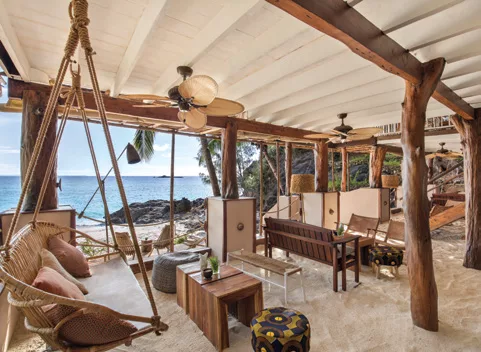
The Mitsio archipelago, located 70km northwest of Nosy Be, is home to a small group of islets, surrounded by the warm, tropical Indian Ocean. The luxurious and exclusive Constance Tsarabanjina, on the islet of Nosy Tsarabanjina, is the only hotel in the area and boasts views of the ‘Four Brothers’ (large rock pinnacles rising from the sea), Nosy Tolholo and Nosy Mitsio, for which this area is named. These small islands form an amazing archipelago teeming with remarkable sea life, crystal-clear water lapping onto fine white powder beaches, topped off with lush coconut palms complementing the iconic look travellers are often after in a private island experience.

Constance Tsarabanjina is an idyllic retreat with 25 beachfront villas. All the North and South Beach villas are sea-facing, spacious, tastefully furnished and perfectly nestled on the two different beaches. A holiday here means kicking off your shoes, feeling the sand between your toes, enjoying sumptuous but healthy, freshly sourced cuisine, indulging in spa treatments under blue skies and, most importantly, just relaxing while taking in all the beauty of the surroundings. There are no vehicles on the island, so gentle walking is the way to go back and forth from the villas to the beaches and public areas such as the restaurant and bar, reception and dive centre — a good way to walk off those delicious meals.

The key focus here is sustainability through eco-friendly practices, supporting local communities, preserving nature and promoting a greener future. Ideal for honeymooners, couples of all ages and even solo travellers who want to dive and snorkel the secluded reefs, there are also opportunities to try some deep-sea fishing or just unwind and read a book.

Text | Helen Mann

Photography | Supplied, Time + Tide, Oliver Fly

For more information or to take advantage of promotions, early bird offers and more, contact helen@destinationsabuzz.co.za

Read more

A toxic relationship

Know enough about snakebites to manage an emergency situation

There are three main types of snake venom, affecting different areas and determining the antivenom required. Polyvalent antivenom is effective for the treatment of neurotoxins and cytotoxins. The monovalent variant is used for boomslang bites. The venom types are:


Cytotoxic: This affects the tissue with pain and swelling almost immediately after the bite, worsening with time. It’s often described as feeling like ‘cold fire’, with shock developing later. It can be fatal but rarely is. Snakes with cytotoxic venom include the puff adder and the Mozambique spitting cobra.

Neurotoxic: Neurotoxic venom disrupts nerve function, leading to paralysis, muscle weakness and potentially respiratory failure, and can also cause other neurological complications. Snakes with neurotoxic venom include mambas and some cobras (excluding spitting cobras).

Haemotoxic: This type of venom works slowly, with effects seen after an hour but sometimes taking a few days to manifest. The venom causes irregularities in the victim’s blood, preventing it from clotting. Symptoms can include bruises, blood in the urine and vomiting blood. Anaemia and shock may develop, and eventually, kidney failure may set in. Snakes with haemotoxic venom include the boomslang and the vine snake.

Avoid contact

A sensible list of guidelines, drawing on information shared by Snake Bite Assist, the African Snakebite Institute and Flipper Layman: Snakebite Flipper Card, is worth following when encountering snakes.

If a snake is sighted, don’t attempt to catch, handle or kill it, as this is when bites occur. Juvenile venomous snakes are as dangerous as adults. If a snake appears dead, don’t attempt to move it. They have a habit of playing dead when threatened but will strike if approached.

When walking, step onto logs and rocks, rather than over them. Snakes often hide partially under these for sunning. Wear protective gear when hiking or working outdoors and never walk barefoot at night. If walking at night, use a torch to illuminate the path.

Keep your garden clear of rubble and overgrown vegetation, and avoid leaving pet food outdoors, which attracts rodents. Water features also attract frogs, and many snake species eat frogs.

Take instant action

If bitten by a snake, it is vital to act swiftly and calmly, as every second counts.

Take a photo of the snake from a safe distance (if possible) to assist in identification. Draw a circle around the snakebite and write the time of the bite on the skin. Document the progression of swelling from the first circle to the rest of the body. Get the victim to the nearest hospital with a trauma unit immediately. Keep the victim as calm and still as possible to slow the spread of venom. Remove rings, watches and tight clothing near the bite site.

Do not cut or suck the bite wound. Don’t apply ice, boiling water, lotions or potions. Don’t apply a tourniquet, as venom travels through the lymphatic system, not the veins. Don’t use any form of electric shock. Don’t inject antivenom outside of a hospital. Don’t use EpiPens. The only treatment for serious snakebite envenomation is antivenom administered in a hospital setting under strict medical supervision.

Text | Susan Badat

Photography | Ali Cobanoglu, Vin Centius

Susan Badat is manager at Crocworld Conservation Centre.

For more information about Crocworld, go to crocworld.co.za

Read more

Spend water like money

Awareness and some simple planning can help homeowners save large amounts of water, an increasingly precious resource

Keeping your space green can be tricky and expensive. South Africa is a dry country with an average rainfall of less than 500mm per annum (the world average is over 800mm). As the need for this precious resource grows, so will its price as well as legislation to discourage excessive use.

Gardens are often singled out for water restrictions and bans, but many people are guilty of overwatering. In fact, gardens consume 30–50% of all domestic water used, which is a crazy statistic that calls for waterwise garden designs and maintenance practices.

One of the simplest ways to save water in your garden is to choose native plants. Native plants are adapted to the local climate and soil conditions, requiring less water and care than exotic species. They also support local wildlife, including bees and butterflies, creating a vibrant and sustainable ecosystem in your garden.

Group plants according to their water requirements, keeping high-water-usage plants together and low-water-usage plants together for efficient watering. Choose low-water-usage plants for your garden. Succulents are well known as waterwise plants and are an attractive addition to any garden.

Mulching is a gardener’s best friend when it comes to water conservation. A thick layer of mulch around your plants helps retain soil moisture, reducing the need for frequent watering. It also suppresses weeds, which compete with your plants for water. Organic mulches, such as wood chips, straw, corks or compost, add nutrients to the soil as they decompose, further benefitting your garden.

Structure and systems

Soils rich in organic matter hold water more effectively. Keep soil well mulched to reduce evaporation. Replace lawn areas with hard landscaping or waterwise ground covers – manicured lawns require large quantities of water to maintain.

Drip irrigation systems deliver water directly to the roots of plants, minimising evaporation and runoff. This targeted approach ensures that your plants get the moisture they need without wasting water. Drip systems are easy to install and can be connected to a timer, so you can water your garden efficiently even when you’re not home.

Why let precious rainwater go to waste? Installing a rain barrel under your downspouts allows you to collect and store rainwater for later use in your garden. Rainwater is naturally soft and free of chlorine, making it ideal for plants. Use it to water your garden during dry spells and reduce your reliance on municipal water.

A dripping tap or a leaky hose might seem insignificant, but those small leaks can add up to a substantial amount of wasted water over time. Regularly check for and repair any leaks in your plumbing and irrigation systems. It’s a simple fix that can save you plenty of water each month.

When it’s time to replace taps, showerheads or toilets, opt for water-efficient models. Look for fixtures with the water-saving labels, which meet the criteria for water efficiency and performance. These fixtures use up to 20% less water without sacrificing performance, helping you save water and money on your utility bills.

Get the timing right

How and when you water your garden makes a big difference in water conservation. Water early in the morning or late in the evening to reduce evaporation. Deep, infrequent watering encourages roots to grow deeper, making plants more drought resistant. Avoid watering on windy days, as wind can carry water away from your plants before it has a chance to soak in.

Greywater, the relatively clean wastewater from baths, sinks, washing machines and other kitchen appliances, can be recycled for irrigation purposes. Simple greywater systems can be installed to redirect this water to your garden, reducing your overall water consumption. Be sure to use biodegradable and plant-friendly soaps and detergents to avoid harming your plants.

If you have a swimming pool or spa, cover it when not in use. Pool covers significantly reduce water evaporation and can also keep your pool cleaner, reducing the need for frequent refills. This small step can save thousands of litres of water each year.

Educate your family about the importance of saving water and involve them in implementing these tips. Simple actions like turning off the tap while brushing teeth or taking shorter showers can make a big difference when everyone pitches in.

Text | Sean Granger

Photography | Mckysonrin

Sean Granger is General Manager at Granny Mouse Country House.

For more information, go to grannymouse.co.za

Read more

Literary lease of life

From the small screen to the page, Nicky Greenwall delights with her first novel

You were an entertainment journalist and television presenter, and you’re now an author. How well do these careers correlate, or are there major differences?

Nicky Greenwall: When I was working in television, I was responsible for budgets, staff, scripts, equipment and time management. We had a high output of news content – 52 shows a year – including during the two years I was pregnant. After 15 years in the field, I wanted to work on something where the stakes felt lower and the work more meaningful. Which is not to say that writing novels isn’t difficult and demanding at times – but deadlines are not as immediate, and the content is naturally of a more personal nature.

What inspired you to write your first novel, A Short Life?

I’d written one novel that had been rejected by everyone I sent it to. The rejection forced me to relook at my motives and prompted me to enrol in a series of Curtis Brown creative writing courses to hone my skills and zero in on what I was trying to write about and how I needed to go about it.

What is your writing process?

For me, writing needs to feel urgent. When it feels like I can’t not write, that’s the time I’m most productive and closest to some level of truth. I write ideas in notebooks, so it feels more like doodling than work. I rarely go back to the notebooks, but using a pen does tend to free up my mind, especially when it comes to plotting. Once I have an idea, I write scenes on my laptop. I then use the notebooks to ask myself questions about the plot and hopefully answer them on the same page or at least let the question hover in my mind until I can come up with a solution. A Short Life had 17 drafts! The final stage involves removing overused words and phrases and, of course, a final spell check.

How much research was involved in writing your book?

I live, and have grown up, in Cape Town, where the book is set, so there wasn’t much research in that sense, other than to check the accuracy of police procedure in the area. There was some research involved with one pivotal plot point that I can’t mention because it would be a spoiler!

Did you have challenges or obstacles when writing your book?

The greatest challenge is trying to experience the novel as a reader would experience it, for the first time. I’m lucky that I have some trusted, widely read readers in my circle who offered to read first drafts and gave me valuable feedback.

How did you come up with a plot gripping enough to keep readers riveted to the end?

I didn’t know the ending when I started writing. I only knew the moral conundrum I wanted to place the characters in. The story’s main issue revolves around one central premise: if you can love a child, a parent, a partner and a friend simultaneously, where will your loyalties lie when the people you love prove not to be on the same side? For me, piecing it together as I go is the only way to know I’m delivering unpredictable twists.

And the characters?

I’m certain every character carries some trait I recognise in myself. That’s not to say that every character is exactly me, but I do need to find empathy for each character in order for the reader to care about them, so it’s inevitable there will be some bleed-through…

Talk us through the fact that the story is deeply personal, despite it being fictional.

I’ve lost family and friends in all manner of ways. I’ve seen people I care about go through unimaginable grief and shock. Writing about these experiences in an abstract and fictional sense gave me the opportunity to explore some of my feelings around death. Hopefully, those conclusions will resonate with readers.

Do you suffer from writer’s block, and if so, how do you combat it?

Writing prompts have helped me in the past. I like doing short bootcamp writing courses where you have to work to a deadline with a group of other writers and share your work along the way. Again, for me, even though the process of writing a novel can feel slow, there has to be a sense of urgency to the writing. If I have too much time on my hands, things start to feel laboured.

Are you a procrastinator?

I’m focused when I need to be, and if anything, I tend to do too much too soon, rather than procrastinate. I wish I was more of a procrastinator. Mind you, I think housework is essential to the writing process. So, if ironing a few dishcloths is procrastinating, then maybe I do… But my mind works differently in those spaces, and I’m able to solve things in my head before I sit down to write.

Is there a new novel on the cards?

Yes, I have a few more in the works and one out on submission as we speak. Fingers crossed! I’ve learnt that nothing in life is guaranteed, least of all life itself, so I keep putting fingers to keys and hoping for the best.

Text | Heléne Ramackers

Photography | Danielle Klopper

A Short Life by Nicky Greenwall, published by Penguin Random House, is available now.

For more information, go to penguinrandomhouse.co.za

Read more

Sweat it out

Skin gets affected by the outcome of exercise, but such issues are relatively easy to address

Exercise has a positive impact on your skin. After a workout, your complexion looks radiant and glowing. This is because of the increased blood flow to all your organs – including the skin – during exercise. Blood carries oxygen and nutrients to your skin cells, creating that post-workout glow.

And then there’s sweat… Sweating is a healthy way for the body to release impurities, but it can have a negative impact on the skin. Sometimes, sweating clogs pores, leading to breakouts and other skin conditions like seborrheic dermatitis.

Sweating is a natural process that helps the body regulate its temperature. When our core temperature rises during a workout, the glands in our skin produce sweat to reduce the excess heat. Furthermore, sweating removes toxins and impurities from the body. However, these are only trace amounts of toxins, as most toxins are removed from the body by the kidneys and the liver. When sweat reaches the skin, it evaporates, which cools the skin and tissue underneath.

Sweat also has some benefits for the skin. While sweat is mostly water, it also contains substances like amino acids. These act as humectants, locking in moisture to keep skin hydrated and prevent it from drying out. Sweat also contains antimicrobial peptides, which help our skin ward off bacteria that try to enter the skin.

Sweat can also flush out sebum and dead skin cells. If it isn’t washed off the skin quickly enough and the combination of oil, moisture and dead skin cells sits on the surface of the skin for too long, it may settle into and clog pores, leading to breakouts.

Sweat trapped against your skin by your clothing can lead to chafing, often accompanied by irritation, itching and skin dermatitis. Sodium in sweat may dry out the skin. If you have eczema, sensitive skin or psoriasis, dryness could cause discomfort or flare-ups.

Recover well

Try to shower as soon as you are finished exercising to prevent sweat from sitting on your skin and clogging your pores. At the very least, change out of your workout clothes and put on dry clothes made from a breathable fabric like cotton.

Drinking enough water is essential for hydrated skin. When we sweat, our bodies lose water, so it’s important to replenish that water throughout and after a workout.

Salicylic acid helps prevent clogged pores and breakouts. It loosens the bonds between skin cells and unclogs pores by removing excess oil and impurities. By washing the body with a salicylic acid cleanser after working out, you’ll lessen your chances of developing body acne and breakouts. And moisturising your skin before your workout will prevent sweat from drying it out.

Sometimes, despite following all the guidelines, you may still experience the occasional sweat-induced breakout on your back or chest. Treat it like a breakout on your face. Cleanse the area twice daily and apply a serum designed to calm the skin and heal the breakout.

Text | Judey Pretorius

Photography | Yaroslav Astakhov

Dr Judey Pretorius is the founder of Biomedical Emporium.

For more information, go to biomedicalemporium.com.

Read more

Vintage results

Correct storage helps keep wine at its best until it’s time to pop the cork

For wine lovers, the journey of enjoying a good bottle doesn’t end at uncorking. Proper wine storage plays an integral role in maintaining the integrity and quality of each bottle, ensuring that it matures perfectly over time or is ready to be enjoyed at its prime.

Temperature is arguably the most crucial element when it comes to preserving wine. If stored at the wrong temperature, even the finest bottles can suffer from irreversible damage. Exposure to fluctuating temperatures accelerates the ageing process, diminishing the wine’s complexity and aroma. Wine is a living thing, and like any other living thing, it thrives in stable conditions. Temperature fluctuations can cause a wine to lose its vitality and, in some cases, make it undrinkable.

Wine coolers with multiple temperature zones are particularly valuable for collectors, as they allow red, white and sparkling wines to be stored at their respective ideal temperatures simultaneously. Red wines typically thrive in a range of 12–18°C, while white wines are best stored slightly cooler, between 7–12°C. Sparkling wines, such as Champagne, require an even lower temperature of around 5–7°C to preserve their crispness and effervescence.

Don’t dry out

Along with temperature, humidity is another critical factor that can make or break a wine’s ability to age gracefully. Too little moisture can cause corks to dry out, which in turn allows air to enter the bottle, spoiling the wine. Excess humidity, on the other hand, can lead to mould growth and potential label damage. A dry cork can cause the wine to oxidise, while excess humidity can cause the labels to peel off, affecting the presentation and value of the wine.

Many wine coolers feature humidity control systems, allowing collectors to customise the ideal environment for their bottles. This helps keep corks moist and prevents them from drying out, ensuring that oxygen is kept out and your wine stays fresh. Whether you are storing a prized bottle for decades or keeping a few open bottles for short-term enjoyment, maintaining the right humidity levels is essential.

Vibration is another element that can disrupt the ageing process. Although it may seem like a small concern, constant vibrations, such as those caused by nearby appliances or the movement of the unit itself, can cause sediment in the wine to shift, which in turn can affect the clarity and flavour. Over time, excessive vibration can result in a less refined wine, particularly with older bottles that rely on a peaceful environment to mature slowly.

Accelerated sedimentation can lead to an imbalance in its taste and texture. If possible, look for wine coolers designed with vibration-free compressors and solid construction.

Throw some shade

Another often overlooked factor in wine preservation is light. Ultraviolet (UV) rays can cause wine to age prematurely, leading to the degradation of flavour and aroma compounds. This effect, known as ‘lightstrike’, can result in a flat or undesirable taste. It’s critical to store your wine in a place where it is protected from direct sunlight and strong artificial lights. UV-resistant glass helps keep the wine safe from harmful exposure.

With the rise of smart home technology, wine storage has also entered the digital age. WiFi-enabled wine coolers allow users to monitor and control their storage units remotely, whether at home or on the go. The future of wine storage is all about connectivity. Being able to adjust temperature and humidity from your phone means that you have full control over your wine storage at all times, no matter where you are.

The wine cooler can also send notifications directly to your phone in case of any issues, such as temperature fluctuations or door openings, giving you peace of mind when you’re away.

Proper wine storage is an essential art required for preserving the character and integrity of your collection, whether you are a casual enthusiast or a serious connoisseur.

Text | Sicelo Champion

Photography | Andrii Zastrozhnov

Sicelo Champion is Brand Activation Manager at Miele.

For more information, go to miele.co.za.

Read more

Adjusting to The Change

Hormonal changes are natural and the business world needs to better support workers

One in four women considers leaving her job due to menopausal symptoms – and one in 10 actually does. With 70% of women experiencing symptoms during the transition out of their reproductive years, the impact on the workforce is both widespread and underestimated.

From sleep disturbances and anxiety to brain fog, joint pain and mood changes, these symptoms can quietly, yet profoundly, impair performance and productivity. Still, the topic remains largely unspoken.

Forward-thinking employers are starting to recognise that supporting women through menopause isn’t just an act of empathy – it’s a strategic investment.

This stage of life should represent a pinnacle in a woman’s career – a time when she brings decades of experience, emotional intelligence and leadership maturity to the table. With children often more independent, many women are finally positioned to take on larger roles, lead teams or pursue long-held ambitions. But instead of flourishing, many are grappling with a cocktail of brain fog, insomnia, anxiety and physical discomfort that makes the daily grind feel insurmountable. The result? Businesses risk losing some of their most seasoned and capable professionals just as they reach their peak.

Making the transition

With over 60% of today’s workforce made up of women, it’s clear that the traditional design of work – often built around outdated assumptions – needs to evolve. It’s necessary to craft environments that acknowledge and support the biological transitions that come with age for both women and men. While menopause has its own set of challenges, men, too, experience hormonal changes. Testosterone levels decline gradually – typically around 1% per year after age 30 – and more rapidly in those under chronic stress. Between 30 and 70% of men report symptoms ranging from low energy and mood shifts to muscle loss and poor sleep and libido. These changes, if unsupported, can quietly erode performance, relationships and wellbeing.

While some individuals breeze through these life stages, most experience changes in vitality just as their careers demand the most from them. In a competitive job market, this misalignment can cause significant loss. Not long ago, postpartum women were expected to express milk in toilet cubicles. Today, progress has been made in supporting working mothers – and now it’s time to extend that same consideration to midlife transitions. Employers and employees alike need the language, education and tools to identify symptoms and access appropriate support.

Hormone replacement therapy (HRT) has often been misunderstood. A widely publicised 1990s study from the Women’s Health Initiative cast a long shadow over HRT, linking it with breast cancer. Thirty years later, we now know that the associated risks – particularly for certain types of HRT – were overstated and that the benefits for many far outweigh the risks. When appropriately prescribed, HRT can reduce all-cause mortality and improve quality of life by supporting cardiovascular, bone and brain health – not to mention alleviating symptoms often misattributed to burnout or mental health decline.

Text | Skye Scott and Melinda Whitfield

Photography | LightField Studios

Dr Skye Scott and Dr Melinda Whitfield are family GPs and owners of Health with Heart.

For more information go to healthwithheart.co.za

Read more

Building dreams

Durban-based architect and designer Nikhil Tricam, joint winner of the Home Of The Year and Nando’s Clout/SA Hot Young Designer award, fuses art and function in his work

What first sparked your passion for architecture and design?

Nikhil Tricam I have always been compelled to create and build. My parents encouraged this curiosity early on by teaching me how to use power tools instead of shielding me from them. That freedom to explore led to an early love for automotive and building design but, eventually, I gravitated towards architecture, as I figured it would allow me to live out my passion for design and creativity.

Your career took off quickly. How did you transition from academia into high-end residential and hospitality design?

I began lecturing in my third year and continued for around four years. Eventually, the demands of my job meant spending more and more time at the office, leaving no time for academia. Once I relocated to Durban from Port Elizabeth, I joined Designworkshop, where we took on several high-end residential projects. These resonated with me and I completed several of them for the firm. Later, as a senior design architect with Lisa Rorich, I specialised exclusively in luxury residential and hospitality projects. That experience laid the foundation for my current work.

What inspires your design aesthetic?

The natural world, the human experience, the built environment, photography, sculpture, light, art and aura. There is also the incorporation of fine art philosophies as well as the use of my signature mark-making and brushwork in certain projects that serves to set the individual pieces apart.

How would you describe your design philosophy?

Humanist but slightly dictatorial! I believe in the importance of experience through the moulding of light, but also the importance of the tactile nature of design. I create work that must be touched and not just seen. I want the interplay of materials to be considered, and experienced. So, I use natural materials as much as I can, while drawing inspiration from the landscape, as well as the cultural and historical context.

Functionality versus aesthetics – how do you strike a balance?

By questioning conventional details and reinventing them. A surface doesn’t have to be just one material – it can be travertine and terracotta or Volakas marble and brushed brass. Even a door can be made from stone. I enjoy reimagining the familiar.

What advice would you give to aspiring architects and designers?

Diversify – and learn to use your hands. The only real experience comes when you physically get involved with making. Then, you understand the limits of the materials as well as how the rules can be bent and broken.

Text | Delon le Roux

Photography | Supplied

Follow Nikhil Tricam on Instagram: @nikhiltricam_studio, @kalkiceramics & @studio.kalki

Read more

As loud as Velvet

South African-born musician and producer Esjay Jones has partnered with American singer Miss Velvet on a three-song, 14-minute cinematic short called Triptych, filmed in the Mojave Desert

Triptych features complexity, a combination of visions and a massive investment in every sense. It must be massively satisfying creatively and artistically, but what are the challenges to marketing it? It’s not fully a film and not a traditional single release, either.

Miss Velvet When we were wrapping the project, just signed to The Orchard via Sony, there was thinking about trying to break us with a single, but we wanted to give viewers a new way to experience a concept record, which we love. It was really hard to get it going, but there were always exciting moments, like adding new laurels to posters as the film was accepted to different festivals.

Esjay Jones There’s the challenge of short attention spans, so we split the film up into three singles, but with Miss Velvet as the overarching presence. The sonic choices were intentional and purposeful, as they go hand in hand with the visuals.

When talking about co-writing songs, you’ve been quoted elsewhere as saying, “We started to almost live together.” That kind of scenario is so much better for creating and understanding the journey in a song or album, rather than simply trying to do the best you can on a deadline. What’s the process, though? What do you defer to each other on? And is it a case of writing for a character or persona – Miss Velvet – rather than a person?

Esjay Jones I’m really into immersive songwriting. Living in that house, the Traveler album was the first interpretation of this kind of idea. I moved in with Miss Velvet, her husband and her then one daughter – she found out she was pregnant again while we were writing. We’ve had three years of being ‘lifelong musical partner’ to each other. For me, it’s about taking her vision and making it work.

Miss Velvet I’ve been purposeful in my life, which was part of moving out to the area where we live in Los Angeles, having the experiences we have there and even getting and understanding the phrasing for that ‘Laurel Canyon vibe’; that California sound that so many people love.

And living together, I got to know the layers of how Esjay works. She’s a multifaceted instrumentalist who hears the guitars, the strings and all the layers. As a performer, I’m not limited to genres, so it’s great to be working with someone I know is able to score this in the way that I hear it.

The most recent single from the project, Hallelujah, was the conclusion of the Triptych journey. It has a gospel feel in the title and the backing vocals, and the effect of the song on the listener is positive, as much because of the mood or tone as any stated message in the lyrics. There are loads of comments on the video: messages like, “Why isn’t this a huge hit?” – which is an excellent question, by the way.

Miss Velvet The song had only been out for three weeks in the US when that comment about it being a hit was made. We felt like, “Come on! Give us a chance!” But beyond that, rock in the US sits in its own space. Part of this project is trying to bring rock into the pop space and to encourage female singers to sing the way we used to! And if that happens through fashion or film, both of which are part of Triptych, maybe we can help redefine what a hit is.

Where did introducing the song to a South African audience fit in? What were your hopes?

Esjay Jones We knew that South Africa is quite a different market for rock music, but we also knew that it’s a very fervent market, and we hope we have planted the seeds in that space with Hallelujah. It feels like many listeners have been scared of guitars for years, but now their time is coming around again! For this project, there is not one sample and not one moment of Auto-Tune.

Text | Bruce Dennill

Photography | Chris Quinn

For more information, go to officialmissvelvet.com.

Read more

In a FIX

Working to contractually strict dates can put employers on the spot

There is a fallacious belief that hiring staff on the basis of a fixed-term contract will make life easier for the employer. This is often not the case, especially when the employer wants to end the employment relationship before the contract’s expiry date.

Companies may have various reasons for wanting to terminate such contracts prematurely. For example, during a retrenchment exercise, the employer may need to terminate all temporary contracts so that it may give preference to saving the jobs of the permanent employees. However, due to the fact that the parties are bound to the expiry date, ending the contract early for any reason is a major challenge.

In the case of Sedumedi vs Sefako Makgatho Health Sciences University (Lex Info, 4 April 2025; Labour Court case number J502/2022), the employer terminated the employee’s fixed-term contract almost two years early for reasons of operational requirements. (That is, he was retrenched.) He took the matter to the Labour Court, which found that his employment contract did not contain any clause entitling the university to terminate Sedumedi’s contract before its expiry date. The Court therefore ordered the employer to pay the employee R2,063,472 for the unexpired portion of his contract. The Court also awarded partial legal costs.

Know their rights

This decision means that:

  • As regards retrenchment, a temporary employee with a fixed-term contract may have stronger rights than a permanent employee.
  • The terms and wording of fixed-term contracts need to be radically revised.
  • No employer should enter into or terminate a fixed-term contract before consulting with a labour law expert.

The employer in the case cited above had to pay out more than R2 million because it mistakenly believed that it had the legal right to end the employment contract before its expiry date.

Such costly errors can be avoided if management is trained in understanding the law relating to fixed-term contracts and the extent to which labour law favours employees.

Text | Ivan Israelstam

Photography | Fizkes

Ivan Israelstam is Chief Executive of Labour Law Management Consulting. Contact him on 011 888 7944 or 082 852 2973, or ivan@labourlawadvice.co.za.

For more information, go to labourlawadvice.co.za.

Read more

Healthy growth

Hospitality companies need to consider consumers’ growing tastes for physical and environmental wellbeing

As global awareness around health and wellbeing continues to rise, the service and hospitality industry is experiencing a profound cultural shift. Consumers are becoming increasingly health-conscious, seeking services and experiences that align with their wellness goals and placing greater trust in companies that prioritise their physical and mental health.

This shift is driven by a growing recognition of the impact of lifestyle choices on long-term health, accelerated by the global pandemic and the subsequent focus on immune health, mental wellbeing and sustainability. Now, more than ever, guests are looking for businesses that not only meet but exceed expectations when it comes to promoting healthy environments and practices.

The trend toward health-consciousness is evident across various sectors of the service and hospitality industry, including travel, dining, fitness and spa services. Hotels, restaurants and wellness centres are increasingly offering organic, locally sourced meals, plant-based options and wellness retreats designed to cater to both the body and mind. These businesses are working to create environments that promote relaxation, mindfulness and overall health.

Building trust

The shift in consumer preferences is not just a trend, it’s a movement. Guests are more informed and selective about where they spend their time and money, and they want to be certain that their choices align with their health goals.

There is also a growing emphasis on trust. Consumers are not only seeking healthier options but also expecting transparency and integrity from businesses in the hospitality sector. From sourcing practices to staff wellness, guests require clear information about how businesses operate and the measures they take to ensure the wellbeing of their employees and customers.

In today’s world, trust is a key currency. From sustainable practices to mental health support for employees, building trust through action has become a central focus of our business model.

The cultural shift is also highlighting the intersection between sustainability and health. With a growing interest in environmental sustainability, many consumers are seeking out businesses that reduce their ecological footprint while promoting personal wellness. More and more travellers are choosing destinations that not only offer wellness experiences but are also committed to sustainable practices. It’s not just about eating healthy; it’s about supporting a healthier world for future generations.

This shift is poised to become a defining characteristic of consumer expectations. Businesses that adapt to this new reality by integrating health-focused practices, building trust with their customers and embracing sustainability will be better positioned to thrive in an increasingly health-conscious world.

Text | Renee Hill

Photography | Irvan Dery

Renee Hill is MD of the IIE School of Hospitality & Service Management.

For more information, go to iiehsm.com.

Read more

Shining investment

The business case for spending money on renewables is as compelling as ever for businesses

Organisations that increase solar investment today can protect their business from steep tariff increases and future outages, as well as improve their green credentials. The prolonged pause in national rolling blackouts hasn’t changed the reality that most businesses can reduce long-term costs, as well as improve uptime, by becoming more independent from the grid.

Although businesses have heaved a collective sigh of relief over the past year, thanks to the much-improved state of the national power grid, energy supply is still constrained and investment in renewable energy sources remains imperative.

One important factor is that power supply in many cities and towns remains unstable even now. Irregular power cuts are still a factor in most municipalities due to the fragility of infrastructure at the local government level. Eskom is also implementing localised load rotation or load reduction in certain areas to curtail excessive power consumption.

Such power outages have a heavy cost for businesses in terms of lost revenue and production, as well as in wear and tear on assets such as factory and IT equipment resulting from sudden power losses and surges. Lost trading hours and diesel costs hit businesses hard, whatever the reason for a power outage. Solar and batteries can ensure continuous trading and production when the lights are out.

Better for the budget

The rising costs of electricity offer another compelling reason for businesses to invest in solar generation. Eskom has imposed tariff increases of around 148% since 2015/16 and NERSA has approved increases of 12.7%, 5.3% and 6.19% for the next three years. Municipalities are not only passing these increases on but also hiking their mark-ups.

Municipal electricity costs will keep rising as their revenues fall due to private solar, and infrastructure maintenance costs catch up with them. Businesses can mitigate these cost increases by investing in alternative energy. With solar panel pricing falling in the absence of loadshedding, now is a good time to ramp up investment.

In terms of the financial case for solar, the investment can yield both short-term and long-term payoffs. In the immediate term, companies can harvest cost savings from relying less on diesel generators when there’s a power outage and from using solar power rather than grid power for at least some of their day-to-day electricity needs.

These savings will offset some of the costs of financing solar panels, inverters and batteries. In the longer term, cost savings will accumulate as the organisation pays off the costs of the solar investment and generates energy at relatively low additional costs. Over time, solar can contribute towards lower and more predictable operating costs.

An added benefit of using renewable energy is that it enables organisations to reduce carbon emissions. Solar can contribute significantly to a business’s sustainability and corporate social responsibility (CSR) objectives.

AI can simplify energy management through real-time monitoring and intelligent automation. They can, for example, automate system adjustments based on dynamic factors such as weather conditions and power usage patterns. These systems also provide accurate data for reporting carbon emissions.

Text | Jo-Anne Arends

Photography | Bilanol

Jo-Anne Arends is Product Manager at Nashua.

For more information, go to nashua.co.za.

Read more

A seed in Soweto

Skills learnt during a tough childhood stand author in good stead when entering the world of business

Soweto. My home. Growing up here, it was more than just a place – it was a way of life, a state of mind and, quite honestly, a test of endurance. Back then, it was a dusty, chaotic place. And I’m not talking about metaphorical dust – I mean the real thing. The kind of dust that clung to your shoes, found its way into your clothes and danced in the air long after a soccer ball had skidded across an open field. Dust was a part of life, inseparable from the Soweto I knew.

Trees? They weren’t part of our story. Trees were for the suburbs, for places where lawns stayed green and life seemed easy. In Soweto, we didn’t plant trees. We didn’t even think about them. Why would we, when our focus was on making it through the day, surviving in a world that often felt indifferent to us? But here’s the thing about dust – it doesn’t last forever. Given time, care and a little faith, even the dustiest of places can transform. Today, Soweto is changing. Slowly, steadily, trees are beginning to sprout in spaces where there was once only barren earth. Some people plant them for shade, others for beauty, but I believe they represent something much deeper. To me, those trees are symbols of hope. They stand for growth, transformation and the quiet belief that something better is possible. It’s not easy to plant a tree in a place like Soweto. The soil is merciless, water is scarce and progress is slow. But when that tree takes root, it’s a reminder that small beginnings can lead to something extraordinary.

I see so much of my own journey reflected in those trees. Growing up, I didn’t know what my future would look like. Like most kids here, I had dreams, but they were often clouded by the reality of life in a township. Dusty streets seldom inspire visions of grandeur. Yet, over time, with hard work and faith, I learnt that even in a tough environment, you can plant seeds of change – and that those seeds can grow.

Corporate life, however, revealed its own challenges. Between gruelling commutes, systemic inequities and the constraints of traditional career paths, I realised that my aspirations lay beyond climbing the corporate ladder. My father’s modest pension after decades of loyal service reinforced a pivotal lesson: true security lies in building something of your own.

Let’s be honest: If you’re reading this, you’ve probably found yourself stuck between a rock and a hard place. You have a secure corporate job, but deep down you know you’re meant for more I get it – I’ve been there. The decision to leave behind the safety of corporate life was one of the toughest choices I’ve ever made.

But here’s the truth: You need to make that jump. The longer you wait, the harder it becomes. Responsibilities pile up and the risk-averse mindset creeps in. But think about it. What’s really stopping you? You don’t have to have it all figured out. I certainly didn’t when I started my journey. What we need is to believe in ourselves and take that leap of faith.

Corporate life gives you a false sense of security. A job is not permanent. Companies retrench all the time. And yet, we get tied down to things – houses, cars, debt – that make it harder to leave when we know it’s time to try something bigger. The truth is that South Africa’s unemployment crisis won’t get any better unless more people step up to create jobs. Entrepreneurship is one of the most effective ways to do that.

What corporate life gives you are invaluable skills. The routines, processes, network, time management and risk assessment you learn there can all be transferred to your own business. They’re the building blocks of entrepreneurship. The key is to understand that you already have what it takes. From managing your time to problem solving, these are skills you’ll use every day when you step into your own venture.

The road to entrepreneurship won’t be easy. But when you finally leave that corporate chair behind, you’ll realise just how freeing it is to be able to make decisions for yourself – and how much more rewarding it is than staying stuck in a 9-5.

Text | Raymond Ledwaba

Photography | Supplied

First-Generation Founder by Raymond Ledwaba, published by NB Publishers, is available now.

For more information, go to nb.co.za.

Read more

The trouble with toys

Children’s gadgets are a wide-open channel for online danger if not properly managed

According to a recent Kaspersky survey (conducted by the Toluna research agency), 91% of parents surveyed in South Africa use gadgets to entertain and occupy their children while travelling or to gain some free time for themselves.

Moreover, half (50%) of children in South Africa receive their first personal device – a smartphone or tablet – quite early, at the age of three to seven years. However, a quarter of respondents in South Africa (26%) have not discussed internet safety rules with their children. This means that some of the children, who are often left one-on-one with their devices, are not always aware of how to behave safely online.

Children themselves admit that gadgets play a significant role in their lives. According to their own admission, 72% in South Africa cannot live without their gadgets. Smartphones, tablets and game consoles are at the top of the list of the most desirable devices for children. This emphasises the critical need for children to understand that they can be exposed to threats online, what this means and how to safely navigate this through appropriate device rules and guidelines.

Team

Most parents give their children gadgets in order to entertain them, spare some time for themselves or calm down their kids. However, children shouldn’t use digital devices uncontrolled. Rather, parents should monitor their child’s digital life better. This can be done by limiting screen time and holding conversations, but a security solution is also needed.

Applying parental control is not showing distrust to your child; it’s a sensible precaution with which you can, among other things, protect the device and the data on it. It allows parents to control which sites their children visit and which games they play, as well as disallowing file downloads, blocking access to content on unwanted topics and preventing the disclosure of confidential information. Such technologies help protect finances and confidential data from cyber criminals and protect children from the risks that may lurk in the online environment.

Parents can create a safer online environment for their children by staying informed about the latest threats and actively monitoring their children’s online activities. It’s crucial for parents to have open communication with their children about the potential risks they may encounter online and to enforce strict guidelines to ensure their safety.

To prevent your child from downloading any malicious files during their online experiences, install a trusted security solution on their device. With the right tools, such as digital parenting apps, parents can effectively safeguard their children against cyber threats in the digital space.

Text | Seifallah Jedidi

Photography | Prostock-studio

Seifallah Jedidi is Head of Consumer Channel in the Middle East, Türkiye and Africa at Kaspersky.

For more information, go to kaspersky.co.za.

Read more

The other first aid training

Managers need to be aware of how to assist employees in maintaining good mental health

Mental health statistics indicate a global crisis, and awareness is steadily rising. In 2019, the World Health Organization stated that as much as 15% of working-age adults were estimated to have mental health issues. This massive figure can be translated into an estimated loss of 12 billion working days and a cost of R19 trillion per year in lost productivity.

Shining a spotlight on mental health by being solutions-focused is the obvious solution. In physically demanding fields like mining, poor mental health can increase safety risks. That’s why many companies have incorporated morning check-ins into their procedures. Rather than replacing ‘underperforming’ employees, businesses have realised that investing in staff wellbeing leads to long-term benefits.

Warning signs that an individual is struggling with their mental health are often like those of substance abuse, so learning what these are could be instrumental in stopping harmful behaviour.

Physical signs of neglect can range from being unkempt to sudden weight gain or loss. An inability to be ‘in the moment’ can stem from anxiety and being preoccupied with what has happened or caught in worry about what could happen.

Outbursts that are unprovoked, like aggression, irritability or extreme sadness or drawing inward and avoiding social interactions, are common symptoms of struggle. This could also include disengagement at work.

When something that would previously give an individual joy no longer evokes any sort of emotion, it’s a strong indicator that help is needed. Uncharacteristic behaviours are evident when a person’s habits seem to change – for example, a punctual person being late or missing deadlines.

Stay sensitive

It’s important to keep in mind, as a manager, that it is not your job to diagnose. Your conversations need to remain work-related, so you can ask an employee if they are coping with their work and open to a catch-up chat. If so, this would be the opening to create a supportive environment.

The fundamentals are important: understanding mental health, anxiety and depression. This includes looking at what the common challenges are in a specific workplace context or statistics that drive home the message about the enormity of this issue.

Understanding what to do when a person is at risk doesn’t make you a counsellor in the same way that doing a first aid course does not qualify you to practice medicine. Essentially, it qualifies you to ‘stabilise’ an at-risk person until the correct help is available to them. Your primary job as a leader remains to manage the workplace processes and systems.

Respecting a person’s right to confidentiality is an important aspect, and eradicating office gossip is critical to the success of this course. Not everyone leads with empathy: train people with the type of listening and communication skills that basic counselling involves.

True mental health support goes beyond policies and training. It requires a cultural shift where employees feel seen and supported at every level. By embedding mental health awareness into workplace structures, companies can move from reactive responses to proactive support.

Text | Alvin Govender

Photography | Yuri A

Alvin Govender is a performance coach. For more information, go to awakeningleadership.co.za.

Read more

Engineering the future

Climate change means enormous challenges, but shifting strategies sooner rather than later can still make a difference

In South Africa, the impact of climate change is no longer a distant concern – it’s a harsh reality that’s already reshaping the landscape. The country faces an unpredictable climate that brings with it an escalating frequency of extreme weather events. From severe droughts and devastating wildfires to torrential storms and catastrophic flooding, the effects of climate change are disrupting lives and damaging vital infrastructure.

However, while the challenges are formidable, they are not insurmountable. The time for action is now, and engineers in South Africa are calling for climate action that can mitigate the damage and build a more resilient, sustainable future for the country.

Changing weather patterns will continue to affect several sectors, especially agriculture, which relies on stable weather conditions for food production. Prolonged droughts are one of the most pressing challenges and the ramifications are far-reaching. Agriculture, a significant part of the economy, will be under immense strain as water resources become scarcer.

The combined effect of these droughts and the increasing frequency of heatwaves – some of which could exceed 40°C – poses not only a risk to human health but also to the energy and water infrastructure. There will be more power shortages as the demand for energy increases during these heatwaves and many will be left struggling for access to clean water.

The risk of wildfires is also growing. In the dry, windy conditions expected in many regions, the potential for fires to spiral out of control is frighteningly high. This is especially true in areas with large expanses of dry vegetation, where fires can spread quickly, devastating both property and wildlife. Furthermore, heavy rainfall in some regions will continue to lead to flooding, especially in urban areas with outdated or poorly maintained drainage systems. As the frequency of high intensity rainfall increases, these areas will face the double burden of more water and inadequate infrastructure to handle it. This scenario not only threatens lives but also undermines economic activities, as businesses and homes are damaged or destroyed.

Involve the people

Community leaders and citizens play a pivotal role in responding to the impacts of climate change. Effective preparation starts with collaboration. Local leaders must work alongside experts, scientists and community members to develop and implement climate action plans tailored to the specific vulnerabilities of their areas. One of the most important areas to address is infrastructure resilience. 

While nature-based solutions, such as the restoration of wetlands or green spaces in urban areas, can help mitigate flooding and reduce the impact of extreme weather, building climate resilience, critical focus must be placed on infrastructure. This includes fixing leaks to avoid the devastating water loss many areas are facing and upgrading and maintaining systems.

Leadership required

For South Africa to adapt effectively to climate change, the government must take bold, immediate action. Adaptation is not just about responding to the hazards themselves but also about reducing the vulnerability of communities to those hazards.

A critical area for adaptation is water management. Upgrading and repairing infrastructure should be a national priority. In addition, rainwater harvesting, wastewater reuse and desalination are all valuable solutions to help manage water resources more efficiently. However, these must be seen as part of a broader strategy to improve the sustainability and resilience of the entire water supply system.

The government also needs to strengthen its emergency response systems. This includes investing in early warning systems and ensuring that local communities are adequately prepared for floods, heatwaves and fires. Vulnerable areas, such as informal settlements, should receive targeted assistance in disaster preparedness and response planning.

Planned movement

The reliance on maize as the primary staple crop leaves the country vulnerable to drought conditions, as maize is highly water intensive. Alternative crops like millet, sorghum and legumes, which are more drought resistant, should be promoted. These crops not only offer a buffer against climate-induced crop failures but also help create a more diverse, sustainable food system.

Adaptation to climate change is inextricably linked to the global conversation on climate action. At the COP29, developing countries like South Africa were allocated US$300 billion for climate action, a fraction of the US$1.3 trillion that experts had originally estimated as necessary. While the allocation is a step in the right direction, it falls short of what is needed to help developing countries adapt to the climate crisis.

This budget should be focused on several key areas: the transition from fossil fuels to renewable energy, improving infrastructure resilience and investing in climate-smart agriculture. This energy transition will be central to reducing emissions and mitigating the impacts of climate change. However, this transition must be done in a way that does not leave workers in the fossil fuel sector behind. Reskilling and upskilling programmes for these workers should be a priority.

Text | Karen King

Photography | Juergen Faelchle

Karen King is Director of Climate Resilience at Royal HaskoningDHV. For more information, go to royalhaskoningdhv.com.

Read more

Getting better virtually all the time

Technological advances mean medical services can be extended to communities outside of traditional care institutions

Artificial intelligence (AI) is reshaping healthcare globally, and Africa can benefit immensely. AI-driven telemedicine is revolutionising access to care, offering innovative solutions to overcome healthcare challenges across the continent. From remote diagnostics to virtual consultations, AI is enhancing medical services, improving efficiency and ultimately making healthcare more accessible to millions.

Telemedicine leverages telecommunications technology to provide remote healthcare services. It includes virtual consultations, remote patient monitoring, electronic health records and AI-powered diagnostics. AI, through machine learning and natural language processing, analyses vast amounts of data rapidly, identifies patterns and provides valuable insights. With AI doing the heavy lifting in healthcare, medical professionals can focus on patient care while benefiting from advanced decision-making support.

The World Health Organization (WHO) estimates that over 60% of Africans lack access to essential healthcare services. A shortage of healthcare professionals and inadequate infrastructure exacerbate this challenge. In South Africa alone, 50 million people rely on state healthcare, making cost-effective, high-quality solutions a necessity. Addressing healthcare access issues is crucial for improving public health, reducing mortality rates and enhancing overall wellbeing.

AI-driven tools are enhancing medical diagnostics, improving accuracy and efficiency. For example, AI algorithms can analyse imaging scans such as x-rays and MRIs to detect conditions like tuberculosis and cancer.

Upgrade the systems

Many African regions face limited internet connectivity, device accessibility issues and electricity shortages, hindering telemedicine implementation. Satellite internet solutions, such as Starlink and solar-powered connectivity, present potential solutions.

Supportive regulatory frameworks are crucial for AI-driven healthcare success. Governments must develop policies that encourage innovation while safeguarding patient data. Collaborative efforts between policymakers and tech companies can facilitate AI integration into healthcare systems. The African Medical Council (AMCOA) plays a key role in shaping such regulations.

Educating healthcare professionals on AI technologies is essential for effective implementation. Upskilling programmes empower medical staff to utilise AI tools efficiently. Additionally, cultural acceptance of telemedicine varies, making community outreach and education initiatives vital for overcoming scepticism.

Technology costs often pose adoption challenges, particularly when solutions are not developed locally. However, virtual primary healthcare services are cost-effective and can serve as an entry point for widespread AI adoption. Strategies to enhance affordability include subscription models, public education, media promotion, healthcare practitioner reimbursement, cross-border medical registration and economic incentives for AI adoption.

AI-driven telemedicine has the potential to revolutionise healthcare accessibility in Africa. By addressing critical adoption barriers, fostering collaborations between governments, tech companies and healthcare organisations and leveraging AI-powered innovations, a more connected, efficient and inclusive healthcare ecosystem can be created. The future of healthcare in Africa is digital, and AI is paving the way toward a healthier, more accessible future for all.

Text | Supplied

Photography | Gorodenkoff

For more information, go to firstcare.solutions.

Read more

On message

Social media has completely changed how corporates get their communications across

I remember when social media first appeared in my life. I was 14 and a friend introduced me to this thing called Facebook. At the time, I was more consumed with playing The Sims on our desktop, making careful selections at Musica to purchase a single CD with my favourite songs and using Encarta CDs for assignments. The highlight of my week was a DVD night and my second-hand Samsung D600 was the ultimate cool gadget.

Who could have imagined that 17 years later, social media would revolutionise the world? Gen Z now navigates life with iPhones, generates TikTok content daily and consults ChatGPT for instant answers. The landscape has changed drastically, far removed from my millennial teenage reality.

What started in a Harvard dorm room in 2003 as a tool for social networking has since evolved into a powerful driver of commerce, marketing and consumer engagement. Facebook alone has grown from a million users in South Africa to an estimated 28–30 million today. What was once a luxury for businesses is now an existential necessity.

Consumer behaviour drives marketing decisions. The rapid digital shift forced brands to engage with consumers where they spend most of their time – on social media. This shift provided access to unprecedented consumer insights, transforming marketing into a data-driven science.

Today, generic messaging no longer works. Consumers demand personalisation, expecting brands to cater to their specific needs and preferences. User experience has extended beyond digital interactions to physical products and services. A handwritten note with every order placed online, for example, adds a personal touch that sets one brand apart from competitors who send only a bland, impersonal receipt.

Understanding effectiveness

Access to real-time data and analytics has redefined return on investment. Success is no longer measured solely by sales figures but also by engagement metrics, conversion rates and behavioural patterns. A/B testing (comparing two different modes of communication) has become a crucial tool, allowing businesses to refine their messaging and optimise content for specific target audiences.

Imagine standing on a stage before a diverse audience, with just 30 seconds to deliver a compelling message. Traditional advertising often felt like this – a broad, unfocused effort to capture attention. Social media changed the game, allowing businesses to segment audiences into highly targeted groups. Targeted advertising has had significant financial implications, making marketing efforts more cost-effective and measurable. With precise audience targeting, companies can allocate budgets efficiently, justify ad spend and adjust campaigns in real time based on performance data.

While the benefits of social media are undeniable, businesses must navigate this landscape responsibly. Ethical considerations, data privacy and consumer trust should be at the forefront of every strategy. The fundamental principles of consumerism remain unchanged – people seek connection, affirmation and belonging.

Marketers must remember that they are also consumers. The same curiosity that led me to explore Facebook years ago now drives my approach to leveraging its evolving features for business success. Evolve responsibly. Stay (highly) informed, adapt strategically and ensure that social media works for you and your business – not the other way around.

Text | Clara de Wet

Photography | Master1305

Clara de Wet is CEO of Uppe Marketing. For more information, go to uppe.co.za.

Read more

Aiming higher

Negotiating remuneration can’t be done effectively without proper groundwork

You’ve decided it’s high time you got paid what you’re worth and you’re about to knock on the boss’s door to ask for a raise. Before you do, get your ducks in a row. Convincing your employer to increase your salary can be challenging and many employees make avoidable mistakes that weaken their case instead of strengthening it.

Asking for a raise just after joining the company or too soon after your last increase will probably be seen as premature or unprofessional. Salary reviews typically follow structured cycles and approaching your manager at an inappropriate time reduces your chances of success. For example, if your company has not performed well or budget constraints have been imposed, your request will likely fall on deaf ears.

Many employees ask for a raise without first establishing a strong case for why they deserve one at all. Simply fulfilling job responsibilities is not enough – you need to showcase consistent, measurable achievements, contributions and reliability. Demonstrating how your work has positively impacted the business strengthens your request, especially if your manager agrees with your evidence.

Take responsibility

Hinging your request on personal financial needs or comparisons with colleagues will prove fruitless. Most employers base remuneration on individual performance, trusted market benchmarks and business impact – not personal expenses, informal discussions about peer salaries or arbitrary remuneration data gleaned from the web. Instead, focus on your unique contributions to the company and the value you bring to your role and responsibilities.

Approaching the conversation with threats, ultimatums or vague references to news articles and generalised salary data weakens your credibility. Instead, rely on your company’s remuneration policy, verified industry benchmarks and a professional, well-prepared presentation of your case.

A well-informed, positive and collaborative approach fosters a more constructive negotiation and a greater probability of winning your raise.

Employees often assume that their employer is solely responsible for their career advancement and consequently neglect their own professional development and growth. So, they miss out on opportunities for salary progression. Proactively engaging with your manager on your skill development, performance differentiation and career planning ensures a stronger position when requesting an increase or even a promotion.

To recap – poor timing, not demonstrating value, using anecdotal evidence, ineffective communication and no career initiative are all big mistakes. Individually or in any combination, they will likely see you leaving your boss’s office no better off than before. By avoiding these mistakes and approaching your salary negotiation strategically, you greatly enhance your chances of a successful outcome.

Text | Nicol Mullins, Lindiwe Sebesho and Deon Smit

Photography | Fizkes

Nicol Mullins, Lindiwe Sebesho and Deon Smit are Master Reward Specialists at the South African Reward Association (SARA). For more information, go to sara.co.za.

Read more

Soft sell

Business trips with more of a focus on the wellbeing of individuals are coming to the fore

Although it’s been simmering under the surface for the past few years, ‘soft travel’ is staging a quiet revolution and is set to become a major trend. The phenomenon is driven by broader health and wellbeing trends prioritising mental health, self-care, reflection and authentic experiences.

In leisure travel, this means embracing simplicity and spontaneity, allowing yourself time to unwind and recharge. Rather than being driven by obligations or checklists, soft travel enables a trip to unfold in the gentlest, slowest, most relaxed and enriching way possible.

But what does it mean for business travel? The idea of a ‘soft’ business trip may seem contradictory (and counterproductive) to business owners, but introducing elements of ‘soft travel’ into business travel plans could actually enhance business outcomes, adding an unexpected edge.

There’s no doubt that happy, well-rested travellers are more productive. But there’s more to it than that. For example, a business traveller with the time to immerse themselves in local culture might forge stronger client relationships than one rushing between meetings.

Fresh aims

The typical traits of soft travel can actually deliver real, strategic benefits for your business.

Reduced itinerary pressure: Rather than maximising every minute of a business trip by scheduling back-to-back meetings, building in deliberate downtime can lead to better decision-making and more successful negotiations. When we rush from meeting to meeting, we’re collecting information but not processing it. Those seemingly ‘empty’ moments between engagements – an hour for coffee, a morning walk, even a quiet train journey – are often when our minds connect the dots and spark our best solutions. The most valuable insights often come during these breathing spaces, not in the boardroom.

Immersion in local culture: Soft travel is all about embracing the experience, and giving executives the time to fully understand local markets and business customs can lead to stronger partnerships down the line.

Focus on wellness and self-care: Soft travel often incorporates wellness activities such as yoga, meditation, and spa treatments. These activities are designed to reduce stress, improve physical health and enhance mental clarity and emotional calm – all integral to performing at your best.

Eco-conscious and responsible practices: Committing to a healthier lifestyle goes hand in hand with soft travel, for example, embracing a slower pace, choosing local, seasonal produce, supporting local economies and minimising one’s impact on the destination’s environment – all the better if this supports your business’s values and ethos, as it can help build a strong, responsible company culture!

Inclusivity and accessibility: At its core, soft travel provides an easy, stress-free travel experience. This is important for both neurodiverse staff and team members with disabilities, as it involves creating travel experiences that are accessible and comfortable for everyone, regardless of their needs or abilities.

What’s in a win?

Before dismissing the idea of soft business travel, teams may need to take a closer look at how they measure the success of a trip. Move from ‘number of contacts made’ to measuring the depth and longevity of relationships. Track repeat business and referrals that stem from those deeper business relationships. Measure the quality of local market intelligence gathered during ‘slower’ trips.

Assess deal success rates when comparing itineraries with back-to-back appointments versus those with intentionally paced meetings. Measure the quality of decisions and insights that emerge during trips with more unstructured time. And assess employee wellbeing (including stress levels and talent retention) when comparing traditional and soft travel approaches.

Stressful, high-pressure trips just need a few ‘soft’ tweaks to deliver big results. Choose accommodation well – chat with your travel manager or travel management company (TMC) about hotels with a soft touch. Spas, swimming pools and sleep menus all make a big difference, and an added bonus is if the accommodation can offer excursions and tours to maximise downtime.

Create moments of calm in transit. Nothing adds to the stress of a trip like running through an airport to make your connection. Ensure you have enough buffer time in your journey to catch your breath and avoid issues. Ask your TMC to negotiate early check-in or late check-out, add in a day or two of leisure time and try and make sure you have a solid block of downtime between meetings. It can improve decision-making, information retention and problem-solving.

Look for a booking process that is as seamless and easy as possible – clunky booking platforms can get a trip off to a stressful start. Flexibility and spontaneity must be possible (in other words, travel changes should not become laborious or costly).

Ultimately, travellers want things to be as simple as possible. Apps and travel wallets can put all the necessary information at their fingertips, while after-hours travel support offers peace of mind in an emergency.

Text | Rategang Moroke

Photography | wavebreakmedia

Rategang Moroke is Operations Manager at Corporate Traveller South Africa. For more information, go to corporatetraveller.co.za.

Read more

Building blocks

Quick, cheap option makes financial and environmental sense for mines in far-off places

The demand for fast and affordable accommodation in Africa’s mining sector is increasing, especially for temporary workforce housing often referred to as ‘man camps’ in remote locations. To meet these accommodation needs, modular construction is emerging as a cost-effective solution.

Mining projects are generally set up wherever valuable minerals or resources are located, often in areas lacking the necessary infrastructure or accommodation nearby to support the project. Modular buildings can be shipped to a site quickly, making a site fully operational within three to six months. A traditional brick-and-mortar construction project of similar scale would usually take about two to three years.

Additionally, modular camps can be expanded as required, and if the client rents the units, it eliminates the need to allocate capex from the project. The rented units can also be removed at the end of the project period. This is particularly beneficial in mining, where there is often a construction phase with a fluctuating workforce.

One of the key benefits of this approach is scalability. Units can be added or removed as needed, and structures of any size can essentially be constructed.

Set to scale

Due to the adaptability of modular buildings, it is possible to construct anything from executive accommodation with en-suite bedrooms to housing for supervisors, managers, labourers and artisans. This contributes to the comfort and functionality of living environments for workers in remote mining areas across Africa.

While some mines have a long lifespan, other projects have a huge ramp-up phase in the beginning, requiring a lot of accommodation. However, once fully operational, they may no longer require so many units. Given that modular buildings can be rented, units can be removed and rental costs lowered, providing the project with the type of financial flexibility that brick-and-mortar construction cannot match.

From a sustainability perspective, modular construction does not require concrete to be poured into the ground. At the end of a project, when mine rehabilitation is required, the land can be restored to its original state, and modular units can simply be picked up and removed without leaving behind a concrete foundation. This results in very little impact on the ground, leaving virtually no footprint.

Ultimately, the mining industry would do well to consider modular building solutions. It makes the landed cost of the asset sensible for clients, whether they choose to rent or purchase such units. Modular construction solutions are expected to continue growing and improving, only getting better over time.

Text | Karen Olivier

Photography | Anatoliy Cherkas

Karen Olivier is Business Manager at Waco Modular.

For more information, go to wacomodular.com.

Read more

More than numbers

Customer surveys never tell the full story regarding their experience with a company

Would you ever tell a friend you had a ‘4/5’ experience with a company? Of course not. That’s not how we talk or communicate. Yet, brands and companies continuously rely on these arbitrary ratings to assess customer experience. When a company calls to ask for feedback, how do you respond? If the experience was just okay, do you say it was fine?

Post-purchase customer calls or automated surveys have become standard for high-value purchases such as cars, designer apparel, real estate, insurance or healthcare insurance, but here’s the real question: What is a company supposed to do with ‘fine’ or ‘4/5’? Some argue that because surveys assign numerical values to experiences, it makes them scientific and measurable. But if a customer rates their experience a 4/5, what does that really tell you? Is that a great score or just acceptable? Does it reflect a universal understanding of ‘4’ or just a personal reluctance to give full marks? What does it reveal about the customer’s future behaviour – will they return, recommend or leave?

The truth is, customer service teams struggle to drive real change without real insights. Without deeply understanding customers and how they feel and what they’re willing to do, it’s impossible to predict or influence their behaviour. Yet, too many organisations still worship such scores as their guiding key performance indicators (and the basis of how they incentivise their employees), without questioning whether those numbers reflect actual customer sentiment or future behaviour.

Just a chore

Surveys on their own are simply not an accurate measure of customer experience and feedback, and here’s why.

Customers are survey-fatigued. Companies have bombarded customers with surveys at every step of their journey for years. Business leaders swear by net promoter score (NPS) as the ultimate measure of customer service performance, but does knowing a number lead to better business decisions? The problem? Customers know their responses are just data points. They’ve seen brands ask for feedback but rarely act on it in a meaningful way. So, they either ignore surveys or half-heartedly respond, knowing their input won’t drive real change.

The ‘easy’ answer isn’t the right one. Given a choice, most customers default to quick, convenient answers – often selecting a random score just to move on. The reality is that many customers view surveys as a formality and respond out of reciprocity. Even when customers do think about their response, the company’s definition of a ‘good’ score may not match theirs. Numbers are subjective, and relying on them risks misinterpreting the actual customer experience.

Get talking

Customer interviews or conversations provide the missing piece of the puzzle. They go beyond numbers to uncover the why behind customer emotions and behaviours. Unlike surveys, well-structured interviews allow companies to understand how customers really feel about their experience; what they did or intend to do based on that experience (leave, complain, advocate or stay silent); whether they are still committed to the brand or already disengaged; and the real reasons behind dissatisfaction, frustration or delight.

These insights cannot be extracted from numbers alone and certainly not from generic open-ended survey questions. Many companies resist in-depth customer interviews, believing they require too much effort. The common business pushback: “It’s too time-consuming and expensive.” But what’s more valuable? A number that gives a vague sense of satisfaction or real insights that drive business improvements?

What’s the cost of not listening? Lost customers, brand erosion and missed opportunities to innovate? 

Even a small number of well-structured customer interviews can provide a clearer, more actionable picture of what it’s really like to do business with you and where to improve.

There’s a competitive edge in being a brand that listens and acts on feedback.

Text | Liezel Jonkheid

Photography | Andrey Popov

Liezel Jonkheid is Director and Founder of the Consumer Psychology Lab.

For more information, go to consumerlab.co.za.

Read more

Game changer

Making point scoring and rewards part of a customer service offering is an ever-growing strategy

Given the competitive nature of today’s business landscape, decision-makers are continuously looking for more innovative ways to keep customers engaged, enhance employee productivity and drive revenue. This is where gamification comes in.

By applying game-like elements such as rewards, challenges and leaderboards to non-gaming contexts, the opportunity to transform industries as diverse as finance, marketing, healthcare and education cannot be ignored. 

Gamification introduces game mechanics into business processes to increase user engagement and customer retention. By leveraging elements such as progress tracking, point systems and achievement-based rewards, companies can create interactive and motivating experiences for employees and customers alike. Examples include a business using a mobile app to incentivise purchases or encouraging employees to reach performance targets.

One of the most well-known South African examples of gamification in action can be found in the healthcare industry. Many years ago, a medical aid provider started rewarding users for adopting healthy behaviours such as exercising and maintaining good nutrition. Not only did this improve customer retention, but users’ wellbeing as well.

Gamification has gained significant momentum in recent years thanks to its ability to compete directly with social media to capture attention. Younger audiences have shorter attention spans and higher expectations for interactivity. Gamification provides them with an immersive and rewarding experience that triggers a dopamine response similar to that of video games and social media engagement.

Changing mindset

Gamification is being embedded into everyday life and business strategies. More businesses are using gamified customer loyalty programmes to strengthen brand engagement. Employee training and performance management are also benefitting, with companies using gamified platforms to improve productivity and job satisfaction. While some brands have taken gamification a step further by integrating interactive elements into their marketing campaigns, encouraging social sharing and increasing their reach.

Gamification can significantly boost business growth. Donut Papi, an Australian doughnut brand, is a great example of how interactive engagement can drive revenue. By launching a simple Candy Crush-style game where customers could win free doughnuts by achieving high scores, the company increased its website traffic by 581% and boosted sales.

However, many companies are still finding it difficult to implement gamification effectively. One of the biggest hurdles is education, as many older business leaders view gamification as frivolous or purely entertainment-driven. 

There is also the perception that gamification can be executed on a minimal budget, with decision-makers comparing it to traditional marketing campaigns. However, it involves complex design elements that require investment in technology and expertise.

Even when companies successfully implement gamification, they often overlook the importance of marketing their initiatives. A well-designed system can only be effective if customers are aware of it and actively participate.

Although gamification is still a relatively new concept in South Africa, it holds immense potential. Early adopters stand to gain a competitive advantage by pioneering the market. As industries such as film, television and marketing explore gamification to enhance audience engagement, the demand for expertise in this field will continue to grow.

Text | Thabo Tsolo

Photography | Linaimages

Thabo Tsolo is CEO and Game Designer at SpaceSalad Studios.

For more information, go to spacesaladstudios.com.

Read more

Home is where the confidence is

Being able to rely on remote workers makes for a productive corporate scenario

Two work-from-home heroes emerged from the pandemic: technology and trust. Technologies like Zoom and Teams have given us practical means to keep up productivity and keep in touch. In contrast, trust gave us the emotional means to remain connected to colleagues and committed to our employees.

The shift to hybrid working happened under emergency conditions. The early weeks of the pandemic saw businesses rushing to enable remote working, keep the wheels turning and limit the damage caused by lockdown. Now, collective adrenaline levels have settled back down, and we can see that, by and large, it worked. Many businesses survived thanks to a more flexible approach, while workers reaped the benefits of a new hybrid routine.

How can businesses protect the trust that’s grown between dispersed team members and between employers and employees? And how can those businesses that struggled to create a hybrid environment based on trust begin to build one now?

Early in the pandemic, there was a dramatic increase in the use of remote time-tracking and electronic monitoring tools, which can take webcam pictures of employees every five minutes. Unsurprisingly, this kind of distrust is a crucial factor in what’s being called The Great Resignation – an ongoing economic trend that sees employees leaving their jobs in unprecedented numbers. According to McKinsey, some employers are failing to understand new workforce values: their research shows employees now rank ‘having trusting teammates’ alongside ‘adequate compensation’.

The benefit of trust

In his book The Speed of Trust, Stephen Covey gives this lack of trust a new name: ‘snoopervising’. He also links it to lower productivity. In cultures where managers hover over to check what reports are being done, cc’ing half the organisation on emails to protect their own backs takes much longer to get anything done.

The opposite is true for high-trust cultures, where you have the right level of control. Trusted staff clearly understand and take responsibility for their goals; managers trust their teams to get things done and measure performance against big-picture goals, not micro-deliveries. 

This high-trust model can make hybrid working a sustainable, prosperous way of life. But it’s no small task. In their Trust Barometer 2022, Edelman highlights a global societal collapse of trust, citing issues such as fake news, divisive media, climate change, economic inequality and more.

However, according to Edelman’s ‘most trusted’ scale, businesses (61%) now outperform both government (52%) and media (50%). If, as the research suggests, ‘distrust is now society’s default emotion’, businesses have an opportunity – even a responsibility – to model trust and give employees something they can count on.

Steps to connection

So, what components of trust should managers and employees alike aim to bring to their new hybrid working lives?

According to Accenture, 63% of companies in high growth have already adopted a ‘productivity anywhere’ workforce mode, showing the value to be unlocked from hybrid, trust-building processes.

Start small: Find low-risk opportunities for small groups of employees (you can include yourself) to work together on non-promotable projects, such as onboarding a new summer intern or organising the holiday party. Repeatedly demonstrating the ability to deliver on small promises builds trust over time.

Be predictable: Establish a regular communication routine and stick to it. Even when there’s no big news to announce, hold ‘status quo’ sessions where you touch base with your teams. Don’t wait for a drama to call a meeting; consistency, certainty and stability are the cornerstones of trust. Learn the art of hybrid meetings to get the most out of them.

Measure outcomes: Remote micromanaging is tempting, but it not only induces employee anxiety but is also an ineffective way to improve productivity. Measure outcomes as well as outputs – trusting people to deliver on bigger-picture goals, making work meaningful and connecting with your teams.

Develop conversation skills: Because we’re having fewer of those water-cooler conversations, we’re losing micro-opportunities to establish interpersonal trust and rapport. Aim to create informal opportunities for conversations with remote workers and hone your skills around listening and empathy.

Use tools for transparency: With staff working flexibly and remotely, it’s vital that everybody knows where and when the rest of the team is working. Shared calendars or scheduling tools can foster peer-to-peer trust and allow workers to see everyone else’s schedule.

Deploy face time wisely: With the reduced frequency of face-to-face collaboration, there’s a new role for in-person contact. Schedule regular opportunities for collaboration sessions, workshops and meetings, or provide coworking spaces that provide the extra social touch that working from home does not offer.

Text | Joanne Bushell

Photography | Gecko Studio

Joanne Bushell is MD at IWG Plc. South Africa.

For more information, go to iwgplc.com.

Read more

Making wild choices

Supporting conservation areas around mining areas is a win-win situation for all involved

Many mining people are passionate about wildlife. They are at their most content around a campfire, glass in hand, listening to the night sounds of a distant jackal’s bark or the grunt from a lion’s belly. This is a long way from the image of an excavator hell-bent on destroying the earth.

A typical remote mining site is a haven and beacon for migrating birdlife. Many of the people working on the mine prefer living in remote areas, close to nature. The natural world is under threat from human population growth and overconsumption. There are multitudes of charities protecting the rhino, the elephant, the pangolin and the dung beetle, for example, but what matters most is the protection of habitat.

Habitat destruction is happening at a rapid pace, but everyone wants electricity, clean water, sanitation and a high standard of safe living. Mining is a necessity to provide the metals for modern life. All cars, cellphones, power lines and machines need metals. Mining is not going to disappear despite the wishes of the anti-mining lobby. Happily, there is a win-win scenario, an opportunity to use mining and mining people’s skills for the benefit of wildlife and to enhance our planet’s health. The aforementioned passion of mining people for wildlife brings opportunity for the establishment of wildlife preserves around mines, much like the wild dog dens at De Beers’s Venetia mine in Limpopo.

De Beers has always established game reserves around its mines in Africa. The original reasons were to protect the mines from smuggling and illicit diamond buyers (IDB) by creating a buffer perimeter of protected ground around the mines where many loose alluvial diamonds lay.

In South Africa, prospecting and mining are illegal in game reserves, so protected land creates a no-go zone and a cordon sanitaire for mines. De Beers created its first game reserve, Rooipoort, near the Kimberley Mines in 1895, starting with the reintroduction of giraffe. It now has a thriving giraffe population and other species that co-exist with large animals. Other mines, including Koffiefontein, Venetia, Finsch, Cullinan and all the Debswana mines (Jwaneng and the Orapa cluster in Botswana), have established game reserves that have grown beyond their original purpose and now provide havens for endangered species with a predominant objective of habitat protection with community support.

Long-lasting reserves

Phalaborwa copper mine has dropped its boundary fences next to the Kruger National Park. The fences around the actual active mining area remain, protecting larger animals. However, around the mine perimeter, there are leopards, herds of elephants and buffalo, most antelope and prides of lions. Eagles nest in the steep walls of the old open pit, and their cries echo as they hunt the smaller creatures that have rewilded the huge cliffs of the open mine.

A measurable benefit is that since the wildlife has been embraced, there has been zero theft – except for the odd muffin sneaked out of an open kitchen window by an inquisitive elephant.

Williamson Diamond Mine has a large game reserve that is the pride of Tanzania. Lumwana copper mine in Zambia (Barrick Gold) has a large, protected area around the mine lease area with large herds of kudu. Bingham Canyon (Rio Tinto Group) in Utah, USA, one of the world’s largest copper mines, is surrounded by a wildlife reserve with large herds of elk.

Nevertheless, mining generally receives bad publicity worldwide. Sometimes it is warranted at macro governmental level, but mostly, each mine has a conservation policy. There is always opportunity to create larger protected areas supported by mining initiatives. Social licence for mines can be significantly improved.

Mine management and shareholders take huge pride in their reserves, which provide employment for local communities, plus rest and relaxation for employee and community members alike. The reserves are used to educate benefits of wildlife for humanity and the need to protect wildlife from poaching.

Make it last

This all helps to sustain habitats beyond the life of the mine. In some areas, where, for example, a reef is mined by multiple mining companies, mines are close to each other or close to national parks or UNESCO Geoparks (which preserve unique geological formations), thus providing an opportunity to link up and provide greater areas and corridors for habitat protection and re-establishment of migration routes.

A typical life of a mine is 20–40 years. The early establishment of a reserve during mining starts the process of rewilding, ready for when mining ends. African Parks and Peace Parks already work with governments in DRC and Angola to create wildlife reserves from damaged areas. The approach fits the African Parks and Peace Parks models, but with mining support rather than government support. In some areas, the parks can integrate at a strategic level.

Long-term planning is key. If a mine’s life is 40 years, then on closure, the infrastructure is handed over to the park, and the rehabilitation fund (which all mines by law must contribute to) could contribute to maintenance and development.

Angola is a particular area of promise. Eleven game reserves have been established in Angola as joint ventures with the government, and there are millions of hectares available for both rewilding and the re-establishment of endangered species, both of which can be protected by mining infrastructure until autonomous.

The establishment of reserves is a win-win solution for wildlife, mines and communities. It generates significant social capital, and frankly, should be considered by all existing and proposed mining areas to enhance sector sustainability.

As former Endangered Wildlife Trust CEO John Ledger said in the late 1990s,

“A bankrupt environment leaves the earth with a bankrupt economy.”

Text | Kym L Morton

Photography | Bashi Kikia

Dr Kym L Morton is a water strategist and consulting mining hydrologist at KLM Consulting Services.

For more information, go to klmcs.co.za.

Read more

Growth cycles

Getting good financial returns involves many of the same principles as farming

In 2008, South Africans watched as the global financial crisis unfolded, shaking markets, businesses and entire economies. For many, it felt like the end of prosperity. Property values dropped, businesses struggled and people feared for their financial future.

Yet, just a few years later, those who stayed patient and invested wisely saw remarkable recoveries. The Johannesburg Stock Exchange, like markets worldwide, rebounded, creating wealth for those who understood a simple truth: markets, like seasons, move in cycles.

If you have ever driven through the farmlands of the Free State or the vineyards of Stellenbosch, you will notice something: farmers do not panic when winter comes. They do not abandon their fields. They prepare, knowing that spring will return. The best investors do the same. You do not plant in winter. You do not harvest in the spring, but you harvest in the autumn. That is true for farmers, and it is true for investing.

Seasonal change

Financial spring is when things look the worst – when pessimism peaks, fear is rampant and everyone assumes the game is over. But under the surface, something is happening. The seeds of the next boom are being planted.

March 2009 was a perfect example. The world was still reeling from the financial crisis. Stocks had been crushed. The media was filled with stories about the ‘death of equities’. But the best investors – those who understood cycles – were quietly buying. Not because they knew the market would bounce back immediately, but because they understood that winter never lasts forever.

Signs of financial spring:

  • Pessimism is everywhere, which means opportunity is too.
  • Interest rates are low. Governments are trying to stimulate growth.
  • The brave start buying, even though it feels wrong.

This is the time for long-term thinking. Buy quality assets while they are still cheap, even if everyone around you is convinced it is a mistake.

By financial summer, optimism returns. Prices rise. Companies expand. Everyone starts feeling good again. This is when investing feels effortless – and that is exactly when you should be most careful. Remember the dotcom boom? Between 1995 and 2000, it felt like you could throw money at any tech stock and watch it double. Investors stopped asking questions. They forgot about risk. And they assumed the party would last forever. Of course, it did not.

Signs of financial summer:

  • Rising consumer confidence. Everyone feels wealthier.
  • Falling unemployment – businesses are hiring aggressively.
  • Markets seem unstoppable, and that is a big red flag.

During this period, you should stay invested, but do not let greed take over. This is when smart investors start trimming their winners and preparing for the inevitable change in seasons.

Tougher times

Financial autumn is the trickiest season because it feels like summer but acts like winter. Markets are still rising, but the cracks are forming. Overconfidence sets in. Investors start taking on too much risk, believing they have figured out a system that ‘can’t fail’.

In 2007, it seemed like the housing market could only go up. People bought homes they could not afford, banks handed out loans for free, and Wall Street packaged debt into products no one really understood. The warning signs were there, but no one wanted to see them.

Signs of financial autumn:

  • Prices stay high, even when fundamentals weaken.
  • Debt levels rise – people take on more risk than they should.
  • Everyone feels invincible, right before reality hits.

This is when you should harvest. Take profits, rebalance your portfolio and get defensive. If an investment feels too good to be true, it probably is.

Financial winter is painful. Prices collapse, unemployment rises and pessimism takes over. People sell at the worst possible time, not because they want to, but because they panic. But here is the thing: winter is where wealth is built. If you look at history, the biggest investment opportunities come when fear is highest.

Take the Great Recession. In 2008, fear was so intense that investors dumped stocks at record levels. But in hindsight, it was one of the greatest buying opportunities of the last century. The problem was that most people could not bring themselves to act.

You know it’s financial winter when:

  • Markets plunge, and fear dominates.
  • Unemployment spikes and recession fears grow.
  • Everyone thinks that this time is different, but it never is.

In winter, you first need to survive and then prepare. Do not sell in a panic; use financial winter to buy quality assets at discount prices because, just like in nature, winter is always followed by spring.

Adapt accordingly

If you look around today, the market feels like late autumn. Some sectors are booming, but risks are piling up – rising interest rates, geopolitical tensions and speculative bubbles in tech. Does that mean winter is coming? Maybe. Maybe not. The key is not to guess, but to know how to act when the season changes.

Morgan Housel once said, “Good investing is not necessarily about making good decisions. It is about consistently not screwing up.” Market cycles are not about getting every call right. They are about staying rational when everyone else loses their minds.

In spring, be bold. Buy when it is painful. In summer, be cautious. Enjoy the ride, but do not overextend. In autumn, be sceptical. Take profits and reduce risk. In winter, be patient. Hold your ground and look for opportunities. Investing is simple, but it is not easy. The hardest part is not knowing what to do; it is having the discipline to do it. So, next time the market scares you, remember this: every season changes, and the best investors are not fortune tellers. They are just really good farmers.

Text | Jaco Prinsloo

Photography | MEE KO DONG

Jaco Prinsloo is a financial consultant at Alexforbes.

For more information, go to alexforbes.com.

Read more

Braai mushroom bruschetta

Fungi make for a fantastic, tasty snack

Ingredients

  • 8 slices bread of choice (ciabatta and sourdough work well)
  • Olive oil
  • 2 shallots, finely sliced
  • 2 cloves garlic, minced
  • 250g baby button mushrooms, sliced in half
  • 250g portabellini mushrooms, sliced
  • 125g Gruyère cheese, grated
  • Salt and pepper, to taste
  • Fresh parsley, for serving

Method (Serves four)

  1. Preheat the braai.
  2. Brush the slices of bread with a little olive oil and toast on the braai until golden brown on both sides. Set aside.
  3. In a cast iron pan directly on the braai, heat a drizzle of olive oil. Add the shallots and cook until tender and starting to caramelise. Add the garlic and cook for a minute. Add the sliced mushrooms and cook, stirring occasionally, until browned all over. Season the mushrooms with salt and pepper and remove from the heat.
  4. Place the toasted bread onto a baking tray. Spoon the mushroom mixture onto each slice and sprinkle with cheese.
  5. Place the tray on the braai and cover with the lid for two minutes or until the cheese has melted. Transfer to a platter, sprinkle with fresh parsley, and serve.

Text and photography | The South African Mushroom Farmers’ Association

For more information, go to mushroominfo.co.za.
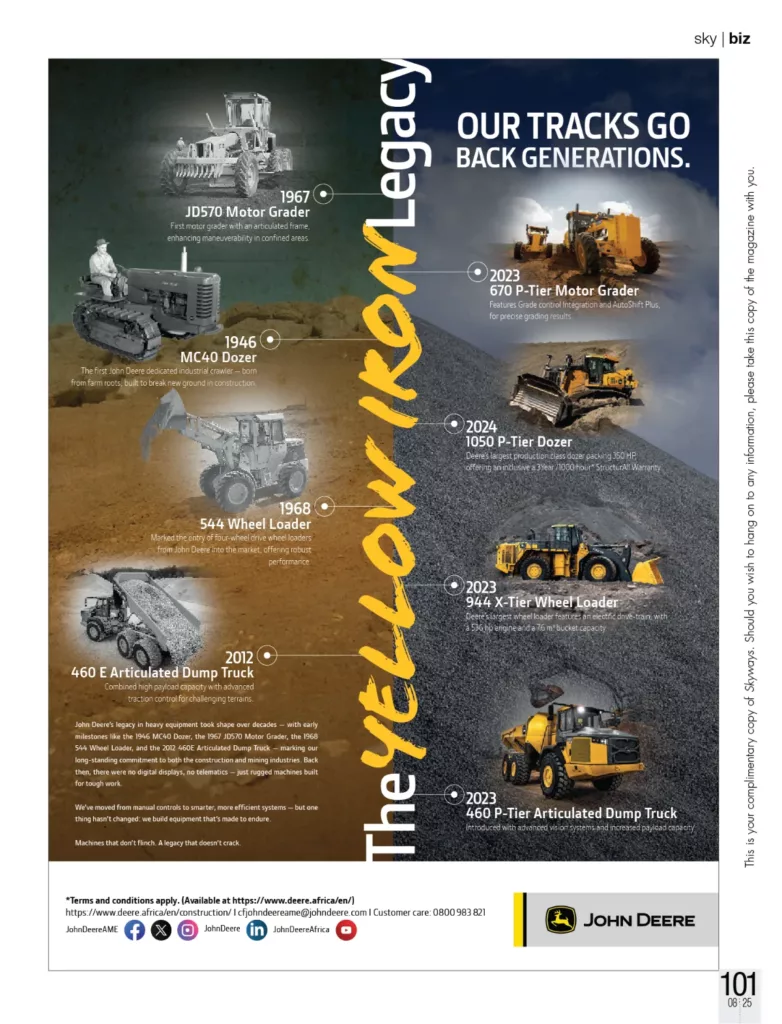
Paloma cocktail

In South Africa, Chef Aiden Pienaar specialises in the culinary delights of Mexico. Try this cocktail recipe from Pienaar’s cookbook, Mexico In Mzansi. Serves one.

Ingredients

For the syrup:

  • 100g white sugar
  • 100mℓ water

For the cocktail:

  • 1 slice lime
  • 30mℓ sea salt
  • 50mℓ Blanco tequila
  • 25mℓ grapefruit juice
  • 25mℓ syrup
  • 200mℓ grapefruit tonic
  • 8–10 large ice cubes\
  • Grapefruit slices for garnishing

Method

  1. For the syrup: bring the sugar and water to a simmer in a small pot over medium to high heat. Once the sugar has dissolved, remove from the heat and allow to cool completely before using.
  2. For the cocktail: rub half the outer rim of a cocktail glass with a slice of lime and dip the glass in the sea salt. In a cocktail shaker, combine the tequila, grapefruit juice and syrup. Add the ice cubes and shake for about 15 seconds until the outside of the shaker gets cold and frosty. Strain into the glass, top up with grapefruit tonic and garnish with a grapefruit slice or two.
Read more

Falcon Ridge Bird of Prey Centre

Showcasing, protecting and rehabilitating winged warriors

Tucked into the foothills of the Central Drakensberg in Champagne Valley, Falcon Ridge Bird of Prey Centre has captivated visitors for 26 years with its breathtaking flying displays and heartfelt mission.

This family-run sanctuary began with Greg McBey, who took up falconry at age 11. His passion laid the foundation for Falcon Ridge: a haven where education, conservation and human connection take flight.

Education is our core mission. In our open-air amphitheatre, visitors of all ages witness birds of prey soaring against the Drakensberg backdrop. But it’s more than a show; it’s a powerful lesson in the role raptors play in nature, the threats they face and how we can all contribute to their protection. We believe knowledge leads to compassion and compassion leads to action.

Equally vital is our work in rehabilitation. We care for injured or orphaned birds from across KwaZulu-Natal, many of whom are eventually released back into the wild. To improve this, we are fundraising R30,000 to purchase tracking transmitters, enabling us to monitor released birds and ensure their success in the wild.

Every ticket bought, every visit and every donation move us closer to that goal. Whether you’re a first-time visitor or a loyal supporter, your involvement matters – not just to us, but to every bird we help return to the sky.

Let’s ensure that every bird we rescue not only flies, but thrives.

For more information, contact Greg on +27 82 774 6398 or follow us on Instagram @FalconRidge_.

Should you wish to donate:

Account Name: Falcon Ridge Bird of Prey CC

Account Number: 62136734474

Bank: First National Bank

Swift Code: FIRNZAJJ

Text and Photography | Supplied

Read more

Late can be great

Being slow on the uptake when it comes to keeping up with trends often works out just fine

There are several stereotypes – sometimes entire generations, sometimes simply groups of people or even just individuals – who describe themselves as ‘early adopters’. These are people who, years ago, were the first to trade in their indestructible Nokia brick phones for fancy Blackberries and then the first to discard those when an advert starring Steve Jobs caught their attention.

These are the folks who loved the hippy goodness of vinyl, then bought wholesale into the neatness and relative unwarpability of CDs, then threw away every album they owned in either format so that they could enjoy the convenience of having every song they’d ever listened to on a hard drive that would become obsolete in three months’ time, and then spent triple the budget of that entire exercise on rebuilding their vinyl collection when that became cool again. And these are people who love to read, provided the new bestseller – and the entirety of their favourite authors’ back catalogues – are available as audio books.

As a late adopter, largely thanks to a budget that is more CNA exam pad than Moleskine diary (or in this technological context, more Toyota Corolla than BMW 5 Series), I have discovered that, supposed sophistication and expediency aside, it is occasionally the case that it literally pays to be so slow off the mark that you’re cool again because you were so slow taking on a trend everyone else thought was better (vinyl records a case in point; no extra purchases, and now albums that originally cost R25 are worth 20 or more times that).

But there is more to it than that. For many, the entire wall of shelving filled with a few decades’ worth of collected CDs appears to be nothing more than an eccentric decor choice. And given how difficult it is to find machines of any kind that can actually play CDs, there might be something in that. However, one of those albums was bought in a little shop on a bridge on the edge of Lake Geneva. Another was purchased from a street seller with a bunch of second-hand stock in the shadow of the gargantuan Strasbourg Cathedral. A third – the first release you bought by an artist who has now soundtracked a fair chunk of your life since – was on sale in an Atlanta music store that your sister-in-law knew you’d love to visit if you were in the area.

Similarly, while being a Ken Follett fan may be the equivalent of unwillingly joining a gym – 800 pages per book, with a new one every year, or sometimes more – you get a sense of the scale of a story you become part of with a physical book. You also get a sense of satisfaction as you watch your bookmark work its way further and further down the spine. Plus you can take out an intruder (never mind a mosquito) with each volume.

Everything will keep getting updated. Sometimes, it’ll make sense to just go with it – podcasts are lovely, for instance, but you don’t necessarily want Joe Rogan actually sitting at your dining room table when you’re trying to serve a meal – but it’s also great if you want something that comes with memories and connections to different parts of your life and identity.

Oh – and that Corolla still runs like a dream.

Text | Bruce Dennill

Photography | Patrick Daxenbichler

Read more
Scroll to Top

Skyways delivers bespoke advertising campaigns for brands to real people. We connect the brand to the passenger at a unique moment in the sky where they have 50% higher recall. These campaigns sit across our award-winning magazines, digital, video and targeted digital solutions.

For all advertising Inquiries, contact Gill Johnston
at +27 83 455 2397 or gill@panorama.co.za