
insight for executives on the move

december 2025

Another year of adventure, innovation, travel and growth

Nosy Be with kids • Christopher Jaftha • Zambezi waterfalls • Tourism practices • Cyber game plan • Vibrant Vilanculos •

Table of Contents


 Bravely go…

Another cycle completed, another good reason to take a break, another time when we’re sort of expected to be planning ahead, even if we don’t have many changes to make to what we’re already doing.

We’re also expected to be creative about what is to come, to give it freshness and verve and to… what? Impress others? Sometimes, what is clichéd is that for a reason. Because it works. Because it makes a difference. Because sometimes, it’s even sensible.

Examples? Versatility is valuable, for work purposes and otherwise, as the career of actor-and-other-things Christopher Jaftha shows (see page 54). Communication is a good thing, whatever age you are (see page 46). And doing what you love can be a great way to make money as well (see page 62).

So, as you rest ahead of the new year, consider as a starting point for your 2026 vision statement something along the lines of, “Have fun, in different ways – and share the joy.”

You know what? That sounds like a good plan.

Happy holidays and safe travels.

Bruce Dennill

Editor

Read more

PUBLISHER: Urs Honegger
EDITOR: Bruce Dennill
SENIOR SUB-EDITOR: Claire Rencken
SUB-EDITOR: Gina Hartoog
OPERATIONS AND PRODUCTION MANAGER: Paul Kotze
SENIOR DESIGNER: Annie Fraser
DESIGNER: Perpetua Chigumira
ADVERTISING: sales@panorama.co.za, +27 11 468 2090
NATIONAL SALES MANAGER: Gillian Johnston, +27 83 455 2397, gill@panorama.co.za
SUBSCRIPTIONS: subscriptions@panorama.co.za, Tel: 011 468 2090, Fax: 011 468 2091
Digital ezine available from skywaysmagazine.co.za
COMMENTS AND SUGGESTIONS: skyways@panorama.co.za
We value reader feedback. Please get in touch.
FINANCE: accounts@panorama.co.za
ISSN 1025-2657

Skyways magazine is published monthly and distributed via Airlink. All rights reserved. Reproduction of this magazine in whole or in part is prohibited without prior written permission of Panorama Media Corp (Pty) Ltd. Copyright © 1994-2024 Panorama Media Corp (Pty) Ltd. The views expressed in Skyways magazine are not necessarily those of Panorama Media Corp or Airlink, and the acceptance and publication of editorial and advertising material in Skyways magazine does not imply any endorsement or warranty in respect of goods or services therein described, whether by Skyways magazine or the publishers. Skyways magazine will not be held responsible for the safe return of unsolicited editorial contributions. The Editor reserves the right to edit material submitted and in appropriate cases to translate into another language. Skyways magazine reserves the right to reject any advertising or editorial material, which may not suit the standard of the publication, without reason given. Editorial material accepted for publication in Skyways becomes the property of Panorama Media Corp. Executive Briefs, Corporate Briefs, and Knowledge Profiles™ are solicited and paid for advertorial features in this magazine. Skyways magazine is published by Panorama Media Corp on behalf of Airlink.

Guidance system

Airlink elevates leadership excellence through GIBS Development Programme

Airlink has taken a major step towards building strong leadership for the future by launching its Leadership Development Programme (LDP) in partnership with the Gordon Institute of Business Science (GIBS). This initiative shows Airlink’s commitment to professionalism, innovation and growing forward-thinking leaders who can help the company thrive.

The LDP is designed to develop and empower managers to excel in today’s fast-changing business environment. Only 25 employees in management are nominated each year. The participants are selected based on their performance and potential. The programme ensures it helps managers enhance their decision-making and financial skills and strengthens leadership and management abilities. It supports managers in becoming confident, capable leaders who can guide their teams and make informed decisions in today’s complex business landscape.

Desiree Setlhare, the ground operations training manager and one of the few selected managers for the LDP inaugural class, has been with Airlink for 15 years, having served within ground operations at MBD airport, in the Revenue department as a revenue controller, and in Training as a trainer.

Desiree shares her LDP transformative experience as follows: “The LDP shaped my leadership approach to be more inclusive, adaptable and forward-thinking. I now place greater emphasis on active listening, coaching and developing future leaders within my team.”

The LDP includes modules on emotional intelligence (businesspeople management), change management and finance—areas that have had an impact on Desiree’s growth. “Despite having no prior background in accounting, I now feel confident in handling and managing budgets,” she shares.

Ongoing strategic growth

GIBS is one of South Africa’s leading business schools with global expertise across the African continent and is well positioned to support Airlink’s leadership journey. The strategic approach of the LDP aligns well with Airlink’s goal to meet and exceed the global standards in service and professionalism. By investing in the LDP, Airlink is not only nurturing individual careers but strengthening the organisation’s ability to adapt and lead. This ensures that Airlink management is equipped with the necessary skills to drive operational excellence and uphold the airline’s reputation.

Airlink’s approach echoes the timeless quote of Harvey S Firestone, who said, “The growth and development of people is the highest calling of leadership.” Through the LDP, Airlink is empowering individuals like Desiree Setlhare to not only grow personally but to elevate their teams and contribute meaningfully to the organisation’s success.

Text | Keamogetswe Masango

Photography | Supplied

For more information, go to flyairlink.com and gibs.co.za.

Read more

Beyond the grave

TRAVEL

Airlink adds spice with Zanzibar route

Airlink will launch its new Johannesburg–Zanzibar route on 3 June 2026. Tickets are now on sale for flights to the Tanzanian island, famous for its spices, beaches, forest and marine life and resorts. The UNESCO-listed historical Stone Town, with its maze of streets featuring mosques, churches, bazaars, villas and a palace – as well as a museum marking the birthplace and boyhood home of the late rock star, Freddie Mercury – reflect Zanzibar’s fusion of African, Asian and European influences. These have made Zanzibar an increasingly popular destination for tourists from around the world, including South Africa.


With its flourishing economy, Zanzibar is also emerging as a magnet for investors and business travellers.

“Zanzibar’s proximity to Johannesburg, Airlink’s main hub, puts the island within reach of our customers based in Gauteng. The timing of the flights allows for Airlink connecting flights from other destinations we serve across South Africa and the Southern African Development Community (SADC) region. Similarly, Airlink will provide convenient connections for customers travelling between Zanzibar and almost anywhere in the world on our world-leading partner airlines,” said de Villiers Engelbrecht, Airlink CEO.

Airlink will operate its brand-new, state-of-the-art Embraer E195-E2 flagship aircraft on the new Zanzibar service, which accommodate up to 136 passengers. Flights between Johannesburg (JNB) and Zanzibar (ZNZ) will operate twice weekly from 3 June 2026.

Source: flyairlink.com

Read more

More of Mozambique up by Airlink

TRAVEL

Airlink will add Nacala to its Mozambican destination portfolio from February 2026. The coastal town in the north of the country will be Airlink’s seventh Mozambican destination and will initially be served with twice-weekly return flights from Johannesburg operating on Mondays and Fridays.

Airlink will operate its comfortable and efficient Embraer regional jet aircraft on the route.

“By adding Nacala to our network, Airlink is able to provide additional vital connectivity for business and leisure travellers to and from Mozambique’s economically important north-eastern region, complementing our current services to Nampula,” explained Airlink CEO, de Villiers Engelbrecht.

Airlink currently operates 64 return flights a week to Mozambique, serving Maputo, Beira, Pemba, Nampula, Tete and Vilanculos. Airlink flights are scheduled to provide convenient connections with the airline’s other domestic and regional services, as well as with long-haul flights provided by global airline partners.

Source: flyairlink.com

Read more

Electronic efficiency

TRAVEL

The Federated Hospitality Association of South Africa (FEDHASA) has welcomed the announcement by Minister of Home Affairs, Dr Leon Schreiber, of the new Electronic Travel Authorisation (ETA) system, presented at the Tourism Business Council of South Africa’s Leadership Conference.

Brett Tungay, FEDHASA National Chairperson, commended the Minister for prioritising the modernisation of South Africa’s visa and border control systems: “The introduction of the ETA is a bold and visionary step that will transform how international visitors experience South Africa from the first moment they engage with our country. By removing outdated paper-based processes and replacing them with a fast, digital, traveller-friendly platform, Minister Schreiber is dismantling one of the biggest barriers to inbound tourism growth. This will undoubtedly help attract more visitors, create much-needed jobs and buoy our economy.”

The ETA system leverages advanced machine learning and biometrics to digitalise visa applications, enabling real-time approvals and reducing processing delays. It integrates with the upgraded Electronic Movement Control System (EMCS 2.0), which will employ facial recognition at ports of entry such as OR Tambo and Cape Town International Airports, ensuring smoother, more secure arrivals.

Source: fedhasa.co.za

Read more

Giving paper weight

ENVIRONMENT

A global survey on the print and paper industry confirms that paper-based packaging remains South Africa’s preferred sustainable packaging choice. Consumers value paper-based packaging for its recyclability, biodegradability or compostability, lower environmental impact, affordability, safety and its ability to display clear product information, according to the South African findings of the 2025 Two Sides Trend Tracker report.

With increasing pressure to reduce plastic waste and cut carbon footprints, the packaging sector faces intense scrutiny, says the Paper Manufacturers Association of South Africa (PAMSA). Paper-based packaging has emerged as a positive solution, as it is made from renewable wood fibre from sustainably managed planted forests and/or recycled paper fibre.

Overall, paper and cardboard emerged as the top choice among consumers who rated packaging materials based on 15 environmental, visual and physical attributes. In second place was glass, followed by plastic and metal that were on equal footing.

Source: thepaperstory.co.za

Read more

More on the move

TRAVEL

The International Air Transport Association (IATA) released data for August 2025 global passenger demand with the following highlights:

  • Total demand, measured in revenue passenger kilometres (RPK), was up 4.6% compared to August 2024. Total capacity, measured in available seat kilometres (ASK), was up 4.5% year-on-year. The August load factor was 86.0% (+0.1 ppt compared to August 2024), a record high for the month.
  • International demand rose 6.6% compared to August 2024. Capacity was up 6.5% year-on-year, and the load factor was 85.8% (+0.1 ppt compared to August 2024).
  • Domestic demand increased 1.5% compared to August 2024. Capacity was up 1.3% year-on-year. The load factor was 86.3% (+0.1 ppt compared to August 2024).

“August year-on-year demand growth of 4.6% confirms that the 2025 peak northern summer travel season reached a new record high. Moreover, planes were operating with more seats filled than ever with a record load factor of 86%. Despite economic uncertainties and geopolitical tensions, the global growth trend shows no signs of abating,” said Willie Walsh, IATA’s Director General

Source: iata.org

Read more

Soft and significant

ENVIRONMENT

Two rehabilitated small-spotted genets have taken their first steps back into the wild thanks to a new soft-release enclosure at Vergelegen Wine Estate in Somerset West, created in partnership with the Kogelberg Biosphere Wildlife Rescue and Training Centre near Betty’s Bay.

The young genets were discovered hiding above a ceiling at a home in Sir Lowry’s Pass Village. After initial care at the Kogelberg centre, they spent several weeks acclimatising in the Vergelegen enclosure before being released at night. Supplementary food was provided until they became fully independent.

A soft-release facility is a large, escape-proof enclosure located far from roads, buildings and people. It mimics the natural habitat of the species it houses and can be adjusted to suit mammal, bird and reptile patients.

Vergelegen, renowned for its biodiversity initiatives, is home to a 2000ha nature reserve with the same conservation status as the Kruger National Park. The new enclosure, built near the reserve’s 400ha game sanctuary and sheltered by a shady tree, has mesh walls, a solid roof and straw-covered floor.

Source: vergelegen.co.za

Read more

Daily news

Wildlife activity informs visitors’ experiences at riverside lodge

A lone bull elephant is standing on an island in the middle of the Zambezi River, feeding on reeds. The pachyderm is blissfully unaware of the fact that a few metres away from where he is peacefully grazing, a total of five hippos with a tiny calf have unceremoniously clambered out of the water to soak up the afternoon sun. What will happen if this trunked behemoth crosses paths with the blubbery river horses – an altercation for dominance, or for food?

“The hippos will move away,” Sausage Tree Camp guide Nobby tells me. “They see elephants as the giants of the jungle. The elephants favour the taller shrubbery while the hippos prefer short grass since they don’t use their front teeth to eat; they actually pull the grass out with their lips and then coarsely grind it with their back molars.”

Stop, listen and look

At the camp, at the end of the sandy pathway, is tented suite number seven. Big troops of chacma baboons like frequenting this spot, rummaging through the leaves on the ground for something to eat, or coming for a sip from the plunge pool. Being mindful that the camp is unfenced goes a long way in ensuring guest safety, so when butler Arnold encounters a cheeky elephant on the way to my suite, he suggests that we choose a different route to steer clear of the ear-flapping bull.

After lunch, guests are encouraged to enjoy ‘down time’, during which the sound of a cattle egret going berserk is evidence that something is making it unhappy. Scanning to see where the sound is coming from, a face is spotted peeking over the riverbank – it’s a leopard! Strolling nervously between two of the tents in broad daylight, the gorgeous big male briefly pauses by a tree before disappearing as quickly as he made an appearance.

Dwarfed by a giant Natal mahogany tree, a small elephant is picking purple flowers with his trunk, which must taste great, as he stops just short of vacuuming them up. Not too far from where he’s indulging in a feeding frenzy, his siblings are feasting on the leaves of a winterthorn tree and their pregnant mom is keeping a close eye on her offspring.

The Lower Zambezi National Park is a popular wildlife destination for locals and tourists alike and having a private guide during a stay at Sausage Tree Camp is a great privilege, as you can tailor-make your timeframes and activities. On our morning game drive, Nobby stops the vehicle, pointing to something on the ground. “I’m looking at the front page of the newspaper,” he says with a smile. “The ‘daily news’ (wildlife footprints in the sand) will tell us what is out there.”

Finding the Main pride of lions on two different occasions, we sit with them at sunset – three males, three females and four cubs. The cubs are becoming increasingly agitated with pesky flies bothering them, trying to catch them by biting and swatting into the air. This continues for a while until the adults start stretching and getting active.

There is something magical about the light in the park and seeing the lions stepping into the golden morning light is an unforgettable experience.

Sustainability and sustenance

Sausage Tree Camp is situated on the banks of the Zambezi River, 20km upstream from where guests land by fixed-wing aircraft at the Jeki airstrip. The camp is a wonderful interspersion of incredible views over the river from all seven tented suites and one expansive family house. From the main area, lots of seating options also allow for unimpeded vistas over the water and wildlife that are sure to make an appearance as you savour your meal.

Hippos frolic throughout the day and night, forming the soundtrack to a stay at this conservation-led property. Treading lightly on the Earth is behind the venue’s zero plastic use: cold drinks are served in glass and decanted from glass bottles – even the straws are glass. Hot drinks are presented in either glass or mugs handmade from clay.

The tented suites are large dwellings, consisting of a lounge area and drinks station; a bedroom with seating area and a bed draped in mosquito netting at night; and a bathroom with double vanities, his and hers showerheads, a soaking tub, a flush loo and an outside shower. Stepping out onto the private deck, there are those views again and, here, you can spend a few hours on the deckchairs next to a plunge pool, soaking in the beauty of your surroundings.

A surprise is on the cards for the early afternoon and meeting at the jetty, boat captain and guide Clement steer a pontoon up the Zambezi River. The journey is almost silent, barring a low hum from the propeller powering the e-boat and hippos emitting snorting sounds along the way. “Welcome to your island lunch!” lodge manager Chris announces. Feasting on a starter of chickpea hummus with breadsticks, a main course of a variety of salads, kebabs and fish and a delicious chocolate sponge cake for dessert, you will never go hungry at Sausage Tree Camp.

The evening’s sundowners are laid out on the northern banks of the Zambezi and watching the sun dip behind the Chirapira mountain, casting hues of orange and pink on the calm river, makes one fully appreciate the breathtaking magnificence of Zambia.

Text and Photography | Heléne Ramackers

For more information or to book, go to greensafaris.com/sausage-tree.

Heléne Ramackers’s flights between Cape Town and Lusaka on Airlink were sponsored by cazenove+loyd. For more information, go to cazloyd.com.

Read more

Nostalgia for the now

Adventures along the Mozambique coast inspire a desire to return

I felt the change in the air as soon as I stepped off the plane, soft and heavy with salt, sunlight diffused through the heat like honey. We climbed into a waiting vehicle and made our way slowly through Vilanculos, the road winding past weathered buildings, fruit stalls and rusting bicycles leaning against shaded stalls. Schoolchildren in blue uniforms spilt out into the streets, smiling at us as we passed. The town moved gently around us, never in a hurry.

As we left the town centre behind, the view opened up – glimpses of the sea between rows of palm trees, flashes of white sand through the tall grass. And then, there it was. Saudade.

The villa stood quiet above the beach, its thatched roofs blending into the landscape, bright bougainvillaea cascading like ribbon. Stepping through the entrance and out onto the terrace, a flock of flamingos drifted across the sky, low and wide above the water, their wings pink and coral in the sunlight. Below them, the ocean shimmered silver-blue.

The villa was open and airy, everything flowing without interruption from room to garden to ocean. The ceilings rose high above, thatched and cool, and every window seemed to frame a different slice of sky. There was no excess here, just intention. Every corner held some quiet touch: carved wood, soft cottons, handwoven baskets. My room looked straight out to the sea and when I lay in bed under the voluminous white mosquito netting, the only sounds were waves brushing the shore and the occasional murmur of wind through the trees.

Gentle discoveries

Each morning, the tide was different – sometimes stretching far out to reveal golden swathes of sand, sometimes rolling in to kiss the garden steps. I wandered for hours, collecting shells and watching crabs scurry sideways into the sand.

Breakfasts were slow and generous, with mountains of fresh fruit, delicious warm bread, eggs any way you desired, strong coffee and delicious muffins. We’d linger here on the terrace, watching as the sun inched higher and the boats began their day.

We spent one morning at the town market. Our guide, a local with a wide grin, moved easily between Portuguese, English and the local dialect, chatting to everyone who crossed his path. The market itself was a riot of texture and colour – armfuls of crisp green lettuce, piles of dried fish and clams, mountains of lethal-looking bright red chillies, coconuts stacked like cannonballs and tiny bottles of homemade piri-piri sauce lined up like soldiers.

Later, we wandered through the backstreets, friendly greetings wherever we turned. A tuk-tuk took us down to the port and the faded Art Deco curves of Hotel Dona Ana, perched at the edge of the sea, before rattling along the road back to Saudade.

Another day, we boarded a small dhow, its sail patched and its hull sun-bleached. We glided out onto the water in search of seahorses. Our guide, Ilídio, slipped quietly into the shallows, motioning for us to follow. The water came to our waists, seagrass brushing our legs like underwater wheat. He moved with such gentleness, parting the grasses with care, until finally he stopped and pointed. There, wrapped delicately around a stalk, was a seahorse the size of my thumb. It barely moved, its body pulsing with each wave. We found more – some golden, some striped like autumn leaves. We didn’t touch them. We just watched, breathless and reverent.

Views and value

The next day took us to Magaruque Island, a jewel set in the Indian Ocean. We arrived by boat, the sea flashing turquoise and indigo beneath us. Once anchored, we leapt into the water and drifted over coral gardens, alive with movement and colour. Parrotfish in electric blues, butterflyfish fluttering like silk scraps and even a solitary dolphin, curious and unhurried, passed by.

Snorkelling done for the day, we stepped ashore onto powdery sand that squeaked beneath our feet. While we waited for lunch to be laid out beneath a brilliant blue, billowing tent, we set off to walk the length of the island. The dunes at its heart were steep but climbable and from the top, the view was astonishing – miles of untouched beach curling away, the reef visible just beneath the surface and the mainland a hazy promise in the distance.

Early one morning, we visited one of the small inland lagoons hidden behind the dunes, still and green and ringed with birdsong. Binoculars in hand, we spotted ducks, cormorants, herons, egrets, sunbirds, bee-eaters and so many, many more. It felt like stepping into a secret pocket of the world.

Back at Saudade, the days began to blend into one another, in the best possible way. Each one was both full and simple: a morning walk or swim, a day of activity, a new dish to try at lunch or dinner. Meals were always a joy. There was no pretension, just care. Every dish sang of the sea – fresh-caught fish, wonderful prawns, delicate calamari and delicious crab.

Evenings were slow, spent sitting on the terrace as the sky blushed lavender and gold, the ocean darkening with each passing minute, the sound of ice tinkling in my glass as the stars blinked into the sky, one by one. And the people, always the people. The team at Saudade had a way of making you feel like you’d come home. They were never intrusive, but always there, ready with a story, a suggestion, a smile.

On the final morning, I stood at the edge of the infinity pool, coffee in hand, watching the tide come in. The sea was still, the light just beginning to warm. I tried to memorise the exact shade of blue, the scent of the salt in the air, the sound of waves and the far-off calls of the fishermen.

Saudade is a Portuguese word, one that has no perfect English translation. It loosely means a longing or nostalgia, the ache for something you once had or wish you could hold again. That’s what this place gave me. Not just rest or beauty or escape, but the kind of deep quiet you carry long after your footprints have disappeared from the sand.

Text | Sarah Kingdom

Photography | Sarah Kingdom and supplied

For more information or to book a stay, go to saudademozambique.com.

Read more

Friends in high places

Mountain lodge is a fairytale entrance to North African culture

To reach the Atlas Mountains from Marrakesh, you need to cross a wide, stony plain, passing through a brand-new town that has been planned but not yet completely built, with boundaries demarcated but nothing yet inside them (apparently, some 300,000 people will one day call this place home). It’s freshness alongside inconceivably ancient, and raises an interesting question: given a blank slate, what would you include when planning a new city?

The road into the mountains is only one lane either way, which means occasionally crawling behind a truck, but the scenery more than makes up for it – radiant green rivercourses against the deep brown-red of the soil.

A myriad small settlements cling to the hillsides, linked by timeworn footpaths with no more traffic than a mule and his minder. Picnic spots along the river next to the road are much busier, with brightly painted chairs mirroring the joy of community connection.

The picturesque village of Imlil offers a range of shops that reflect its status as the starting point for the area’s gorgeous hikes and camping expeditions. 

Above the village looms (in the friendliest way possible) Kasbah du Toubkal, a hotel built on the footprint of an old palace and then rebuilt better and stronger after the earthquakes suffered by the region a couple of years ago. The pathway up the hill to the hotel is steep and winding. Mules carry guests’ luggage in roomy saddlebags, bearing the burden as they have for centuries.

Through a solid door befitting a mountain fortress, the path to the hotel’s common area is lined by gorgeous stands of cosmos flowers and verdant fruit trees, and as you are offered orange-infused water to wash your hands on arrival, it feels like you’ve come to a place where culture and comfort are impossible to separate.

Delicious cordiality

There are cool lounges everywhere, a magnificent infinity pool and steps leading to a rooftop terrace where many of the meals are served, with more stairs up to a lookout area offering breathtaking mountain vistas and refreshing breezes.

On the terrace, under lattice structures that provide shade, couches, low tables and stools create an informal dining area promoting sharing and interaction. The tables are initially loaded up with piled flatbreads, both crumbly and crispy, plus salads and jugs of water, with bottles of wine cooling to one side. It’s tempting to fill up early, but you need to plan well: still on the way are tagines of lamb with figs and couscous and vegetables. Everything is tender and tasty. Everything demands tasting…

This is the kind of place you want to make a meal last for hours, whiled away in happy hospitality. The hotel’s owners, Chris and Mike, are both storytellers, with the former memorably explaining how they affected post-earthquake rebuilding in “less than the confinement of a chinchilla” (around 12 weeks, apparently).

The rooms, when retreated to, are large, featuring the sort of shapes and angles required when both building on a steep slope and reflecting local history and culture.

Text | Bruce Dennill

Photography | Supplied

For more information or to book a stay, go to kasbahdutoubkal.com.

Read more

Fall and fall again

Magnificent cascades are features of fishing destinations along the Zambezi River

There’s something exciting about fishing on the Upper Zambezi – and that’s coming from someone who doesn’t fish at all! Just being there is part of the experience. Out on the water, my husband casts his line into the river. He’s hoping to land a tigerfish, a giant cousin to the piranha and probably the most coveted game fish on the continent. With interlocking, razor-sharp teeth, tigerfish are fierce predators, known for their speed, agility and ferocity, and have a reputation for putting up a serious fight.

The first tug on the line comes surprisingly quickly, a sharp, aggressive pull that seems to come out of nowhere. What follows is a battle. In a bid to escape, the fish leaps and thrashes, jumping high out of the water, then diving to the depths, trying to dislodge the hook from its mouth. The unpredictable, sudden jerks make it challenging to keep the line taut.

The goal now is to tire out the fish while avoiding getting tangled in underwater debris. The fish starts circling the boat, trying to figure out its next move. The head breaks the surface of the water, shaking wildly, trying to dislodge the hook. This is the moment we’ve been waiting for. The net slides beneath the fish, lifting it out of the water. The hook is removed from its mouth with pliers while avoiding all those teeth, and after a quick weigh on the scale and a photo for posterity, the fish is released back into the water, where it disappears from sight. After countless more casts and probably as many misses as successes, we head back to camp to compare notes with the other fishermen over drinks by the fire.

Swimming and sightseeing

Lumbe Pools Camp is a special spot, situated on the banks of not one but two rivers – the Lumbe and the Zambezi. With just five open-air chalets, this is the only permanent lodge on this stretch of the Upper Zambezi. It feels wonderfully remote, a space where guests might have the river pretty much to themselves.

This is a place that attracts serious fishermen, but while the fishing is thrilling, it’s also a great place for families. Some of the real magic lies in its natural swimming spots – small beaches and clear pools, perfect for cooling off and fabulous for swimming and snorkelling. It’s possible to spend hours in these pools with a mask and snorkel, following schools of tiny fish as they scoot between the rocks and getting up close to the cormorants and darters that sun themselves on the rocks, seemingly oblivious to human presence.

Dragging ourselves away from the camp and the river one day, we head upstream to the nearby Sioma Ngonye Falls. Walking towards the top of the falls, the rocks underfoot resemble giant ginger biscuits – flat, golden-brown, cracked and crinkled. Water seeps under and through the gaps, trickling tiny streams and creating the occasional shallow pool. Clumps of papyrus sway in the breeze, and here and there, brave shrubs and small trees cling to the rocks, sending their roots down deep, anchoring themselves for when the rains return and the water levels rise again.

The Sioma Ngonye Falls mark the transition point in the Zambezi’s flow from the Kalahari sand floodplain to the basalt rock that stretches all the way to the Victoria Falls, some 300km away. This transition from sand to rock creates a quirky geological phenomenon: not all of the water flows over the falls; some diverts into underground tunnels beneath the rocks to either side. Walking across these rocks, it’s possible to feel the vibration of the river through the soles of our shoes – gushing and grumbling and flowing beneath the surface.

At the edge of the falls, the river sheds its serene demeanour and, sucking in its belly, tumbles over a horseshoe-shaped layer, cascading over the 20m drop in spectacular fashion. The water flows fast, but not too fast for visitors to venture in. Drinks in hand, we sit in the rock pools, water bubbling and swirling like a giant jacuzzi. A pair of local fishermen, below the falls, are setting up huge reed fish traps to catch any fish washing over the edge of the falls. Deciding to try his luck, my husband trudges downstream with his rod, casting over and over again, with zero success.

Scottish explorer and missionary David Livingstone stumbled upon the Sioma Falls in 1853, during his travels northwards from Botswana, writing, “The islands above the falls are covered with foliage as beautiful as can be seen anywhere. Viewed from the mass of rock that overhangs the fall, the scenery was the loveliest I had seen.”

Captivated by the scenery, Livingstone rests here for some time. During his stay, local villagers share tales of an even more magnificent waterfall farther south. Intrigued by their accounts, he sets off on a journey along the eastern bank of the Zambezi. It was this chance encounter at Sioma Ngonye Falls that would eventually, two years later, lead Livingstone to the Victoria Falls.

Departing Sioma Ngonye Falls and Lumbe Pools Camp, we follow the Zambezi downstream, but by road. After five hours, on not-very-good roads, the town of Livingstone and the Zambian side of the Victoria Falls come into view.

Clifftop vistas

Victoria Falls is the boundary between the upper and middle Zambezi, and it is here that the river seems to pause for a moment, swelling and surging, before plunging 108m into the depths of the Batoka Gorge. Millions of litres of water cascade over the edge every second, falling with a thunderous roar – a dazzling white curtain that sends plumes of mist skyward.

The impact of all this falling water is ferocious. At the base of the falls, a churning cauldron of foam and spray fills the air with a constant rumble. The cliffs of the Batoka Gorge, dark and imposing, tower above, framing the falls, their jagged edges a stark contrast to the dynamic, flowing water. The zig-zagging gorge is a geological marvel, carved out by the Zambezi River over millions of years. The sheer cliffs, some rising as high as 250m, are a testament to the river’s relentless force.

Perched dramatically on the edge of the gorge, around 11km downstream, Taita Falcon Lodge sits 230m above the Zambezi, with panoramic views over the turbulent river below. At sunrise, the light creeps into the gorge and into the rooms, casting a golden hue over everything it touches. At sunset, a hike along the rim of the gorge ends at a lookout to watch the sun go down. Far below, the river shimmers in shades of orange and pink, while overhead birds soar – Taita falcons, for which the lodge is named.

Text and photography | Sarah Kingdom

For more information or to book a stay, go to lumbepoolscamp.com and taitafalcon.com.

Read more

In the family way

Indian Ocean island offers experiences to thrill and fulfil all generations travelling together

When you arrive in Nosy Be with children in tow, the first thing you notice is how easy it feels. The island is small, the roads are quiet and there are no queues, no neon theme parks, no pressure. Just warm, shallow seas, children’s laughter echoing down sandy lanes and enough adventures to keep every age group wide-eyed.

For the very young, the island itself is a playground. At Home the Residence, a tree-climbing course winds between branches and it’s impossible not to grin watching a six-year-old scrambling like a little lemur while you slip away for a stolen half-hour in the Banyan Spa. On another day, you might wander into Lemur Land, where children stand stock-still as gentle lemurs leap over their heads. Their first close-up wildlife encounter is something they’ll talk about for months.

Beaches become storybook settings: sandcastles rising on deserted beaches, toes dipped in calm turquoise shallows at Nosy Sakatia or little ones playing tag between the tortoises at Villa Makoa. Even a trip to Rose et Bleu Parc d’Attractions – a shady patch of rides and games – feels wonderfully retro, a reminder that simple pleasures don’t date.

Older kids and teens quickly discover that Nosy Be is an island of freedom. A live-aboard yacht charter swaps WiFi for wide horizons: days spent snorkelling, kayaking and fishing together, with no screens in sight. Some will earn their first scuba certification here – the theory finished at home and dives completed in the island’s warm waters.

Others find thrills on quad bikes, bouncing along forest trails and village paths, waving at local children who run out to greet them. A guided walk in Lokobe National Park feels like stepping into another world: black lemurs peering from branches, chameleons blending with leaves, the rainforest alive with birdsong.

Activities and adventures

Every family has their ‘Nosy Be moment’. For some, it’s the first sight of the sandbar at Nosy Iranja – two islands joined by a gleaming ribbon of white sand that vanishes and reappears with the tide. For others, it’s the morning snorkel at Tanikely Marine Reserve, floating above a reef alive with darting clownfish, while a turtle glides past unhurried. At Nosy Sakatia, children squeal through their snorkels as giant turtles rise from the seagrass below them.

Even inland, the memories keep stacking up: sunset views from Mont Passot as the island glows below, pony rides through ylang-ylang fields at Ambaro Ranch or plunging beneath a hidden waterfall at the Cascades. Sometimes, the quietest moments are the most powerful. Walking into a local school where children share books with pages falling apart, yet beam with a happiness that is startling in its simplicity.

Families quickly settle into island rhythm. Days start early with swims and mango juice, and evenings end with grilled fish under a sky shot through with stars. Malaria is rare but precautions are simple: repellent, sleeves at dusk and a mosquito net at night.

Stay together

For families, villas make sense. Meals appear without anyone needing to shop or cook and there’s space to spread out. Villa Makoa has safe swimming on the doorstep and Sakatia Beachfront Villas sit on a car-free island where children chase shoals of small fish while turtles cruise offshore.

For those who prefer hotels, Amarina has a wide beach and kids’ activities, Exora offers modern simplicity and Vanila Hotel & Spa provides babysitting when parents crave a quiet dinner. Families with teenagers often gravitate toward Sakatia Lodge, where the island’s calm waters and onsite dive centre make it one of the best places for young divers to earn their certification while parents enjoy the laid-back island atmosphere.

And for families with a taste for adventure, a live-aboard yacht promises a different view – and a different sunset – every night.

On Nosy Be, time stretches. Children roam without the constant “be careful” refrain and parents relax into the slower pace. The experiences aren’t manufactured; they unfold naturally: a lemur on the path, a dolphin beside the boat, a smile from a child in a village school. And that’s the magic. The island isn’t about ticking boxes on a list of attractions. It’s about stories you’ll tell long after you’ve left, the ones that start with “Remember when…” and always end with laughter.

To make the most of a family holiday on Nosy Be, it helps to have someone on the ground who knows the island inside out. Logistics here can be unpredictable – boats, transfers, excursions and even villas often rely on personal connections. There are no visa hassles; just a small entry fee on arrival.

Text | Harriet Millson

Photography | Byvalet, Dave Primov and Madelein Wolf

For more information, go to madagascat.co.za.

Read more

Comprehensive compendium

Noteworthy institution gives visitors deep insight into Atlantic island

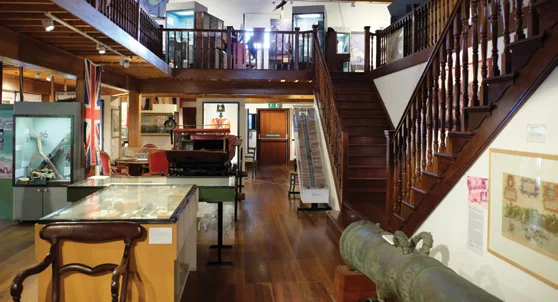
The Museum of St Helena, situated right adjacent to the bottom of the steep Jacob’s Ladder staircase that is perhaps the island’s most iconic tourist attraction, deserves at least as much attention.

Situated in an old power station (that was, before that, an old East India Company warehouse), its excellent, well-maintained layout features different areas for history, culture, military events, natural history, slavery, technology and more.

There are artefacts from everywhere – Dutch and Chinese ceramics; British uniforms (their fabrics ridiculously thick and dense for such a hot, humid climate); a piece of the Google undersea cable (surprisingly thin); carved items made by Afrikaner soldiers in the Boer prisoner-of-war camps (including General Cronje’s ornate wood and ceramic pipe) and a telephone exchange that would once have served the whole island. There is much more too, including a collection of the unique animals that have lived locally across geological eras. Interestingly, ‘megafauna’ in this context refers to creatures such as the giant earwig – unusual, certainly, but still smaller than some contemporary South African insects.

Past to present

A model of the RMS St Helena serves as a reminder of the importance of the many sea routes that have serviced the island throughout its history – and that ship in particular, sailing from Cape Town – now replaced to some degree by the much faster Airlink flights.

There’s a sense of the East India Company being a mercenary mega-corporation, running the island for profit, not for the benefit of its people. It’s difficult to argue with that while looking at the slavery exhibit, which includes a poster advertising the sale of three slaves alongside other items such as ribbons and pins. Another offer includes leasing the slaves, this time also pitching the sale of a horse. It’s horrifically dehumanising, pitched in such a blasé way.

Redeeming that history only began relatively recently when the British, who initiated slavery on the island, began to use its strategic location to find and intercept slave ships crossing from Africa to the Americas as abolition began and spread.

With Jacob’s Ladder right outside, interacting with a scale model of the rail system that used to run up and down the prodigiously steep slope, moving rubbish and waste to the Ladder Hill Fort area at the top, is fun and fascinating, while also underlining what a challenge it has always been to join the two points.

Today, the museum is not a finite organism, with its collection continuing to grow as new objects and relics are donated, found by St Helena residents and visitors as they walk and dive around the island.

Text and photography | Bruce Dennill

For more information or to book a stay, go to sthelenatourism.com.

Read more

On wobbly legs

Photographer Greg du Toit won first place in the B&W International Awards for wildlife photography with a series of photos taken of a newly born giraffe standing for the first time.

The giraffe is the tallest animal on the planet, so seeing one being born in the wilds of Kenya was nothing short of spectacular – a baby giraffe is born 2m long, taller than many professional basketball players! It was especially special to see the young one try to stand up for the first time, encouraged and aided all the time by its mother.

Read more

A helping leg: Being so tall made it difficult for the baby to stay standing and it fell over a number of times. Then, in what stands out as the highlight of the spectacle, the mother giraffe stuck her leg out to support her baby. It worked – the baby stayed on its feet long enough to gain some much-needed balance.

LEFT: A mother’s protection: The newborn giraffe gathers itself after a rather lengthy plummet to terra firma. After the mother licked the young one clean, she stood above the baby as it gained the courage to try to stand for the first time. Moving forward, placing the baby between her legs, the mother giraffe kept a vigilant eye out for any would-be predators.

Nearly there: The baby giraffe made a series of attempts to stand. It was no easy feat; with such a long neck, it repeatedly fell head over heels. The mother stood watching and encouraging the young one with an occasional lick. Finally, the baby got its legs splayed far enough apart and made another attempt to stand.

Up at last: Finally, with the baby up on wobbly legs, the mother led it off into the bush, leaving us spellbound at having witnessed one of nature’s marvels.

Giant hailstones herald future storms

Study reveals how massive ice balls get bigger… and become lethal

Hailstones that are bigger than your fist plummeting towards the ground pose huge risks to people caught outside during hailstorms. Now, a new analysis of these giant hailstones’ inner structure reveals how they’re able to get so big – a discovery that could help scientists predict hailstorms before they become a threat.

Hailstones are formed during storms, when a raindrop freezes in a very cold part of a cloud. They then grow in diameter as gravity pulls the increasingly heavy particles downwards.

For the new study, published in Frontiers in Environmental Science, a team of researchers from Barcelona and Catalonia (an autonomous region in northern Spain) collected giant hailstones up to 12cm in diameter and then used computed tomography (CT) scans to look inside them.

Usually, CT scans are used in more of a medical context – the rotating x-ray machine creates 3D images of people’s bodies. But in this case, the machines – borrowed from a dental clinic – allowed researchers to study the ‘anatomy’ of the giant ice balls without breaking them apart.

Each cross-sectional image, known as a ‘slice’, of the hailstones revealed the density of the layers, showing how they grew at different stages of the storm. The researchers discovered that even the most spherical hailstones have irregular insides – in fact, strangely, the near-perfect-looking spheres had the most off-centre cores.

The researchers say this reveals that hailstones don’t grow evenly in each direction, contrary to previous assumptions about hailstones – a discovery they think could help to predict violent storms before they happen and limit the damage they cause.

This article appears in Very Interesting #83. Click here to receive the current VI issue digitally for FREE!

Read more

Wisdom for the ages

We talk to our children about values, money and planning for the future – but how many of us have had those same conversations with our parents?

As they grow older, many of us begin to wonder if our parents have everything in place. Are they financially secure? What happens if something goes wrong? Do we know what matters most to them and do they have a plan not just for ‘one day’, but for how they want to live now?

These questions aren’t always easy to raise. But they are some of the most important conversations we’ll ever have as families. For many families, money is still a taboo topic. Too often, it’s only discussed when there’s a crisis. And for our parents’ generation in particular, money can carry deep emotions – pride, fear, guilt or uncertainty.

Adult children often don’t know the full picture of their parents’ finances or plans. With families increasingly living in different cities or countries, it becomes even harder to offer support or step in when needed. And without open dialogue, misunderstandings or conflict can arise later on.

But these conversations aren’t only about preparing for the worst. They’re about helping your parents feel seen, supported and secure, so that they can live well now and into the future.

The first step is to approach the conversation with care. It’s not about taking over, but listening – really listening – to what your parents want. Including siblings or other family members in the discussion can help ensure that expectations are clear and everyone is on the same page.

You don’t need to cover everything in one sitting. Start gently and create space for your parents to share what they’re comfortable with. Some of the key questions to ask include:

  • Do you have a valid and updated will? Who are the executors?
  • Where do you keep your important documents like wills, powers of attorney, bank details, passwords, living wills or letters of wishes?
  • Have you appointed someone to make decisions on your behalf if you’re no longer able to?
  • Have you discussed your medical care wishes? For example, resuscitation, life support or long-term care?
  • What kind of legacy would you like to leave?

Check the numbers

On the financial side, it’s helpful to understand whether your parents feel confident in their current position:

  • Do you feel secure about having enough for your needs?
  • Are you comfortable with your budget and how your money is working for you?
  • Is your financial plan still relevant to your life stage?
  • Do you have sufficient medical aid, gap cover or provisions for long-term care?
  • Are you working with a financial planner and would you be open to introducing them to the family?

Starting these conversations early allows time to find solutions and make adjustments if needed. It also helps prevent rushed, fear-based decisions in a crisis, like cashing out investments too soon or holding onto underperforming assets for too long.

For many parents, the instinct is still to save ‘just in case’, even when they have enough. They’ve spent decades looking after others, putting themselves last. But this is their time. One of the most powerful outcomes of these conversations is being able to say: “It’s okay to spend. It’s okay to enjoy what you’ve worked for.”

Be mindful of meaning

This is also the time to talk about what brings your parents joy, meaning and purpose. What does a good life look like for them now? What have they always wanted to do but never made time for?

And then there’s the role that work has played. For many, it’s been more than a job, it’s been identity, structure and meaning. Retirement can feel like a loss if not reimagined with purpose. Help your parents consider what they’re retiring to, not just what they’re retiring from. Could they mentor others? Learn something new? Volunteer? Travel?

Of course, some of the questions we need to ask are harder. But they’re necessary. What if one partner passes away? What if one becomes ill or needs frail care? Would they want to move or remain in their home? What does ‘support’ look like to them in later years?

When families talk openly, these questions become less daunting. The greatest gift you can give your parents (and yourself) is peace of mind. That comes from knowing plans are in place and their wishes will be honoured.

If you need help navigating these conversations, a trusted financial planner can guide the process. They can bring objectivity, ensure that nothing important is overlooked and help balance the emotional and practical aspects of later-life planning. Start small. Listen first. Ask with kindness. And remember that these aren’t just conversations about money, they’re conversations about living well.

Text | Kim Potgieter, certified financial planner, coach and author

Photography | Fizkes

For more information, visit www.charteredwealth.co.za

Read more

Found in translation

Dubbing is making an increasingly important impact for streaming TV audiences

Imagine being pulled into the messy family dynamics of a Turkish drama, the joys and heartbreak of a Brazilian soap or the heart-stopping twists of a K-drama – and hearing every word in your own language.

That’s the power of dubbing: it doesn’t just translate stories, it brings them closer, breaking down barriers so that viewers everywhere can feel part of a global conversation.

With global demand for international content surging and audiences discovering new stories from beyond their borders, dubbing has become an increasingly powerful tool for bridging cultures, breaking down language barriers on an unprecedented scale in streaming.

For decades, language was a gatekeeper in media. If a series or film wasn’t produced locally, audiences had little chance of seeing it in their home language. Subtitles are one solution, with dubbing offering an appealing alternative, delivering stories in one’s own language.

The South African dubbing industry is expanding rapidly. According to Global Growth Insights, the film dubbing market is projected to reach about R130 billion by 2031, driven largely by streaming platforms that have opened vast libraries of international titles and recognised the demand for local-language versions.

This speaks to two important shifts: viewers remain loyal to content in their own language, but they are also increasingly curious about stories from elsewhere. Dubbing enables both – celebrating local identity while opening the door to new cultures.

Multi-faceted advantages

The impact of dubbing goes further than simply making content available. It helps producers and distributors extend the reach of shows across regions and it gives audiences a smoother, more immersive experience.

Soap operas, action blockbusters and family shows have found an especially eager audience in South Africa when dubbed. Telenovelas, with their big emotions and dramatic twists, hit home just as hard in isiZulu or Afrikaans as they do in Portuguese or Turkish. Action titles keep their pace, family entertainment keeps its warmth – and dubbing makes these stories feel immediately familiar and personal.

Artificial intelligence (AI) is reshaping what’s possible in dubbing. It can accelerate translation, voice matching and production, cutting costs and turnaround times. But technology can’t replicate everything or get everything correct 100% of the time. Native speakers remain vital to capture nuance, natural phrasing and cultural authenticity. The future of dubbing is likely to be hybrid, with AI for speed and scale and people for resonance and quality.

For South Africa, this evolution comes with enormous opportunity. With 11 official spoken languages, the appetite for localisation is strong. isiZulu has already proved popular and demand is growing for Afrikaans, isiXhosa, Sesotho and Setswana. Every new dub helps more people access content and can encourage repeat viewing.

Text | Elouise Kelly

Photography | Dmytro Sheremeta

Elouise Kelly is Country Manager at Viu. For more information, go to viu.com.

Read more

Women a-wandering

Girl group getaways are a rising trend

The days of waiting for ‘the right time’ or ‘the right person’ to travel with are long gone. Many women are packing their bags for shorter, more frequent escapes with their friends, and they’re doing it their way. A new travel trend called ‘girl grouping’ is redefining the way women travel. Recent research reveals that 14% of female travellers are planning a women-only trip this year, drawn by the friendship, freedom and fun the trip promises.

Regardless of whether they are married or have children, the intention of these holidays includes a deliberate travel plan that shifts toward transformative, ‘lifemoment’ travels, merging learning, luxury and sisterhood along with new travel experiences and destinations. Picture a Pilates session surrounded by the Drakensberg Mountains in Newcastle, horseback riding in the Midlands Meander or a cultural and heritage interactive Zulu dancing experience in Hluhluwe.

Better together

There are a number of reasons why women are embracing girl grouping. Safety still matters, but so does solidarity. Women are choosing to travel in close-knit, trusted groups of friends, family or colleagues. These aren’t huge squad tours but smaller groups of four to six women sharing laughs, playlists and petrol costs. The right accommodation can make all the difference – look for spacious multi-bed suites, small villas or hotel groups that cater for flexible room configurations.

Women are taking more frequent but shorter breaks. Think two- to three-night stays, often within driving distance or a quick local flight, that offer just enough to break the routine, reconnect and return recharged. Hotels within two hours of major cities are great options. Look out for winter specials or mid-week packages with perks such as spa treatments, excursions or a complimentary game of padel or putt-putt.

These trips are not about rigid, over-scheduled itineraries or luxury just for show. Women are choosing soul-healing breaks that mix downtime with deep chats. It’s within the simplicity of a wine-tasting, a sunrise hike or dinner in a pretty courtyard where the connection becomes far more significant than the destination or activities.

The modern girl group getaway is definitely planned and curated, but not for Instagram. Women are travelling for the experience, not to publicise it. Yes, they’ll take the photos, but it’s the spontaneous moments, like a shared morning coffee or a surprise birthday cake at checkout, captured for the group, not for the Instagram feed.

These travels often don’t require passports, rather being familiar yet meaningful.

Text | Corné Alberts

Photography | Candy Retriever

Corné Alberts is National Marketing Manager at ANEW Hotels & Resorts.

For more information, go to anewhotels.com.

Read more

Stay in touch

Skin contact can be beneficial, even for those who are tactile defensive

Formally trained and registered massage therapists encounter all sorts of clients with varying degrees of comfort. Many people have an aversion to being touched by strangers, also known as haphephobia or tactile defensiveness. Sometimes it has to do with trauma, while sometimes it depends on where you live and how much touch is part of your culture. Touch deprivation goes by many names – touch starvation, touch depression, affection deprivation, touch hunger or skin hunger – and the science behind it isn’t new. Nor is it a trivial concern. In the 1990s, scientists travelled to Romania to study sensory deprivation of children in understaffed orphanages. They found that touch-deprived children showed significantly lower growth development than children who were not touch deprived.

According to the Texas Medical Centre, “Touch starvation increases stress, depression and anxiety, triggering a cascade of negative physiological effects. The body releases the hormone cortisol as a response to stress, activating the body’s fight-or-flight response. This can increase heart rate, blood pressure, respiration and muscle tension and can suppress the digestive system and immune system – increasing the risk of infection.”

Spas are well positioned to meet that head-on with massage therapy, body treatments, facials and signature services. Touch has multiple physical and mental health benefits. Touch can even help people fight off infection and disease.

Increasing immunity

Massage shows similar benefits against illness. Tiffany Field, director of the University of Miami School of Medicine’s Touch Research Institute, says, “We found that massage increases natural killer cells. Natural killer cells are the front lines of the immune system. We think that the reason that happens is because we’re knocking down cortisol levels, the body’s culprit stress hormone. Cortisol kills natural killer cells, and so if we can reduce the stress hormones, we can save natural killer cells.”

Touch also has emotional and cognitive benefits. Just 15 minutes of touch is connected to enhanced growth and weight gain in children as well as emotional, physical and cognitive improvements in adults.

The best kind of touch includes massage therapy. Studies show that touch is associated with increased feelings of trust and safety, reduced heart rate and blood pressure, reduced pain, and the release of oxytocin and serotonin.

Field says that holding hands, hugging and cuddling are all “pretty good”, but that more pressure is associated with more benefits. She said, “Light stroking is a bit aversive to most people because they feel like they’re being tickled. Heart rate decreases when you’re getting moderate pressure. Heart rate increases when you’re getting light pressure.”

The kind of touch is of particular importance to people who are touch averse. Recommendations are for touch that is clearly focused on rehabilitative massage (like in physiotherapy clinics) – firm instead of light, to decrease the heart rate; less skin contact, less rubbing.

Remember to inform spa staff about an aversion to touch when booking your appointment and discuss options for modifying treatments or avoiding specific areas.

Text | Supplied

Photography | Dmytro Sheremeta

For more information, go to grannymouse.co.za.

Read more

Vocational variety

Christopher Jaftha likes a bit of everything — on stage or in front of the camera

Did you have an influence in your youth that shaped your career path?

Christopher Jaftha: Not directly. I was lucky to grow up with supportive parents who encouraged whatever we were passionate about. My current path found me a few years after high school. I spent three years with Youth for Christ, touring internationally and using industrial theatre to raise funds for HIV/AIDS orphanages in South Africa. We tackled themes like racism and South African history, raising awareness through performance, bringing hope and education to many. It was during my third year, while in California, that I felt something shift. A seed was planted and before I knew it, the arts weren’t just a tool, they were my calling. But my folks knew, I knew and God confirmed it through an amazing woman who God used to speak to many, including myself. A story for another day…

You’re an actor, singer, MC, presenter and dancer. Can you share some career highlights across these roles?

There are too many to count but here are a few standouts. As an actor, filming a pilot with the legendary John Kani was an unforgettable moment. The project never aired, but the experience was electric. It was a political drama ahead of its time – bold, layered and probably too provocative for that moment in SA.

As a singer, one corporate performance sticks with me, unfortunately for the wrong reason! I started a bar early and while my fellow performers covered me brilliantly, I knew. To the audience, it sounded like a creative echo, but I wanted to disappear into thin air. I left the venue without saying goodbye. Today, we laugh about it. The joys of live performance!

As an MC, I’ve shared stages with global icons, but the real test came when a client handed me a flawed script with wrong names and dates and last-minute changes an hour before showtime. Of course, the biggest name was butchered and I took the fall. Character-building, to say the least!

As a presenter, I’ve had my fair share of ‘bucket list’ moments. One that stands out: being told I was the first-ever host of Dancing With The Stars to also dance in the professional opening sequence. Whether that’s official or not, I’m claiming it! And The Longest Date being nominated for two South African Television Awards was quite cool, for best reality series and best presenter. What an honour.

As a dancer, I’ll never forget performing in Monaco with African Footprint. Towards the end of the show, roses were thrown at our feet, literally. It became a safety hazard, so we had to choreograph a ‘sweeper’ into the routine. Afterwards, everyone was inviting us onto their yachts for cruises to Cannes and Nice. Could’ve been nice, but we couldn’t do it since we were headlining at the sporting club. The arts are truly treasured in Europe.

You’re in incredible shape. How much effort goes into that?

I choose to be in shape for vitality. I’ve had seasons where I’ve not been as serious and that’s okay too. But staying fit gives me longevity in life and this industry. It fuels my mental health, sharpens my focus and boosts my overall wellbeing – except when I get injured, of course! A wise man once said: “It is a shame for a man to grow old without seeing the beauty and strength of which his body is capable.”

In Joseph and the Amazing Technicolor Dreamcoat, you played three characters. What was your approach to this challenge?

This was a lovely out-of-the-box moment for me, as it had been 10 years since I was last on stage before that. For the first time in the show’s history, one actor played Pharaoh, Jacob and Potiphar. And we had only three weeks to rehearse. The entire show is sung-through, so there’s no dialogue break to catch your breath or reset your mind. I had to learn the lyrics, music, choreography and blocking while also crafting three distinct characters. Never mind those darn minor and major keys that were the bane of my existence for some time! 

I relied on rigorous notes and vocal drills and trusted my experience. My acting coach helped fine-tune the character work I’d started on my own and with our creative team, who gave me freedom to experiment. It allowed me to layer in personality and physicality over time. The process was intense but, once the dust settled, the characters came alive and kept evolving.

One of the joys of theatre for me is that you really only truly feel like you’ve found the characters towards the end of the run. For me at least. And it’s something fun to look forward to.

You star in Khaki Fever, a movie filmed on safari. Tell us about your role and shooting on location.

I play Daniel, a smooth-talking, rule-bending ranger and the group’s resident flirt. He secretly initiates a competition among the rangers to see who can bed the most guests over the season. The prize? Everyone’s collective tips and the title ‘King of Khaki’. If they get caught, they’re all fired! But it’s not all mischief, his motives are heartbreakingly human. His mom’s cancer returns and the medical costs are overwhelming. Desperate, he leans into the only skill he thinks he has. It’s hilarious, touching and chaotic all at once.

And yes, filming with real wild animals in the bush was as cool – and unpredictable – as it sounds! Wild animals and wilder rangers. The film is a hilarious comedy, but viewer discretion is advised…

Do you prefer comedic, serious or action roles – and why?

I love them all. When I started out, I thought comedy would be my thing. But I’ve always admired the greats who can do it all. Versatility excites me. I want to be the guy who can make you laugh in one project, then leave you shaken in the next. It’s also refreshing creatively – you breathe differently between genres. It keeps me hungry and keeps the audience guessing.

You’ve travelled extensively for work. Any favourite destination?

I’ve been blessed to work across the world, but Hong Kong stands out as my favourite city. It’s a mesmerising balance between futuristic cityscape and lush green jungle. The people are considerate and the systems efficient. I once witnessed someone being sent to the back of a food queue for not knowing what they wanted when they reached the counter. Hilarious but also practical! That kind of social accountability resonated with me. We’re not islands; we’re part of a shared experience. It’s a good thing to be considerate of others.

Text | Heléne Ramackers

Photography | Xavier Saer

For more information, go to christopherjaftha.com.

Read more

Different strokes

Author Veruska De Vita explores humankind’s connection to the oceans in her book Deep Blue: Why We Love The Sea

Open-water swimming has gained popularity all over the world. People gather in the early morning twilight to bathe and entrain to the strokes and breathing of a group, to feel that feeling of being connected through the element of water and sensing the movements of others. They imbibe in the exhilaration and unpredictability of the water.

In South Africa, groups of swimmers meet regularly to enjoy the communal, social and fitness aspects of sea swimming. In Durban, in Gqeberha, in various areas of the Western Cape, large and small groups meet to enjoy the softness and the hardness of the waves, and the sheer bliss of the after-swim glow. On the Cape Peninsula, Scott Tait’s passion for swimming and for the sea led him to organise open-water swims at Long Beach in Simon’s Town. In swimming circles, he is legendary and goes by the name of Scotty. He is a 50-something triathlete and owner of a swimming school called Swim Cape Town. He is a waterman, taking people into different aquatic environments to teach them how to read them, so that after four weeks, they have an understanding of the movements of water, be it ocean, lake or river. He coaches those wanting to succeed in big swims like Robben Island and the English Channel, and he promotes swimming as a recreational sport.

Scotty is committed to the sea and to the ancient sport of swimming. “I get immense joy from seeing people enjoy themselves in the water,” he confirms. A number of years ago, watching people in the waves from his home in Glencairn saved him from his shadow. He was in a dark place, recovering from an injury, and then he got COVID. The illness progressed into long COVID. In False Bay, where twilight is violet and at midday the sun’s rays set fire to the waves, Scotty hoped for a miracle.

He hung his hopes on the people he watched as they splashed about in the sea he loves. He was living vicariously through them. He tells me how ocean swimming has helped many people conquer the darkness. “It’s a quiet, safe space for a lot of people.” 

The miracle arrived as an idea to start an open-water swim that would encourage Capetonians – young and old, newbies and veterans – to explore adventure swimming. The Around the Buoy swim, better known as ATB, was born.

ATB happens once a month and brings together all sorts of people to swim along a marked-out route that starts and ends at Long Beach in Simon’s Town. Scotty is very organised, as safety is his top priority. He gets official clearance from the Navy, and there are lifesavers present for the duration of the swim. “We don’t skimp on safety. We want everyone to be safe and then have a great time.”

The swimming group is still small. It’s a social activity designed for those who are new to open-water swimming and those who want to train in a safe environment. It’s not a race, and it’s not timed. The location was chosen specifically for its safe waters – there are no rip tides.

Scotty’s clear voice brims with excitement. “If you’re a swimmer in Cape Town, it is almost a crime if you don’t swim in the ocean. ATB is about getting people into the water, where they can swim in the company of magnificent creatures like short-tail stingrays and puffer sharks.”

There is another reason Scotty organises the swims: to change the perception of False Bay. “When people think of False Bay, they think of great white shark attacks. Yet there hasn’t been one for six or seven years. Fish stocks are depleted, so great whites are feeding offshore. Orcas are also coming into the bay and taking out the shark population.”

The biodiversity in False Bay is abundant, but it is changing. The winds have changed, moving old kelp and rock lobster eastwards. Seabird life is changing. Pelagic fish species are shifting, and it is no longer big bad shark territory.

Social swimming, also known as wild swimming and adventure swimming, is becoming trendy. People like Scotty have made it easy and accessible. Social media has popularised the activity. People want to experience the health benefits and enjoy the rush of endorphins. It feels good. Cool wind on skin, water, sun, the ground beneath – all the elements are present. Scotty’s monthly ATB swims are occasions that test and fortify fitness and also strengthen social fitness. They’re not just about the swim. People mingle and catch up on shore. Friendships are made, and a level of trust is formed, a tacit promise of ‘see you next time’.

People bond over a shared love for the ocean. They bond in the water. There is power in sea swimming – it is epic in its very nature. Scotty reminds me that the ocean will test anyone, and it will always win. “It will challenge your fears because you are out there in the elements – there is wildlife around you, wind, sun and waves, but it is an incredibly rewarding experience. It changes your perception as to what is possible.”

Text | Veruska De Vita

Photography | Supplied and People Images

Deep Blue: Why We Love The Sea by Veruska De Vita, published by Jonathan Ball, is available now. This excerpt is published by permission.

Read more

Excellence versus economy

Cheap tickets might not ultimately save a company money

Chasing savings on business travel has become almost automatic for many organisations. With budgets under scrutiny and finance teams laser-focused on spend, booking the cheapest possible fare seems like an easy win.

The latest SAP Concur Business Travel Survey shows that 87% of business travellers say their company has cut back over the past 12 months and further cuts are expected to company travel budgets, which typically show up as requiring the choice of the lowest fares. One in three polled say that business or premium class as an option has dried up. The logic is simple: less money spent per flight means more left in the pot. But not every cost comes with a clear price tag.

A bargain ticket might trim the budget sheet today, yet it can quietly drain productivity tomorrow. Employees routed through multiple layovers to nab a good deal arrive at their destination running on empty. A journey stretches out and instead of hitting meetings at full strength, travellers need time to recover from their itinerary.

The knock-on effects go far beyond tired faces in airports. Two-thirds of travellers say these leaner itineraries make them less effective; nine out of 10 would flat-out refuse trips if safety or health feels compromised by fatigue or logistical stress. Every disruption – whether it’s a missed connection or an unplanned reroute – triggers new expenses and lost opportunities along the way. In South Africa alone in 2025, nearly 90% of business travellers hit major snags while on assignment; many now factor extra days into each trip to cope with setbacks before work begins in earnest. 

And company culture isn’t immune either: almost half of employees say current travel rules fall short for real-world needs and more than a quarter have considered switching jobs because they feel unsupported on the road.

Aim for value

What do smart savings really look like? As global prices continue their steady climb, the answer lies not in squeezing every cent but in planning wisely around total value delivered. The best-run businesses empower staff with booking tools that weigh both ticket price and journey impact and introduce flexible policies based on trip purpose rather than blanket mandates for everyone.

A well-designed travel policy recognises that sometimes paying more upfront actually protects productivity. It isn’t about luxury; it’s about outcomes. Before confirming that next ticket, ask: will this journey set our team up for success?

The human cost aside, cheap fares can deliver a real hit to your budget. Many airlines design bargain seats with plenty of strings attached. The cheapest tickets tend to show up when demand is low, but there’s a catch: they’re often non-refundable and loaded with strict rules. Need to adjust your trip because a client moved a meeting? Expect to pay significant penalties or find yourself stuck buying an entirely new ticket at the last minute.

For business travellers whose schedules change quickly, inflexible fares rarely deliver actual value. That’s why many top performers opt for flexible tickets whenever possible. Paying extra for flexibility is like buying insurance against disruption. Sometimes, it’s what keeps your deal on track and your costs under control.

Text | Herman Heunes

Photography | Drazen Zigic

Herman Heunes is General Manager of Corporate Traveller South Africa.

For more information, go to corporatetraveller.co.za


Read more

Levelling up

Activity once regarded as frivolous increasingly seen as a corporate training tool

Picture this: millions of people worldwide are voluntarily putting themselves through intensive cognitive training programmes that make corporate leadership courses look like child’s play. They’re developing lightning-fast decision-making abilities, mastering complex strategic thinking and building teamwork skills that Fortune 500 companies spend thousands trying to teach their executives. The catch? They think they’re just having fun.

Your teenager just spent six hours playing video games, and before you start drafting that lecture about productivity, consider this: they might have just completed more intensive brain training than most people manage in a month.

Sounds ridiculous? Here’s the thing: while you see someone glued to a screen mashing buttons, neuroscientists see something completely different. They see rapid-fire decision making, complex problem solving and coordination skills that would make an air traffic controller green with envy.

The reality is that competitive gaming has accidentally become one of the most effective cognitive training programmes ever invented. Most of us just haven’t caught up to that fact yet.

Take a typical gaming session. Players are juggling more information streams than a stock trader during market chaos. They’re tracking enemy positions, which includes multiple objects moving through space at different velocities, managing limited resources, coordinating with teammates and making split-second tactical decisions that could win or lose everything. All while someone on the other team is actively trying to outsmart them.

Now imagine suggesting that stockbrokers, project managers or emergency responders don’t develop transferable skills from their work. You’d be laughed out of the room. Yet we somehow think gaming is different.

The hand-eye coordination benefits are obvious: watch any professional gamer’s fingers dance across a keyboard, and you’ll see precision that would impress a concert pianist. But the mental gymnastics happening behind the scenes are where things get interesting.

Strategy games turn players into generals, forcing them to think five moves ahead while adapting to constantly changing conditions. Puzzle games create master troubleshooters who approach problems from angles others miss. Team-based games produce natural leaders who can coordinate diverse groups under pressure. Almost all gaming genres help with problem-solving skills, analytical thinking and perseverance.

Varied applications

Dr Simone Kühn from the Max Planck Institute for Human Development discovered that gaming actually changes brain structure, increasing grey matter in areas responsible for spatial awareness, strategic planning and motor skills. Two months of gaming showed measurable brain improvements: try getting those results from traditional training methods.

Schools are starting to get it. Esports programmes are popping up everywhere, and teachers are discovering that students who seemed disengaged suddenly become strategic masterminds when the classroom becomes competitive. These kids aren’t just playing – they’re learning leadership, teamwork and digital literacy while having the time of their lives.

Changing perceptions

Yet somehow we’re still stuck on the image of the lonely gamer in a dark basement. Meanwhile, tournaments are filling stadiums. The community aspect isn’t disappearing – it’s exploding.

Think about the cognitive load involved here. Professional gamers maintain laser focus for hours while processing information faster than most people can follow. They analyse performance data, study opponent strategies and constantly refine their approach. If this happened in a boardroom, we’d call it high-level strategic planning.

Perhaps most valuable of all, gaming teaches people how to fail well. Players lose constantly, learn from mistakes and immediately try again. This rapid cycle of failure and improvement builds resilience that serves people throughout their lives. How many traditional activities offer such immediate feedback and opportunities for improvement?

The generational shift on this topic is happening whether we like it or not. Digital natives are moving into leadership positions, and they understand that gaming achievements often indicate exactly the kind of persistence, strategic thinking and teamwork that companies desperately need.

Parents can stop worrying about wasted time and start recognising skill development. Educators can harness gaming’s natural engagement to enhance learning. Employers can see gaming backgrounds as indicators of valuable traits rather than red flags.

The evidence is clear: competitive gaming develops exactly the kinds of cognitive skills that our increasingly digital world demands. The question isn’t whether these skills are real. The question is whether we’ll wise up to what’s happening before everyone else does.

Those controllers and keyboards might look different from traditional tools, but the mental muscles being built are precisely what tomorrow’s challenges will require. Maybe it’s time to stop rolling eyes and start paying attention.

Text | Brad Kirby

Photography | Gorodenkoff

Brad Kirby is MTN’s Senior Gaming Specialist.

For more information, go to acgl.gg/mtnshift.

Read more

Owe well

Facing and managing debt can make a positive difference on many levels

Debt may seem like a means to an end – a necessary part of modern life. But for many, it’s more than just money owed. Debt is a weight that holds you back, a chain that limits your freedom and a slow drain on your financial future. The harsh reality is that every rand of debt you carry isn’t just a number – it’s a claim on your time, your income and your choices.

For those caught in the cycle of debt, financial progress can feel like running on a treadmill. No matter how hard you work, you’re not moving forward. The burden of repayments eats into your salary before you even see it. That car loan, those store cards, the mortgage – they all claim a portion of your earnings, leaving you with little to invest, save or enjoy.

Debt quietly controls more than just your money – it controls your life. It affects the decisions you make, the risks you can’t take and the dreams you delay. It can keep you in a job you dislike simply because you can’t afford to walk away. It can prevent you from starting a business or investing in your future. When you’re buried under repayments, survival becomes your only focus. There’s little room for bold financial decisions or long-term planning.

The ease of access to credit makes the situation even worse. It only takes a few minutes to apply for a loan or swipe a credit card, but the repayments last for years. We’re sold the idea of lifestyle on credit – the shiny car, the designer clothing or the dream home – but rarely do we understand the true cost. That million rand home could end up costing you R2.3 million over 20 years with a 10% interest rate. Suddenly, it’s not such a dream after all.

The illusion of wealth is everywhere. Social media fuels the need to ‘look rich’ – but the truth is that many who appear wealthy are drowning in debt behind the scenes. It’s not the person with the biggest house or newest phone who is financially secure – it’s the one who has control over their income and minimal liabilities.

The golden rule remains: if you can’t afford to buy something in cash, you probably can’t afford it at all.

If real financial freedom is what you’re after, then it’s time to face your debt head-on, not someday, but today. Many people assume they’ll tackle debt once they earn more, but often, the more you earn, the more you spend. The key is to change your mindset first and build discipline into your habits.

Get going

The first step is to take stock. List all your debts – big and small – and understand exactly how much you owe and what interest rates you’re paying. Then commit to a strategy. One effective approach is the debt snowball method:

  • Pay off your smallest debt first while maintaining minimum payments on others.
  • Once the smallest is cleared, roll that payment into the next debt.
  • Repeat the process until all your short-term, high-interest debts, such as credit cards and personal loans, are gone.
  • Set a target date to be debt-free. Without a clear timeline, it’s too easy to push the goal further and further away.

Be aggressive in your pursuit of debt freedom. This could mean taking on extra work, selling unused items or drastically reducing unnecessary spending. Living below your means might not be fun now, but it can give you decades of financial peace. Include your family in the plan so everyone understands the sacrifices and the goal. That might mean no holidays for a while or driving a used car instead of financing a new one, but the payoff is worth it.

Once your short-term debt is under control, focus on your long-term obligations. Start chipping away at your mortgage or vehicle finance. Paying your home loan off early can save you hundreds of thousands of rands in interest. Why commit to 20 years of repayments when you could finish in 15?

Investment option

It’s true that not all debt is bad. Used wisely, debt can be a tool – to invest in property, education or a business. But the key is whether that debt is helping you grow your wealth or simply funding consumption. Leveraging finance only makes sense if it leaves you better off in the long run.

The problem is that most people never get off the leash. They move from one loan to the next, from one credit card to another. Instead of building assets, they build repayments. That’s why it’s critical to get into the habit of owning your pay cheque and your choices, instead of handing them over to a lender.

Ultimately, the decision is yours. You can choose to let debt define your financial life, or you can take control. Freedom doesn’t come from more stuff – it comes from less obligation. When your money works for you instead of the bank, that’s when you begin to build real wealth.

So take control. Review your debt. Create a plan. Be ruthless. Because when you own your debt, you own your future – and that’s worth more than anything you could buy on credit.

Text | Jaco Prinsloo

Photography | Chay_Tee

Jaco Prinsloo is a Senior Financial Planning Consultant at Alexforbes. For more information, go to alexforbes.com.

Read more

Make the right call

Call centres are increasingly using mobile numbers for outbound calls, which is effective but against regulations

The ICASA 2016 Numbering Plan Regulations prohibit the use of mobile phone number ranges such as 082, 083 or 072, for example, for fixed-location services such as call centres. The cost of contravention is as high as R3 million per infringement. Yet, South Africans are enduring a radically increased volume of spam calls, and a large percentage of these are from mobile numbers.

These call centres are using prepaid SIM cards, which have unlimited calling bundles, or they’re spoofing mobile numbers to increase their answer rates. Calling back is impossible, and reporting them pointless – the numbers are swapped when they’re flagged for abuse.

This practice is effective. Call centres adopting these tactics have a 69% connect rate compared with the 29% for landlines. This is an important metric because every connection has an impact on the number of leads generated, and each lead rolls through to potentially successful sales. At a time when the economic situation is challenging, it’s understandable that companies are opting in despite the reputational and financial risks. Currently, the fine is the only real ramification faced by these companies, and a R3 million fine after generating potentially R50 million in revenue is just a drop in the proverbial ocean.

While regulations and rulings must change to become even more onerous and rigorous, particularly to protect consumers from the onslaught of spam calls, companies have a choice to opt into a more ethical approach. An approach that minimises the impact of spam on their customers and stands in line with the work that organisations like the Internet Service Providers’ Association (ISPA) and Vox are doing.

Cut out spam

In April 2025, ISPA asked the Independent Communications Authority of South Africa (ICASA) to take ‘firm action to prevent the unlawful use of mobile numbers by call centres operating from fixed premises’. The company is advocating for the use of legitimate, assigned geographic numbers, supported by ISPs that have a vested interest in protecting consumers and the industry.

This is not good practice. Not only does it place an additional burden on the consumer, but it also affects those who adhere to good practice standards. Companies playing by the rules are not just falling behind but are being tarnished by the same brush – irritated consumers refusing to engage because they’re on their tenth spam call of the day.

Change must come from the brands. Adopting ethical best practices with service providers that align with regulations and prioritise brand reputation is the right way forward. It is also the way forward that ensures brands will be on the right side of change when the ramifications of going against regulations become increasingly onerous. They won’t need to adapt their systems or find new ways of managing their contact centre processes because they’ll already be ahead of the curve.

Text | Natalie van der Merwe and Andrew King

Photography | People Images

Natalie van der Merwe is Head of Telephony and Andrew King is Head Voice, Visual Comms and Microsoft at Vox.

For more information, go to vox.co.za.

Read more

Intelligent action

Smart homes offer convenience, but are vulnerable to interference

It is expected that by 2028, more than 33% of households worldwide will be equipped with smart home systems. Voice assistants, kitchen robots, smart lights and many other intelligent devices have become an integral part of our everyday life, transforming the way we interact with our living space. However, with the rise of smart technology comes the need for robust protection against potential vulnerabilities.

Smart home systems integrate various devices, creating a ‘living’ environment, enabling seamless interaction between gadgets and users. Usually, it has a central hub or controller, which acts as the brain of the smart home.

Comfort and ease of use are the main advantages of a smart home system. Users can set specific times for devices to perform actions, for example, turning on lights at sunset. Devices can also be programmed to respond to specific events, such as turning on the thermostat when the user arrives home. Even TVs with built-in AI technology – which can help you to discover dishes in shows as they appear on screen, find the recipe and then compare the products needed for its preparation with those that are in your fridge and make a shopping list – don’t sound like a fantasy anymore.

Despite the advantages that a smart home system offers, its Achilles’ heel is the internet connection. Connectivity of all devices to a local WiFi network as well as the need to log into personal accounts makes intelligent gadgets potentially vulnerable to hacking. 

The idea that the regular household items surrounding you every day might be sharing personal data, overhearing or even watching you sounds terrifying. However, there is no need to stop using your favourite gadgets. Though examples of smart home device attacks are still rare, basic security rules are essential to safely enjoy the benefits of smart technology, preventing hackers from using them against you.

Focus on security

Secure your WiFi network. It’s highly recommended that you change the system password that many WiFi routers have by default to a more complex and secure one.

Monitor your network regularly. Look out for any suspicious activity on your local network or even consider using specific monitoring tools that alert you if WiFi security settings are weak or if there are open ports that could allow unauthorised access to your WiFi or smart home devices. Smart home monitors notify you when a new device joins your WiFi network, so you can disconnect it.

Any device’s unusual behaviour might be a signal that somebody has access to it. If you notice suspicious activity, it’s recommended that you change your account password (if you are logged in on the device) and check your local network traffic.

Review the settings regularly – less is more. Disable any unnecessary features or services on your device that could pose a risk to your privacy or security. For example, you can disable access to a device’s camera and microphone if you are not currently using these functions.

The prospect of using as many smart devices as possible seems very tempting, but remember that every new gadget increases the potential risk to your security, so choose carefully and opt for responsible manufacturers.

Text | Supplied

Photography | Gorodenkoff

For more information, go to kaspersky.co.za.

Read more

The human touch

As technology affects career paths, there are still a number of contexts in which employees deliver better results

In the face of rapid technological advancements, artificial intelligence (AI) and automation are transforming industries and redefining the workforce. While these changes present challenges, they also offer opportunities for professionals to adapt and thrive. Central to this adaptation is the cultivation of human-centric skills and strategic business education, which together can ensure long-term career resilience in an AI-augmented world.

AI’s influence extends across various sectors, reshaping job roles and skill requirements. For instance, the rise of AI in marketing has led to the emergence of hybrid positions that blend technical expertise with creative strategy. Similarly, in finance, AI tools assist in data analysis, but human judgement remains crucial for interpreting results and making strategic decisions. This trend underscores the importance of combining technological proficiency with human insight. By learning how AI integrates into your specific industry and leveraging it for improvement, you not only enhance the field but also strengthen your own technological skills. While AI can handle a wide range of tasks, it still requires the human touch for qualities that cannot be replicated – such as empathy, creativity, ethical judgement, leadership and the ability to genuinely listen and understand the concerns that individuals have about a certain situation. Those who can achieve the correct balance between technical literacy and human intuition will thus have a competitive advantage in the workplace. Business schools can prepare students not only for the specifics of their industries, but also for the dynamic challenges provided by AI, giving them the capabilities they need to adapt, lead and prosper in a technology-driven society.

Unique skills

Although AI is advancing in automation of routine and technical jobs, there remains a domain where it will consistently underperform – skills that are centred around human interaction. These abilities are valued by employers and will remain essential as we progress deeper into an AI-driven future. Skills such as critical thinking and problem solving are needed to analyse situations, identify challenges and think outside the box – something only a human can do. In situations involving decision making, individuals can rely on a broad range of personal experiences, cultural backgrounds and moral issues.

Equally important are human-centred skills such as emotional intelligence and adaptability, qualities that remain well beyond the reach of AI. Humans need to feel empathy and understand in certain situations that they are facing; only a human can understand and manage those emotions while adapting to the situation and environment they are positioned in. Being creative and coming up with original plans is something only human intuition can aid, where new ideas are formed and there is a personal touch added to ideas being created. These skills need leadership – another downfall of AI, it cannot be accountable for leading teams. Business education provides individuals with the mindset and abilities to excel in volatile, uncertain, complex and ambiguous settings, cultivating the resilience needed to thrive in a constantly evolving professional environment.

Teaching new lessons

Now, as AI is becoming integral to business operations, traditional educational models may fall short in preparing professionals for future challenges. Schools and universities need to start becoming more aware of how AI can help students and encourage its use in the right way rather than banning it from being used during assessments. Individuals have implemented robotics for the longest time in South Africa, but that needs to evolve further now.

As research shows, current courses frequently cover subjects such as digital transformation, AI ethics and innovation management. These fields of study give students a more profound insight into the ways technology interacts with business processes, ethics and social dynamics. Reports suggest that professionals are increasingly adding AI skills to their portfolios, with people now more than twice as likely to acquire AI skills than in 2018. This trend highlights the growing recognition of AI’s importance and the need for education systems to adapt accordingly. Investing in business education, such as postgraduate diplomas, MBAs or specialised courses, equips individuals with a blend of technical knowledge and soft skills. This combination enhances employability and positions professionals to lead in sectors where AI and human expertise intersect. Contemporary business schools provide programmes that focus on interdisciplinary approaches, teamwork and adaptability; capabilities crucial for thriving in the digital economy. Through cultivating a diverse skill set, business education equips students for various roles, from management to entrepreneurship, making sure that they stay adaptable and employable regardless of changes in the job market.

Something that individuals need to consider is how they need to adapt their profession to AI and include it so that they are evolving. They feel defeated because they believe that AI can replace them, but they should rather openly embrace the change and grow as individuals.

The interplay between AI and human skills is reshaping the employment landscape, creating a demand for professionals who can blend technological proficiency with human-centric competencies. Strategic business education serves as a building block for developing this unique skill set, ensuring career resilience in the face of automation.

Text | Hoosen Essof and Deepti Govind

Photography | Gorodenkoff

Hoosen Essof is Head of Employability and Deepti Govind is an intern at Regent Business School. For more information, go to regent.ac.za.

Read more

Boss the blockade

Leaders need to take responsibility for their companies’ cyber security

Cyber security is a topic every business leader is concerned about, yet many aren’t fully involved in the process. After all, the IT department should be handling it, right? There is a difference between thinking that IT has it ‘handled’ and knowing that it is. If you are the CEO, MD or GM, you are the decision-maker in a cyber crisis. You are the one clients expect answers from, your team looks to when systems are down and the one the board or owners hold accountable for recovery.

If you are not asking what your cyber-attack game plan is, you are the weakest link in your IT security chain. Cyber risk is now a business risk, and if you treat it as anything less, you’re exposing your company to potential disaster.

Business continuity underpins your operational and strategic goals. That’s why a cyber game plan must be a key part of your business strategy, encompassing the people, processes and systems required to ensure resilience.

There are several questions you should be able to answer today:

  • Do we have a cyber incident response plan, and has leadership reviewed it?
  • Do we know what to do in the first 30 minutes of an attack?
  • Have we done a cyber drill with our executive and comms teams?
  • Have we trained employees on basic cyber hygiene (passwords, phishing, multi-factor authentication – MFA)?
  • What is our stance on ransomware payments, and have we reviewed this with our legal advisor?
  • Are our backups isolated, tested and recoverable within hours?
  • How do we demonstrate to clients and stakeholders that we take cyber risk seriously?

If you are unsure about any of the above, you can’t afford to wait any longer; you need to be better prepared.

Start and keep going

Your main cyber ‘job’ is to provide strategic oversight, not to know every technical detail. No one expects you to understand ransomware payloads or endpoint detection and response software. However, they do expect you to ask the right questions and challenge assumptions.

Make sure there is a written cyber incident response plan that has been tested in a mock scenario. It should cover who does what, when and how – outlining roles, responsibilities, timelines, key contacts and escalation steps.

Cyber security isn’t a once-off audit – it’s an ongoing process, and someone needs to own it. You must assign responsibility internally or through a trusted service provider. Schedule quarterly security reviews to get updates on risks, incidents, emerging threats, compliance and recovery readiness.

Drive a culture of awareness. Ensure that your employees are trained and know how to spot phishing attempts, use strong passwords, enable MFA and report suspicious activity quickly.

Review your backup and recovery strategy. It’s good to know that backups are in place; however, have they been tested? Can you be 100% certain that core system data can be recovered quickly and files are not corrupted?

While cyber security is often approached as a compliance checkbox or technical upgrade, the truth is that cyber resilience starts with leaders.

Text | Warren Bonheim

Photography | Gorodenkoff

Warren Bonheim is Managing Director of Zinia. For more information, go to zinia.co.za.

Read more

Anti-social behaviour

The digital platforms many use the most can also offer an easy way in for criminals

Taking advantage of the popularity of platforms such as WhatsApp, Facebook, Instagram, X, Telegram and TikTok, cyber attackers are creating fake pages that mimic legitimate websites and promise everything from account verification to benefits like free followers or premium features. This situation is especially worrying considering the high level of digital exposure users face today.

There are multiple fraudulent campaigns employing sophisticated tactics and widely recognised platforms to execute their attacks.

Fake verification pages: Users are led to websites mimicking WhatsApp and other apps’ official interfaces. These fraudulent pages ask users for phone numbers and the verification code received via SMS. With this information, cyber attackers can access accounts, take full control and perform actions such as impersonating the account holder, sending messages in the victim’s name or accessing confidential information.

Promises of free followers: Fraudulent pages offer to boost users’ digital popularity on platforms like Instagram by supposedly giving away followers. However, to access the benefit, victims have to voluntarily enter their login credentials.

Fake shops on TikTok: This social network has seen targeted attacks, especially through its TikTok Shop feature, which allows sellers to directly associate products with posted videos, making them easier to purchase. Cyber criminals create fake sites that simulate being part of TikTok Shop, with the aim of stealing sellers’ credentials.

Fake security notifications: Cyber criminals send alerts pretending to be from Facebook and similar platforms’ security teams, warning of suspicious activity on the user’s account. Through these notifications, they direct victims to phishing forms requesting their credentials. Once entered, the attackers could take control of personal profiles or manage pages.

Form good habits

These situations reflect the real risks associated with using social media: exposure of personal data, loss of control over accounts, dissemination of false information and threats to privacy. Despite the increase in these types of threats, users are not defenceless. With increased awareness, good cyber-security practices and the use of reliable protection tools, it is possible to significantly reduce the risk of falling victim to these scams. Experts recommend the following practices to reduce risks:

  • Don’t click on suspicious links, especially those promising unbelievable offers, benefits or services. Always verify the authenticity of the sender and the content before clicking.
  • Be careful what you share. Information like pet names, important dates or locations can be used by cyber attackers to guess passwords or design personalised attacks.
  • Use strong passwords and two-factor authentication. Also, activate an extra security option that many platforms offer: after entering your password, you will receive a code to your phone or email to confirm it’s you.
  • Review privacy settings. Platforms regularly update their policies and security options. Check who can see your content, tag you or access your profile.
  • Use cyber-security solutions to protect your digital life. Such programmes warn you about suspicious links and downloads and also help you check if your phone number or emails appear in any data leakage.

Text | Seifallah Jedidi

Photography | Studio Romantic

Seifallah Jedidi is Head of Consumer Channel for META at Kaspersky. For more information, go to kaspersky.co.za.

Read more

Prioritise connection

Fresh format offers new opportunities for users

The media industry loves a shiny acronym. OTT, AVOD, FAST – and now CTV (connected TV). But in the rush to categorise every shift in viewing habits, it can be forgotten that this is still television. CTV isn’t a separate medium. It’s TV, delivered via the internet instead of a broadcast signal or satellite dish.

This evolution has happened before. First, there was linear TV: live, scheduled programming on free-to-air channels. Then came pay TV, offering more choice and premium content through satellite or cable. Now there is CTV, powered by streaming and smart devices. Different format, same purpose. Viewers are still sitting down to watch shows and movies. They’re just doing it through an app instead of a satellite and decoder.

For advertisers, this means CTV shouldn’t be treated as an add-on to digital plans. It should be considered as part of a holistic television strategy.

One of the most important differences between CTV and traditional TV is how people engage with it. With broadcast or pay TV, something is already playing when you turn it on. But CTV offers a home screen with a menu of apps to choose from. You need to actively engage with it by deciding what to watch, where to watch it and when. That makes CTV a highly intentional, active viewing experience. 

That’s good news for advertisers. There’s less background noise, more screen time and greater attention. Also, most CTV content is long-form and viewed on the biggest screen in the house – an environment where well-placed advertising can have real impact.

Moment of attention

There’s no longer a single destination for great content. Instead, audiences toggle between apps, switching from Showmax to YouTube to Netflix depending on what’s trending or recommended. Many companies are now even bundling apps, making it easier and more accessible for viewers to get their content fix.

But more choice means more fragmentation and less loyalty. Viewers go where the content is, not where the platform is. That makes the discovery phase of the viewing journey crucial, and the home screen of a smart TV plays a major role.

Formats positioned directly on the CTV home screen are valuable. Before the viewer has chosen what to watch, there is a moment of attention. It’s the new front door to their viewing experience, and brands should be there.

CTV offers the impact of TV with the precision of digital. You can target specific audiences, measure performance and adapt campaigns in real time, all while appearing in a familiar, TV-like environment.

And in South Africa, where cost-conscious consumers are increasingly turning to ad-supported options, this model is only becoming more relevant. Platforms are rolling out more advertising video on demand (AVOD) options, and global players like Netflix, Prime Video and Disney+ are already experimenting with ad tiers in other markets. Local adoption isn’t far behind.

Planning needs to reflect this reality. The TV ecosystem may be broader than before, but the foundation is unchanged.

Text | Leslie Adams

Photography | Stock-Asso

Leslie Adams is Sales Director at Reach Africa. For more information, go to reachafrica.com.

Read more

Protect the talent

Flawed hiring practices can mean reputational damage as well as missing out on good candidates

Poor candidate experiences in corporate hiring don’t only drive away top talent, they also inflict lasting damage on company reputations. Organisations would do well to consider the unintended impact of flawed hiring practices.

South Africa’s ongoing high unemployment rate and brutal job market have led to a significant power imbalance between employer and candidate. This has seen the normalisation of disrespectful, poor treatment of candidates. Companies have become accustomed to treating candidates carelessly due to an oversupply of talent, with process gaps between HR, hiring managers and recruiters, along with untrained interviewers exacerbating the issue. It is a mistake, however, to think that flawed hiring practices are hidden behind the scenes and only negatively impact the unsuccessful candidates.

Poor experiences harm employer branding, customer relationships and future hiring prospects. In recent years, the floodgates have opened on candidates sharing negative hiring experiences online, impacting both a company’s prospects of attracting great candidates as well as its general reputation.

Even top-tier professionals, including executives actively headhunted for senior roles, are walking away from opportunities where a company has developed a reputation for disrespectful or disorganised hiring processes. 

When candidates, especially those who didn’t even apply but were approached for a role, experience ghosting, delayed responses or unprepared interviewers, it sends a clear message about a company’s values. 

The consequences are severe and multifaceted. Beyond losing quality candidates, companies risk long-term damage to their brand. Candidates talk. They post reviews, share stories in professional networks and, in some industries, your candidates could also be your clients or competitors.

Easy to improve

Fortunately, fixing flawed hiring practices doesn’t require a big budget, only intentional effort. There are a number of practical steps that South African companies can implement immediately, or reintroduce if courteous processes have fallen by the wayside:

  • Communicate clearly upfront about the hiring process, including timelines and stages.
  • Ensure that interviewers are prepared and have reviewed candidate CVs.
  • Provide timely updates, even if it’s just to say there’s no news yet.
  • Always close the loop with candidates, whether they’re hired or not.

Ghosting is never acceptable. Even a simple, respectful ‘no’ is better than silence. It shows that you value people’s time and effort. Going beyond basic courtesy in an era where AI and automation are transforming recruitment, human connection is emerging as a competitive edge for organisations.

South African businesses can’t afford to treat candidates like numbers. A warm, respectful process sets you apart, especially when candidates are used to being ignored or undervalued and are happy to go on the warpath in person and online.

It is possible to balance efficiency in high-volume hiring while still providing a quality candidate experience. People should leverage technology thoughtfully rather than using it as a replacement for human connection. Use AI and automation for initial screening, scheduling and basic updates, but maintain human touchpoints at critical junctures, especially for providing personalised feedback and delivering final decisions.

It is also worth considering implementing a ‘candidate experience champion’ role within recruiting teams to ensure that no candidate falls through the cracks.

Text | Advaita Naidoo

Photography | Fizkes

Advaita Naidoo is Africa MD at Jack Hammer Global.

For more information, go to jhammerglobal.com.

Read more

Africa Golf Club launches intra-Africa golf tours

Connecting business, lifestyle and travel across Airlink destinations

Golf has always been more than a game. It is conversation, connection, culture and an unspoken bridge between people. Across Africa, golf clubs have long served as informal boardrooms where partnerships are formed, investments are explored and friendships are built. Yet, historically, Africa’s golfers have not always had a structured pathway to play, meet and network across borders.

Beginning in January, the Africa Golf Club community will embark on a new chapter: Africa Golf Tours – a curated series of golf travel experiences connecting golfers across the continent, powered by routes and destinations where Airlink flies.

Each tour will run for between three and seven days, depending on the number of courses in the host city. The structure is simple, but powerful:

  • Play iconic golf courses.
  • Network with fellow African business leaders.
  • Explore local culture, cuisine, real estate and investment opportunities.
  • Strengthen the connections that shape Africa’s future.

The tours are intentionally intimate and designed for meaningful engagement.

Our first tour – The Kenya Golf Tour 2026

The inaugural tour takes place in January, beginning in Nairobi before continuing to Mombasa, where golfers will tee off at the breathtaking Vipingo Ridge, a championship course overlooking the Indian Ocean.

Nairobi offers dynamic business energy and some of East Africa’s most storied golf clubs.

Mombasa and Vipingo add the element of coastal relaxation and world-class golf scenery.

The experience blends:

  • Championship golfing
  • Business networking sessions
  • Luxury hospitality
  • Cultural and lifestyle immersion

Africa Golf Club’s partnership approach aligns with Airlink’s expanding intra-Africa routes. The tours will follow Airlink’s flight grid, making travel seamless and opening pathways for golfers from Johannesburg to Nairobi, Cape Town to Windhoek, Durban to Harare, Lusaka to Maputo and beyond.

The tour will bring together entrepreneurs, executives, investors, creatives and professionals who recognise that the future of African business is collaborative.

By integrating golf, business networking and intra-Africa movement, Africa Golf Club is doing something rare – it is making the continent feel smaller, more connected and more accessible.

Join the movement

Whether you are a seasoned golfer or discovering the game as a pathway to relationships and growth, you are welcome.

Text and Photography | Supplied

To join, email: join@golfclub.africa

To view the 2026 tour calendar, visit: www.golfclub.africa

Call/WhatsApp: +27 83 488 2600

Email: hello@golfclub.africa

Read more

Aim for seminal seminars

Creativity and commitment can make conferences enjoyable and effective

A well-executed conference can inspire, educate and connect attendees in meaningful ways. Whether hosting an industry summit or corporate gathering, careful planning ensures success. To plan a conference that stands out, there needs to be engagement, seamless logistics and memorable experiences. From choosing the right speakers to hiring entertainment, every detail matters.

Before diving into logistics, establish the purpose of your conference. Are you educating, networking or launching a product? Understanding your goals will shape your event’s structure, format and content. Define your target audience to ensure the event aligns with their expectations. A clear vision helps guide decision-making and guarantees a successful outcome.

Selecting the right venue sets the tone for your conference. Choose a location that’s accessible, comfortable and equipped with modern amenities. Ensure there’s ample space for networking, breakout sessions and interactive displays. High-quality audiovisual equipment is essential for smooth presentations. A well-planned venue layout enhances the guest experience.

Compelling speakers and insightful content drive the success of any conference. Select presenters who are knowledgeable, engaging and relevant to your audience. Panel discussions, Q&A sessions and interactive workshops keep attendees involved. Ensure presentations are concise and visually appealing for maximum impact. A mix of formats can cater to different learning styles and preferences.

Adding entertainment makes your conference more dynamic and memorable. A live band, DJ or interactive performer can set the right mood during breaks or networking sessions. Consider elements like a magician, a digital caricature artist or a live podcast recording. Entertainment provides a refreshing break from presentations and keeps energy levels high. Well-timed performances create excitement and encourage participation.

Use event management tools to streamline scheduling, registrations and communication. A conference app can provide real-time updates and interactive features. Live streaming options extend reach to virtual attendees. Social media integration encourages engagement before, during and after the event.

Smart technology solutions enhance the overall experience for both organisers and guests.

Action plan

Before you go to the conference, you should have a clear and concise answer to the question: who are you, and what do you do? Your elevator pitch should summarise your background, skills, goals and value proposition in less than 30 seconds. It should also be tailored to the specific audience and context of the conference. Practise your pitch with a friend or a colleague and get feedback on how to improve it. You never know when you might meet a potential client, partner or mentor, so be ready to impress them.

Speakers are usually experts in their fields and can offer valuable insights and advice. Ask them thoughtful questions during the Q&A sessions, compliment them on their presentations or follow up with them via email or social media. You can also share your own insights and opinions on the topics they covered and show your interest and enthusiasm. By engaging with the speakers, you can establish yourself as a knowledgeable and curious attendee and build rapport with them.

Attendees are your peers and potential collaborators, so you should try to connect with as many as possible. You can start by introducing yourself and your elevator pitch, then ask them about their backgrounds, interests and goals. You can also exchange business cards, connect on LinkedIn or join online groups related to the conference theme. You can also attend social events, workshops or breakout sessions where you can interact with more people and learn from each other. By networking with the attendees, you can expand your professional network and find new opportunities.

Share the news

Use social media platforms, blogs, podcasts or newsletters to share what you learnt, what you liked and what you challenged at the conference. You can also tag the speakers, organisers and attendees and thank them for their contributions. You can also use hashtags, keywords or links to increase your visibility and reach. By sharing your insights online, you can demonstrate your thought leadership, credibility and engagement and attract more followers and fans.

You should send personalised emails, messages or notes to the people you met at the conference within a week. You should remind them of who you are, what you talked about and how you can help each other. You should also suggest a next step, such as scheduling a call, meeting for coffee or collaborating on a project. You should also keep in touch with them regularly and update them on your progress and achievements. By following up with your contacts, you can nurture your relationships, build trust and create opportunities.

Ask the organisers, speakers and attendees for their feedback on your performance, presentation or participation. You should also reflect on your own strengths and weaknesses and identify areas for improvement. You should also set goals and action plans for your future conferences and track your results. By seeking feedback and improving, you can show your commitment to learning, growth and excellence and become a better conference attendee.

Text | Supplied

Photography | Alex Photo Stock

For more information, go to grannymouse.co.za.

Read more

Act accordingly

Data protection according to POPIA guidelines is a necessary, important function of modern corporate life

As South African SMEs increasingly collect personal data, protecting that information has become a key concern. The implementation of the Protection of Personal Information Act (POPIA) means that businesses must understand their legal obligations to ensure compliance, avoid penalties and build customer trust.

POPIA regulates how businesses collect, store and process personal data, including anything that can identify an individual: names, contact details, financial records or online identifiers. If your business handles personal data, POPIA applies to you. The law requires businesses to obtain explicit consent before collecting data to ensure that data is used only for its intended purpose. Additionally, businesses must take steps to keep data accurate and secure from unauthorised access or loss.

Compliance with POPIA is important. Develop a policy outlining how personal data is collected, stored, used and protected. This policy ensures transparency and trust with customers and employees. Identify the personal data your business collects and assess whether it is necessary. This will help ensure alignment with POPIA’s principles of purpose limitation and data minimisation.

Implement security measures like encryption, password protection and secure storage. Regularly update these measures to safeguard sensitive data. And always obtain explicit consent from individuals before collecting their data. This can be done through forms, contracts or checkboxes on your website.

Stay in step

Many SMEs rely on third-party providers for services like cloud storage or payment processing. POPIA holds your business responsible for personal data protection, even when it’s handled by third parties.

Ensure that third-party providers are POPIA-compliant by establishing a Data Processing Agreement (DPA). This agreement outlines both parties’ responsibilities in handling personal data and ensures your business is not left exposed in case of a breach.

Despite all parties’ best efforts, data breaches can happen. POPIA mandates that businesses report any breaches to the Information Regulator and affected individuals within a reasonable period. Failing to do so can lead to penalties. SMEs should have a Data Breach Response Plan in place, outlining how to detect, assess and respond quickly to breaches, minimising damage and maintaining trust.

Non-compliance with POPIA can result in fines of up to R10 million or imprisonment. Beyond legal penalties, failing to protect data can damage your reputation and customer trust.

Data protection is no longer optional for South African SMEs. By understanding and implementing the requirements of POPIA, businesses can mitigate risks, avoid penalties and foster stronger customer relationships. Protecting personal data is a legal obligation and a crucial step toward long-term success in the digital age.

Text | Molisa Cheda

Photography | Family Stock

Molisa Cheda is founder and managing director at Vanguard Legal.

For more information, go to vanguardlegal.co.za.

Read more

Cautionary tales

Employers need to understand how to properly use warnings as a management tool

The Code of Good Practice: Dismissal in Schedule 8 of the Labour Relations Act (LRA) explains that warnings are corrective measures for teaching employees the employer’s standards of conduct and work performance and for giving them a chance to improve. Employers too often misuse disciplinary warnings or avoid using them at all because they are unsure of what the law sees as appropriate.

When an offence with a relatively mild potential consequence is committed, it is most often appropriate to issue a warning to the employee. The level of warning (verbal, first written or final warning) to be used depends on the level of seriousness of the offence and on whether previous valid warnings have been given for a similar offence.

Can an employee be dismissed for a repeat offence after having received a final warning for a similar offence? Yes, provided that there is no reasonable alternative corrective action to the dismissal and the final warning is valid.

A final warning would be valid if it was given for an offence similar to the new one, has not expired and was given prior to the occurrence of the new offence. That is, the employee must have been given a chance to heed the previous warning.

Know the nuances

In the case of Cashbuild vs Dyani (Lex Info, 6 August 2025; Labour Court case number PR277/22), the employer issued the employee with a final warning for poor work performance in respect of offence A. However, this warning was issued after the employee had committed the second offence, offence B. That is, although offence A had occurred before offence B, the issuing of the warning for offence A had been delayed until three days before the end of the poor performance period in respect of offence B.

A key aspect of offence B was the employee’s failure to provide a customer with bags of cement for which he had paid long in advance. Having received the final warning for offence A, the employee immediately arranged for the cement to be delivered to the client. The Court therefore found that it had been unfair for the employer to have relied on the final warning as an aggravating factor.

Since warnings are not punishment but rather mechanisms to correct behaviour, the final warning for offence A in the current case was intended as a corrective measure. As that warning successfully served its corrective purpose, it should not have been used against the employee. The Court therefore ordered the employer to reinstate the employee, to issue him with a final warning for the second offence and to pay him R103,075.64 in backpay.

This outcome acts as a reminder to employers that the use of warnings as aggravating circumstances is neither a mechanical nor a technical action. Where the employee corrects his behaviour on receiving a final warning, it cannot be used to justify a dismissal.

Text | lvan lsraelstam

Photography | Fizkes

lvan lsraelstam is Chief Executive of Labour Law Management Consulting. Contact him on 011 888 7944 or 082 852 2973, or at ivan@labourlawadvice.co.za. For more information, go to labourlawadvice.co.za.

Read more

Selling up

Accepting an offer for a company has both professional and personal ramifications

Every entrepreneur has a dream for their business. There are those who’ve built a business around their personal passions and lifestyles and have no intention of selling, while others aim to grow and scale their business so they can exit and retire or start a new venture.

Selling a business involves careful planning and execution. Key aspects include determining the business’s value, preparing it for sale, finding a buyer and negotiating the sale.

Don’t underestimate how emotional and stressful the experience can be, and often your family and friends won’t really understand what you’re going through. While there are many highs, there are also plenty of lows, with the earnout period being especially challenging for many entrepreneurs who are used to being in the driver’s seat. This is when being surrounded by like-minded entrepreneurs with non-competing businesses, who have been in your situation before, will prove incredibly valuable.

Rediscover your route

Life after exit is all about finding purpose again. Often, our identities are so wrapped up in our business that it’s difficult to let go. It’s worth taking the time to discover what makes you happy and gives you meaning. Also, recognising and celebrating your achievements is such a vital part of the post-exit transition. Not only does it reinforce your belief in your abilities, but it also reminds you of what you can accomplish. Building and successfully exiting a business is a significant milestone that reflects dedication, resilience and vision. Taking the time to acknowledge your achievements can help boost your confidence and provide closure.

Leverage your experience. The skills and knowledge one gains over the years are transferable, making you adaptable to new opportunities or career changes. Many entrepreneurs find value in mentoring, consulting or advising other startups and small businesses, which can be fulfilling and keep you engaged in the business ecosystem.

Exiting your business isn’t an ending – it’s a transformation. With the right support, like a trusted circle, self-reflection and openness to new possibilities, this transition can become one of the most rewarding periods of an entrepreneurial journey.

Text | Nicola Nel

Photography | Mangza2029

Nicola Nel is the Global Managing Director of PROI Worldwide and a member of the Entrepreneurs’ Organisation (EO).

For more information, go to eonetwork.org.

Read more

Speed wobble

Getting a true sense of the effectiveness of your internet connection involves a number of factors lining up

Long-time internet users might remember the days of dial-up internet connections and the excitement of looking forward to a noticeable difference in experience every time the line speeds were upgraded. Today, customers don’t seem to feel the same difference when upgrading – why is that the case? This is where it becomes necessary to understand the differences between capacity and throughput and evolving connectivity requirements at home and the workplace.

A favourite thing for people to do when they get an internet connection for the first time, or upgrade, is to run a speed test. But something strange happens: a customer with a 500Mbps connection might download a file from a fast server and achieve 480Mbps; when they upgrade to 1Gbps, they might expect to see 960Mbps, but instead, they only get 600Mbps.

Why? At lower speeds, the internet connection itself is the bottleneck – meaning that you can get close to the plan’s advertised speed. But, beyond certain speeds, the bottleneck is no longer your access speed but external factors such as servers, end-to-end network conditions and even the TCP/IP protocol itself.

So, even if you have a 1Gbps, 10Gbps or 100Gbps connection, if the maximum throughput achievable due to server-side or network limitations is 600Mbps, that is all you will get. In this example, the capacity – the maximum data rate under ideal conditions – is 1Gbps while the throughput – the actual data rate achieved in the real world – is 600Mbps. As fibre internet access line capacities continue to increase, these limitations will become more noticeable.

The same applies to wireless services, where, for example, even though 5G may be capable of a theoretical speed of 20Gbps, this is based on using the best equipment in ideal conditions, and even then, there are radio frequency limitations that will prevent this speed from being reached in real-world use cases.

Correct connections

ISPs also make use of contention, which segregates different service profiles. A dedicated service will have much less contention than a broadband service. Higher-contended products allow customers to use their full connection simultaneously, and as such, the customers share a portion of the network’s capacity. In such instances, users may observe higher throughput at off-peak times and lower throughput during peak times when more users are active. Similarly with wireless services, the more people connect to a single tower, the lower the throughput becomes.

Now, back to the speed tests: firstly, in order to be accurate, the speed test must be done in a manner that removes all other variables, and this means using a wired connection directly from a laptop to the router. Users also have to make sure that the device being used for the test is capable – if a laptop has a 100Mbps network port, that is the maximum you are going to get. Even the quality of the LAN cable, being a CAT4, -5, -5e or -6, may influence your performance test. For instance, a CAT4 cable can only handle 16Mbps, a CAT5 cable only 100Mbps and a CAT5e cable up to 1Gbps.

Servers, switches, routers, cables, firewalls and access points can all have a negative impact on speed. As an example, when fibre network operators were rolling out free speed upgrades over the past few years, customers found they were unable to benefit because their routers were incapable of handling over 100Mbps. Many were unaware of this and instead thought the problem lay with the fibre network operator or their ISP.

Equipment issues

The second challenge is that high-speed connections, such as a gigabit link, were not designed to deliver 1Gbps to a single user on a single device (as would be seen on a speed test), but rather to connect multiple users, devices and applications concurrently to the same network. Having a gigabit connection is not going to ensure that a single user has perfect video calls all of the time; rather, it means that you can have multiple users, all taking part in video calls at the same time and each having an optimal experience.

The combined required throughput of a link can be determined by the simultaneous use per user or device. As an example, should 30 concurrent users/devices require an effective throughput of 10Mbps each, one would then need a 300Mbps service. It is all about ensuring that each user/device has a reasonable experience. Here, the limitations of the internet protocol or devices no longer apply because it’s not one device trying to download a file at 1Gbps, but multiple devices that are accessing cloud-based services, downloading, streaming video and gaming online at the same time and making full use of the bandwidth available.

Text | Theo van Zyl and Andre Eksteen

Photography | Aleksey H

Theo van Zyl is Head of Wireless at Vox and Andre Eksteen is Senior Product Manager of FTTB at Vox.

For more information, go to vox.co.za.

Read more

Skills assessment

Graduates need to learn proficiencies that make them employable as they join the workforce

As the world hurtles toward a more digital, automated and interconnected future, the question that should be on our minds as a nation is: “Are graduates being adequately prepared with the right skills to survive and thrive, now and in the future?”

According to the World Economic Forum’s Future of Jobs Report 2025, employers anticipate that 39% of core skills required in the job market will change by 2030. Technological proficiencies such as AI and big data, networks and cyber security and technological literacy are projected to see rapid growth in demand.

Human skills like creative thinking, resilience, flexibility, curiosity, social influence and environmental stewardship are also expected to rise in importance, underlining the importance of thinking about the increasing rise of AI in terms of a human-in-the-loop approach.

Most universities are still largely geared toward traditional academic disciplines and theoretical learning, and while these remain important, they don’t always translate into employability. What’s needed is a mindset shift, from qualification-first thinking to skills-first education.

To bridge this growing gap between what the world of work demands and what education currently provides, South Africa must urgently reassess how and what is being taught in classrooms and lecture theatres alike. A future-focused education system can no longer be built solely on rote learning or memorisation and limited application of theoretical knowledge but must equip young people with the skills to think critically, adapt quickly and engage meaningfully, particularly in uncertain and rapidly evolving environments.

New skills needed

Analytical thinking, resilience and emotional intelligence are no longer ‘nice-to-haves’ but are the qualities employers now prioritise alongside technical skills like data literacy, AI proficiency and digital communication. Yet, in a country where youth unemployment remains stubbornly high and nearly half of 15- to 24-year-olds are not in employment, education or training (NEET), too many young South Africans are still entering the job market underprepared.

This is not a problem unique to South Africa, but it is one that must be tackled head-on. It requires a shift in the philosophy of teaching itself. That means moving from qualification-first models to skills-first thinking, where knowledge is contextualised, debated and applied. It means placing more value on curiosity, creativity and problem-solving than on reproducing and applying facts in limited contexts.

Some local institutions have started responding to this challenge by reimagining what higher education looks like, adapting to centre learning on dialogue, engagement and real-world problem-solving. Students are encouraged to explore multiple perspectives and to test theory through diverse applications, whether in collaborative projects, simulated work environments or industry engagements.

There needs to be a move from simply transmitting knowledge to fostering the kind of thinking that allows students to navigate ambiguity, work effectively in teams and continue learning long after graduation.

Text | Gill Mooney

Photography | MMD Creative

Dr Gill Mooney is Dean: Academic Development and Support at the Independent Institute of Education, including Varsity College and Vega.

For more information, go to iie.ac.za.

Read more

Re-routed intentions

Tourism practices are changing as travellers prioritise new preferences

Tourism in South Africa is undergoing a shift and is no longer defined by passive getaways or one-size-fits-all packages. The modern South African traveller is mobile-first, experience-driven and increasingly values authenticity and flexibility in their journeys. A recent survey conducted by consumer insights agency KLA, in partnership with YouGov Profiles, unpacks this further.

Some 84% of South Africans say a phone or tablet improves their travel experience. This sentiment has remained stable since 2021, reinforcing that mobile technology is now embedded across every stage of the travel lifecycle, from research and bookings to navigation, reviews, translation and communication. Mobile can no longer be treated as a feature – it must be the foundation. Websites, booking engines, loyalty apps and in-destination tools need to be seamless, fast and user-friendly, as a smooth mobile experience directly enhances brand engagement.

South Africans are increasingly prioritising travel that offers a sense of belonging and deeper exploration, with 81% agreeing that ‘you can only truly get to know a country by experiencing its culture’. This shows a shift toward experiences that include local cuisine, community interaction and authentic stories that go beyond typical tourist attractions.

Around 79% of participants described themselves as ‘passionate about travelling’. While this figure peaked slightly in 2024, it continues to rank among the top sentiments in 2025, highlighting that the travel bug has bitten and presents an opportunity for businesses to tap into an enduring emotional drive through campaigns that emphasise personal growth, shared memories and the joy of discovery.

Getting more involved

Around 76% of South Africans say they enjoy researching and planning their holidays. Planning is no longer seen as a chore but rather part of the fun, often sparked by Instagram inspiration, travel TikToks or deep dives into Google reviews. This calls for curated guides, visual content, itinerary tools and inspirational blogs that help simplify the process and empower travellers to shape their own experiences.

Leisure doesn’t mean laziness – 62% of respondents say they prefer holidays that include planned activities like food tours, workshops, hikes and cultural classes.

One of the most noticeable shifts in South African travel behaviour between 2021 and 2025 is the rise in last-minute bookings. In 2025, 40% of travellers say they ‘usually wait for last-minute deals rather than book early’, up from 31% in 2021. This is due to economic caution, remote work flexibility and the growing impact of real-time social media promotions.

Almost half of South Africans say they enjoy going off the beaten track when they travel. These travellers aren’t looking for luxury resorts: they want moments, like a remote hike, a hidden vineyard or a quiet stargazing spot.

About 70% of respondents say they spend their leisure time on hobbies and interests, suggesting that holidays are increasingly seen as extensions of personal passions, whether that’s photography, food, yoga, cycling or something else entirely. Travel is no longer just about escape but about doing more of what people love.

Text | Supplied

Photography | Jacob Lund

For more information, visit kla.co.za.

Read more

Up to code?

Marketing tool can also lead users to risky spaces

In a digital world, QR codes are placed on almost everything, from yoghurt containers and restaurant menus to museum exhibits and even utility bills and parking lots. People use them to open websites, download apps, collect loyalty programme points, make payments and transfer money and even for charity donations.

The accessible and practical technology is convenient for many, including cyber criminals, who have already rolled out a variety of QR-based schemes. Experts have identified the top security risks when scanning QR codes:

  • Phishing and redirection to malicious sites: QR codes can direct users to fraudulent websites designed to steal personal or financial information, such as passwords and credit card numbers. Attackers can impersonate legitimate sites, such as banks or streaming services, and trick users into entering their credentials.
  • Malware download: Some QR codes can trigger the download of malicious applications that compromise the security of the user’s device, especially if it is not protected against unauthorised installation.
  • Payment fraud: During special events or sales periods like holiday sales, a fake QR code can redirect users to make payments to fraudulent accounts.
  • Unsafe automatic connections: A QR code can also automatically connect the user to WiFi networks controlled by cyber attackers, allowing them to intercept their communications.

QR codes are a fertile ground for potential manipulation, especially as they appear in various everyday contexts such as receipts, flyers and signage. Attackers have nearly endless possibilities to exploit them. As these codes have already become an integral part of our daily lives, it is essential for users to know how to use them safely and responsibly.

Protect yourself

In order not to fall for a scam when scanning a QR code, anyone using the codes should:

  • Verify the source: Scan QR codes only from trusted and known sources. Avoid scanning codes in public places that may have been tampered with.
  • Check the URL: If you really need to scan a publicly available code, verify that the web address it directs you to is legitimate before taking any action on this website.
  • Don’t share personal information: Avoid entering sensitive information if you’re not completely sure of the origin of the QR code.
  • Protect your digital life: Install a cyber-security solution with anti-phishing and anti-fraud protection on all your devices – it will alert you to any danger timely.

Text | Seifallah Jedidi

Photography | Wave Break Media

Seifallah Jedidi is Head of Consumer Channel for META at Kaspersky.

For more information, go to kaspersky.co.za.

Read more

Engine room

Where business travellers stay can have a practical impact on their performance while on the road

For decades, the business-class upgrade has been the holy grail of corporate travel – a visible symbol of company investment in employee comfort and productivity. But growing evidence suggests that hotel upgrades may offer better return on investment when it comes to the overall trip.

Businesses are increasingly recognising that hotel selection deserves equal, if not greater, strategic attention. The maths is compelling: business travellers spend 6–12 hours in premium airline seats but 24–72 hours in their hotel environment during multi-day trips. Yet, upgrade decisions often prioritise flights over accommodation – which has more influence on sustained performance than many realise.

Business travellers consistently rank hotel-related factors – sleep quality, workspace reliability and location convenience – as having significant impact on their performance throughout their trip.

Premium air travel certainly delivers value, especially on long routes. There’s a reason why people want to fly up front. But when you’re dealing with back-to-back meetings across multiple days, it’s your hotel that keeps you sharp and supported hour after hour.

Better rest means better work

If you’ve ever spent two nights in a budget room next to the elevator, you don’t need convincing that hotels – and hotel rooms – matter. But what exactly separates an average stay from one that helps you perform at your best?

Real rest when you need it matters. Sleep isn’t just recovery time; it’s cognitive fuel. The difference between a restless night and quality sleep determines whether you’re sharp during negotiations or struggling to process information during crucial meetings.

Top hotels invest heavily in sleep science – from mattress quality and pillow menus to blackout curtains, proper soundproofing and climate control systems that maintain consistent temperatures. They understand that business travellers aren’t just looking for a bed; they’re looking for a performance advantage that starts with proper rest.

Infrastructure must work when you do. The modern business traveller is essentially a mobile office, which means hotel infrastructure can make or break productivity. Business-ready hotels offer reliable WiFi with guaranteed bandwidth, ergonomic desks positioned for natural light and quiet spaces for focused work.

The gap between adequate and excellent infrastructure is vast. Standard hotels might offer “business centres” that consist of a single desktop computer in the lobby and WiFi that struggles under load. Meanwhile, business-focused properties provide enterprise-grade connectivity, 24-hour business centres with professional printing and copying services and in-room workstations designed for extended productivity sessions.

The ripple effects extend beyond immediate technical needs. Reliable infrastructure means you can work efficiently from your room, potentially avoiding expensive co-working spaces or the awkwardness of conducting sensitive business calls in public areas.

Proximity is preferable

Staying close to meeting venues means less commuting in unfamiliar cities. But the benefits go deeper than time savings. A good location reclaims hours over multi-day trips. More importantly, it preserves mental energy you can redirect toward actual business objectives.

Strategic locations also provide flexibility when plans change unexpectedly. When meetings run long or get rescheduled, being centrally located means adapting without scrambling across traffic-clogged cities or missing subsequent appointments.

Service that anticipates your needs is brilliant. Business travel rarely goes according to plan. Flights get delayed, meetings shift unexpectedly and emergencies arise that require immediate attention. Premium hotels excel at proactive service that adapts to these realities – front desk staff facilitating early check-in, housekeeping flexibility around important calls and crisis support like extending stays due to delayed flights (when you really, really don’t want to swap rooms).

In order to unlock these benefits, accommodation choices require thinking beyond price point. This means prioritising properties that cater specifically to business needs rather than leisure amenities you’ll never use. It means choosing locations that minimise commuting stress over properties that might be marginally cheaper but require additional transportation costs and time.

The loyalty programme landscape offers another opportunity. Business-focused hotel chains often provide more accessible elite status thresholds than airlines and benefits like room upgrades, late checkout and complimentary breakfast have immediate, tangible value.

And working with a travel management company to secure reduced rates with valuable perks provides the kind of negotiating power individual travellers lack.

Companies have a responsibility to ensure that their people can rest and maintain their wellbeing while travelling on business. A quality hotel is essential for protecting employee health and performance during physically and mentally demanding trips.

Text | Herman Heunes

Photography | Drazen Zigic

Herman Heunes is GM of Corporate Traveller. For more information, go to corporatetraveller.co.za.

Read more

Deep dive into the future

Namibian mining growth is providing both challenges and opportunities

Namibia is poised to become a key supplier in the global energy transition with discoveries of critical minerals like lithium, gold and uranium. While this presents a significant opportunity for economic advancement, ensuring that this growth is sustainable requires a considered approach.

There is currently a critical shortage of skilled workers, which risks undermining the country’s potential within the mining sector. If this skills gap is not addressed swiftly, the industry’s growth will be affected.

In the last two years, there has been a surge in investment and exploration that has shifted Namibia’s mining landscape. Well-established uranium and gold operations are showing recovery and signs of renewed vitality, and there are multiple new projects emerging in copper, zinc, lead, manganese and especially uranium.

There is significant activity taking place in areas such as the restarting up of the Tschudi Copper Mine in Tsumeb, the expansion of the Rosh Pinah Zinc mine in the south and new ventures like Osino Resources’ gold project. Further developments include the expansion of the Andrada’s lithium, tin and tantalum mine, as well as ongoing infrastructure development underway at Deep Yellow’s Tumas and Bannerman’s Etango-8 uranium project in the Erongo region.

This growth signals a turning point for mining in Namibia and demand for local talent is rising across the board, from geology to metallurgy and mechanical engineering to environmental science. However, the national training pipeline is struggling to keep up with the demand for an experienced workforce within the mining industry.

Looking local

For many mining companies, it is already challenging to find and recruit local skills with the necessary qualifications and experience. Artisan-level skills such as boilermakers, electricians and fitters are generally available, but there is a notable shortage of higher-level skills like geologists, mining engineers, project leads, contract managers and technical specialists. Some mines are turning to international hires, but this is not a sustainable solution for an industry that needs local ownership and long-term community support. The rise of green hydrogen and oil and gas industries is expected to further intensify competition for talent, potentially leading to an overall labour shortage.

One of the biggest challenges is a lack of training infrastructure in specialised technical fields, as well as a disconnect between education and the skills required for mining. Government and the private sector need to work together to address this by investing in training programmes aligned with industry needs. It is also important to expand graduate and apprenticeship initiatives, while re-skilling professionals in emerging fields such as battery mineral processing or radiation safety.

Practical interventions are essential in addressing these challenges. This includes expanding internship programmes to provide relevant industry exposure and hands-on experience, tax incentives to encourage mentorship and training and better employment terms to retain skilled professionals and build workforce stability.

Strategic collaboration between government, industry and education institutions is essential. Without it, Namibia risks skills shortages that delay projects, undermine investor confidence and erode the sector’s potential.

Text | Julien Karambua

Photography | Rachel Hawkins

Julien Karambua is Country Manager at Workforce Staffing Namibia.

For more information, go to workforcestaffing.co.za.

Read more

Under the influence

Online marketers are making ever more money, but with that success come tax responsibilities

South Africa’s influencer economy is booming and it’s not just brands that are taking notice – SARS is paying attention too. Digital marketing expenditure in South Africa is set to surpass R14.5 billion in 2025. As the industry expands, online influencers are emerging as key economic drivers, cashing in on substantial earnings.

Much like the gig economy, where companies engage independent contractors for short-term projects, influencers are generally compensated on a per-campaign or brand-partnership basis. According to the 2024 South African Influencer Benchmark Report, local influencers can charge anything between R3,000 and R18,000 for a single Instagram post and up to R8,000 for a reel.

Globally, social media advertisement spends spike by as much as 30% during the festive period, a trend echoed here in South Africa, meaning that local influencers are likely to earn significantly more during this time. However, with significant earning potential comes an even greater tax responsibility. Many influencers overlook the need to operate as businesses, a misstep that can result in serious compliance challenges.

Social media influencers are driving billions into the economy, yet too many fail to recognise themselves as brands in their own right. This lack of awareness puts them at serious risk, especially as the online nature of social media makes it easier for SARS to track income and ramp up its enforcement efforts. Whether it’s cash payments or promotional gifts, undeclared income could result in penalties that not only drain earnings but also jeopardise careers.

Do your research

To succeed like a brand, influencers need to act like a brand. Transparency and compliance aren’t just good ethics – they’re good business. For influencers who find themselves falling short of compliance, the SARS Voluntary Disclosure Programme (VDP) that was launched in 2012 offers a valuable second chance to get back on track. The VDP enables taxpayers to declare previously undeclared income and avoid severe penalties – provided they act proactively and approach SARS before an audit is initiated.

However, while the VDP serves as a critical lifeline for influencers who have overlooked their tax obligations, it’s not a one-size-fits-all solution. To benefit, you must act before SARS identifies non-compliance and it is important to note that leniency isn’t guaranteed after that point. To avoid this risk altogether, compliance must evolve into a lifelong habit. Tax laws are constantly changing and staying compliant is an ongoing responsibility. 

Compliance demands more than just paying taxes – it requires a solid understanding of tax obligations and navigating a complex financial environment shaped by evolving platform rules and algorithms. The demographic profile of influencers poses unique challenges here, with most being either Gen Z or Gen Alpha. While this age bracket is incredibly tech-savvy, they often lack the business acumen and financial literacy required for sustainable, long-term success. This gap highlights the urgent need for financial education tailored to influencers, empowering them to manage their earnings responsibly and thrive in the digital economy.

Many influencers face challenges because they don’t treat their activities as businesses. For instance, some use personal bank accounts to receive income, which automatically categorises them as sole traders, subjecting them to additional scrutiny.

The responsibility of being tax-aware doesn’t rest solely on influencers, though. Marketing agencies should also play a role in educating influencers about their contribution to the economy and their compliance responsibilities under tax laws and regulations.

Simple steps

Influencers need to treat an influencing career as a legitimate business. Use a business bank account to keep personal and professional finances separate, which also simplifies tax calculations. Sole traders often face additional scrutiny, so proper registration is crucial.

Whether earnings come in the form of cash, cryptocurrency or promotional gifts, document all sources meticulously. Failing to do so could lead to undeclared income penalties. Work with a tax professional to understand key obligations such as VAT, income tax and provisional tax. Every influencer’s tax situation is different – some rely on their influencing career as a full-time profession, while others use it as a secondary income stream alongside another job. Either way, expert advice can help you stay compliant.

Avoid costly penalties by submitting your tax returns promptly. Late filings can erode your income and complicate future compliance efforts. If you’ve overlooked declaring income in the past, the VDP offers a chance to rectify your tax affairs before an audit begins. The programme allows you to address non-compliance issues dating as far back as 2010.

The tax landscape for influencers is complex and ever-changing. Consulting a tax practitioner can save you time, reduce stress and help you ensure that all legal requirements are met while a growing brand remains the focus.

Text | Luncedo Mtwentwe

Photography | People Images

Luncedo Mtwentwe is Managing Director at Vantage Advisory and host of the SAICABiz Impact Podcast. For more information, go to vantageadvisory.co.za.

Read more

Learning to fly

Good preparation makes a difference when applying to work as a cabin crew member

Becoming a cabin crew member is more than just a job. It is a chance to see the world from every angle, meet new people from all walks of life and elevate travellers’ journeys along the way. Each year, thousands of talented young people apply to become cabin crew members, but some miss out on the opportunity due to small, avoidable mistakes.

Make sure to read through the requirements carefully. Cabin crew roles come with specific requirements, from physical criteria to language skills and customer service experience. Once you are sure that you qualify for the position and understand what the role involves, then you’re ready to apply. Cabin crew jobs demand flexibility, resilience and a love for people.

Tailor your CV for the position. By submitting one that is generic and not designed for the correct role, you can make it harder for recruiters to see why you would be a great fit. Make sure to highlight your strengths in areas like customer service, teamwork, communication and cultural awareness. Think about how your experience, even from part-time jobs or volunteering, can translate into skills needed on board.

Include a professional photo. Using casual holiday snaps or selfies may not create the right impression. Choose a clear headshot with good lighting and a neutral background. Dress in business attire, smile naturally and present yourself as you would on an actual flight.

Do your homework

Attention to detail is vital when working in aviation. That is why small errors in your application, like incomplete forms, missing documents or not following guidelines, can give the wrong impression. Always double-check everything before you submit your application.

The assessment day is a chance to show who you are. Not just on paper, but in person. Arriving unprepared or underdressed can affect your confidence and the chance of making a good first impression. Prepare by dressing smartly and paying attention to grooming. 

You will also be required to mingle with the team, so do some research about the airline’s values and be ready to show how you align with them.

A common misperception is that airlines will bring you on board based on personality alone. That’s only one part of what they are looking for. Airlines want to know that you understand the role and what it takes to succeed in it. Take time to learn about the airline and the realities of cabin crew life. Think of examples where you have handled challenges or provided great service and be ready to share why this role matters to you.

Cabin crew members do more than just hand out meals. They should know how to handle diverse situations with empathy, professionalism and grace. It is vital to show that you are a good communicator, an attentive listener and a caring team player.

Your journey starts long before you wear the uniform. Every interaction is an opportunity to show that you are ready to represent the airline you want to work for.

Text | Afzal Parambil

Photography | Supplied

Afzal Parambil is Regional Manager, Emirates, Southern Africa. For more information, go to emirates.com.

Read more

Missing links?

Not making proper plans to include artificial intelligence in corporate structures may see businesses left behind

Generative AI has captured the imagination of businesses, governments and society at large. The possibilities seem limitless. Yet, for all the excitement, the reality is stark: few organisations are turning these possibilities into real, scaled reinvention.

According to Accenture research, only 36% of executives report having scaled generative AI solutions, and a mere 13% have achieved significant enterprise-level value from these initiatives.

South African organisations must act decisively. They cannot afford to stay trapped in perpetual pilot projects, small-scale proofs of concept or academic debates about AI’s future. Business leaders must take bold steps to industrialise the deployment of generative AI across their organisations, rewiring business processes, rethinking customer engagement and creating entirely new value propositions. The call to action is clear: act now, scale fast or risk becoming irrelevant in a global economy where agility and reinvention are paramount.

True reinvention begins with mindset. Leaders must move from viewing AI as a set of isolated projects to treating it as a strategic imperative woven into the fabric of the business. AI must not be delegated solely to IT departments or innovation labs.

Progress and potential

In the financial services sector, AI is being used to reinvent how credit risk is assessed, enabling more inclusive lending. In healthcare, generative AI is enhancing diagnostic accuracy and personalising patient care. In retail, AI is transforming inventory management, marketing and customer service.

These are not isolated wins: they are early indicators of a broader wave of transformation that can reshape South Africa’s economic trajectory if scaled effectively.

Yet barriers remain. Many organisations are held back by legacy systems, fragmented data architectures and siloed operating models. Others are paralysed by concerns around governance, ethics or risk.

While these are challenges, they are not insurmountable. What is needed is a clear strategic roadmap that balances ambition with responsible implementation, which aligns AI deployment with business outcomes and that builds trust with customers, employees and regulators.

One critical enabler of real reinvention is talent. South African companies must invest in building hybrid teams that combine technical AI expertise with deep business acumen. Employees must be empowered to work alongside AI tools, augmenting their capabilities and driving continuous innovation. Upskilling, reskilling and fostering a culture of experimentation will be essential to embedding AI into the organisational DNA.

It is estimated that up to 40% of all working hours across industries can be supported or augmented by language-based AI, highlighting the significant potential for productivity gains through effective human-AI collaboration.

Data is another pillar of successful reinvention. Generative AI is only as good as the data that feeds it. Organisations must invest in building high-quality, ethical and well-governed data ecosystems. This includes ensuring transparency, fairness and explainability in AI-driven decisions – particularly critical in a country like South Africa, where issues of bias, equity and inclusion are paramount.

Text | Junaid Kleinschmidt

Photography | Summit Art Creations

Junaid Kleinschmidt is Intelligence lead for Accenture, Africa. For more information, go to accenture.com.

Read more

Green is for... better?

South African passport reform will help tourists and companies travel more easily and efficiently

South African business travellers have long faced barriers when venturing abroad – from increased visa requirements to frustrating delays. For the country’s SMEs, these challenges can be more than just an administrative hurdle; they can represent missed opportunities, delayed deals and disrupted travel plans.

Now, a major reform is underway. South Africa’s Department of Home Affairs is overhauling its passport system in an effort to restore global trust in the country’s travel documents and ultimately win back visa-free access to key markets.

Home Affairs Minister Leon Schreiber, speaking at the 2025 Tourism Business Council of South Africa (TBCSA) Leadership Conference, confirmed several measures designed to close security gaps, modernise passport issuance and improve South Africa’s international standing.

This reform is long overdue, and it’s a step in the right direction. SMEs’ travel budgets leave little room for inefficiency or error, so a more credible and secure passport will go a long way toward restoring confidence.

The tipping point came in 2024 when Ireland – previously a visa-free destination for South Africans – suddenly imposed visa requirements. This move led to application backlogs of up to 14 weeks, frustrating travellers and business leaders alike.

Minister Schreiber acknowledged that the loss of visa exemptions isn’t political. “Our systems have not been modernised to secure and ensure the legitimacy of the South African passport. It’s on us. We need to work,” he said, admitting that gaps in authentication had created risks other countries could no longer ignore.

The key flaw? While fingerprints and facial scans were collected during passport applications, the actual photograph used was not matched to biometric data. This enabled potential impersonation or duplication – a weakness incompatible with increasingly digitised global border controls.

That loophole has now been closed. “The passport will not be issued if your face doesn’t match your record on the population register,” Schreiber confirmed.

Identity issues

The reforms go further than fixing photographs. A complete redesign of South Africa’s identity infrastructure is underway.

The central population register, which underpins identification systems in the country, is being upgraded into what Schreiber calls an “intelligent population register”. This new system will improve interoperability between state agencies and private-sector users, including airlines, banks and international governments, making identity verification more secure and consistent.

South Africans will also receive a new e-passport, embedded with a biometric chip containing their facial and fingerprint data. This aligns South Africa with global standards, placing its passport on par with those used by countries that offer smoother international entry processes and e-gates.

Incorporating international best practice into our documents makes compliance easier. Security upgrades like biometric chips are no longer just ‘nice to have’; they’re an expectation from many border agencies abroad.

While the passport improvements have been welcomed, Schreiber has made it clear that restoring visa exemptions won’t happen overnight.

“This isn’t a quick fix. Once we’ve modernised our systems, we’ll invite other governments to assess them for themselves. Only when they are confident in the integrity of our processes can we begin negotiating the return of visa-free access,” he said.

The goal? To give South Africa’s passport a clean bill of health, strengthen its credibility and, in time, bring down the number of visa requirements placed on South African travellers. Until then, the visa burden on South African passport holders will remain, especially for popular business and trade destinations in Europe, North America and Australia.

Despite the promising news, many SMEs continue to grapple with legacy challenges. Long visa lead times, varying embassy requirements and high costs take their toll. Delayed travel not only affects meetings and project timelines – it also introduces opportunity cost.

For now…

While the passport overhaul is underway, practical steps can help SMEs minimise disruption to their travel plans:

  • Apply early and plan ahead. Even domestic passport applications can face delays. Anticipate visa timelines and set realistic lead times for key trips.
  • Monitor destination requirements. Many embassies have updated their application processes. A reputable travel partner can assist in navigating changes.
  • Keep documentation updated. Ensure travellers’ passports are valid for at least six months beyond their return date and that all business invitation letters and supporting documents meet current requirements.
  • Lean on expert support. Travel management companies provide real-time information, visa assistance and proactive travel advice customised for you and your team.

South Africa’s passport overhaul signals a renewed government commitment to facilitating travel and improving global mobility. For local businesses, international mobility is critical. Whether it’s securing funding, exploring new markets or attending trade expos, every delayed visa or slow border checkpoint has a knock-on effect. This reform gives reason to be hopeful.

Text | Herman Heunes

Photography | Alii Sher

Herman Heunes is General Manager at Corporate Traveller South Africa. For more information, go to corporatetraveller.co.za.

Read more

Learning curve

Universities need to change the way they function to remain relevant

The ivory tower is crumbling. Universities, once bastions of knowledge and enlightenment, now face an existential threat: technology. The seismic shifts reshaping higher education are both exhilarating and alarming, prompting a re-evaluation of what universities are and what they should become.

One of the most profound changes is the democratisation of information. Just as patients now enter doctors’ offices armed with information from the internet – challenging the traditional doctor-patient relationship – students have unprecedented access to knowledge. This challenges the traditional asymmetry between professors and students, necessitating a transformation in the educator’s role from sole dispenser of knowledge to facilitator of learning.

The future of education hinges on embracing personalised and lifelong learning. The world has moved from multi-generational careers, where one’s profession was inherited, to simultaneous multi-careers, where individuals juggle multiple roles and continuously adapt to new fields. Universities, however, have been slow to adjust to this reality. The rapid advancement of technology renders specific skills obsolete at an unprecedented pace. Learning a programming language today might be irrelevant tomorrow as artificial intelligence (AI) automates coding tasks. Therefore, the most critical skills to impart are the ability to learn quickly and to make connections across different domains.

Outside the box

Breaking free from traditional models is imperative. Universities are often constrained by rigid structures dictating that all content is produced in-house, faculty are permanent and tenured, and programmes are of fixed duration and format. These ‘frames’ stifle innovation. To remain relevant, universities need to become platforms that embrace collaboration and integrate external expertise.

An illustrative metaphor comes from the world of entertainment. Cirque du Soleil revolutionised the circus industry by removing animals from their performances. This bold move eliminated costly and controversial elements, allowing them to focus on human artistry, storytelling and innovation. Similarly, universities need to ‘remove the animals from the centre’ – a metaphor for shedding outdated practices and hierarchies that impede progress. By eliminating entrenched systems, such as rigid tenure tracks and insular academic silos, universities can reallocate resources toward innovation, interdisciplinary collaboration and student-centred learning.

Adopting cutting-edge technologies is key. The role of simulation in healthcare education offers a blueprint. Medical training has advanced through the use of simulations, allowing practitioners to hone their skills before interacting with real patients. Education can adopt similar approaches, using virtual reality and other immersive technologies to create engaging learning experiences that prepare students for real-world challenges.

Just add tech?

Look no further than AI-driven personalised learning. Imagine an educational experience where AI curates a hyper-personalised curriculum tailored to each student’s goals, needs and learning style. Universities have the resources and credibility to pioneer this approach, offering something that fragmented bootcamps and online platforms cannot replicate at scale.

Industry leaders offer valuable lessons. Companies like Apple have mastered the art of creating frictionless user experiences. Universities should aspire to make the learning journey seamless, from enrolment to graduation. This includes streamlining administrative processes, offering flexible pathways and recognising prior learning and competencies. By reducing friction, universities can enhance student engagement and satisfaction.

Moreover, adopting a ‘moonshot’ mentality, similar to Google’s X lab, can spur innovation within universities. Establishing dedicated units focused on experimenting with new teaching methods, technologies and programme structures can drive the transformation needed to stay ahead in a rapidly changing landscape. These units operate with the agility of startups but leverage the resources and reputation of the university.

Work together

Another key is collaboration. Just as in the medical field, where interdisciplinary teams improve patient outcomes, universities can enhance educational outcomes through partnerships. This could mean joint programmes between institutions, integrating industry experts into the faculty and offering cross-disciplinary courses that reflect the interconnectedness of today’s world.

To achieve this vision, universities must break down internal barriers and challenge long-standing norms. Eliminating rigid tenure systems that may promote complacency and embracing leadership from diverse backgrounds can infuse fresh perspectives and drive innovation. Just as Cirque du Soleil reimagined the circus by removing outdated elements, universities can reinvent themselves by shedding practices that no longer serve the educational mission.
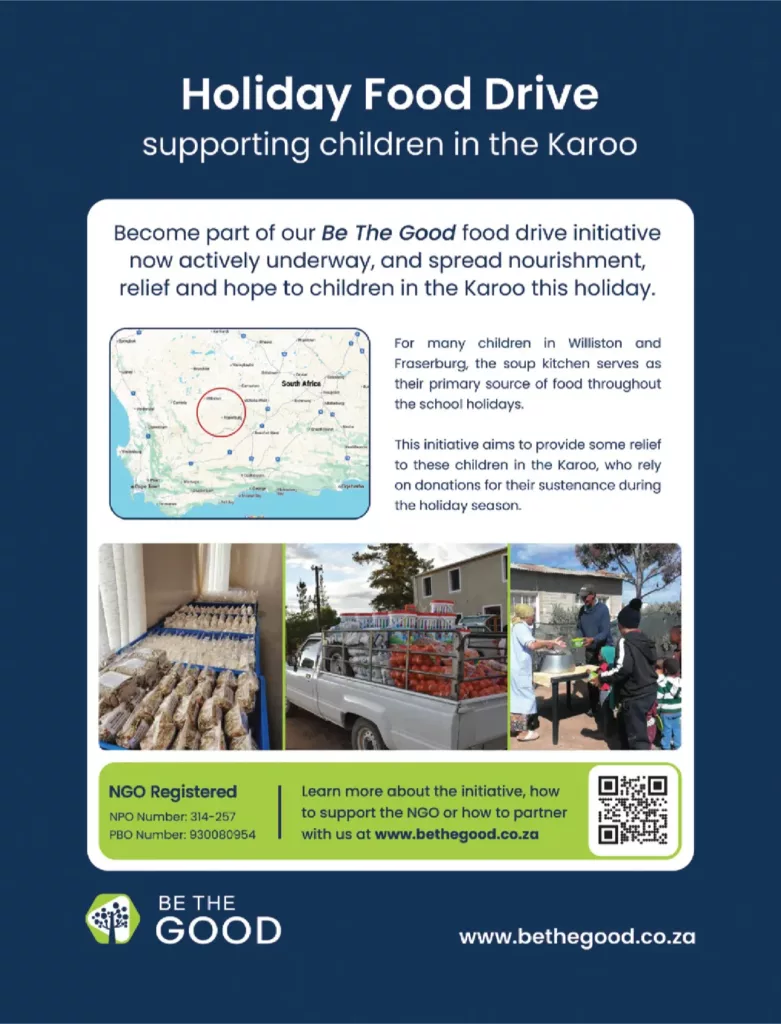
The universities that will survive and thrive are those willing to embrace change boldly. They must break free from the confines of tradition, harness technology to enhance learning and reimagine their role in society. It’s imperative for educational institutions to guide this transformation, ensuring that universities remain pillars of knowledge and catalysts for personal and societal growth.

The future of higher education is not predetermined. By adopting a learner-centric approach, leveraging technology for personalised learning and fostering a culture of continuous innovation, universities can redefine themselves. They can become not just places of learning but dynamic platforms that empower individuals to navigate an ever-changing world.

Text | Eugene Yiga

Photography | Besjunior

Eugene Yiga is a tech journalist and educator.

For more education, go to eugeneyiga.com.

Read more

Berry pavlova with caramel chilli drizzle

A show-stopping dessert that’s as beautiful as it is delicious

This light, airy pavlova is topped with a medley of fresh, juicy berries and finished with a bold drizzle of chilli-infused caramel made with Banhoek Chilli Oil. The perfect balance of sweet, tangy and spicy, this pavlova is an irresistible centrepiece for any festive gathering.

Serves six to eight. Preparation time: 30 minutes. Cooking time: one hour plus cooling.

Ingredients

  • 6 eggs
  • 1½ cups castor sugar
  • 1 tbsp corn flour
  • 2 tsp white vinegar
  • 1 tsp vanilla extract
  • ¼ cup brown sugar
  • 50g salted butter
  • ½ cup cream
  • 2 tbsp Banhoek Chilli Oil
  • 1 cup whipping cream
  • 3 fresh apricots, sliced into wedges
  • 3 cups fresh berries

Method

To make the meringue:

  1. Separate the egg whites and yolks. Place the whites in a large bowl and reserve the yolks in the fridge for later use.
  2. Whisk the whites until stiff peaks and then slowly sprinkle in the castor sugar a little at a time, rubbing a little between your fingers each time to feel if it is incorporated, and then continue. Once all the sugar has been incorporated, mix the corn flour, vinegar and vanilla in a small bowl and then whisk it into the meringue.
  3. Preheat the oven to 140°C.
  4. Trace a side-plate-sized circle on a piece of baking paper and place it circle side down on a baking tray. Use this circle as a guide for spooning the meringue onto the tray.
  5. Optional: Reserve a third of the meringue and place in a piping bag fitted with a star nozzle and pipe around the edges for a more detailed design.
  6. Place the pavlova meringue in the oven and turn it down to 100°C and bake for 60 minutes.
  7. Turn off the oven and allow the pavlova to cool in there for two hours.

To make the caramel chilli sauce:

  1. While the meringue cools, combine and mix the brown sugar, butter, cream and Banhoek Chilli Oil in a small pot, place on a medium heat and simmer until slightly reduced and the sugar has dissolved.
  2. Remove from the heat and allow to cool.

Serve the meringue:

  1. Whisk the cream until stiff peaks and spoon onto the baked meringue. Top with fresh apricots and berries and then drizzle the caramel chilli sauce over.
  2. Cut into slices and enjoy with family and friends.

Text and photography | Supplied

For more information, go to banhoekchillioil.com.

Read more
travel | leisure | lifestyle
REVIEWS

Media

This issue: Trees, twists, Hollywood and hunters

Tree Tales Of Zimbabwe Volume 2

by Jonathan Waters

There are few natural phenomena – terrestrial, certainly; the ocean gets much more attention – that are as culturally interesting as trees. They live for long periods, often in locations where human activity begins, evolves and sometimes even ends, overseeing history with all of its nuances, and often playing an extra role as home to any number of creatures along the way.

Jonathan Waters’s deep appreciation of the significance of old or otherwise traditionally entrenched trees shines through in both the scale of the endeavour behind this book – he has visited and researched scores of different trees and locations and collected them in a chunky coffee table book format – and in the detail of his research and storytelling, with his personal interest in and affection for his home country clearly evident. Baobabs feature heavily, unsurprisingly, but there are a range of other species (one is called a ‘snot apple’!) – many not as visually spectacular, but just as central (physically and metaphorically) to the places and stories they are part of. 

For all the changes and struggles a country goes through, trees give it a continuity and, well, rootedness that few other things can. This book will make any visit to Zimbabwe more interesting for any engaged traveller and enrich the experience of any locals who may pass these trees regularly without understanding their importance.

Read more

A Song For A New Day

by Sarah Pinsker

Written the year before COVID-19 stopped the world, putting a temporary end to public gatherings and wiping out most of the means for artists of all ilk to make a living, A Song For A New Day lands twice as effectively for both capturing the angst caused by a pandemic and for being the product of the author’s imagination, not her observations. Sarah Pinsker’s story weaves together threads about the power of music and community, struggling as outsiders and prioritising commerce over creativity and integrity. It’s rich and entertaining, simultaneously science fiction and yesterday’s news, and thought-provoking on both fronts.

Read more

Feud: Season 1 (16L)

This Disney+ series takes viewers back to old Hollywood – to the glamour, yes, but also to the behind-the-scenes politics, gossip and machinations that kept the star system ticking over. Jessica Lange and Susan Sarandon star as Joan Crawford and Bette Davis, respectively, with Alfred Molina as the long-suffering director Robert Aldrich, tasked with not only handling the actresses’ formidable egos but also the realities of them both entering the twilight of their careers. There are a number of major actors in other minor roles too, making a storyline about the challenges of acting and filmmaking very enjoyable in a pleasingly meta way.

Read more

Trap (16LV)

The new film from M Night Shyamalan, available on Showmax, reminds viewers of the director’s skill in presenting a scenario that is not what it seems, while also suggesting the frustrating choices he has made outside of his best work. Josh Hartnett plays a father who is accompanying his daughter to a pop concert in an arena. He’s made uncomfortable by what seems an unreasonably heavy police presence, and how and why he reacts informs the rest of the film. Even with the occasional moment that doesn’t fly as likely or possible, Trap is a solid thriller, especially in the moments around the main twist.

Read more

The Hunting Party (16LV)

Most bingeable series come with a good central concept, and in Showmax’s The Hunting Party, the premise is that an explosion takes place at a prison housing a large number of truly terrible people, who, now free, go about wreaking unimaginable havoc according to their specific, warped agendas. The team on their tail includes an expert profiler (Melissa Roxburgh), whose insight helps to narrow the gap between her and her colleagues and the psychos they’re seeking. This set-up allows each episode to be a tight, pacey thriller while continuing a nominal narrative over the course of the series. More of a focus on action than intellect, but enjoyable in that context.

Read more

Badgered into submission

What on Earth is happening on product warning labels?

It was the badger that sent me down a rabbit hole. Why a Woolworths strawberry yoghurt bar would proudly proclaim that it was “badger-friendly” was anyone’s guess. But it had me looking more closely at the packaging on other products in an exercise that was good neither for me nor the product.

Take my daily moisturiser as an example. Made by Dermalogica, it boasts “48 hours” of moisture protection. Which would be fantastic, if it didn’t instruct me to apply “twice a day”. In genuine confusion, I approached my wife, whom I consider to be an expert on all household skincare products, which includes moisturisers in a subcategory. She was as unhelpful as my daughter, who muttered something inaudible, but which included the word “men”, accompanied by a shaking of her head. 
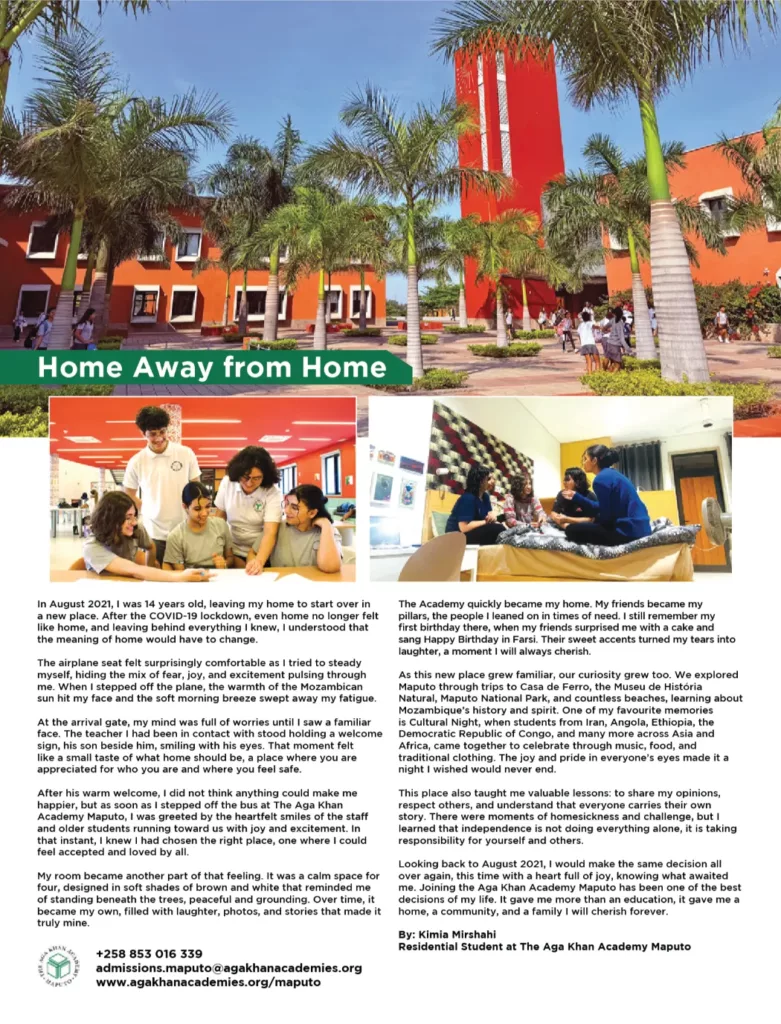
I was none the wiser.

So, I did what any sensible, self-respecting adult would do. I turned to the only place where truth and sanity still exist – the internet comment section. After 15 minutes, three conspiracy theories and one unsolicited skincare regimen involving goat placenta, I emerged even more confused but now deeply moisturised. But the madness didn’t end there.

Next on my forensic audit of consumer packaging was a bag of mixed nuts, unsalted, because apparently I care about my blood pressure now. The front declared, “May contain traces of nuts.” Which felt less like a warning and more like a philosophical riddle. Was I holding Schrödinger’s almonds? If it may contain nuts, and it’s literally a bag of nuts: is this a cry for help from the person writing the label?

Then there’s my shower wash. A product I have been using for years, mostly as directed, and which, recently, I noticed carries the solemn instruction, “For external use only.” This struck me as both reasonable and deeply worrying.

Because until that moment, it had never occurred to me that someone, somewhere, might have tried to drink it. Or perhaps use it as a colonic rinse. I’m not sure which horrified the manufacturer more, but it clearly felt the need to make it known that shampoo isn’t, under any circumstances, a smoothie.

And then the pièce de résistance: a frozen pizza box that instructed consumers to “Remove pizza from box before placing in oven”. Which, I would argue, removes the last sliver of natural selection from the modern food chain. If you’re putting cardboard in an oven, nature has tried to warn us.


Honestly, we used to worry about small print hiding nasty surprises. Now, the big print is more alarming. I haven’t even mentioned the bottle of ‘still water’ that helpfully states, “Contains water.” Thank you. That clears it right up.

At this point, I’ve stopped reading ingredients altogether. I just scan for helpful phrases like, “Does not contain uranium,” or “Badger-neutral”.

I dream of simpler times, when a tin of tuna said “tuna” and we all just… believed it. In the meantime, I’m launching my own range of products. Here’s the label on my first item: artisanal steam, small batch, locally exhaled ‘Howard’s hand-harvested H₂O’.

  • Gluten-free (obviously)
  • Homeopathically enriched
  • Badger-indifferent
  • 100% irony-infused
  • Pairs well with existential dread

Serving suggestion: read the label, question everything and, most importantly, moisturise twice daily.

Text | Howard Feldman | Shutterstock/photog’s name

Follow Howard Feldman on X: @HowardFeldman

Read more
Scroll to Top

Skyways delivers bespoke advertising campaigns for brands to real people. We connect the brand to the passenger at a unique moment in the sky where they have 50% higher recall. These campaigns sit across our award-winning magazines, digital, video and targeted digital solutions.

For all advertising Inquiries, contact Gill Johnston
at +27 83 455 2397 or gill@panorama.co.za