






insight for executives on the move

February 2026

Exploring new directions in South African mining

Women in engineering • Tourism careers • Leaders and AI • Beyond Zanzibar’s beaches • Future-ready children •

Table of Contents


Hidden depths

Modern South Africa is a country founded to a large extent on its mineral wealth – what has been discovered beneath the surface of its landscapes and extracted from those spaces to become the foundation for cities, markets and lifestyles. As mining companies come together to innovate, partner and network for a new year at the African Mining Indaba in Cape Town, the obvious metaphor here is worth reconsidering: it’s worth going deep to find value.

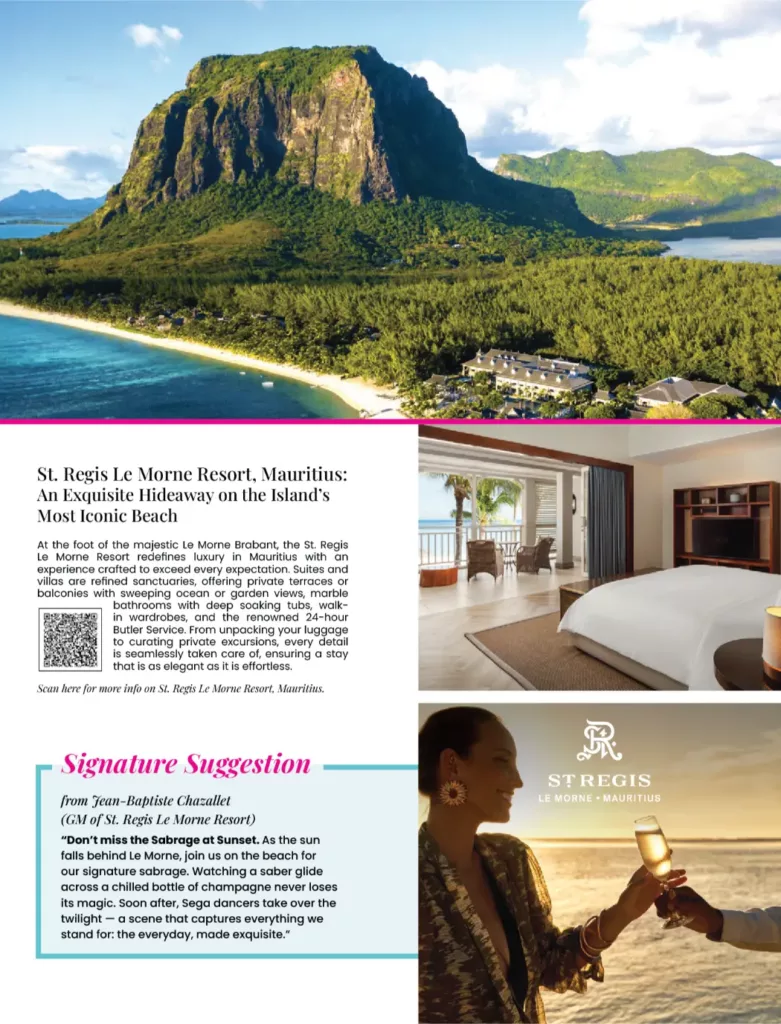
This, of course, applies to all sorts of industries and all sorts of commercial scenarios, such as using analytics intelligently to truly understand what employees add to a business (see page 108) and not being afraid to go further afield to seek what has not yet been explored (see features on new and upcoming Airlink destinations on page 22 and page 26).

And, though it may require at least temporarily abandoning comfort zones, looking deeper within – both yourself and those around you (see page 64) – will reveal more meaning and the opportunity for something beyond the superficial.

Here’s hoping you find some treasure in there.

Travel safely.

Bruce Dennill

Editor

Read more

PUBLISHER: Urs Honegger
EDITOR: Bruce Dennill
SENIOR SUB-EDITOR: Claire Rencken
SUB-EDITOR: Gina Hartoog
OPERATIONS AND PRODUCTION MANAGER: Paul Kotze
SENIOR DESIGNER: Annie Fraser
DESIGNER: Perpetua Chigumira
ADVERTISING: sales@panorama.co.za, +27 11 468 2090
NATIONAL SALES MANAGER: Gillian Johnston, +27 83 455 2397, gill@panorama.co.za
SUBSCRIPTIONS: subscriptions@panorama.co.za, Tel: 011 468 2090, Fax: 011 468 2091
Digital ezine available from skywaysmagazine.co.za
COMMENTS AND SUGGESTIONS: skyways@panorama.co.za
We value reader feedback. Please get in touch.
FINANCE: accounts@panorama.co.za
ISSN 1025-2657

Skyways magazine is published monthly and distributed via Airlink. All rights reserved. Reproduction of this magazine in whole or in part is prohibited without prior written permission of Panorama Media Corp (Pty) Ltd. Copyright © 1994-2024 Panorama Media Corp (Pty) Ltd. The views expressed in Skyways magazine are not necessarily those of Panorama Media Corp or Airlink, and the acceptance and publication of editorial and advertising material in Skyways magazine does not imply any endorsement or warranty in respect of goods or services therein described, whether by Skyways magazine or the publishers. Skyways magazine will not be held responsible for the safe return of unsolicited editorial contributions. The Editor reserves the right to edit material submitted and in appropriate cases to translate into another language. Skyways magazine reserves the right to reject any advertising or editorial material, which may not suit the standard of the publication, without reason given. Editorial material accepted for publication in Skyways becomes the property of Panorama Media Corp. Executive Briefs, Corporate Briefs, and Knowledge Profiles™ are solicited and paid for advertorial features in this magazine. Skyways magazine is published by Panorama Media Corp on behalf of Airlink.

Winning ways

Airlink’s commitment to excellence recognised at Civil Aviation Industry Awards

Airlink proudly celebrated a remarkable achievement on 14 November 2025 at the Civil Aviation Industry Awards, securing a number of prestigious awards. The evening highlighted Airlink’s dedication to excellence, innovation and transformation within the aviation sector.

Among the awards received was the Aviation Transformation Award, a recognition of Airlink’s ongoing journey to drive meaningful change in the industry. Since 2009, the airline has focused on increasing the participation of black people, including women, youth, workers, people with disabilities and private enterprise ownership. This commitment has been realised through initiatives such as Airlink Cleaning Services, Siyathemba Catering and Jo Borkett uniforms, which have created sustainable enterprises that uplift communities and deliver lasting impact. Airlink’s transformation efforts extend beyond enterprise development. Programmes such as TechLink and The Link expose learners from low-income communities to aviation, equipping them with both theoretical and practical knowledge.

A particularly special moment of the evening was the recognition of former CEO Rodger Foster, who was honoured with the Outstanding Contribution to South African Aviation Award. This award acknowledged his exceptional leadership, vision and enduring impact on the industry.

Airlink also received second runner-up in the People Development Award, a highlight of Airlink’s commitment to nurturing talent and empowering employees across the organisation.

Community values

Beyond the Civil Aviation Industry Awards, the airline was recognised at another event, where it received the Social Impact Award from the Gordon Institute of Business Science (GIBS), a testament to its broader contributions to communities and society. This was evident in Airlink’s decision to donate an Embraer 135 aircraft to the Rhodesfield Engineering School of Specialisation and develop a curriculum that will only be implemented this year. This was more than just a donation – it was a significant milestone in the aviation sector and a landmark for Airlink, ensuring that learners are introduced to opportunities that will shape their futures. By investing in education, Airlink is creating a pathway for young people in the aviation sector.

The airline expressed heartfelt gratitude to the teams and individuals whose efforts played a crucial role in securing these awards. Special thanks were extended to Dr Namhla Tshetu, Morgan Chikurunhe, Ingrid Skosana, Zandile Ngobe, Refilwe Mlaudzi, Michelle Le Roux, Thato Sekhaolela, Duane Ferreirinho and Stephen van Rensburg, whose dedication in collating information and providing support throughout the application process was instrumental in achieving success. Their commitment and hard work represent the spirit of collaboration that continues to drive the airline forward.

Airlink’s achievements at the Civil Aviation Industry Awards and GIBS Awards highlight not only its operational excellence but also its commitment to transformation, education and community upliftment. The airline continues to set new standards in South African aviation, inspiring future generations to soar.

Text | Keamogetswe Masango

Photography | Supplied

For more information, go to flyairlink.com.

Read more

Where future stars take flight

Inside the Titans Performance Institute

The Titans Performance Institute (TPI) stands as one of South Africa’s most progressive high-performance development hubs, designed with one clear purpose: to identify, nurture and elevate the next generation of sporting talent.

At TPI, athlete development goes far beyond traditional coaching. The programme brings together the full ecosystem required for elite performance: advanced coaching, sports science, performance analysis, strength and conditioning, mental skills development and academic or life-skills education.

This holistic framework ensures that every athlete is developed not just for the game, but for life, emerging well rounded, resilient and fully prepared for high-pressure competitive environments.

For Titans Cricket, the TPI operates as a specialised, year-round high-performance ecosystem where emerging players, coaches and support staff collaborate daily in a culture built on excellence. It serves as the critical bridge between grassroots cricket and the professional arena, offering structured pathways, individualised performance plans and valuable exposure to elite competitive settings.

But TPI’s impact goes beyond athletic ability. The programme intentionally shapes discipline, leadership, confidence and personal responsibility – qualities that define Titans Cricket’s proud legacy of producing champions on and off the field.

Who should apply?

The TPI is open to matriculated players who are serious about advancing their cricket career and progressing through the domestic system. Under the expert guidance of the Titans Cricket Union’s coaching staff, aspiring cricketers have the opportunity to train, develop and rise within a world-class, high-performance environment.

For those ready to elevate their game and step onto a professional pathway, the TPI is where the journey begins. Where potential meets purpose, and where future Titans are made.

Text and Photography | Supplied

Read more

Airlink fine-tunes Johannesburg-Nairobi schedule

TRAVEL

Airlink is updating its Johannesburg–Nairobi schedule to provide optimal customer convenience from late March 2026. The airline will introduce a daily early morning south-bound service (6:30am–9:40am) from Nairobi to Johannesburg, ensuring travellers arrive at the start of the working day and also in time for the morning wave of onward connections from Johannesburg’s OR Tambo International Airport.

The daily north-bound flight will depart just after lunchtime (1:30pm–6:30pm), accommodating customers arriving at Airlink’s Johannesburg hub during the mid-morning and connecting onwards to Nairobi.


“With our expanded fleet, we’re able to adjust our Nairobi schedule to better serve the needs of business and leisure customers who prioritise convenience and a great choice of connections at both ends of the route. Nairobi is a key gateway to Kenya and the all-important East African market. Similarly, through Airlink’s Johannesburg hub, customers can connect with our other domestic and regional services as well as long-haul flights provided by our global airline partners,” said de Villiers Engelbrecht, Airlink’s CEO.

Source: flyairlink.com

www.flyairlink.com

Read more

New black aircraft takes to the sky

AVIATION

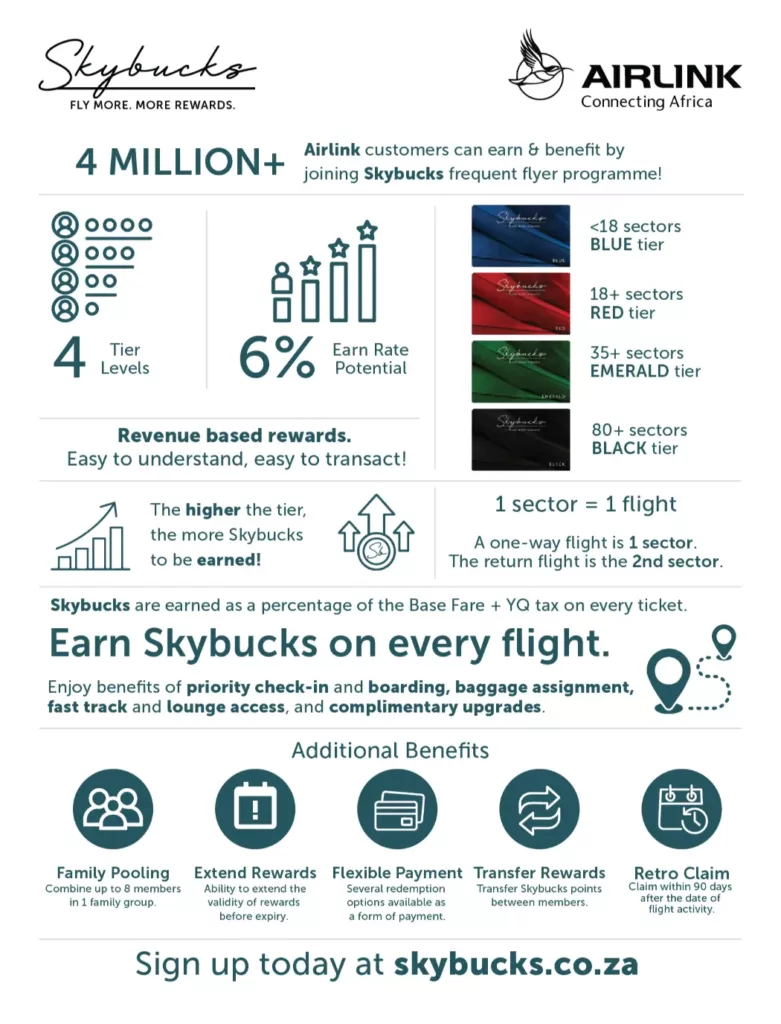
One of Airlink’s ERJ-135 LR aircraft (registration ZS-TGC) has been painted black to help promote the airline’s Skybucks loyalty programme, in which Black is the top tier, reserved exclusively for a select group of Airlink’s most loyal high-flyers.

The aircraft’s old paint was carefully removed using a light sanding process, creating a smooth surface for the new finish. This preparation ensured that the fresh coat adhered properly, delivering a durable, high-quality result. The process, completed by a dedicated team of two skilled and four semi-skilled personnel at Airlink’s Polokwane facility, took 18 days.

The black ERJ’s first flight was from Polokwane to Johannesburg on 28 November 2025.

Source: www.flyairlink.com

Read more

Even playing field

TECHNOLOGY

Managing air traffic in Europe’s busy skies is challenging enough without unpredictable weather. Storms and turbulence can cause thousands of delays every year, forcing controllers to make rapid decisions to keep flights safe and on schedule. To improve how weather is managed, DSNA, France’s air navigation service provider, worked with SITA to trial real-time weather tools designed to give controllers the same live data already used by pilots and airline dispatchers.

The proof-of-concept at the Reims Area Control Centre tested SITA’s Enhanced Weather Awareness System (eWAS) and Mission Watch over the summer of 2025. Across 21 days with weather-related capacity impacts between July and October 2025, DSNA used these tools to track and respond to fast-changing conditions across multiple airspace sectors. The results were clear. Flow managers were able to anticipate weather shifts more precisely, reducing delays by up to 65% – an estimated 60,000–105,000 minutes saved – while maintaining full safety. These operational gains also translate into financial benefits: handling 2,700 extra flights at an average en-route charge of R15,000 per flight equates to roughly R40 million in additional revenue for the same period. No incidents related to loss of traffic awareness were reported during the trial.

Source: sita.co.za

Read more

Welcome back, Erica!

ENVIRONMENT

After an unsuccessful search in 2012, the rare Erica cunoniensis was feared extinct, but in September 2025, a team of conservationists made a rediscovery of this endangered plant species, found for the first time in nearly four decades.

CapeNature staff, in partnership with members of the Custodians of Rare and Endangered Wildflowers (CREW), embarked on a challenging expedition to conduct threatened flora monitoring on the Buffelstalberg in the Kogelberg Nature Reserve, which has the only known population of Erica cunoniensis, with about 200 individuals in historic records. Kogelberg is known to contain around 1,800 plant species, of which 150 are only found within the reserve.

The team’s persistence was rewarded with the rediscovery of eight Erica cunoniensis plants,

confirming that even endangered species can survive with sustained conservation focus.

Sylvia Wolita, a pupil field ranger at Kogelberg, made the pivotal first sighting of the elusive plant.

Source: capenature.co.za

Read more

Golden guide

TOURISM

Johannesburg has a new voice – Jo, the chatty online personality of JHB In Your Pocket GPT, Africa’s first-ever AI-powered tourism guide, designed to lead visitors to the city’s coolest corners, quirkiest spots and hidden spaces.

Users can download the latest interactive guide to the Joburg City Centre and surrounds at jhbinyourpocketgpt.com. A printed guide, developed in partnership with Nando’s and Jozi My Jozi, is also available at select hotels and tourism hotspots.

Using OpenAI’s GPT technology, JHB In Your Pocket GPT has been customised to cater for Johannesburg’s unique mix of cultures, languages and lifestyles, targeting both locals out to discover their energetic city or international tourists visiting for the first time.

Source: jhbinyourpocketgpt.com

Read more

In the bag

TRAVEL

Airports Company South Africa (ACSA) recently announced a new enhancement to the ACSA Mobile App – the introduction of a real-time baggage tracking feature that offers passengers increased visibility, convenience and peace of mind throughout their journey.

Passengers can now, by entering their booking reference number and flight date, monitor the progress of their checked-in baggage from the moment it is handed over at the check-in counter, through each stage of the baggage handling process, until it is safely loaded onto the aircraft.

Passengers are able to download the updated ACSA Mobile App, featuring the baggage tracking functionality, from the Apple App Store, Google Play Store and Huawei AppGallery.

Source: airports.co.za

Read more

Deeply satisfying

New route to coastal city in northern Mozambique opens up a sanctuary of sand and sea

Well known as a deep-water port with depths of up to 50m, Nacala remains one of the busiest port cities in northern Mozambique. Its industrial side has expanded and ships with tall containers have long stood berthed on the Indian Ocean’s shores, bringing in commercial goods.

However, the perhaps less appreciated and under-explored aspect of the area is its natural beauty. Nacala’s multi-hued ocean expands wide below a crystal-blue sky, and they melt into each other at the horizon’s edge. There is ever-greater local interest in and potential for eco-tourism and sustainable travel, and this will help bring in unmatched experiences for travellers keen to explore this part of the country.

Kwalala Lodge, just north of the city, is aptly called an “oasis of relaxation”, living up to the meaning of its name – an East African term used to describe a place of beauty or rest. The direct view of the sun-kissed waters and the soft breeze blowing between the tall coconut trees and palms at the sea-facing pool create an ideal scenario in which to soak in the surrounding tranquillity, leaving all worldly worries behind. The ever-changing view presents new sights every day, a delight every time.

The lodge has been beautifully designed and curated by the warm, welcoming owners, Mike and Shirley Donald. Apart from being nature lovers, their dedication to making the lodge an inviting place to visit has spanned over 20 years of hard work.

The lodge offers something for all kinds of travellers: family units, self-catering units, twin units and sea-view units. They are all designed with natural materials, featuring stone walls, wooden interiors and décor in two gorgeously married colours – blue and white – making guests feel as connected to nature as possible.

Explore through activity

There are a few places you can go to in the world and feel true peace, a sense that comes to you here as the deep blue, endless ocean calls you to dip into its cool, comforting waters. The Professional Association of Diving Instructors (PADI)-trained staff (Mike is a diving instructor himself) guide guests through Kwalala’s marine sanctuary, a haven for both thrill- and peace-seekers, allowing them to witness the carefully preserved marine life underwater, including breathtaking creatures such as ribbon eels, octopuses, cuttlefish, leaf fish, lionfish, angelfish and batfish. There are also shoals of rainbow runners, kingfish and the ever-elusive Indian Ocean walkman, which uses its peculiar pectoral fins to ‘walk’ across the ocean floor.

The lodge’s activity centre offers all-weather, night and day access to the ocean. Guests can kayak, snorkel, scuba dive, stand-up paddle or hire a boat. Seasonal whale-watching is also offered, allowing ocean enthusiasts to hear humpback whales communicate or sing as they share the underwater space with the giant creatures.

For travellers wanting to relax after these physical exertions, witnessing the burnt-orange sunset over chilled drinks, enjoying a picnic while basking in the sun with warm sand beneath their feet or taking slow ocean swims are perfect options.

Feeling full

Mornings at the lodge are slow, with the waves crashing in the background and the smell of freshly brewed coffee hanging in the air. Breakfast involves soft, velvety pancakes covered in honey and fresh fruits and nuts, or a delicate slice of bread smothered in tangy orange jam.

The Thirsty Whale Restaurant, situated at the top of a rise, allows guests to enjoy an ocean view while dining. Arguably one of the best aspects of eating here is the wide range of cuisine the restaurant offers its guests on a concise yet comprehensive menu. The kitchen uses locally sourced ingredients, including fresh seafood from the ocean out front, as well as produce grown in the lodge’s own garden. Their home-made chilli sauce adds a perfect piquant twist.

The restaurant’s lunch and dinner menus range from Mozambican prawns and Indian butter chicken to burgers – something for all tastes. A must-try is the teriyaki chicken, glazed with sweet and savoury soy sauce, creating the perfect balance.

The desserts on the menu are an optimal way to end your meal, with the banana spring rolls and apple crumble being the guests’ favourites – a wonderful, sweet ending to a brilliant experience.

Text | Aayat Irfan

Photography | Supplied

For more information or to book a stay, go to kwalala-lodges.com.

Read more

Beyond the beaches

Beautiful Indian Ocean island has a rich, complex history, well worth investigating

Zanzibar is promoted to tourists as a paradise of white-sand beaches, turquoise seas, coral reefs teeming with life and resorts where cocktails appear as if by magic. All that is true, but there is also a darker, more complex history, one that shaped not just Zanzibar but much of East Africa. It’s a past built on human exploitation, one that deserves to be acknowledged and remembered as much as the natural beauty is celebrated.

From Stone Town, it’s impossible to miss Changuu, better known as Prison Island. It sits on the horizon like a mirage, its coral walls and palm-lined shoreline glowing in the late-afternoon light.

These days, tourists arrive by the boatload, cameras at the ready, eager to meet the island’s famous Aldabra giant tortoises or to swim in the impossibly clear waters. The past told a different story: when the first dhows brought enslaved men and women here, their journey was one of fear and despair, not leisure.

Hints of the past

Prison Island is both beautiful and haunting, a contradiction that makes it all the more powerful. The slaves brought here were commodities, awaiting sale or punishment. The ocean that now reflects sunlight like glass once mirrored the terror of human beings who knew that freedom was slipping from their grasp.

The old prison building still stands. Its rear façade faces the sea – the side from which the slaves would have disembarked. Today, the area in front, where the prisoners would have been gathered, is a restaurant serving seafood platters and cold drinks, but it doesn’t take much imagination to picture a very different scene more than a century ago. In the shadow of those same coral walls, men and women once waited in chains, unsure of their fate.

A few remnants remain, silent witnesses to what took place here. In the areas now repurposed as the ladies’ toilet and the bar, visitors will discover iron rings embedded in the floor, which were once used to secure prisoners as punishment was administered. Pause for a moment beside one of those rings, and the laughter of tourists fades into the background. What you hear instead is the echo of history, the whisper of waves carrying stories too heavy for words.

Before or after a guided tour, it’s worth stepping into the small information centre. There you’ll find letters, photographs and artefacts that lend voice to the voiceless: correspondence between colonial officers, abolitionists and traders. Some of it is chilling in its bureaucratic indifference; other pieces are deeply human, offering rare glimpses of compassion amid cruelty.

And then, as if the island’s narrative couldn’t be more surreal, there are the tortoises. Four Aldabra giants were originally gifted from the Seychelles, a symbol of peace, perhaps, or merely exotic decoration. Whatever their purpose, they have thrived. Today, nearly two hundred lumber slowly across the island’s sandy paths, impervious to both history and humidity. The oldest of them, at 193 years, has witnessed more than most of us could imagine. When stroking the shell of such a creature, it’s hard not to feel the contrast between the permanence of nature and the fragility of human morality.

Ironically, Prison Island never served its intended purpose as a prison. In later years, it became a quarantine station, housing patients with yellow fever and other contagious diseases before they could enter Zanzibar. The irony isn’t lost – an island once used to confine slaves was later used to protect the population from another kind of threat. Either way, confinement remained its central theme.

What lies beneath

Back on the mainland, a visit to Stone Town’s Anglican Cathedral deepens the sense of historical gravity. The cathedral itself is an architectural gem – a fusion of Gothic and Islamic design, built directly atop what was once the island’s largest slave market. It’s a symbolic act of redemption: faith built upon cruelty; hope anchored in remembrance.

In the courtyard, the remnants of the slave chambers are preserved. The air down there is thick and still. Low ceilings press down on you, and it takes little imagination to picture the suffering that filled this space. Chains hang on the walls, a silent reminder of what the human body and spirit can endure. In the garden, a sculpture depicts five enslaved figures, carved from stone, their necks bound together by real chains. This isn’t a distant history lesson; it’s an emotional confrontation.

The small museum adjoining the cathedral recounts Zanzibar’s role in the East African slave trade. For centuries, the island was a hub for human trafficking. Tens of thousands of Africans captured from the mainland were sold here each year to Arab, Indian and European traders. The trade was abolished in 1873 under pressure from the British, but abolition didn’t erase the memory. The slave trade shaped Zanzibar’s identity, its economy and its people in ways that can still be felt today.

Riches and respect

Tourists want to escape to the exotic beauty that Zanzibar offers in abundance. Visiting Prison Island and the Old Slave Market isn’t about guilt: it’s about gratitude – for freedom, for progress and for the chance to learn from history.

It’s also about perspective. Standing at the edge of Prison Island, you can see Stone Town shimmering across the water. The same view would have been visible to those brought here in chains, freedom so near, yet impossibly far. And from the steps of the cathedral, you can hear the call to prayer drifting through the narrow alleys, a reminder that Zanzibar’s story is one of coexistence as much as conflict.

Swim in the warm Indian Ocean. Sip cocktails beneath the frangipani trees. Wander through spice farms and lose yourself in the labyrinthine lanes of Stone Town. But take a morning to visit the above two sites as well. Read the plaques. Touch the stones. Let the weight of history settle on your shoulders, if only for a while.

The soul of Zanzibar lives in its resilience, in the echoes of its past and in the quiet determination of a people who turned pain into beauty. That’s the story worth remembering and the one worth telling.

Remember, when visiting, that sites like Prison Island and the Old Slave Market are not just tourist attractions, they’re memorials. Dress modestly, speak softly and take a moment to reflect before raising your camera. Support local guides – their stories give these places a human voice that no plaque ever could. Buy from local vendors and artisans, and most importantly, carry the experience with you. Share what you’ve learnt so history never becomes just another forgotten footnote.

Text and Photography | David Batzofin

For more information, go to visitzanzibar.go.tz and travelandthings.co.za.

Read more

Happy trails

Karoo slack-packing safari places hikers in breathtaking surroundings – with luxury to look forward to

After a scenic drive from Gqeberha (Port Elizabeth), arriving at Samara Karoo feels undeniably, immediately special. Here is the definition of ‘wide open spaces’ – a place where driving to your neighbour to borrow a cup of sugar will be a three-hour round trip. Mountains march in receding lines, so in any direction, they’re always moody and distant. Vast, flat plains blur slightly as herds of springbok wander across them, and the skies have so little light pollution that the Milky Way is visible at twilight.

Out in this enigmatic wilderness, a simple but comfortable fly camp has been set up under the stars, the base for the Cheetah Trail, a slackpacking walking safari that also takes in Samara’s safari-tented Plains Camp, a few kilometres away. The generally imagined setup for such fly camps is that cots or mats are laid down in a compact area with perhaps a strand of electrified wire encircling the camp to ward off curious critters, with everyone then rolling out a sleeping bag to huddle down together at bedtime.

The reality? No electric fence – the fire, noise and movement of campers are enough to keep nocturnal passers-by passing by – and the beds are large, luxury stretchers with duvets, blankets and mosquito nets, arranged in groups under trees with side tables, bug spray, mugs for water and boxes of tissues. Off to one side, there’s an open-air shower and a chemical loo. It’s more like a garden party sleepover at Downton Abbey than a ‘basic’ camp-out.

Everyone is offered their favourite tipple and seated around a large campfire on which the guides cook lamb chops, sausages, aubergine steaks, braai rolls, chicken kebabs and more over the coals. The meal is delicious, if slightly difficult to see with the fire as the main source of light. Many guests set their cutlery aside and use their hands so they can feel what they’re eating. Dessert is barbecued pineapple slices covered in chocolate sauce, all prepared on the fire – a brilliant idea.

Lying in the dark, the quiet wilderness feels simultaneously wrong (what’s out there that you can’t see?) and magnificently, peacefully right. If you drift in and out of sleep, the stars will have shifted, updating the pristine panorama above your head. A chorus of jackals pans from left to right, the sound eventually surrounding sleeping guests. The guide on watch stokes the fire and does circuits of the surrounding bush with a torch bright enough to be noticed by astronauts passing overhead. Collectively, it’s a soul-stirring basics-meets-extravagance experience.

Wildlife and widescreen scenery

An early start includes breakfast around the fire before setting out for Plains Camp via a mindfully meandering path that allows for maximum wildlife sightings and interest. The guides track a couple of black rhinos that always manage to stay ahead and out of sight, following criss-crossing, figure-of-eight paths. While on their trail, it’s fascinating to note the tiny blooms that arise from nowhere after rains earlier in the week, alongside the scattered, centuries-old shepherd trees, some of them at bonkers angles even as their leaves remain vivid green thanks to tap roots that extend deep (the guides say 70m!) into the soil.

We approach a small herd of giraffe and are motioned to sit, slowly and quietly, as apparently this makes them curious. Sure enough, they wander closer, unperturbed, peering at us for a couple of minutes before continuing with their browsing.

A light rain begins to fall as we reach Plains Camp, where the safari tents offer 180° views of a poetically exquisite, ancient landscape. Freshening and warming up happens courtesy of bucket showers hot enough to scare a lobster (you can adjust for cold by leaning out into the rain).

In the common area, a large dining table can be placed in- or outside, depending on the weather, while a small, circular pool begs for sun-drenched afternoons. There’s a single phone charging point, temporarily busy as newly arrived guests dip back into reality, then quiet as the realisation kicks in that resting on a sun lounger across the valley from faraway mountains is time better spent than scrolling on TikTok. Even a cloudy day is no reason for disappointment – it simply changes the texture of the vista, suggesting Van Gogh one minute and Klimt the next.

There is silence of a quality impossible to achieve in any sort of urban area. No pumps, no generators, no hum or buzz of power lines, no dogs barking or cars hooting. Bird calls become signals rather than background noise, and the changing intensity of the wind allows you to hear the word ‘shimmer’… without anyone saying it.


It’s a wonderful context for doing nothing, but it feels almost criminal to close your eyes when there’s still light around, wasting that view…

Brotherhood of beauty

On an afternoon walk, right near the camp, two of the trail’s namesakes are lounging about in the grass – large, relaxed cats known as ‘The Kalahari Brothers’ for their original home region (management of cheetah populations involves relocations in order to diversify the species’ small gene pool). This pair is so powerful that they don’t bother with the usual smaller antelope like springbok, successfully teaming up to bring down gemsbok and kudu.

From there, it’s a short hike up the hill to a spot with even wider views than the camp. In the distance – 16km away – in the valley where the Samara Karoo Lodge is situated, rain is falling as we enjoy sundowners. That area apparently gets twice the annual rainfall of Plains Camp. For now, it’s as dry as good gin on our side, so G&Ts, snacks and conversations about adventures flow freely.

There’s more food back at camp, delivered with infectious smiles and giggles from the cheerful, caring staff, before retiring to a tent warmed by a log fire set while we were out, which, with all the window flaps closed, sets the temperature at ‘mild sauna’ before it equalises with a bit of airing.

On the final day of the trail, sun and sky make a comeback after mist and rain, as does the wind, a reminder that the landscape makes the rules here. Itineraries are lovely, but what happens will happen – all while you’re enjoying genuine comfort and attentive service.

Text | Bruce Dennill

Photography | Supplied

For more information or to book for the Cheetah Trail, go to samara.co.za.

Read more

Stark splendour

Photographer paints a glorious picture of a stunning country

Namibia – vast, empty and the driest country in sub-Saharan Africa – is often perceived as bleak (mostly by those who have never visited the place). In reality, the country is almost bewilderingly beautiful, from the iconic red dunes of the Namib Desert to the magnificent wildlife, perfectly adapted to the harsh conditions.

Text | Bruce Dennill

Photography | Anna-Mart Kruger

For more information, go to facebook.com/TravelAfricaPhotos.

Read more

Flavour on top

Airlink’s commitment to excellence recognised at Civil Aviation Industry Awards

Airlink proudly celebrated a remarkable achievement on 14 November 2025 at the Civil Aviation Industry Awards, securing a number of prestigious awards. The evening highlighted Airlink’s dedication to excellence, innovation and transformation within the aviation sector.

Among the awards received was the Aviation Transformation Award, a recognition of Airlink’s ongoing journey to drive meaningful change in the industry. Since 2009, the airline has focused on increasing the participation of black people, including women, youth, workers, people with disabilities and private enterprise ownership. This commitment has been realised through initiatives such as Airlink Cleaning Services, Siyathemba Catering and Jo Borkett uniforms, which have created sustainable enterprises that uplift communities and deliver lasting impact. Airlink’s transformation efforts extend beyond enterprise development. Programmes such as TechLink and The Link expose learners from low-income communities to aviation, equipping them with both theoretical and practical knowledge.

A particularly special moment of the evening was the recognition of former CEO Rodger Foster, who was honoured with the Outstanding Contribution to South African Aviation Award. This award acknowledged his exceptional leadership, vision and enduring impact on the industry.

Airlink also received second runner-up in the People Development Award, a highlight of Airlink’s commitment to nurturing talent and empowering employees across the organisation.

Community values

Beyond the Civil Aviation Industry Awards, the airline was recognised at another event, where it received the Social Impact Award from the Gordon Institute of Business Science (GIBS), a testament to its broader contributions to communities and society. This was evident in Airlink’s decision to donate an Embraer 135 aircraft to the Rhodesfield Engineering School of Specialisation and develop a curriculum that will only be implemented this year. This was more than just a donation – it was a significant milestone in the aviation sector and a landmark for Airlink, ensuring that learners are introduced to opportunities that will shape their futures. By investing in education, Airlink is creating a pathway for young people in the aviation sector.

The airline expressed heartfelt gratitude to the teams and individuals whose efforts played a crucial role in securing these awards. Special thanks were extended to Dr Namhla Tshetu, Morgan Chikurunhe, Ingrid Skosana, Zandile Ngobe, Refilwe Mlaudzi, Michelle Le Roux, Thato Sekhaolela, Duane Ferreirinho and Stephen van Rensburg, whose dedication in collating information and providing support throughout the application process was instrumental in achieving success. Their commitment and hard work represent the spirit of collaboration that continues to drive the airline forward.

Airlink’s achievements at the Civil Aviation Industry Awards and GIBS Awards highlight not only its operational excellence but also its commitment to transformation, education and community upliftment. The airline continues to set new standards in South African aviation, inspiring future generations to soar.

Text | Keamogetswe Masango

Photography | Supplied

For more information, go to flyairlink.com.

Read more

Fat can burn itself, say scientists in weight-loss breakthrough

Initial trials indicate the body can be ‘tricked’ into turning calorie-storing white fat cells into calorie-burning beige

Who doesn’t wish for an easier weight-loss journey? It can be tricky to make those all-important changes to improve our diet and exercise, and trickier still, to know which of the endless weight-loss fads will be the one to work for you. Of course, there is no substitute for healthy eating and regular exercise, but scientists might have found something of a cheat code for burning calories. And it all comes down to a fat-burning mechanism that you already have in your body. It’s known as beige fat.

Lots of mammals, including humans, have three types of fat cells: white, brown and beige. A team of researchers at the University of California, San Francisco, USA, have discovered a way of getting white fat cells to transform themselves into beige.

Now, it would be understandable to think that these sound like two sides of the same coin, but there is a significant difference. White fat cells store calories for energy, brown cells burn energy to release heat in the regulation of body temperature and beige cells combine both tasks.

By switching more white fat cells into beige – which, unlike brown, are embedded in deposits of white fat – the body could effectively burn more fatty cells naturally, without assistance.

While this discovery is based on tests on mice, the researchers are optimistic that it could lead to the development of a new class of weight-loss drug, and one without the side effects in some of the current treatments growing in popularity today. It could even explain why clinical trials of related therapies have not been successful to date.

Humans can naturally transform white fat cells into beige in certain circumstances, like a diet or a cold environment, but scientists have long believed that the key to inducing this process lies with stem cells. The new study, published in the Journal of Clinical Investigation, demonstrated that there is another method that does not rely on stem cells at all. Ordinary white fat can transform into beige fat by limiting the production of a single protein: KLF-15.

“A lot of people thought this wasn’t feasible,” said Dr Brian Feldman, Professor of Paediatric Endocrinology and senior author of the study. “We showed not only that this approach works to turn these white fat cells into beige ones, but also that the bar to doing so isn’t as high as we’d thought.”

KLF-15 plays a role in metabolism and the function of fat cells. During investigations on mice, Feldman and his team discovered that the protein was much less abundant in white fat cells than the other two.

The team bred mice with white fat cells that lacked the KLF-15 protein and found that they converted fat cells from white to beige. Not only could they make that switch, but without the protein, beige actually became the default setting.

The reason for this – discovered using cultured human fat cells – is that KLF-15 controls the levels of a receptor called Adrb1, which helps to maintain energy balance. Previous research used drugs to target the similar Adrb3 receptor in mice and resulted in the test subjects losing weight. Human trials, however, had disappointing results.

According to the team, a drug targeting the Adrb1 receptor is much more likely to be effective. It could also have advantages over current weight-loss treatments by limiting the side effects while having longer-lasting benefits.

“For most of us, white fat cells are not rare, and we’re happy to part with some of them,” said Feldman. “We’re certainly not at the finish line, but we’re close enough that you can clearly see how these discoveries could have a big impact on treating obesity.”

This article appears in Very Interesting #84.

Please CLICK HERE to receive the current VI issue digitally for FREE!

Read more

Trace that call…

New book sees true crime podcast host re-examine missing person and murder cases

There’s a knock at the door of room 205. The young woman answers and chaos ensues. Hours later, her parents receive a call that changes their lives forever. In many ways, their lives end that day too. Just before the hooded man lopes away from the hotel, he hangs a sign on the door: do not disturb. And for two decades, the world took heed.

I heard about the murder of Leslie Brockbanks van Zyl early in my podcasting journey. I’d occasionally be tagged in the comments sections of articles about her murder by her colleagues and friends and it struck me how people still remembered her after so long with such fondness and respect. Weird coincidences often crop up in the work I do. For the most part, they’re probably just that – coincidences – but sometimes it’s comforting to interpret them as confirmation that I might be on the right track. Several delays in researching Leslie’s case meant I released the podcast later than planned. The day it was published happened to be Leslie’s birthday. Leslie’s mom, Christine, thought that was pretty cool.

Christine has found different ways to remember her daughter over the years and speaking with me seemed like a good way to do that in 2021. I also spoke with Michelle Pienaar, a journalist from the George Herald. She and her colleagues at the newspaper have been instrumental in raising awareness about Leslie’s case and they were among my main sources of information.

As with other cases in this book, police have identified persons of interest. These people remain innocent until proven guilty in a court of law and as I do with my listeners, I ask that readers withhold public speculation about these suspects. I do not want social media witch-hunts or personal campaigns against any of them. It’s not in the interests of justice for Leslie.

Leslie Brockbanks was born to her parents, Christine and Arthur, on 17 December 1971. Leslie’s parents are British and she and her brother, Paul, were born in England. In 1981, the family moved to the southern suburbs of Cape Town. Leslie was an intelligent and studious girl and, when the family arrived in South Africa, the education authorities recognised that she was too far advanced to be placed in the same grade as her similar-aged peers. She went on to matriculate from Plumstead High School in the year she turned 16, with a university exemption.

Leslie initially wanted to go into banking, but after trying it out for a while, she decided it wasn’t for her. Instead, she started her career at Liberty Life, where she flew up the corporate ladder. She spent 11 years at the company and was still there at the time of her death. Several former and current Liberty employees have contacted me over the years about Leslie’s case. These are people who worked with her more than two decades ago but they still remember her and speak fondly of her kindness and strong work ethic.

Christine says she and Leslie were friends as much as they were mother and daughter. At one point, when they both worked in town, they would meet for lunch almost every day. They loved shopping together and could spend full days trying on clothes and giggling at one another’s jokes.

Leslie met Pierre van Zyl after she started working at Liberty Life. The pair married but Christine says the relationship quickly became rocky. In Pierre’s statement to the police, he admitted that their marital difficulties stemmed from his use of alcohol. Christine, on the other hand, says the couple’s issues went much deeper.

Early in their marriage, the couple lived in a house across the road from Leslie’s parents, and Christine says Leslie would often come over when she’d had an argument with Pierre. Christine believes her daughter may have been the victim of physical or emotional abuse, or both.

Leslie was soon promoted to the position of team leader at Liberty and the job required a fair amount of travel. She often flew to other branches throughout the country to train staff on new insurance products.

In August 2000, Leslie and Pierre were separated and she was living with her parents. Christine says Pierre remained in regular contact with Leslie, occasionally complaining to her that he didn’t have enough money to support himself.

On Monday, 28 August 2000, Leslie’s father dropped her off at Cape Town International Airport. She was due to fly to George, where she would be giving a presentation to staff at the Liberty Life branch in the southern Cape city. On arrival, Leslie made her way to the Protea Hotel King George in King George Drive, about 10 minutes from the airport. She checked in and was allocated room 205.

It would later be determined that Leslie received a telephone call in her room. I don’t have a time for this call, unfortunately, but it’s safe to say that it was several hours after Leslie checked in. The call would be traced to a public phone box (remember those?) outside the Dros restaurant in York Street, George.

According to my research, it isn’t possible to phone a hotel room directly from outside the hotel. The call must be routed through the reception desk. So, the call Leslie received that night must have gone to reception, the caller must have asked for her by name and the call would have been transferred to room 205. We do not know who made this call.

Text | Nicole Engelbrecht

Photography | Maryam Adams and Conchi Martinez

Bare Bones by Nicole Engelbrecht, published by Jonathan Ball, is available now. For more information, go to jonathanball.co.za. This excerpt is published by permission.

Read more

Searching for stories

Looking great is a smaller part of a luxury travel option than it used to be

Around 71% of affluent travellers now prioritise emotional connection and storytelling over traditional luxury cues like décor or branding (according to Skift’s 2024 State of Luxury Travel). For this new wave of high-net-worth travellers, the most valued experiences are those with cultural resonance, authenticity and personal relevance. Modern luxury is less about chandeliers and marble bathrooms and more about heritage, identity and the stories a place can tell.

Research confirms that two-thirds of affluent consumers prioritise purpose-driven experiences over possessions (Business Insider) and a third of luxury travellers will pay more for experiences aligned with their values (Mastercard Luxury Insights). Neuroscience also shows that emotionally charged moments imprint deeper and last longer than neutral ones.

Luxury is now measured in stories rather than objects. Travellers seek destinations that reflect history, culture and local identity, with authenticity and sustainability taking precedence over conspicuous display.

Heritage sites and working estates are increasingly popular because they offer depth rather than superficial luxury. Five years ago, the focus was on how many destinations you could tick off. Today, it is about which will leave a lasting impact.

Getting the balance right

This shift is closely tied to slow travel. Extended stays allow guests to move from observers to participants. Depth replaces breadth: a longer stay enables meaningful experiences that leave a lasting impression and support deeper engagement with a property.

However, even with a focus on storytelling and immersion, balance is key. Guests seek authenticity but also ease. Too much curation feels sterile, while too little leaves people adrift, as seen in the industry-wide concern of ‘beige-ification’, where luxury hotels risk becoming overly neutral and generic (Travel and Tour World). The sector continues to navigate this tension as it shifts from generic luxury to layered, grounded experiences.

For luxury brands, the lesson is clear: the future is defined by purpose, not polish. Properties that embed heritage, culture and personal relevance into every touchpoint are the ones that resonate most. Publishing a property’s cultural or ecological impact, involving guests in the story and offering experiences that align with their values have become the new signals of exclusivity.

It’s the story that stays with guests long after the visit.

Text | Catherine Schulze and Carryn Wiltshire

Photography | Neil Bradfield

Catherine Schulze is Managing Director of Hospitality and Carryn Wiltshire is Marketing Manager of Wine at Steenberg Farm.

For more information, go to steenbergfarm.com.

Read more

Layers of processing

AI analysis of an individual’s skin characteristics can improve the quality of skincare

In the skincare space, there is a massive transformation as AI restructures how products are developed and formulated – all tailored to meet consumers’ unique skin requirements. Skincare products are no longer following a ‘one size fits all’ approach. Instead, AI is empowering beauty brands to create bespoke products that factor in an individual’s distinctive – and pre-existing – skin conditions, environmental influences, genetic makeup and even how one person’s skin is likely to react to ingredients.

Cutting-edge machine learning algorithms process and analyse vast amounts of data about an individual’s skin health and unique characteristics. These systems maximise the use of technology to conduct detailed skin analyses, including reviewing factors such as texture, tone, pore size, fine lines and potential areas of concern. So sophisticated is the technology that it can detect subtle variations in skin condition that may not be visible to the naked eye.

AI systems don’t merely examine surface-level skin characteristics. They incorporate multiple information sets, including environmental factors like humidity, UV exposure and pollution levels in the user’s location.

One of the most notable aspects of AI in skincare is its ability to draw on historical data about product effectiveness. By using a myriad of data from customer feedback, clinical trials and real-world usage, AI systems can identify patterns in how different skin types respond to various ingredients and formulations.

For example, when treating specific skin conditions such as scarring, AI may recognise that although vitamin E oil indicates positive outcomes for certain skin types, other ingredients may well be more effective for different genetic profiles or skin conditions. This kind of in-depth analysis makes for entirely personalised recommendations based on the data and no longer on broad assumptions.

Room to grow

Safety still comes first in skincare development. AI systems are specifically programmed to work within stringent safety protocols and regulatory frameworks. With this in mind, technology can quickly identify potential safety concerns or side effects on an individual’s skin type, known sensitivities and other health conditions.

However, the human touch will never fully be negated. Typically, those organisations currently making use of AI in the skincare realm most often rely on dermatologists and cosmetic scientists to review and validate AI-generated formulations. This hybrid approach ensures the best outcome for both the company and consumers.

Given that AI technology is still relatively new, it is difficult to predict with any degree of accuracy what the future of AI in skincare looks like. However, pundits are suggesting the following advances may be in reach sooner than we think:

  • Integration with wearable devices to track additional health metrics that might impact skin condition.
  • Enhanced prediction models for long-term skin health outcomes.
  • Improved formulation methodologies that create products with greater stability and efficacy.

Text | Adrian Gounder

Photography | People Images

Adrian Gounder is founder of Skin Recode. For more information, go to skinrecode.co.za.

Read more

Bumps in the road

While treating warts can be a simple matter and can be done at home, it’s important to do this correctly

Although warts might be small skin conditions, they can spread and may cause unnecessary discomfort, particularly in the summer months when warts are known to spread. The increased exposure to warm, moist conditions, as well as time spent barefoot and in public places, leads to the viral spread. There are many myths around the treatment of warts, and this can prolong the viral spread.

Frogs and toads don’t cause warts. Rather, they’re caused by the human papillomavirus (HPV), which is a group of more than 150 viruses. The virus enters the skin through tiny cuts or abrasions, often in warm, moist environments like swimming pools or public showers.

Warts are contagious. However, they require touch to spread from person to person – either by direct contact or sharing personal items like towels, razors or shoes. Remember that scratching or picking at your own wart can spread it to other areas of the body.

Warts are surprisingly common, affecting 10–20% of people globally. Children, teens and individuals with weakened immune systems are particularly susceptible. They often show up on the hands, feet, elbows or parts of the body where the skin is frequently exposed to moisture or friction.

Non-invasive treatments

Warts come in different shapes, sizes and types, each caused by different strains of HPV. While treatments often overlap, knowing what type of wart it is helps determine the best course of action.

The most common include:

  • Common warts: Usually on the hands and fingers
  • Plantar warts: Found on the soles of the feet; often painful
  • Flat warts: Smaller and smoother, commonly on the face or legs

While some warts do disappear naturally, others can linger for months or even years. And even when they vanish, the HPV virus remains in the body, meaning the wart can return. If a wart is painful, spreading or causing embarrassment, it’s best to treat it early.

Thanks to advancements in dermatological treatments, wart removal is now more comfortable and less invasive. Topical treatments can be bought as over-the-counter medication, effectively treating most warts in a couple of weeks. Home remedies such as apple cider vinegar, duct tape or garlic are widely promoted online, but they’re rarely backed by scientific evidence. Additionally, these can actually irritate or damage healthy skin if not used properly or if used on sensitive skin. It’s best to use proven treatments or consult a healthcare provider.

Anyone can reduce their chances of getting warts by following a few simple hygiene steps:

  • Don’t walk barefoot in communal areas.
  • Avoid sharing personal grooming items.
  • Keep cuts and scrapes clean and covered.
  • Wash hands regularly.

Text | Lynsey Hammond

Photography | Yury Nikolaev

Lynsey Hammond is Managing Director of Kroko.

For more information, go to kroko.co.za.

Read more

Nature’s weirdest creatures

The world’s ecosystems are filled with fabulous, fantastic life forms

What lives around 1,000m underwater, is the size of a chickpea and looks like the plump pink rear end of a pig? This question had scientists puzzled for a long time. Teams from the Monterey Bay Aquarium Research Institute (MBARI) occasionally spotted these odd creatures while surveying the Monterey Canyon, off the coast of California, with remote-controlled submersibles. But they couldn’t figure out what kind of animal it was.

It wasn’t until the submersible pilots managed to carefully collect a few specimens of these creatures that MBARI scientists had their first chance to study these strange animals up close. When they did, they realised that they’re actually a kind of bristle worm, or polychaete, a huge group of marine worms that live throughout the ocean but mostly on the seafloor. They also realised these floating worms are highly unusual.

Sequencing the animals’ DNA revealed them to be members of the Chaetopterus genus. Unlike their relatives, which have classically ‘wormy’, elongated bodies divided into segments, in this species, one of the middle segments is inflated like a balloon – or a pig’s bum. The worms’ other body segments are all squashed up at the front and back.

The scientists who solved the riddle of these peculiar creatures not only assigned them the common name of pigbutt worm but also included it in their choice of scientific name, Chaetopterus pugaporcinus: puga from the Latin root word meaning ‘rump’; porcus meaning ‘pig’; and inus meaning ‘having the likeness of’. This is officially the worm that looks like a pig’s rump.

Why it looks like this is less of a mystery. The inflated segment increases the worm’s buoyancy and helps it float. Most other Chaetopterus worm species spend their lives crawling around on the seabed, but these ones seem to have said farewell to the bottom of the sea and drifted off to begin life bobbing about on the currents.

Pigbutt worms live mostly between 900 and 1,200m underwater, which is where they find most of their food. Scientists watching them in the wild have often seen them surrounded by a small cloud of goo. They think this mucus acts like a net and catches falling particles of organic matter, known as marine snow, which is the pigbutt worm’s staple diet.

Live specimens in the lab have also shown they share a common ability with many deep-sea species. Pigbutt worms glow in the dark. If you gently prod one, their body glows blue. And if you watch carefully, you might see them emit a puff of green glowing particles. These come from what’s technically called the mid-dorsal ciliated groove on the worm’s body – in other words, the part that looks like the crack between its buttocks.

Text | Helen Scales

This article appears in Very Interesting #84.

Please CLICK HERE to receive the current VI issue digitally for FREE!

Read more

Telling wild stories

Traveller, writer and journalist David Bristow adventures into southern Africa’s most intriguing corners, past and present, in new book

What is the importance of telling stories rather than just relaying facts? Loony Birds… covers history, anthropology, environmentalism and many other topics some readers might not otherwise actively go looking for.

David Bristow: Many of us are quite well trained in the ‘-ologies’, but the deeper you go into these things, the more stories you find. I recently went on a fossil-collecting trip with the UCT Summer School. I thought we’d be shown a site or two, but no – we were set loose and found what were clearly five different, previously uncovered fossils. It was like pulling plums from a Christmas pudding!

I never planned to be a writer. I was a journalist because I saw amazing historical events unfolding and I wanted to be part of that. So, I quit my job, drove to Rhodes University – and was accepted! Next, as a climber, I stumbled into putting a book together and it became a bestseller.

Now, I feel like I’ve joined a storytelling guild, like the San around a fire. Some of the stories in this book are obscure. If you’re a real reader, you might know some of them, but we weren’t taught about these things at school. My kids won’t necessarily have seen or read these stories, so these short versions could still find a new audience. The story about David Livingstone, for instance, is hilarious and strange. I found a version of that story in a book at a lodge and made a note to look into it, which I later found in my pocket.

You’ve said that you try to “research deeply and write lightly”. What does that mean in terms of travel writing or edutainment?

I really have travelled. I started at 14, when I hitchhiked everywhere from Swaziland to the Okavango Delta. Then I started studying. Combining these perspectives, I think, gives me a decent knowledge of the places I’ve been.

I’m extremely disgruntled about the state of writing – everything from the use of AI to never leaving the office. You need to be able to write a book before you can write a short story. All writing needs to offer information and education. You can play around with percentages, but it all helps. It’s also good to have a sense of humour…

As a photojournalist, what knowledge is needed to tell a story with pictures versus with words?

I was more of a word guy to start. Photography never seemed to be what I would do and, at some point, I looked at the cost of cameras – R100,000 or more – and at what I paid for my notebook, which is around R20. That made it an easy decision. Photography is much more of a peopled niche now. I can name 20 wildlife photographers, but not 20 wildlife writers. Not taking photographs is hard work, but investing in that technology is a challenge.

In this book, there are both your own experiences and interpretations of what historical figures went through. Many of your chapter titles include the word ‘searching’ – how important is it to actually find what you’re looking for in these scenarios?

Half of the people and incidents in this book are long gone and therefore second-hand. But having travelled so broadly and experienced the landscapes where these things happened, I have a feeling for the places. For instance, I have a sense of why Nieu Bethesda is so infused with atmosphere and time – not just the history of Helen Martins and the Owl House. I have a drive to find what a place is really about. Once I do that, then I start writing.

Overlaying your research and writing with your decades of travelling and speaking to people: what is the same and what is gone?

I’ve had several wake-ups. I used to travel to the beach with homemade spearguns and stuff like that. I went back years later and was angry at what had been done to those places. Then I went back again with my kids a decade later and realised how wonderful those destinations were, so I got over myself.

But while there’s still so much to be positive about, the human footprint is problematic. It’s not about one group of people; there are just too many people. I don’t know where it’s going, but it’s not good… My dad used to tell us as kids to spend time appreciating the incredible value of wildlife – while talking about a herd of impala! That was a wonderful attitude and one I try to keep going. It takes time to learn to love nature and many South Africans who had no access to wild areas for decades are learning this now.

Text | Bruce Dennill

Photography | Supplied

Loony Birds, Lion Men and the Snake That Was a Gerbil by David Bristow, published by Jacana, is available now. For more information, go to jacana.co.za.

Read more

Bringing the outdoors indoors

Sharing your living space with plants can make for a vibrant home

In gardening terms, the patio is a form of compromise, a transition between nature and house. It can take on various forms: paved but with no overhead covering; offering some sort of protection with an overhead trellis and vines to filter the fiercest of the sun’s rays; or it may have a permanent roof covering and serve as an outdoor room where entertaining can take place year-round.

It could become a cool, green oasis with pots containing small palms, shade-loving ferns, variegated foliage plants and that favourite parlour plant of Victorian times, the aspidistra. If it is a place for dining al fresco style, then scented plants such as pelargoniums or herbs in pots are a good choice.

Potted dragon tree (Dracaena marginata), tall sacred bamboo (Nandina domestica) and Ficus benjamina, with weeping, variegated or plain green leaves, are ideal for screening part of a patio. Climbing plants such as syngoniums and philodendrons can be given a pole made of wire netting filled with damp moss to climb up. Mandevilla sanderi is a semi-climber with pink, trumpet-like flowers and yellow throats, suitable for sun or dappled shade. Plant in a large pot supported by a trellis, but away from a wall, so that there is plenty of air circulation.

Given indirect light, a moist growing medium and the high humidity found on the coast, anthuriums and spathiphyllums with long-lasting, spathe-like flowers are a good choice for patios.

Inner sanctum

Indoor plants have become an important part of the décor in homes, not only for their decorative qualities, but also because they are effective in purifying the air. They can be chosen for their foliage, flowers or growth habits. Vertical metal or fibreglass containers suit modern homes and are striking when planted with bamboos or cordylines, while clay pots and glazed pottery go well in most homes.

Light density is an important factor when growing indoor plants. Try to duplicate the light a plant would receive in nature. Air circulation and humidity are equally important. Grouping plants with similar requirements has more impact and will also help increase humidity.

Popular houseplants for low-light areas include aglaonema with leaves splashed with silver, aspidistra and maranta, with feathering along the veins – known as the prayer plant because it closes its leaves at night. Marantas should never be allowed to dry out. Dieffenbachias are easy to grow indoors, provided they are given a position in medium light and moisture. They are known as ‘dumb canes’ because of their toxic properties.

Spathiphyllums with dark green, spear-shaped leaves and white spathes that last for several months make good houseplants. Most ferns need a position in medium light and all need a moist, but well-draining potting mix. Ferns are among the most well-known houseplants and can be grown as a single specimen or grouped with plants with similar light and moisture requirements.

Text | Sean Granger

Photography | Gardens by Design

Sean Granger is General Manager of Granny Mouse Country House & Spa. For more information, go to grannymouse.co.za.

Read more

A different journey

Changing trends are making tourism a new, exciting and challenging space

Technology, flexibility and conscious choices are shaping how the world travels this year. While the desire for discovery remains timeless, the way people approach journeys, from planning and booking to experiencing destinations, is evolving fast.

Technology, especially AI, has transformed the way people travel and has become a trusted travel advisor and companion. AI-powered apps can now design entire itineraries in minutes, rebook disrupted flights automatically and even suggest personalised activities based on your preferences.

Navigation is easier than ever. Apps like Citymapper allow travellers to enter their start and end points and instantly see which options are quicker or more affordable.

Airports and hotels are embracing this shift, cutting queues with mobile check-in, biometric boarding and real-time luggage tracking. The result? Less stress, more efficiency. However, over-automation, with its constant notifications, can risk removing spontaneity and the human touch, and travellers increasingly want both tech convenience and authentic human interaction.

Room service menus that adapt to dietary preferences and AI-curated city guides that know whether you’re a foodie or a nature lover show that travellers expect experiences to feel unique to them. Loyalty programmes and hotel apps are moving towards Netflix-style algorithm personalisation, like remembering your coffee order, pillow choice or fitness options in new cities.

Connectivity is now a central part of travel, with WiFi on long-haul flights and reliable mobile networks increasingly expected. But at the same time, digital detox travel is booming, from ‘signal-free’ lodges to wellness retreats designed to help travellers reset. The key distinction is choice. People value having control over when they are reachable and when they are not, rather than being forced into constant connection. This balance allows travellers to stay informed and engaged when they want but also to fully experience their journey without digital interruptions.

Adaptability is key

Cancelled flights, shifting schedules and overbooked destinations have made flexibility non-negotiable. Flexibility is now essential, not just in bookings, but also in mindset and expectations. Travellers are seeking bookings that adapt, with refundable stays, open date passes and experiences that offer space for downtime. Structured packages are still popular but with breathing room built in for rest or spontaneous exploration.

Family travel continues to expand, with airlines offering child-friendly boarding, seating and entertainment, while hotels provide family suites, child-focused activities and tailored dining. The focus is on convenience and stress-free travel, allowing parents and children to enjoy quality time together.

Timing has become a travel strategy. Instead of peak July crowds in Europe, for example, many are opting for late June or winter months to enjoy fewer tourists, lower prices and easier access to attractions. Smart travellers are learning that when you go can be just as important as where.

On-the-ground advice remains unmatched. Travellers increasingly rely on concierges, shop owners, bartenders and residents for authentic tips, combining tech-powered logistics with human insight.

Comfort is now a style statement. Athleisure and versatile fashion dominate airports and train stations, with travellers favouring breathable, wrinkle-resistant fabrics that work from flight to sightseeing to casual dining. Travel wardrobes are less about status and more about efficiency, with comfort without compromise central to fashion choices.

Text | Corné Alberts

Photography | Upslim

Corné Alberts is National Marketing Manager at ANEW Hotels & Resorts.

For more information, go to anewhotels.com.

Read more

The rise of Africa’s golf economy

Teeing off to prosperity

For years, African economic discussions centred on mining, agriculture and technology. However, a high-value sector is quietly rising: the golf economy. Beyond sport, golf has become a catalyst for foreign investment, tourism and real estate development across the continent.

Africa possesses immense potential with over 900 courses. While South Africa holds nearly half, nations like Kenya, Morocco, Mauritius, Egypt, Rwanda and Zimbabwe have invested heavily in world-class infrastructure. The continent offers modern golfers exactly what they seek – year-round playability, warm climates and unmatched landscapes, ranging from Indian Ocean views to dramatic mountains.

The economic impact is significant due to the ‘tourism multiplier effect’. Studies show golf travellers spend three to five times more than average tourists, with longer stays and interests spanning investment and business. Connectivity is key to this growth; Airlink’s expanded network acts as a bridge, allowing seamless travel between major hubs like Cape Town, Harare, Lusaka and Nairobi.

Real estate is perhaps the most underreported success story. Golf estates such as Pearl Valley in South Africa, Vipingo Ridge in Kenya and Borrowdale Brooke in Zimbabwe are evolving into lifestyle ecosystems. Offering security, community and wellness, these properties command a global value premium of 10–30%. As urbanisation accelerates and the middle class expands, premium lifestyle estates are becoming one of the fastest-growing real estate categories.

Furthermore, golf acts as a vital business platform. Partnerships are frequently forged on the fairway rather than in boardrooms. The Africa Golf Club is capitalising on this by building a pan-African network that connects business leaders through events and tours, positioning golf as a tool for economic integration.

The future of Africa’s golf economy points toward exponential growth, driven by five key forces:

  1. Expanded connectivity – Airlines like Airlink linking top courses and offering golfer-friendly policies
  2. Middle-class demand – Rising disposable incomes driving interest in golf lifestyles
  3. Real estate investment – Developers integrating courses into mixed-use estates
  4. Global visibility – Digital platforms showcasing African golf to international audiences
  5. Government strategy – Prioritising high-value golf tourism

As travellers explore new courses and investors enter the market, the economic ripple effects will extend far beyond the fairways. Africa’s golf future is bright, and the world is finally paying attention.

Text and photography | Supplied

Read more

To join, email: join@golfclub.africa

To view the 2026 tour calendar, visit: www.golfclub.africa

Call/WhatsApp: +27 83 488 2600

Email: hello@golfclub.africa

Analogue growth

Too much screen time at an early age cuts down on interactions important for proper development

While screens may offer convenience and short-term distraction, research shows that excessive screen time for toddlers and preschoolers can hinder emotional, social and cognitive development.


Young children learn through experience by engaging with people, moving their bodies and exploring the world around them. No screen can replace the warmth, responsiveness and complexity of a real-life interaction.

By the age of six, a child’s brain has already reached around 90% of its adult size, with neural connections forming at a rate of up to one million per second in the early years. This period of rapid brain development makes it especially important to provide rich, real-world experiences that support language, social interaction and emotional growth. Excessive or unregulated screen time can limit these crucial interactions, reducing opportunities for imaginative play, problem-solving and face-to-face connection – activities that are essential for building strong neural pathways. Managed or limited screen time during these foundational years helps children engage with their environment in meaningful ways, laying the groundwork for healthy cognitive, emotional and social development.

Old-fashioned value

Studies have found that too much screen time in early childhood is linked to reduced empathy, shorter attention spans, weakened impulse control and even delays in language acquisition. According to leading brain scientists, babies under one year old do not learn from screens at all. As neuroscientist Patricia Kuhl explains, infants absorb information best from human interaction – learning is deeply rooted in eye contact, tone of voice and the rhythm of real conversation.

Technology should be used thoughtfully and sparingly, with an emphasis on what truly matters for early development: play, creativity, relationships and movement. What may seem like boredom or unstructured time is, in fact, where some of the most important growth happens. That’s when children practise problem-solving, build imagination and learn to manage frustration – skills screens simply cannot teach.

The World Health Organization recommends no screen time at all for children under two and no more than one hour per day for children aged two to four. Instead, parents and caregivers should focus on story time and reading aloud, which supports vocabulary development and focus; face-to-face play, to nurture empathy and emotional intelligence; outdoor exploration, which builds sensory awareness and coordination; and simple, screen-free routines like shared mealtimes and bedtime conversations.

Families face various pressures, and it’s important to support – not shame – parents navigating these challenges. The most valuable thing caregivers can give children isn’t a device – it’s their presence.

Text | Ursula Assis

Photography | Cultura Creative

Ursula Assis is Country Director of Dibber International Preschools South Africa.

For more information, go to dibber.co.za.

Read more

Have a little heart

Though this might not be what you see on a typical Valentine’s Day card, it is what the human heart actually looks like. Well… what it looks like very close-up. What you’re actually seeing are the actin-based protein structures within cells that form sarcomeres – the structures responsible for making your heart beat. These structures are woven with highly interconnected mitochondrial networks (seen here in blue) that are crucial for the heart’s energy supply. These sarcomeres are particularly special as they’re made from human induced pluripotent stem (iPS) cells.

“Heart cells can’t regenerate after damage,” says Dr Till Stephan, a German cell biologist at Goethe University in Frankfurt, who took this award-winning picture. “So, cardiomyocytes [heart cells] derived from iPS cells may one day be routinely used to repair heart injuries.”

Stephan took this photo using microscopy, which he describes as “a vital tool in life sciences”. Microscopy allows researchers to study individual cells at a subcellular level, unveiling the complexity of structures and processes within them.

Photography | Dr Till Stephan

Please CLICK HERE to receive the current VI issue digitally for FREE!

Read more

Diversity while developing

Aiding children in their appreciation of other cultures is incredibly important

Children are born curious. As they explore the world around them – filled with different people, sounds, tastes and traditions – they begin forming ideas about themselves and others. In South Africa, where cultures weave a rich and colourful national identity, early childhood offers a beautiful opportunity to instil openness, acceptance and pride in diversity.

Teaching children to value diversity starts long before they enter a formal classroom. It happens not just through books and lessons but through the lived experiences, celebrations and connections they see around them. It’s not taught in a single lesson. It’s something lived, every day, in how you talk, play, eat and include. Today, cultural awareness is a superpower, and children should be encouraged to embrace difference with joy, curiosity and empathy.

From Diwali to Eid, Chinese New Year to Heritage Day, every celebration is an opportunity to learn about customs, symbols and stories from around the world. Dressing up in traditional attire, preparing cultural meals and hearing the stories behind each holiday helps children connect emotionally and visually with cultures beyond their own.

Children naturally respond to rhythm, melody, colour and pattern. Exploring diverse music and art introduces them to new perspectives and creative expressions. Whether they’re learning to play a djembe drum, creating Zulu beadwork or singing lullabies in different languages, these activities lay the foundation for cultural appreciation.

Direct interactions

Family outings to places like the Ditsong National Museum of Cultural History in Pretoria or local libraries with multicultural children’s books allow young learners to understand how history, struggle and celebration shape identity. These visits can spark deeper conversations and help children connect local stories to their own lives.

Storytelling is a powerful tool for empathy. Reading books about children from different backgrounds, abilities and experiences teaches preschoolers to appreciate differences and recognise common humanity. Conversations around what makes each person special help children grow more compassionate and inclusive.

Children mirror the actions of the adults around them. They learn to do the same when parents, teachers and caregivers speak respectfully about all cultures, use inclusive language and build diverse friendships. Such practices should be embedded in daily routines, from greeting one another to the languages used to teach and celebrate in various scenarios.

When children grow up in spaces that celebrate culture, they grow up with confidence, respect and a strong sense of belonging.

Text | Ursula Assis

Photography | Luz Zuluaga Photography

Ursula Assis is Managing Director of Dibber International Preschools South Africa.

For more information, go to dibber.co.za.

Read more

Gold in them hills...

Las Médulas is an area in the north-west of Spain where the Romans mined gold in the 1st century AD using hydraulic power, as evidenced by the dams and canal structures that remain.

When the imperial power left after working the mines for two centuries, using canals and conduits that collectively extended for around 100km to channel water forcefully enough to smash and then wash away rock, the effects on the environment remained evident, giving the area its look of epic, ragged glory. Las Médulas is now a UNESCO area of Outstanding Universal Value.

Photography | Anxo Rial

Read more

The desert goes green

Namibia is boldly staking its claim as a leader in renewable energy in southern Africa

With abundant solar resources, steady winds in select regions and wide swathes of undeveloped land, Namibia is well positioned to scale up clean energy production. At the same time, its mining sector, vital to the economy, is under pressure to cut emissions, maintain reliable power and boost efficiency. The result is a new chapter of opportunity for industries.

Renewable energy is changing how mines operate, how workers are trained and how communities benefit, and Namibia is on track to prove that mining can grow in a way that is responsible and sustainable.

Namibia has a natural advantage when it comes to renewable energy. The country’s sunny plains, windy regions and potential for green hydrogen create strong opportunities for clean power. Solar farms can be built at scale, wind farms can provide steady energy and green hydrogen can store excess power, fuel industrial processes and support electricity and transport needs. Together, these energy sources can deliver reliable, round-the-clock power for mines and other industries.

For mining companies, the benefits are substantial. Generating energy on or near mining sites reduces reliance on imported electricity and fossil fuels, giving operations more control over supply and costs. It also improves efficiency by providing a stable, predictable source of power, which is particularly important for energy-intensive processes and remote locations.

Renewable energy can help mines reduce operational downtime, lower carbon emissions and meet environmental compliance standards, all while strengthening resilience against fluctuating energy prices. In addition, adopting solar, wind and green hydrogen can enhance a company’s reputation with investors, regulators and communities by demonstrating a commitment to sustainability and forward-thinking operations. This is more than the adoption of renewable energy. It is an opportunity for mining companies to operate more efficiently, sustainably and reliably, setting a new standard for the sector.

Reduced impact

Mining is an energy-intensive industry, and traditional reliance on diesel and imported electricity can leave operations vulnerable to supply disruptions and rising costs. By integrating renewable energy, mines can stabilise their power supply, ensuring continuous production and protecting both output and profitability.

Renewable energy also allows mining companies to reduce greenhouse gas emissions and improve environmental performance. This can help meet regulatory requirements, satisfy investors who are increasingly focused on sustainability and build stronger relationships with local communities. Cleaner energy solutions can also lower operating costs over time, as mines gain more control over energy pricing and reduce dependence on external suppliers.

Immediate benefits aside, renewable energy encourages long-term operational resilience. Mines equipped with solar, wind or green hydrogen systems can better plan for future growth, manage risks and adapt to changing market conditions. Namibia proves that mining can be smart and sustainable, combining operational strength with a commitment to cleaner energy and environmental care.

Looking after the land

The move to renewable energy is reshaping workforce demands across sectors. People are needed to install, manage and operate solar setups, wind turbines and green hydrogen systems, as well as the complex energy storage and control systems that support them. Skills in electrical and mechanical systems, digital monitoring and safety are essential, along with the ability to adapt to new technologies as they emerge.

This growing demand for renewable energy is creating exciting opportunities for technicians, engineers and operators, particularly in rural communities. Accredited training providers are equipping workers with the practical skills, safety knowledge and environmental awareness needed to operate solar, wind and emerging energy systems such as green hydrogen. Programmes also teach land rehabilitation and ways to reduce environmental impacts, preparing the sector to meet both operational and sustainability goals.

In combining technical expertise with environmental stewardship, Namibia is building a workforce that can drive cleaner, more resilient mining operations in a way that directly benefits local communities. The country is emerging as a regional leader focused on workforce development, showing how mining can be productive, responsible and forward-looking, while providing an example for other nations to follow.

Fit for purpose

For renewable energy to drive growth in Namibia’s mining sector, mining companies, energy providers and training organisations must work closely together. Training programmes need to evolve alongside technology so that workers are continuously learning new skills to meet modern demands. Partnerships between service providers and regulatory agencies will ensure skills remain aligned with industry requirements, and supportive policies will reinforce these efforts.

When sectors collaborate effectively, the benefits multiply. Operations become more efficient, local communities gain opportunities and sustainable investment is encouraged. Namibia is setting a bold example for the region, showing how mining can grow to become smarter, cleaner and more inclusive. Other countries can look to Namibia as a model for aligning economic growth, workforce development and environmental stewardship in a way that inspires a more sustainable future for the entire continent.

Text | Jacques Farmer

Photography | Rachel Hawkins

Jacques Farmer is Managing Director of PRISMA Training Solutions.

For more information, go to prisma.co.za.

Read more

Homegrown potential

Foundational South African industry can be supported by local training and industry

The current geopolitical landscape, marked by increasing unpredictability in US foreign policy and shifting global trade dynamics, has made clear the risks of relying heavily on international partners.

Recent changes in US trade policy, investment restrictions and strategic recalibrations – driven by domestic political shifts and global competition – have created uncertainty for the African mining sector, which is dependent on foreign expertise and supply chains.

These conditions have exposed vulnerabilities in skills transfer and local capacity development across the continent. In response, building robust local training and development capabilities has become a critical priority for African governments and mining companies.

Reducing dependency on foreign providers not only limits exposure to global political volatility but also aligns with growing regulatory demands within Africa that emphasise local content and skills development. In this environment, South African training companies offer a valuable alternative: they bring regionally relevant expertise, cultural understanding and a proven track record of competency-based mining training.

South Africa’s mining industry, with over 150 years of continuous operation, has developed training systems that combine historical depth with ongoing innovation. This extensive experience has positioned South African training providers as leaders in competency-based programmes that meet rigorous regulatory and safety standards. African countries – especially emerging mining markets like Ghana, Côte d’Ivoire and Zambia – stand to benefit by integrating South African training methodologies into their own mining development projects. This transfer of expertise supports compliance with local regulations while fostering beneficiation efforts that enhance economic growth and industrialisation.

South African training companies also understand the complex socio-economic contexts across Africa, allowing them to tailor their programmes for local realities. Their approach goes beyond theoretical instruction to include practical workplace learning, ensuring that trainees are job-ready and safety-conscious.

In touch with the market

Many African countries continue to look to traditional mining training hubs such as Australia, Canada or Europe for guidance. However, these distant providers often deliver programmes that are expensive and not fully aligned with the unique operational, economic and cultural realities in Africa. As a result, training in many regions remains fragmented, focusing narrowly on minimum qualifications instead of comprehensive competency and safety. This gap has led to situations where unqualified or undertrained workers assume critical roles, increasing risks to safety and productivity.

The geopolitical shifts affecting international cooperation, such as tighter US export controls and changes in multilateral trade agreements, have further complicated access to foreign training resources. In this context, African mining sectors need solutions that are both accessible and effective. Without reform, skills shortages and training quality gaps will continue to limit mining growth and the creation of sustainable local employment opportunities. These challenges highlight the urgency of adopting locally embedded training solutions that can be scaled efficiently.

South African training providers operate under strict national standards governed by bodies like the Mining Qualifications Authority, which align with international benchmarks. Their training programmes integrate classroom theory with extensive hands-on, on-site experience. This ensures that learners not only understand mining concepts but also apply them safely and efficiently in real working conditions before certification. This competency-based approach directly addresses shortcomings in many African training programmes that focus on passing exams rather than developing practical skills.

This advantage is especially important given the current uncertainties in global supply chains and expertise flows, influenced by geopolitical tensions and changing alliances. South African providers’ regional proximity, cultural affinity and proven training frameworks allow them to respond quickly and effectively to evolving needs on the continent.

Earning a place

Despite their strong credentials, South African training providers sometimes face scepticism, partly due to outdated perceptions or competition from international providers. However, these providers offer expertise on par with global standards, combined with a nuanced understanding of African labour markets and socio-cultural dynamics. This combination enables them to build effective partnerships that respect local contexts and contribute to long-term workforce development.

Beyond technical skills, South African companies are working to change how mining careers are perceived locally. By offering structured career pathways and community engagement, they help workers see mining not as temporary employment but as a sustainable profession. This mindset shift is key to empowering local communities and improving retention rates.

Economic pressures and currency volatility, partly driven by global geopolitical shifts, have increased the cost sensitivity of mining operations across Africa. In this context, South African training providers offer a competitive alternative to more distant international providers from Australia, Canada or Europe. The favourable exchange rate of the South African rand compared to these currencies means that training can be delivered at a lower cost without compromising standards.

Current global geopolitical tensions, including shifts in US foreign policy, trade realignments and emerging regional blocs, are forcing African mining sectors to reconsider their strategic partnerships. South Africa is well positioned to support this transition by providing reliable, regionally relevant training solutions that meet international standards.

Text | Jacques Farmer

Photography | Parilov

Jacques Farmer is Managing Director at PRISMA Training.

For more information, go to prisma.co.za.

Read more

Deeper together

Building Africa’s mining future on a foundation of trust

Gatherings like the Investing in African Mining Indaba, now a regular feature of Cape Town’s calendar in February, are becoming even more important in an age of widespread misinformation.

This is likely to make the theme of the event – which this year is ‘Stronger Together’ – resonate with delegates.

As an industry, there is not much that can be done to counter the rise of misinformation and the mix of private and state actors using various platforms and tools for their own ends. However, it’s possible to continue to build trust – among stakeholders and with the communities they impact. The theme of the Indaba should inspire the sector to think even more deeply about the importance of speaking and acting with integrity, so that every engagement can be leveraged to build trust.

As ambassadors for companies, countries and industries, delegates can make a positive difference by remaining authentic and in direct contact with their stakeholders. Interactions at the Indaba can set the tone for the message taken out – a message that must be conveyed directly to parties who are not attending, especially those communities directly impacted by mining activities.

Trust needs to be cultivated over time, based on each player’s true assessment of the other. Critical to this process is proving one’s bona fides to others in the mining ecosystem and receiving the same consideration from them.

Clear communication

Physical engagements – rather than virtual or remote conversations – give a better sense of who is being dealt with and how their views compare to different companies. The personal connection allows for the opportunity to find ways through disagreements.

The issue of trust has become critical to the mining sector, notably in the relationships between mines and communities. Just as the industry has made advances in its engineering solutions, it is also learning to more effectively engage with communities. Questions of communication and trust are now front and centre in mining’s efforts to mitigate social risk, and this is demonstrated through the sector’s environmental, social and governance (ESG) commitments. With smart devices now carrying messages in real time, mining companies need to become more proactive in how they communicate.

Communication is becoming more challenging where digital and other media are harnessed to spread untruths. This has led to situations where a mine and communities do not even share a common set of basic facts. One of the tasks facing the industry is to build upon the trust and partnerships that exist in the respective ecosystems to ensure that there remains a common factual basis for a relationship of mutual trust. This applies to relationships with all stakeholders.

While the rise of artificial intelligence may contribute to innovative technical solutions, it is also likely to lead to even more misinformation, which will make it harder to preserve and build trust. This is exacerbated by the fact that past mistakes by the industry are more likely to stick in the minds of the public than the many ways in which it has become more responsible in its mining operations.

Text | Andrew van Zyl

Photography | Harrison Ha

Andrew van Zyl is Managing Director of SRK Consulting (South Africa).

For more information, go to srk.com.

Read more

Dry spell

Dewatering is a massively significant aspect of keeping mines functioning

Mining and water have always had a complicated relationship. The moment extraction begins, a mine starts intersecting groundwater systems, altering both the natural flow on the surface and the hidden movements below ground. When permeable rock and reliable water sources meet open voids, inflows can quickly become more than a nuisance. They can become a safety hazard and a major operational cost.

What many people outside the industry don’t realise is just how expensive water can be. Dewatering is often the third-largest cost at a mine, yet it rarely receives the same detailed financial scrutiny as other line items. Beyond the direct cost of pumping, Konkola Copper Mine in Zambia spends roughly R17 million per month just to lift water 1.3km to the surface. Wet conditions accelerate corrosion, increase tyre and machinery wear, damage haul roads and even require specialised explosives capable of functioning underwater.

Across the globe, inflow rates vary dramatically. Wet-climate mines in dolomite or limestone aquifers can see staggering volumes. Goldstrike in Nevada records around 380,000m³/day, while Freeport McMoRan’s Indonesian operations reach about 270,000m³/day. Mines in arid regions often face far lower figures, but even then, groundwater can still pose serious risks. Kimberlite mines, for example, battle swelling ore bodies when exposed to water, while other mines face extreme costs when contact water becomes heavily polluted.

Because every site is different, effective water control demands a bespoke dewatering strategy. The most reliable method is a structured, three-phase approach that builds understanding, predicts outcomes and then implements a sustainable system.

Structured plan

Phase 1 begins early, ideally at pre-feasibility. Using exploration drilling data, hydrogeologists build an initial conceptual model of the site. This includes defining hydrogeological units, estimating permeability and understanding the depth and volume of water that must be controlled. Mines also begin installing vibrating wire piezometers and flow meters to monitor how, where and how fast water moves. This monitoring forms the backbone of all future decisions. With this information, engineers explore practical options such as perimeter pumping wells, sump pumping, horizontal drains, wellpoints or dewatering galleries. For open pits, stormwater control is essential. It’s impossible to manage groundwater if rainfall is allowed to flow freely into workings.

In Phase 2, the conceptual model becomes a numerical model. This predictive tool simulates various mining scenarios, estimates inflows over the life of the mine and calculates how water levels will respond to different dewatering strategies. The strength of a model lies in continuous calibration; as the mine pumps more water and monitoring data improves, the model becomes increasingly accurate.

Phase 3 is implementation. Engineers set water-level targets for each mining zone and plan the ‘cone of drawdown’ to keep excavation areas dry and safe. Trial systems may be tested, and the numerical model is continually updated to track performance and refine strategy. When conditions change – as they inevitably do – the design adapts with them.

Text | Kym Morton

Photography | Nicko Satya

Dr Kym L Morton is a Water Strategist and Consulting Mining Hydrologist.

For more information, go to klmcs.co.za.

Read more

Tails to tell

Planning for stronger, more reliable tailings dams can help avoid potential disasters

The January 2019 Brumadinho tailings dam failure in Brazil that killed over 250 people created worldwide focus on what can be done to reduce tailings dam failures. South Africa has had its own tailings dam failures; notably the Merriespruit failure in Virginia in 1994, where 17 people were killed and over 300 houses destroyed.

Modern techniques for tailings dam monitoring emphasise the measurement of movement of the slopes using radar, LiDAR (light detection and ranging) and prisms. However, these techniques only measure the reaction of slopes to instability factors and do not address the causes or assist with reducing risk.

Once the slopes of a tailings dam have been established, the only factor that can be controlled to reduce the risk of failure is the weight (measured as pressure) of water in the slopes of the tailings dams. The presence of water within the tailings dam slopes reduces the stability of the slopes of the tailings dam by modifying the shear stresses on the potential failure surfaces.

Pore pressure monitoring is an accurate method to measure the weight of water in a slope or dam wall and enables early intervention to delay or prevent failure. Open-pit slope stability techniques can be used to manage dam wall stability. The success of accurate monitoring design depends on the location, construction and management strategy for a tailings dam. The best monitoring systems are designed for each specific tailings dam.

Older tailings dams were often constructed by depositing tailings into depressions or into riverbeds. They can, therefore, have weak, unstable foundations with no lining and hydraulic connection to underlying aquifers. The base of the tailings dam can often be recharged from buried streams fed from upstream runoff.

Signs to look for

Failure in a slope, known as volume deformation, will occur as three possible scenarios:

  • Compression of water in the pores of the material
  • Compression of individual particles (sediments and others)
  • Rearrangement of particles, usually to a more compact configuration

Pore pressures can be measured using pressure transducers, typically the sealed vibrating-wire point type piezometers, grouted into coreholes drilled into critical sections of the slopes of the tailings dam retaining walls.

The water balance of a tailings dam is affected by the rainfall input to its pond and any surface runoff entering the dam foundations from upstream. The groundwater levels around, below and upstream impact on the water balance of the tailings dam and also need to be monitored and managed to increase safety.

An accurately instrumented tailings dam will include monitoring of rainfall, pond levels, upstream surface and groundwater flows and pressures, downstream surface and groundwater flows and pressures, and pore pressure monitoring within all the tailings dam’s slopes.

This data is converted to information, and then the resultant plots of pressures can be used within dashboards to review the actual pressures compared to the required pressures. Trends that show increasing pressure can be used to implement pressure reduction actions such as drainage or pumping. Dashboards can be shared to inform decision-makers of increasing pressures that can then be reduced by increasing drainage of the unstable slope.

Text | Kym Morton

Photography | Vibe Images

Dr Kym L Morton is a Water Strategist and Consulting Mining Hydrologist.

For more information, go to klmcs.co.za.

Read more

Minerals to move Africa forward

If incredible natural resources can be coupled with wise investment, this continent can step up its international influence

Over the next two decades, clean energy systems, electric vehicles and grid upgrades will require significantly more metals than they do today. Analysts talk about trillions of dollars in new investment and rising demand for cobalt, tin, tantalum, copper, lithium, manganese, graphite and a range of rare earth elements. Many of these are present in significant volumes beneath African ground.

This often leads to a simple claim: Africa has the minerals, the world needs them; therefore, Africa can supply everything. The reality is more layered. No single region will supply all the metals the world needs. Africa will be central for some minerals, important for others and marginal for a few.

While Africa cannot supply all the world’s critical metals, it can provide an irreplaceable share of cobalt, manganese, platinum group metals, some copper, emerging lithium and graphite belts as well as certain rare earths.

Africa hosts a large share of known reserves for several key minerals used in batteries, wind turbines and grid infrastructure. The Democratic Republic of the Congo dominates cobalt supply, South Africa leads in platinum group metals, rare earths and manganese, and other countries hold important graphite, copper and lithium deposits. But reserves and production do not automatically translate into processing or pricing power. Much of the midstream refining for these minerals takes place outside the continent, mainly in China and a small group of industrial economies. African producers often export concentrate or ore and import finished components at higher prices.

Infrastructure requirements

Between a reserve map and sustained revenue sit three broad filters: governance and security; infrastructure and logistics; and demand linked to wider development. Investors pay close attention to licensing stability, transparent fiscal terms, mineral policy, level of in-country corruption and the enforcement of law. A technically strong orebody can still be unattractive if titles are uncertain, taxes unpredictable, corruption pervasive, security risks high and government intervention and policy reform uncertain.

Energy transition buyers, including carmakers and electronics companies, are tying long-term offtake agreements to demonstrable standards on human rights, environmental performance and traceability. Jurisdictions that can show credible oversight in daily practice, not just on paper, will have a clearer route to market.

Mineral wealth needs power, water, roads, rail and ports. Many promising African belts sit far from deep-water ports or reliable grids. That raises capital costs and operational risk.

A coastal gateway linked to regional corridors supports exports. At the same time, water supply, power generation and institutional capacity limit the pace and shape of growth. Projects such as the Lobito Corridor (through Angola, the DRC and Zambia) aim to unlock cobalt and copper from inland basins and shorten the route to Atlantic ports. They can change the economics of both mining and processing, yet they carry political, social and timing risks that investors must price in.

Critical minerals do not exist in isolation. Demand for them rises alongside broader cycles of urbanisation, industrialisation and infrastructure build-out. The same regions that are still adding power lines, roads and housing at scale tend to see rising demand for steel, copper and related materials.

International angles

The policy choices of major demand centres shape how and where African projects move forward. 

The United States is using laws such as the Inflation Reduction Act and related industrial policies to link clean-tech tax credits to mineral supply from domestic sources or trusted partners. In practice, that means strong interest in ‘friend-shoring’ supply from countries that can demonstrate stability, responsible environmental, social and governance (ESG) practices and alignment with broader strategic aims.

For African projects, this creates an opportunity where host governments can match US expectations on traceability, permitting and fiscal transparency. Facilities that can feed battery-grade material into North American supply chains under these rules will likely attract financing, but projects that fall short on governance or community standards may struggle, regardless of ore quality.

China remains the dominant player in mineral processing and in many upstream African investments. Chinese firms and banks have backed mines, smelters, refineries, power plants and transport links across the continent. China also controls a large share of global refining capacity for cobalt, lithium, nickel and rare earth elements.

Recent export controls on selected minerals and technologies show that Beijing now sees this position as a strategic tool as well as an industrial asset. For African states, this creates both leverage and dependence. Chinese partners can finance and build midstream facilities that align with African value-addition goals, yet heavy reliance on a single buyer or processor carries geopolitical and commercial risk.

Europe’s Critical Raw Materials Act and related initiatives aim to diversify supply, increase domestic extraction and processing and limit dependence on any single external supplier. The EU has signed memoranda and partnerships with countries such as Namibia and South Africa and is using its Global Gateway programme to back selected corridors and processing projects.

At the same time, European policy debates remain cautious about large-scale energy use and environmental impacts of new processing facilities. African governments seeking to move from ore exports to refined products need to reconcile Europe’s appetite for lower-risk, lower-emission imports with domestic goals for industrial jobs and value addition.

Japan and South Korea are large buyers of battery metals and rare earths for automotive and electronics industries. They tend to move through long-term offtake contracts, equity stakes in projects and joint ventures, often with a lower public profile than the United States, China or Europe.

Recent G7 statements, Japanese agreements through agencies like JOGMEC and South Korean supply chain policies all point in the same direction. These countries want diversified supply, strong ESG performance and reliable partners. African and South African policies that support transparency, stable rules and regional value chains can match that demand and draw in quieter, yet patient, capital from these markets.

South Africa’s 2025 Critical Minerals and Metals Strategy is an example of how an African producer is trying to align national goals with global policy shifts. The strategy defines a national list of critical minerals, including platinum group metals, manganese, vanadium, rare earth elements, lithium and more. It sets out pillars that cover geoscience mapping, exploration, value addition at source, research and skills, infrastructure, finance and regulatory harmonisation.

Text | Supplied

Photography | Sunshine Seeds

For more information, go to minrom.co.za.

Read more

Behemoth business

Potential for continental growth is likely to increase exponentially with continuing Chinese input

Africa may not boast the largest economies or deepest pockets, but it has what many regions lack: energy, youth, abundance and innovation. While the rest of the world gets older and runs out of steam, Africa’s cities are expanding, consumer demand is rising and resources remain plentiful.

What this means is that in the next 25 years, over half of global population growth will emanate from Africa, shifting the currents of investment, infrastructure and trade. Recognising its potential as a new frontier for global economic growth early on, China was Africa’s first meaningful investor in the 21st century. Over the past two decades, the Asian colossus has shifted its early focus on extractive industries to investing in renewable energy, railways, ports, manufacturing, digital networks and healthcare. This commitment has helped lay much of the physical and digital backbone that Africa so desperately needs to grow.

Across the continent, projects backed by Chinese investment have strengthened critical systems and enabled new markets. Such stories about local projects may not dominate headlines abroad, but they stimulate markets, build skills and engender the conditions for African businesses and consumers to thrive.

China’s approach has evolved to match Africa’s economic trajectory. The early years were defined by sovereign-backed megaprojects. Today, China invests in targeted, more manageable and commercially viable investments that encourage local participation and private-sector delivery while providing a clearer return on investment.

Gearing up

The automotive sector offers a clear example. In South Africa, nearly half of the 14 Chinese car brands that are now active in the country entered the market in the past year. One of China’s largest electric vehicle manufacturers plans to triple its dealership network and expand its range of electric and hybrid models this year. Other manufacturers are gaining ground by offering technology-rich, competitively priced vehicles tailored for African consumers. These moves are about more than sales: they are building supply chains, creating jobs and positioning South Africa as a hub for electric vehicle adoption and assembly.

Shifts in global trade are reinforcing these opportunities. As Western protectionism grows, including through US tariff regimes, China is expanding zero-tariff access for African goods and strengthening its role as a reliable trade partner. For African economies, this opens new markets and buffers against volatility in traditional export destinations.

For African governments, China’s role is pragmatic and strategic because it speeds up infrastructure delivery, broadens industrial bases and opens new trade corridors. For businesses, aligning with this investment momentum can mean first-mover advantage in high-growth markets, improved access to logistics and industrial hubs tied into global supply chains and opportunities to co-develop products and services for a rapidly expanding consumer base.

However, simply being present in the right markets is not enough. Success depends on positioning: showing a clear understanding of local priorities, demonstrating long-term commitment and framing participation as part of Africa’s wider development story. Those who approach this relationship with clarity and purpose will gain both economic and reputational value.

Text | Rachel Irvine

Photography | EQRoy

Rachel Irvine is the CEO of Irvine Partners.

For more information, go to weareirvinepartners.com.

Read more

Looking for leadership

Younger employees are seeking being valued rather than chasing titles

The world of work is changing, and Gen Z is leading the charge. For businesses looking to attract and retain top talent, understanding what this new generation truly values is no longer optional – it’s essential.

At first glance, it might seem like Gen Z is rejecting leadership altogether. But take a closer look, and the truth is far more nuanced. It’s not that they’re turning away from leadership; they’re actually redefining it.

For Gen Z employees, redefining leadership means bringing a fresh, forward-thinking perspective to the workplace, one where traditional hierarchies and top-down management styles are seen to be increasingly outdated and out of step with how they believe teams work best. As digital natives who’ve technically been raised on peer-to-peer knowledge sharing via social media, Gen Z-ers thrive in environments that prioritise agile workflows, collaborative coaching and shared growth.

Great leadership in the eyes of Gen Z-ers isn’t defined by titles or years of service. For them, a boss or superior should be approachable, supportive and have a willingness to share expertise. They look up to mentors who guide rather than command and leaders who create a culture where questions are welcome, experimentation is encouraged and everyone has the opportunity to contribute.

To effectively engage this generation, businesses need to shift their focus from simply managing tasks to actively nurturing growth and potential. As already seen in workplaces today, Gen Z-ers are challenging traditional structures by advocating for a skills-first culture, where influence is earned through capability and contributors are valued for the difference they make, not the title they have.

Overhaul the model

This mindset also calls for a fresh approach to team structures. Rather than relying on rigid hierarchies, businesses should be adopting ecosystem-style models where individuals have the autonomy to lead from any seat while staying connected through shared purpose, open communication and mutual support.

This approach is especially important in fast-evolving digital fields. In these spaces, up-to-the-minute knowledge often outweighs years of experience. Whether it’s mastering a new design tool or navigating a coding language created to meet evolving needs, early-career professionals are often the first to experiment, adapt and lead the way.

Real-time feedback is also quickly becoming a defining feature of how today’s young professionals work, especially in digital environments. Gen Z-ers aren’t willing to wait for quarterly feedback like previous generations. Instead, they seek guidance and input in real time, which in turn affords them the chance to learn directly from those around them.

Gen Z-ers thrive through fast, hands-on learning and active knowledge exchange. They want to ask questions, share ideas freely and contribute to teams that are agile, transparent and continuously evolving.

For businesses, meeting these expectations isn’t just about keeping up; it’s about building high-performing, future-ready teams. This means embedding mentorship into everyday workflows, enabling collaboration across teams, recognising results over rank and creating flexible environments that blend autonomy with connection. When done well, these shifts don’t just appeal to one generation; they create workplaces where everyone can grow, contribute and succeed.

Text | Nishendran Naidoo

Photography | SeventyFour

Nishendran Naidoo is Human Resources Operations Specialist at Strider Digital.

For more information, go to striderdigital.co.za.

Read more

Choose the right channel

Partners who are fans of your brand are valuable and worth keeping onside

Channel partners loyal to your business are the ultimate partners. They willingly and passionately advocate for your brands and products over the many others that they sell, even when there are many competitors vying for their attention and support. That kind of personal and professional endorsement is pure gold.

You have to do a lot right to build that kind of loyalty. Even if your products are the best, you still have to treat your partners well. Even if your pricing is good, your partners still need your help marketing your products. And like any relationship, loyalty takes time to build.

Loyalty shows up in actions and behaviours – ultimately, in prioritising and recommending your brand – but also in things like committing time to researching and understanding your products, sharing feedback and insights and participating in marketing and research. Building loyalty is about shifting and shaping those behaviours over time.

Capturing attention and motivating initial action is the ‘nice to meet you’ phase, where you want to spark interest and find space in partners’ minds. The behaviours you’re targeting are their first engagements with your brand – signing onto a programme, for example, and making their first few sales. Here, simple incentives are effective. Non-reward gestures also help, such as personal onboarding calls or easy access to support and resources.

Encouraging preference

Building confidence and capability is the ‘getting to know you’ phase. Your partners get to know your products so they can sell them with confidence – and your support. Behaviours you may want to see are doing training, using your marketing tools and presenting your product well.

What works well here are certification programmes and badges, sales tools and recognition for training milestones completed. Giving partners early and preferential access to new products for completing training or certification, or points for engaging with learning functionality on an app, are good motivators.

Encouraging preference and prioritisation is about ‘taking things to the next level’ and hoping to see signs of commitment. You want your brand to be your channel partner’s go-to choice, and the behaviours that show that they are recommending your brand over the alternatives and proactively selling. Incentives should start becoming more meaningful and reward high-performance behaviours more sustainably.

Fostering advocacy and emotional commitment is for when your partners are actively championing and recommending your products, referring new partners and remaining loyal even during tough times. Encourage this through things like exclusive events and early access to opportunities to influence new products or product roadmaps.

Building loyalty is a journey that can be mapped methodically, with clear milestones, defined behavioural goals and appropriate incentives. And while it might sound rather rational and strategic, it’s vital to remember that, ultimately, loyalty is emotional. That’s why it’s important to ensure that the journey is not simply transactional or financial.

Text | Gordon Wilson

Photography | DC Studio

Gordon Wilson is the Commercial Director at Achievement Awards Group.

For more information, go to awards.co.za.

Read more

When liability claims get personal...

Every decision taken in operating a company has consequences for the workforce, your customers, your bottom line – and those decisions are a careful balance of risk and reward. In calculating that risk, directors and officers need to be aware of the personal consequences of decisions that can result in breaches of their fiduciary duties, in terms of the Companies Act No 71 of 2008 and King IV.

Section 77 of the Act places personal liability on directors and officers of all registered companies – regardless of their size – for any breach of their fiduciary duties, which results in any loss, damages or costs to the company or any person. These duties include, but are not limited to, acting in good faith and for a proper purpose, acting in the best interests of the company, and exercising due care, skill and diligence in their duties.

Liability can be extended to include misconduct or negligence in the execution of their duties, which also leads to any financial loss to any person.

Responsibility can be a burden

Personal liability means your personal assets and funds – even your pension fund – could be attached, with direct consequences for you, your spouse, heirs and estate, if your actions are found to have contravened the Act.

Claims may arise from different scenarios and stakeholders – employees, shareholders, customers, regulators, contractors, competitors or unions. Effectively, any person who interacts with the company – and suffers any loss from that interaction – can hold the directors and officers responsible for that loss.

Counting the cost

Personal responsibility for the costs of investigating claims, the costs of defending claims against you and damages that may be awarded to claimants if you’re found liable is a heavy and expensive burden to bear – and that’s just scratching the surface.

Auto&General Directors & Officers Insurance is designed to give business leaders essential protection for peace of mind so that you’re empowered to lead boldly, knowing you’re covered should a legal challenge arise.

The policy provides defence costs and ultimately pays for the settlement or damages of covered claims that are awarded against you should you be sued, protecting your personal financial wellbeing. The policy provides cover for past, present and future directors, partners, members and principals, as well as employees in a managerial or supervisory position.

Get an Auto&General Directors & Officers Insurance quote

Protect yourself and your organisation with Auto&General Directors & Officers Insurance. For more information or a quote, visit www.autogen.co.za or contact us at liabs@autogen.co.za

 to speak to a team who will guide you through your options and help you find the perfect cover for your needs.

Text and photography | Supplied

Auto&General is a licensed Non-Life Insurer and Financial Services Provider. Terms and Conditions apply.

Read more

Jachris turns 50

Half a century of powering Africa’s mines and industries

In 1976, in a modest factory in Springs, Gauteng, a family business began with a single coupling and a dream to keep Africa’s industries moving. Today, that business is Jachris, Africa’s leading integrated on-site industrial solutions provider and the trusted ‘last mile’ partner for mining and heavy-duty sectors across the continent.

From those humble beginnings, Jachris has grown into a multinational force of over 400 technicians operating 30+ integrated maintenance workshops across 16 African countries.

While this growth of African industry is vertiginous, on-site solutions are vital. Mines in Africa often sit in remote regions with no infrastructure or service providers nearby. Jachris bridges that gap by embedding technicians and fully equipped workshops on-site, ensuring uptime and safety where it matters most.

What makes Jachris different?

What sets the business apart is the combination of world-class technology, comprehensive solutions and a deeply human approach to problem solving. The company offers a full spectrum of services including hydraulic and industrial hose solutions, lubrication systems, fire suppression solutions, fuel management and filtration as well as a range of protective and wear part solutions, all under one roof. This integrated model means the end of fragmented service providers with primarily curative solutions, atomised supply chains and no sense of data collection.

Technology is a cornerstone of Jachris’s success; proprietary systems like the in-house developed JacTrack RFID tagging system, SAP-powered inventory management and asset reporting transform maintenance into a data-driven science to provide real-time insights into asset performance. These tools deliver transparency, measurable value and inform preventative maintenance across every site. For industries where every hour of downtime has a significant effect on the bottom line, this level of intelligence changes the game.

Jachris’s greatest strength lies in its people

“What makes me most proud is the team,” says Warwick Bouwer, CEO and third-generation custodian of the business. “We’ve worked hard to build a culture of integrity and partnership. Our clients don’t see us as suppliers; they see us as part of their team.” Warwick recalls walking the floor of the 12,000m² factory, an old building with a modern soul, and feeling immense pride in the people who make uptime possible. Across 36 mine sites, technicians wearing Jachris shirts stand firm behind a common cause: to keep Africa’s industries running.

Looking ahead

As Jachris celebrates its 50th anniversary in 2026, the company is gaining a whole new dimension of growth, with plans to grow its footprint to 100 workshops across Africa, so its mission to be a catalyst for industrial progress is firmly on track. Warwick’s vision is bold: for Jachris to be remembered as the company that supported the continent’s industrial renaissance, delivering first-world service in some of the world’s most challenging environments and empowering industries from the inside out.

For Jachris, uptime is a promise, not merely a metric. For 50 years, that promise has powered Africa’s industrial heartbeat, and will continue to be the driving force behind innovation, resilience and, most importantly, partnerships that bring value for decades to come.

Text and photography | Supplied

Read more

Outside the boundaries

Employees abroad often make some questionable decisions

Some 79% of business travellers admit to taking risks on work trips that they’d never consider at home, according to World Travel Protection’s annual business traveller sentiment survey. Whether it’s ignoring local safety advice, riding scooters without helmets or getting into cars with strangers, these choices both endanger individuals and quietly expand corporate exposure and liability in ways most companies haven’t fully reckoned with.

Risk profiles are changing fast, especially as younger employees enter the workforce with a higher appetite for adventure and digital trust in gig-economy services. Employers must confront an urgent reality: safeguarding travellers is now just as much about understanding and influencing the behaviour of their own people as it is about geopolitics or natural disasters.

Smart businesses are embedding duty of care into every stage of travel, from pre-trip education to real-time alerts, to keep their teams safe and their brands protected. The question isn’t whether employee behaviour will shape your company’s travel risk; it’s how prepared you are to manage it.

Removed from daily routines and familiar environments, many travellers recalibrate their sense of caution. Psychological distance from home breeds a sense of anonymity, and cultural unfamiliarity adds another layer. What’s safe or legal in South Africa may be risky or prohibited elsewhere. In many cases, employees simply don’t know how local customs, laws or health conditions differ until it’s too late.

Learning to prepare

The survey results demonstrate that younger employees are especially likely to take chances – those under 34 are almost four times more likely than their senior colleagues to ignore health precautions or safety advice. Furthermore, two in 10 have admitted to getting into cars with strangers while travelling for work. Even basic protocols like sharing one’s location or sticking to known routes are frequently overlooked.

These behaviours carry immediate consequences for companies, including increased exposure to medical emergencies, legal trouble and reputational damage; greater complexity when providing effective support if something goes wrong; and heightened duty-of-care obligations, especially as regulators tighten expectations around employer responsibility. The takeaway is that employee behaviour has become a major variable in corporate travel risk management – and companies overlooking this reality are placing both people and business operations in jeopardy.

Traditional travel risk management relied heavily on emergency support and reactive measures. That approach no longer holds up against the realities of modern business travel. As employee behaviour becomes a primary source of exposure, leading companies are moving their focus towards prevention and empowerment.

Pre-trip preparation now goes far beyond itinerary confirmations. Proactive education – built into booking workflows – gives travellers destination-specific insights, highlights local legal or cultural pitfalls and flags activities that may require special insurance or approvals. For example, planning to ski or try water sports? Employees are briefed on required medical cover before they depart.

Personalised risk assessments have also become standard practice. Travel managers evaluate not just where employees are going but who is travelling: their age group, health profile and past behaviours. They then tailor alerts and guidance accordingly. On the ground, mobile platforms deliver live safety updates based on location and planned activities while making it easy for travellers to check in or seek help at any hour. Ultimately, the duty of care shouldn’t revolve around controlling employee choices. Rather, it should equip them to make safer decisions before risk becomes reality.

Cover the bases

Today’s environment demands policies that reflect real traveller behaviour and adapt as situations evolve. 

Forward-thinking organisations are creating dynamic frameworks that guide decision-making before and during a trip. Policies now include clear reminders about local laws, health risks and employer expectations, delivered just when travellers need them most.

Clarity around escalation procedures is non-negotiable. If an employee loses a passport or faces a medical emergency after an accident abroad, they know exactly who to call and what support is available from day one of their journey. Importantly, policy updates aren’t set-and-forget. They need to be living documents informed by post-trip feedback and incident reports, ensuring continuous improvement as new risks emerge.

Employee behaviour is now at the heart of corporate travel risk. Every decision made on the road directly influences business continuity, brand reputation and duty-of-care compliance. Companies willing to confront this reality are already setting a new standard by embedding proactive education, personalising risk assessment and updating policies to reflect today’s traveller mindset.

Text | Herman Heunes

Photography | Gints Ivuskans

Herman Heunes is GM of Corporate Traveller. For more information, go to corporatetraveller.co.za.

Read more

Designing a difference

The gender balance in a major sector is beginning to equalise

The engineering sector has historically been a male-dominated field and, to a large extent, it still is. However, this is changing and the shift is gaining significant momentum as more women begin to take up leadership roles, spearheading innovation and driving inclusive growth.

In recent years, the number of women studying engineering in South Africa has grown significantly across disciplines, including mechanical, civil and electrical engineering. This shows a promising pipeline of female engineers who will be entering the workforce in the future. Just as promising is the growing presence of women in senior roles within the engineering space. While there is still a long way to go to reach gender parity in leadership, companies are starting to take representation more seriously.

Government strategies have helped push this agenda forward, compelling organisations to build more inclusive workforces. However, it is the drive of women to succeed that is seeing them excel in this space. These visible examples are important – when young women see someone like them succeeding in a traditionally male space, they begin to believe it is possible for them too, which helps the movement to gather momentum.

Diversity and inclusion are about more than just ticking boxes – many studies show that inclusive workplaces are more innovative and, ultimately, more successful. Women bring different life experiences, perspectives and problem-solving approaches to the table, which offers a significant strategic advantage, particularly in the field of engineering.

Equalising trend

Engineering is often associated with physically demanding labour, which has helped to perpetuate the dominance of men in the industry. However, the landscape is changing rapidly, and thanks to technologies like automation, artificial intelligence (AI) and remote tools, many more physically intensive tasks have been transformed or eliminated. This means more women are entering roles that previously felt inaccessible, including remote monitoring, data analysis, systems design, robotics and more.

Digital transformation is also resulting in entirely new roles emerging in the sector, such as data scientists, cyber-security experts, AI specialists and even project managers. These are engineering-adjacent careers that require analytical minds and technical skills, but not necessarily physical presence on site. In addition, technology is reshaping the world of work for engineering. Flexible and remote working options make it easier for women, especially mothers or caregivers, to contribute without being physically tied to a site.

Inclusive growth and innovation go hand in hand. Bringing together people of different genders, backgrounds and experiences creates dynamic teams that are better equipped to solve complex problems. Diversity encourages creativity, adaptability and a deeper understanding of the world we are building for. It also makes engineering more relatable, and the more women enter the field, talk about the possibilities and share their experiences, the more this becomes normalised.

Text | Maureen Phiri

Photography | Gorodenkoff

Maureen Phiri is Sales Manager at Oxyon People Solutions. For more information, go to oxyon.co.za.

Read more

Own being yourself

Legislation to protect personal identity can help keep individuals and businesses safe

South Africa should consider tighter legislation similar to a ground-breaking proposal by Denmark to respond to the challenges of generative artificial intelligence (GenAI) by ensuring the protection of individual rights and mitigating AI-enabled social engineering. This has become even more critical as AI becomes embedded in financial services, where assurance and governance are no longer optional but are now foundational to digital credibility and institutional resilience.

In 2025, Denmark introduced a groundbreaking proposal to formally recognise individuals’ rights to their own voice, face and likeness as personal property. This legal first reframes identity as a protectable asset rather than simply a personal attribute, setting a powerful precedent for global digital rights in the age of AI.

The proposal to recognise an individual’s voice, face and likeness as personal property marks a global first, reframing identity as a legal asset in the fight against AI-driven manipulation. It highlights growing global urgency around artificial content, biometric risk and reputational harm. Frameworks like this signal a heightened need for proactive, embedded controls that safeguard digital identity and uphold institutional integrity in AI-augmented environments. In a world where verifiable truth and reality are less objective than arguably ever before, it is clear that a premium needs to be placed on not only protecting the general integrity and authenticity of media but also on the individual’s right to protect their own identity and reputation.

For institutions, especially, digital assurance is no longer a back-office function; it is a frontline defence and a strategic imperative.

Trust and credibility

In South Africa, digital inclusion is a critical enabler of social progress and economic growth. But as digital ecosystems expand, so does the need for strong controls to protect identity and maintain trust. For executives and risk leaders, this is no longer a compliance checkbox. In an AI-driven world where identity can be faked, weaponised or stolen, the ability to manage it has become a core pillar of trust, resilience and brand protection. The risks are real, immediate and multidimensional – reputational, financial and legal.

There is a need for South Africa’s financial sector to partner with specialists and go beyond FSCA and POPIA alignment by embedding forward-looking assurance frameworks that protect identity, reinforce credibility and enable confident, compliant growth. This will involve designing digital trust architectures to strengthen resilience in this dynamic environment, ensure regulatory alignment and build trust.

Text | Nevellan Moodley

Photography | Image Flow

Nevellan Moodley is Head of Financial Services Advisory at BDO South Africa. For more information, go to bdo.co.za.

Read more

Start strong

Research indicates that the first 1,000 days of a child’s life may be crucial in unlocking their lifelong potential

In the formative early years of a child’s life, positive experiences and stimulation have a profound effect: neural connections form at a rapid rate, influenced by the environment and care a child receives. Early experiences are pivotal in shaping children’s ability to learn, socialise and thrive.

The early years are when children’s characters and capabilities are built – it’s when they learn how to learn. Notably, experts emphasise that play-based learning is one of the most effective ways to foster this development. Young children learn best through play, maximising their natural curiosity and enthusiasm. Studies have found that playful learning supports growth across all cognitive, physical, social and emotional domains and boosts learning outcomes more than formal, desk-bound instruction.

South Africa’s context highlights why starting early is crucial. The country has approximately seven million children under the age of six, making up a significant portion of our population. Yet, many of these children do not have access to quality early childhood programmes. In fact, less than one-third of children aged four years old or less attended any sort of preschool or early learning programme in 2021. This gap in the early years has led to downstream challenges in the education system.

One alarming statistic reveals that 81% of South African Grade 4 students cannot read for meaning in any official language. This finding from an international literacy study is a stark indicator that foundational skills, like language and understanding, are not being solidified early on. Educational experts warn that children are more likely to struggle later in life without a strong foundation in the preschool years, leading to higher dropout rates and fewer opportunities in adulthood.

High-quality early childhood development (ECD) programmes have thus become a national priority, seen as a way to ‘future-proof’ a child’s education by addressing learning gaps before they widen.

Initial investment

Quality early education has proven long-term benefits for children and society. A solid early foundation helps children excel in literacy and numeracy when they reach primary school. Through guided play and interaction, young children learn co-operation, communication and empathy – qualities vital for success in school and life.

Children with a quality preschool experience are more likely to graduate high school and pursue further studies, opening up better career opportunities. Early identification of learning difficulties allows for interventions to occur sooner, reducing the need for special education placements later on. In the long run, investing in early childhood education yields a more skilled workforce, lower crime rates and reduced strain on social services, ultimately benefiting the entire country.

These outcomes show why early childhood development is not just a parental concern, but a national one.

Children should become keen explorers who love to learn.

Text | Ursula Assis

Photography | Lordn

Ursula Assis is Country Director of Dibber International Preschools. For more information, go to dibber.co.za.

Read more

Deliver the data

Allowing transparency via open access to reports and metrics yields improved governance

You can build highways and hospitals, deploy fibre networks and modernise fleets, but without trust, none of it holds. Around the world, citizen confidence in government is collapsing. Studies show that fewer than half of people globally trust their national governments to do what is right. As faith in institutions declines, so too does compliance, engagement and legitimacy.

To reverse this trend, governments must treat trust as critical infrastructure – a system that requires deliberate construction, ongoing maintenance and vigilant protection, much like roads, energy networks or digital connectivity. The blueprint is clear: radical transparency built on open data, robust sustainability reporting and inclusive, participatory governance.

It is time for public leaders to embrace transparent public data not as a compliance burden, but as a strategic tool to rebuild credibility and earn citizen confidence. There needs to be a coordinated effort across national, provincial and local spheres to make government more visible, more accountable and more open to scrutiny and collaboration. Trust is no longer a byproduct of performance. It is the platform on which effective governance is built.

At its core, transparency is a signal of integrity. When governments openly publish performance data, fiscal reports and real-time metrics in plain language, they show that they have nothing to hide. In Brazil, for instance, the national Transparency Portal allowed citizens to track every government transaction. Within three years of its launch, convictions on unlawful activities jumped by over 60%. In Jacksonville, Florida, a new suite of ‘transparency dashboards’ opened daily service data from waste collection to emergency response times, resulting in higher service efficiency, citizen engagement and over 600 staff hours saved. These are not isolated wins. They are proof that when government makes its data public, people re-engage.

Important action

Transparency also matters for how governments manage crises. During the COVID-19 pandemic, the ability of health ministries to publish timely, accessible data on cases, hospitalisations and vaccine rollouts made the difference between informed co-operation and widespread mistrust. The US Centers for Medicare and Medicaid Services’ Open Payments initiative, which tracks financial ties between doctors and pharmaceutical companies, reinforced ethical oversight and reassured a sceptical public. In short, open data saves not just resources – it safeguards reputations.

But transparency is not just about responding to crises. It is equally vital in building long-term public value, especially around service delivery and fiscal accountability. Citizens want to know: Where is my tax money going? Why is my water meter still broken? What’s being done about potholes or poor school results? Governments like Estonia and Uruguay have led the way with user-friendly budget portals, allowing every citizen to follow the money. In Ghana, the Audit Service launched a mobile app enabling users to monitor public spending.

In South Africa, this is the next frontier for state capability. There needs to be a move beyond legislative reporting requirements or sporadic press releases. Departments must deliver real-time public data that tracks everything from procurement and school attendance to waste collection and clinic wait times. Open contracting portals, public service dashboards and participatory budgeting platforms must become the norm. And crucially, this transparency must be paired with follow-through. When a problem is highlighted, government must be seen to act. Without that link, transparency becomes hollow and risks deepening cynicism.

Public participation

Equally vital is the role of sustainability and climate reporting. Citizens are increasingly judging governments not only on present-day services but also on their stewardship of the future. In West Hollywood, California, a public-facing Climate Action Dashboard tracks the city’s progress toward carbon neutrality by 2035. These dashboards do more than inform; they create public pressure for results and bring communities into the fold. As countries move to meet their Paris Agreement obligations, this type of transparency will be essential in showing that targets are not just rhetoric but measurable commitments.

Open data is not enough on its own. It must be accompanied by genuine citizen participation. Participatory budgeting, pioneered in Brazil and now practised in over 7,000 cities worldwide, allows citizens to directly allocate portions of municipal budgets. Studies show that this can boost public trust by over 20%. When people help make decisions, they feel more ownership and are more likely to see the state as responsive rather than remote.

Transparency is not a single initiative. It is a culture. It is how the government conducts itself when no one is watching and how it welcomes people to watch anyway. It turns government from a black box into a glasshouse. And while that may feel risky, the bigger risk is continuing behind closed doors while trust evaporates.

The ideal outcome here is a trust infrastructure strategy – a cross-government commitment to public data transparency, sustainability reporting and participatory governance. Let each department and municipality identify five high-impact indicators to publish monthly. Let the treasury lead on a fiscal transparency portal accessible to every citizen. Let public dashboards track not only performance but also responses to complaints. Let climate data, school results and procurement contracts be open by default. Let trust be treated not as an afterthought, but as infrastructure: essential, strategic and long overdue for investment.

Text | Gugu Nyanda

Photography | Nico El Nino

Gugu Nyanda is Health & Public Service lead at Accenture, Africa. For more information, go to accenture.com.

Read more

Digital downsides

Cryptocurrency users need to be aware of scams and put measures in place against fraud

New data from cryptocurrency platform Luno reveals that while crypto-related scams affect less than 1% of their customers, scams and fraudulent misrepresentation remain the most prevalent forms of fraud in digital currency.

Customers are defrauded in various ways. John, a South African man, began chatting to Anna (not their real names) and found that they had similar interests. They were firm friends by the time Anna explained her predicament: she was in jail and needed help to pay for various expenses, including attorney fees. John was happy to help. For four and a half years, he sent over 80 transactions to Anna totalling R4 million, before realising he had been scammed.

It’s wise to implement fraud detection systems that flag suspicious behaviour and partner with blockchain analytics companies in their fight against crypto crime. These also warn customers when transactions are potentially suspicious. Sometimes, customers appreciate the warning, but others don’t heed it. It’s a balancing act to protect customers while respecting their autonomy.

One client lost a significant sum of crypto. He used the same passwords across all financial platforms. His email account was compromised, which meant that a hacker had gained access to his email and the sensitive information it contained, thereby gaining access to his cryptocurrency account.

Money on the move

Customer demographics reveal that South African males aged 20–40 are most susceptible to crypto scams, followed by women aged 20–30 and then females aged 55 and above. Recent data indicated an even split between South African male and female customers who reported scams. The information also suggested that victims of fraud are more likely to pursue high-risk investments in the hope of quick returns. Many find it hard to resist outsized returns and the possibility of getting rich quickly, a common vulnerability that scammers exploit.

A growing trend involves customers being used as money-laundering mules. Money is deposited into the customer’s personal bank account. They retain a small percentage and transfer the rest to cryptocurrency wallets and then distribute it in crypto, unaware that they are being used to launder money.

Other incidents involve phishing, the impersonation of staff or financial advisors promising guaranteed returns, as well as technical confusion where customers attempt to send coins to incompatible wallets or networks. Once cryptocurrency leaves a wallet, it is generally irretrievable due to the decentralised nature of blockchain technology. Customers are attracted to crypto because it has no central authority, but this also means there is no safety net, which requires holders to take responsibility for their transactions.

Wallet users are encouraged to increase their knowledge about cryptocurrency transactions and security practices, as customer education remains one of the most effective defences against sophisticated scammers.

Text | Christo de Wit

Photography | Roman Samborskyi

Christo de Wit is country manager for Luno South Africa. For more information, go to luno.com.

Read more

Led to believe

Getting collective minds around the changes AI is bringing begins with bosses and their strategies

Artificial intelligence (AI) is no longer a distant concept waiting on the horizon. It’s here. And it’s moving fast. For South Africa, a country grappling with significant structural challenges but rich in ingenuity and potential, AI presents both a monumental opportunity and a real risk of being left behind.

The question now is not whether we’ll participate in this new world of AI – but how. More specifically, what can senior business leaders and executives do right now to ensure that South Africa not only adapts, but leads in a way that delivers real value, protects its digital foundations and brings its people along in the transformation?

This is not a future concern – it’s a leadership imperative for today. Among the many challenges faced locally, the rise of AI is expected to further displace jobs in the coming years. While increasing numbers enter the job market annually, only a small proportion are likely to secure stable employment. Many will rely on intermittent work, while a significant number may struggle to find any opportunities at all. While the long-term vision of AI in South Africa is essential, the real impact lies in the immediate actions leaders take now to prepare the country. That means stepping beyond theory and strategy documents and moving with urgency to implement foundational changes.

First, it starts with intent. The C-suite – across public and private sectors – must step forward and position AI as a national economic and developmental priority. This isn’t just about automation or operational efficiency. It’s about unlocking productivity across entire industries, leapfrogging development constraints and designing inclusive, African solutions to African problems. That means driving AI not as a tech experiment but as a business, social and public good imperative. Leaders need to ask: how can AI help us deliver better healthcare outcomes? Safer, more efficient transport systems? More responsive government services? Stronger agriculture and food security? Leading with value ensures that AI isn’t simply a hype cycle – but institutionalised by design.

Building capacity

No AI capability can deliver if the digital core is fragile. Too many organisations in South Africa still operate on legacy infrastructure that is slow, siloed and insecure. As a starting point, leaders must double down on modernising their core systems – investing in scalable cloud architecture, strengthening cyber-security frameworks and ensuring responsible data management. This isn’t the glamorous part of the AI story, but it’s the foundation. You can’t build AI on top of outdated platforms. And you certainly can’t protect citizens’ data or business IP without a secure, resilient digital backbone. Any serious AI agenda must go hand in hand with serious digital hygiene.

That brings us to skills – and here, the gap is more like a chasm. While the demand for ‘T-shaped’ skills is well known, the future will increasingly call for ‘Star-shaped’ skills – a blend of deep expertise, broad capabilities and a growth mindset. This includes essential human skills such as resilience, agility and empathy. In South Africa, the shortage of critical digital skills is no secret, and the rise of AI is only amplifying the need for both depth and scale in talent development. But here’s where leadership can be catalytic.

It’s not just about poaching scarce data scientists or sending a few executives to Stanford bootcamps. It’s about building pipelines – starting at the base. That means working with educational institutions to embed digital and AI literacy from the ground up, including at Technical Vocational Education and Training (TVET) colleges, where so much of our youth potential sits untapped. Internally, companies need to commit to large-scale reskilling programmes that help existing employees transition into future-fit roles. And government must make it easier for private enterprise to invest in human capital development through incentives and simplified partnerships.

Careful progress

Talent transformation isn’t only about what people need to know – it’s about how we work. AI demands a mindset shift from rigid hierarchies and linear decision-making to agile, collaborative, cross-functional teams. In the AI-native organisation, leadership doesn’t always sit at the top – it often emerges at the edge, where the data is generated and where customers interact. This is unfamiliar territory for many executives, but it’s critical. Leaders must redesign their organisations to support experimentation, decentralised problem-solving and rapid feedback loops. That requires cultural change, not just systems change.

While all of this unfolds, another challenge looms – and it’s arguably the most important. As we rush to deploy AI, we must also ask: Is it fair? Is it transparent? Is it safe? Responsible AI can’t be an afterthought or a PR checkbox. For South Africa, where historical inequities still shape many of our systems, this is even more urgent. Algorithms trained on biased data will replicate – and even worsen – those biases. That’s not just a reputational risk. It’s a societal one. Leadership must therefore prioritise governance structures that enforce explainability, equity and accountability in every AI use case. This includes clear ethical guidelines, independent oversight, technical guardrails and mechanisms for recourse when AI gets it wrong.

Work together

The good news is that we don’t have to start from scratch. There’s a growing global conversation about responsible AI and frameworks that we can adopt or adapt. But they won’t work without local leadership to contextualise and enforce them. Executives must be vocal and visible in shaping the norms, not just following them. And this responsibility extends beyond their own organisations. Business leaders, government and academia must form coalitions that establish national standards, invest in AI safety research and promote open dialogue on the unintended consequences of AI adoption.

None of this will happen without alignment and urgency. South Africa can’t afford siloed efforts, nor can it wait for perfect conditions. The leaders who will help this country thrive in the AI era are the ones who act now – with clarity, collaboration and a sense of national purpose. They’re the ones who see AI not as a threat to manage, but a tool to transform – if guided responsibly, built securely and deployed in service of real human outcomes.

What the new world of AI demands from South African leadership is not just technical insight. It demands vision. The courage to modernise systems. The humility to reshape how we work. The foresight to invest in people. And the ethical backbone to ensure that what we build with AI reflects our highest values, not our worst habits. The technology is already here – about 55% of South Africans have used generative artificial intelligence (GenAI) at least once. The question is whether we’re willing to lead boldly enough to use it well.

Text | Junaid Kleinschmidt

Photography | Anton Vierietin

Junaid Kleinschmidt is Intelligence lead for Accenture, Africa.

For more information, go to accenture.com.

Read more

Cancelling corruption

Small companies need to factor in updates to anti-bribery legislation

South Africa continues its strong stance against corruption with the recent amendments to the Prevention and Combating of Corrupt Activities Act (PRECCA). These changes extend the country’s efforts to fight bribery and promote ethical business practices, especially in the private sector. Small- and medium-sized enterprises (SMEs) need to be aware of these updates and how they affect day-to-day operations.

The amendment significantly broadens the scope of bribery offences, moving beyond public officials to include bribery within private business transactions. This means offering, giving, receiving or soliciting any form of improper advantage – whether monetary or otherwise – in private sector dealings is expressly prohibited under the law. Previously, anti-bribery enforcement focused largely on government officials, but the amendment clearly criminalises corruption between businesses and individuals in the private sphere as well.

A critical feature of the amended Act is the introduction of strict liability for companies. This legal principle holds businesses accountable for corrupt activities carried out by their employees, agents or representatives, even if senior management had no knowledge or involvement. The company’s defence lies in proving it had implemented “adequate procedures” to prevent such acts. This change compels SMEs to take proactive steps to prevent bribery, as failure to do so could result in serious legal and financial consequences.

Stay compliant

To comply, SMEs must establish and maintain effective anti-bribery compliance programmes. These include implementing clear anti-corruption policies, conducting staff training and creating safe channels for whistleblowing. Additionally, transparent financial record-keeping and regular audits help detect and prevent illicit payments or gifts. Maintaining detailed records of hospitality, gifts and facilitation payments is particularly important to avoid misunderstandings and demonstrate compliance during inspections or investigations.

Penalties for non-compliance under the amended Act are substantial. Fines can be hefty, and individuals involved may face criminal prosecution, including imprisonment. Beyond legal sanctions, the reputational damage resulting from bribery scandals can severely impact an SME’s ability to secure contracts, attract investors and grow.

For SMEs, the implications are clear: adopting strong anti-bribery controls is no longer optional. Early compliance not only protects against legal risks but can also serve as a competitive advantage. Ethical business practices build trust among clients, suppliers and partners, which is vital for sustainable growth.

In conclusion, the amendments to the Prevention and Combating of Corrupt Activities Act represent a zero-tolerance approach to corruption in South Africa’s private sector. SMEs that embrace transparency and accountability will not only avoid costly penalties but also position themselves as reputable, reliable players in the business community.

Text | Molisa Cheda

Photography | SaiArLawKa2

Molisa Cheda is founder and Managing Director of Vanguard Legal.

For more information, go to vanguardlegal.co.za.

Read more

Women and children first

South Africa stands at the forefront of reimagining travel not just as an economic driver, but as a powerful platform for transformation, empowerment and connection

With women and youth playing a critical role in the future of tourism, industry leaders are calling for a more inclusive and people-centred approach to building Africa’s tourism sector.

Tourism is more than just travel – it is storytelling, culture, connection and care. These are human elements that cannot be replicated by artificial intelligence (AI). It is the smiles, the voices, the shared experiences that create lifelong memories. That’s why the heart of tourism will always be people.

Tourism is one of the few industries that naturally fosters leadership and entrepreneurial growth for women. With its dynamic and diverse nature, it offers flexible career paths in hospitality, travel management, event planning, conservation and more. It’s an industry where empathy, communication and service – qualities often associated with women – become superpowers.

According to the United Nations World Tourism Organization (UNWTO), women make up 54% of the global tourism workforce, making the industry one of the most inclusive sectors for female employment. However, despite their strong presence, women are often concentrated in lower-paying, lower-status jobs and remain underrepresented in leadership roles. Globally, only 23% of tourism ministers are women, highlighting a significant gender gap in decision-making positions. Closing this gap presents a major opportunity for inclusive growth and gender equity in one of the world’s most dynamic industries.

Built-in solution

South Africa’s youth face a pressing unemployment crisis. Tourism offers a viable and vibrant solution. As one of the fastest-growing sectors globally, it provides entry-level opportunities, mentorship, skill development and the chance to innovate within a global marketplace.

Young people bring fresh energy, digital fluency and creative thinking – all essential to reshaping African tourism for the future. We need them not just to work in tourism, but to lead it.

On the African continent, tourism is more than economic stimulation – it is nation-building. It promotes cross-cultural understanding, creates jobs in rural and urban areas alike and attracts foreign investment. From the plains of the Serengeti to the vineyards of the Western Cape, Africa’s rich cultural and natural heritage is a magnet for the world.

Developing sustainable tourism on the continent can help preserve our environmental assets while creating long-term employment and empowering local communities. While technology continues to reshape many industries, tourism remains inherently human. AI can recommend destinations or automate bookings, but it cannot replicate the warmth of a local welcome, the nuance of human hospitality or the cultural intelligence of a seasoned guide. Tourism is built on human connection – and that will never change.

Text | Dominique van Wezop

Photography | People Images

Dominique van Wezop is General Manager of the Radisson Hotel OR Tambo.

For more information, go to radissonhotels.com.

Read more

Whittling the workforce

Analytics can help determine and refine how employees move through the levels at the office

South Africa’s world of work is evolving at a rapid pace, shaped by digital disruption, economic challenges, demographic shifts and the growing demand for more flexible and meaningful career experiences. Traditional career paths, linear, hierarchical and often defined by tenure, no longer align with how people want to work or how organisations need to operate.

As organisations adapt to this changing environment, HR analytics is emerging as a strategic tool to help rethink and redesign career growth frameworks. It enables a more agile, inclusive and data-informed approach to career development – one that responds to the realities of a dynamic South African labour market.

For decades, the conventional model of career advancement followed a predictable route: starting in an entry-level role and moving upward through a defined set of titles and responsibilities. However, this model is becoming less relevant, particularly among younger professionals who seek autonomy, learning opportunities and purpose-driven work.

A recent article by the Sowetan explored the growing tension between traditional and new-age careers. While professions such as law, teaching and nursing remain respected, they are being reimagined in the digital era. At the same time, emerging careers in content creation, data science and green technology are becoming increasingly attractive, especially to a generation raised in a connected, fast-moving world.

This shift calls for a move away from the traditional ‘ladder’ towards a more fluid ‘career lattice’, where employees can move laterally, diagonally or vertically based on their skills, aspirations and the organisation’s evolving needs.

Tailored models

HR analytics is not merely about collecting data – it’s about turning workforce insights into action. By understanding patterns in employee behaviour, performance, learning and mobility, HR professionals can design career journeys that are both empowering for employees and aligned with organisational strategy.

In South Africa, where access to formal qualifications is often uneven, employees may possess valuable skills that are not captured by traditional HR systems. HR analytics enables organisations to build accurate skills inventories, identify workforce capabilities and spot individuals who are ready for new opportunities, even if they fall outside of conventional pipelines.

For instance, a retail supervisor with excellent people skills and digital literacy may be well suited to transition into a customer experience or training role, provided the right support is in place.

HR analytics can help build tailored career path models by analysing historical movement, promotion trends and performance indicators. Employees can then be matched to potential roles based on their competencies and development trajectory.

This is particularly useful in organisations looking to improve internal mobility and reduce turnover. For example, a finance officer might be shown clear steps, supported by relevant learning modules, to move into a business intelligence role.

Learning and development efforts often fall short when they are not aligned with organisational needs or career objectives. By using analytics, HR teams can track which learning interventions result in promotions, improved performance or successful job transitions. This ensures that training investments deliver measurable impact.

In a South African context, where training budgets must stretch to reach both urban and rural talent pools, this targeted approach is essential for cost-effectiveness and inclusivity.

Close the gaps

Data can also illuminate disparities in career progression. HR analytics can uncover gaps in promotion rates, training access and leadership visibility between demographic groups. This insight allows for proactive strategies to ensure that underrepresented employees – such as women in STEM roles or young people in rural areas – are given equitable access to development opportunities. Addressing these gaps is not just a compliance issue; it is fundamental to long-term talent sustainability and national transformation.

Today’s employees value visibility into their growth prospects. By giving individuals access to data-driven career tools such as skills dashboards, internal job matching or personalised development plans, organisations foster a culture of ownership and accountability. In doing so, employees are better equipped to manage their own career journeys, aligned to both personal goals and business priorities.

South Africa faces unique labour market challenges: youth unemployment remains high, the digital divide continues to limit access and many sectors are undergoing significant technological change. In this environment, a reimagined approach to career development is not optional; it is essential.

Youth talent can be more effectively linked to emerging roles in areas like green energy, fintech and digital services. Mid-career professionals can pivot to new opportunities through targeted reskilling. Organisational diversity goals can be advanced through inclusive mobility planning. Workforce planning becomes more agile, helping businesses stay resilient amid change.

Ride the wave

Deloitte’s global research describes careers in the 21st Century as ‘wave-like’ – non-linear, constantly shifting and often marked by reinvention. This metaphor resonates strongly in South Africa, where economic realities and personal ambition often drive professionals to pursue multiple career shifts across their working lives.

HR analytics does not replace the human element of career development, but it does provide a more accurate, unbiased and responsive foundation on which individuals and organisations can build.

Reinventing the career ladder requires more than new job titles or training programmes – it requires a mindset shift. HR leaders in South Africa must embrace flexible, data-informed career models that reflect today’s diverse, tech-enabled and purpose-driven workforce.

By using such analytics thoughtfully, organisations can move beyond tradition and toward a future where every employee, regardless of background, has a clear, supported and meaningful path to grow.

Text | Craig Raath

Photography | People Images

Craig Raath is Executive Director at 21st Century. For more information, go to 21century.co.za.

Read more

Growing awareness

There is still confusion in many people’s minds regarding the sustainability of wood-based products

Asked to rate the environmental friendliness of eight materials, only 24% of consumers see paper as the most environmentally friendly, whereas 56% consider wood to be among the most sustainable materials. Cue a raised eyebrow: paper is made from wood.

Conducted across key regions by Two Sides and Toluna, the global 2025 Trend Tracker survey examined the opinions of 12,400 consumers. Although the South African-focused research was a small percentage of this, it still provided revealing insights into what consumers believe about printing and paper products.

The disconnect is striking: wood is the raw material for paper, and when responsibly sourced, it supports a circular, renewable and sustainable production cycle. The contradictions are stark: half of respondents believe that paper and paper packaging are major contributors to global greenhouse gas emissions, and 45% consider the products harmful to the environment. Some 76% believe that electronic communication is more environmentally friendly; an assumption that conveniently ignores the carbon footprint of digital infrastructure.

Adding to the paradox, 77% of respondents acknowledge that planted forests are not bad for the environment. At the same time, 69% recognised the importance of using paper sourced from sustainably managed forests, demonstrating a growing awareness of sustainable sourcing and yet still failing to connect these dots in the paper lifecycle.

This is not the first time these contradictory statistics have been encountered. A survey conducted by the Paper Manufacturers Association of South Africa (PAMSA) in 2024 indicated that 61% believed electronic communication – such as emails, e-readers and online news – is greener compared to using print and paper. But 83% agreed that paper is a renewable resource.

See the full picture

These myths persist because of outdated beliefs, incomplete information and misleading ‘go paperless’ messaging (greenwashing). There is also a visibility bias. People are blind to the hidden environmental costs of digital use, such as the countless terabytes of cloud storage, electricity-hungry applications, messages and emails.

However, people will see forestry land being cleared of trees, whether legally or not. They can be forgiven for thinking this is ‘deforestation’ due to the lack of awareness about sustainable forestry. What many may not know, or even see, is that these plots of land will have new trees growing within 12 months.

Sustainable forest management is the opposite of deforestation, which is the conversion of forest to another land use – urban, agriculture or infrastructure. Deforestation specifically excludes areas where the trees have been removed as a result of harvesting or logging and where the forest is expected to regenerate naturally or with the aid of silvicultural (forestry) measures.

Any industry or product should be evaluated within the full lifecycle context – including energy sources, recycling practices and responsible manufacturing. When it comes to computers and devices, the embodied carbon – emissions from materials extraction and manufacturing – is often far greater than the emissions from actual device use.

Text | Supplied

Photography | Dietrich Leppert

For more information, go to thepaperstory.co.za.

Read more

Copycat crime

Deepfake fraud is an increasingly sophisticated challenge for corporates and individuals

AI-powered scams are rapidly reshaping the fraud landscape, exposing new vulnerabilities within financial systems and eroding public trust in digital communication. In recent months, there has been a notable increase in cyber attacks that exploit AI to deceive individuals, often by imitating real people with alarming accuracy.

A key strategy involves leveraging AI to produce highly convincing fake images, videos and audio, commonly referred to as ‘deepfakes’. These are used to impersonate real individuals and spread misleading or false information. While early examples of deepfakes were often unconvincing, recent advancements have made them increasingly difficult to detect, making it easier for bad actors to mislead, manipulate and defraud.

Momentum Group’s Financial Director, Risto Ketola, recently disclosed that he had been impersonated on WhatsApp. Cyber criminals used his LinkedIn profile photo to create a closed WhatsApp group, falsely presenting themselves as Ketola. While this incident did not involve AI-generated imagery or video, it highlights the significant harm that can result when an individual’s likeness is misused for malicious purposes.

Deepfake-driven cyber crime has escalated to the point where the South African Banking Risk Information Centre (SABRIC) recently issued a strong warning about the growing threat of AI-enabled fraud. SABRIC specifically highlighted the use of deepfakes and voice cloning to impersonate bank officials, promote fake investment schemes and fabricate endorsements from well-known public figures. This emerging threat not only compromises the integrity of the financial sector but also erodes customer trust and confidence in digital interactions.

Block the gaps

In practice, fraudsters are increasingly using AI to bypass security measures such as automated onboarding systems and know your customer (KYC) checks, enabling them to create accounts and access services under false identities. From a business email compromise (BEC) standpoint, attackers are now incorporating deepfake audio and video of senior executives into phishing attempts, convincing employees to release funds or disclose sensitive information. Social engineering attacks have also become more sophisticated, with AI being used to analyse and replicate communication styles based on publicly available information, making scams appear more authentic. In some cases, AI is used to generate entirely synthetic identities, combining real and fabricated data to create fake personas capable of applying for credit, laundering money or committing large-scale financial fraud. Unfortunately, many legacy fraud detection tools aren’t designed to detect fake audio or video, making deepfake scams harder to spot.

In response, financial institutions must urgently evolve their fraud prevention strategies to stay ahead of sophisticated threats. Regulators expect financial institutions to keep up with the latest cyber crime trends, and failing to detect deepfake-based fraud can result in compliance failures, fines and legal action. Financial institutions must also consider the broader impact of these risks on customer trust. As awareness of deepfake threats grows, it is understandable that clients may begin to question the authenticity of video calls, digital signatures and other remote interactions. This erosion of confidence has the potential to hinder digital transformation initiatives and may even prompt some customers to disengage from digital platforms altogether.

Text | Sameer Kumandan

Photography | Collagery

Sameer Kumandan is MD of SearchWorks. For more information, go to searchworks.co.za.

Read more

Equipped to cross the line

Technology has the potential to make traversing borders safer and more efficient

Global travel is booming again while, at the same time, border threats are increasing. This dual problem is putting government border agencies under tremendous pressure: they need to maintain national security while providing smooth and efficient travel flows. Yet, outdated manual and analogue systems cannot keep up.

This is where modern border tech comes in. Today’s modern digital platforms bring together travel authorisations, biometrics and real-time risk checks to keep things secure and moving fast.

Budgets are tight. Staff are stretched thin. And the tech is often outdated. Meanwhile, traveller numbers keep climbing while various threats are increasing and evolving. Digital tools help address these problems. For instance, online electronic travel authorisations and e-visas let travellers apply online from anywhere with no need for in-person consular visits. Real-time updates to entry rules become easy to do with Advance Passenger Processing (APP) and it does not require systems overhauls. And biometric automated border control gates and kiosks speed up ID checks, so border agency officers can focus their attention on the high-risk travellers.

The results are lower costs, faster passenger processing, stronger security and smoother traveller journeys through airport and cruise terminal passport checkpoints.

Border policies can shift quickly thanks to politics, global events and new rules. Agencies must stay in step with international standards, industry frameworks and regulations. Rigid systems cannot keep pace. But more flexible digital ones can. Dynamic APP lets governments change entry criteria easily and share information with airlines to approve or deny boarding based on identity, documentation and risk profiles.

Extraordinary circumstances

COVID-19 showed just how vulnerable manual border checks can be. The health threats created long lines, lots of contact between border agents and passengers along with slow health screenings. Now, digital systems are built with health in mind. Travellers can upload test results or vaccine records before they fly for verification. Self-service eGates and kiosks with facial recognition make for fast, contactless entry or exit processing. And everything updates in real time.

Wars, natural disasters and economic crises are forcing millions to move. Borders need to handle sudden surges while treating these people with care and dignity. Digital tools help make that possible. In a digital clearance process, Electronic Travel Authorisations (ETAs) serve as the first layer, pre-screening travellers before they begin their journey. At departure, APP links to this data, allowing airlines to verify authorisation and to approve or deny boarding in real time. Upon arrival, eGates use biometric checks to match travellers with their cleared records by automating and efficiently finalising the clearance process. Together, these systems create a continuous, risk-based control flow from pre-travel to arrival.

Transnational criminal organisations (TCOs) exploit border weaknesses to illicitly move drugs, weapons and counterfeit goods and to traffic people. Manual checks alone can’t stop them. Digital platforms offer a smarter defence. Governments can conduct real-time risk profiling using Passenger Name Record (PNR) data, APP integration with watchlists, biometric collection with ETAs and travel histories to flag suspicious travellers.

Text | Andy Smith

Photography | Frame Stock Footage

Andy Smith is the Director of Industry and Innovation at SITA. For more information, go to sita.co.za.

Read more

Age-old problem

Employers must understand whether employee age can play a role in a dismissal or not

Section 187(2)(b) of the Labour Relations Act (LRA) provides that a dismissal may be fair if the employee has reached the normal or agreed retirement age. This means that termination based on the employee’s age might not constitute unfair discrimination if it can be shown that the employee has reached retirement age.

Unfair discrimination can take many forms. For example, where an employee is unnecessarily sidelined because he or she is disabled, this could be unfair discrimination. If an employee is sexually harassed, this is a form of unfair discrimination based on sex. If a worker is paid less than his or her colleagues because he is male or she is female, this would constitute prohibited gender discrimination. If a job applicant is unsuccessful because he or she is white, this could be found to be unfair on the grounds of race.

For example, in the case of Consolidated Billing vs IMATU (1998, 8 BALR 1049), the employees were turned down for internal appointments because they did not fit the desired racial profile. Because the internal applicants had already been short-listed and were thus acknowledged to have been suitably qualified, the IMSSA arbitrator found the failure to appoint the employees to be unfair racial discrimination.

What is normal?

What is the situation when employers have allowed employees to stay on after the normal retirement age? Must the employer then allow the employees to stay on until they pass away? Section 187(2)(b) of the LRA appears to answer this question by indicating that an employee who is 66 or 78, and whose normal retirement age was 65, may be fairly dismissed because he or she ‘has reached the normal retirement age’. However, not even the Constitutional Court was able to agree on the meaning and application of this section.

In the case of Solidarity vs SITA (Lex Info, 20 December 2024), Constitutional Court case number CCT 346/22, the judges were not all able to agree on the meaning and application of this section. In this case, the six employees all passed their normal retirement age of 60 but were allowed to stay on. They agreed that their new retirement age would be 67. However, SITA retired them before they reached age 67. It appears that the employer relied on the argument that an agreement should not take precedent over the provisions of a statute and that section 187 effectively allowed them to retire the employees at any time after age 60.

The majority of judges found that the dismissals had been automatically unfair and ordered the employer to pay each of the employees 24 months’ compensation. Even if the average remuneration of the employees was only R20,000 per month, this award would have amounted to R2,880,000. This outcome shows that the courts will not tolerate mistreatment of employees on the grounds of age, and that decision-makers all need to be trained in the requirements of workplace law.

Text | Ivan Israelstam

Photography | Media_Photos

Ivan Israelstam is Chief Executive of Labour Law Management Consulting. Contact him on 011 888 7944 or 082 852 2973, or at ivan@labourlawadvice.co.za.

For more information, go to labourlawadvice.co.za.

Read more

An electric performance

New energy vehicles look set to make up a larger part of the local market soon

South Africa stands at a fascinating crossroads. Often perceived to be lagging behind the developed world, the nation has a unique opportunity to not only catch up, but also to leapfrog established markets like Europe and the USA in the long-term adoption of new energy vehicles (NEVs). This won’t be driven solely by the introduction of much-needed government incentives but also by the spirit of innovation and necessity that has seen South Africa lead in other technological spheres.

In the early days of mobile communication, South Africa trailed significantly. However, the rapid rollout of prepaid services and groundbreaking innovations like the ‘Please Call Me’ service allowed the country to bypass the growth patterns of nations focused on contract-based systems.

Similarly, the banking sector in South Africa has defied expectations. E-wallet services have provided accessible financial solutions to a large unbanked population, placing South Africa ahead of many developed nations in mobile payment and digital banking adoption, despite its socio-economic disparities.

Navigating speedbumps

This same dynamic is at play in the budding NEV market. Despite facing significant headwinds, including a 25% import tax on EVs compared to the 18% on imported internal combustion engine (ICE) vehicles, NEV sales continue to climb. In 2024, sales reached an impressive 15,589 units, doubling the 7,746 sold in 2023. According to Automotive Business Council data, NEV sales increased by 14% from 3,058 units in the first quarter of 2024 to 3,487 units in the first quarter of 2025. Remarkably, this growth has preceded the introduction of direct government incentives for consumers. This inherent demand signals a market ripe for exponential growth, which can only be spurred further by the introduction of consumer-focused incentives.

The 150% tax incentive to attract EV manufacturers is a welcome development and will undoubtedly fuel greater demand and wider adoption. However, even before local manufacturing and potential consumer incentives materialise, the groundwork for sustainable adoption is being laid.

A crucial part of this groundwork is dispelling the myth of range anxiety, which is still widespread among local car buyers. South Africa’s energy landscape is showing increasing stability, and the EV charging infrastructure is expanding rapidly, resulting in a commendable charge point density of approximately one EV for every seven public chargers – a ratio that surpasses global averages. This reality needs to be effectively communicated.

Car buyers need to understand the total cost of ownership (TCO) of EVs, which extends beyond the initial purchase price. Factors such as lower running costs due to cheaper electricity versus traditional fuel, reduced maintenance requirements thanks to fewer moving parts and the potential for longer asset lifespans must be highlighted as presenting significant financial advantages in the long run.

Text | Linda Cele

Photography | SofikoS

Linda Cele is Products Head Key Accounts & Partnerships: Fleet Management and Leasing at WesBank.

For more information, go to wesbank.co.za.

Read more

Green growth

Using existing resources to improve and increase sustainability is an opportunity small businesses should consider

Imagine a South Africa where the sun powers communities, waste fuels industries and rural youth become green tech pioneers. That future is within reach if we act now. As the world grapples with rising climate risks, deepening inequality and economic fragility, the question is no longer whether we must go green but how fast, how far and how inclusively we can do it.

For South Africa, a country with one of the highest youth unemployment rates in the world and a pressing need for economic transformation, green entrepreneurship presents an unprecedented opportunity.

It is time to stop treating sustainability as an afterthought. We must centre it in our economic planning not only as a moral obligation but as a strategic advantage. Done right, green entrepreneurship can create industries, unlock innovation and restore ecosystems. It can uplift and empower rural and poor communities. And perhaps most importantly, it can give our youth a future worth believing in.

Why go green? First, it is cleaner. Climate change is not a distant threat – it is already here, disrupting agriculture, displacing communities and damaging infrastructure. A green economy curbs emissions, reduces pollution and protects biodiversity. Second, it is cheaper in the long run. Renewable energy, for example, has become more cost-effective than fossil fuels in many parts of the world. Green technologies are increasingly modular, scalable and economically viable. Third, and most importantly, it is sustainable. Green models align long-term economic growth with environmental stewardship, creating resilience rather than extraction.

Existing resources

Green entrepreneurship is about building a more humane and sustainable society. It’s about finding that sweet spot where innovation, inclusion and impact converge. In short, green is the new gold.

South Africa is not starting from zero. We are blessed with abundant sunlight, strong mineral reserves, rich biodiversity and a dynamic, youthful population hungry for opportunity. There are also growing pockets of innovation and entrepreneurship, from agritech hubs to clean energy startups that are quietly but steadily rewriting the script.

South Africa has a unique opportunity to lead in the green hydrogen economy. With 70% of the world’s platinum reserves, a key component in hydrogen fuel cells, South Africa could manufacture electrolyser and fuel-cell components locally. It’s possible to establish modular production units, support hydrogen-powered logistics solutions, such as forklifts, and develop containerised hydrogen hubs. 

The market is already forming; we must act quickly to own it. Green ammonia presents another bold opportunity, particularly in fertiliser production, where decarbonisation is urgently needed. With the right investment, South Africa could pioneer ammonia-based solutions for both agriculture and green shipping fuels. Imagine small-scale ammonia plants serving farming cooperatives, bringing industrial solutions to rural economies.

Green plastics are another critical frontier. Traditional plastics, derived from fossil fuels, are polluting oceans and choking landfills. The world is crying out for circular, biodegradable alternatives, and we can meet that demand.

We must support green plastics incubation programmes that partner with sugar mills, breweries and food producers to convert waste into sustainable polymers, create hubs for 3D filament production and foster circular design thinking in product development. This is a global export opportunity waiting to be unlocked.

In the building and construction sector, ecobrick manufacturing and energy-efficient home retrofitting offer a dual solution, addressing the housing crisis while reducing carbon emissions. South Africa has the capacity to train artisans in green building techniques and insulation materials derived from recycled waste. This is job creation that is both practical and green.

The chemical industry, too, is poised for transition. We must accelerate the move away from fossil-based inputs toward biofuels, biodegradable plastics, green solvents and eco-friendly industrial cleaners.

Build the foundations

Innovation doesn’t stop with materials and machinery. Water, one of the most threatened resources, offers a powerful area for entrepreneurial disruption. Technologies like metal-organic frameworks (MOFs), pioneered by scientists like Professor Omar Yaghi, enable the harvesting of clean water from the air even in arid regions. Supporting waterpreneurs through startup funding and cooperatives could revolutionise water access in drought-prone areas.

In agriculture, the potential is equally massive. Green agriculture, from organic and regenerative farming to hydroponics and aquaponics, is already the fastest-growing subsector in African agribusiness. Add smart sensors, AI and data-driven planting techniques, and there are the makings of a digital green food economy. Youth must be the architects of this transformation.

But to truly unlock green entrepreneurship, we must build the green workforce. This requires investment in training programmes for solar technicians, biogas specialists, eco-plumbers and green artisans. We must integrate green career guidance into schools and TVET colleges and develop digital platforms that connect green-certified professionals with market demand.

Entrepreneurship requires more than good ideas – it requires resources. There is a need for dedicated grant windows for green SMMEs, especially youth- and women-led ventures. We must create green incubation hubs in rural areas, aligned to local value chains, and incentivise public-private partnerships that offer skills development, market access and compliance support.

Big picture thinking alone won’t change lives. We need boots-on-the-ground implementation, backed by funding, training and political will.

Text | Yershen Pillay

Photography | Iryna Inshyna

Yershen Pillay is the Chief Executive Officer of the Chemical Industries Education & Training Authority (CHIETA).

For more information, go to chieta.org.za.

Read more

Home time!

To give more families a chance at owning a home, change is needed at industry and government level

Automotive and property data provider Lightstone reports that only one formal house exists per 3.3 families who earn less than R26,000 per month in South Africa. This accounts for more than 80% of South African households. The overwhelming majority of local households are currently priced out of the property market and this trend is worsening.

There’s something very wrong if such a large demand is not being met and, although the problem is well known in the property industry, no real solutions are forthcoming from the government actors who are responsible for solving these problems. The root causes are mainly systemic and need to be addressed by the government. Not only are there not enough houses, but new developments are victim to rising construction costs, making each generation of property less affordable to consumers than previously. In fact, property prices have been outpacing wage increases for the past 70 years, not only in SA but in most of the world.

Add to this trend South Africa’s flaccid economic growth resulting in low job creation and low wage growth, and it’s easy to see why affording a home is becoming more difficult for low- to middle earners.

Re-think the structures

Certain things need to change outside the property market before problems can be tackled from within. South Africa sorely needs economic growth driven by consistent economic policy. Not only graft but also mismanagement of state and parastatal finances need to stop. For example, paying CEOs of dysfunctional utilities more than the Prime Minister of the UK is wasteful and robs citizens of funds that could go towards housing.

Foreign investment coming into South Africa is not the kind that creates infrastructure or jobs. It’s portfolio money that can easily be withdrawn. The country needs structural reform that embraces deregulation, labour market reforms, trade liberalisation, privatisation or public-private partnerships and tax reforms to encourage infrastructure investment. This may also require currency devaluation, which is a difficult political proposition and is unlikely to be popular with richer consumers.

Artisans are retiring faster than they can be replaced, which puts upward pressure on housing production costs. Most of South Africa’s workforce is not well suited to its services-oriented economy. It needs to reindustrialise to create jobs for the skills we have, encouraging technical trades, such as plumbers or electricians.

South Africa’s restrictive labour policies make labour much more expensive than in competing economies, such as Bangladesh or Sri Lanka. This could be resolved by devaluing the currency or reducing imports, or simply by liberalising labour laws. That might mean workers are paid less but that more people will have jobs as a way of creating an economy that works for all – and this would be a temporary situation that will correct itself as more jobs are created.

Making such changes at a national level will ensure that problems in the property market are not intractable. But these necessary reforms will also go a long way toward rejigging the economy generally for the better.

Obstacles to affordability

Inside the property market, several problems are making housing construction more costly and therefore less affordable when properties are sold.

Bureaucratic sprawl is one of the largest problems developers face, and it’s not unique to South Africa. Bureaucrats and lawmakers heap regulation upon regulation, increasing time to approvals from months to years – or even decades in some cases. The government needs to streamline or completely remove regulations that cause delays and add costs to housing developments.

NIMBY (Not In My Back Yard) refers to people who object to new developments they perceive to be invasive of their lifestyles or threatening to their status. It has become their pastime to delay new housing developments in the courts. This not only discourages development but adds to the cost of producing new housing stock. Legislative and enforcement frameworks intended to solve housing production issues should be designed to allow for rigorous public consultation and objections, but limit the time allowed for the process and restrict access to the already full and overburdened court system.

Fixed charges, like a basic electricity fee, hit poorer households the hardest. Low-cost housing becomes substantially more expensive when municipal rates and fixed charges are added, creating the risk that owners cannot afford the property. This disincentivises developers from entering that segment of the market. So, as a rule, fixed charges should never be applied and all municipal charges on property should be either a progressive tax (in other words, you pay a smaller percentage if you are poorer) or based on actual consumption.

Fitting more smaller units on a piece of land means building more kitchens and bathrooms, which are the most expensive structures in a house, regardless of size. It also takes the same energy to sell small properties as large properties. So, there are already structural disincentives to building small properties. The government can offset this deterrent with better tax breaks or programmes that release land to developers to build only small, affordable homes.

A major part of the solution is the faster release of new land for development. Socially responsible public comment and input must be part of a well-structured and well-managed but shortened process. Some processes, like an environmental impact study, could be run concurrently with others or could even be eliminated completely for some areas. Ideally, processes would be designed to be carried out in advance on land earmarked for development and developers would be told which land is available without having to wait.

Home financers or landlords are often seen as large bureaucratic and potentially predatory institutions that do not invite sympathy from the public (or the courts). Yet, they provide an invaluable service by transforming the shorter-term savings of ordinary South Africans into capital that goes to home loans and housing developments, among other longer-term investments. Eviction procedures and foreclosures need to be rationalised and their timeframes shortened to ensure that, while consumers must be treated fairly, this important function is not put at risk through delays and procedural disadvantages.

Text | Renier Kriek

Photography | N Universe

Renier Kriek is Managing Director of Sentinel Homes.

For more information, go to sentinelhomes.co.za.

Read more

Juggling risks

Multiple jobs are a daily reality for many people – and each one comes with its security risks

The Gen Z trend of ‘polyworking’ – juggling multiple jobs at once – is creating new cyber-security challenges, as each additional role increases the risk of attacks on both individuals and corporate networks. Between 2024 and 2025, Kaspersky detected over six million attacks disguised as work tools, along with scams posing as job offers on Indeed, Glassdoor and similar platforms.

For Gen Z, working one job is no longer the norm – it’s an exception. While the concept of juggling multiple jobs isn’t entirely new, this generation (born 1997–2012) is accelerating the trend of polyworking. The term refers to juggling multiple income streams simultaneously, combining freelance gigs, side hustles, passion projects and part-time or full-time employment. According to public research, almost half (48%) of this generation already have a side job, which is the highest rate among all generations. But while polyworking brings autonomy, flexibility and financial resilience, it also opens the door to new cyber-security risks.

Managing multiple job roles also means navigating an ever-expanding digital environment. Each additional role brings with it new inboxes, project management tools, communication platforms and external contacts. This can result in dozens of apps and accounts operating simultaneously – from Microsoft Teams and Outlook to Slack, Zoom and Notion.

While these platforms are designed to streamline collaboration, they also dramatically widen the attack surface. Cyber criminals may take advantage of this complexity, launching phishing emails through compromised business accounts, embedding malware in fake calendar invites or sending malicious links via chat apps disguised as legitimate coworker messages. The more tools in use, the harder it becomes to verify every interaction, creating the perfect conditions for social engineering and accidental breaches. Current top targets are Zoom, Microsoft Excel and Outlook, followed by OneDrive and Microsoft Teams.

Too many channels

With the rise of so many new income platforms, alongside more traditional job search sites, there also comes an increased cyber-security risk. As Gen Z explores opportunities across Fiverr, Upwork, Behance and LinkedIn, they are increasingly targeted by phishing schemes disguised as legitimate job offers. From July 2024 to June 2025, Kaspersky experts detected over 650,000 attempts to visit phishing pages disguised as LinkedIn alone. Cyber criminals can exploit the urgency and informality of freelance culture, sending fake recruitment emails, contract attachments or messages with malicious links that promise ‘quick gigs’ or ‘exclusive offers’.

The sheer volume of communication Gen Z receives across inboxes, messengers and gig platforms widens the scope of attack, making it easier for threats to slip through unnoticed. What might look like a promising freelance opportunity may in fact be a trap designed to steal login credentials, deploy malware or compromise payment information.

Managing access to a growing number of platforms – ranging from project tools and gig marketplaces to payment systems and internal workspaces – often leads to shortcuts. In the rush to stay productive across multiple jobs, workers may frequently reuse passwords or rely on simple, easy-to-remember combinations. While convenient, this practice dramatically increases the likelihood of account compromise. A single weak or repeated password used across multiple roles can serve as a gateway for cyber criminals, allowing them to move laterally between accounts, steal sensitive information or even launch further attacks using the victim’s identity.

Shared environment

The situation is further complicated by device usage. Many polyworkers operate across multiple gigs using the same personal laptop or smartphone – without segmentation between their work and personal environments. This overlap makes it easy for sensitive client files or corporate credentials to be saved on unsecured devices or public cloud storage solutions like Google Drive or Dropbox.

In some cases, these workers also install unauthorised software or browser extensions to streamline their multitasking – a practice known as ‘shadow IT’. While helpful in the short term, these unauthorised apps may have vulnerabilities or operate with unclear data-sharing policies, increasing the attack surface across all jobs. The danger here isn’t limited to individual freelancers. One compromised account, such as a hacked Fiverr login or an email phishing incident tied to a side project, can cascade into much larger breaches if the same credentials are reused for corporate systems. For organisations hiring remote contractors or allowing BYOD (bring your own device) practices, this raises serious questions about endpoint security and credential management.

Gen Z’s work-life-tech overlap creates a unique kind of cognitive overload. This constant multitasking increases the risk of mistakes: sending a wrong file to the wrong client, overlooking a phishing email or misconfiguring access permissions. It’s not about carelessness – it’s about the sheer volume of digital demands pulling attention in all directions. And in cyber security, even one small lapse can have big consequences.

Take measures

To avoid falling victim to cyber criminals, separate work and personal environments. Use different devices for personal and professional tasks to reduce cross-contamination risks. Watch out for fake tool updates – download work tools like Zoom or Teams only from official websites or app stores from trusted developers, not from third-party links or emails.

Use strong, unique passwords and avoid reusing passwords across platforms. Use a password manager to securely store and generate strong passwords. Avoid installing unofficial browser extensions or apps for productivity unless they’re verified and approved – especially on work-connected devices.

Slow down when dealing with urgent messages or unfamiliar contacts. Phishing often thrives on rushed decisions. Enable multi-factor authentication (MFA), especially for email, cloud storage and freelance platforms. Use a reliable security solution to detect malicious attachments that could compromise your data. And ensure secure browsing and safe messaging with a VPN, protecting your IP address and preventing data leaks.

Text | Evgeny Kuskov

Photography | Artie Medvedev

Evgeny Kuskov is a Security Expert at Kaspersky.

For more information, go to kaspersky.co.za.

Read more

Hi-Tech crane simulates air rescue

This Condra 4-ton overhead crane with suspended helicopter fuselage accurately replicates helicopter motion in the hover, allowing simulated but realistic training of emergency rescue teams.

They are part of the University of Johannesburg’s newly opened Rescue Centre. By lifting, rotating and tilting the suspended Eurocopter A365N3 helicopter fuselage above a five-metre-deep survival pool, the crane helps deliver an authentic, low-risk training experience at economical cost, allowing trainees to prepare for real-world rescue conditions.

Officially opened in October 2025, the Rescue Centre is a four-storey-high, 3,000-square-metre building equipped with a plethora of specialised machinery to immerse trainees in controllable air rescue conditions of high wind, rough seas and heavy rain.

Hundreds of hours of design work went into the integration of crane and helicopter through a complex system of electronics and control systems.

UJ’s Rescue Centre addresses a critical gap in regional training capabilities by providing an accessible environment to train and re-train coast guard teams, oil-rig rescue and multiple other crews who execute land-sea emergency rescue missions.

It is the only facility of its kind in Africa, establishing Johannesburg as the continent’s hub for advanced rescue training. Teams that previously had to train abroad for mandatory certification can now train closer to home at lower cost and without any need to use actual helicopters in potentially dangerous weather conditions.

Text and photography | Supplied

Read more
Left and right: The Condra crane with multiple-rope suspension system and Eurocopter A365N3 helicopter fuselage.

Pork sosaties

Sosaties or kebabs are a popular way to cook meat over the coals

This dish will be ready in one hour, plus one hour marinating time.

Serves four to six.

Ingredients

  • 30ml lemon juice
  • 30ml sunflower oil
  • 2 tbsp chopped fresh origanum
  • 1⁄2 tsp salt
  • Black pepper to taste
  • 500g leg or shoulder of pork, all fat removed and cut into cubes
  • 1 onion, cut into pieces
  • 1 green or red pepper, seeds removed and cut into pieces
  • 1⁄2 pineapple, cut into pieces

Method

  1. Mix lemon juice, oil, origanum, salt and pepper.
  2. Place the meat in a shallow dish and pour the marinade over. Stir through to coat the meat.
  3. Marinate for 30 minutes to an hour.
  4. Thread meat with onion, pepper and pineapple onto sosatie sticks.
  5. Braai over medium coals for 8–10 minutes on each side or until the meat is cooked but still juicy.

Tips

  1. Fry the sosaties over medium heat in a frying pan using the marinade. This marinade can also be used to make chicken or fish sosaties.
  2. If available, dried prunes or apricots are delicious additions.
  3. Add a teaspoon of curry powder to the marinade, if preferred.

Text and photography | Supplied

For more information, go to mydynamics.co.za.

Carrot cake smoothie

This quick and easy smoothie is inspired by the flavour of a classic carrot cake. Sip on this guilt-free and enjoy it as a breakfast or snack. It will keep you feeling fuller for longer.

Ingredients

  • 2 tbsp raisins
  • 180ml strong warm rooibos tea
  • 1 medium carrot, coarsely grated
  • 1⁄2 small pineapple, peeled and cubed
  • 1 medium banana, sliced
  • 1 medium apple with skin, chopped
  • 1⁄4 cup uncooked ordinary oats or ground almonds
  • 1⁄2 tsp ground cinnamon
  • a pinch each ground nutmeg and ginger, or to taste
  • lemon juice to taste

Method

  1. Soak raisins in rooibos tea for 10–15 minutes to soften.
  2. Place all the ingredients with the soaked raisins in a large jug. Blend with a stick blender until well blended. Season to taste with more ground spices and lemon juice.
  3. Pour the smoothie mixture into glasses and garnish with any extra elements used in the mixture, like a lemon wedge and a sprinkle of cinnamon. If too thick, thin down with a little water or more rooibos tea to your preference.
Read more

Duvet disputes

When bedding goes bad…

There are some things you wrestle with while staying in the African bush: a stubborn zipper on a tent flap, a monkey trying to steal your rusks or philosophical questions about the meaning of life while staring into a campfire.

What you don’t expect is to find yourself in a full-blown midnight brawl with bed linen. Yet there I was, in the middle of the night at a bush lodge, surrounded by a symphony of lion vocalisations and the occasional snorting hippo, while engaging in a silent but deeply personal war with my bedding.

As a result of a combination of excellent food and copious quantities of fresh air, sleep comes easily in the bush. Sometime around 2am, I woke up feeling like I was being slow-roasted in a down-filled oven. Disoriented and half asleep, I decided I needed to get rid of the duvet and just sleep under the cover, and this is where my troubles began. If you’ve never tried to remove a duvet from its cover in the dark, allow me to paint a picture: it’s like trying to pull a large octopus out of a bucket using only your elbows and optimism.

I grabbed one corner and tugged. Nothing. I rolled over, muttering encouragement to myself like a man diffusing a bomb. I tried to slide the duvet out, but the cover clung to it like a toddler to its mother on the first day of school. The more I pulled, the more twisted it became. I thrashed. I flailed. I performed movements that could only be described as interpretive dance meets advanced contortionist training.

At one point, I was certain the duvet was winning. 

Mid-battle, I became tangled, properly cocooned, like being in a sleeping bag stitched shut by my own panic. My feet were out, but my arms were trapped. I considered calling for help, but realised that “Help, I’m trapped in my own linen!” might not carry the gravitas I’d like.

Eventually, with a final burst of frustration-fuelled adrenaline, I liberated myself and flung the entire duvet, still in its cover, onto the floor.

I lay back, triumphant, panting like I’d just completed a 5km trail run.

After the morning game drive, while seated at breakfast, I wondered if anyone had heard my nocturnal nonsense. Apparently not. But when I sheepishly shared my tale over a full English, both guests and the staff erupted with laughter. Someone suggested the lodge add ‘duvet disentanglement’ to the activity list, to be completed before going to bed.

And really, that’s the beauty of a lodge stay. It’s not just the wildlife encounters or the luxury setting that remain with you, it’s the unexpected moments that become stories.

Text | David Batzofin

Photography | Bigshot01

For more information, go to travelandthings.co.za.

Read more
Scroll to Top

Skyways delivers bespoke advertising campaigns for brands to real people. We connect the brand to the passenger at a unique moment in the sky where they have 50% higher recall. These campaigns sit across our award-winning magazines, digital, video and targeted digital solutions.


For all advertising Inquiries, contact Gill Johnston
at +27 83 455 2397 or gill@panorama.co.za