






insight for executives on the move
july 2025
Strawberries – from delicious desserts to tennis tradition
Airlink’s community support initiatives give learners opportunities to interact with technology and create solutions to big-picture issues
The Link believes in the power of innovation to transform communities. In line with this vision, The Link hosted the Innovation Challenge 2025 at Mayibuye Primary School in Tembisa in May. This event brought together exceptional Grade 10 learners in core STEM subjects that include Physical Sciences and Mathematics. These students were tasked with designing and presenting innovative solutions to real-world problems.
Fifteen teams were tasked to identify and select a problem that was affecting their communities, keeping in mind the United Nations Sustainable Development Goals (which include food security, the eradication of poverty and much more). The event featured exciting, engaging activities such as drone piloting, simulator flying, virtual reality, 3D printing and robotics. The activities throughout the process helped foster creative thinking, problem solving and teamwork.
Social check-ins: ongoing support
Once learners are inducted into The Link by Airlink programme, our team conducts quarterly social visits to ensure their well-being and academic success. These visits are essential for several reasons:
During the visits, The Link team provided the Linkers with study guides designed to help them organise academic information and prepare effectively for exams. In addition, the Grade 12 Linkers had a virtual session workshop where a skilled expert gave guidance on university admission and funding.
On 10 May, a university funding application session was conducted, during which a facilitator provided essential guidance to Grade 12 students who will be attending university next year. The session focused on assisting students with the admission process and securing funding for their higher education.
The Linkers also visited the SAVF Martha Hofmeyr Tehuis, an organisation that provides essential social services and support to people of all ages.
LEARNERS’ REACTIONS
Linkers involved in the programme shared their responses to the Airlink team’s visit.
Wildlife photographer Greg du Toit gets to know the magnificent inhabitants of a mysterious wilderness area
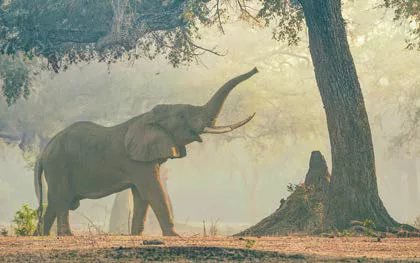
By visiting the exact same forest over a period of five years, Greg du Toit was able to assemble an award-winning series of photographs titled The Enchanting Forest, clinching first place in the wildlife category of the Fine Art Photography Awards for professionals.
Growing along the Zambezi River, bordering Zambia and Zimbabwe, is a magical forest, home to many creatures, but especially elephants – all drawn to the nutritious pods of the trees.
Spending countless days waiting for an elephant to appear in appropriate patches of the forest, at the exact time golden light streamed in through the canopy, was an exercise of passion and patience.
Each piece in the series contains an elephant, but the real subject is the enchanted forest itself.
Text and photography | Greg du Toit
For more information, go to gdtprints.com and gregdutoit.com.
Magnificent cats and their stories add richness to a luxury lodge stay
We are hot on the trail of a huge male leopard. When we catch a brief glimpse of him in what is referred to in photographic terms as the ‘golden hour’, his rosettes glisten in the afternoon sunlight and it has become clear that everyone would like to see him.
“He went into the drainage line,” field guide Piérre confirms with tracker Ntsako, who gestures to Piérre that we continue our pursuit. Suddenly, a bushbuck sounds the alarm, not once, but twice. It is a deep barking sound, which sends the leopard into an impenetrable thicket. Ntsako points in a forward direction, indicating to Piérre that he should carry on parallel to the dense foliage. Excitement is evident in the radio chatter and the team is trying to relocate the leopard, coupled with a good amount of bundu bashing that gets the pulse racing.
With a few more bushes flattened, we arrive at the sighting and Piérre cuts the engine. To the right of the vehicle, the cat has positioned himself in the grass next to a small shrub. Turning towards us, Piérre shares the story of this beautiful leopard.
Making short work
“His name is Ncila and he is one of the leopards with the biggest rosette patterns in the Lion Sands concession. Born in around 2016 in the Kruger National Park, he has distinctive features, which include yellow-green eyes, large rosettes similar to those of a jaguar, high, rounded cheekbones and an unusually short tail, which is what his name means in the native Shangaan language.”
Ncila is incredibly territorial and the newly opened wound above his right eye speaks of a scuffle. Piérre corroborates that he came to blows with another male leopard in October 2024 over either territory or a female. He seems to be firmly in charge of his 30–50 km² range in which Lion Sands Game Reserve is situated, even though that’s shrunk over time due to conflict with other males. While we spend some time admiring his magnificence, Ncila starts his fastidious grooming process, something big and small cats take pride in. They are clean animals and after Ncila has cleaned his face, he moves on to his feet. He had to walk through grass to get to where he is and he obviously got his feet dirty, so he cleanses each pad with great care.
Action in the area

Deriving its name from the Narina trogon, Lion Sands Narina Lodge is every bit as beautiful as the bird, which is native to the forests and woodlands of the Afro-tropics. A stay here evokes a feeling of being ensconced in nature, with all the superlative luxuries that go hand in hand with being at a luxury property.
Situated in the Kruger National Park and bordering the Sabi Sand Nature Reserve, guests have the freedom to pop over to the other side, should the sightings on this fringe of the river not quite meet with their expectations. But the wildlife always makes an appearance, even at the lodge.
While we’re having lunch on the deck with vistas over the Sabie River, a bushbuck comes into view. In this ideal environment for the medium-sized bushland-dwelling antelope, these solitary browsers have it all at their disposal in and around the lodge, with tall grasses in abundance.
Our butler Ellon calls us over to the edge of the wooden deck to see what a loud whooshing sound is all about. A small breeding herd of elephants is busy crossing the river from an island in the middle and the matriarch makes her displeasure known to the crocodile that is sunning himself on the sandbank. She retreats and launches herself forward, making a big and loud splash, as if to say, “Stay away from me and my family!”
Buffaloes are often immersed in the river and these members of the Big Five give you the beady eye from across the water. Why do buffaloes always look like you owe them money?
The nine suites at the lodge are all river-facing and creature comforts include a lounge, bedroom, bathroom with double vanities, freestanding bath, as well as indoor and outdoor shower. On our private deck, the plunge pool is the ideal respite to cool off after a leisurely breakfast or before indulging in high tea.
Purrfect scenarios
Big cat sightings in the Lion Sands concession are hard to rival. Each day brings a new surprise and the emotion of sitting safely in a game viewer next to a leopard in a tree is difficult to describe.
Piérre and Ntsako find three leopards on our morning game drive and one of them is a cub! With cameras clicking, we marvel at the exquisite Mgiba female with her pinkish nose, bright green eyes and relaxed disposition. She is fast asleep in a marula tree and eventually opens her eyes, so that we can admire her splendour.
In another marula tree, Golonyi has stashed her male impala kill, which she and her cub have been feeding on for the last two days. The cub is gorgeous and starts tucking in to what we imagine must taste like old biltong.
Precariously balanced, the carcass tumbles to the ground, much to the delight of four hyenas lying in wait. A few of them sniff at the base of tree, hoping for a few additional morsels that they can scavenge. Lesson learnt, the cub looks sheepishly over to its mother, eyes wide. Glancing back to her offspring, she’s sure to forgive the little tyke, something a good mother will certainly do.
Text and photography | Heléne Ramackers
For more information or to book a stay, go to more.co.za/lionsands/narina-lodge.
Heléne’s flights between Cape Town and Skukuza on Airlink were sponsored by Mahlatini Luxury Travel.
For more information, go to mahlatini.com.
An African beach – sunshine, romance, business, music, exorcisms and more…
Mozambique is wearing, once again, a timid smile. It has been through a torrid time: 450 years of colonisation, a war against the Portuguese, independence in 1975 and then the cruellest of wars – a savage 16-year civil war that left almost a million dead, five million displaced, and families and the country divided.
Two thirds of rural bridges, roads, railways, health centres and primary schools were destroyed during the war – a proxy war waged between Russia and the West. Since 1992, peace and economic growth, though extremely unequal, have helped Mozambique back off its knees.
It seems a type of natural justice that the pleasure of being alive is often strongest among those who struggle the most. This pleasure is one of the most vivid impressions provided of Mozambique and Africa in general. Mozambicans, like most Africans, love to party and the simplest occasions are seized upon as an excuse. In a collective culture, there are always others willing and able to get into party mood. Of course, parties cost money, a commodity still in noticeably short supply in Mozambique, so many people head to where it is cheapest to make merry: the beach.
The warm water of the Indian Ocean laps the 4,000 km of Mozambican coast from Tanzania to South Africa and there are hundreds of beautiful, often deserted, beaches. Most of the big towns have beaches nearby and people head to the sand when the mercury rises. Maputo Beach, on the outskirts of the capital city, is one of them. Many, without money for the local minibus, walk long distances to get there. They don’t go to swim (few can) or to suntan (few need to), but to play and socialise. They jump up and down in the water and do cartwheels at the edges. Groups of young boys and girls play football as they howl and scream. Anyone can join in. They shout, “Come and play!” There are children scooping the sand for the tiny crabs, frolicking in the warm water and rolling about in the shallow water in dips in the sand at low tide.
Eating and action
Groups of teenagers, girls and boys, dance in ankle-deep surf to the sound of their own singing or to the blare coming from a loudspeaker in an open car boot.
Some come simply to do business: women and their children grill fish or chicken to serve with xima, which is a corn porridge dish made from milled maize. The small fish, called magumba, is fished in the bay and is both tasty and very bony. Cooked over charcoal and with a dollop of xima, you have your fill, eating with your fingers, for about R20.
There are sellers of oranges, drinks and various kinds of nuts. Some young men carry around the full panoply of nail varnishes and paint toenails and fingernails, often with unusual and creative designs. There is a photographer or two strolling around. Some young men tote around a trampoline on which kids jump for a few cents. A young man is jerking the strings of two wooden, gaudily coloured puppets as he has them shudder and jump in some obscene dance.
The beach also plays a role as a huge singles meeting place. Few young people have the chance to go to bars or discos, places where they might meet the opposite sex, so the ocean’s edge serves this purpose. They come to see and be seen, admire and maybe acquire. Some serious flirting is done by both sexes as girls stroll with their mobile phones in their hands. Evangelical churches also use the beaches for baptisms, prayer meetings and exorcisms. These are colourful occasions and especially noisy when a devil is being exorcised with much pummelling, rolling in the sand and energetic immersion in water.
Layers of life
The beach is the most democratic institution in Mozambique. Nobody is refused permission. The dress code is informal: street clothes, swimwear, underclothes, collar and tie and religious robes. Of course, it’s not all fun and games. Girls squat down to urinate wherever there is a dip in the sand, as there are no toilet facilities. And after nightfall, strolling on the sand, you’ll do well to watch out for robbers and amorous couples.
Further on, at the end of the beach, there is the fishing village and, there, it’s all business. There, each day, weather-permitting, people (mainly women), wait for the fishermen in their small, artisanal fishing boats to come back with their catches, and magumba is landed. Well, not exactly landed, as the women wade out at low tide to meet the boats, there being no pier. Business is brisk. Some buy to bring home; others buy to sell at the local market.
Reading a book while sitting under a coconut tree, I am seldom left alone. It surprises people to see someone reading on the beach – or anywhere else for that matter. There is little reading culture in Mozambique: books are prohibitively expensive and few schools have them. Somebody will usually come to ask what’s going on or maybe show off their rudimentary English. A girl may try to flutter her plastic lashes to see if I am concentrating on my book. Would she like to drink something? Of course she would. Would she like a lift back to town? Of course she would.
Business, pleasure, exorcisms, worshipping the sea, finding a partner, chilling out, getting drunk, dancing, fighting and showing off: there are many opportunities and few dull moments on Maputo Beach.
Text | Donal Conlon
Photography | Shutterstock
Follow Donal Conlon on Facebook at facebook.com/donal.conlon1
Famous game reserve offers a plethora of attractions for birdwatchers and photographers
Hwange Safari Lodge lies within its own private concession and is a 20-minute game drive from the main gate of Hwange National Park, given you aren’t held up by sightings of wild dog, which is no great hardship.
The park is the largest reserve in Zimbabwe and covers 14,600 km². It is home to over 400 bird and 100 mammal species, including the second biggest population of African elephants on earth. There is plenty to see and explore in this expansive wilderness.
Africa and its wild places are a tonic for the soul. They quickly replace and restore what daily life extracts. Although the special sightings and moments with iconic wildlife and exciting bird species are what most visitors are after, the bush offers so much more. There is the smell after it rains, the peace of dappled shade and large repetitive woodlands, and the familiar sounds of booming ground hornbills or trumpeting elephants – all just as much a part of the experience as the magical encounters themselves.
My guide for the four days is Lazarus Manyuwa. Besides having a wealth of experience, a love for all living animals and an exceptionally keen sense of sight, Manyuwa is a humble man with a kind heart and a wonderful sense of humour. He calls out, laughing: “We are always adding, never subtracting,” as we add another bird species to the list.
Experienced wildlife photographers will know that you cannot go to a new place and expect to put together a decent portfolio of wildlife images without some version of Lazarus. Guides are an instrumental part of any trip, and anyone would be fortunate to have one of Hwange’s finest leading the way.
Warmly satisfying
It is the end of November – a few weeks before the big rains are due. The bush is bone dry, and the cicadas are at their loudest, most deafening pitch. Without any cloud cover, the heat becomes oppressive, and by 8 a.m., people are looking for shelter, a pool and a cold beverage. Fortunately, the lodge has all of these amenities as well as air-conditioned rooms. Each room has large windows that look out into a dry riverbed called Dead Vlei. The vlei transforms with the onset of rain, with two well-appointed waterholes. A quick glance through a bedroom window might bring into view a multitude of birds, from Abdim’s and marabou storks to grey-crowned cranes and ground hornbills. The waterhole sighting list for the month held an impressive list of mammals, from big cats and buffalo to small springhares.
The guests in the game vehicle show childlike enthusiasm and hope regarding what might be seen around the next bend. A sudden change in plan takes the drive through magnificent false mopane and teak forests in search of one of the area’s harder-to-find avian specials. Within minutes, the bird’s tell-tale cry is heard, and everyone begins searching the skies. Before long, one of Africa’s loveliest spectacles presents itself: a racket-tailed roller, performing its namesake rolling display.

Game drives are always eventful, but one day stands out above the rest. It is cloudy and overcast, and the vehicle is heading to Kennedy Picnic Spot 1 on the eastern side of the park. The canvas roof is a huge relief as temperatures remain in the twenties, keeping the birds active, and the diffuse light allows for prolonged photography. Within a few hours, we have achieved more decent photographs of birds than I have managed on any other game drive in a national park. From broad-billed rollers at eye level to Meyer’s parrots drinking, close to ground hornbills feeding their newly hatched young, to tits, swallows, shrikes and sparrowhawks – hardly any time to gather ourselves! If this is not enough, there are also magnificent herds of sable, Zimbabwe’s national animal. They are as majestic as they are graceful and powerful.
Happy space

As elephants make their way to one of the many waterholes on Dead Vlei that evening, it’s impossible not to feel soul-filled, perhaps even more than expected. It’s not just the tranquillity and wildlife, it is also the people the experience is shared with. The staff at the lodge are so welcoming and friendly that, although there are many rooms, every guest feels special and included. Webster, Albertina and Shane are always just a few seconds away whenever you need a drink or a meal. “How was your day?” “Did you rest well?” “What can we help you with?” These are just some of the kind questions they consistently ask. Nothing is a fuss or too much of an effort. A local conservationist, David Bennet, shares some of the many projects his organisation is working on in the area, including community development projects, groundbreaking giraffe research, a tree and plant nursery and much more.
Returning home at night, visitors are serenaded with the sounds of scops and barred owlets, and a short walk outside offers a wealth of beetles and bugs. From massive giant dung beetles and colourful longhorns and blister beetles to helmeted and true toktokkies, the area has them all. After sending my insect-loving son, Joshua, a video of a popeye dung beetle, I quickly received a WhatsApp from my wife asking me, “When can Joshua come? He wants to know.”
We will be back, but next time as a family of three.
Text and photography | Richard Flack
For more information or to book a stay, go to africansunhotels.com.

The prevalence of osteoporosis increases with an ageing population. But it won’t increase equally between the sexes
The world’s population is undergoing an enormous shift because the average person is living longer. According to the World Health Organization, in 2020, there were more people aged 60 and over than there were children under five. Due to this demographic change, an often-ignored health condition – especially in women – is gaining attention: osteoporosis.
Osteoporosis is a disease that causes bones to break more easily. Worldwide, it’s responsible for almost nine million fractures each year and it’s estimated that one in three women over 50 will have an osteoporosis-related fracture at some point.
It’s all due to age-related changes in our bones.
Special cells in our bones called osteoblasts are responsible for forming new bone tissue, while cells known as osteoclasts dissolve old and damaged tissue, so that it can be replaced with new, healthier tissue. A key factor in bone health is the ratio between the activity of these two cells.
Up until the age of 30, there’s generally more osteoblast activity, so we’re building more bone than we’re losing. This doesn’t mean we’re growing additional bones, just that our osteoblasts are building new bone tissue – remodelling existing bones and healing damaged ones by laying down the structure to be filled by bone matrix (the calcium, collagen and other substances that form the mass of our bones).
But, when we hit 35, our bone quality and density begin to decrease as osteoclast activity starts to take over. This results in a small loss – approximately 1% – of bone tissue each year.
This loss significantly increases in women post-menopause, when the level of oestrogen produced by the body has dramatically decreased. The drop in oestrogen is thought to result in a reduction in the number of osteoblasts and an increase in osteoclast lifespan, so they remain active for longer.
A condition called osteopenia can arise when bone density drops below a certain level. And if this continues to a point where bone density is reduced to such a degree that the bones easily break, it can progress to osteoporosis. People say osteoporosis ‘thins bones’, but it doesn’t; it changes bone density, microarchitecture and quality, which reduces their strength.
Unfortunately, neither osteopenia nor osteoporosis show any symptoms. Currently, osteoporosis is commonly diagnosed as an ‘incidental’ finding when a woman has already sustained a fracture and the condition shows up on scans.
Other risk factors for developing osteoporosis include smoking and health conditions, such as thyroid disease and diabetes. Some medications, like steroids, can also have an effect.
There’s no cure for osteoporosis, but its effects can be reduced. A significant way to protect your bones is by eating a well-balanced, varied and calcium-rich diet. If you eat dairy products (like milk and cheese) and eggs, you’ll likely get a sufficient dose. If you’re vegan or don’t consume dairy products, however, you may need to take supplements to top up your calcium levels.
Calcium alone isn’t enough, though. We also need vitamin D, which our bodies produce through safe exposure to sunlight. But most people living in countries with low levels of sunlight have low levels of vitamin D and would benefit from taking a supplement.
Exercise, especially activity that puts ‘strain’ on the bones, such as progressive resistance training, can also prevent and delay the progression of osteoporosis by stimulating osteoblast activity. This increases the rate of new bone formation and changes the microarchitecture of bones, including the arrangement of collagen, all of which increases skeletal strength.
Studies also show that resistance training helps to build muscle strength and improves balance, so helps us to maintain a healthy posture and reduces the overall risk of falls and fractures. It should be noted, however, that post-menopause, the effectiveness of exercise in increasing bone minerals depends heavily on the adequate availability of calcium and vitamin D, so supplementation is strongly advised.
There are also various medications that can treat or delay the progression of osteoporosis. Oestrogen, taken as part of hormone replacement therapy, is the current recommended treatment for osteoporosis prevention in menopausal women.
While osteoporosis can be an issue for many, with awareness, education, prevention and the correct treatments, we can reduce its effects. And we absolutely need to, given our growing ageing population.
Text | Michelle Griffin
Dr Michelle Griffin is the director of MFG Health Consulting, as well as a women’s health expert and strategy advisor in women’s health tech.
Rejuvenated luxury hotel places guests in the middle of the action
First impressions do matter. As such, refined Art Deco detailing, a massive frieze featuring stories from Greek mythology, layered fountains with a striking Anton Smit statue in their centre, great glass elevators and the mind-warping magnitude of an atrium that extends up a full 28 floors are a gut-punch to the senses for anyone checking in to the Sandton Towers hotel, the most luxurious of Southern Sun’s handful of hotels scattered throughout Sandton and Rosebank.
All of these establishments have recently been refurbished, which is an obvious win for guests, but also for a group that, after being founded by Sol Kerzner in 1979, was a constant – as a range of holiday destinations or the only place you’d ever go for a conference – for a whole generation of South Africans.
In the ’80s and ’90s, it was the epilepsy-inducing colour mash-up of the carpet designs that made you feel dizzy. Now, at this hotel, it’s the peek over the railing in the corridor outside your room, peering down at the diners in the Atrium restaurant or waiting on the lobby couches for their Ubers or contacts to arrive.
So close…
This is an excellent location for both lazy and diligent guests. For both groups, there is access to everything in just a few hundred metres of their comfortable rooms. Breakfast, lunch and dinner is downstairs in that atrium, the beauty of which is reason enough to stay in-house. Shopping – the endless options of the sprawling Sandton City mall – is across the street (literally), and a skywalk means you don’t even need to dodge traffic. And turning left instead of right coming out of the same elevator that leads to the skywalk takes guests immediately into the Sandton Convention Centre, venue for hundreds of events, trade fairs, conferences, concerts and other reasons to stay in the area for a few days. The local Gautrain station is around the corner, and there’s even a theatre in the adjacent Nelson Mandela Square.
If you’re lazy, stick around watching TV until the last moment and then toddle across to your appointment. If you’re diligent, fill your itinerary to the brim, as it’s difficult to be late when you’re so close to everything.
Going pair-shaped
The hotel’s history, location – it is the literal centre of Sandton – and upgraded facilities make it incredibly valuable to its investors, but also potentially attractive to locals looking for a staycation option or a place to celebrate a special occasion. Apart from all the walking-distance attractions (plus the hotel pool in summer), there’s a sophisticated feel to staying in-house. The Atrium restaurant’s menu offers a microcosm of this mood – every dish on offer has a suggested wine pairing with it, and a haute cuisine meal for two costs the same or less than a single steak at some less accessible eateries nearby.
Text | Bruce Dennill
Photography | Supplied
For more information or to book a stay, go to southernsun.com.
With insight and patience, helping teens to grow up healthily is an accessible goal
The teenage years can be challenging as young people navigate new experiences, an increased workload and hormonal changes in a short space of time. This is also an impressionable time where bad habits can be picked up, or good habits enforced with the right guidance.
Raising a teen is a mix of challenges, growth and wonderful learning moments. Parents play a crucial role in guiding them towards routines that not only improve their wellbeing in the moment but set the stage for a healthy future.
Teens thrive when they feel a sense of control and accomplishment. They need to understand that it’s about progress not perfection. Rather than overwhelming them with big, abstract resolutions, work with your teen to set realistic, actionable goals. These could include healthy hydration, limiting screen time and stepping away from devices at least one to two hours before bedtime, and stretching for five to 15 minutes every hour if using screens or studying.
Your habits set the tone for your household, and teens learn far more from what they see than from what they’re told. If you want them to limit screen time before bed and you’re glued to your phone, they may push back. Show them what healthy living looks like. Prepare balanced meals and involve them. Even something as simple as asking for their opinion on which protein to include for dinner can make them feel more invested. Participate in activities they also enjoy such as a hike or sports. Practise stress management techniques like mindfulness, journalling or prayer to stay present and calm.
Sensible schedules
Your home environment plays a huge role in shaping healthy habits, so stock your kitchen with nutritious, teen-friendly snacks like fresh fruit, nuts, whole-grain crackers, low-sugar health bars, frozen fruit for smoothies, popcorn and yoghurt.
Try to make mealtimes relaxed and inclusive and, rather than lecturing, focus on positive messaging that highlights the benefits of eating foods that fuel their energy and make them feel good. Dinner time should be a space for connection and catch-ups, not conflict. If conversations become tense, consider setting aside a different time for one-on-one sharing.
Sleep is essential for your teen’s physical and mental health, yet can often be overlooked when school demands or late-night gaming keep them up. Help them develop a consistent bedtime routine by encouraging screen-free time at least one to two hours before bedtime, suggesting calm pre-bed activities like reading, playing cards as a family or sipping caffeine-free tea. Setting a regular bedtime and wake-up schedule, even on weekends, can reinforce a healthy sleep cycle.
The key to physical activity is helping your teen find movement they enjoy. Whether it’s soccer, skateboarding, swimming, dancing or hiking, encourage activities that make them feel good, relieve stress and build confidence. Focus on the joy of movement rather than fitness or weight goals.
Teens thrive on positive reinforcement, so celebrate their progress, no matter how small. Whether they stuck to their goals for a week or tried a new activity, acknowledge their effort and let them know you’re proud. Instead of rewarding achievements with food, celebrate with a fun, healthy meal or a shared experience like a movie night.
Help them help themselves
Teens value autonomy, so empower them to take ownership of their habits while offering the guidance and support they need. Check in regularly to see how they’re feeling about their goals. Ask open-ended questions like:
Text | Mbali Mapholi
Photography | Dragon Images
Mbali Mapholi is a Laager Rooibos partner dietitian.
For more information, go to joekels.co.za.
With insight and patience, helping teens to grow up healthily is an accessible goal
The teenage years can be challenging as young people navigate new experiences, an increased workload and hormonal changes in a short space of time. This is also an impressionable time where bad habits can be picked up, or good habits enforced with the right guidance.
Raising a teen is a mix of challenges, growth and wonderful learning moments. Parents play a crucial role in guiding them towards routines that not only improve their wellbeing in the moment but set the stage for a healthy future.
Teens thrive when they feel a sense of control and accomplishment. They need to understand that it’s about progress not perfection. Rather than overwhelming them with big, abstract resolutions, work with your teen to set realistic, actionable goals. These could include healthy hydration, limiting screen time and stepping away from devices at least one to two hours before bedtime, and stretching for five to 15 minutes every hour if using screens or studying.
Your habits set the tone for your household, and teens learn far more from what they see than from what they’re told. If you want them to limit screen time before bed and you’re glued to your phone, they may push back. Show them what healthy living looks like. Prepare balanced meals and involve them. Even something as simple as asking for their opinion on which protein to include for dinner can make them feel more invested. Participate in activities they also enjoy such as a hike or sports. Practise stress management techniques like mindfulness, journalling or prayer to stay present and calm.
Sensible schedules
Your home environment plays a huge role in shaping healthy habits, so stock your kitchen with nutritious, teen-friendly snacks like fresh fruit, nuts, whole-grain crackers, low-sugar health bars, frozen fruit for smoothies, popcorn and yoghurt.
Try to make mealtimes relaxed and inclusive and, rather than lecturing, focus on positive messaging that highlights the benefits of eating foods that fuel their energy and make them feel good. Dinner time should be a space for connection and catch-ups, not conflict. If conversations become tense, consider setting aside a different time for one-on-one sharing.
Sleep is essential for your teen’s physical and mental health, yet can often be overlooked when school demands or late-night gaming keep them up. Help them develop a consistent bedtime routine by encouraging screen-free time at least one to two hours before bedtime, suggesting calm pre-bed activities like reading, playing cards as a family or sipping caffeine-free tea. Setting a regular bedtime and wake-up schedule, even on weekends, can reinforce a healthy sleep cycle.
The key to physical activity is helping your teen find movement they enjoy. Whether it’s soccer, skateboarding, swimming, dancing or hiking, encourage activities that make them feel good, relieve stress and build confidence. Focus on the joy of movement rather than fitness or weight goals.
Teens thrive on positive reinforcement, so celebrate their progress, no matter how small. Whether they stuck to their goals for a week or tried a new activity, acknowledge their effort and let them know you’re proud. Instead of rewarding achievements with food, celebrate with a fun, healthy meal or a shared experience like a movie night.
Help them help themselves
Teens value autonomy, so empower them to take ownership of their habits while offering the guidance and support they need. Check in regularly to see how they’re feeling about their goals. Ask open-ended questions like:
Text | Mbali Mapholi
Photography | Dragon Images
Mbali Mapholi is a Laager Rooibos partner dietitian.
For more information, go to joekels.co.za.
Awareness of your mental health needs and how to address them is a hugely important part of managing your work and home lives
No matter how hard we try, busy work schedules and fast-paced lives can put strain on our mental health. Although this can be overwhelming, it’s crucial that we take time not only to reflect on the positives of our situations but also work to outline a set of realistic mental health habits that will help stop us from falling back into old, unhealthy patterns.
Resolutions and goal setting are useful. Whether these take the form of getting a promotion at work, achieving a fitness goal or travelling to a new country, these objectives often neglect to include a very important aspect of one’s life, and that’s mental health.
Setting mental health goals may sound foreign to some but they are a crucial step towards improving your mental wellbeing. Goal setting of this kind encourages self-reflection and provides you with an opportunity to understand your actual needs and desires better. Not sure where to start? Begin by thinking about how you can set healthy boundaries, practise self-love, improve your self-awareness and find ways to better your relationships.
Getting quality sleep each night is a non-negotiable, not just for your physical health but for your mental health too. And it’s not just about getting in the right number of hours. The quality of your sleep matters just as much, with disrupted sleep often contributing to mental health symptoms.
It’s important that you put measures in place to ensure you get the sleep you need. Avoid caffeine in the afternoon, set a specific bedtime that you adhere to every night and, finally, limit your social media activity in the evening and remove your phone from your bedroom. Late night scrolling be gone!
Bust a move
Not everyone can find the time to exercise every day, afford a gym membership or dedicate themselves to a regular yoga class. But one thing everyone can do is move their body. And the beauty of movement is that it can mean something different for everyone.
You don’t have to be a marathon runner to support your mental health. From taking stretching breaks throughout your day at work to taking a walk on your lunch break, doing some restorative gardening after a long day or even dancing to your favourite song ahead of your daily commute, there are so many ways you can move your body that fit your schedule, body type and fitness level. So, no matter what you choose, just be sure to move.
We all know the value of eating properly, but a crazy day or even a busy week can wreak havoc on your diet. Whether you are one to skip meals, fill up on unhealthy snacks when stressed or speed-eat over your laptop, all of these habits need to change if you are wanting to keep your mental health in check.
Eating healthy and regular meals should be your first port of call but you can also support improved mental health by incorporating foods that are packed with mood-boosting nutrients. These include berries, bananas, beans and fatty fish. In addition to eating properly, you should also be drinking enough water during the day and aim to stay away from certain foods that increase anxiety symptoms, like caffeine, refined carbohydrates and sugar.
Seek rest
Taking a rest isn’t slacking off or an act of laziness, it is an essential mechanism that gives your mind and body the opportunity to unwind and restore. But as with most things, rest looks different for everyone. For some, rest is a power nap; for others, it’s meditation and, for many, physical rest doesn’t come that easy, so relaxing hobbies like art or music can greatly assist in ensuring you get the downtime your body and mind need.
Whether the measures you are taking to improve your mental health are working or not, a therapist can be a hugely powerful way to improve your mental health.
Don’t wait until things get really bad. Remember, you can seek out professional support at any time. You don’t have to be depressed or having anxiety attacks to benefit from therapy. It’s all about understanding yourself and your needs, and learning to practise healthy habits that will benefit your mental health in the long run.
Text | Emma-Jane Truter
Photography | ViDI Studio
Emma-Jane Truter is founder of and Head Social Media Strategist at Emma Is Social.
For more information, go to emmaissocial.com.
Tea is beneficial beyond its qualities as a drink
When it comes to looking after one’s skin, many spend huge amounts each month on serums, balms and creams to achieve glowing skin. However, skin specialists often recognise the value of natural products that are readily available when it comes to skincare.
Tea has a range of different benefits for the skin, of which many are unaware. The affordability of tea also makes it a great addition to a skincare regime.
Tea has a number of roles to play when it comes to skin health, which is why the incorporation of tea into daily skincare routines is encouraged – both the consumption of brewed tea as well as external uses of tea leaves and bags.
Green tea is rich in antioxidants that help fight free radicals and reduce inflammation, meaning that sipping a cup a day could leave skin looking clearer and more radiant. Chamomile tea is another great option, as it’s calming for skin and stress levels, essential for a healthy glow, while also supporting restful sleep. Sleep itself plays a key part in skin health, allowing the skin to repair itself and regenerate. Getting enough deep sleep can help prevent bags under the eyes, wrinkles and puffiness.
After brewing tea, chill the bags and place them on your eyes for about 10 minutes. The tannins in the tea help tighten skin and reduce puffiness. Plus, it won’t cost you anything, and reusing your teabags benefits the environment – win-win!
Face forward
Tea leaves are a great natural exfoliator. For an effective skin scrub, combine brewed and cooled tea leaves (cut open the bags and remove the leaves) with honey, brown sugar or ground coffee granules, and massage onto your skin before rinsing with water to remove dead cells and brighten your complexion. Tea leaves are also often used as an ingredient in homemade face masks. For a natural green tea face mask, combine brewed and cooled green tea leaves (removed from the bag) with honey and plain yoghurt. Cover your face and allow it to sit for 15 minutes, then wash off with water and enjoy the feeling of soothed, refreshed skin! (Note: If you are prone to skin conditions, consult a skincare specialist before trying these ideas.)
Add chamomile or green tea bags to your next bath for a calming and natural skin-soothing soak. Simply run hot water, add the tea bags and allow them to soak for five minutes, then remove the tea bags and add cold water to get your bath to the preferred temperature. The antioxidants can help reduce irritation and leave your skin feeling soft.
Text | Mbali Mapholi
Photography | New Africa
Mbali Mapholi is a Tetley partner dietitian.
For more information, go to joekels.co.za.
Eating disorders continue to be a societal challenge as youngsters try to meet unhealthy expectations
Imagine a world where emotional pain was visible, but no one paid any attention to the bleeding wounds. This sounds unthinkable, yet it is the reality we live in every day. In South Africa, one in four teenage girls is estimated to suffer from an eating disorder.
A 2021 study reported that 22% of adolescent females in Johannesburg bear the burden of disordered eating, while 9% of adolescent males are similarly affected. Society often reinforces unrealistic body standards for young people, leading them to believe and internalise these as ‘normal’ expectations.
Instead of expressing concern at potential warning signs of eating disorders and unhealthy relationships with food, mainstream global media continues to normalise these patterns. They hold up painfully thin icons of popular culture as examples to emulate.
Eating disorders are not confined to any single demographic. They are increasing across all racial and socioeconomic groups, thriving in a culture that often fails to recognise the silent suffering. One of the greatest barriers to seeking treatment for eating disorders is this lack of recognition.
The warning signs are frequently dismissed, or worse, praised as positive traits. Children are often commended for their discipline when they follow rigid meal plans or exercise obsessively. A competitive sports culture encourages young people to push their bodies beyond healthy limits, while concerns about restrictive food choices or aesthetic weight loss are comparatively deafening in their silence.
Many parents unknowingly reinforce disordered habits through their own orthorexic behaviours, which include obsessing over so-called ‘clean’ eating, equating thinness with health or making dieting a family activity.
A struggle expressed
The truth about eating disorders is that they are not about vanity, food or even weight. They are manifestations of deep psychological wounds – unprocessed trauma, emotional distress and unmet needs that manifest as obsessive behaviours. Anorexia, bulimia, binge eating disorder and avoidant/restrictive food intake disorder (ARFID) all carry the same underlying message: an individual who is struggling to express pain in any other way.
The South African Journal of Science highlights that these illnesses are too often seen as personal choices rather than the complex mental health conditions they truly are. This common misconception prevents people from receiving the help they need, allowing the disorder to tighten its grip on their lives.
The focus must be extended beyond those who are actively struggling with eating disorders to challenge the societal norms that normalise disordered behaviours. There needs to be a reconsideration regarding what it truly means to be healthy and recognise the fine line between encouragement and obsession. Families need to look at themselves with fresh eyes, or we could be unknowingly reinforcing harmful habits.
Text | Marlene van den Berg
Photography | New Africa
Marlene van den Berg is a therapeutic programme manager and occupational therapist at Netcare Akeso Montrose Manor.
For more information, go to akeso.co.za.
Recognising eating disorders
Symptoms of eating disorders vary but often include:
Quality, innovation and commitment to regional growth
Founded in 1997, Ferpinta Mozambique is a key player in the country’s steel production and distribution sector. As part of the international expansion of its parent company, Ferpinta Portugal, the Mozambican operation was built on a clear philosophy: focus on quality, technical excellence, integrity and strong customer commitment.
Strategic market presence
Since day one, Ferpinta Mozambique trusted the local market and committed to its development. This was reflected in the expansion of its product range and in the creation of a solid, decentralised infrastructure. The company now operates in three strategic regions:
This geographic structure ensures nationwide coverage and fast, responsive service – a key competitive advantage.
Rooted in European expertise
Ferpinta Mozambique benefits greatly from the expertise of Ferpinta Portugal, which has decades of experience in the European market. This know-how has been adapted to local realities, ensuring efficient operations, high-quality standards and a long-term, strategic vision.
Differentiation through quality
In a competitive market, Ferpinta stands out by offering a broad product portfolio tailored to local needs. Its certified products follow strict quality and production controls, reinforcing its reputation as a reliable and trusted provider.
Driving growth through innovation
Innovation is central to Ferpinta Mozambique’s evolution. Investments in process improvement and operational efficiency ensure that the company remains agile and competitive. Versatility and a customer-focused approach help meet the demands of a fast-changing market.
In a nutshell
Ferpinta Mozambique is more than a steel manufacturer – it is a long-term partner in the country’s development. With strong industrial capacity, a strategic footprint and a firm commitment to quality and innovation, Ferpinta continues to support regional growth and turn challenges into opportunities.
Text and Photography | Supplied
Publishing his book Contrasts gave Chad Cocking an insight into the varied seasons of wildlife and landscapes

Did you have an influence in your youth that shaped your career path?
Chad Cocking: Growing up in South Africa, I was fortunate enough to have access to some amazing wilderness areas, but the Greater Kruger was always my favourite. My earliest childhood memories are from my trips to this area, and I can recall my first lion sighting from when I was not yet four years old!
Your gap year turned into a career as a guide and wildlife photographer. Walk us through that journey.
While studying, I was spending more time looking at nature photographic forums than scientific journals and decided to take a year away from the books to go and work as a guide, primarily to give me an opportunity to take photos. That year turned into two, then three and now almost 18! And I still wake up looking forward to work, even at 3:50 a.m. every morning.
You live and work in the Timbavati Private Nature Reserve. Has there been an experience that has had a profound impact on you, and would you mind sharing it with us?
As difficult as the pandemic was for everyone, I was blessed to have been able to lock down within the Timbavati. I had the place to myself – almost – and despite not needing to, I spent as much time out on game drives as I could. This showed me that even after so long in the bush, I was still passionate about it. Even more profound was realising that while it was amazing seeing the things I did during this period, something was missing. And that was the fact that I got so much pleasure out of this vocation by being able to share the experiences with people. Until that point, I did not realise how much sharing these experiences with other people meant to me. Needless to say, I no longer take having guests come along for the experience for granted anymore.
Is there a particular species of wildlife that you are drawn to and why?
I could give a good reason why I love a long list of species, but I think I am likely most drawn to lions. They’re impressive beyond words, powerful and so incredibly social. Yet this social aspect leads to untold trials and tribulations in their lives, from the hardships of providing for and raising cubs to the inevitable shifts in power as different coalitions take over the prides and disrupt the peace and stability.
Despite all this, the prides still push through and show a resilience that I admire greatly. It has been a privilege to watch the lion dynamics in the Timbavati over the past two decades.
Your photographs are incredible. Looking at the cover of Contrasts, a blended image of a mother leopard on the right and her daughter on the left, how do you go about selecting a cover image from thousands of photos taken in the field?
It is one of the toughest processes when it comes to putting a book together. If I made a book representative of my complete portfolio, it would consist of 90% lions and leopards! Finding a theme for the book was the most important part of the process. Once I struck on the theme of contrasts, the task became easier as I sought images that fitted the narrative. As for the cover, that was purely by chance; while going over the images, I was struck by how similar the mother and daughter looked – despite what many might think, leopards all look markedly different from one another. I happened to have a photo of each of them, taken from roughly the same angle and in the same sort of light; I overlaid the images and was astounded by how perfectly alike they were – except for their eyes.
It unintentionally became an eye-catching image that fitted the idea of contrasts and, at the end of the day, was a no-brainer.
How long does it take to put a book such as Contrasts together?
There were two elements to the process – one was taking the photos, and the other was designing and creating the book. Most of the images were taken over a six- or seven-year period. However, some images, like the white and tawny lion drinking alongside one another, were once-in-a-lifetime shots and had to be pulled out from deeper in the archives.
As for putting the book together, I worked on it for almost two years. The initial design came quite quickly, but fine-tuning the layout and proofing everything from the text to the colours took many months. It turned into a real labour of love.
What is the process of self-publishing?
Creating Contrasts taught me that anyone can publish a book. I was lucky enough to work with a great publisher who dealt with all of the printing, binding and shipping, and made that side of it easy. Although online printing of coffee table books is popular, it can be costly if one is looking to print in bulk. If you have enough interest in your work, it is worth considering working through a publisher, as the economy of scale makes this a more affordable way of releasing one’s work.
What are you hoping readers will take away from the book?
I’m hoping that people who page through the book not only see that the South African wilderness is full of inherent beauty but also that this beauty changes from one season to another, from one day to another, and from one animal to another. In so doing, I hope that it keeps bringing these readers back to South Africa, as it is through their contributions that these wilderness areas will continue to thrive.
Text | Heléne Ramackers
Photography | Chad Cocking
For more information, go to instagram.com/chadcocking.

Putting savings aside for worst-case scenarios is more than just common sense
An emergency savings fund is a financial safety net that helps cover unexpected expenses, such as medical bills, car repairs or job loss. It should be sufficient to cover three to six months’ worth of essential costs.
However, many people find it impossible to save money while managing daily expenses. South Africa’s poor savings rate – one of the lowest in the world – can be attributed to the high cost of living, low financial literacy and a culture of relying on credit.
DebtBusters’ Debt Index for Q4 2024 shows that South Africans who applied for debt counselling during the period had 42% less purchasing power than in 2016 (when DebtBusters first started analysing data). They had unsustainably high levels of unsecured debt, and debt-to-income ratios were at their highest-ever levels among several income bands.
Without savings, an unanticipated expense can derail your budget and force you into debt. You may have to rely on a credit card or high-interest loan, which can lead to long-term financial strain. On the other hand, if your car breaks down and you need R8,000 for urgent repairs, an emergency fund allows you to cover the cost immediately. Similarly, if you lose your job, savings can keep you afloat while you search for new work. An emergency fund provides financial security, reduces stress and helps you stay in control of your money.
Sensible steps
Start small. Be consistent, even if you put away only R50 or R100 per month. Set a realistic goal for your first milestone, such as R1,000, and gradually work towards it.
Choose the best savings option. Consider a high-interest savings account or a flexible fixed deposit account that offers competitive interest without tying up your money for too long. A savings wallet – a separate account within your main transactional bank account – is another means to set money aside for a specific goal while offering easy access.
Automate savings. Set up a monthly debit order or schedule a transfer to a separate savings account to be activated when your salary is deposited.
Cut unnecessary expenses. Do you have subscriptions you barely use? Are you buying takeaways too often? Redirecting a small portion of these expenses to your emergency fund can make a big difference over time.
Use windfalls wisely. Whenever you receive money unexpectedly – such as a bonus, tax refund or birthday cash – consider putting some aside.
Boost your income. Consider a side hustle, such as online tutoring, or setting up a small business, selling unwanted items or renting out unused space.
Take advantage of discounts. Special offers and loyalty programmes can help you save money, which you can allocate to your emergency fund.
Reduce utility bills. Cut electricity and water costs by being more mindful of usage.
Join a savings challenge. This is a structured, goal-driven way to encourage consistent saving by following a specific plan over a set period.
Avoid dipping into savings. Only use your emergency fund for genuine emergencies.
Fine-tune your savings goals. Once you’ve reached your first savings milestone, set a new one.
Text | Sarah Nicholson
Photography | Pla2na
Sarah Nicholson is operations manager at JustMoney.co.za.
Representing your company well on digital communication channels is increasingly important
For businesses today, a solid social media presence is no longer a nice to have; it’s an imperative. It’s become a crucial component of business strategies, opening up a powerful avenue for reaching and engaging with current and potential customers.
Despite the immense opportunities good social media can afford businesses, many operate their platforms and profiles in isolation, often putting out content that they think their target audience will like but that doesn’t necessarily make sense to their business goals, ethos or offering.
The first step is to define your business goals and outline your top priorities. For some, this could be acquiring new customers, while for others it’s ensuring the success of a new product line or increasing market share. Then decide: what do social media goals look like, and how can they be linked up with business ones?
If your business goal is to increase the level of familiarity and recognition of your brand among its target audience, a social media goal alignment could be to increase brand awareness. This will need to focus on building a large but targeted following, requiring the creation of content that draws attention to your brand’s story and its values. Suitable content would then need to be accompanied by a targeted advertising or boosting strategy on several social media channels, driving reach.
Goal-oriented
If your business goal is to increase profitability, social media can drive sales. Social commerce is booming and is a powerful way to move product and boost conversions.
However, driving sales through social media requires more work than just detailing offerings and prompting people to purchase. A strong sales-driven social media strategy must also be able to generate leads and boost website traffic to ensure all sales-oriented opportunities are covered.
From a sales perspective, it’s important to focus on the platform where your target audience is most active. You’ll need to be consistent in posting by making sure you share content regularly, as this assists with social media algorithms. Also important is the kind of content you post. While focusing on your sales is great, it’s also advisable to mix it up with user-generated content that focuses on product reviews or test things out with an influencer-led campaign that is aimed at driving trial of your product or service.
If your business goal is to increase customer satisfaction, social media can assist by helping to improve your customers’ online experience. With most modern consumers now engaging with social media before anywhere else, you have an opportunity to ensure your customers feel appreciated and receive a high level of service off the bat.
Social media has a leg up on other customer interactions because it enhances satisfaction almost instantly by providing a direct channel for communication and support. Customers no longer have to wait for an email response or phone call. They can be assisted by a brand representative quickly and have their issues resolved far faster than on other channels if there is a dedicated person or team willing to deal with any query or complaint that comes their way.
Text | Emma-Jane Truter
Photography | Gorodenkoff
Emma-Jane Truter is founder and Head Social Media Strategist at Emma Is Social.
For more information, go to emmaissocial.com.
Ensuring that nuclear power remains safe is a complex business
Eskom’s Koeberg nuclear power station was recently licensed to operate its Unit 1 for another 20 years. Koeberg’s Unit 1 is one of around 120 reactors worldwide that have safely continued operations beyond their initial 40-year life.
Nuclear projects are governed by stringent local and international quality and safety standards, requiring a wide variety of aspects to be monitored, analysed and reported, including technical studies in the fields of hydrology, geohydrology, geotechnology and meteorology. Other factors looked at were land, water and sea use, ecology, demography, water supply, as well as transport routes, nearby industrial and military facilities.
The whole life of the nuclear plant must be considered, so it is important to be able to forecast population growth and movement over this expected lifespan. One reason why this data is relevant is because of the plant’s potential radiological impact. For purposes of emergency planning – such as determining an appropriate transport evacuation model – planners also need to know how many people are likely to be in the area in future decades.
Using the concept of ‘pathways to humans’, the specialists must consider all the possible ways that people can be exposed to radiological impact – through proximity, the food chain, water or other channels. The regulator is then in a position to ensure that the plant will – or continues to – operate safely at that geographic location.
While this work considers the potential radiological impacts of the plant on its surroundings, the site safety investigation also considers the impacts of the surroundings on the plant and its safe operation.
These aspects include the geology and geohydrology of the ground on which the plant is built, as well as seismic risks to the integrity of the operation. This extends as far as identifying air traffic routes, considering the potential for aircraft-related accidents. The big question to answer with all this data is whether the environment poses a risk to site safety in which the plant can operate throughout its lifecycle.
Dealing in data
In the face of identified risks, it must also be considered whether there are any impediments to creating an effective emergency plan – so that people can be evacuated from the area in the event of an incident. This includes considering not only the existing transportation infrastructure, but the likely future scenarios, taking into account economic growth and urbanisation.
The planning of nuclear power stations requires the gathering of considerable data, but also demands intensive engagement with stakeholders like local government. While the planners must understand the spatial development frameworks of municipalities or metros, there must also be agreement between parties about what happens in the future.
This is because the power station must be able to make reasonable forecasts of where infrastructural and urban development is likely to take place in coming decades. Considering, for example, the impact if local government changes its plans in a way that could have an unexpected impact on the power station.
Text | Derry Holmes
Photography | Johann Van Tonder
Derry Holmes is principal consultant at SRK Consulting.
For more information, go to srk.com
Employees working two jobs simultaneously might not be the conflict of interests it superficially appears to be…
Workers are increasingly pursuing second jobs. According to a survey by Bankrate, 53% of Gen Z-ers have one, as do half of millennials and 40% of Gen X-ers.
As a business leader, your tendency may be to worry that this could make your employees less committed when they’re working for you. But think again: second jobs bring numerous advantages you can harness to create a workplace where innovation thrives.
Consider employee wellbeing. Happy employees are more productive, and if they have the satisfaction of being able to pursue a passion via a second job (not to mention the extra income and financial security that comes with it), there’s a wellbeing boost that they also bring to work with you.
When an employee pursues a second job, they naturally develop a range of new skills they may not have acquired in their role with you, accelerating professional development. They can bring these skills to your workplace.
The creativity fostered by pursuing a second job can bring fresh perspectives and an entrepreneurial mindset to your workplace, and this, in turn, can drive innovation that your business benefits from. By supporting and encouraging your workers in their pursuit of something that’s important to them, you demonstrate loyalty and commitment and make them feel valued, boosting staff retention.
Trust and win
There are practical steps your business can take to encourage and benefit from employees’ second jobs. Make sure employees know that you support their extra-curricular endeavours, but at the same time, be clear about the boundaries – perhaps even writing them into employees’ contracts. For example, you might want to address conflicts of interest and clarify that an employee can’t compete with your business via their second job or use your company’s intellectual property. On a practical note, ensure employees with second jobs tell your HR team so that they can get their tax codes right.
The Henley Business School estimates that 45% of those with a second job work more than 40 hours a week when combined with their day job, and 25% are working more than 50 hours per week.
When employees spend their leisure time working on a second job, even if it’s a passion of theirs, they could be at heightened risk of burnout – something that would negatively impact not just the individual, but your business as well.
The flexibility and autonomy of hybrid working empower employees to pursue their second jobs without impacting their work for you. According to Stanford economics professor Nicholas Bloom, hybrid workers save an average of 70 minutes a day when they don’t have to commute. Of those 70 minutes, the survey shows they’ll spend 30 minutes working more and use the other 40 minutes doing other things – such as second jobs. This is backed up by an IWG survey in which 81% of hybrid workers reported that they have additional personal time compared to before the pandemic.
Text | Joanne Bushell
Photography | Pixel-Shot
Joanne Bushell is MD of IWG plc, South Africa.
For more information, go to iwgplc.com.
The facets that give corporate travel value are changing to mirror trends elsewhere
Remember when business travel was all about quick flights to Johannesburg, endless expense reports and racing between meetings? That world is vanishing fast. Fresh research from FCM, surveying 562 global decision makers, reveals an important shift in how companies approach business travel – and it’s challenging everything apparently established about corporate travel trends, especially in the South African context.
Gone are the days when success was measured by how much a company spent or how many trips employees took. In 2025’s world of higher costs – with airfares expected to rise by 0.6% and hotel rates by 2.6% globally – South African companies are rethinking value over volume. When more than half (63%) of business trips are dedicated to customer or stakeholder meetings and connections drive revenue growth directly, every trip must prove its worth beyond its price tag.
Ask yourself not just how much a trip costs but what it’s worth. This mindset has ushered in zero-based budgeting: starting each year with a clean slate instead of simply adding inflationary adjustments to last year’s numbers. Every single trip is assessed based on measurable outcomes aligned with broader objectives like winning new sales or building relationships that matter most.
Perhaps the most surprising revelation is how traveller wellbeing has quietly risen to become almost as important as policy compliance and cost management. It’s now a top priority in corporate programmes globally – including those in South Africa, where health-conscious consumer behaviour closely mirrors this trend.
The shift is striking: nearly four out of 10 organisations (39%) now prioritise traveller wellbeing almost as much as standard policy compliance measures (44%). But why does this matter? Because burnt-out employees don’t close deals effectively or represent brand values during critical client meetings overseas.
Travel policies today must go beyond logistics. They should focus on creating sustainable patterns that protect employee health while meeting broader company goals. For instance: companies are increasingly adopting smart scheduling practices like banning red-eye flights unless unavoidable. They’re also allowing flexible return options, so that executives can decompress post-conference rather than rushing back into back-to-back calls upon landing home, exhausted.
Increasing efficiency
While 77% of companies prioritise travel and expense management, the real story is how technology is being deployed to achieve this. The rise of AI isn’t about replacing human decision making – it’s about enhancing it in ways we couldn’t have imagined five years ago.
Here’s what this looks like in practice: 58% of companies are now using AI for real-time disruption management, helping re-route travellers when flights are delayed or cancelled. Another 51% rely on AI tools to automate expense tracking, eliminating hours of tedious admin work. Meanwhile, predictive analytics is enabling 50% of organisations to optimise budgets by forecasting costs more accurately.
Here’s where corporate travel hits a reality check. While sustainability dominates boardroom discussions and marketing materials, the numbers tell a different story. Only 26% of companies have formal carbon reduction targets, despite 32% claiming green travel as a priority. It’s the corporate equivalent of having a reusable…
This gap between intention and action mirrors broader South African consumer behaviour, where 78% prefer energy-efficient solutions but often struggle with implementation. The challenge? Turning well-meaning environmental policies into realistic, measurable actions.
The key is making sustainability practical. Companies are looking for ways to reduce their environmental impact without compromising business objectives – making every trip count environmentally as well as commercially. The solution isn’t in grand sustainability statements but in actionable steps: choosing direct flights over connections, selecting hotels with proven green credentials and measuring the actual environmental impact of travel decisions. It’s time to move beyond the feel-good factor of sustainability promises and focus on measurable results.
Less multi-tasking
For years, we’ve heard about the rise of bleisure (blending business and leisure), but recent data tells a different story entirely. While headlines might hype up employees extending work trips into personal holidays, the reality shows limited uptake:
So, what does this mean for South African businesses? It signals that flexibility needs rethinking beyond just offering leisure extensions during work trips. Instead, employee-centric policies should focus on providing seamless experiences within core business objectives first – whether that’s reducing stress through better itineraries or ensuring downtime after long-haul engagements abroad.
What we’re seeing now is smarter trip planning, where productivity takes centre stage over optional extras. For example: companies increasingly encourage multi-stop itineraries combining several meetings into one trip – cutting costs drastically while still delivering high-value outcomes efficiently across regions.
Text | Mummy Mafojane
Photography | Shine Nucha
Mummy Mafojane is Leader of Productive Operations for FCM.
For more information, go to fcmtravel.co.za.
Data helps companies determine who their best partners are and which strategies may work best as a result
Detectives solve mysteries, and business is full of them. For example, you may know who your best channel partners (companies who help organisations sell or market themselves or their products) are, but do you know exactly what makes them the best?
While intuition and anecdotal insights have their place, data offers a more reliable and illuminating source of truth. Data analytics acts as a modern detective, uncovering patterns and insights that might otherwise remain hidden. One of data’s greatest strengths is its objectivity. It has no bias, no emotion and no agenda. It simply presents the truth. Data analytics is a powerful tool, capable of processing and distilling vast amounts of information quickly and accurately. But data becomes truly valuable when it reveals things you might not, would not or could not know on your own.
Identifying your top-selling partners is straightforward. But understanding why they are your best performers requires deeper analysis. Beyond sheer sales volume, factors such as frequency of sales, product range diversity, display quality and brand engagement all play a role.
For instance, your highest-performing partners might be those most engaged with your incentive programmes. They might be opening more of your emails or interacting more frequently with your product updates. By tracking and measuring these behaviours, you can develop a clearer picture of what drives success.
Stop the slide
Conversely, data can also help identify commonalities among underperforming partners. Once you know what makes your top 10% of partners successful, you can use that data to elevate the next best 20%. For example, if your best partners excel in product display and knowledge but also engage more with your app or emails, that insight becomes actionable. Encouraging broader partner engagement with these channels could drive overall performance improvements. If your top partners also participate more actively in incentive programmes, you can use that data to refine and expand those initiatives.
What about partners who were once top performers but have started to decline? Data can serve as an early warning system, predicting churn before it happens Consider a channel partner who historically sold high volumes but has recently slowed down. Or one who was always a consistent performer but has become erratic in recent months. If a previously engaged partner stops redeeming rewards in your incentive programme, that could be a signal of waning interest. While a single bad month might not indicate a major shift, a pattern over six months could suggest they are being courted by a competitor. Spotting these trends early allows you to check in, understand their concerns and take proactive steps to retain their loyalty.
One of the most valuable aspects of data is when it provides insights. In the past, businesses had to wait until the end of a month or quarter to analyse trends, by which time it was often too late to react effectively. Real-time data changes that dynamic.
Text | Gordon Wilson
Photography | Golden Sikorka
Gordon Wilson is Business Director at Achievement Awards Group.
For more information, go to awards.co.za.
While digital assets offer some advantages, minerals may still be better for you
A recent digital heist – where hackers siphoned off R28 billion from a major cryptocurrency exchange – once again exposed the vulnerabilities of digital assets. The incident raises a fundamental question: is your wealth truly safe in digital form?
While cryptocurrency enthusiasts champion blockchain’s decentralised security, the reality is that cyber criminals remain one step ahead, exploiting weaknesses in exchanges, wallets and even user complacency.
As digital assets increasingly fall prey to sophisticated hacking groups, investors should reconsider the merits of tangible wealth – specifically, physical gold. Unlike cryptocurrencies stored on vulnerable exchanges or hot wallets, gold held in secure custody remains impervious to cyber attacks, blockchain failures or digital manipulation.
The cryptocurrency market has long promised decentralisation and security, but history paints a different picture. High-profile exchange hacks, phishing scams and insider fraud have plagued the industry for over a decade. The R28 billion heist is merely the latest in a series of breaches that have cost investors billions. Unlike traditional banking systems, which offer some degree of recourse in fraud cases, crypto transactions are irreversible. Once stolen, digital assets are often untraceable, laundered through obscure online channels and lost.
Even cold wallets, often considered the safest way to store cryptocurrencies, are not foolproof. Hardware failures, human error, such as forgotten passwords, and sophisticated malware can render digital holdings inaccessible or compromised.
Trust reliability
In contrast, gold’s security lies in its very nature. It is physical, indestructible and free from the risks associated with cyber crime. Throughout history, gold has been the ultimate safe-haven asset, weathering economic collapses, wars and financial crises. Unlike digital currencies, gold does not require an internet connection, cryptographic keys or third-party exchanges to hold its value.
Critics of physical gold often cite security and storage concerns, but proper custodial solutions have effectively addressed these challenges. Leading gold dealers and financial institutions offer secure vaulting services, ensuring that gold holdings are protected from theft, loss and government intervention. Unlike digital exchanges, which hackers frequently target, reputable vaults implement rigorous security protocols, insurance coverage and regular audits.
Gold has proven itself as a reliable store of value for centuries. With the right custody solutions, investors can rest assured that their wealth is secure and free from the risks that plague digital assets. The importance of tangible assets in wealth preservation cannot be overstated.
This is not to say that cryptocurrency has no place in a diversified portfolio. However, the recent billion-dollar theft is a stark reminder that digital assets are not without risk. Investors seeking proper financial security should consider balancing their holdings with physical gold, an asset that has consistently retained its value for millennia. In an age of increasing cyber threats, the safest bet may still be one that can be held in your hands.
Text | Rael Demby
Photography | NetVideo
Rael Demby is CEO of The South African Gold Coin Exchange, The Scoin Shop and SafeGold.
For more information, go to scoinshop.co.za.
Swartland winemaker is one of the unlikely poster boys for a revolution in South African viniculture
On paper, he’s the Constantia-born former head boy of prestigious Wynberg Boys High, the institution that’s produced cricket icons Jacques Kallis and Allan Lamb and Springbok Rob Louw. He’s the former winemaker at marquee Stellenbosch estate Rustenberg, did a harvest at Bordeaux’s Chateau Angelus and is a member of the Cape Winemakers Guild, making him industry aristocracy.
But whatever vision that may conjure up isn’t likely to be matched when you meet Adi Badenhorst in person: flowing white beard that’s a month or two away from department store Santa, matching hair held in place by a well-worn trucker’s cap, a similar vintage T-shirt (or garish floral shirt for special occasions) and for a black tie event, a pair of shoes. Possibly.
But it’s a look that’s exactly in keeping with one of the modern greats of South African winemaking. Badenhorst has cheerfully shrugged off convention time and again, be it naming his kids (son Samuel, a promising rugby player, carries the second name ‘Sunnyskies’) or embracing the making of wine on his own terms. And for the better part of the last 20 years, that’s been in the Swartland, where he’s not just affirmed his own name as a thrilling winemaker but also helped to establish one of wine’s most dynamic regions as part of a visionary quintet.

Reason to celebrate
Badenhorst’s farm Kalmoesfontein was recently home to an almighty celebration of one of the defining movements of local wine: the Swartland Revolution, the name coined to mark the transition of a broad expanse of sweeping farmland. Five young winemakers saw something in the Swartland few others did and poured their passion (and considerable talent) into that shared vision. And thanks to Badenhorst, Eben Sadie, Andrea and Chris Mullineux, and Porseleinberg’s Callie Louw, an area once unknown in fine wine circles is now revered around the world as home to exceptional wine – and exceptional winemakers.
Fifteen years after the first Swartland Revolution was held, the event returned, driven by Badenhorst, his wife Cornelia, and the other four revolutionaries – plus winemakers, collectors, writers and aficionados from all over the world. From Duncan Savage and Marelise Niemann to Victoria Mason and Michael Fridjhon, this was a laid-back countryside Met Gala for the wine world, as epic vintages from storied producers were paired with enthused conversation around the industry. Magnums flowed, debate raged and the famed English wine critic Tim Atkin tore up the dance floor like a young Travolta attached to an electric fence. It was a most memorable weekend.
But once the dust had settled and heads had cleared, the key takeaway from the revelry was the legacy that the Swartland five and others who have since joined them in building up the region’s stellar reputation – David and Nadia Sadie, Donovan Rall, Jasper Wickens, Jolandie Fouché, Craig Hawkins and many more – have created. The Swartland has played a huge role in lifting South Africa from the bottom shelf of the supermarket to the top and beyond. And while there’s still much work to be done, it’s a collective achievement that the Swartland’s enfant terrible, together with Sadie, the Mullineux and Louw, can be rightfully proud.
Text | Dan Nicholl
Photography | Supplied
Dan Nicholl is the founder and host of Dan Really Likes Wine. Dan is a former PICA Magazine Columnist of the Year and has worked on television and radio and in print and online journalism.
Moving a business into a new stage requires proper investment and engagement from corporate leaders
In business, many factors will remain uncertain, but change will always be ever-present.
Not knowing what the changes may be or when they present themselves can be a major cause of stress, frustration and employee dissatisfaction.
A glaring error ahead of overseeing change management is often the first step taken. Leadership likes to consult with big-name consultancies, bringing out the big guns and scaring everyone in the process. While there’s no doubt they have experience in restructuring businesses, it must be said that divorcing the decision-makers from those affected is risky. Removing the emotion from this scenario creates bad blood and resentment.
There’s a large gap between the consultants who leave behind their spreadsheet outlining the new structure and those who need to enforce the change and move forward. Often, a wide gap develops, mostly filled with anxious, uncertain employees.
Two things easily identified are that companies are not doing the basics right and that the people directing the change aren’t involved with the people affected. Change fails not because employees resist it but because leaders fail to guide it effectively.
Aim and commit
Before you start anything, you must create a clear vision and strategy for what’s ahead. Without ill intentions, people panic and communicate with their teams too early amid uncertainty. You first need to define what the change is going to look like and then sit with the executive team. Priority is getting the buy-in from your core team, most often the company’s senior leadership.
Create a clear strategy outlining where you see this going. Get the team to do their research on what impact this will have at all levels. The research and planning need to come before any formal communication. In most cases, where initiatives fail is in communications. Too many leaders don’t know how to communicate.

If there is a Section 189 restructuring or a potential merger, there are likely to be non-disclosure agreements in place which would prevent individuals from communicating. But although you can’t communicate, you can still engage. You can talk to people. Change is tangible and can be felt, so make the time to have meaningful coffee catch-ups with your team. People are practical and understanding about the legalities behind a process and what this means for management. Nothing prevents you from asking someone how they are feeling and if there’s anything that they want to talk through.

A big mistake managers make is to disappear when change is afoot. This creates anxiety when people are already on edge. Ensure you have a clear script of what you’re going to say and what you will not divulge. Don’t be ambiguous or create worry.
Guide with strength
When the communications have been finalised, it’s time to group people for debriefing sessions. If, for example, there is a company-wide change that’s going to affect job loss, a manager leads those discussions. The managers need to provide support to make the future more bearable. Visible managers can lead change more effectively.
Worrying research indicates that leaders are not trusted during a change process. This happens when they are not visible and uncommunicative. People are looking for guidance, and if that’s noticeably absent, it exacerbates a difficult situation.
Change is inevitable, but failure is not. Leaders who approach change with a clear vision, transparent communication and genuine engagement foster trust and resilience within their teams.
By prioritising the human side of change, managers can turn uncertainty into opportunity, ensuring that transitions are not just endured but embraced. True leadership lies in guiding people through transformation, not just structuring it on paper but standing beside them every step of the way.
Text | Alvin Govender
Photography | Alphaspirit.ite
Alvin Govender is CEO of Awakening Leadership.
For more information, go to awakeningleadership.co.za.
With the right knowledge, making money out of buying art is an exciting possibility
In certain quarters, art has become an increasingly attractive alternative investment as part of a diversified portfolio. One of its biggest advantages is that it tends to hold its value and, over time, can increase in value. In the meantime, buyers get to enjoy their acquisitions.
The global art market was valued at US$552 billion in 2024 and is projected to grow to US$585.98 billion in 2025 and US$944.59 billion by 2033, primarily driven by increased sales of artworks, particularly amongst high-net-worth individuals. As the number of these individuals rises globally, there is growing demand for art as a viable asset class to include in their investment portfolios alongside traditional assets like stocks, bonds and real estate.
The most common mistakes new art collectors make are not knowing the important components that influence the value of an artwork, its provenance and getting expert advice. Naturally, the most important factor is the status of the artist and their biography, as well as the significance of the work within the artist’s repertoire and the social milieu in which it was created. Before acquiring an artwork, it is essential to research the artist, their background, their creative output, what their work stands for and how it has been received – by the general public, the art world and the market at large.
This is where expert advice from specialists who understand the art market and current trends can make the difference between acquiring a piece that holds its value and one that appreciates significantly in value.
Plot a path
Online art auctions are an effective way to embark on an art collecting journey, offering a good introduction to the art world for new collectors, irrespective of whether they choose to buy a specific artwork or simply use the opportunity to establish what pieces resonate with them aesthetically. Some websites offer a buy now, pay later model, which allows buyers to pay off artworks over a three-month period interest-free.
Understanding long-term ambitions is important for investors. Acquiring an Irma Stern painting is certainly a reliable way to preserve value and hedge your investment. However, high-end purchases like this may take a long time to appreciate significantly in value.
Acquiring an artwork from emerging talents, on the other hand, will be significantly more affordable but does come with a degree of uncertainty in terms of how much their work will appreciate in value over time. When it comes to art collecting, it takes experience and insight to recognise emerging talent – and a healthy dose of luck – which is why expert advice is always a good idea.
Art collecting is essentially about patience: an art collection is not built up overnight, and it does not always appreciate in value quickly. Instead, regard it as a passion project that has the potential to be a lucrative investment if you have bought carefully. A buyer’s market allows for careful selection, strategic acquisitions and a strong foundation for future appreciation when market conditions shift.
Text | Marelize van Zyl
Photography | Pressmaster
Marelize van Zyl is CEO at Aspire Art. For more information, go to aspireart.net.
Collaborative efforts are needed to help undo some of the environmental damage caused by massive industries
The manufacturing, petrochemical and mining industries have long been pillars of South Africa’s economy. However, their operations have also left a significant environmental footprint, particularly in terms of soil and groundwater contamination.
Despite the presence of a strong regulatory framework and a skilled workforce, many contaminated sites remain in a ‘care and maintenance’ phase, where the focus is on containment rather than achieving permanent remediation.
Addressing this issue requires a collaborative effort among industry leaders, environmental specialists and technology providers.
Decades of industrial activity, particularly in the manufacturing, petrochemical and mining sectors, have left an unfortunate significant environmental footprint on South Africa. The legacy of these operations includes the contamination of soil and groundwater with a diverse range of pollutants, including sulphate, ammonium, nitrate, heavy metals and metalloids, such as lead, mercury, arsenic and cadmium, which are toxic and persistent in the environment. Hydrocarbon pollutants, including petroleum products and their byproducts and organic compounds, such as pesticides and industrial solvents, pose serious risks to human health, ecosystems and water resources.
Traditional remediation methods, often relying on excavation and disposal, on-site bioremediation or pump-and-treat systems for groundwater, can be time-consuming, costly and disruptive. These methods may be ineffective for complex contamination scenarios, such as deep soil contamination of groundwater plumes, and can have unintended consequences, like disturbing soil characteristics and natural groundwater flows.
Team effort
Overcoming the complex environmental challenges posed by the manufacturing, petrochemical and mining industries necessitates a collaborative approach that unites industry leaders, environmental experts and technology providers. By pooling resources, knowledge and innovative technologies, these partnerships can accelerate the development and implementation of effective and sustainable remediation solutions.
Private sector companies are at the forefront of driving innovation, developing cutting-edge solutions such as advanced bioremediation and in-situ treatment methods. These technologies offer efficient and environmentally friendly approaches to complex contamination problems. The sector can also provide the necessary financial resources and expertise to support especially large-scale remediation projects, demonstrating a commitment to environmental responsibility and long-term sustainability. Effective communication and engagement with local communities is critical. Private sector involvement can help build trust and address community concerns through transparent and inclusive processes. By working closely with regulatory authorities, private sector companies can ensure compliance with environmental standards and contribute to the development of more stringent regulations.
Innovative technologies and optimised resource allocation can significantly reduce remediation timelines (from long decades to short years) and costs, while ensuring adherence to stringent environmental regulations. Just as important, transparent communication and community engagement foster trust and support, which lead to smoother project implementation and improved public perception. In fostering strong partnerships between industry, government and academia, South Africa can accelerate the rehabilitation of contaminated sites and position itself as a global leader in sustainable resource management.
Text | Robert Erasmus
Photography | Christian Vinces
Robert Erasmus is MD of Sanitech and Harry Ylikangas is CEO of Sensatec Africa.
For more information, go to sensatecafrica.com.
Disconnection from work should be allowed, provided everyone understands the boundaries
With boundaries between work and personal life growing blurrier than ever, there’s a growing movement across the globe to formalise – and even commit to policy – the right of employees to disconnect completely during personal downtime.
While that is one response to the challenge of employees feeling pressurised to be available at all times, finding a win-win solution requires a more nuanced approach.
For a while during and after the global pandemic lockdowns, as workplaces grappled with making work-from-home and hybrid solutions fair to both employer and employee, there was a greater representation of employee voice. They felt they were heard and their mental health was taken into account as it related to boundaries. However, this alertness to boundaries faded. Now, with retrenchments and layoffs never far from mind, in a context of local and global economic turmoil and uncertainty, many workers feel that they have little choice but to be available and performing at all times.
This is a recipe for burnout, resentment and ultimately an unproductive workforce, which should lead employers to think seriously about and communicate expectations around availability versus the right to disconnect.
Preferred mode
Research by Eurofound, a European Union agency providing knowledge to assist in the development of better social, employment and work-related policies, found that in companies with a right to disconnect policy, 92% of workers reported better work-life balance, compared to 80% in companies without such policies. Twice as many workers reported very high levels of job satisfaction in companies with a right to disconnect policy, while 28% of workers in companies with a right to disconnect policy experienced stress or anxiety, compared to 38% in companies without this right.
It was also found that workers who regularly work remotely are more likely to work longer than is contractually required. Close to one-fifth of the survey respondents reported working additional hours because they were contacted outside of working hours. The right-to-disconnect issue has led to a number of countries introducing legislation and many more companies introducing policies in an attempt to address concerns.
While there is a case to be made for policies and legislation, the first step – for companies and leaders who have not yet done so – would be to have the conversation and ensure everyone is on the same page with regard to expectations around personal time off. This message has to be clear and modelled from the top. If the culture from the top from the leaders is not in line with the stated expectations, there will be tension and a sense of obligation and guilt.
An example of this would be if, for instance, a manager or leader prefers to catch up with mails after hours. It should then be clearly communicated that even though you might receive communication after hours, you are not required to respond immediately.
Remote workers also need to ensure they keep their slate clean. If, for instance, they take time out during the day for personal reasons, which then requires them to catch up after hours, that should not be viewed as encroachment on their personal time.
Text | Advaita Naidoo
Photography | meeboonstudio
Advaita Naidoo is Africa MD at Jack Hammer Global.
For more information, go to jhammerglobal.com.
After a successful first season, the SuperSport Park International Cricket Academy (SPICA) is gearing up for its second intake of young cricketers to join it for the 2025 academy, kicking off in August.
For those looking to forge a career in cricket – whether umpiring, in sports management or as a professional cricketer – SPICA offers world-class training and is now accepting applications for the second intake.
WHAT IS SPICA?
The academy aims to nurture and better cricket talent, offering cricketers access to world-class training facilities, advanced technology and expert coaching over an intensive six weeks during the season. Emphasising a holistic approach, the programme balances cricket training with educational courses in sports management, event/project management and certifications in scoring and umpiring. Participants will engage in matches against the Titans and compete in regions like Western Province, Boland and KwaZulu-Natal.

“We’ve successfully welcomed our first addition and are eager to continue making a meaningful impact on players’ lives. What excites us the most is that this isn’t just about cricket – it’s a holistic approach that integrates academic learning alongside the sport. We’ve also received interest from international players and look forward to accommodating them in this incredible country,” says Pierre Joubert, Academy Director of SPICA.
APPLICATIONS
The academy welcomes applications from aspiring professional cricketers worldwide, including those from South Africa. Additionally, the Young Guns and Titans Pipeline projects will continue to offer free comprehensive training and opportunities to emerging cricketers.
The 2025 academy will run from 15 August until 30 September. Applications are open and application forms can be found on the Titans website (www.titans.co.za/cricket-services) and the SuperSport Park Instagram page (@supersport_park). Applications close on 10 June. For more information on joining the academy, send an email to Tukisi Tloubatla at TukisiT@cricket.co.za.
Text and Photography | Supplied
SUCCESS FROM THE VERY FIRST SEASON
Tukisi Tloubatla, Academy Administrator and Co-ordinator, says: “Our first academy season was a success in many ways. From an administrative perspective, it helped us identify the key needs of such an initiative. There’s a sense of excitement within the administration, fuelled by the innovative ideas we have for the upcoming intake.”
Travel sector allows customers to focus on good health, provided care is taken in terms of environments and practices
The global wellness tourism sector is among the fastest growing worldwide. According to the Global Wellness Institute, which defines wellness tourism as travel tourism that seeks to improve or maintain a person’s wellbeing, the industry was worth R12 trillion in 2022 and is projected to be worth R26 trillion by 2027.
South Africa is well placed to benefit from wellness tourism in the coming years, as evidenced by the uptick in eco-lodges and the country’s long-standing relationship with nature-oriented tourism. The country is blessed with a wide diversity of natural settings that global tourists are already familiar with, such as the Kruger National Park, the Garden Route, the Winelands, the Midlands and the Karoo, to name but a few.
Risks exist, though, including that South Africa is competing against every other tourism location worldwide, including those vying for dominance within the global wellness tourism market. In a market where first impressions matter to the point of permanence, South African operators are encouraged to be mindful of creating areas of risk due to inattention.
A critical part of the wellness tourism value proposition is providing products and services in a safe, unique setting at an affordable price. In South Africa, that could be a hike up Table Mountain, riding dune buggies in the Kalahari, doing the Otter Trail in the Tsitsikamma National Park or a bush drive in a national park in KwaZulu-Natal.
An immediate area of concern for operators in the sector is falling foul of health and safety legislative requirements, particularly when some activities offered carry with them inherent risk. Legislation seeks to provide a healthy and safe working environment for employees and people potentially impacted by the undertakings of a business (such as clients, visitors or third parties in the vicinity). It further protects people, such as wellness tourists, against hazards to their health and safety that may arise in surroundings managed by others. In addition to the ethical considerations associated with ensuring the safety and avoidance of harm to employees and the public, there are real business continuity risks associated with legislative non-compliance, with regulators having the powers under applicable statutes to halt operations that may expose people to harm.
Be aware of responsibilities
If wellness tourists injure themselves during an activity offered by a tourist business and that business has not followed appropriate health and safety protocols and acted reasonably in preventing any foreseeable harm, as well as creating the potential for reputational harm, this opens the operator up to legal liability – both statutorily (that is, criminally) and in terms of potential civil action suits for damages. Mitigatory measures can be employed to help managers to manage the risks. In addition to understanding and complying with appropriate legal requirements, having contractual indemnities and appropriately drafted waivers in place can minimise risks for operators to the extent competent in law.
In addition to complying with legislation, it is helpful (and in some sectors or services may be required) for wellness tourism operators to be accredited with the necessary councils, bodies and representative associations in the sector in addition to the activities they offer (where appropriate).
While accreditation, more often than not, requires the paying of membership and compliance fees, these associations are validators of quality in the market and add a layer of legitimacy. The mushrooming use of online booking portals and other associated digital systems within the wellness tourism space has allowed operators to lower costs and optimise the efficiency of their operations. However, while such travel to South Africa is a click away, these systems mean that tourism operators are responsible for handling, using and protecting tourist privacy and data, including banking information. A data breach can spell the death knell of a wellness enterprise for several cycles, and with tourism in general, a game of cash flow and foot traffic, significant disruptions in patronage represents a severe threat to any tourism business.
Operators are advised to review relevant industry policies and guidelines and familiarise themselves with the Protection of Personal Information Act (POPI), which lays out how private user data should be handled in general. POPI breaches can result in criminal action or fines of up to R10 million, both fatal penalties for most tourism businesses.
Stay inside the lines
Similar to understanding the relevant legal framework and the risks associated with non-compliance, tourism operators, especially those within the wellness space, are well served to understand the risks they need to manage within their business and which of those risks can be appropriately mitigated through appropriate cover. If an incident occurs at a wellness tourism establishment, the operator is not insured and the guest or guests seek damages, it can be ruinous because of the high costs civil claims attract, in addition to attaining legal representation.
It is essential for any business to comply with sector and general employment legislation, guidelines and governance practices to cultivate and sustain a productive workforce, which in turn will enhance the company’s competitive edge in the sector.
In addition, if a wellness operator runs a franchise model, it is advised to check in with franchisees regularly. All it takes to turn away wellness travellers is for one franchisee to cut corners and their lack of professionalism to become public.
Text | Megan Jarvis, Leigh Lambrechts, Kate Collier and Dhevarsha Ramjettan
Photography | Media_Photos
Megan Jarvis, Leigh Lambrechts, Kate Collier and Dhevarsha Ramjettan are partners at Webber Wentzel.
For more information, go to webberwentzel.com.
Alternative learning options could help address the shortage of career-ready youngsters coming into the workspace
The South African government has long recognised the importance of education in national development. However, the apartheid system (1948–1994) imposed severe educational disparities for non-whites, leaving a lasting impact on the country’s workforce.
The systemic discrimination extended to school infrastructure. Non-white schools lacked proper facilities, textbooks and resources. UNESCO reported that African students, especially those interested in science and technology, faced significant disadvantages due to poor equipment. This deliberate underinvestment has resulted in a critical shortage of skills in science, engineering and all industries, harming South Africa’s long-term economic development. By 1960, UNESCO noted that South Africa faced a severe shortage of top-level manpower, worsened by educational exclusion. Education should improve the individual’s career prospects and performance and ultimately contribute to economic growth. However, most young South Africans are struggling to catch up, and so is the economy.
Many graduates lack the practical skills employers require, making it difficult to find work. There are limited internship opportunities, preventing students from gaining hands-on industry experience.
Companies struggle to meet employment equity targets while ensuring they hire suitably qualified candidates. Many entry-level positions offer minimal salaries, making it difficult for young employees to afford living costs, let alone invest in furthering their education. Opportunities for advancement are often restricted, particularly in specific industries. Many South Africans work in the informal sector, which lacks stability, benefits and career growth prospects.
Developing skills
All employees should be given the opportunity to enhance their skills. And organisations, irrespective of size, can assist in developing their employees – whether by contributing to employees’ children’s education or offering workplace training and development to their employees, closing skills and experience gaps at scale.
An eLearning programme can empower employees to upskill and reskill themselves, so that they’re ready to meet any challenges in their roles. It can also align employees with the business goals to ensure everyone is performing and driving it forward.
Businesses that aren’t already doing so should aim to offer internships for students to gain practical experience and equip them to find a job in their desired field. Many large enterprises worldwide offer internship opportunities using eLearning to uplift young people entering the job market without putting a drain on their teams.
Targeted skills development initiatives help overcome the unique barriers facing historically disadvantaged groups. Some examples include providing business training, funding access and mentorship for women-led businesses; addressing a lack of representation and mentorship for women in tech; aiming to address high youth unemployment; assisting people with disabilities in entering the workforce; and addressing the lack of trained professionals in solar, wind and green energy sectors.
Though apartheid officially ended in 1994, the educational and economic disparities it created persist. Many entry-level employees still struggle with skills mismatches, unemployment and career progression. Addressing these challenges requires an open mind and an open heart. Organisations that take a long view and invest in education and skills development will help close the education gap, grow a more skilled workforce and ultimately contribute to economic growth.
Text | Michael Gullan
Photography | Ground Picture
Michael Gullan is CEO of G&G Advocacy. For more information, go to ggadvc.com.
If different nations in international partnership can play to their own and others’ strengths, much progress can be made
South Africa’s membership in the BRICS economic bloc, comprising Brazil, Russia, India, China and South Africa, offers a unique platform to capitalise on the nation’s substantial mineral reserves. As the sole African representative, South Africa serves as a conduit to the continent’s abundant natural resources.
The mining sector, a pivotal driver of the South African economy, is poised to significantly benefit from heightened investor involvement within the BRICS framework, opening new avenues for expansion and delivering a multitude of socio-economic advantages.
South Africa is home to a remarkable endowment of mineral resources, including gold, platinum and rare earth metals, all of which are critical for various industries like manufacturing and renewable energy. Within BRICS, this mineral wealth has the potential to solidify trade ties and attract major foreign direct investment (FDI).
Investor participation in mining through BRICS partnerships offers several advantages, including capital inflow, access to advanced technology and expanded markets. FDI can modernise mining operations, significantly boosting productivity and export capabilities. Collaboration enhances access to efficient and sustainable mining technologies, which can promote environmental responsibility, while BRICS economies represent new and expanding markets for South Africa’s mineral exports, which will foster economic diversification. Additionally, such investments can drive employment opportunities and skills development programmes, which will accelerate socio-economic progress.
Take the lead
While the abundance of mineral resources positions South Africa strategically, its contribution to BRICS should not be limited to mere resource extraction. The country has a long and distinguished history in mining, amassing a wealth of expertise in areas like mine management, geology and safety protocols.
The South African mining industry places a strong emphasis on safety, with a well-established regulatory framework and a consistent focus on improving safety practices through continuous learning and skills development. This emphasis translates into a highly skilled workforce with a strong safety culture. South Africa has developed comprehensive training programmes that equip mine workers with the knowledge and skills necessary to work safely in challenging environments. These programmes cover a wide range of topics, including hazard identification, risk assessment, emergency response procedures and the use of safety equipment.
This expertise in mining-specific skills development and training can be invaluable for other BRICS nations seeking to enhance safety standards within their own mining sectors. South Africa can share its best practices in safety training and workforce development, assisting other member nations in developing and implementing effective safety programmes that prioritise the wellbeing of their miners.
The exchange of knowledge and expertise within BRICS can be mutually beneficial. For example, South Africa can share its expertise in underground mining with China, while learning about AI-powered mining technologies. Collaboration with India can focus on sustainable mining practices, incorporating environmental protection and renewable energy. Partnerships with Russia can involve developing advanced materials and utilising satellite imagery for exploration.
With Brazil, South Africa can exchange knowledge on mine ventilation and hydrometallurgical processes. Finally, establishing a regional centre of excellence within BRICS can facilitate the exchange of knowledge and technologies across the bloc.
Position of strength
To solidify its position within BRICS, South Africa must prioritise strategic initiatives. Firstly, investing in human capital development strategies across BRICS nations is vital. This involves championing the development and implementation of high-quality training programmes for mine workers, ensuring that they possess the skills necessary for safe and efficient operations.
Secondly, advocating for the implementation of standardised mining regulations and mandatory skills development programmes within the bloc will ensure responsible and sustainable mining practices. Finally, by capitalising on its extensive mining experience and expertise, South Africa can position itself as a knowledge hub within BRICS, fostering collaboration and knowledge exchange among member nations.
By strategically leveraging its mineral resources, fostering skills development across BRICS and embracing technological advancements, South Africa has the potential to become a key player within the alliance. This, in turn, can contribute to the broader BRICS goals of economic collaboration, shared prosperity and the responsible development of the natural resource sector.
By prioritising environmental sustainability, ethical labour practices and adherence to international standards within its mining sector, South Africa can also alleviate US concerns regarding potential negative impacts of BRICS engagement. This approach fosters trust and co-operation with the US while demonstrating a commitment to responsible global citizenship.
South Africa can actively pursue diversified trade relationships with both BRICS and the US. This balanced approach will allow South Africa to leverage the economic opportunities presented on all sides, maximising its access to global markets and minimising dependence on any single economic power. This will help contribute to a more balanced and interconnected global economy while addressing the complexities of the changing geopolitical landscape.
Text | Jacques Farmer
Photography | Sunshine Seeds
Jacques Farmer is Managing Director of PRISMA Training Solutions. For more information, go to prisma.co.za.
Tool for improved connectivity both excites and challenges prospective users
There is excitement about 5G. It’s the fastest-growing mobile technology in history, exceeding 1.5 billion connections by the end of 2023 and expected to reach 5.5 billion over the next five years.
As Statista highlights, it offers improved download speeds, additional bandwidth, reduced latency and the ability to transfer data in real time – improvements that leave 4G’s capabilities far behind. This is the technology driving the evolution of driverless cars, real-time healthcare, improved supply chains and smart cities. It is the connectivity of reimagining solutions and ideals that could transform the world and how people live, work and play.
But many low- to middle-income countries aren’t going to see these benefits anytime soon. There are challenges with infrastructure, cost (of equipment and end-user devices), adoption and accessibility that are inhibiting 5G from achieving its full potential.
One of the key benefits of 5G is ownership and mobility. Connectivity stays with the user, enabling a seamless experience whether working remotely, in the office or on the go. High bandwidth and low latency make it ideal for accessing and fully utilising cloud-based tools, ensuring employees can perform tasks efficiently no matter where they are. While coverage may still be limited in rural or underserved areas, there is a significant advantage over traditional fibre through mobility and flexibility.
Safe and sound
Another consideration is 5G’s improved authentication and security protocols. The layers of security placed on the technology make it a more secure service than 4G and 3G on multiple levels, which is a value-add for companies. When it comes to companies providing and users consuming live video, streaming, broadcasting and eGaming, there is transformation of connectivity capabilities.
This technology is also increasingly being recognised as an effective fail-over solution for business fibre connections, providing a reliable backup option in the event of an outage, as 5G can maintain connectivity during disruptions, ensuring uninterrupted critical business operations. This is particularly beneficial for companies that rely heavily on stable internet connections for activities such as video conferencing, cloud services and real-time data processing.
The other benefit is accessibility. With the right technology integrated within the business or the home, users can quickly access 5G and create a WiFi ecosystem that’s under their control and designed to meet their unique needs. For example, in the manufacturing, gaming and automotive markets, this connectivity allows them to transform business and consumer communications and service delivery.
The move to new technology does introduce an element of fear. However, it’s also an opportunity to tap into emergent technologies, build real-time capabilities, refine collaboration and more.
Text | Chris Boshoff
Photography | Suwin66
Chris Boshoff is Senior Product Manager at Vox. For more information, go to vox.co.za.
While AI can help in various parts of the recruitment process, humans are still the crucial piece of the puzzle when it comes to getting the details right
With the help of AI, businesses are streamlining and transforming HR processes from recruitment through to performance reviews and even workforce planning. But when it comes to job profiling, we’ve got to pump the brakes a bit.
While AI can certainly analyse large datasets, crunch numbers and generate suggestions, it struggles to adhere to the detailed rules that govern job profiling and job evaluation and doesn’t always get it right. In fact, relying too much solely on AI for job profiles leads to big problems that result in profiles that are underwritten or overwritten, leading to inaccurate job evaluations and a snowball effect on remuneration and all the other HR processes.
Job profiling follows specific language rules and frameworks to ensure that roles are clearly defined and aligned with organisational standards. AI, however, lacks the contextual understanding needed to apply these frameworks accurately. When AI generates job profiles, it often fails to capture the appropriate level of detail. This, in turn, leads to underwritten profiles, where key accountabilities are confused with responsibilities. Conversely, AI can also produce overwritten profiles, which exaggerate the role’s complexity or mistake responsibilities for accountabilities. The result? Mismatches in job evaluations. These errors can cause roles to be over-graded or under-graded, distorting…
Problematic momentum
Inaccurate job profiles affect more than just the description of a role – they can have a ripple effect across the entire organisation, especially in areas like job evaluation and remuneration.
Underwritten profiles may lead to under-evaluated roles. Since salary benchmarking is linked to the base pay or total package of employees in most organisations, it causes employees to be placed in a lower pay scale than what they should be. This not only affects remuneration but also damages morale and retention, as employees may feel undervalued.
Overwritten profiles, on the other hand, can lead to inflated job evaluations, where roles are over-graded and employees are compensated more than their actual responsibilities justify. Over time, this distorts the company’s pay structure, creating inconsistencies that are hard to rectify and can lead to financial inefficiencies.
Both cases can result in a snowball effect. Poor job evaluations affect base remuneration, which in turn impacts employee satisfaction, promotion paths and succession planning. Inaccurate grading can also disrupt performance appraisals, as employees are assessed against incorrect job standards.
Another major flaw of AI in job profiling is its inability to understand organisational context and the nuanced requirements of a role. Job profiles are not just about technical skills – they often need to incorporate the need for scarce skills, special working conditions and the role’s contribution to the organisation’s strategic goals.
AI might be able to list typical qualifications or technical requirements, but it cannot truly understand the context in which a role operates. For example, a managerial position may require the ability to lead in a specific corporate culture, or a specialist role might need unique problem-solving skills that aren’t easily captured by AI-generated profiles. Furthermore, AI also does not understand certain critical rules that are of paramount importance in terms of typical qualifications and experience and how they are used. For example, job evaluation rules only use minimum qualifications and experience, whereas for recruitment and selection, one would perhaps want to use the ideal qualifications and experience. These factors have a direct influence on job grade and evaluation results and, in turn, affect other HR processes.
Human insight is critical in these cases to ensure that the job profile reflects the actual needs of the business and the responsibilities and accountabilities of the role.
Aiming for clarity
Job profiles require precise language to convey the role’s responsibilities clearly. AI can produce generic or unclear descriptions, leading to confusion during recruitment, job evaluations and even performance reviews.
Human professionals and job profiling specialists understand how to write profiles that are clear, concise and aligned with organisational values. They can ensure that the profile accurately reflects both the technical and interpersonal skills required for the role, which AI often fails to do. The implications of underwritten or overwritten job profiles extend beyond pay grades and immediate evaluations. Inaccurate profiles can also distort performance appraisals, succession planning and even equity and fairness in the workplace.
If a role is over-evaluated due to an overwritten profile, employees may be expected to perform at a level that isn’t aligned with their actual job responsibilities. This leads to skewed performance appraisals, with employees either being judged too harshly or leniently based on incorrect standards.
Inaccurate job profiles make it difficult to identify the right talent for future leadership positions. When roles are poorly defined, the development or career paths for employees become unclear, leading to gaps in succession planning.
If some roles are consistently over-graded due to inaccurate AI profiles, it can lead to inequitable compensation structures, where certain employees are unfairly advantaged or disadvantaged. This can have long-term implications for workplace equity and inclusion.
AI certainly has the potential to support HR processes, such as analysing market trends or suggesting relevant skills for certain roles. However, it is important to remember that AI is just a tool – it cannot replace the human expertise required to create job profiles that accurately reflect the position in real life and align with an organisation’s strategic goals.
HR professionals should continue to own the job profiling process, using AI only where appropriate through prompt engineering but ensuring that final profiles are reviewed and refined by human experts who understand the specific profiling and evaluation rules, business context and the legal, cultural and organisational rules governing each role.
Text | Chimoné Zaayman
Photography | Yuri A
Chimoné Zaayman is an Executive Job Evaluation and Job Profiling Expert at 21st Century.
For more information, go to 21century.co.za.
Scammers are aware of the emotional aspect of an urgent need for money, so it’s worth taking extra care during financially pressured times
Scammers and fraudsters are often most active during periods when consumers are most obliged to spend large amounts of money; for instance, when fees need to be paid for school or university. There are a number of prominent scams to be aware of.
A loan scam is a loan that is offered under false pretences. Scammers seek to hook their targets and reel them in by making big promises. They will deceive you into paying them money in the hopes of securing a bigger loan and could ask for things like an administration fee, processing fee or insurance on the loan. Once payment is made, the scammers will disappear. They also use the process to gain access to your personal data (via phishing), which they will use to commit application fraud, open bank or store accounts and even take out loans in your name.
Look out for guaranteed approval where you are promised large loans, irrespective of your credit record, or debt consolidation to help reduce your financial stress. Other warning signs include pre-payment of administrative costs, where you are asked to pay a fee for administration or processing purposes. They ask for the upfront payment via an untraceable payment method. Time constraints, or a sense of urgency to respond, as an offer will expire, as well as special or ‘exclusive’ offers from an unfamiliar brand should also be treated with suspicion. There’s more, too: watch out for a person claiming to be from a well-known organisation but with an email address and information that don’t link to that organisation. Or when someone asks for personal, sensitive or irrelevant information up front to phish as many details about you as possible.
The cost of learning
Education is important and many people make financial sacrifices for their children to receive the best education possible. However, this can incur a significant cost. These factors make bursaries and scholarships attractive options, and the temptation of these options may cause potential victims to ignore the fact that they are being scammed.
In this area, scammers have been known to string their victims on for a significant period before a line is drawn in the sand. By then, the victims have more than likely lost quite a bit of money. Be wary if there are no minimum requirements, such as proof of academic performance or evidence of being in need of financial support. There should be no pre-payment of administrative costs and if you get notified about a bursary or scholarship you did not apply for, that’s not real. Equally, if they offer to complete your application for you, assist with late applications or help you structure your applications for an increased likelihood of acceptance, or if you cannot find an official website, steer clear of the ‘offer’.
Shopping for brand new items has become expensive and is often out of reach for many. For textbooks and technology items such as laptops and tablets, many people turn to social media marketplaces to capitalise on used items offered at a reduced cost. However, social media and online markets present opportunistic platforms for scammers. These scams are carried out with a great deal of social engineering.
Friends you don’t need
Social engineering is the practice whereby criminals exploit a person’s trust to get access to confidential information or money, by using your behaviour and what you share with the world against you. A common tactic by scammers is to create a fake profile and then befriend potential victims, taking an interest in their social lives.
Warning signs include deals that are too good to be true popping up on social media as ads. These can click through to sites you do not know or that resemble a legitimate website. Payment is expected via untrusted or untraceable methods or simulates a trusted payment service provider’s process. Your card details and card verification value (CVV) details are then phished and sold, or unauthorised transactions may be processed from your account immediately.
Look out for spelling and grammatical errors in ads and website links, as well as contradictions in contact or location details or excuses that international call centres are used for customer support.
Text | Elmi Kemp and Nazia Karrim
Photography | Yuri A
Elmi Kemp is Communications Lead and Nazia Karrim is Head of Product Development at the South African Fraud Prevention Service.
For more information, go to safps.org.za.
Constructive criticism allows leaders to improve delivery without breaking workers’ spirits
One often reads that people are a business’s biggest asset. While it has become something of a business cliché, it remains the truth because every organisation is 100% dependent on the performance of its teams across multiple functions and levels.
The responsibility lies with leaders to develop high-performing teams, made up of high-performing individuals. In other words, the best organisations have leaders who foster a culture of excellence.
A winning culture cannot be achieved without constructive criticism and discipline. Not so much a science, balancing constructive criticism with discipline is an art that requires a delicate balancing act. When executed with empathy and care, it can unlock fountains of potential in teams and individuals. Any leader will know that it is not easy. Leaders face multifaceted challenges when providing effective feedback to their teams, and navigating these challenges requires a deep appreciation of human dynamics, emotional intelligence and the nuances of communication.
Take care with conflict
Organisations, by their nature, bring different people into the same space, and this means that some conflict is inevitable. Causes of conflict vary, but often it stems from a lack of accountability, different opinions and behavioural challenges. This creates difficult situations to navigate, but rather than only focusing on the problem, leaders would do well to see conflict resolution as an opportunity to strengthen teams.
By tackling conflict head-on, leaders can be proactive and constructive. Leaving the situation to fester can lead to a culture of negativity that can permeate across the organisation. Successful conflict resolution, on the other hand, often leads to diverse ideas and innovative thinking.
It is critical to establish a safe environment for feedback. Leaders should consider starting meetings by clearly establishing ground rules that encourage open communication and respect for diverse opinions. This strategy helps team members, especially newer employees or those who are navigating difficult situations, to feel comfortable enough to voice their opinions without fear of victimisation.
Effective leaders emphasise the importance of building trust and rapport among teams. Without this, the opportunities for engaging in honest dialogue are limited. It is important to create an environment where team members, no matter where they are in the business hierarchy, feel empowered to bring concerns directly to their managers.
This type of environment is paramount because when it comes to criticism and discipline, which invoke different emotional responses in different people, a leader has more ability to engage effectively with individuals. Empathy and emotional intelligence go a long way when sitting opposite someone who is receiving criticism.
Maintain momentum
It is of paramount importance to provide feedback as soon as possible, rather than allowing issues to linger and grow into something bigger. Even if the feedback is difficult to deliver, effective leaders manage challenges proactively. Through experience, they learn how to strike the right balance between autonomy and support, which ensures team members feel empowered to take ownership of their performance while also receiving the right guidance and support they need to succeed.
Different personality types and generations communicate and respond to criticism differently. This means it is important for leaders to adapt how they communicate accordingly. This exercise requires subtlety. For example, for some team members, a full stop is a full stop. Others may interpret a full stop after ‘thanks’ as abrupt or even aggressive, even if it was not intended that way. Picking up and adapting to these nuances is far easier when a leader leads with empathy and understanding, rather than just focusing on the facts.
Engage with empathy
Recognise and celebrate successes, even the small ones. This is a proven way to not only encourage more of the same and energise motivation levels in individual employees, but it also motivates other team members. However, ensure that any praise that is given is meaningful and tied to specific achievements, or else the exercise risks becoming a tad generic and overused.
It is a good strategy to schedule regular check-ins with team members to assess their progress and to provide additional support. It is not enough to simply deliver constructive feedback and then move on. It is important for leaders to follow up to ensure that the team member is making the necessary improvements.
This is important to ensure individual growth as well as to instil a sense of accountability within employees. This isn’t a one-size-fits-all approach, as different employees respond differently to feedback, and so leaders need to adjust their approach to get the best out of individuals.
While it likely can never be mastered, striving to master the art of critical feedback and discipline is instrumental to building high-performing teams. Leaders who work towards understanding the nuances of effective feedback, tailoring communication with different personalities and generations, creating a safe environment for open communication, balancing criticism with praise and maintaining regular contact with individuals go a long way towards building a culture of excellence. While personal accountability underpins all success, empathetic leaders tend to unlock the most potential in their employees.
Text | Insaaf Daniels
Photography | fizkes
Insaaf Daniels is Human Capital Director at redPanda Software. For more information, go to redpandasoftware.co.za
With Wimbledon on for a large part of this month, strawberries and cream are on the menu
Crunchy meringue, whipped cream and strawberry sauce is a winning combination, best served al fresco.
Ingredients
Method (Serves six)
Text and photography | Sophie Godwin
Photography | Sham Clicks, Dennis Clevert
For more information, go to bbcgoodfood.com.
Tennis, anyone?

Strawberries and cream are closely associated with Wimbledon, arguably the most famous tennis tournament in the world.
It feels like hounds can’t handle what they used to…
I was striving to be responsible. It was Sunday night, and I had sensibly gone to bed at a reasonable hour. All was peaceful until 11pm, when my daughter burst into our room.
“Penny ate a rusk. With raisins!”
Half-asleep, I wasn’t sure whether this was a milestone to celebrate or a cause for concern. It turned out to be the latter. Apparently, raisins – not rusks – are toxic for dogs. And despite Penny’s belief that she wasn’t part of the canine species, she was very much a Poodle.
One pact my wife and I have upheld is never disclosing to our kids – or anyone – what we paid for the raisin eater. It’s the one thing we’ve agreed to take to our graves. And all for her to be felled by an Ouma rusk.
Now fully awake, while my wife and daughter furiously googled and called poison centres and 24-hour vets in Fourways, I had time to reflect on how things have changed. I recalled growing up when my parents always seemed to have a pack of dogs.
With names like Havoc, Vortex, MacTavish, Stoffel and Julio, they were a law unto themselves. They ate whatever my mother gave them because, back then, dogs could eat human food. They lived outside and successfully hunted the neighbours’ cats whenever the felines were foolish enough to enter our garden. After realising that honesty might have been the best policy but also the most expensive one, my parents eventually stopped admitting guilt when the distraught couple came looking for missing cats.
The cats weren’t the only ones at risk. With gates that didn’t lock, many a rabbinic collector from Israel fell prey to the pack. On more than one occasion, I recall my parents taking the bewildered clergy to the then-Johannesburg General Hospital for stitches that night and then to Monatic for a new pair of trousers the next day. I assume the cheque they left with made the sacrifice worth it, but that’s speculation.
How is it, I wondered, that back then, dogs could do anything without fear of death? How did we arrive at a point where Gatsby needs his nose lathered with SPF 50 sunscreen for sensitive skin, or where we have to supply the shampoo to the parlour because he’s allergic to the one they use? I can’t imagine my parents debating the colour of the bandana that ‘Pimp My Pup’ will drape dramatically around Penny and Gatsby’s necks.
All this is why I decided that if Penny had indeed eaten a raisin and had a reaction to it, we would deal with it then. No one goes to Fourways at this time of night unless it’s to pop by the casino. And I wasn’t feeling lucky.
Text | Howard Feldman
Photography | Madebyindigo
Follow Howard Feldman on X: @HowardFeldman
Skyways delivers bespoke advertising campaigns for brands to real people. We connect the brand to the passenger at a unique moment in the sky where they have 50% higher recall. These campaigns sit across our award-winning magazines, digital, video and targeted digital solutions.
For all advertising Inquiries, contact Gill Johnston
at +27 83 455 2397 or gill@panorama.co.za