

insight for executives on the move
June 2024
South African radio telescope unearths galactic treasure trove
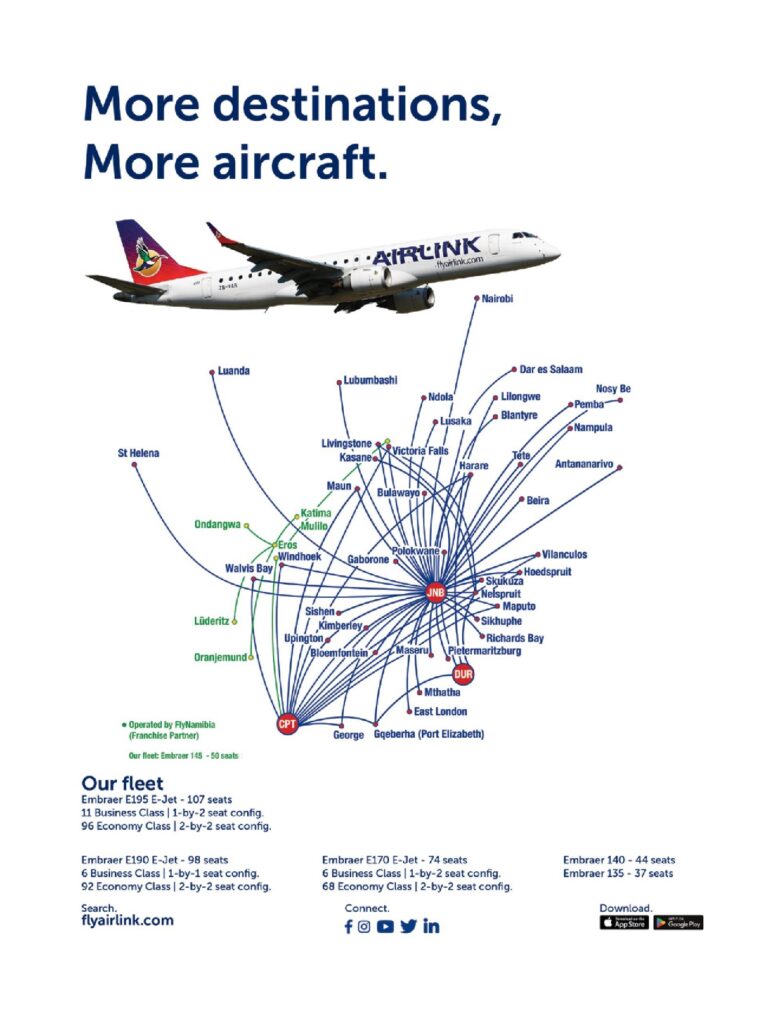
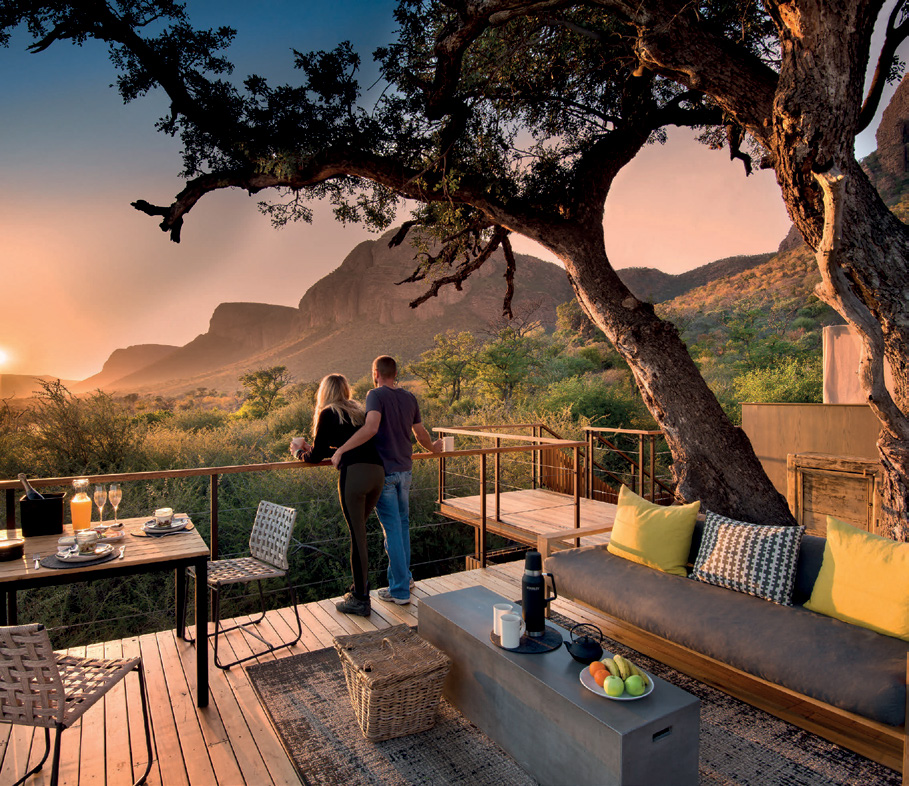
Trust Airlink to be your escape to wildlife adventures as you discover game lodges across Southern Africa, which offer unforgettable experiences, from encounters with wildlife to moments of relaxation.
Whether you’re a wildlife enthusiast, a honeymooner, or a family seeking adventure, Southern Africa’s game lodges promise an unforgettable journey into the heart of the wild.
Book your Airlink flights today! Start your journey on flyairlink.com, the FlyAirlink App, by calling Airlink Reservations at +27 (0)11 451-7300, or through your trusted travel agent.

Better off balanced
There is much we can learn from the early success of Mozambique’s Maputo National Park (see page 30) – only three years old this year, but already a model of what can be achieved in terms of conservation and tourism gains.
One such lesson is regarding balance. In the park, authorities are recording increases in predator numbers, with the outcome being that other animal populations end up being better controlled and thus the general ecosystem health is improved. In natural terms, predators are things to be feared – they signify aggression, power, and a complete lack of regard for the wellbeing of any creature lower than them in the food chain.
In metaphorical terms, we often regard anything that has a similar effect on our psyche – hardship, frustration, burdens of any kind that require bearing – as only negative. But where a trite aphorism like “Suffering builds character” is rather too simplistic, it is clearly true that facing a challenge, learning from it, and coming out the other side stronger and better equipped is ultimately beneficial.
Here’s to moving to that part of your journey this month.
Happy reading!
Bruce Dennill
Editor

PUBLISHER: Urs Honegger
EDITOR: Bruce Dennill
SENIOR SUB-EDITOR: Claire Rencken
SUB-EDITOR: Gina Hartoog
OPERATIONS AND PRODUCTION MANAGER: Paul Kotze
SENIOR DESIGNER: Annie Fraser
DESIGNER: Perpetua Chigumira
ADVERTISING: sales@panorama.co.za, +27 11 468 2090
NATIONAL SALES MANAGER: Gillian Johnston, +27 83 455 2397, gill@panorama.co.za
SUBSCRIPTIONS: subscriptions@panorama.co.za, Tel: 011 468 2090, Fax: 011 468 2091
Digital ezine available from skywaysmagazine.co.za
COMMENTS AND SUGGESTIONS: skyways@panorama.co.za
We value reader feedback. Please get in touch.
FINANCE: accounts@panorama.co.za
ISSN 1025-2657
Skyways magazine is published monthly and distributed via Airlink. All rights reserved. Reproduction of this magazine in whole or in part is prohibited without prior written permission of Panorama Media Corp (Pty) Ltd. Copyright © 1994-2024 Panorama Media Corp (Pty) Ltd. The views expressed in Skyways magazine are not necessarily those of Panorama Media Corp or Airlink, and the acceptance and publication of editorial and advertising material in Skyways magazine does not imply any endorsement or warranty in respect of goods or services therein described, whether by Skyways magazine or the publishers. Skyways magazine will not be held responsible for the safe return of unsolicited editorial contributions. The Editor reserves the right to edit material submitted and in appropriate cases to translate into another language. Skyways magazine reserves the right to reject any advertising or editorial material, which may not suit the standard of the publication, without reason given. Editorial material accepted for publication in Skyways becomes the property of Panorama Media Corp. Executive Briefs, Corporate Briefs, and Knowledge Profiles™ are solicited and paid for advertorial features in this magazine. Skyways magazine is published by Panorama Media Corp on behalf of Airlink.
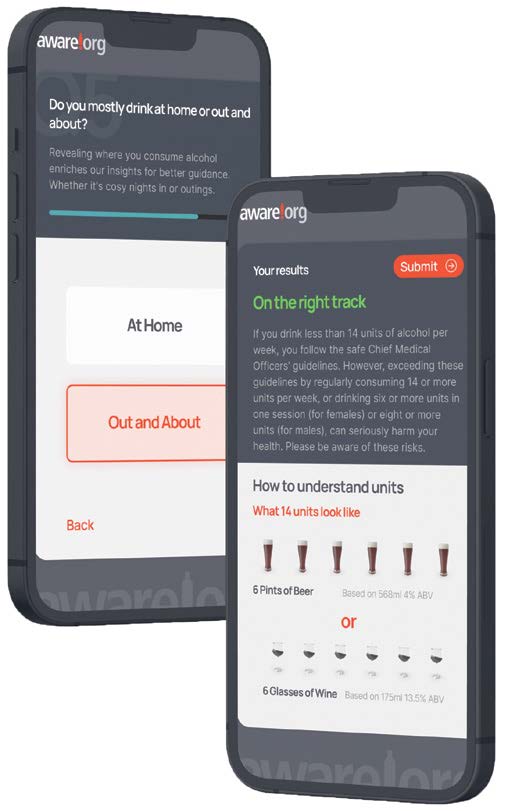
Aware.org has unveiled an innovative digital tool. The Drunk Goggles simulator is designed to help South Africans understand the dangers of drinking and driving, encouraging them to prioritize safety by only driving sober.
The days of mere warnings and depressing statistics with little action are over. Now, individuals can immerse themselves in the harrowing reality of driving under the influence, thanks to this new online challenge.
The simulator is more than just another virtual distraction; it’s a critical wake-up call. The initiative uses cutting-edge technology and gamification strategies to tackle a persistent and complex social challenge.
Picture this: you’re in a virtual bar, freely downing drinks as if there’s no tomorrow. Then, fueled by virtual liquid courage, you take the driver’s seat – all within the safety of the simulation. But this is not a game. It is a powerful and eye-opening educational and behavior change tool.
As participants advance through the challenge, they encounter essential facts and debunk common myths about alcohol consumption and its effects on driving abilities. From the fact that all alcohol is a nervous system depressant to the misconception that coffee can sober you up, participants gain invaluable insights into the dangers of drunk driving.
### Understand the Consequences
“The launch of Drunk Goggles marks a pivotal moment in our ongoing efforts to combat drunk driving in South Africa,” says Carmen Mohapi, Managing Director of Aware.org. “By providing individuals with a firsthand experience of the dangers of driving under the influence, we aim to empower them to make responsible decisions and ultimately save lives.”
The simulator offers a sobering experience, allowing users to witness the immediate and devastating effects of alcohol on their perception and driving abilities. Through a virtual journey, participants can step into a simulated bar environment, indulge in drinks of their choice, and then attempt to navigate a vehicle.
As you navigate the virtual streets, you’ll come face to face with the brutal truth about drunk driving. Forget the myths; this experience serves up the facts about the effects of alcohol on your brain and body. Spoiler alert: coffee won’t save you.
According to the latest road safety report released by MEC Kedibone Diale-Tlabela, fatalities decreased slightly from 1,452 in the previous reporting period to 1,427 in the most recent period. Five provinces – the Free State, Eastern Cape, Northern Cape, Limpopo, and North West – recorded fewer fatalities, while others experienced increases.
Although driving under the influence is directly linked to only a percentage of these fatalities (5.5%, RTMC), it is entirely preventable. Driving only when sober is a personal choice that every driver must take to ensure that South Africans prevent thousands of accidents, fatalities, and shattered lives each year.
“Drunk Goggles is also an empowerment tool. Armed with knowledge and immediate experience, users can become ambassadors for positive change in their social circles,” Mohapi says.
Text and photography | Supplied
For further information or to experience the Drunk Goggles simulator, go to aware.org.
A new high
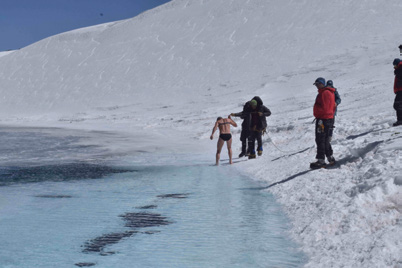
Madswimmer’s Jean Craven and a group of people from different backgrounds and countries recently attempted the highest swim in the world after sherpas reported spotting a new water body at about 7,000m above sea level in the Himalayas.
Ojos del Salado on the Argentina-Chile border currently hosts the highest water body in the world, but if Craven and the team verify and swim in this newly claimed highest pool at Phuta Himchulli in the Himalayas, it means the highest water body on earth has changed continents – from South America to Asia.
Madswimmer is a group doing extraordinary swims to benefit children in need while also highlighting social causes.
Source: madswimmer.com
A fight with bite
Airports Company South Africa (ACSA) and Goodbye Malaria (GBM) have joined forces in a partnership that aims to contribute significantly to the fight against the disease.
Goodbye Malaria has pioneered innovative solutions to address malaria while bringing about positive social and economic change. The impact of the partnership extends beyond employment and economic support. Through malaria elimination programmes in the MOSASWA (Mozambique, South Africa, and Eswatini) regions, over four million lives have been protected and impacted.
Source: goodbyemalaria.com
Movement milestone
Airports Company South Africa (ACSA) recently announced that Cape Town International Airport (CTIA) achieved a groundbreaking milestone by processing more than 10 million passengers in a single financial year. CTIA achieved this record during the 2023/2024 financial year by processing the highest number of international and regional passengers since COVID-19. It hit the 10 million mark by processing more than 320,000 passengers in March 2024 – a monthly figure that exceeded projections.
With airlines augmenting flight frequencies and renewed confidence in the city’s and region’s appeal, CTIA is preparing to commence with various expansion projects. Plans include the construction of a new runway, terminal upgrade projects, and various refurbishment projects, aiming to improve airport operations and the passenger experience, and to enable continued growth.
Source: airports.co.za
Darkness Brought to Light
To mark 30 years of South Africa’s democracy, the Apartheid Museum is partnering with the Ifa Lethu Foundation to showcase an exhibition of selected works from its collection. The collection of artworks, repatriated from 16 countries, represents a record of life in the townships in the dark days of apartheid.
Dr. Narissa Ramdhani, director of the Ifa Lethu Foundation, says: “During the apartheid era, these artists were unrecognised and remained unsung to the extent that even museums in this country refused to acknowledge their work. Yet, this collection attracted 24,000 visitors to our 2010 exhibition at Constitution Hill and went on to be exhibited in the United Kingdom for the 2012 Olympic Games and in France and Australia at the invitation of Heads of State.”
Source: apartheidmuseum.org
Aim for the Island
Excitement is building ahead of the Cape to St Helena Yacht Race. This prestigious 1,700 nautical mile race across open ocean is a true test of sailing skill and endurance. The race has a storied 28-year history, originally inspired by the Cape to Rio fleet in 1996. The first edition that year attracted 13 entries, growing to a record 22 yachts in 1998.
After a pandemic postponement in 2020, the successful 2022 race saw competitors battling intense weather and high seas while forging bonds of camaraderie. For 2024, entries remain open until 1 November. Racers will experience the thrill of landfall at St Helena, steeped in maritime history, as they explore Napoleon’s exile home, hike scenic trails, and immerse themselves in local culture.
Source: capetosthelena.co.za
Taking a Stand
Lesotho is poised to welcome a groundbreaking 1,280-seater football stadium constructed primarily from sustainably sourced timber and dubbed the Stadium of Life. Located in Maseru, the project, which harnesses timber’s renewability and carbon storage properties, stems from a collaboration between local charity and football club Kick4Life (K4L), non-profit organisation Relationships Inspiring Social Enterprise, the Forest Stewardship Council (FSC), and international certification body DNV.
The Stadium of Life aims to foster a connection between football and nature. After various design options, timber won, with 8,584 treated eucalyptus poles forming the west and south stands and a 160m perimeter fence. Wood serves as a long-life carbon storage mechanism. When trees are sustainably harvested, the wood continues to store carbon even when turned into another product such as sawn timber, poles, and even pulp and paper. One cubic metre of eucalyptus wood captures 880kg of atmospheric carbon dioxide, thanks to photosynthesis that takes place while a tree is growing. Some 640kg of oxygen is released back into the atmosphere, while safely locking away 240kg of captured carbon.
Source: fsc.org
The Full Handful
Cape Town-based extreme swimmer and global speaker, Ryan Stramrood, recently became the first person to complete the Big 5 Swims. The Big 5 Swims comprise:
– The Leopard – Cape Point (8km)
– The Cape Buffalo – Dassen Island (11km)
– The Rhino – Robben Island West Coast Angle (18km)
– The Elephant – Double Langebaan Express (24km)
– The African Lion – False Bay Crossing (33km)
Stramrood became the first Big 5 Swims finisher after he completed the Robben Island West Coast Angle in February. This is an 18km swim from Blouberg Beach to the northern tip of Robben Island, where you then turn east towards Melkbos Beach. It’s a long way in icy water and it’s difficult to assess the right conditions to take it on because of the two different directions in which you need to swim.
Source: ryanstramrood.com
Making Sludge Special
A pioneering solution has been developed to convert cellulose fibre-rich waste from pulp and paper mill operations into ethanol using a specialized fermentation process. Ethanol is a versatile starting material that finds diverse applications in the production of industrial chemicals, bio-based plastics, and sustainable aviation fuel.
The current demonstration plant has been deployed for a nine-month period at Sappi’s Tugela mill in northern KZN, with a follow-up project planned at Mpact’s mill in Springs, Gauteng. Giovanni Sale, Sappi’s senior general manager for sustainability and the Sappi Technology Centre, says: “This initiative not only addresses the pressing issue of waste management but also reduces the associated environmental impacts and costs, while unlocking economic opportunities and promoting responsible consumption and production.”
Source: thepaperstory.co.za
African Pitta
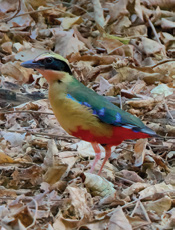
Breeding in the leafy undergrowth and riparian thickets of Zimbabwe and Mozambique in early December is the “Holy Grail” of birds: the African pitta. Though the bird itself, like the region’s Big Five animals, has been a bit exploited, birders who choose to use one of Zimbabwe’s communal area management programmes (CAMPFIRE) can see the bird for a reasonable fee.
One of these programmes is located in the remote Masoka Village. My wife and I spent two days with Mackenzie Zirota and his birding team. Though the rains had not arrived, we managed to have a few magnificent sightings of this special species.
Nearest Airlink airport: Harare, Zimbabwe.
Source: sacrp.org
Text and photography: Dr. Bob Graham
Have questions around your booking or travelling experience? Here are some solutions to pressing queries
Does Airlink Accept Sporting Equipment?
Individual sportspersons or sports groups will be permitted sporting equipment (subject to the items listed in section 4.4 of the 4Z baggage policy) packed as one piece, weighing a maximum of 15kg, on top of the free checked baggage allowance allocated on the ticket.
What if My Sporting Equipment Does Not Form Part of the Table Listed Under the Baggage Policy?
Sporting equipment not specified in the table will be accepted and must be booked via the Airlink Reservations Support Desk for verification no later than 72 hours before departure.
Who Should I Contact to Pre-book My Sporting Equipment?
Pre-book as a Special Service Request in respect of Sports Equipment (SSR SPEQ or SSR WEAP) through your travel agent or through the Airlink Helpdesk on 011 451 7300 (select option 1) or at e-ticketing@flyairlink.com.
For more information, go to flyairlink.com.
Use the FlyAirlink app, which gives you a convenient platform to plan, book and manage flights on your smartphone. Available in Apple App or Google Play stores.
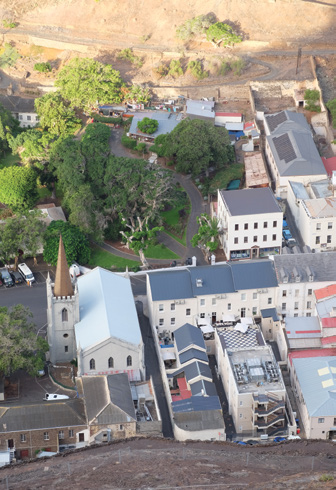
Many hotels around the world harp on about their location and how useful and central it is for visitors wanting to explore a particular destination. But not many destinations are like Jamestown, the capital of St Helena. It’s the capital of the country and the island’s single largest collection of buildings – many of them historical and many fulfilling practical purposes as homes, shops, schools, and administrative centres.
It’s also, because of the restrictions imposed by the rugged cliffs that rise on either side of it, a town that’s about as big as it’s ever going to be, a mile long up the length of the valley and no more than a couple of hundred metres wide at its most extensive.
Staying in such a place as a visitor means maximum potential for exploration, and the Mantis St Helena hotel is a brilliant base for whatever plans you have made. The older part of the establishment takes up the space once occupied by the officers’ barracks of the East India Company, built in 1774. As you’d expect, generals and the like were never going to settle for bunk beds and handbasins, so the three upstairs rooms overlooking Main Street, each featuring three picture windows, are large and beautifully appointed – polished wooden floors, plush chairs (including one in the bathroom, should you need a break between ablutions), a shower large enough for a foam party, and a TV on which you can keep tabs on the week’s international sporting events. If you press your face up against the glass, you can see the yachts in the harbour, too.
The newer part of the hotel, built behind the old barracks, is a much more recent build, with rooms spread over three levels around a chequerboard terrace, making it easily the largest accommodation block on the island.
Immersed in History
Next door is St James Church. There has been a church structure of some kind in that spot since the beginning of the 16th century, when Portuguese sailors first stumbled across the island in the vastness of the South Atlantic and erected a wooden room in which they could worship when they were harboured there. The current church was also part of the 1774 construction wave, with its shiny spire added to the architecture in 2016.
Within a whole minute’s walk from the hotel’s front door are the city’s museum, the wharf where the island’s supplies have been rowed or motored ashore for centuries, the 18th-century castle with its fortifications and defensive moat, the landscaped Castle Gardens and the bottom of the terrifyingly steep Jacob’s Ladder, the huge staircase that leads up to the Ladder Hill Fort, take all the oxygen in your lungs with you.
For lazy guests, this is a remarkable privilege. You hardly need to take 100 steps from where you wake up to explore, in depth, 500 years’ worth of history and culture and a way of life entirely different from living in a big city (regardless of where you’re from, unless you also live in a country’s capital populated by considerably fewer than 1,000 people). Living in town, as you will be for the duration of your stay at the Mantis, you’ll get to know a number of the locals and likely be invited to join them in some of their rituals, which might include activities as mainstream as gathering in the hotel bar for a nightcap or something as site-specific as joining general manager Ian Williams and a group of other locals for a sunset swim in the ocean, finning out to the wreck of the SS Papanui to marvel at the scale of the ship, scuttled in the bay after it had to make an emergency diversion into the harbour when on fire during a 1911 voyage.
Airlink flights arrive once a week, and however full they are, they provide a cosmopolitan boost to the island community. The Mantis restaurant often plays host not only to those curious newcomers, many of them from the UK (there are still a number of familial links between the populations) as well as everywhere from Edenvale to Estonia, but also to the great and good of the island, who frequent the place to celebrate major events or to gather for meetings. In the latter case, sitting at a nearby table and keeping an ear open allows for some excellent insight into whatever is going on or coming up in the community. It’s not eavesdropping if the courtyard acoustics give you no choice – and the church spire and the necklace of lights fastened up the length of Jacob’s Ladder provide a striking visual focus as you tuck into a delicious steak.
There are different storytelling opportunities available over breakfast, where you’ll likely see other guests you’ve crossed paths with once or twice over the previous couple of days and with whom you can compare notes about which island tour is the most interesting, which natural phenomenon is most mind-blowing, which hike is most scenic, or how convoluted the journey of some of the ingredients in your meal has been, given the incredible remoteness of the island on which you’re staying.
St Helena is not a resort island in the same sense as the white sand beaches and cocktails with umbrellas of Mauritius or the Seychelles or wherever and – not but – for that reason it is fascinating to experience.
Text and photography | Bruce Dennill
For more information or to book a stay, go to mantiscollection.com or sthelenatourism.com.
In the southern part of Klaserie Private Nature Reserve, the extraordinary Simbavati Waterside is fronted by a large dam, where a variety of wildlife make an appearance to lap up the life-giving sustenance. Owner Richard Krige called upon the expertise of architect Bennie Vosloo and interior designer Eugene Coetzee & Associates to work their collaborative magic in creating a masterpiece in both structure and furnishings.
Not rushing the project ensured that the lodge is well thought-out in many ways – it has different dining areas and ample indoor space for enjoying meals should the weather not play its part. The biggest focus area is the water in front of the lodge, with their ethos of water being life. Another vital aspect was finding the ideal place for the large swimming pool, which is not always as straightforward as it may seem.
“Most lodges have smallish swimming pools. And some have them adjacent to the main area, where they look lovely but are not as frequently used,” lodge manager Colin tells me. “It’s a personal space because guests don’t necessarily want to be seen in their bathing suits, so we decided to make it more private. We built a deck around it and, depending on the season, we host the most wonderful dinners next to the sparkling water.”
There’s also a focus on the quality of the aquatic refreshment. The installation of a state-of-the-art water filtration system means filtered water out of every tap. A strong emphasis is placed on minimizing the lodge’s carbon footprint, and their five-year plan is to eliminate bottled water in the camp entirely.
Testing the water
While we’re sitting down for lunch at the edge of the wooden deck under the imposing weeping boer-bean, where there is an uninterrupted vista of the watering hole, a lone elephant bull is slowly making his way down to the water. He doesn’t seem too impressed by the presence of the seven-strong family of waterbuck and waits for them to make the first move. They don’t seem in the least bit intimidated by him but eventually disperse, after which the elephant ambles past some foliage, pausing to take a nibble. He has now sped up substantially, almost into a slow trot.
When he reaches the sandy patch next to the dam, he lifts his right front leg, swaying it back and forth for about 30 seconds. He does the same with his left front leg. Turning his body, he faces the water and lowers his trunk. “Thhhllll,” the liquid nourishment makes it into his trunk, which he lifts to deposit the water into his mouth. After drinking for a good 10 minutes, he leaves and looks even more displeased when a buffalo approaches where he’s just been standing. Away from the waterhole, he immediately starts feeding, disappearing as quickly as he appeared.
Wanting to find out why the elephant lifted his foot and swung it in an almost rhythmic fashion, I reach out to Elephants Alive and, according to director, co-founder, and principal researcher Dr. Michelle Henley, the elephant is expressing uncertainty when he is possibly feeling conflicted or is unsure of what to do next, while assessing his situation. “It could also be displacement behavior,” she says, “Lately, scientists have suggested that elephants may be trying to even the weight on the other three legs to pick up potential seismic vibrations.”
It is time to check into the impressive luxury accommodation. All the suites are named after birds, as so many of them make their presence known in and around the lodge. The specially designed wooden door is huge! Upon swinging the door open, the exquisitely decorated room is a haven of tranquility, featuring every creature comfort imaginable. To the left, there is a stunning bathroom with grey marble his and hers vanities and a freestanding bathtub summoning a soak. To the right, the king-sized bed looks really inviting, but then the tub on the outside deck comes into view. Why snooze when one can take in the wondrous bush surroundings from your own private deck while immersed in a gas-fired hot tub?
Wise Words
Game drives are conducted in the expansive Klaserie Private Nature Reserve, and our safari guide is Wise, with tracker Hendry keeping tabs on what spoor he can match to the animal that has just walked there. Working together as a team, they have a natural nonverbal communication style, as Hendry gestures to Wise when to slow the Land Cruiser down or when to speed it up when things are about to get exciting.
Encountering a huge breeding herd of elephants with tiny babies has everyone clamoring for their cameras, and seeing a pride of lions asleep in the late afternoon is definitely a highlight. Another favorite sighting is of the most adorable steenbok. She has her head turned slightly sideways and it looks like she’s missing her right ear. There is a collective sigh of relief when she turns to face us, and we see that she has both appendages. This gorgeous specimen is evidently comfortable with our presence and is clearly loving the camera, seemingly ‘posing’ for a good five minutes.
Text and photography | Heléne Ramackers
For more information or to book a stay, visit simbavati.com.
South Africa is the only country in the world able to pinpoint the start of its wine industry, thanks to the first written record appearing on 2 February 1659. Not far from that early vineyard, Stellenbosch eventually emerged as a cornerstone of its rise, thanks to numerous defining milestones. Among them, Stellenbosch was where South Africa’s famous pinotage grape was developed, where Cap Classique was born and where the country’s first wine route was established.
Each of the 120 wine estates along the Stellenbosch Wine Routes is unique. From the sprawling vineyards of family-owned estates to the avant-garde architecture of a modern winery, every location is distinct. Experiences include wine tastings, vineyard tours, and harvest experiences that provide insights into the art of winemaking. The town’s heritage is visible in its splendid Cape Dutch architecture, museums, and galleries. History is intertwined with its present, offering a glimpse into the past.
Stellenbosch’s culinary scene is as diverse as its wines. From the contemporary twists on traditional South African dishes at Eike to the farm-to-table delights at Spek en Bone, each restaurant offers a unique experience. Indulge in the sophisticated creations of Marthinus Ferreira at Jordan Wines or elegant fine dining at Rust en Vrede. Enjoy the relaxed, family-friendly vibe at Geuwels or lazy bistro chic at The Vine Bistro.
Diverse and numerous accommodations offer a fit for each visitor. Luxury seekers can find solace in the exclusive suites of Lanzerac, while those seeking a more intimate experience may prefer the rustic elegance of Jordan Wine Estate’s cottages. Budget travelers and families are also well catered for, with numerous cozy B&Bs. Spas blend luxury and serenity through ranges of rejuvenating treatments. Surrounded by stunning vineyard landscapes, most of these havens are perfect for meditation and connecting with nature.
The tours and adventures in Stellenbosch cater to every interest. History buffs can explore the town’s heritage on foot, while thrill chasers can embark on mountain biking expeditions. The Vinehopper tour is a novel way to explore, allowing visitors to hop on and off at various estates. For a unique experience, Scootours offers downhill non-motorized scooter rides, and Segway tours provide a fun way to get out and about.
Each of Stellenbosch’s 14 wine bars has its own personality. From chic, modern spaces to intimate nooks, these are perfect places to unwind. Some have live music, and many offer the opportunity to engage with local winemakers at organized events. Numerous farms and wilderness areas are open to the public, making them a magnet for outdoor enthusiasts – hikers, cyclists, bikers, walkers, birdwatchers, joggers, and more. Recognizing the importance of family, many estates offer family-friendly experiences, from educational grape juice tastings for kids to playgrounds and safe open spaces.
Stellenbosch is a vibrant showcase of artistic expression, blending sculptures, galleries, and installations with its winemaking heritage. Wander through streets adorned with striking sculptures, explore diverse art collections in local galleries, and experience the serene beauty of the Dylan Lewis Sculpture Garden.
Text | Supplied
Photography | Fokke Baarssen
For more information, go to visitstellenbosch.org.
It’s a sad fact that throughout my childhood, Mozambique was off-limits to tourists because it was being torn apart by civil war. Although I grew up in Durban, just a few hours south of the border, it was a total no-go zone. No one ever mentioned its beauty, its wild lands, nor the incredible strips of unspoiled coast where you can walk for hours without seeing another soul. All we ever heard were horror stories.
Skip forward three decades, and Mozambique has been named (by Condé Nast Traveler) among the top places in Africa to visit in 2024. It’s little wonder. Among the country’s emerging destinations is Maputo National Park, which, despite being less than an hour south of the capital, must rank among the most healing and restorative places on Earth.
A conservation triumph, thanks in large part to the efforts of Peace Parks Foundation that manages it, the national park was officially proclaimed in December 2021, the result of a merger between Maputo Special Reserve and Ponta do Ouro Partial Marine Reserve into one contiguous area. It stretches for around 100km, from just south of the capital to Mozambique’s southern border, where it reaches the northern boundary of Tembe Elephant Park in KwaZulu-Natal’s Maputaland.
Within the 1,700km2 reserve, there exists a thriving mix of swamp forests, sprawling wetlands, coastal lakes and endangered mangroves, huge grasslands and beautiful beaches. From as few as 100 elephants that survived the war, the park’s pachyderm population is now flourishing, with estimates as high as 600 or 700. Herds can be found on the open floodplains or ambling through dense dune forests.
It’s not only the expanses of shimmering green that make the reserve special, but that it incorporates a huge protected marine area, shelter for whales, dugongs and sharks – plus its beaches are vital nesting sites for endangered leatherbacks and loggerheads. From October through February, it’s possible to see female turtles making their way across the sand to lay their eggs or witness hatchlings crawling towards the water at night.
Take Your Time
It’s also a place that brings you down to Earth completely. Despite the good road network and proximity to Maputo’s airport, once you enter, you become aware of the huge distances and are slowed down as much by the soft-sand tracks as by the lush wildness. It can feel as though you’ve travelled back in time.
From the main gate, it took us more than an hour to reach our freshly minted chalets at Ponta Membene, an accommodation project realised by Peace Parks in an effort to create a place for adventurous travellers from all walks of life – and somewhere that could appeal to a mix of budgets.
It’s an architect-designed mix of self-catering chalets for families, more compact units deep within a sunlight-dappled dune forest, and – at the other end – slick camping sites. Built with low-impact materials and designed to blend into the environment, it’s a tucked-into-the-bush hideaway in the true sense.
From my ‘dune’ chalet, where the waves sounded like they were inches from the bottom of my bed, I had only to open the windows for a full-blown sensation of sleeping in a forest.
Instead of TVs and internet scrolling, our evenings were given over to al fresco dinners served on one of the communal decks, a stone’s throw from the sea. We grilled prawns skewered on sticks over the fire and later huddled around the flickering flames and listened to one of the reserve’s ecologists talking about the great efforts to restore the park’s habitats to what they once were.
Helping pave a path to recovery in the wake of the war that lasted from 1975 until 1992, around 5,000 animals have been translocated into the area since 2010. Almost a dozen species, including cheetahs, have been reintroduced. Infrastructure and security personnel have been installed, and the park is now a lynchpin in the vast Lubombo Transfrontier Conservation and Resource Area, a network of protected places straddling northern KwaZulu-Natal, Mozambique, and eSwatini, covering some 10,029 km².
Balance Being Restored
According to Peace Parks’s Georgie Pearce, the reserve is seeing rising populations of predators – including hyena, serval, genet, jackal, and various raptors. “Carnivores are stepping into their role of fine-tuning the food web by controlling prey numbers and better balancing the greater ecosystem,” she says.
Most exciting are recent signs of leopard activity caught on the park’s network of camera traps. “Historically, the ecosystem has lacked the balance and biodiversity that leopards bring,” says Pearce. “But it’s now able to sustain them.” The leopards that are settling in have been tempted from far away by the park’s resurgent health and vitality, “a fantastic sign of nature bouncing back if given the chance,” she says.
Best of all, Pearce believes, is that leopard cub tracks have been found, signaling that these apex predator numbers are “growing naturally” and “becoming self-sustaining.”
The park is also renowned for its birdlife, so on our first morning, we bundled the birders into the 4×4 to see what we could see. We passed in and out of alternating biomes. One moment the vehicle was hemmed in by thick bush, waterberry and monkey orange trees, and ‘jungley’ tangles of sprawling vines on all sides, and the next we were moving across a vast marshland – swampy, reed-covered, and lined with wild date and ilala palms.
Squawks, tweets, whoops, and ca-caws came from all sides – the sort of soundtrack capable of converting anyone to the birdwatching game. The twitchers, clutching their bird-call apps, binoculars, and Roberts field guides, were caught off-guard by the variety and abundance of feathered creatures they were able to identify. For those with less extreme bird-watching tendencies, there were the easy-to-spot trumpeter hornbills with their oversized beaks balancing on branches overhead and the slightly crazed calls of purple-crested turacos.
When we stopped at a tranquil, reed-encrusted lake, a black-headed heron flew above the water’s surface; higher up, soaring on the thermals, a fish eagle uttered its familiar cry. Across the way were submerged hippos and crocs sprawled like logs on the distant shore, where rows of low hills undulated towards the horizon. There were nyala, waterbuck, and oribi, a side-striped jackal bounding through the tall grass, and an elephant, all alone, splashing about at the lake’s edges.
Around each bend there was more of that rare feeling of being somewhere untouched and seldom seen. Throughout that entire morning drive, there were no other vehicles.
Back at the lodge, a quick stroll ended on the beach, a magnificent, unspoiled coastline that stretched endlessly in both directions. For the rest of the morning, there were long walks, rock-pool snorkeling sessions, and e-bike rides along the shore all the way to Anvil Bay, with a slight breeze whipping the hair in our faces as ghost crabs by the thousands scuttled towards the water. A sense of unmitigated freedom came over me – the kind of feeling you have when the rest of the world and all its troubles are too far beyond your reach to care.
Text and photography | Keith Bain
For more information, go to parquemaputo.gov.mz
Moored just a few metres from the V&A Waterfront’s Clock Tower, the Mirage Catamaran is difficult to miss. Mind you, if you need that landmark to find the boat, you may need to visit an ophthalmologist. It’s a huge luxury craft that can carry 30 passengers (with plenty of space to spare) out into Table Bay or down along the coast towards Camps Bay, depending on where the marine life action is.
Today, there is no need to put in all that work, as a superpod of dolphins – someone murmurs that there might be as many as 1,000 of the creatures swimming and breaching and splashing and feeding – has swum into the middle of the bay, close to the harbour exit. An equal number of seabirds adds to the sense of energy and scale and excitement, blurring the air above the parts of the bay where the dolphins are most concentrated, intent on snapping up any scraps the predators leave behind as they plough through unfortunate schools of fish.
With all of that happening, a lone sunfish goes almost unnoticed on the other side of the boat. When it’s pointed out, passengers coo and aah – for many, it’s an exotic sight, with its bulky body and small dorsal fin. That fin looks like a seal’s flipper, which makes seeing a few seals a short while later momentarily confusing.
Seating Options
The upper deck offers unencumbered views of Table Mountain and the city below it, as well as a hint of the Green Point Lighthouse and the Sea Point Promenade beyond it in the distance. Look the other way and there is the low presence of Robben Island, a few massive, moored tankers, and, in the distance, the hazy massif of the Hottentots Holland Mountains.

The lower deck, where there is shelter from the sun – and, if you are unlucky, the rain – looks and feels like a comfortable restaurant with an open bar, with all of the views still available through large picture windows.
Out front, between the catamaran’s twin hulls, taut, tough fabric offers a different place to relax. Closer to the water and with air cooled by the Atlantic Ocean flowing through the fabric, it allows passengers a more acute sense of the speed and movement of the boat – exhilarating on a reasonably mellow day, but only for the brave if the wind is up and the waves are rising to meet it. Some folks position themselves right on the fabric at the front of the boat, almost getting an unintentional headbutt from the dolphins frolicking just ahead of the craft.
The whole experience is relaxing, with genial skipper Mark and a crew of affable, sure-footed youngsters milling about between passengers to take and deliver drinks orders. It’s an offering that’ll be different every day as the weather and sea conditions change and, with them, the behaviour of the fish, birds, and other wildlife. Both family-friendly and engaging on a number of levels, it’s the sort of activity that could become a holiday tradition for visitors to Cape Town.
—
Text and photography by Bruce Dennill
For more information, go to miragecatamaran.com.

A Head of the Game
Airlink customers who enjoy golf have access to some of the most extraordinary golf courses in the country thanks to the airline’s extensive route network. After landing at George, itself a major golfing destination, it’s a short drive to Knysna, home to Pezula Golf Estate.
The championship course here blends into the Pezula Nature Retreat on Knysna’s Eastern Head, meaning that players wander, as they hit their shots, through indigenous vegetation. All around are gorgeous vistas – the Indian Ocean to one side, the scenic Knysna Lagoon down below, and the imposing Outeniqua Mountains providing the backdrop to it all. The course has won many awards, including the IAGTO Awards ‘Best Golfing Destination in Africa and the Middle East’.

For you, what is it about World War Two that makes it so rich as a context for storytelling?
Kate Furnivall: The impact on Europe was so huge. It was really significant in the development of England, where I live, and it taught countries to work together. There were also personal hangovers for so many people – they were so poor after the war. There are still ruins in so many English towns. It took a long time for the scars to go away, and those had a strong impact on me. Also, there were the tragic aspects: separation and losing loved ones.
For me, it resonates with the Ukraine war that is happening now. Russia wants to take part of Europe as part of taking more of Europe. It is in our self-interest and the interests of humanity to help the Ukrainians.
There are not as many peri-war stories (like yours) as there are war stories. There’s a different kind of tragedy involved. Was that shift a reason to tell this story, or was the story itself the driver and the context just the details?
The story had been in the back of my mind for about five years. My mother used to speak of the Berlin Airlift and its heroism in the same way as most people talk about Dunkirk. My son lives in Berlin, so I have been there quite often. In the National History Museum, I saw a snippet of the planes landing, which triggered the idea of a woman looking for her child. So much of that was happening at that time – missing kids and children living on the street. Everything in that film also happened in the dark, which adds menace. Berlin was in the dark and divided up.
I have referenced World War Two in several of my books, but I will never write about what happened during the war. The impact of what happened afterwards is just so fascinating.
How did you research the book? Soviet East Berlin was likely not the most accurately documented place…
The Soviets destroyed many records. I went to see Templehof Airport, which is a mind-blowing, triumphalist place. Hitler wanted visitors arriving in Germany to see the grandeur for which the Nazis were responsible. It was intriguing walking around it, picturing what it would have been like.
The two American generals involved in the airlift there were incredible. The job had never been done before.
I was heavily influenced by lockdown when I was writing. I realized we were nervous about our neighbors and that the government had extra power. I felt the fear of what might happen, and that tension infiltrated the story, which took place in a similar atmosphere.
Another war story cliché is that the protagonists are men – heroic soldiers, evil generals, tragic cannon fodder, and the rest. You have, instead, two strong female leads, Anna and Ingrid, both strong but very different.
Anna had lived a privileged life in a comfortable part of town where her parents were looking after her. She was a happy young woman suddenly thrust into a completely foreign situation. It was interesting to examine how the situation changed her and made her understand what was really important – and also how her relationship with fear changed.
Ingrid was forced from early on to take risks, to the extent that she was hooked on it and well-equipped to deal with it, able to exploit any opportunity.
Do you feel that society in general needs reminding of the strength of women?
Very much so. I was brought up in a household without a father. I saw from an early age the strength of my mother, who was bringing up four kids. I saw how important it was to have a voice. Many women don’t get the chance.
The strength of women is important in all my books, in that I look at how a female character brings change to her environment. In Gone With The Wind, Scarlett carved a path for herself. I saw that film at the age of nine, and I see a bit of her in my characters. So much of what has been achieved by women goes unrecognized.
You also include motherhood as a theme – a core driving force, even when the world is upside down.
It’s a basic, animalistic part of the human psyche. I like to take people and strip away the outside to see what’s underneath. It’s important to write and think about deeper things. Without question, in any story, there needs to be action, relationships, and entertainment, but a central theme needs to bind this together.
I want readers to think about relationships and different kinds of protection. The book is about love, even with all the violence and sadness. Love can hold things together – if people let it. Moral questions are interesting – seeing what is acceptable, even in war.
Your family has its own history with Russia as an oppressor, with your grandmother fleeing the Bolsheviks in 1917. How does this shape your understanding of the potential worst of what the Soviets stood for in 1948, when this story is set, as well as your insight into the empathy they can also have?
I would never want a one-dimensional villain. My feelings for Russia are fraught. I’m a quarter Russian, which I love, but I hate what they’ve done in the past. And as I write about certain historical periods, they keep coming back into my books.
It’s such a culturally rich nation, but also capable of doing terrible things. It makes it interesting to look at all the dynamics in Europe, then and now. It’s still the case that the Russian psyche does seem to want a strong leader more than democracy.
In the book, you deal with the Cold War, lust for power, the switching of allegiances, the dressing up of ‘freedom’ as a reason for looting and more. None of this is very different from a newscast today. What are your feelings about 2024’s wars?
We’re not learning. We’re heading deeper into a terrible catastrophe, much of it manipulated by Russia. The US and the West can’t afford to pick sides all the time, so there are likely to be advances made by Russia. I guess another Cold War – with little or no bloodshed – would be preferable to the alternative…
The decor adds wonderful ambience, with a large chandelier and a beautiful textured mural. Outside seating is an option if the weather is warm, but then you lose out on this emotive design.
The menu is comparatively compact, but it’s updated often, allowing for both Head Chef Gerard van Staden’s ever-developing creativity and the use of whatever ingredients are freshest at the time. It offers a four-course meal, with portions combining for a happy, non-bloated total. Beef carpaccio with oxtail bitterballen with lemon and a parmesan pepper foam. Then butternut ravioli, with cinnamon sugar shards a stand-out element. Then a roast lemon-lacquered loin of lamb with tree-ringed potatoes. All closed out with a chocolate tart with salted caramel sauce. It’s gastronomic gladness – and if you’re staying at the hotel, you’ll head up to bed with a happy heart and a satisfied palate.
palmhouse.co.za
Franks Corner, Franschhoek
After founding and running the Franschhoek Beer Company together, Alex McCormack, Frank Rodriguez, and Reuben Riffel decided to add this restaurant to their slate. Situating it on Franschhoek’s famous restaurant strip (much of the town’s tourism offering is built around food) balances out the unfortunate lack of an apostrophe in the name. Differentiating the space from some of the other eateries close by – bistros and other themed offerings – ‘Franks Corner Bar and Grill’ is about as mainstream a name as it’s possible to come up with.
If you choose to sit inside, it’s all clean, modern lines, which makes it feel more like an ‘event’ – anniversaries; meals designed to impress – venue than that appellation suggests. Unsurprisingly, and enjoyably, there is the option of a beer tasting with your meal, with all of the Beer Company’s products lined up in small glasses as accompaniment to a delicious upmarket version of steak or fish and chips (above). Such choices are a marker of the establishment’s unwillingness to fix what ain’t broken, but instead to do what it does do very well indeed. Hospitable, attentive, kind staff add to the ambience and experience – you’ll want to go back.
franks-corner.com
Text | Bruce Dennill Photography | Supplied
The Red Room, Belmond Mount Nelson Hotel
‘Iconic’ is a horribly over-used word, but it does apply to the Mount Nelson, which makes you feel like you’re visiting somewhere historic or the set of a Wes Anderson movie – often at the same time. The Red Room (above), owned by Liam Tomlin and David Schneider, is – even though it is underground – easy to find, thanks to the name being elegantly spelt out in tiles to one side of the hotel’s main entrance. As you pass over this mosaic, heavy old wooden doors, now automated, swing open as though you’re being welcomed by a ghost doorman.
Descending carpeted stairs, diners reach a dramatically lit (read: dark-ish) area that lives up to the restaurant’s name. The decor is striking, with velvet-clad, semi-circular benches curving around the bigger tables, with smaller tables having their two chairs arranged on one side to aid the sharing of the Pan-Asian dishes once they’ve been delivered. The staff need to be – and are – well trained and knowledgeable regarding a menu full of dishes from Japan, Korea, China, and Malaysia, as well as which combinations of those dishes work well together.
The dessert stack is phenomenal, even if the fortune cookies take the easy way out by making general statements. That’s the only clichéd part of the meal, though, with the lush surroundings, house cocktails, and wide array of combinations of shareable dishes pretty much ensuring a memorable time with a partner or friends.
De Tafel, Wynberg

The in-house restaurant at Palm House Boutique and Spa, De Tafel (above), is also a standalone culinary destination, aiming to be both another reason for foodies to head to Cape Town in general and relatively unglamorous Wynberg specifically. It’s also a wonderfully convenient option for residents of the suburb and surrounds, saving them a drive into town or wherever else there are further fine dining options.
The decor adds wonderful ambience, with a large chandelier and a beautiful textured mural. Outside seating is an option if the weather is warm, but then you lose out on this emotive design.
The menu is comparatively compact, but it’s updated often, allowing for both Head Chef Gerard van Staden’s ever-developing creativity and the use of whatever ingredients are freshest at the time. It offers a four-course meal, with portions combining for a happy, non-bloated total. Beef carpaccio with oxtail bitterballen with lemon and a parmesan pepper foam. Then butternut ravioli, with cinnamon sugar shards a stand-out element. Then a roast lemon-lacquered loin of lamb with tree-ringed potatoes. All closed out with a chocolate tart with salted caramel sauce. It’s gastronomic gladness – and if you’re staying at the hotel, you’ll head up to bed with a happy heart and a satisfied palate.
palmhouse.co.za
Franks Corner, Franschhoek
After founding and running the Franschhoek Beer Company together, Alex McCormack, Frank Rodriguez, and Reuben Riffel decided to add this restaurant to their slate. Situating it on Franschhoek’s famous restaurant strip (much of the town’s tourism offering is built around food) balances out the unfortunate lack of an apostrophe in the name. Differentiating the space from some of the other eateries close by – bistros and other themed offerings – ‘Franks Corner Bar and Grill’ is about as mainstream a name as it’s possible to come up with.
If you choose to sit inside, it’s all clean, modern lines, which makes it feel more like an ‘event’ – anniversaries; meals designed to impress – venue than that appellation suggests. Unsurprisingly, and enjoyably, there is the option of a beer tasting with your meal, with all of the Beer Company’s products lined up in small glasses as accompaniment to a delicious upmarket version of steak or fish and chips (above). Such choices are a marker of the establishment’s unwillingness to fix what ain’t broken, but instead to do what it does very well indeed. Hospitable, attentive, kind staff add to the ambience and experience – you’ll want to go back.
franks-corner.com
Text | Bruce Dennill Photography | Supplied
Salad greens are easy to cultivate in a city garden
Many homeowners feel inspired to transform their gardens and grow their own produce. But not everyone has the time, budget, or suitable property to establish a vegetable garden, and growing tunnels can be unsightly in an urban setting.
The ubiquitous lettuce (Lactuca sativa), however, is easy to cultivate. There are many varieties: Buttercrunch, Green Oakleaf, Green Salad Bowl, Cinnamon Cos, Butter Blush, Lollo Rosso, Forellenschluss, Brune D’Hiver, Henderson’s Black Seeded Simpson, Little Gem, May Queen, Merveille des Quatre Saisons, Tom Thumb, Parris Island Cos, and Mignonette Bronze.
Good growing companions include asparagus, beans, beetroot, cabbages, carrots, celery, chicory, cucumbers, dill, fennel, kohlrabi, leeks, mint, onions, peas, pumpkins, radishes, rhubarb, strawberries, sweetcorn, tomatoes, and yarrow. Bad companions? Parsley and parsnip.
Lettuce is adaptable to many growing conditions but likes it cool – around 15-18°C. Generally, better results will be obtained by growing lettuce during the cooler months. Lettuce grows best in full sun, though excessive heat can cause it to bolt (prematurely running to seed) or the leaves to wilt. South African full sun, especially during summer, is generally too hot, and the plants should be grown under shade – 30-40% shade cloth would be ideal. Also, if growing during hot summer conditions, be sure to keep the top few centimetres of soil moist at all times (a good mulch helps). Lettuces are shallow-rooted plants, and even a few hours without water will send the plants into survival mode (they will go to seed).
Lettuce is tolerant of a wide range of soils but prefers well-drained, cool, loose soil with plentiful moisture and a pH of 6.2 – 6.8. To encourage tender and tasty growth, make sure the location is rich in organic compost matter.
Into the ground
Direct seed or transplant in early spring – as soon as you can work the soil. Prepare beds by working in
In manure or compost and raking smooth to leave a fine seedbed. Seeds need light to germinate; sow at a very shallow depth by covering them with a thin layer of growing medium. For direct seeding, sow seeds 2-3mm deep, 2.5cm apart, in rows 30-45cm apart. When plants have two or three true leaves, thin to 30cm spacings for crisphead varieties and 15-25cm for other types. You can also lightly broadcast seed (particularly of loose-leaf varieties) in a patch instead of a row. For transplants, sow in seed trays three to four weeks before transplanting outside. Harden seedlings for three to five days before transplanting. Use row covers or cloches to protect early plantings from cold, to protect young plants from insects, and to shade crops when warm weather arrives.
Make succession plantings every week or two and grow several varieties with different maturity dates for a continuous supply. Moisture, stress, and high temperatures, particularly at night, encourage bolting. As the season progresses, plant more bolt-resistant varieties. Locate plants where they will be partially shaded by taller nearby plants, latticework, or other screens. Mulch to retain moisture and suppress weeds.
Fertilising can be helpful to promote faster growth, especially with a fish emulsion type that is not high in nitrogen, which can cause greens to become bitter. Water lightly but consistently.
Harvest time
Many varieties of lettuce can be harvested as microgreens, baby greens, leaves, or the entire plant. Ideally, greens should be collected early in the day to prevent wilting. Microgreens are usually harvested within two weeks after germination by cutting the entire plant just above the ground, once it is around 10cm tall. Baby greens are harvested between 28 and 35 days after germination. Looseleaf, butterhead, and romaine types can typically be harvested as baby greens, while iceberg lettuce is not suitable as baby greens.
Mature leaves can be harvested from all types of lettuce, except for icebergs, at any time in the growing cycle until a central stem begins to form. This indicates that the plant is preparing to bolt, and greens collected from such plants are often too bitter for consumption. Entire plants can be harvested in mid-development while the leaves are still plump and tender, but before a stem has started to form. Many varieties of looseleaf lettuce can be harvested numerous times during a single growing season.
Leaf lettuce can be cut as soon as it is large enough to use, usually within 50-60 days from planting. Cutting every other plant at the ground will give the remaining plants more space for growth. Romaine and butterhead lettuce can be harvested in about 60-70 days from planting. Iceberg (crisphead) varieties take longer and should be harvested as soon as a head develops but before outer leaves turn brown. If seed stalks appear, pick the lettuce immediately and store it in the refrigerator to prevent bitterness.
To store lettuce, first wash it well by immersing it in water and swishing it around. Place it in a colander and rinse, then drip dry. When it is dry, place it in a plastic bag in the refrigerator or wrap in paper towels and place in a bowl in the refrigerator. Avoid storing lettuce with apples, pears, or bananas, as they release a natural ripening agent that will cause brown spots, and the leaves will decay quickly.
Text | Supplied Photography | epiximages
For more information, go to grannymouse.co.za.
In the delicate balance of parenting, a fine line exists between nurturing and hovering too closely. Helicopter parenting, characterized by overprotection, micromanagement, and excessive involvement, while rooted in love and concern, can inadvertently hinder a child’s development. Such parenting stems from a deep desire to shield children from harm and ensure their success. However, this hyper-vigilant approach can impede children’s ability to develop crucial life skills, such as independence, resilience, and problem-solving.
The long-term effects on children can be varied. By constantly intervening and limiting their independence, helicopter parents inadvertently hamper children’s confidence and self-esteem, hindering their ability to navigate challenges with resilience. Sheltering children from failure deprives them of valuable learning experiences and coping mechanisms, leaving them ill-prepared to handle setbacks and disappointments.
Constant pressure to meet parental expectations and the lack of autonomy can lead to heightened stress and anxiety levels among children, affecting their overall well-being. Children accustomed to having their every need catered to may develop a sense of entitlement, expecting success without putting in the necessary effort or facing adversity. Overprotected children may lack essential life skills, such as problem-solving and resilience, making it challenging for them to navigate the complexities of the real world independently.
Support All You Can
To avoid falling into the trap of helicopter parenting, parents can try to do a number of things. Allow children to tackle challenges and solve problems on their own, gradually increasing their autonomy as they grow. Support them in facing setbacks and disappointments, emphasizing the importance of perseverance and resilience in overcoming obstacles. Provide opportunities for children to develop essential life skills, such as decision-making, problem-solving, and emotional regulation, through hands-on experiences and real-world challenges.
The importance of being a supportive presence in children’s lives, offering comfort and encouragement when they encounter difficulties, can’t be underemphasized. Parents can help children build the resilience and confidence they need to thrive by serving as a safety net rather than a hovering presence.
Text | Ursula Assis Photography | Aleutie
Ursula Assis is Country Director of Dibber International Preschools. For more information, go to dibber.co.za.
Gone are the days when breakouts magically disappeared the moment you left your teens. Adult acne is becoming more common, and it’s not unusual for people to continue experiencing breakouts well into their 30s, 40s, and 50s. Here are answers to common questions.
We all assume that the only time you should get breakouts is when you’re in your teens. Even though this is the one time that your body is going through huge hormonal change, this is not the only time that it happens. Breakouts indicate a change in hormones, and there are a few phases in life when this happens.
The odd pimple (or breakout) can be caused by changing environments, stress, an area of clogged pores, or maybe a peel or resurfacing treatment that creates change in your skin. There is no regularity about a breakout. Acne is a chronic condition that is driven by hormones and probably has a link to genetics. It worsens with stress and hormonal change. It can also vary from light to full inflammatory cystic acne.
There is no unequivocal evidence to prove that diet is linked to acne or the worsening of breakouts. If there were a strong link, there would be populations that don’t have acne where these foods might be excluded from their diets. There are individual anecdotal links to diet, though, and these cannot be denied.
Wearing make-up does not cause breakouts. Rather, not removing make-up and sleeping with thick layers of it on your skin might cause breakouts. Once again, this will vary from person to person. Make-up does not cause acne, though – hormone fluctuations and genetic predisposition do.
For the odd pimple, consider salicylic acid, azelaic acid, and niacinamide. These could be included in a cleanser, spot treatment, or moisturiser.
There is a lot to be said for keeping skin clean and healthy by cleansing and moisturising twice a day with the correct products for your skin. If you do notice a lifestyle habit that is affecting your skin health, try to avoid it. Don’t pick at your skin or pimples and avoid touching your skin too much, as hands tend to be dirtier than other body parts. If you tend to get breakouts around your hairline, wash your hair regularly. The scalp tends to be oilier at the hair follicles.
Text | Karen Bester Photography | Pixel-Shot
Karen Bester is a medical trainer at Lamelle Research Laboratories.
For more information, go to lamelle.co.za.
In Africa, landscapes and ancient traditions converge to offer healing superfoods that are revolutionising the skincare and food industries globally. Superfoods are nutrient-rich foods found in nature and considered to be particularly beneficial for health in general and healthy skin due to their high concentration of vitamins, minerals, antioxidants and other beneficial compounds.
Baobab: the tree of life’s gift
Known as the ‘tree of life’, the baobab tree yields nutrient-rich fruit full of vitamins and minerals. Baobab oil is deeply moisturising and absorbs quickly into the skin without clogging pores, making it ideal for all skin types. Rich in vitamin C, it helps brighten dull skin, even out skin tone and promote collagen production for firmer, more youthful-looking skin.
Cacao: the skin’s sweet treat
Chocolate isn’t just for indulgence anymore! Derived from the cacao bean, this superfood is packed with antioxidants, which help fight free radicals and protect the skin from environmental damage. Cacao’s high levels of flavonoids promote skin elasticity and hydration, leaving a youthful glow. The natural caffeine content can stimulate circulation, reducing the appearance of dark circles and puffiness around the eyes.
Shea: nature’s moisture miracle
Shea butter, derived from the nuts of the African shea tree, has been used for centuries for its moisturising and healing properties. Packed with fatty acids and vitamins A, E, and F, shea butter nourishes and softens the skin, providing long-lasting hydration. Its anti-inflammatory properties make it effective in soothing irritated skin conditions such as eczema and psoriasis.
Marula: the elixir of youth
Marula oil, extracted from the kernels of the marula fruit, is renowned for its hydrating, anti-ageing and skin-rejuvenating properties. Rich in antioxidants and omega fatty acids, marula oil helps protect the skin from free radical damage and reduces the appearance of fine lines and wrinkles. Its lightweight texture absorbs quickly into the skin, leaving it silky-smooth and radiant without feeling greasy.
Text | Nicole Sherwin Photography | Memongbubba
Nicole Sherwin is the founder Eco Diva Natural Superfood Skincare. For more information, go to ecodiva.co.za.
Nurturing resilience in young children is paramount for their growth and development in a country and world filled with challenges. Resilience refers to a child’s ability to respond positively to adverse events.
While some may perceive resilience as an innate trait, it can also be cultivated through cognitive, emotional, and social skills. It’s not just about bouncing back from setbacks; it’s also about equipping children with the tools to navigate life’s uncertainties with confidence and adaptability.
Parents should set boundaries and encourage independence in their children. Saying ‘no’ when appropriate and allowing children to tackle tasks independently instils a sense of self-reliance and responsibility. While ensuring safety is essential, overprotecting children doesn’t help. Allowing them to explore, experiment, and occasionally experience failure is crucial for their growth and resilience.
A supportive and loving family environment lays the foundation for resilience. Spending quality time together, fostering open communication, and nurturing emotional stability contribute to a child’s ability to cope with challenges. Experts suggest asking ‘how’ questions to encourage problem-solving skills and a positive outlook instead of focusing on mistakes. This approach helps children develop resilience by shifting their perspective from dwelling on failures to finding solutions.
Fall and get up again
Making mistakes is a natural part of learning and development. Allow kids to make and learn from mistakes, emphasizing that resilience is built through overcoming challenges. It is key to highlight the importance of encouraging children to take calculated risks and step out of their comfort zones. Providing guidance on assessing risks and taking appropriate precautions empowers children to explore new opportunities confidently.
Sharing stories of resilience and perseverance inspires children to believe in their abilities. Storytelling is a powerful tool for instilling values of determination, passion, and resilience in young minds. The tone of communication plays a significant role in shaping children’s perceptions and responses to challenges, with parents encouraged to communicate positively and emphasize encouragement and support rather than fear or negativity.
While fostering independence, the importance of maintaining a supportive presence in children’s lives needs to be stressed. Knowing they have a reliable source of love and guidance gives children the confidence to navigate obstacles and seek help when needed.
Parents play a crucial role in modeling resilient behavior for their children. By incorporating these strategies into parenting practices, parents can empower their children to thrive in the face of adversity.
Text | Ursula Assis Photography | Evgeny Atamanenk
Ursula Assis is the Country Director of Dibber International Preschools. For more information, go to dibber.co.za.
Singer and songwriter Kahn Morbee recently emigrated to the Netherlands but, in spite of now being a solo artist, he’s also still part of The Parlotones.
When did your love for music originate?
Kahn Morbee: I can’t exactly pinpoint an origin to the love of music. I was always surrounded by it. Music is ubiquitous in most of our lives. It’s the soundtrack to our lives. It’s there on many occasions, sad and happy. I just enjoyed being around it and making up my own little melodies and songs.
When did you first realize you have an amazing singing voice?
Kahn Morbee: I don’t believe I have a good singing voice, but I’ve always loved singing. When the time came to start a band and be the singer, they didn’t like my voice, as the music scene was very grunge-oriented, with singers having a gruff voice. I decided I would write my own songs and start my own band and that’s how I became a singer. All artists go through a bit of an imposter syndrome, because we’re forever learning and always aspiring to be like the artists who inspire us.
You’re able to play the acoustic and the electric guitar, the mandolin and the ukulele. Did you teach yourself or were there lessons involved?
Kahn Morbee: They’re all part of the guitar family and I did embark on a few lessons in my 20s but, mostly, it’s self-taught. You learn from your peers and mimic the albums you listen to. I was a big fan of REM and picked up a mandolin but, in all legitimacy, I don’t think I can call myself a guitarist. I see all the instruments as a means to an end because they’re conduits for me to write a song.
Who have your musical inspirations been and why?
Kahn Morbee: If I went down the rabbit hole of musical inspirations, it would occupy an entire interview and then a couple of interviews after that. At the early stages of my career, I was inspired by indie rock guitar bands. I like old music from the ’60s, the swing band era, Frank Sinatra, Ella Fitzgerald, and Nina Simone. I have a strong love for musicals and am a big fan of Andrew Lloyd Webber. My biggest inspiration is from songwriters who perform their own music. I always circle back to The Beatles – they illuminated the way for other people who had an affinity for crafting and creating their own music.
When and why did you embark on a solo career?
Kahn Morbee: I am a prolific songwriter and there just wasn’t enough space on every Parlotones album to document all my ideas. I wanted to explore different sounds. There is a much more democratic process in a band. When you’re doing a solo project, you get to be a bit of a dictator – and both have their merits in the creative process. From a solo perspective, you can be quite selfish and self-indulgent. In a band, you have to let all the different ideas interact in harmony.
Are there benefits to flying solo?
Kahn Morbee: You get to explore the creative process and make decisions solely on a selfish platform. It can be quite a lonely process and is often filled with self-doubt. When you’re in a band, you have a soundboard and you can bounce ideas off each other.
Do you and The Parlotones still perform together?
Kahn Morbee: Yes, we do, even though it’s not as full-on as it used to be, primarily due to me emigrating to the Netherlands. I am taking a more subdued approach to live performing and touring. It’s quite demanding of one’s time and I choose to spend more time with my family and my kids. We are still very much a band and good friends.
Can you speak Dutch or has your Afrikaans improved?
Kahn Morbee: I’m trying to speak a bit of Dutch every day. People call it ‘Nederkaans’ when you mix Dutch and Afrikaans. I can get by and coach my kids’ football team and speak good Dutch football jargon.
What is the culture like in the Netherlands compared to South Africa?
Kahn Morbee: I live in a diverse suburb with a lot of expats. The only real difference is the colder climate, so it’s a lot more ‘indoorsy’ compared to the South African lifestyle or culture.
What is your songwriting process?
Kahn Morbee: I try to learn something new on guitar or piano and I will dissect some lyrics from artists I like. The beauty of music is that you will never ever master it and you will always be learning, and there’s so much out there that is good and inspiring. Songwriting is not linear. You quickly get your ducks in a row when there’s a deadline. I equate it to a stewing, percolating pot of ideas.
Text | Heléne Ramackers Photography | Stephen Segal
Follow Kahn Morbee on Instagram: @kahnmorbee.
Embracing clean skincare involves using products formulated with natural ingredients devoid of harmful chemicals. Ethical skincare ensures sustainability and cruelty-free practices throughout the production process. Opting for such products benefits the environment and animal welfare.
Look for skincare products enriched with superfoods known for collagen-boosting properties. Ingredients like vitamin C-rich Kakadu plum, antioxidant-packed green tea extract, and hydrating hyaluronic acid can stimulate collagen synthesis while nourishing the skin. Additionally, seek out brands committed to transparent sourcing and eco-friendly packaging, reflecting a dedication to both skin health and environmental stewardship. Look for brands that offer high counts of superfoods in their formulations like baobab, cacao, maca, marula, cranberry, sesame, and moringa, all of which help to stimulate and boost collagen from the outside in.
Valuable minerals
The old adage, “You are what you eat,” rings especially true when it comes to skin health. Incorporating plant-based whole foods into your diet provides a bounty of nutrients essential for collagen production. Foods rich in vitamin C such as citrus fruits, berries, and leafy greens, play a pivotal role in collagen synthesis by supporting the body’s natural production processes. Prioritize foods abundant in nutrients like copper and zinc, found in seeds, nuts, legumes, and whole grains. These minerals aid in collagen formation and promote skin elasticity, helping to maintain a youthful complexion. High doses of natural mineral supplements like trace minerals help with the regeneration of bone, hair, nails, skin, and teeth.
Get moving
Physical activity not only benefits overall health but also contributes to collagen production and skin rejuvenation. Incorporate exercises that engage the muscles and stimulate blood flow, such as strength training, yoga, and high-intensity interval training. These activities promote circulation, delivering vital nutrients and oxygen to the skin cells while flushing out toxins. Targeted facial exercises can help tone facial muscles and improve skin elasticity. Simple techniques like facial yoga and massage increase blood flow to the skin’s surface, enhancing collagen synthesis and reducing the appearance of fine lines and wrinkles. Integrating regular exercise routines into your lifestyle amplifies the natural mechanisms that uphold skin health and resilience.
Achieving radiant, youthful skin doesn’t have to entail harsh chemicals or invasive procedures.
Text | Nicole Sherwin Photography | Hryshchyshen Serhii Nicole Sherwin is the founder Eco Diva Natural Superfood Skincare. For more information, go to ecodiva.co.za.
Astronomical treasure trove discovered in just a few hours
International astronomers have discovered 49 new gas-rich galaxies using the MeerKAT radio telescope in South Africa. The observations lasted less than three hours and were made possible by the IDIA (Inter-University Institute for Data Intensive Astronomy).

Dr. Marcin Glowacki, from the Curtin University node of the International Centre for Radio Astronomy Research (ICRAR) in Western Australia, led the research, which aimed to study the star-forming gas in a single radio galaxy. Although the team didn’t find any star-forming gas in the galaxy they were studying, Glowacki discovered other galaxies while inspecting the data.
In total, the gas of 49 galaxies was detected. Glowacki said this was a great example of how fantastic an instrument like MeerKAT is for finding the star-forming gas in galaxies.
“I did not expect to find almost 50 new galaxies in such a short time,” he said. “By implementing different techniques for finding galaxies, which are used for other MeerKAT surveys, we were able to detect all of these galaxies and reveal their gas content.”
The new galaxies have been informally nicknamed the 49ers – a reference to the 1849 California gold rush miners. Glowacki views the 49 new galaxies as valuable as gold nuggets in the night sky. Many galaxies are near each other, forming galaxy groups, with several identified in one observation.
Connected in space, three galaxies, in particular, are directly connected by their gas. Glowacki said, “These three are particularly interesting, as by studying the galaxies at other wavelengths of light, we discovered the central galaxy is forming many stars. It is likely stealing the gas from its companion galaxies to fuel its star formation, which may lead the other two to become inactive.”
Professor Ed Elson from the University of the Western Cape, a co-author of the paper, said, “This discovery highlights the raw power of the MeerKAT telescope as an imaging instrument. The methods we developed and implemented to study the 49ers will be useful for MeerKAT large science surveys and smaller observing campaigns such as ours.”
The discovery was no accident. Recently, an ICRAR summer student, Jasmine White, working with Glowacki, helped find even more gas-rich galaxies in other short observations made by MeerKAT.
“We hope to continue our studies and share even more discoveries of new gas-rich galaxies with the wider community soon,” Glowacki said.
The research was published in Monthly Notices of the Royal Astronomical Society.
Text and photography | Supplied
For more information, go to sarao.ac.za.

At 10:30pm, when Ward 30 explodes, I think back to the tranquillity of the morning. The morning is when the Chris Hani Baragwanath Hospital in Soweto is at its most peaceful.
That day – my first at the hospital – had started just over 15 hours earlier, after a night of restless sleep. In the darkness, I kept glancing over at the new lanyard dangling from the nearby chair, squinting to see if the word ‘Doctor’ was still on the name badge and hadn’t been erased after some higher power realised that a mistake had been made; that I couldn’t possibly be ready to start treating actual patients on my own.
A persistent nausea had settled deep in my abdomen, replacing the excitement that had been present since graduation two months earlier. I tried to calm my thudding heart and reminded myself that six years of medical school had prepared me for this; I was ready. But no sooner had my breathing settled than doubts began seeping into my brain like black ink through water. What if someone had an illness I had never studied? If there was an emergency, would I remember what to do? What if I made a mistake and someone suffered or died as a result?
This gnawing anxiety was compounded by the reputation of what was to be my workplace for the next two years. Baragwanath, or Bara (as it was generally referred to) was infamous. Stories had filtered all the way back to Cape Town that it regularly reduced junior doctors to tears. It was a hospital that could shatter you if you weren’t able to handle the pressure.
Those who had survived their internship at Baragwanath wore it like a badge of honour and had the grizzled, slightly damaged look of war veterans who had ‘seen things’, rather than junior professionals with a two-year medical apprenticeship under their belts.
When the shrill of the alarm clock pierced the quiet morning, I was so wired I almost jumped out of bed. To calm my thudding pulse, I rechecked my medical bag for what felt like the 20th time since the night before. Stethoscope? Lying like a snake poised and ready to strike. Folder for documents and ward lists? Propped up proudly on the side of the bag. Well-thumbed Internal Medicine handbook from med school? Bookmarked and ready to be surreptitiously checked between patients. I glanced at the white coat hanging in my cupboard and was relieved that this piece of attire was not required at Baragwanath. I had always found wearing it stuffy and unnecessary; an extra piece of clothing in a withering climate that quickly reduced the crispest of extraneous layers to limp, damp cloth.
With the sun gently rising, I grabbed a cup of coffee and a piece of toast and headed to the hospital. Easing down the harsh concrete highway, I noticed on the horizon a gentle plume of smoke rising from the informal settlements and modest houses that surround Baragwanath. This haze signified an entire populace getting ready for the day. A thousand breakfasts being prepared, old bones and joints creaking to life, fresh-faced children being roughly washed and readied for school in crisp uniforms. Above lay the extraordinary blue of the African sky. Perhaps it was my adrenaline pumping, perhaps it was my senses on a state of high alert, but it was a startling sight this particular morning. On a sunny day, it is bluer and deeper than any ocean and I found myself staring at it as I nervously shifted gear while waiting at a traffic light.
The moment of serenity was shattered by a high-pitched horn from an impatient minibus taxi behind me, upset that I had not pulled off the millisecond the light turned green. With a vaguely dismissive gesture from his window, more out of a sense of obligation than real anger, the taxi driver zoomed around me and sped off to collect his next cargo of passengers.
The drive to Soweto from the leafy, middle-class suburbs of Johannesburg was a surreal experience; a real-time journey through the glaring disparities of wealth that exist in South Africa. The tree-lined streets in front of enormous, high-walled houses quickly gave way to more modest, single-storeyed homes before the ubiquitous mine dumps that pock the outskirts of the city indicate you have reached the edge of where apartheid’s planners intended white people to live. Beyond this, everything becomes a lot more haphazard, and on the southern border, the cruelly – and ironically – named ‘Golden Highway’ takes you to Klipfontein Road, one of the arteries that feeds the sprawling area of Soweto.
Text | Alastair McAlpine Photography | Supplied and Wirestock Creators
Prescription: Ice Cream by Alastair McAlpine, published by Pan Macmillan, is available now. For more information, go to panmacmillan.co.za. This excerpt is published by permission.
Gradual exposure
The problem with serious anxiety disorders and phobias is that they trigger such a strong fear response in the brain that it fails to learn that they’re harmless. The fear response itself provides the negative consequences. A typical route to avoiding this fear response is to engage with the source (social interactions, in this case) in small, incremental doses. Say hello to a stranger, or give a brief thank you to a shop assistant, and build from there, giving your brain time to adjust without setting off alarm bells.
Screen interactions
While there will be some negatives to doing so, social anxiety can be mitigated by communicating via screens and online messaging. It’s not as rewarding as face-to-face interaction as far as our brains are concerned, but it comes with fewer risks, more control, and much less uncertainty. Interacting through screens removes a lot of the pressure. Studies even suggest it’s the preferred method of interaction for many neurodivergent people, who have a tougher time than most with socialisation.
Reappraisal
A more recent approach involves essentially reframing the nerves and anxiety of social interactions and public speaking as something positive. Modern research suggests much of the emotion we experience is the result of our brains figuring out what the initial activity caused by an experience means, given the context and producing the relevant emotion. But this means there’s some flexibility and interpretation to emotional reactions. This is used to help people take what’s usually felt as anxiety and instead perceive it as excitement or eagerness, changing the whole experience. It’s something successful performers have been doing for centuries.
Virtual reality
Despite being a more advanced and ‘work in progress’ approach that won’t be accessible to many yet, recent studies suggest that virtual reality therapy shows a lot of promise in this area. After all, given the previous points, it’s a way for your brain to experience social situations without any of the actual risks involved. Over time, your brain may learn to deal with the real thing better.
Avoid alcohol
There are many options to help you ‘cope’ with social situations, but many of them will be counterproductive and make the problem worse. The most obvious is alcohol. While alcohol does suppress internal doubts and provide ‘liquid courage’, it’s a short-term solution at best. Besides the health and mental downsides of regular alcohol consumption, alcohol has these effects because it suppresses the prefrontal cortex, which may already be underpowered in socially anxious people.
Establish boundaries
If social anxiety is an issue for you, you could become guarded and not give anything of yourself away at all – to avoid all risk of rejection. But a totally closed-off approach gives you an impenetrable boundary. Those who share things with you and get nothing in return will learn not to do so in the future, so you’ve not really fixed the issue. On the other hand, you could embrace the ‘face your fear’ approach and force yourself to be as outgoing as possible. But sharing everything with someone, even if it’s only to get over your anxiety, won’t automatically be reciprocated or appreciated. Other people’s boundaries matter as much as yours. It’s a tricky balance to maintain, which again shows why anxiety around social situations occurs so often.
Text | Dean Burnett
Photography | PeopleImages.com – Yuri A
Neuroscientist Dr. Dean Burnett (@garwboy) explores the nature of dreaming in his latest book Emotional Ignorance.
This article appears in Very Interesting #78. Would you like more content like this? Tap here for your 3 FREE issues today!
Scientists have pinned down the characteristics of a unique type of genius dog, and it all comes down to how well they know their toys. These dogs are known as Gifted Word Learners (GWLs), as they know the names of many of their toys and can retrieve them on command.
Published in Nature Scientific Reports, the study confirmed that these canine geniuses are incredibly rare. In fact, it’s one of the first studies to investigate the characteristics of these dogs in depth, with a sample size of 41 rather than just one or two dogs. The researchers found that, on average, the genius dogs knew 29 toy names. However, GWL dogs learn words so quickly that, by the time the study had finished, 50% of the pups being observed knew the names of over 100 toys.
To establish whether the dogs were GWLs, the researchers asked the owners to first send in videos of their dogs retrieving their toys by name. After this, the researchers met the owners in a ‘virtual lab’ to test this toy retrieval in more controlled conditions. The team then gave each of the owners a survey to complete, which asked questions about their dog’s life experience, the owners’ experience of training them, and how the dogs learned the names of their toys.
The study, conducted by scientists from Eötvös Loránd University in Budapest, Hungary, reveals that owners of GWL dogs report that their gifted pups are able to learn the name of a new toy in under 30 minutes.
According to the study, certain breeds are more likely to be GWLs than others. While 56% of the GWL dogs in the study were Border Collies, there were several non-worker breeds too (including a Corgi and a Shih-Tzu).
The majority of owners surveyed didn’t have a professional background in dog training. In fact, most didn’t even intend to teach the dogs this trick; the dogs simply learned the names of the toys by having their owners say things like, “Do you want to play with your snail?”
“The relatively large sample of dogs documented in this study helps us to identify the common characteristics that are shared among these dogs and brings us one step closer to understanding their unique ability,” said Prof Ádám Miklósi, head of the Department of Ethology at Eötvös Loránd University and co-author of the paper.
Text | Supplied
Photography | Niki Papp
This article appears in Very Interesting #78. Would you like more content like this? Tap here for your 3 FREE issues today!
People who sleep for less than six hours a night also tend to struggle with weight issues, having a body-mass index (BMI) of 12% greater than those who sleep for between seven and nine hours.
Over time, chronic sleep deprivation may also lead to insomnia. When an individual consistently experiences insufficient sleep over a prolonged period, it can disrupt the body’s natural sleep-wake cycle and the regulation of sleep hormones such as melatonin. This disruption can result in difficulties falling asleep, staying asleep, or getting restorative sleep, which are characteristics of insomnia.
Long-term sleep deprivation can affect various bodily functions, impacting cognitive abilities, mood, and overall health. It can lead to increased stress, irritability, difficulty concentrating, memory issues, depression, and anxiety, as well as a weakened immune system. Over time, these effects can contribute to the development or exacerbation of insomnia.
Cause and effect
Other critical factors that contribute to insomnia include stressors like grief, chronic pain, substance abuse, medical comorbidities, impaired social relationships, lower socioeconomic status, and old age. Insomnia is more common in women because of hormonal fluctuations, a predisposition to depression, anxiety and stress, as well as circadian rhythm disorders and coexisting medical problems.
Insomnia affects an estimated one in four adults at some point in their lives, with 10-15% experiencing chronic insomnia and a further 25-35% reporting occasional insomnia. Yet, despite the high incidence, insomnia is still largely underdiagnosed and undertreated. Time-constrained doctors’ consultations, which often do not allow for enough questions about a patient’s overall wellbeing, hinder the diagnosis of insomnia.
Addressing sleep deprivation early and adopting healthy sleep practices are crucial in preventing the development of chronic insomnia. Treating it typically involves a combination of lifestyle changes, behavioural strategies, and, in some cases, medical intervention.
A routine for rest
There are a number of approaches that can help manage and treat the condition.
Establish a consistent sleep schedule: Maintain a regular sleep routine by going to bed and waking up at the same time every day, even on weekends. This helps regulate your body’s internal clock.
Create a relaxing bedtime routine: Develop pre-sleep rituals that signal to your body that it’s time to wind down. This might include drinking a cup of soothing herbal tea, like rooibos, reading a book, taking a warm bath, practising relaxation techniques like deep breathing or meditation, or listening to calming music.
Optimise your sleep environment: Ensure that your bedroom is conducive to sleep. Keep the room cool, dark, and quiet. Invest in a comfortable mattress and pillows. Minimise electronic devices and screen time before bedtime, as the blue light can disrupt your sleep.
Limit stimulants and alcohol: Reduce or eliminate caffeine and nicotine, especially in the hours leading up to bedtime. While alcohol might make you feel drowsy initially, it can disrupt your sleep later in the night.
Regular exercise: Engage in regular physical activity but try to avoid vigorous exercise close to bedtime, as it can be stimulating. Exercising during the day can promote better sleep.
Cognitive behavioural therapy for insomnia (CBT-I): CBT-I is a structured programme that targets behaviours and thoughts affecting sleep. It helps identify and replace negative thoughts and behaviours with positive ones to improve sleep.
Mindfulness and relaxation techniques: Practices like mindfulness meditation, progressive muscle relaxation, or guided imagery can calm the mind and body, making it easier to fall asleep.
Limit daytime naps: If you must nap during the day, keep it short (20-30 minutes) and avoid late afternoon naps, as they can interfere with nighttime sleep.
Seek professional help: In some cases, a doctor might prescribe short-term medication, such as a sedative-hypnotic. Hypnotics with a modified release formulation allow the active ingredient to be released at two different rates or time periods and work by slowing activity in the brain to help patients fall asleep and stay asleep. However, these medications should be used under medical supervision.
What works for one person might not work for another when it comes to treating a sleeping disorder like insomnia. Consistency and patience are crucial, as changes in sleep habits and improvements may take time. Consulting with a GP or sleep specialist can provide personalised guidance and treatment options suited to your specific needs.
Text | Abdurahmaan Kenny
Photography | wavebreakmedia
Abdurahmaan Kenny is Neuroscience Product Manager for Pharma Dynamics. For more information, go to mydynamics.co.za.
99 black balloons
Nature photography requires patience to get that perfect shot. Patience paid off for Shane Gross, who captured this image of a family of tadpoles in a lake in British Columbia.
Tadpoles tend to hide in deeper water at night in order to avoid predators like water bugs and leeches. But during the warmer parts of the day, they swim to the more oxygen-rich shallows to feed on plants and algae.
This process is repeated daily for six to eight weeks before they finally metamorphose into Western toads, a common species in Canada and the United States.
“It was a real spectacle to behold,” says Gross. “But it was challenging, photographically. I wanted to capture the whole scene, showing the tadpoles’ habitat as they swam among lily pad stems. Luckily, the tadpoles weren’t shy – in fact, when we floated still in the water, they would nibble on us and our cameras!”
What makes a business a great place to work?
Some might say it’s pay, beautiful offices, or generous perks. While all these things do play a role, a business’s true attractiveness lies rooted in the work environment it fosters. This includes things such as employee retention, attracting quality talent, and sustaining high performance.
Such an environment is characterized by management and employees working together to promote healthy actions and practices with the ultimate goal of making the working environment a safe and positive one. Before COVID-19, the idea of a healthy work environment was a consideration, but the pandemic brought the concept into focus as the world had to shift its view on how and where employees worked.
Many businesses and employees realized that work environments weren’t altogether healthy, which led to burnout, depression, and large-scale resignations becoming a consistent fixture all over the world. One thing that all businesses should have taken from the experience is that a positive workspace boosts employee satisfaction, supports consistent performance, and encourages teams to work together and produce exceptional results. It was obvious that businesses that placed employee wellness at the top of their priority list during COVID proved to be in a much better position than those that did not.
Work to live
There is nothing worse than for an employee to feel as though they are not in the loop or unsure of which direction to take. Staff must be kept abreast of relevant news and developments as much as possible. Weekly check-ins go a long way towards keeping everyone on the same page. And as much as it is the responsibility of a manager to ensure the lines of communication are open and foster a safe environment for employees to voice opinions, it is also essential that all other team members speak up too.
Clock watching and measuring employees based only on how much time they spend at their desks are over. Working smarter and more efficiently is the name of the game now, including making room for flexible working arrangements. When employees are able to work from home when they need to or are afforded more freedom, they not only feel they are trusted to manage their responsibilities but also feel they are treated as human beings, not machines. Employees given more flexibility in their jobs and hours are empowered to practice a better work-life balance, which has proven to result in a healthier mindset that enables them to perform more successfully.
People ‘work to live’, and it’s time to recognize that the old way of being expected to ‘live to work’ is archaic and counterintuitive. Studies have shown that activating the reward part of your brain can counteract the harmful effects of stress. Employers should utilize reward systems to help find a healthy balance between work and play.
Text | Nikki Burgoyne
Photography | PeopleImages.com – Yuri A
Nikki Burgoyne is Team Lead on Employee Wellness at Strider Digital. For more information, go to striderdigital.co.za.
If you are in debt with SARS or received a notice of final demand, there’s no need for panic. The first and most important step is for you to take action immediately. If you don’t, SARS will. That includes collecting the tax debt from third parties, like your employer, your bank, your investment broker, or anyone else who owes you a buck. SARS is also empowered, where necessary, to attach your assets in order to collect on the tax debt.
The second step might simply be to admit that you’re in trouble – you’ve been trying to do it all yourself, you’ve been getting it wrong, or you’ve been receiving poor advice and bad service from a tax advisor who’s not up to speed on tax or tax law themselves.
Recently, SARS Commissioner Edward Kieswetter mentioned 53 tax practitioners who remain non-compliant in their own tax affairs. This, he said, “explains, in part, how they advise their clients and why their clients are equally delinquent.” Ouch. There can often also be a correlation drawn between how well you resolve your tax debt and the competency of the tax advisor who mediated with SARS on your behalf. So, don’t try to fix the problem using the same party who got you into it.
Escape routes
There are really only two conditions that make a difference: SARS got their sums or facts wrong, or SARS got their sums and facts right. If they are wrong, you can work with your new tax practitioner to dispute their assessment and bring the tax debt back to reality. If SARS is right, then you may face a tax debt that is onerous or downright unaffordable.
However, you still have two saving graces at your disposal. First, you can negotiate with SARS to defer the debt, which means developing a payment plan that allows you to pay it off in reasonable installments. Deferment is also handy in some cases where you intend to dispute the assessment, because of SARS’ ‘pay now, dispute later’ policy – it can cushion you from an immediate and possibly unaffordable full settlement.
Second, if you qualify, you can enter into a tax debt compromise agreement with SARS in terms of section 200 of the Tax Administration Act. This allows you to reduce your tax liability, sometimes substantially. Be aware, though, that the compromise process involves an invasive assessment, requiring SARS to dig deeply into every aspect of your finances and personal wealth. And a final settlement must still be fair to the South African fiscus.
Any of these situations are best handled through a tax advisor with legal muscle to spare and a firm grasp of SARS’ often confusing and complex debt resolution processes. This is especially the case where there are other potentially problematic issues that the taxpayer is facing. Many tax practitioners – especially newly minted ones – don’t usually have legal expertise or the experience to negotiate effectively with SARS in sensitive matters.
Text | Thomas Lobban
Photography| Rawpixel.com
Thomas Lobban is a Tax Legal Specialist at Latita Africa. For more information, go to latitaafrica.com.
It is a new age, and Generation Z, known as Zoomers, is beginning to make up a large part of the workplace. With that comes employees who actively engage in all forms of social media. They use Facebook, Twitter, Instagram, Snapchat, and TikTok almost interchangeably. While social media certainly has its benefits, there is no doubt that underneath the surface lurks a dark underbelly.
These employees will often participate in TikTok videos, which are generally funny or uplifting skits, purely for entertainment. However, alarmingly, users can sometimes be seen filming their workplace or posting a personal video while wearing company clothing. They may even complain about colleagues or management in a video showcasing the workplace and employer in an identifiable and negative light. Should such conduct be allowed, and can it lead to disciplinary action or even dismissal?
It’s advised that all employers adopt a detailed social media policy, clearly indicating to employees what is and what is not allowed when using social media. The rules regarding the use of social media should be incorporated into the contract of employment and/or the employer’s disciplinary code.
Take appropriate action
This type of misconduct has been dealt with in the South African courts before. In the case of Juda Phonyogo Dagane v South African Police Services (2018) 7 BLLR 669, the Labour Court dismissed a review application brought by an employee who challenged an arbitration award, which upheld his dismissal for comments made by him on Facebook.
In Sedrick and Another v Krisray Pty Ltd (2011) 8 BALR 879 (CCMA) and Fredricks v JO Barkett Fashions [2011] JOL 27923 (CCMA), the employees were dismissed because of derogatory Facebook status updates. They challenged the fairness of the dismissals at the CCMA. In both cases, the CCMA found that the employees were fairly dismissed.
TikTok has now overtaken Facebook in terms of the number of downloads and is the most used app in the world, so it may only be a matter of time until we see cases regarding its use in our courts.
Should an employer suspect that an employee has contravened its social media policy, it is advisable to do the following:
– First, investigate the matter.
– Establish whether there is a link between the employee’s conduct and the employer’s business. It’s important to consider if the post or video identifies the employer and/or showcases the employer in a negative light. Should a link exist, institute disciplinary charges against the employee in terms of the social media policy and disciplinary code.
– Conduct a disciplinary hearing where both parties will have an opportunity to present their respective versions. In severe cases, it may lead to the dismissal of an employee.
Text | Siliziwe Rumbu
Photography | LDprod
Siliziwe Rumbu is a Dispute Resolution Official at Consolidated Employers Organisation. For more information, go to ceosa.org.za.
In an era where the allure of cryptocurrencies captivates the imagination of the global market, the double-edged sword of the decentralized and unregulated nature of these digital assets presents opportunities and significant security challenges for businesses.
These core principles of cryptocurrency can be seen as both a blessing and a curse. The relative freedom comes at the cost of increased vulnerability to cyber attacks, where financial transactions, traditionally considered the epitome of security, can also serve as a refuge for criminal activity.
There have been numerous financial heists since the first cryptocurrency, Bitcoin, was released as open-source software in 2009. In 2022, the Ronin Network, a cryptocurrency network focused on gaming, confirmed that a staggering R12.4 billion had been lost.
On the same day that the now infamous FTX declared bankruptcy under Sam Bankman-Fried, cyber criminals began stealing hundreds of millions of dollars from its coffers. In the Ronin Network case, the theft was attributed to the relaxing of security measures to accommodate an influx of players.
In many cases, cryptocurrency heists and the accompanying scandals highlight the critical need for enhanced security protocols and serve as a stark reminder that security cannot be an afterthought.
It is imperative for the crypto industry and any business engaging in cryptocurrency to adopt a security-first mindset, akin to traditional financial institutions, to protect investors’ assets effectively.
Stay up to date
As cryptocurrencies gain more mainstream acceptance, the threat landscape evolves along with it, making understanding and mitigating risks through comprehensive cyber security strategies something businesses cannot delay. Adopting a proactive approach to cyber security is not optional but a necessity and should go beyond simply implementing security measures to a security consciousness throughout an organization.
Key strategies include thorough risk assessments, regulatory compliance, employing encryption protocols, multi-factor authentication, and continuous transaction monitoring to detect and respond to threats promptly. In addition, blockchain technology, which serves as the backbone of cryptocurrencies, offers significant security advantages. Blockchain’s inherent security features, including its resistance to tampering and transparent verification processes, present a formidable defense against cyber threats. Even so, it should not be viewed as a silver bullet. Businesses should complement these features with a holistic cyber security strategy.
In the cryptocurrency landscape, staying informed and prepared is key. The goal should be for businesses to empower themselves with the knowledge and tools to navigate this environment securely.
As governments worldwide begin to introduce legislation aimed at increasing transparency and accountability, the integration of cyber security measures will become increasingly critical. More innovative cyber security solutions are likely to come to the fore that secure the digital economy and foster greater trust among users and investors in cryptocurrency.
Text | Carey van Vlaanderen
Photography | Roman Samborskyi
Carey van Vlaanderen is CEO of ESET Southern Africa.
For more information, go to eset.com.
The path to the top for female leaders is often strewn with obstacles. Although much progress has been made, gender bias and stereotypes still prevail. The balancing act between professional aspirations and personal commitments further complicates women’s ascents, often forcing talented individuals to trade career milestones for familial responsibilities.
Networking, a crucial rung on the corporate ladder, can be tough due to the entrenched boys’ club culture in many sectors, which limits access to the informal gatherings where essential decisions are made. The need for mentors and sponsors in senior positions exacerbates this isolation, leaving many women to navigate the corporate maze without a compass.
The wage gap remains an unfortunate reality, with women still often earning less than their male counterparts for the same roles and responsibilities. This disparity undermines their financial autonomy and diminishes their perceived value within the organization. The underrepresentation of women in leadership roles creates a vacuum of role models, making the journey seem lonelier and the destination further out of reach.
Although historic challenges continue to prevail, organizational shifts are taking place that provide an opportunity for women to redefine leadership. The corporate landscape is gradually transforming, with organizations increasingly acknowledging the value of diversity and inclusion. This shift paves the way for policies and practices that level the playing field.
The rise of women-focused networks and support groups also provides a sanctuary for sharing experiences, strategies, and success stories, creating unprecedented opportunities for momentum. Additionally, the increase in successful female leaders across various industries serves as a beacon of hope. Flexible work arrangements, once a rarity, have become a staple in the modern workplace, increasingly offering women the ability to balance their career aspirations with personal commitments.
Take the gap
Although challenges remain, the environment is ripe for women to chart their way to the top. Those pursuing leadership roles must carve their niches, crafting personal brands that resonate with their unique value propositions. Seeking out mentors and sponsors, building supportive networks, and advocating for oneself become indispensable tools.
It is also essential that advocacy continues in support of policy changes. The onus also falls on organizations to cultivate an environment where diversity thrives, biases are dismantled, and opportunities are equitable. Championing diversity and inclusion initiatives, advocating for policy changes, and fostering a culture of mentorship can amplify the impact of women leaders, paving the way for a more inclusive corporate landscape.
Increased advocacy for gender equality and policy changes, such as equal pay legislation and parental leave policies, are creating a more level playing field for women in the corporate world. However, it is essential to follow through on these wins, to ensure that the promises on paper match the implementation in reality.
Addressing lingering challenges and leveraging available opportunities requires a multifaceted approach, including personal initiative, organizational support, and broader societal changes. But, for women ready to begin their path towards senior leadership, today’s environment provides fertile ground for realizing that vision.
Text | Linda Meyer
Photography | Gorodenkoff
Dr. Linda Meyer is Managing Director at The Independent Institute of Education’s Rosebank College. For more information, go to rosebankcollege.co.za.
The move away from third-party cookies, driven by privacy considerations, presents both challenges and opportunities for digital marketers. While it may disrupt tracking and targeting for some, it opens doors to building trust-based relationships with customers. Embracing ‘first-party data’ ensures data compliance and enables hyper-targeted, customer-centric marketing.
Google remains committed to achieving its deadline for completely discontinuing third-party cookies on Chrome by the second half of 2024. This decision is contingent upon addressing any additional concerns raised by the UK Competition and Markets Authority but is a reality that digital marketers around the world need to prepare for.
This change creates a significant shift in value towards data. The way it’s used varies among brands and industries, but, ultimately, anyone who has a lot of good quality data is sitting on a goldmine.
Data is the currency of any business, but some are using it better than others. ‘First-party data’ is a potent force with the capability to impact various facets of business from analytics to overarching marketing strategies.
Unique consumer information collected from a company’s customer base, subscribers, social media, and website visitors comprises ‘first-party data’. When visiting a website, the user has to give consent, making their data the property of a brand. This direct information helps to shape strategies and boost campaign precision as it taps directly into customer behavior and preferences. Unlike purchased data, it allows for personalized marketing strategies that resonate on a deeper level.
This valuable data is collected during interactions with the website, app, marketing efforts, or through purchases and belongs to a company, without requiring third-party cookies. Its significance lies in its direct origin, providing exclusive insights into how customers engage with a brand.
Brands can integrate ‘first-party data’ strategically for market growth, optimized campaigns, a deeper understanding of customers, and a unique edge in the digital landscape. It’s about collaboration, innovation, and uncovering unique characteristics when targeting high-intent buyers, building personalized messages and campaigns to reach them cost-effectively.
Using ‘first-party data’ allows brands to stay agile in a dynamic market, personalizing adverts in real-time and minimizing spend, all the while reaching profiled audiences beyond demographics and geographics, including buyer profiles and price points. This data holds immense value for marketers, especially amidst rising privacy concerns.
Text | Dan Levy and Gil Sperling
Photography | tsingha25
Dan Levy and Gil Sperling are co-founders and co-CEOs of Flow.
For more information, go to flowliving.com.
There is a concerted effort by the South African government and several bodies within the Information and Communications Technology sector to strike a balance between embracing the potential of AI and ensuring responsible practices.
Many people are concerned about transparency, justice and fairness, non-maleficence (the ethical principle that requires actions that avoid or minimize harm to others), responsibility, and privacy.
Specific concerns for South Africa regarding the implementation of AI policies include foreign data and models, data limitations, increased inequality, uninformed stakeholders, and the absence of policy and regulation. It is vital to take a forward-thinking approach to adopting and deploying AI while ensuring that workers are equipped with a broad set of skills that enables them to adapt to an AI-driven economy. Downside risks must also be mitigated.
In November 2022, the Department of Communication and Digital Technologies (DCDT) launched the AI Institute of South Africa (AISA) to address and explore the legislative and regulatory aspects of AI. This initiative aligns with the broader vision set by the Presidential Commission on the Fourth Industrial Revolution (PC4IR), a commission tasked with proposing the country’s overarching strategy for the Fourth Industrial Revolution and currently chaired by President Cyril Ramaphosa.
AISA, together with the PC4IR, will consider and make recommendations regarding the institutional frameworks and roles of various sectors of society in addition to reviewing and creating policies and legislation to empower stakeholders with responsible technology use. At this stage, it’s likely that the focus will be on data privacy and protection laws and digital taxation, with the aim of creating a science-literate judiciary.
Additionally, a new independent body, the South African Artificial Intelligence Association (SAAIA), has been formed and comprises several senior experts from the public and private sectors. SAAIA aims to ensure that AI benefits society and the economy in a responsible and inclusive manner.
Expanding the Boundaries
AI is the most transformative tool of this era. Its applications are ubiquitous across all sectors, enhancing production and services like never before. AI might be poised to take over roles occupied by people, but the technology has the potential to enhance industry and address unemployment. It presents the opportunity to re-skill the labor force for a digital future, whereby working collaboratively with machines will be the norm.
In 2021, South Africa, in collaboration with several member states within the African Union (AU), presented the “Smart Africa Alliance Artificial Intelligence Blueprint” (AI Blueprint). The AI Blueprint outlines the need for ethical considerations and policies for responsible AI adoption and the introduction of regional centers of excellence for AI on the continent, specializing in different fields of AI.
To optimize the economic development of individual member states, the South African government, through the DCDT, is also actively developing an AI policy. The PC4IR report, published in 2020, has served as the official guide for the incoming AI regulations. The establishment of the World Economic Forum AI Centre of Excellence in 2021 by the DCDT, currently managed by the Centre for Scientific and Industrial Research, further underscores South Africa’s commitment to navigating the AI landscape in a globally inclusive manner.
At this stage of its infancy, current legislation such as the Protection of Personal Information Act (POPIA), 2013, and the Electronic Communications and Transactions Act (ECTA), 2002, play an important, albeit indirect, role in overseeing the lawful use of AI in South Africa. POPIA, for example, regulates data processing, with potential future adjustments to accommodate the evolving nature of AI. ECTA recognizes contracts concluded by electronic agents, ensuring that transactions involving AI, like chatbots, are governed by existing legal frameworks.
Banking on Progress
One of the exciting frontiers for AI in South Africa is its application in the financial sector. Banks are leveraging AI and big data to offer personalized services. AI-powered chatbots, armed with natural language processing (NLP), are enhancing customer interactions, making online banking more accessible, efficient, and convenient.
AI is also aiding in customer segmentation, credit assessments, and data analytics in the finance sector. These developments highlight the transformative potential of AI in enhancing services and decision-making processes. This manner of AI usage, however, will need to be carefully managed by organizations to mitigate potential litigious risks, as it may give rise to potential biases.
In addition to the traditional finance sector, there has been a keen interest within the e-commerce sector to further integrate AI to enhance customer experience.
Text | Ayavuya Jack and Kabelo Dlothi
Photography | chayanuphol
Ayavuya Jack is a Candidate Attorney, Corporate & Commercial, and Kabelo Dlothi is Director, Co-Head of Corporate & Commercial at CMS South Africa.
For more information, go to cms.law.
Over the past four years, most companies across the world have had to review their workforce strategies as organizations sought to tap into the global talent pool. This shift resulted from the rise in remote and hybrid work, positioning themselves for growth while keeping costs in check.
For South African organizations, this shift has remained somewhat elusive due to the weakness of the rand, resulting in a reduced ability to leverage expensive global talent and leadership teams.
In the past, there was a narrow mindset about what a successful workplace might look like. This model entailed a CEO surrounded by full-time executives who would all live in proximity to the office and spend five days of the week, 8 am to 5 pm, together. Within the space of only four years, that model has come to be considered somewhat outdated.
The composition of future-focused business is undoubtedly moving towards a hybrid and fractional work model. Growth can be driven with zero external funding by taking on board top fractional leaders integrated with a company’s culture.
Not to be confused with consultants, fractional leaders are part-time executives who work within an organization, integrating into the company’s leadership team and contributing to strategic decision-making. They often handle specific functions and oversee particular areas, such as marketing and finance. Globally, organizations are starting to hire fractional leaders to access high-level expertise without the full-time cost.
Fresh Paradigm
South African companies would do well to move away from the former gold standard of centralized command-and-control people models (albeit with some hybrid thrown in) if they want to benefit from geographically dispersed (whether in SA or globally) top talent able to drive growth. Rethinking ways to optimize a workforce and leadership teams is essential to stay competitive.
Having an optimized workforce of full-time fractional people in different geographies, supplemented by AI augmentation, is the way of the future, now happening all over the world. Driving global growth with an old-school mentality as it relates to people models is no longer viable. Growing into new markets requires local market insights, and landing the best people to provide those insights while being aligned with your company culture and values requires more than what a temporary, on-the-ground consultant can provide.
The right people at the right cost model with the right service agreement who are located in the right geography can no longer be contained under the same roof. The days of a narrow geographical focus are fading, and the ability to drive global growth with a fully local team is almost impossible. Diversity is fueling innovation.
Within this new paradigm, options abound. Companies can choose fractional experts, outsource critical roles, or tap into gig workers. The possibilities are endless. It’s about agility, adaptability, and staying ahead of the curve.
Text | Debbie Goodman and Advaita Naidoo
Photography | Ground Picture
Debbie Goodman is CEO and Advaita Naidoo is Africa MD at Jack Hammer Global. For more information, go to jhammerglobal.com.
The southern hemisphere seasonal calendar makes South Africa a particularly attractive destination for those fleeing winter in the global north. As the country braces for a significant increase in international travellers this year, the question of how to prepare becomes paramount for the tourism and hospitality industry.
Building on the substantial 51.8% increase seen at the end of 2023, it’s clear that the post-pandemic surge in tourist numbers is far from over. This resurgence offers a lifeline to many businesses in a sector that suffered during the COVID-19 pandemic. But it also presents a set of challenges that need to be addressed to ensure that the boom in tourism does not become a bane.
One of the main concerns is overtourism. This phenomenon, which involves a greater number of visitors than the destination can handle, has significant negative impacts. It can disrupt the lives of locals, inflate prices, and harm the environment, highlighting the need for sustainable tourism practices—which is good for business as well. A 2022 survey revealed that over 80% of global travellers consider sustainable tourism important and are willing to adopt sustainable travel incentives. Clearly, the future of tourism lies in sustainability.
Capacity building is essential—there must be enough well-trained staff to handle the numbers. A negative experience can quickly tarnish a business’s reputation, especially in the age of social media. Investing in digital assets is another key strategy. Digital support systems and contactless check-in facilities not only streamline the process but also allow you to gather guests’ data and use it to tailor services to individual preferences, enhancing their overall experience.
Aim for Efficiency
It’s also time to re-evaluate commercial approaches. Booking behaviour and travel preferences have changed radically in the past decade. Businesses must be agile, tapping into every available source of insight to understand demand and optimize pricing. Flexible pricing models can provide reassurance to customers, accommodating the possibility of last-minute changes to travel plans.
Understanding and catering to the specific needs of customers by differentiating services and personalizing experiences is important. Data plays a crucial role in achieving this, enabling businesses to make lasting impressions and strengthen guest relations.
Identifying and enhancing key touchpoints in a journey is essential. Every interaction, from check-in to check-out, contributes to the overall experience. Educating and empowering employees to improve these interactions is vital.
Automating redundant tasks can free up employees’ time, allowing them to focus on aspects that directly impact guest satisfaction. Consumers value personalized experiences and are more likely to remain loyal to brands that cater to their preferences.
Effective communication is key to managing an influx of guests. Ensuring that everyone is on the same page is critical for maintaining high service standards. This can be as simple as letting guests know ahead of time what local norms to expect, from mealtimes to cultural quirks and common courtesies.
Adding ‘Instagrammable’ extras can make a destination even more desirable. Offering local experiences like game drives, township visits, museum outings, and wine tours enriches the tourist experience and promotes sustainable tourism.
Text | Genevie Langner
Photography | Shutterstock
Genevie Langner is the marketing manager at the Radisson Blu Hotel Waterfront.
For more information, go to radissonhotels.com.
In today’s connected world, it is a matter of when rather than if you will experience someone trying to hack you. With cyber criminals becoming more sophisticated, it is possible that at some point you may interact with a scammer or click on a phishing link.
Not giving away information is the most important rule. If something feels ‘off’ about a website you are led to after clicking a link asking for your name, email, phone number, or bank card information, close it immediately. If you’re talking to someone on the phone and the conversation seems a little strange, hang up immediately and don’t answer if they call back. If you are communicating through video conferencing tools, end the meeting and close the application.
If you have installed any applications at someone’s request, or someone’s done something on your computer using remote control tools, it’s essential to disconnect your device from the internet. This is because it is likely that malware has been installed on your computer or smartphone. To prevent cyber criminals from controlling your device remotely, turning off WiFi and mobile data or unplugging the ethernet cable of your computer blocks their path.
Stop the Rot
If you have already visited a suspicious website or talked on the phone, try to remember any information you entered on the site or shared with the caller. Address and name? Phone number? Bank card number? Password or security code received in an SMS? If you only shared your name, address, and phone number, no further action is required. Unfortunately, the situation is worse if you have shared more sensitive information, such as passwords, photos of personal documents, or banking information.
You must regularly change the passwords to all your accounts. When you have interacted with a hacker, it is vital to quickly log in to the service in question and change the password immediately. If you disconnected the first device from the internet, use another device rather than plugging in the potentially infected one. Don’t hesitate to ask your friends or co-workers for help if you don’t have another device. When accessing any services, enter the site address manually or open it through browser bookmarks rather than clicking on links in emails.
If you provided bank card numbers or other financial information, contact the bank immediately.
You can usually block cards through a dedicated hotline, as well as through a mobile app and your personal account on the website. For other types of data, such as bank account details, consult with specialists from the bank or online service about protective measures to take.
Once the above is done, check your device for malware or potentially unsafe software before reconnecting to the network. Ensure that your protection software and databases have been updated recently and all protection and scanning technologies are enabled. Then run the deepest scan possible, applying settings that can detect not only malware but also potentially dangerous software such as remote control tools.
If your device does not have protection or if the protection databases are outdated, then use another device to download protection from the manufacturer’s official website. You can then transfer the installation files across using a USB flash drive or SD card.
Check the Trail
After taking all these steps, make sure that the hackers have not managed to do anything harmful with the potentially compromised accounts. If these are online stores or bank accounts, check recent purchases. If you see any purchases that you did not make, try to cancel them by contacting the online store or your bank. On social networks, check recent posts, new friends, photo album content, and so on. In messaging apps, check your recent chats to make sure no fraudulent messages were sent from your account.
Precautionary Measures
Beyond these tips, here are a few precautionary measures you can take in advance:
– Protect your smartphone from potential theft or loss.
– Use unique passwords and two-factor authentication for every account. A password manager with a built-in authenticator will help you create new unique passwords and store both the passwords and the authentication tokens.
– Install a comprehensive security system on all your computers and smartphones. This will prevent most phishing and fraud attempts as well as unauthorized access and hijacking of your computer, neutralize viruses and malware, and repair your PC if it has already been infected.
Text | Supplied
Photography | Sensvector
For more information, go to kaspersky.co.za.
The mining industry has a pivotal role to play in the green transition. The industry delivers the metals and minerals required for a greener future, yet faces significant challenges to do so in a sustainable, responsible manner. Mining relies on non-renewable resources and, in its raw state, is inherently impactful on the Earth. This means that finding sustainable solutions across the mining lifecycle and delivering valuable environmental, social and governance (ESG) outcomes are key to safeguarding the future.
Mining is ubiquitous across southern Africa, with South Africa, Zambia, Botswana, Zimbabwe, and DRC being major contributors. As such, mining organisations can make significant inroads in transforming operations and in setting the tone for how ESG can be approached across the board. The keys to shifting the paradigm of mining in Africa, from exploration through design and construction to operations, closure, and post-closure, lie in understanding the inherent value of the mining operation beyond the commercial value of the minerals that can be extracted. It lies in understanding the operation’s potential as a catalyst for human development and societal progress, embracing sustainability practices from multiple disciplines, and thoroughly planning in advance for closure.
Much of a mine’s environmental footprint and economic sustainability depends on thoughtful, future-focused site layout. Well-planned sites can mitigate, or avoid entirely, many unnecessary risks and costs. Innovations in evaluating ground conditions – a key factor in selecting sites for mine infrastructure such as tailing facilities and waste rock dump sites – have already transformed the way data is collected. These innovations provide a wealth of information in a faster timeframe, allowing improved planning and layout decisions for the mine and its supporting infrastructure.
Design, construction, and operations must also take a future-focused approach, embracing ESG principles at every opportunity. A circular approach is key to supporting the mining sector as it transitions from developing good plans and strategies to implementing these strategies and making meaningful headway in ESG pursuits. The lifespan and usage of the mining operation must be maximised to extract the highest possible value, which must include responsible retirement of assets during mine closure. By-products and waste in a circular economy must be recovered and reused as far as possible. The most common application of this last principle in mining involves reprocessing tailings materials to extract leftover minerals and construction materials. The responsible management of water resources is critical here too.
Other increasingly common trends in the pursuit of zero carbon footprint mining include using electric mobile fleets for reduced fuel consumption and improved air quality; using variable speed ventilation fans to reduce energy consumption; using ‘smart tracking’ to allow for optimized operation of ventilation and fleet management; and optimizing extraction methods to reduce the amount of waste material.
Make a smart start
One of the easiest things that a mining company can do is address their building efficiency, especially if constructing a new building. Applying green building principles to on-site construction can enable a company to leapfrog its sustainability ambitions from the outset. For example, the construction of buildings can be done in a way to minimize wastage, buildings can be designed with water-efficient fittings in mind, and they can integrate renewable energy sources such as photovoltaic solar systems tied to the grid or as part of on-site hybrid power solutions.
Taking a future-ready approach to buildings by designing and constructing them with post-closure in mind not only addresses ESG requirements in the here and now but can also help to ensure that operational infrastructure can meet local requirements when the mine reaches end-of-life stages. Often, buildings cannot be handed over upon closure due to service requirements and other considerations that render them unfit for use in the changed local context. Modular construction and other future-focused approaches from the onset make for more durable infrastructure.
Text | Rochelle Bloemhof and Iphendule Ndzipho Photography | Petrafler Rochelle Bloemhof is a mine closure specialist and Iphendule Ndzipho is a sustainability consultant at WSP in Africa. For more information, go to wsp.com.
New book likens the challenges of the workplace with overlanding through Africa.

Disruptive Innovation
If there ever was a poster child for the saying ‘adventure before dementia,’ I’d like to think it’s me. If not, I’d like a recount. After my six-month solo trip through Africa in my Defender 110 300Tdi in 1999, I had a special place in my heart for Defenders, particularly the older models. As much as my brain was telling me, “Go for a Land Cruiser, sensible human,” my heart was saying, “Are you kidding? Once you go Defender, you never surrender!” This is something only a Land Rover owner will understand – it’s about loyalty until you die. It’s a bit like having an old Golden Retriever that lies at your feet every night and does nothing but cost you a fortune in vet bills. The only difference is that the Defender doesn’t require you to pick up its poop. Although, in fairness, I’ve had to clean up its leaks more times than I’d like to admit.
Over the years, a succession of Land Rovers found their way into my garage. First was a Defender 90 2.8i with a BMW M52 engine, then a Discovery 2 Td5, and finally a Freelander 2, which unfortunately ended up submerged in a river. Then, in 2015, destiny called: an ad on Gumtree showcased a white 2004 Defender 110 Td5 double cab with only 130,000 km (81,250 miles) on the clock. I took it as a sign and flew to George to answer the call. At the dealership, it was automotive love at first sight. You know when you go to a dog shelter and one dog gives you ‘the eyes’? That’s how I felt about this Defender. I bought her on the spot, skipping the test drive. I decided that the 450 km journey back would be initiation enough.
I decided she wasn’t going to be just another suburban poser. No, she was destined to become the ultimate overlanding war machine. Forget the standard Country Station Wagon oldies drive – I was going for Mad Max meets Bear Grylls. Given her formidable specifications and my ambitious vision, I affectionately named her ‘the Monster.’
Built with self-recovery in mind, the Monster was fitted with everything from a 10-tonne Pro Warn winch on the front bullbar with a built-in industrial air compressor to a high-lift jack with an extended base plate to an inflatable five-tonne jack to get us out of the mud. If the gadgets fail, I still have an old-fashioned spade as a backup – because you can’t outsource survival to Siri. When it came to technology, I didn’t hold back. Between an array of apps, switches, Bluetooth controllers, and a long-range VHF radio, it was as if the Millennium Falcon had a baby with an Apple Store. I also invested in a Garmin inReach Explorer (a handheld satellite communicator) so that I could bother my friends with location updates, update my mom from the middle of nowhere that I was still in one piece, or send out an SOS alert – all without needing a cellphone signal.
Three years of dedication went into crafting the Monster. With more bells and whistles than a futuristic spaceship, she is arguably the best-equipped Land Rover in South Africa. And while the project might have made a noticeable dent in my finances, the experiences she’s offered have been priceless. Together, we’ve traversed over 100,000 km across 14 African countries. It’s been the journey of a lifetime, and it’s only just begun.
My experience with the Monster serves as a kind of personal innovation journey. It’s about challenging the status quo, pushing boundaries, and redefining what a vehicle – or even an experience – can be. Much like businesses that stand at the crossroads of tradition and transformation, I had to decide whether to stick with what was familiar or to venture into the unknown. I chose to embrace a radical vision, transforming a standard vehicle into something revolutionary.
This concept of redefining norms raises intriguing questions. Should we settle for what is comfortable and proven, or should we risk the unknown for the chance to redefine our boundaries and, perhaps, our very understanding of what is possible?

Privacy versus protection
Reading private emails in the workplace can have serious legal implications
All employers need to achieve a healthy balance between running their workplaces effectively and compliance with labour laws that favour employees. In this sense, every South African employer has to walk a shaky labour law tightrope.
Viewing employees’ private emails without proper justification is one false move that can land employers in trouble.
The Regulation of Interception of Communications and Provision of Communication-related Information Act, number 70 of 2002 (RICA), places tight restrictions on employers wishing to monitor telephonic, email, and other communications of employees at the workplace. This heavy piece of legislation is not only restrictive but also, in certain places, written in unclear terms. For example, section 6 appears to allow monitoring of employee communications if these communications have been made in the course of the carrying on of the employer’s business. However, there is no clarity as to what “in the course of the employer’s business” means. Does it mean that the subject of the email must be business-related or does it merely mean that the email must have been sent during business hours and/or via the employer’s equipment or communication channels?
However, section 2 of RICA clearly outlaws the interception of any communication in the course of its transmission. Again, it is unclear as to what is meant by “in the course of its transmission.” Does this imply that an employer can wait until after the message has been transmitted and can then read it? This seems unlikely as the provisions of RICA are based on the employee’s constitutional right to privacy, which would be made meaningless by this literal interpretation.
RICA appears to cover telephonic, email, and all other communications. The word “intercept” in section 2 of RICA means the “…acquisition of the contents” of the communication and includes access via “listening to, viewing, examining or inspecting the communication.”
The only section of RICA providing any hope for employers is section 5, which gives employers the right to intercept employee communications if one of the parties to the communication gives written consent thereto. However, employers will not find it easy to get such consent from employees.
Reasonable concerns
In the case of Van Wyk vs Independent Newspapers Gauteng (Pty) Ltd (Contemporary Labour Law November 2005 Vol 15 no 4 page 37), the employee had been dismissed for sending two emails: one to his boss and one to several other people in the company. These emails had been found to be malicious and derogatory towards the newspaper’s editor. Both the CCMA and the Labour Court declined to see the emails as private because, in part, they had been sent to people who, because they were the intended recipients, had the right to read them and to give the employer consent to act on them.
It is most understandable that lawmakers, in the spirit of the constitutional right to privacy, must protect people from being spied upon in the oppressive manner of South Africa’s old regime. However, what of the employer’s right to protect itself from employees who break its rules and endanger its interests? For example, how is an employer to protect itself from employees who:
Ask the Question
In light of RICA’s rigid provisions, the best strategy that employers can use with any safety is to get written permission from all employees to monitor their email or other communications. Employers should, in addition, draw up clear and comprehensive policies prohibiting the abuse of communication systems and the employer’s rights to protect their interests.
The obtaining of employees’ permission and the design of such policies should be done in consultation with a labour law expert in order to ensure that the employer neither infringes any legislation nor leaves any loopholes in its own system.
Text | Ivan Israelstam Photography | Rovsky
Ivan Israelstam is Chief Executive of Labour Law Management Consulting. Contact him on 011 888 7944, 082 852 2973, or at ivan@labourlawadvice.co.za. For more information, go to labourlawadvice.co.za.
Pipe up or tap out
Demand for water is a growing challenge around the world and immediate action is needed.
South Africa’s water provision challenges include loadshedding, failing infrastructure, and climate change. In truth, though, South Africa has always been a water-scarce country, receiving average rainfall of about 40% less than the annual world average.
These recent challenges only exacerbate an already overstretched supply. A report released by the Institute for Security Studies in 2018 stated that: “More than 60% of South Africa’s rivers are currently being overexploited, and only one-third of the country’s main rivers are in good condition.”
The report went on to explain several factors that would increase demand for water – including population growth, urbanisation, and continued reliance on non-renewable energy – as well as intervention strategies to prevent a crisis by 2035. The report concluded that it would be possible for South Africa to reconcile its national-level water system, bring demand in line with available supply through policies to incentivise efficiency (such as tiered pricing), improve the quality of its water infrastructure (including wastewater treatment plants), and increase the amount of groundwater used in a sustainable manner. The report said South Africa could not afford to delay the implementation of more aggressive water policies.
South Africa’s citizenry is often held at cause for the country’s water challenges. Statistics cited state that South Africans use 61.8% more water per day than the international average of 173ℓ per person per day. And while it is true that South Africans could do more to conserve water and use it more responsibly, this statistic doesn’t paint the full picture. The Blue Drop Report 2023 found that 47% of all South Africa’s clean and treated water is lost through leaks and other factors before it ever reaches consumers. Furthermore, 46% of the country’s water supply systems pose acute human health risks, and 67.6% of all wastewater treatment works are close to failure. To call the situation a ‘crisis’ is not an understatement.
Removed from the system
Urgent, systemic intervention is imperative. But individual South Africans cannot let themselves off the hook either. It is imperative that action is taken in homes and businesses. But before installing JoJo tanks or drilling for borehole water at home, there is the contrast with the country’s energy crisis. Where private households and businesses are now generating 5,200MW of renewable energy with rooftop solar installations, taking a similar approach to the water crisis will have unintended, negative consequences.
This is because solar energy is abundant and renewable, while water is neither. Drilling a borehole removes water from the water table, leaving less of this finite resource behind to feed into the water system. Similarly, putting water storage tanks on private property to store municipal water for use during outages relieves the pressure on that property, but removes water from the system and does nothing to reduce the system’s time to recovery or prevent future outages.
Storing rainwater or harvesting greywater are better options, but they come with their own set of challenges. Energy can be generated and used immediately. Water needs to be treated before it is safe for human consumption. Most private businesses simply do not have the expertise to maintain potable water on premises, much less private citizens at home. Even so, reusing greywater to flush toilets or water gardens is a good start. Active water conservation efforts are imperative in homes and businesses.
From promptly repairing leaking plumbing to planting water-wise gardens and taking shorter showers, everyone can make improvements in one way or another.
Collaboration Needed
It is a mistake to think that water security is a small, localized problem in South Africa. A recent World Green Building Council (WorldGBC) report – compiled in partnership with industry leaders – indicates that South Africa is not an isolated case. Internationally, as much as 30% of treated drinking water is lost before it reaches a tap. Predictions are that there will be a 40% gap between global water supply and demand by 2030.
This means that large-scale systemic interventions are critical to resolving our water crisis. The same WorldGBC report showed that buildings and construction are estimated to be responsible for around 15% of freshwater use internationally, so assessing the role of the built environment in contributing to and mitigating this crisis is one such intervention.
The built environment is a major water user through all stages of the lifecycle. In the next four decades, the largest wave of urban growth in human history is expected – emphasizing that the actions of the building and construction sector will be critical to mitigating the impact of the global water crisis. The built environment provides the physical infrastructure that forms the basis of our societies and economic development. A lack of water protection and preservation practices internationally has caused significant contributions from the sector to the global water crisis.
All stakeholders in the value chain, from suppliers to regulators, must recognize the urgency of this challenge, understand where the greatest risks and opportunities can be found across the lifecycle, and collaborate to develop and implement appropriate water strategies. To optimize resources, water management principles must guide the prioritization of measures, starting by preventing unnecessary uses and promoting appropriate disposals without endangering human health or harming the environment.

Affordable luxury shopping from the comfort of your seat. In addition to offering our passengers a warm, friendly in-flight experience, we aim to provide a range of duty free products at competitive prices, Airlink Skyshoppe connects you to a world of international brands. Now available inflight on selected international routes. Spoil yourself or a loved this month. Ask your cabin crew for more details and purchase on board.

YVES SAINT LAURENT Ladies’ Miniature set
4 X 7.5mℓ
ZAR 1,750
FF441
An olfactory walk to explore Yves Saint Laurent Beauté universe: daring, exhilaration, rock femininity, and romance. This collection, YSL Black Opium, YSL Libre EDP, YSL Libre EDT, and YSL Mon Paris, invites you into a world full of emotions where only the senses rule.
DRAKKAR Intense
100mℓ Eau de parfum
ZAR 850
FG086
Drakkar Intense is deeply sensual, heated, and powerful. Exuding pure masculine energy, it combines stimulating essences of bergamot and sage with musky depths of vanilla and suede for a lasting impression.
AVIATOR
Series Retro Classic Pilot watch
ZAR 2,195
WM408
Discover the timeless elegance of the Aviator F-Series Retro Classic Pilot Watch! A meticulously crafted timepiece designed to reflect the essence of classic horology with a contemporary twist. The brown-coloured dial with a rose gold case is adorned with distinctive green luminescent markers and luminescent hands.
The unidirectional rotating bezel is divided into 24 world time zones, providing both functionality and a touch of adventure. The 44mm case size and 11mm height strike the perfect balance between presence and comfort, and the stainless-steel case back guarantees longevity. Water-resistant to 3 Bar/30m, this pilot watch with a brown leather strap is not just a style statement; it’s also a reliable companion for your everyday adventures. Two-year warranty.
AURA
Rose Gold Watch and Jewellery Set
ZAR 1,300
WS163
Elevate your style with this sparkling Aura set. The watch combines mesh strap sophistication with an intricately designed face adorned with shimmering Preciosa® crystals. With Japanese movement, a stainless-steel back, and 18k rose gold-plating, this watch epitomises modern elegance. The halo-style necklace and stud earrings exude femininity, secured with lobster clasp and post and butterfly closures. Perfect for special occasions or everyday glamour, this set seamlessly blends style and sophistication, adding a radiant touch to your ensemble. Free gift: necklace and earring set.
BARBIE
LED Watch
ZAR 295
TS395
Treat your Barbie fan with this fun and fashionable LED watch with light-up display, date feature, and fun printed strap design. Packaged in official branded packaging. One-year guarantee.
Botswana’s beloved magwenya, known as vetkoek in South Africa and fetcook in Zimbabwe, translates to ‘fat cake’ and, while there are slight regional differences, all their cooking entails frying lightly sweetened batter in oil. In Botswana, where the dough tends to be sweeter and moister, they’re enjoyed plain with a cup of tea or a simple smear of butter or jam. They are often sold as street food from large buckets carried on sellers’ heads.
Ingredients
Cardamom syrup
– 2¼ cups (560mℓ) caster sugar
– 10 cardamom pods
– 3 cinnamon quills
– 2½ cups (725mℓ) water
Dough balls
– 2 cups (500mℓ) flour
– 10g (half a sachet) dry yeast
– ½ tsp (2½mℓ) salt
– 1 tsp (5mℓ) sugar
– ¾ cup (180mℓ) lukewarm water
– oil for deep-frying
Method: Cardamom syrup
1. For the rose and cardamom syrup, stir the caster sugar, cardamom, cinnamon, and water in a large saucepan over medium-high heat until the sugar dissolves. Then, bring to the boil and cook until a slightly sticky syrup forms (8-10 minutes; test between thumb and index finger – it should form a thread when stretched). Remove from heat and cool to room temperature.
Dough balls
1. Sift the flour, yeast, salt, and sugar into a bowl. Add the water and stir until well combined.
2. Transfer to a lightly floured surface and knead for five minutes or until the dough is soft and pliable.
3. Cover and keep warm for 40 minutes or until double in size. Punch the air out and knead for a minute. Divide into 15g balls.
4. Set aside on a tray in a warm place and leave for 10 minutes or until double in size.
5. Meanwhile, heat a pot of oil over medium heat. Check the temperature from time to time by dropping a small piece of the dough in the oil. It should cook through without browning too quickly.
6. When the oil is ready, add two to three dough balls and cook for three minutes, flipping them over halfway. Remove with a slotted spoon and drain on paper towel.
7. Immerse in the sugar syrup while they are still warm, soak for one hour, then serve with ice cream, with some syrup drizzled over.
Text and photography | Wilderness
For more information, go to wildernessdestinations.com.
Anton Rupert: The Life Of A Business
Icon by Eben Dommisse
Author Eben Dommisse was the editor-in-chief of Afrikaans daily newspaper *Die Burger*. He knew the late Anton Rupert and a number of other Afrikaner business leaders well. This publication is a biographical sequel to a 2005 book Dommisse co-wrote with Willie Esterhuyse. Questions have been asked as to why such an exercise might be justified. Dommisse asserts that economic events in South Africa since Rupert’s death have made it desirable to reexamine Rupert’s philosophy and redouble efforts to learn from it.
Almost everyone who had dealings with Rupert has described him as a businessman of genius. He had the intellectual capacity to discount risk and had a facility for the mathematics of profit. The story of how he built an international business empire, acquiring household names like Rothmans, Dunhill, Cartier, Montblanc, and Richemont is gripping, and Rupert’s ventures into the wine industry have been the stuff of legend.
Inevitably, the tobacco industry casts long and darkening shadows over any assessment of Rupert’s contribution to the world. When he established his cigarette-producing business in 1941, medical science was just beginning to become suspicious of the negative health consequences of smoking. Rupert cannot be blamed for wanting to succeed in the tobacco trade when he began his career.
More complex questions arise about what he should have done later. Given the wealth of talent he employed, it is impossible to believe that Rupert was not aware of much of the dreadful consequences of cigarette smoking long before these were known to the general public.

Seeing Further edited by Bill Bryson
A collection of essays by scientists and commentators with a shared interest in the history and needle-moving work of the Royal Society, which has counted among its membership Isaac Newton, Benjamin Franklin, Charles Darwin, Albert Einstein, and Stephen Hawking. **Seeing Further** is an intriguing bringing together of a massive range of topics, from metaphysics to engineering and hot air balloons to global warming.
Bill Bryson’s name on the cover is a little distracting, as he has a wonderful track record as an author of science-related books in his own right, but this publication is less mirthful and most suitable for readers with a reasonably well-developed interest in science.

55 by James Delargy
A thriller set in a small town in north-western Australia, 55 has two parallel threads, each developing the likelihood of two suspects being the killer behind a number of murders. The setting adds to the impact of the story – the Australian outback is massive, but it can also be an exceedingly lonely place, making all that space claustrophobic.
Add to the above some complex politics on the side of the investigating officers, and the narrative requires reading right to the end to find out who did what. Delargy’s writing is not as polished as some of his competition, but the concept works well.

Poor Things (18LSN)
This Oscar and Bafta Award-winning film is, ultimately, an examination of a woman’s journey of self-actualization, but wow, is it weird… Willem Dafoe is a mad scientist, Mark Ruffalo is a shifty conman and sexual predator, and Emma Stone is Bella, a mentally challenged young woman whose life seems to be hemmed in by the expectations of others – until she breaks out and takes her own path. Director Yorgos Lanthimos gives the piece a fantastic visual feel, but once the story starts wandering into areas of sexual discovery, things get dark and possibly uncomfortable for some viewers. Powerful but not easy viewing.

Payback (16LV)
BritBox crime drama Payback sees a woman named Lexie Noble (Morven Christie) sucked into a labyrinthine plot after her husband is implicated in a scheme run by a ruthless, dangerous crime lord (Peter Mullan). That Mullan is about the most recognizable face in the enterprise – for South African viewers, certainly – means that the script and the drama are kept center stage, without the distraction that sometimes comes with having a huge celebrity on screen all the time. Deliberate pacing and Lexie finding herself needing to balance instructions from both the criminals and the police means the likely outcome remains satisfyingly in doubt until the end.
It’s difficult to imagine a world so devoid of challenge that I would be intrigued by a solar eclipse. I genuinely have no understanding what the fuss is about. And why anyone would care that, for a limited period, day would be turned to night.
Which is why it’s fortunate that the recent eclipse wasn’t visible in the ‘global south’ as it was in other parts of the world. South Africans were last treated to this occurrence 22 years ago, on 4 December 2002, and won’t see another total solar eclipse for some years – 25 November 2030, to be exact.
It’s perhaps the rarity of the event that makes it enticing, especially considering that a world of darkness is something that we experience every 24 hours. Nightly, even. I further find it hard to associate sudden and unexpected darkness with something positive and exciting. But that might be the fault of Eskom, which has traumatized a whole nation by inflicting it with an irrational fear of sudden darkness.
For Americans, it might well be fun. But for South Africans, it could trigger their anxiety to such a degree they might never recover. For residents of the United States, the consequence of being ill-prepared for the eclipse is potentially damaged eyesight. For South Africans, it’s an emotional abyss of mental health.
It’s only now that the eclipse is over that I have the courage to say what I should have said weeks ago. Eclipses are boring. They happen in silence, without any drama, without any form of musical accompaniment, and without consequence. Witness an eclipse or not, the result is the same. It’s like watching the Oscars. You think that there will be something of interest but, honestly, there isn’t. And they make you buy and wear ugly glasses.
I surmise that because of how dull eclipses are, there’s a need to weave mythology into their occurrence. Because in and of themselves, it’s such a non-event that we seek meaning from the past. It is, I believe, the first example of “confirmation bias”, a term coined by English psychologist Peter Wason. This is the tendency of people to favor information that confirms or strengthens their beliefs or values, and which is difficult to dislodge once affirmed. Although we associate confirmation bias with social media and news reporting in the modern world, I believe eclipse watchers have been doing this since before Pharaoh buried himself in a 3D triangle.
I don’t mean to be the eclipse-hating guy. But in a world of such immense darkness, I would rather we celebrate the hell out of the moments of light. I would rather bask in the sunshine than focus on the moon. I would rather we spoke about the living than the dead. I would rather we didn’t have to protect our eyes, and that we rejoiced not about the arrival of dusk, but the breaking of a new and beautiful dawn.
Text | Howard Feldman
Photography | Green Elk
Follow Howard Feldman on Facebook: facebook.com/howardfeldman.co.za.
Skyways delivers bespoke advertising campaigns for brands to real people. We connect the brand to the passenger at a unique moment in the sky where they have 50% higher recall. These campaigns sit across our award-winning magazines, digital, video and targeted digital solutions.
For all advertising Inquiries, contact Gill Johnston
at +27 83 455 2397 or gill@panorama.co.za