
insight for executives on the move

March 2026

Smooth sailing Nacala: a gateway to Mozambique coastlines and culture

Dark chocolate • Namibia after rain • Art in Malawi • Respectful children • Travel traps • Zanzibar’s Stone Town •

Table of Contents


More ports, fewer storms

As Airlink continues to open up new horizons (see page 14), there are ever more options for business and adventure. Flights to Nacala in northern Mozambique began last month and the destination’s status as the deepest natural port on Africa’s East Coast invites potentially valuable reflection about the importance of safe harbours.

Life is always busy – at the end of this month, the first quarter of 2026 is already up! – so it’s good to know where, when or to whom you can go for a bit of rest, a touch of quiet and a bolstering of the spirit. This could be anything from great wide open spaces (Namibia, say – see page 32) to a profound connection with a family member (see page 48). It could be your hobbies or your faith, or even the new bean-to-cup coffee machine that’s just been installed in the office!

The point is, don’t neglect these sheltered spaces. Balance the noise with some serenity. It’ll stand you in good stead as you look up to explore what is still to come.

Have a wonderful flight.

Bruce Dennill

Editor

Read more

PUBLISHER: Urs Honegger
EDITOR: Bruce Dennill
SENIOR SUB-EDITOR: Claire Rencken
SUB-EDITOR: Gina Hartoog
OPERATIONS AND PRODUCTION MANAGER: Paul Kotze
SENIOR DESIGNER: Annie Fraser
DESIGNER: Perpetua Chigumira
ADVERTISING: sales@panorama.co.za, +27 11 468 2090
NATIONAL SALES MANAGER: Gillian Johnston, +27 83 455 2397, gill@panorama.co.za
SUBSCRIPTIONS: subscriptions@panorama.co.za, Tel: 011 468 2090, Fax: 011 468 2091
Digital ezine available from skywaysmagazine.co.za
COMMENTS AND SUGGESTIONS: skyways@panorama.co.za
We value reader feedback. Please get in touch.
FINANCE: accounts@panorama.co.za
ISSN 1025-2657

Skyways magazine is published monthly and distributed via Airlink. All rights reserved. Reproduction of this magazine in whole or in part is prohibited without prior written permission of Panorama Media Corp (Pty) Ltd. Copyright © 1994-2024 Panorama Media Corp (Pty) Ltd. The views expressed in Skyways magazine are not necessarily those of Panorama Media Corp or Airlink, and the acceptance and publication of editorial and advertising material in Skyways magazine does not imply any endorsement or warranty in respect of goods or services therein described, whether by Skyways magazine or the publishers. Skyways magazine will not be held responsible for the safe return of unsolicited editorial contributions. The Editor reserves the right to edit material submitted and in appropriate cases to translate into another language. Skyways magazine reserves the right to reject any advertising or editorial material, which may not suit the standard of the publication, without reason given. Editorial material accepted for publication in Skyways becomes the property of Panorama Media Corp. Executive Briefs, Corporate Briefs, and Knowledge Profiles™ are solicited and paid for advertorial features in this magazine. Skyways magazine is published by Panorama Media Corp on behalf of Airlink.

Where futures begin

The Link Summer Camp brought together a vibrant group of young minds for a week filled with learning, exploration and unforgettable experiences.

From 21–27 November 2025, The Link Summer Camp opened with a warm and inspiring welcome from Refilwe Mlaudzi, The Link Co-ordinator, who encouraged Linkers to embrace the journey ahead with curiosity and confidence. This message set the tone for a camp dedicated to growth, discovery and bold imagination.

One of the most exciting highlights of the camp was the excursion to the Airlink Aircraft Maintenance Organisation (AMO). Grade 10 Linkers were introduced to the theory of flight and control, pneumatics, air conditioning, aircraft systems and hydraulics. The excursion included a tour of the Embraer E195-E2, diagnostic tools, maintenance procedures and safety checks performed by certified aviation technicians. The Linkers were fascinated by the precision required to ensure aircraft are airworthy.

Innovation was at the heart of the camp, with each grade engaging in projects that connected robotics and aviation. Grade 10 Linkers designed and 3D-printed a scaled airport model complete with a runway, control tower and terminal. The Grade 11 Linkers stepped into the role of engineers, building an automated airport delivery bot using robotics to transport luggage across airport zones. Meanwhile, the Grade 12 Linkers designed an autonomous runway safety bot capable of detecting and avoiding hazards such as foreign objects on the tarmac. These projects not only introduced Linkers to advanced technologies but also emphasised the relevance of robotics, automation and infrastructure in 21st-Century aviation.

Beyond technical projects, The Link demonstrated its care for beneficiaries through initiatives like the Linkers Dialogue Circle. In this session, Linkers were taught how to deal with conflict and develop emotional awareness, reinforcing the camp’s dedication to personal development.

Recognising excellence

On 26 November, Linkers, chaperones and The Link Director, Dr Namhla Tshetu, gathered for an Award Night to celebrate the achievements of outstanding Linkers. Naledi Kapa was recognised as the Top Overall Grade 10, Oarabile Moanakoena as the Top Overall Grade 11 and Lusango Mbongo as the Top Overall Grade 12. A special highlight of the evening was a keynote address by Kgadi Kubyana, a recently qualified aircraft maintenance technician and certified diesel mechanic, proudly shaped through Airlink’s training excellence. Kubyana continues to spread her wings within the aviation industry as she grows into her role as a facilitator. Currently serving in the Skills Transfer Programme at Rhodesfield School of Engineering, she is passionate about empowering young aspiring artisans through hands-on learning and knowledge sharing. Her commitment to inspiring confidence, skill and professionalism in the next generation of engineers left a lasting impression on all Linkers.

The Link Summer Camp 2025 was a transformative journey. Throughout the week, Linkers unlocked their potential, imagined bold futures and built the confidence to shape them.

By combining hands-on learning, inspiring mentorship and meaningful reflection, the camp left a lasting impression on every Linker, reminding them that the sky is not the limit but only the beginning.

Text | Keamogetswe Masango

Photography | Supplied

For more information, go to flyairlink.com.

Read more

Dear Valued Airlink Customers,

Welcome onboard and thank you for flying with Airlink!

With apologies to JFK, we certainly live in interesting times! The rules and norms that have defined post-Second World War diplomacy and geopolitics are being turned on their head, global trade relations have been thrown some curve balls and artificial intelligence continues to be a threat, an opportunity, a risk and a reward, all at the same time!

Despite all the uncertainty, you can depend on Airlink to get you to where you want to go and when you want to go there. Our comprehensive network – now reaching over 45 destinations in 15 countries, including St Helena Island – and our convenient schedule provides the ties that keep our families, friends, communities, markets and economies connected.

Similarly, our constellation of partner airlines, which comprises some of the world’s leading long-haul inter-continental carriers with flights to and from Airlink’s hubs at Johannesburg, Cape Town and Durban, puts you within reach of almost any point on the globe on a single ticket.

As always, we’re not sitting still. This year we will be expanding our flagship aircraft – the new Embraer E195-E2 – fleet, introducing a novel, and best-in-class, onboard product and launching some exciting new routes.

The E195-E2 is the very latest model of the popular Embraer E-Jet series and comfortably seats up to 136 passengers in a two-by-two cabin configuration (there are no middle seats on any Airlink aircraft). The aircraft allow Airlink to accommodate more customers on our most popular routes, while their extra range will allow us to satisfy customers who want direct flights to new destinations and markets that have, until now, been beyond our reach.

Talking of new routes, last month we inaugurated the Johannesburg–Nacala service, our seventh Mozambique destination. Nacala is a rapidly developing port and gateway to the road and rail Nacala Corridor serving Northern Mozambique, Malawi and Zambia. It’s also well positioned for access to popular coastal tourism spots. Airlink will provide Nacala with economic and social mobility to support its development.

We’re also busy preparing to add Zanzibar to our route map. The Indian Ocean “Spice Island” is a great value tourist destination with a rich and fascinating heritage and plenty of things to do and see for visitors of all ages. And if you just want to kick back, tune out and switch off to the rest of the world’s turmoil and noise, there are few places better!

If you’re a regular traveller with us, then earning and burning your Airlink Skybucks loyalty points is about to become even more rewarding thanks to the programme’s alignment with Qatar Airways’ Privilege Club and Avios. This will offer you more benefits and utility for the Skybucks that you have earned. There are more partners and benefits loading for 2026.

We look forward to seeing you onboard again soon.

Best wishes

de Villiers Engelbrecht

Chief Executive Officer

Read more

A fuller story

TRAVEL

Border authorities worldwide are under growing pressure to manage rising passenger numbers while strengthening security. To meet this challenge, Angola has taken a proactive approach with the deployment of SITA’s Advance Passenger Information and Passenger Name Record Gateway (API PNR Gateway) at Dr António Agostinho Neto International Airport. This will strengthen Angola’s operational and data-governance frameworks, ensuring these systems deliver long-term value.

The new system allows airlines to send two types of passenger data to authorities before departure: Advance Passenger Information (API), which includes passport and identity details, and Passenger Name Record (PNR), which contains the passenger’s itinerary and booking information. Bringing this information together in one place gives authorities an earlier and more accurate view of who is travelling to the country and helps establish the processes and analytical frameworks needed to turn this data into faster and more informed decision-making.

Source: sita.aero

Read more

Extra protection

ENVIRONMENT

The Western Cape has welcomed its newest Provincial Nature Reserve, the Mount David Nature Reserve, an over 800ha stronghold of threatened ecosystems and endangered species.

After purchasing the property, then known as Diepgat, in 2008, Antony van Hoogstraten spent 17 years rehabilitating the property. Once used for livestock and grain farming, Diepgat has undergone systematic alien clearing to restore the ecological integrity of the property. Today, it has thriving wetlands, seeps and pristine fynbos that now dominate the area.

The site gained further conservation importance in 2010, when surveys after a wildfire led to the discovery of a critically endangered erica species previously thought to be nearly extinct.

“The declaration of Mount David forms part of the Western Cape’s growing network of protected areas, helping to conserve biodiversity, restore degraded landscapes and strengthen the province’s ecological services that our nature provides,” said Anton Bredell, Western Cape Provincial Minister of Local Government, Environmental Affairs and Development Planning.

Source: capenature.co.za

Read more

Aiding recovery

HEALTH

New data released by Discovery Health Medical Scheme (DHMS) shows that over the past 13 years, HIV-related mortality has declined significantly. This is the result of sustained treatment effectiveness, uptake and adherence, data-driven personalised care and HIV Care Programmes, which have recently been internationally recognised for innovation in managed care. While HIV-registered members are living longer, the effects of non-communicable diseases (NCDs) are emerging as an important risk factor among people living with HIV.

Thirteen years of data show a decrease in HIV-related mortality attributed to sustained adherence to antiretroviral therapy. From 2012–2024, age- and sex-standardised HIV-related mortality rates declined by 47%. Where HIV was the fourth highest cause of death among Scheme members in 2012, it dropped to the 13th cause of death in 2024 (with cancer- and cardiovascular disease-related deaths taking the lead).

Source: discovery.co.za

Read more

Airlink increases Ndola flights

AVIATION

Airlink will add more flights on its Johannesburg – Ndola service from 30 March 2026 to provide customers with a wider range of convenient connections. Airlink will augment its current daily service on the route with a second flight operating three times a week.

The additional service will see flights from Ndola arriving at OR Tambo International Airport during the morning. This will improve productivity for business travellers visiting Gauteng and is also conveniently timed to provide easy onward connections for passengers continuing to other Airlink destinations.

“With our expanded fleet Airlink can better serve the needs of the increased number of business and leisure customers who fly with us on the route. Ndola is Zambia’s third-largest city and capital of the Copper Belt. It is also rapidly expanding as a major industrial, transport and logistics node for mining, manufacturing and trade in the sub-region. Our expanded service enables customers to connect at our OR Tambo International Airport hub with our other domestic and regional services as well as long-haul flights provided by our global airline partners,” said de Villiers Engelbrecht, Airlink’s CEO.

Source: flyairlink.com

Read more

Calmed by culture

HEALTH

A small experiment found tangible benefits from viewing masterpieces by artists such as Manet, Toulouse-Lautrec and Van Gogh in a gallery. Looking at original works of art could boost our health by lowering stress and curbing inflammation, a small new study has found.

People who viewed masterpieces by the likes of Manet and Van Gogh in a gallery saw immediate benefits to their immune, hormone and autonomic nervous systems, according to the first-of-its-kind study, which adds to a growing body of evidence about how art affects our wellbeing.

The findings offer “compelling evidence that viewing art in a gallery is ‘good for you’ and helps to further our understanding of its fundamental benefits,” Tony Woods, the study’s senior author and a researcher at King’s College London, said in a statement. 

“In essence, art doesn’t just move us emotionally – it calms the body too,” he added.

For the experiment, 50 healthy adults aged 18–40 were split into two groups. Half viewed original masterpieces in a London gallery, and half looked at copies of the paintings in a laboratory.

The participants wore medical-grade sensors that measured their heart rates, heart rate variability and skin temperature during the roughly 20-minute sessions. Researchers also used saliva samples to measure their levels of cytokines, which are small proteins that help control inflammation, and cortisol, which is a key stress hormone.

Source: euronews.com

Read more

Results fly higher

AVIATION

The International Air Transport Association (IATA) released data for November 2025 global passenger demand. Total demand, measured in revenue passenger kilometres (RPK), was up 5.7%. Total capacity, measured in available seat kilometres (ASK), increased 5.4% year-on-year. The load factor was 83.7% (+0.3 ppt compared to the year before).

International demand rose 7.7%, capacity was up 7.1% year-on-year, and the load factor was 84.0% (+0.4 ppt up from the previous year). Domestic demand increased 2.7%.

Load factors reached a new record of 83.7% for the month as airlines continued to satisfy growing passenger demand amid continuing capacity constraints stemming from challenges in the aerospace supply chain.

Source: iata.org

Read more

Business insurance – a strategic risk management tool

Choosing the right insurance cover for your business operations

Sustainability, growth and continuity are key pillars of any business and are influenced by many factors, but secured by only one: the correct insurance cover for your business operations.

Every business needs the right insurance to make sure that it’s properly protected from the bumps and bruises that come with day-to-day operations.

Managing risk

No matter the size of the business, the scale of investment involved in establishing it is massive. Going all-in on personal savings to start your first business is as major for an individual as leveraging the balance sheet to take a corporation to the next level is for a listed company.

Your IP may be your starting point, but building dreams or making strategic changes comes with a price tag. Computers, office furniture, vehicles, infrastructure and property are just some of the assets you’ll need to acquire to operate your business – and all of them need to be protected. Beyond that, considering what you do, the people you hire and how you operate are also essential to understanding what type of risks your business faces.

From infrastructure failures to unexpected disasters, your business runs a gauntlet of challenges every day, which can easily cripple it – without the correct insurance. Having to cover any unexpected losses or damages from your balance sheet can be disruptive – or even terminal – for business growth.

Business insurance is not just a compliance or budget line item, it’s a strategic risk management tool. Without it, your business is exposed to financial, operational, legal and reputational risks that can threaten its survival.

Cover your people and your business

Your business assets – the tools that you use to enable your people and your business – are often under threat from a range of risks, from weather-related events to theft. Think about machinery and tools, office contents, electronic equipment, stock and all the other assets that make your business what it is.

There are business insurance types that you might not even know existed, which can protect you from events you could never foresee: general liability; commercial property; business interruption; workers’ compensation; professional liability; directors and officers; product liability – and many more. Auto&General offers tailor-made business insurance for a range of different types of businesses and can help you understand the risks your business faces, from inside and out.

Text | Supplied

Photography | Getty images

Auto&General is a licensed non-life insurer and financial services provider. Terms and conditions apply.

Read more

Get an Auto&General business insurance quote

Protect your business with Auto&General business insurance. For more information or a quote, visit www.autogen.co.za or contact us on 0861 333 877 to speak to a dedicated team who will build a policy to take care of what you’ve built.

Coast to coast

Visitors can enjoy magnificent nature and cultural experiences on either side of northern Mozambique peninsula

The city of Nacala is situated on the coastline of the deep Fernao Veloso Bay in northern Mozambique, in an area that, as well as providing a busy, safe harbour for shipping, offers beautiful beaches and magnificent diving and snorkelling spots.

The nearby Indian Ocean-facing seaboard is equally appealing, with timeless Mozambican vistas – the ocean dotted with dhows, endless beaches for walks and picnics and friendly locals offering homegrown delicacies and gorgeous fabrics for sale (among much else).

As an area that was until fairly recently reachable only by the more intrepid traveller, Nacala and surrounds are still relatively uncrowded. Increasing development and business in the port, however, mean better roads and improved access to places of exquisite beauty and exciting adventure.

Praia Fernão Velosa, north of the city, and Praia Relanzapo, across the peninsula to the north-east, are just a couple of the key diving spots (with fishing and dhow rides available for those wanting to stay above the surface). In or out of the water, look out for Humpback whales during their July to September migration period, as well as the dolphins that inhabit the area.

Accommodation in town and in more remote (but still accessible) areas nearby means that visitors can connect with nature, history and local traditions in a number of different contexts. Souvenirs and local products are available in Nacala’s shops and the restaurants at the lodges and hotels offer regional specialities as well as more mainstream favourites.

Text | Bruce Dennill

Photography | Mike Eloff and Carlinn Meyer

For more information, follow Mike Eloff (@lifeofmikeza) and Carlinn Meyer (@campsbaygirl) on Instagram.

Read more

Left wanting Mua

Remote cultural hub is a highlight worth breaking a journey for

The Mua Mission in central Malawi is an extraordinary place, more so given that it was founded by three Catholic priests who stopped there en route to somewhere else simply because it was getting dark.

This trio of clergymen and their three tents formed the template of much of what the mission looks like now, including the three rondavel-style buildings that make up the Kungoni Centre of Culture and Art.

The Centre is brilliantly put together and informative. Magnificent murals on the outside walls tell the story of the development of the settlement and of the culture of the tribal groups in the area and around greater Malawi.

Visitors are guided into the first of the interlinked museum buildings, in which there is a focus on the history of Mua and the mission. The middle building delves into the complex and fascinating customs of the Chewa people – the room is filled with a startling cavalcade of ritualistic masks. As you step in, it’s at first a touch terrifying and then deeply interesting, with every one of the scores of different designs explained on clear labels. The information also unpacks the Chewa stages of life, societal structures, mythology and much more. The final building deals with the multi-faceted lives and history of the Yao and Ngoni peoples and their equally engrossing rituals and practices.

Inspired output

Across a courtyard, a gallery shows off a bewildering range – works stand on the floor, on pedestals and on shelves on every available vertical surface – of carvings, sculptures and paintings. The creativity is mesmerising, with some of the pieces displaying an intricacy that suggests not only a steadiness of hand to rival a surgeon’s but also an imagination that requires great skill to do it justice.

Some of the art is related to the traditions and mythology explained in the museum, but there is also an intriguing variety of religious paraphernalia, given that this is a Catholic outpost. What is on show in the gallery – sometimes illuminated by a single shaft of sunlight that makes it appear mystical – is not for sale, but for tourists and appreciators of beautifully executed art, pieces are available in a showroom and shop near the museum entrance. There are unique creations, quite different to the cut-and-paste inventory available in less formal craft markets around Africa, and the money paid for them goes straight to the artists, who are all resident in the area. It’s a wonderful investment if anything speaks to you.

Text and photography | Bruce Dennill

For more information, go to malawitourism.com.

Read more

Get shown the door!

Stone Town’s gorgeous home entrances are just part of its multi-layered charm

Zanzibar has a way of lingering in the mind long after the sand has been shaken from your shoes. Aside from the stunning beaches and warm sea, Stone Town will remain etched most deeply in your memory, a living museum where history, culture and commerce swirl together in humid island air.

If you arrive expecting a tropical paradise, you’ll certainly find it. Turquoise waters, palm-fringed beaches and the ever-present hum of boats slicing through the Indian Ocean. But venture inland and Stone Town offers something richer, more textured: an island story written in coral stone and carved teak.

Walking tour
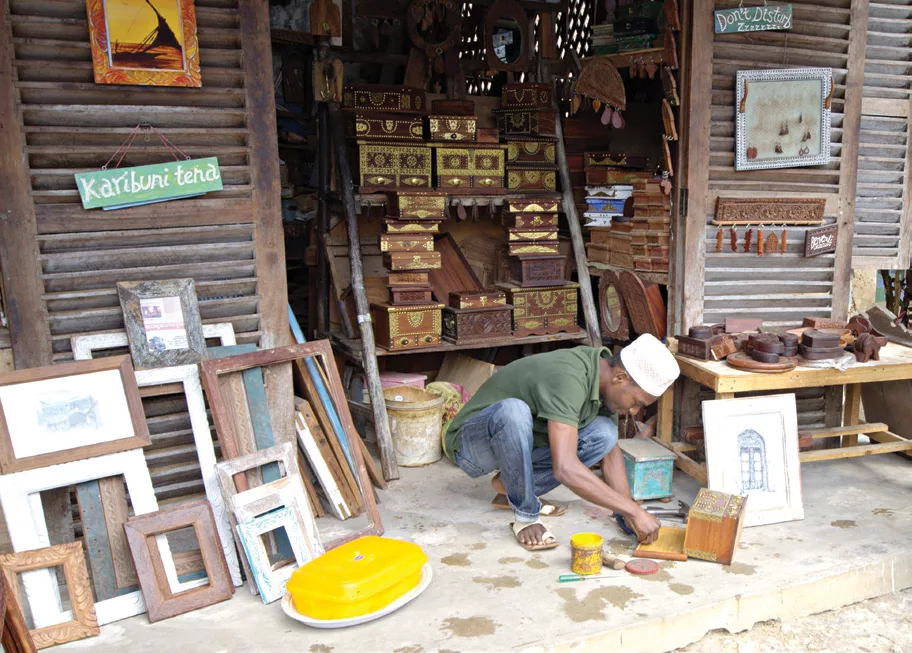
The best way to explore Stone Town is on foot, which is fortunate, because most of its labyrinthine alleys are far too narrow for cars. Even bicycles can be a hazard if you’re not paying attention. One moment you’re admiring the play of sunlight on faded plaster, the next you’re flattening yourself against a wall to avoid an oncoming cyclist who has impressive balance and questionable brakes.

The first thing that catches your eye, though, are the doors. Magnificent, towering wooden creations – some so intricately carved that they seem almost alive. Each tells a story. Some suggest an Indian influence, decorated with brass studs that once served to repel charging elephants. Others are pure Swahili, adorned with geometric designs and Arabic calligraphy that hint at the religious devotion and social status of the original owners.

In their day, these doors announced wealth, faith and lineage before a word was ever spoken. Today, they announce something else: endurance. Many have outlived the houses, the owners and even the reason why they were built. Zanzibar is so protective of these cultural treasures that the original doors cannot be exported. Tourists can, however, commission new carvings – beautiful reproductions crafted by local artisans whose skill continues an unbroken tradition dating back centuries. Supporting these craftspeople is one of the most meaningful souvenirs a traveller can bring home. Each purchase helps keep alive a lineage of artistry that could so easily fade under the weight of mass production.

Hear, hear!

Stone Town’s days are framed by sound. The first call to prayer, just before dawn, echoes hauntingly across the rooftops. It’s a moment of stillness before the day unfolds, with fishermen heading to sea, stallholders setting out fruit and the narrow lanes filling with life.

Make a habit of heading out early with a camera, before the heat turns the air to syrup and tourists flood the alleys. Wandering at this hour, the city feels almost intimate, as if it’s stretching and waking, letting you glimpse its private moments.

As the day brightens, the rhythm changes. The calls to prayer punctuate the hours like a heartbeat, reminding you that faith here is not a quiet or hidden affair. Between them, the calls of vendors selling spices, scarves and carved trinket boxes fill the air.

Some buildings stand proud, others slump gracefully into disrepair, their once-grand facades now ghostly reminders of past prosperity. It’s tempting to see this decay as sadness, but look closer and you’ll see beauty in the resilience, life carrying on around crumbling walls, laughter echoing through broken windows.

As dusk falls, Stone Town transforms again. The oppressive heat fades, lanterns flicker to life and the night market at Forodhani Gardens becomes a theatre of scent and sound. The smoke from charcoal grills mingles with the salty breeze as vendors call out their menus – octopus skewers, Zanzibari pizzas and freshly squeezed sugarcane juice.

For the adventurous, there’s always a seafood table groaning under the weight of lobster, prawns and fish fresh from the ocean. You choose your catch, they grill it while you watch and you eat it on a paper plate under the stars. There’s a sense of community here – locals, tourists and wanderers from every corner of the world, gathered together in the warm night air.

The art of the deal

Out of season, Stone Town slows to a friendlier pace. The local craftspeople, with fewer customers to attend to, are more inclined to talk and to barter. Bartering here isn’t combat; it’s conversation. A dance between buyer and seller, where both sides need to feel they’ve won something.

Mass-produced trinkets can be bargained down with enthusiasm, but when you find a piece that’s clearly handmade – a carved mask, a woven basket or a delicate piece of jewellery – remember that your discount comes directly from the artist’s pocket. The most rewarding moments are often the chats that follow a sale: a laugh shared, a photo taken and a sense that, for a moment, commerce became connection.

I spent half an hour talking to a woodcarver who, during the quieter months, barely earned enough to feed his family. He laughed easily, though, and told me that visitors’ curiosity meant as much to him as their cash. “If they remember my face,” he said, “maybe they will tell someone else.” That is the true economy of travel: human stories shared like currency.

Stone Town was once a hub of trade and tragedy, where ivory, spices and human lives changed hands. The ghosts of that history are still here if you care to listen. Yet, somehow, the city hums with life and humour, with people who find joy in the everyday.

Yes, you’ll find coffee shops with WiFi and Western menus and, yes, you can stand outside the house where Freddie Mercury was born. But if you want the real Zanzibar, turn down the alleyways that don’t appear on maps. Talk to the people. Watch the craftsmen at work. Smell the spices. Listen to the sea.

Stone Town is where Zanzibar’s heart beats – steady, soulful and full of life.

Text and photography | David Batzofin

For more information, go to visitzanzibar.go.tz and travelandthings.co.za.

Read more

Top tips for exploring Stone Town

1. Get lost – safely

The streets are a maze, but that’s half the fun. When in doubt, walk downhill – the ocean is your compass.

2. Go early

The morning light is gentle, the alleys are cool and the only traffic jams involve chickens.

3. Bargain, don’t battle

Haggling is expected, but it’s a conversation, not a competition. Leave everyone’s egos (and wallets) intact.

4. Respect the rhythm

When the call to prayer sounds, pause. It’s not a performance, it’s life unfolding around you.

5. Eat with the locals

Forodhani Night Market offers more flavour (and character) than any resort buffet. Trust the vendor with the widest smile.

6. Look up and slow down

Those doors and balconies have stories to tell… but only if you take the time to look and listen.

Adventure to scale

Rain renews enormous area of natural beauty, offering rich rewards for visitors

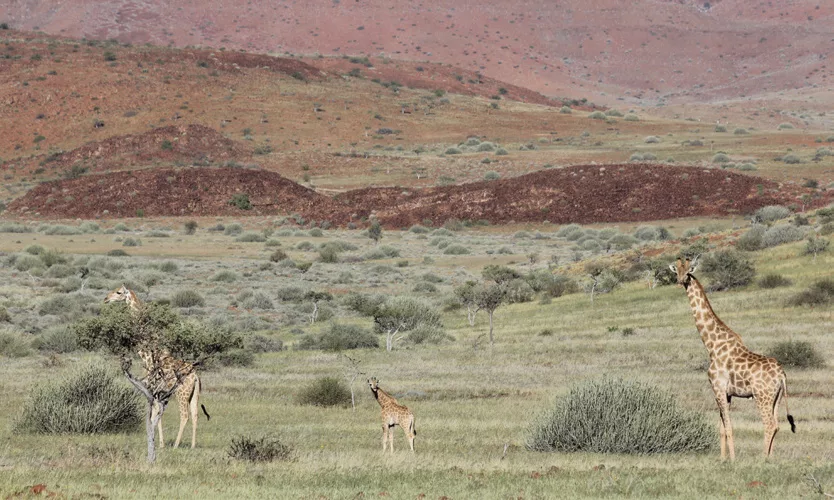
For a brief period, the famously rocky red desert of north-west Namibia was painted in shades of green. After the first significant rain in many years, grass started growing in places that looked lifeless just a few weeks earlier. This startling resurrection promises hope for the resilient people and the desert-adapted wildlife that call this mountainous landscape home.

Desert ecosystems are known for their ‘boom-and-bust’ cyclical patterns of rain and abundant life, and drought and survival. The plants and animals in this region have adapted to be ready to grow, flower and breed at the first signs of a good rainy season, making the most out of the fleeting favourable conditions. Local pastoralists similarly find ways to survive during years of drought and try to rebuild their herds as soon as conditions allow.

While the grass turns from vibrant green to tawny yellow, this season is a great time to visit the north-west of the country and see this ecological resurrection first-hand. Antelope like springbok, gemsbok (oryx) and kudu respond relatively quickly by giving birth soon after the rains, while the slower-breeding giraffe, elephants and rhinos have greater success in raising their calves in good rainfall years. The desert-adapted lions and other predators usually benefit from the rebounding wildlife numbers a year or two after an exceptional rainy season, but they will certainly be on the prowl for prey until then.

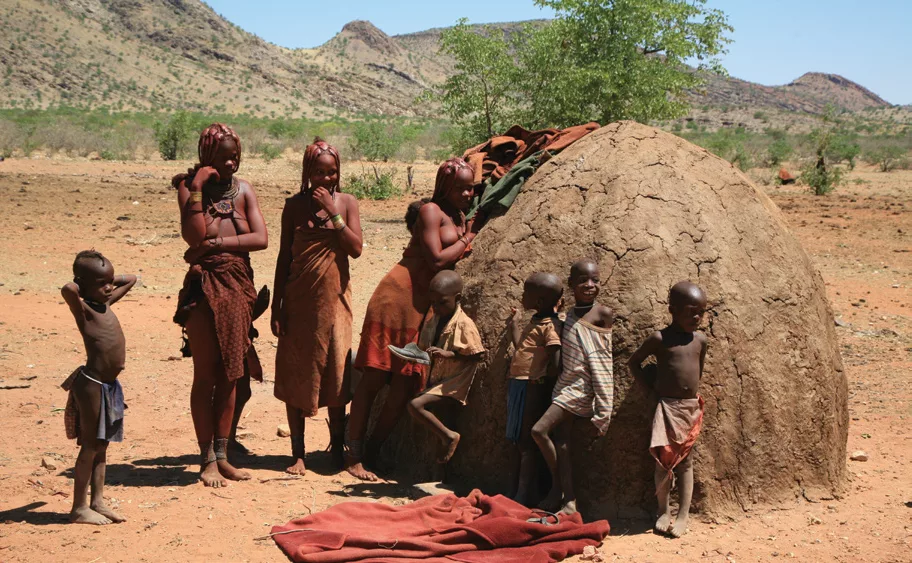
Like the predators, the local people may take some years to recover from the severe multi-year drought. Many of the Ovahimba people living here have been reduced from proud cattle owners to trying to keep small flocks of goats and sheep alive. Jobs and income from the tourism industry have become a vital means of survival, as tourists explored the region even during the height of the drought to appreciate its stark splendour.

Endless wilderness

This remote corner of Namibia has attracted adventure-seekers for over a century, many of whom were no doubt amazed to encounter the Ovahimba and their cattle living alongside lions, elephants and rhinos. The ability to adapt and even thrive in what appears to be a harsh and unforgiving desert gives the adventurer pause for thought and a new appreciation for life. While the region is far more accessible today than at any time in history, the sense of wonder and discovery among modern-day adventurers remains.

The sheer extent of the Kunene Region of north-western Namibia, at over 100,000km², along with its reputation as a 4×4 enthusiast’s paradise, may make visitors hesitant to venture into its wilderness. While the patchy cell reception and isolated campsites are exactly what we need to unplug ourselves from the digital world and reconnect with nature, they also pose potential hazards. Getting two flat tyres on one day – not unheard of on these roads – could turn an epic adventure into a stressful nightmare.

Joining a group tour with a set itinerary is one way of increasing the safety of a trip to this region, yet by their nature, these tours have limited flexibility and cover very little of this vast area. Similarly, cultural exchanges with tours run by foreign guides may be shallow and brief – little more than awkward greetings and curio sales.

Since the Kunene Region as a whole does not fall within the bounds of a national park, there are fewer restrictions on what tourists can do in the area than in Etosha, for example. This freedom can unfortunately be abused when self-drive tourists camp and drive in places they should not.

Be sensitive
‘Wild camping’, where you pitch your tent anywhere you want, can be disturbing for wildlife and dangerous for the campers. Pitching a tent in the middle of a dry riverbed looks like a good idea during the day, yet camping in these wildlife highways puts you in the path of elephants and lions. Sadly, each time a tourist has been killed as a result of wild camping, the animal has also been put down – a tragedy for all involved.

Off-road driving is a similar issue that damages the environment, reduces the enjoyment of other tourists and could be dangerous. Off-road tracks leave lasting scars on the landscape that damage plants, kill small animals and generally detract from the beautiful landscape. If you don’t know the area, you may unwittingly follow someone else’s off-road tracks, making the damage more permanent. Straying off the beaten track has placed tourists in danger if they encounter vehicle problems – search parties may go for several days without finding lost tourists in this wilderness.

Consider booking a safari with experts who know the region and are fully prepared, including in terms of being culturally and environmentally sensitive. If you choose to drive yourself, use the main roads and stay at designated campsites or lodges. By doing so, you will contribute to conserving the region and supporting local livelihoods, while staying safe and preserving this beautiful wilderness.

The desert of north-west Namibia has an alluring, austere beauty. As rare flashes of green fade to yellow and red, the resilient people and animals living here start their own cycles of rebirth and rebuilding. This time of renewal and hope sets the tone for adventures into north-west Namibia that will leave you refreshed and rejuvenated.

Text | Gail Thomson

Photography | Gail Thomson and supplied

For more information about Conservancy Safaris Namibia and Etaambura Lodge, go to conservancysafarisnamibia.com.

Read more

Pursuing the GNU

Author and journalist Mandy Wiener unpacks the lesser-known stories behind the formation and functioning of South Africa’s coalition government

Can you talk through the process from noting all the minutia – from the minor participants and community halls where meetings happen to who sits in which negotiations and why that matters and all the important nuances of arguments – to making sense of them and somehow finding a way to tell a story? And how does all of this fit into your life beyond writing?

Mandy Wiener: It’s like putting together a jigsaw puzzle. By that time, I’ve loved – and hated – interviews with dozens of people and then begun to reconstruct the timeline. I’m interested in the minutia. It creates an immersive experience and puts people in the room. Many people’s memories of this subject matter have atrophied under stress, so sometimes the gaps need to be filled in.

I have several day jobs – my radio show, media training, conference speaking and even a Showmax show, Great African Crimes With Mandy Wiener. It’s a juggling act. When I have a book in progress, it’s like a pot that’s always bubbling. It can often be a slow burn, like a potjie that needs constant feeding, adding texture and layers. Radio is different – quick, like fast food.

With this book, I did have to write relatively quickly to keep it current. It is possible, though, to do parts of this job between other things – while on flights or in hotels or waiting for my daughter while she roller-skates!

What’s the importance of all of this effort in actual journalism – very little of what you write about was in mainstream news reports?

I wanted this to be the definitive record of this period. A lot of books give you one position; this one should stand the test of time. I wanted to write for people who don’t follow politics, in a sort of thriller format where you get to meet and know the characters – you can’t let readers get bored.

When you’re working on in-depth, investigative material, how do you get people to invest the time and effort needed to properly appreciate it?

We have incredible investigative journalists and independent media. Maintaining quality journalism is a global problem. Young journalists are too stretched, there is no budget and they are often parachuted into stories where they are not able to get to the bottom of what’s going on. Not enough people are buying books, which are crucial in terms of the debate between what is in the public interest and what’s just interesting. People tend to consume media that’s less labour-intensive, but important work needs to be supported.

The complexities of the Government of National Unity (GNU) process arguably passed most South Africans by. What’s good or bad about that – ignorance can be bliss?

Data shows that many people have chosen to not follow the news – it’s easier to live in a bubble. As South Africans, however, we need to know what elected leaders are doing on our behalf. In total, we have 30–40 people in charge of 62 million – this is one of the reasons I needed to write this book.

Achieving balance in a project like this, when you have different levels of access to the people you’re writing about – how difficult is that?

I really wanted to speak to everyone as much as possible, but some people were difficult – perhaps because they thought I was going to take a position. Some people say, “This is just the story of the ANC and the DA,” but it’s not that at all, which is why I spent as much time as possible doing interviews.

Is trust between politicians and journalists really possible, given the various agendas involved?

It is possible. It’s one of the reasons I was given so much access – my reputation opened doors. There was lots of talk off the record; another example of trust. And I also let people check their quotes.

Part of the book deals with what are considered African issues, solutions and compromises. How are these different to anywhere else?

We have a Mzansi-flavoured coalition. We had to elect a government in 14 days. In Belgium, they took a year and a half! Ours was an anomaly, but we pulled it off. But it’s a loose agreement, all on a handshake.

In terms of choosing personal power and riches over actual leadership, does the GNU make a significant difference or just cluster the silos?

In the book, Gayton McKenzie says, “If it’s not about power, they’re lying.” Theoretically, the GNU makes a difference, but a lot of old networks still observe. The true measure of success will be the improvement of lives, not who feels most powerful.

Text | Bruce Dennill

Photography | Supplied and Lisa Skinner

The Deal: Inside the Talks that Shaped South Africa’s Future by Mandy Wiener, published by Pan Macmillan, is available now.

For more information, go to panmacmillan.co.za.

Read more

Culture quest

Destinations where history and customs are close to the surface are exciting to explore

Many South Africans have either taken or plan to take a holiday dedicated to exploring their ancestry, history or cultural roots. There are a number of destinations that promise to inspire and connect travellers to the past while creating memories for the future.

Home to more than 20 UNESCO World Heritage Sites, Türkiye is a treasure trove of history and culture. In Istanbul, the Ayasofya Mosque, Blue Mosque and Hippodrome of Constantine stand as testaments to the empire’s past. Bustling bazaars, traditional Turkish baths and a fusion of Eastern and Western influences make the city a cultural bridge like no other.

Further east, beyond the world-famous Taj Mahal, India’s heritage stretches across thousands of years and countless architectural wonders. From the intricate temples of Khajuraho to the ancient ruins of Hampi and the colonial-era elegance of Kolkata, each site tells a story of dynasties, devotion and artistry. Add to that the vibrant street markets, colourful festivals and aromatic cuisine, and you have a destination where history and daily life are beautifully blended.

Egypt’s magic extends far beyond its iconic pyramids. Along the Nile, the cities of Luxor and Aswan form an open-air museum of temples, tombs and monuments that chronicle thousands of years of civilisation. From the Valley of the Kings to the vibrant souks and bazaars, travellers can immerse themselves in the traditions, crafts and rhythms of life that have endured for centuries.

African riches

Morocco is a sensory feast of harmony – a place where ancient traditions meet modern life. In the labyrinthine medinas of Marrakech and Fes, the air is filled with the scent of spices, leather and fresh mint tea. Visitors can wander through centuries-old souks, admire zellige tilework arranged into beautiful patterns and witness artisans practising skills passed down through generations.

Beyond the cities, the Atlas Mountains and Sahara Desert offer insight into Berber culture, while coastal towns like Essaouira blend Portuguese, French and Moroccan heritage in their architecture and cuisine.

Also in Africa and just off the coast of Tanzania, Zanzibar is a crossroads of African, Arab, Indian and European influences. In UNESCO-listed Stone Town, carved wooden doors and coral-stone buildings tell stories of trade, migration and cultural fusion. Visitors can tour spice farms that have sustained the island’s economy for centuries, sail on traditional vessels called dhows and experience Swahili coastal traditions through music, dance and food. The island’s layered history makes it a living museum of the Indian Ocean’s heritage.

Text | Supplied

Photography | thehakanarslan

Airlink will fly to Zanzibar from 3 June (for more information, go to flyairlink.com), and Airlink partner airline Turkish Airlines flies to a number of destinations in North Africa, the Middle East and Asia (for more information, go to turkishairlines.com).

Read more

How much weight fluctuation is normal?

If you’ve ever hopped on the scale one morning, only to find that the numbers have suddenly increased overnight, don’t panic.

For most people, daily weight fluctuations of 0.5–2kg are normal. Try to avoid fixating on day-to-day changes, though. Instead, look for trends over weeks or months, because your weight can be affected by a number of factors. Some of the factors that influence these daily fluctuations include:

  • Water

About 60% of your body is water, so things like a salty dinner or high-carb meal can cause water retention and influence your weight. Hormonal changes, especially around your period, can also cause fluid retention. These fluctuations are usually temporary and will resolve themselves in a day or two.

  • Food

When you eat, food has to travel through your digestive system, and that journey adds weight until it leaves you. So, if you’ve eaten a big meal late at night, the scale might reflect that in the morning. It’s important to remember that this is not an increase in fat but simply the natural process of digestion.

  • Exercise

You might notice that your weight drops after a sweaty gym session. Sadly, that’s more likely due to water loss rather than fat loss. On the flip side, if your muscles are repairing from a workout, they may hold onto water as part of the recovery process. This can make you heavier temporarily. Over time, increased muscle mass can add to body weight, even as fat decreases, so the scale might not reflect fat loss accurately.

  • Bowels

If you’re a bit constipated or weigh yourself just before or after a bowel movement, you’re likely to notice that fluctuation on the scale, too. Keeping hydrated and making sure you have adequate fibre in your diet can help maintain regular digestion and reduce variability.

  • Alcohol

Alcohol dehydrates you, which can lead to temporary weight loss. But your body is likely to overcompensate for this by retaining water the next day.

The best ways to weigh yourself

  • Be consistent Weigh yourself at the same time each day, ideally in the morning after using the bathroom and before eating or drinking, using the same scale and wearing as little as possible.
  • Check your scale Placing a scale on a soft surface, such as carpet, can lead to inaccurate readings. For the most consistent results, put it on a flat, hard surface like tiled or wooden floors.
  • Focus on the big picture Don’t get discouraged by daily fluctuations. Instead, track your weight over weeks or months to identify meaningful trends.
  • Consider other measures If you’re engaging in regular exercise and building muscle, your weight might not decrease as quickly as expected. Monitoring other metrics, such as waist circumference or how your clothing fits, can provide a more comprehensive view of your progress. Sometimes, even taking photos of yourself and tracking those over time to see the change in your body shape can provide motivation on your weight-loss journey.
  • Keep perspective Remember that weight is just one aspect of health. Factors like energy levels, strength and your overall wellbeing are equally important.

This article appears in Very Interesting #84.

Please click here to receive the current VI issue digitally for FREE!

Read more

Time to prey

Adventurer and writer David Bristow unspools the legend of Harry Wolhuter, one of the Sabi Game Reserve’s first-ever rangers

As a young man, Wolhuter loved most to go on hunting trips to the Lowveld. He eagerly joined commandos when word was sent out by the Transvaal Government. They were a kind of people’s army where each man had to be mounted and armed and carry his own supplies for the duration of a campaign against various ‘rebellions’ by indigenous people in the old Boer Republic.

When the Anglo-Boer War erupted, he joined a private regiment raised by a maverick and flamboyant cavalry officer, Colonel Steinacker – Steinacker’s Horse. Their theatre of war was the Sabi reserve, the original chunk of land that later became the Kruger National Park. Here, they patrolled in the hope of intercepting Boer forces, either hunting for game meat or bringing in arms from Mozambique.

And so it was that when the old Sabi Game Reserve was revived after that war in 1902, Harry Wolhuter was the very first ranger employed by the reserve’s first warden, Major James Stevenson-Hamilton.


Wolhuter chose Pretoriuskop as his base, owing to its relatively high elevation that would minimise the risk of malaria. His principal task in the early years was to set up guard posts as far north as the Olifants River, then the northern boundary of the Sabi reserve, and to conduct regular patrols to the outlying pickets. The Boers had shot out the game of the area to such an extent that seldom were any large animals seen other than an occasional steenbok or reedbuck. The first elephants seen in the park made a furtive entrance along the Olifants River only in 1910.


Patrols consisted of the ranger on horseback followed by a line of police constables who tended a procession of donkeys. They would be attended by various dogs from the large pack the ranger kept at his home camp, M’timba. These dogs, usually numbering around 20 at any one time, were all close to wild and were what Wolhuter described as ‘lion dogs’.


August of 1903 found Wolhuter on the return leg of a patrol to the Olifants River with three policemen in his posse and three ‘Boer dogs’ (mongrels usually with Mastiff, Ridgeback and Terrier strains). It was afternoon in the dry season, and they were making for a waterhole some 30km distant. Wolhuter knew the trail well from his days with Steinacker’s Horse and decided to ride ahead in order to get to the water before dark. One dog named Bull followed its master while the other two remained with the pack train.


Darkness fell and the ranger kept on towards the water as they’d had none since leaving the Olifants early that morning. The rider gave no heed to predators because he had not before seen any thereabouts. Also, much of the grass and herb cover had been recently burnt. So, when he heard two animals leap out of a patch of long grass, he assumed it was reedbuck, which he knew liked to lie up in the long grass along the Metsimetsi River.


However, when he heard rustling approaching, he knew instinctively it meant trouble. It was two fully grown male lions and they were readying to pounce.


Wolhuter had no time to draw his rifle from its scabbard as the lions closed in for the attack. He turned his horse tightly round and dug in his spurs. One lion was already so close the horse had no time to spring off as the carnivore leapt up. “I felt a terrific impact behind me as the lion alighted on the horse’s hindquarters.”

The horse bucked and plunged and finally broke free, but not before sustaining severe wounds and knocking the rider from his saddle. His rifle went flying and the ranger landed on top of the second lion that was making to seize the horse by its head. The horse fled off into the night with the first lion in hot pursuit and Bull running and barking after it, while the second lion grabbed and bit down hard on Wolhuter’s right shoulder; then started dragging him towards the dry Metsimetsi riverbed.

The lion’s claws kept raking wounds into the man’s lame right arm as it walked. Spurs on Wolhuter’s boots acted like brakes along the stony ground, which would cause the lion to give impatient jerks, causing more excruciating pain and lacerations.

“I certainly was in a position to disagree emphatically with Dr Livingstone’s theory, based on his own personal experience, that the resulting shock from the bite of a large carnivorous animal so numbs the nerves that it deadens all pain; for, in addition to this was the mental agony as to what the lion would presently do with me; whether he would kill me first or proceed to dine off me while I was still alive!”

Then, through the pain, the prey remembered his knife. A problem was that it had never fit snugly into the sheath on his belt and twice previously it had fallen out when he’d taken a spill while galloping after game. What were the chances it would still be there after all the commotion of the previous few minutes?

Text | David Bristow

Photography | Supplied and photopia

Loony Birds, Lion Men and the Snake That Was a Gerbil: 20 of the Best Bush Tales From Southern Africa by David Bristow, published by Jacana, is available now.

This excerpt is published by permission.
Read more

Home-growing

Indigenous gardens can offer bright colours and vibrant animal life alongside resilience and environmental friendliness

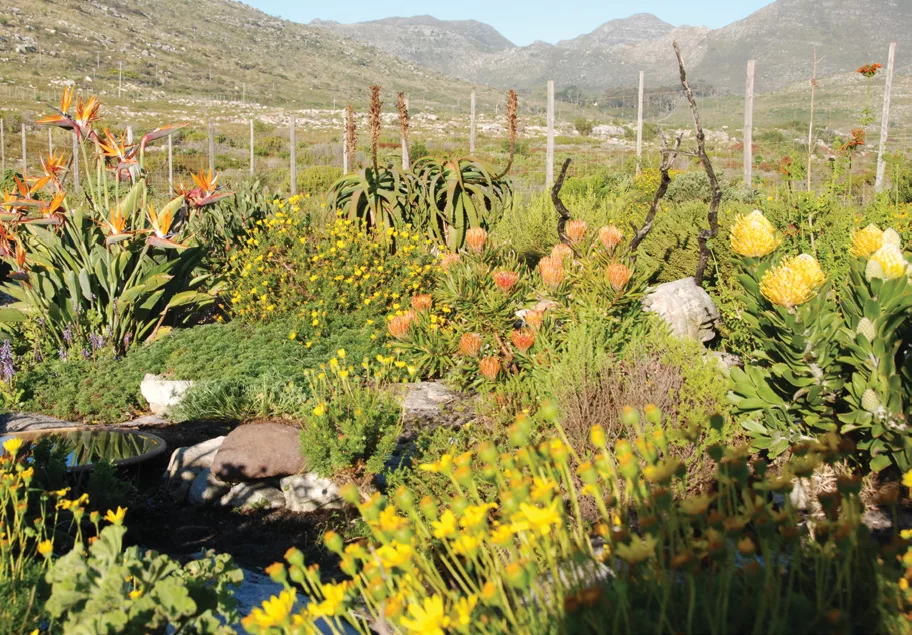
People often imagine indigenous gardens as being all green and spiky, but that couldn’t be further from the truth. When planned properly, indigenous gardens can deliver year-round colour, from the reds and oranges of aloes in winter to the purples and blues of Plectranthus, the sunny yellows of bulbines and the elegant whites and pinks of watsonias in spring.

Having an indigenous garden brings life into it. You invite different birds and insects that feed on the plants, and at the same time, you stabilise the soil, which minimises erosion. They’re hardy and tough and can survive environmental changes with ease – but they still need tender care.

While indigenous plants are naturally adapted to their environment, they do still need some thoughtful maintenance. For those who enjoy a bit of gardening but don’t want to be overwhelmed, this is the ideal balance.

Set the foundation

Start with healthy soil. A good, composted bed with organic material will help your plants thrive. 

Then plan for all seasons. Choose a mix of flowering plants that bloom at different times to ensure year-round colour. And water and feed, but don’t overdo it – indigenous gardens prefer moderation and balance.

An indigenous garden doesn’t have to look wild or untamed. When you understand the plants and how they grow, you can create a structured, elegant garden that’s as spectacular as any exotic landscape, with far less environmental impact.

An established indigenous garden, carefully curated, can result in a layered landscape with an artful blend of succulents, grasses, shrubs and flowering plants that evolve through the seasons.

Text | Amanda Maphumulo

Photography | John McGahey

Amanda Maphumulo is the Garden Installation and Maintenance Supervisor at Renishaw Hills. For more information, go to renishawhills.co.za.

Read more

Look away!

Avoiding digital overload is a necessary check in modern life

Whether it is for a few days, a weekend or even just a few hours, taking time away from screens can have a noticeable effect on your focus, mood and overall wellbeing. Known as a ‘digital detox’, this conscious break from devices and notifications is becoming more important as our work, social and personal lives shift increasingly online.

Research covering 10 years of studies found that digital detoxes can improve sleep quality, life satisfaction and mental health, while reducing anxiety, stress, depression and phone dependency. Digital detoxes also help restore the brain’s ability to focus deeply, something that is easily eroded by constant notifications and multitasking.

South Africans may have much to gain from rethinking their digital habits. According to research by Meltwater, South African internet users spend an average of nine hours and 37 minutes online every day. That is significantly higher than the global average of six hours and 38 minutes. This shows just how deeply devices are woven into our lives and why it’s worth securing them and taking a break from them every so often.

Create good habits

By taking charge of digital habits, people can manage the balance between juggling online activities and meaningful screen-free moments. It is important to be intentional about creating opportunities to disconnect from devices and to connect with yourself, people, pets and the environment. It is also perfectly acceptable to set boundaries because nobody needs to be available 24/7 for everyone. A digital detox does not have to only be planned for a long-awaited holiday, because phone users can also benefit daily by taking breaks and moving their eyes from screens to the sky, making eye contact with someone or a pet, or just closing their eyes and breathing. Dinner time is the perfect time to be present and purposefully check in with loved ones.

A full digital detox, where a person goes entirely offline, may not be realistic for everyone. But you can still take small steps that create space away from devices without disrupting your work or social life.

Get started by using built-in phone settings to limit the time you spend on distracting apps, turn off non-essential notifications for a set period each day, avoid the habit of checking emails or messages the moment they arrive and create ‘tech-free zones’ at home, such as the dinner table or bedroom.

If you are travelling or taking time off, these same principles apply. Limiting social media posts in real time, using secure connections and letting colleagues or family know you are offline for a while can help you relax without worrying about your devices or data.

Safe place to land

Whether your digital detox is short or long, it is worth securing your online accounts and devices so you do not return to unwelcome surprises. Make backups. It is advised to create up-to-date backups of important files stored both locally and online and keep more than just one copy.

Enable two-factor authentication wherever possible so that logging in requires a one-time code. Keep in mind that codes sent via SMS are not secure. So, for critical accounts (banks, email, social networks and ecosystem accounts like Google and Apple), switch to an authenticator app wherever you can. A password manager programme can help here, too.

Strengthen your passwords. Review your critically important accounts: online banking, government service portals, crypto wallets and so on. Replace weak passwords with unique and strong ones.

Install security updates. Update the operating systems, apps and firmware on all your gadgets to the latest versions. Patches fix known vulnerabilities and lower the chances of a successful cyber attack.

Protect your devices. Make sure your computer, tablet and smartphone are protected with reliable security software.

Review your subscriptions. Make a list of subscriptions to pause or cancel completely while you take your digital detox. And conversely, make sure the services that require ongoing payments are linked to an account with enough funds to cover them during your detox. Also, check how long your data is retained after suspending a subscription.

Even if you cannot go completely offline, making deliberate choices about when and how you engage with your devices can help you feel more in control and present in your day-to-day life.

Text | Brandon Muller and Rianette Leibowitz

Photography | Shyntartanya

Brandon Muller is Technical Expert for the MEA region at Kaspersky and Rianette Leibowitz is a cyber wellness expert. For more information, go to kaspersky.co.za.

Read more

Growth through connection

Skin contact between babies and parents has multiple effects

You’ve just welcomed your baby into the world – tiny fingers, soft cries, the warmest bundle imaginable. Amid the whirlwind of new-mom emotions, midwives and nurses will often say, “Hold your baby skin-to-skin.” It’s a simple act – yet science shows it’s one of the most powerful things you can do to help your baby thrive.

From a biological perspective, skin-to-skin contact is like nature’s reset button. It helps regulate your baby’s heartbeat, breathing and temperature and lays the foundation for a deep emotional and physical connection. Within moments of birth, a baby’s world changes completely – from the warm comfort of the womb to the bright, noisy outside world. That’s where touch becomes a lifeline.

Skin-to-skin contact (also known as ‘kangaroo care’) isn’t just about closeness – it’s about communication through touch. When your baby lies on your chest, they can feel your heartbeat and smell your scent, which helps calm their nervous system.

Studies show that babies held skin-to-skin cry less, feed better and sleep more soundly. Moms benefit too. Oxytocin (the ‘love hormone’) surges, helping reduce stress and even supporting breast milk production. Those first cuddles aren’t just emotional – they’re biological. They literally teach your baby that the world is safe.

Brain booster

Early bonding influences how your baby’s brain develops. Between birth and two years, your baby’s brain is growing faster than it ever will again. Every loving touch, every cuddle, every coo helps form neural pathways that support emotional intelligence, resilience and learning later in life. In fact, research shows that babies who experience consistent nurturing care are more likely to grow into confident, empathetic children with strong social skills.

While skin-to-skin contact is often linked to breastfeeding and early motherhood, experts say dads and caregivers play an equally vital role. Bonding isn’t exclusively about biology in the baby – when dads hold their babies skin-to-skin, it triggers similar hormonal and emotional responses. It builds trust and helps fathers feel more confident in caring for their newborns.

Parents are encouraged to make bonding a part of everyday life – and not just the first few weeks. Here are a few ways to nurture that connection:

  • Start skin-to-skin early and often. Even short sessions of 10–15 minutes make a difference.
  • Make eye contact. Babies recognise faces early and feel secure when they see yours.
  • Talk and sing softly. Your voice is familiar and soothing.
  • Involve your partner. Shared caregiving builds unity and connection.
  • Use gentle, safe products. Choose baby lotions and wipes that protect the skin barrier and make cuddle time even more comforting.

Text | Sr Londe

Photography | Adventure Photography

Sr Londe is an independent midwife and advisor to Vital Baby South Africa.

For more information, go to vitalbabyshop.co.za.

Read more

Positive play

Keeping kids busy during the school holidays can be about more than just distracting them

School holidays are approaching with all the subtlety of a sugar-fuelled toddler at 6am. Soon, your little ones will be bouncing off the walls, you’ll hear “I’m bored” 17 times before breakfast, and you’ll be wondering if it’s too early to start counting down to the new school term. Sure, you could let them binge-watch their way through the holidays, but what if there was a way to keep them busy that didn’t involve screens and actually reinforced all those life skills they’ve been learning at school?

There are ways to turn holiday boredom into meaningful memories and life lessons. Sit down with your child and explore giving opportunities online together. Whether it’s a local toy drive or a children’s charity website, this small, shared action makes giving a conscious choice and establishes a team goal. It’s also a low-stakes introduction to digital literacy and navigating websites with purpose. For older kids, it becomes a valuable lesson in commitment and seeing a project through from its exciting start to its rewarding finish.

Empathy is built by imagining yourself walking in someone else’s shoes, and this step helps your child do just that. When selecting a recipient, encourage them to connect with someone of the same age and gender. This creates a bridge of understanding, helping your child think, “This is for someone just like me.” It transforms the abstract concept of “a child in need” into a tangible, relatable person, making the act of giving deeply personal.

Create purpose

Turn a routine shopping trip into a mission with real-world stakes. Give your child a specific budget to purchase items for their chosen cause. Let them be in charge of the calculator and decision-making (with your guidance). This becomes a hands-on lesson in basic mathematics and financial literacy. Your child will learn to make choices, prioritise needs over wants and understand the value of money.

In a world of fleeting texts and emojis, a handwritten letter is an act of connection. Encourage your child to share their name, age, hobbies or simply a warm holiday wish. This is one way of practising handwriting, spelling and grammar without it feeling like homework. More importantly, it teaches your child how to structure their thoughts and communicate with kindness and clarity that will resonate long after the letter is read.

Transform your dining table into ground zero for creativity, accept that glitter will be found in random places until July and watch your child turn humble materials into their masterpiece. Pro tip: hide the good scissors, lay down newspaper and prepare for the kind of concentrated focus you usually only see when they’re trying to avoid bedtime. This is fine motor skills development disguised as fun.

Text | Deb Zelezniak

Photography | Asian Isolated

Deb Zelezniak is CEO of the Santa Shoebox Project.

For more information, go to santashoebox.org.za.

Read more

Could fibre deficiency accelerate our ageing

Eating fibre releases fatty acids that help protect our brains. Now, experts say deficiencies could be behind the high levels of Alzheimer’s and dementia

Many of us could be suffering from a rapidly ageing brain caused by fibre deficiency. The dietary flaw could explain why Alzheimer’s and dementia are now the leading causes of death in the UK. That’s according to registered dietitian Dr Emily Leeming and nutritional psychologist Kimberley Wilson, who shared the theory recently.

Dementia is “a model of accelerated brain ageing. It’s as if you turned the dial up on ageing”, said Wilson. “That’s why this is relevant to everybody and not just people who think they may have a risk factor for Alzheimer’s.”

According to Leeming and Wilson, a fibre deficiency is one such risk factor. Yet most people in the UK are fibre deficient. “We need at least 30g of fibre every day for good health,” Leeming said. Adults in the UK are only getting around 19g a day, however, while US adults consume as little as 15g.

Wilson called fibre “one of the underappreciated protectors of the brain”. When you feed fibre to your gut microbes, one of the byproducts is short-chain fatty acids. These support the lining of the gut, but they also cross into your bloodstream and travel to the brain. Here, they are one of the few things that can get through your blood-brain barrier (BBB): the selective structure controlling what goes into your brain, like a “bouncer outside a nightclub”, according to Wilson.

Short-chain fatty acids protect the junctions within the BBB to stop anything toxic from getting through. “Are we losing some of the protective benefits from fatty acids on the BBB because our diets are so deficient in fibre?” said Wilson. “People don’t tend to make that link.”

Fibre: what can you do if you’re deficient?

Fibre is essential to the health of your gut. It helps you feel fuller, more energised and satisfied. It’s been shown to help with managing blood sugar levels and blood pressure and is linked to a lower risk of colorectal cancer, type 2 diabetes and heart disease. It feeds your gut microbiome and increases the fatty acids that support your brain health, which helps to fight inflammation.

5 top tips: Dr Emily Leeming’s simple changes to improve your fibre levels

  1. Focus on adding fibre-rich foods to your diet, such as rye bread and beans.
  2. Snack on a handful of nuts every day or add a mix of nuts and seeds to your breakfast.
  3. Make sure that half your plate is made up of veggies.
  4. If you need something sweet, 85% dark chocolate is surprisingly high in fibre, containing about 11g per 100g.
  5. Keep the skin on potatoes and root veggies, like carrots and parsnips, for an extra boost.

Please click here to receive the current VI issue digitally for FREE!

Read more

Different case scenarios

What happens to your baggage can affect the tone of a whole trip

With Europe scrapping controversial hand-luggage fees and US authorities hinting at an end to the two-decade-old liquids ban, airlines face a luggage revolution on multiple fronts.

Sure, business travel has its glossy moments: premium lounges, power suits and sealing deals over cocktails in a city bar. But increasingly, it’s what happens to your suitcase that makes or breaks the trip. And right now, that humble piece of luggage has become ground zero for passenger frustration.

‘Luggage rage’, that volcanic moment when your bag fails to appear at the carousel, is driving measurable drops in airline satisfaction scores globally. Even when flights run smoothly, a delayed suitcase can torpedo an airline’s Net Promoter Score overnight. With global air traffic hitting a record 5.3 billion passengers in 2024, even a small percentage of mishaps translates to millions of frustrated travellers, and airlines are feeling the heat.

Transfers remain the riskiest point in the baggage journey. Whether it’s incorrect stickers or a simple loading failure, it’s never ideal to arrive at your destination without the bag you carefully packed. 

Transfers are where most bags go astray. Travellers are advised to remove old stickers, double-check tags and keep essentials in their carry-on, because even rare mishaps can throw off a business trip. According to SITA’s 2025 report, 46% of mishandled bags are delayed at transfer points. International travellers face 11 times the risk compared to domestic flights.

Plan for the worst

Pack a spare set of basics in your hand luggage. Think: power suit in a pinch, plus mini toiletries to save the day. Double-check the sticker on your luggage at check-in. Make sure it matches your final destination. And allow extra buffer time for connections – you might sprint to your gate, but your luggage can’t. Not all luggage disappears. 

Some make it to arrivals looking much worse for wear. Around 18% of mishandled bags are damaged, often thanks to conveyor belts, tight connections or the sheer speed demanded of baggage handlers. Bag battles like these aren’t just embarrassing. They soak up productive hours, leave your team scrambling and often end with an unplanned shopping trip.

Bags often take a beating when peak travel seasons like summer and December holidays mean heavier loads on belts and trolleys, and pressure on handlers to work quickly increases the risk of damage.

To avoid the chaos, invest in high-quality luggage with a reputation for being robust. Many brands even guarantee repairs or replacements. Wrap bags before checking in. Most international airports offer this as a paid service, adding an extra layer of protection.

Sometimes a ‘delayed bag’ isn’t lost at all. It’s simply that you’ve accidentally walked off with a stranger’s suitcase because it looked just like yours. Even ‘unique’ bags get mixed up. Always check the name tags, no matter how confident you are about your luggage choice.

Lost and damaged luggage can create a real headache. Time spent hunting for clothing, buying chargers or toiletries and rescheduling plans, often while running on little sleep, adds up quickly.

On the right track

Business travel margins are tight. A delayed bag doesn’t just inconvenience the traveller; it can derail entire project timelines and client relationships.

The good news is that change is happening fast. The surge in personal tracking devices tells its own story: Apple AirTags, Samsung Galaxy SmartTags and Tile trackers are becoming as essential as passports for nervous business travellers. Singapore’s Changi Airport now uses AI-powered systems that cut transfer mishandling by over 30%, while Delta credits radio-frequency identification (RFID) technology with a 25% drop in lost bags.

Meanwhile, regulatory winds are shifting. The EU’s decision to eliminate hand-luggage fees will force budget carriers like Ryanair and EasyJet to completely rethink their ancillary revenue models. Across the Atlantic, TSA’s hints about ending the 20-year-old liquids ban could make carry-on-only travel far more appealing – no more tiny shampoo bottles or ritual water dumping at security. There’s even been a case of a passenger using an AirTag to track down stolen luggage and finding the thief wearing his clothes.

Interestingly, as global airline passenger volumes continue to soar, the overall mishandling rate is declining. SITA’s latest data shows it dropped to 6.3 bags per 1,000 passengers, meaning you have a 99.37% chance your bag will arrive safely.

Text | Herman Heunes

Photography | Jenari

Herman Heunes is GM of Corporate Traveller South Africa.

For more information, go to corporatetraveller.co.za.

Read more

Driven from distraction

Attention is turning to how today’s fast-paced, digitally driven lifestyle overlaps with the symptoms of adult ADHD

Constant notifications, the pressure to multitask and everyday stress are leaving many adults wondering whether their struggles to focus and concentrate stem from a clinical condition or if it’s simply the effects of constant distraction.

Clinical ADHD is characterised by persistent inattention, impulsivity and hyperactivity that often begin in childhood and interferes with daily functioning, relationships and work and school. Yet modern life can create similar traits. Studies show that constant task-switching and continuous partial attention can impair memory, reduce focus and increase levels of the stress hormones, cortisol and adrenaline.

Environmental overload and short attention spans can look similar to ADHD. But while constant distraction may improve with boundaries, rest and lifestyle changes, ADHD is a neurodevelopmental condition that often requires medical management.

The Global Digital Report 2025, produced in partnership with Meltwater and We Are Social, reported that South African users (age 16+) spend an average of nine hours and 37 minutes on the internet on any device, the highest internet usage rate in the world. 

This digital overload has had a considerable impact on our cognitive abilities, notably on focus and attention. Factors such as shrinking attention spans due to the consumption of bite-sized content, multitasking, frequent notifications leading to ongoing distraction, information overload and skim reading leading to surface-level engagement and disrupted sleep patterns from late-night screen use all contribute to diminished cognitive performance and attention.

Structure your time

While technology-induced attention challenges are more environmental and behavioural, neurodivergence has a biological and neurological basis. This means that people who are easily distracted can refocus and get back on track, and the condition doesn’t impact the person’s ability to get important things done or their daily functioning.

However, people living with ADHD already struggle with attention on tasks, are easily distracted and have difficulty with organisation, making them more vulnerable to the attention-disrupting effects of technology. Added to that is inattentiveness, which presents as overlooking important details, misplacing belongings or forgetting appointments.

Whether the root cause is ADHD or distraction, adopting healthy screen habits and lifestyle behaviours helps maintain your physical and mental wellbeing. Digital boundaries are necessary.

Set time limits for device use and set daily time limits on your favourite apps; use only one device at a time; turn off unnecessary notifications; and schedule checking your favourite social media or news sites only once or twice a day.

Create tech-free times. Plan to stop using your device at a certain time each night; focus on one task at a time; break tasks into smaller steps that make it less overwhelming; move regularly; prioritise sleep and nutrition; and spend time in nature.

Write down distracting thoughts until you are done with your work. Schedule regular recovery breaks (without a screen), such as deep breathing, yoga, meditation, tai chi, massage, aromatherapy, hydrotherapy and creative therapies like music or art. Relaxation techniques can also help focus attention and increase awareness.

Text | Abdurahman Kenny

Photography | Srdjan Randjelovic

Abdurahman Kenny is Mental Health Portfolio Manager at Pharma Dynamics. For more information, go to pharmadynamics.co.za.

Read more

Going dark...

Minimally processed chocolate can have health benefits

A quality dark chocolate is considered a superfood because the cacao it’s made from is rich in antioxidants and beneficial nutrients like magnesium, iron and flavonoids. These compounds have been linked to potential benefits for heart health, brain function and more. However, it is important to choose dark chocolate with a high cocoa content with minimal sugar and additives to reap these benefits.

The chocolate market in South Africa is growing by up to 10% every year. There has also been a growing demand for sugar-free chocolate bars made with natural sweeteners, which are ideal for anyone who cannot consume sugar or is watching their weight. The global sugar-free chocolate market is projected to grow to R45 billion by 2035.

This is due to a growing health consciousness. It is estimated that 84% of consumers have reduced their sugar intake in the past year and seek alternatives to quality dark chocolate that offer a ‘guilt-free’ indulgence.

Taste the flavonoids

Cacao is packed with antioxidants, especially flavonoids, which protect cells from damage. Some studies suggest that it contains more antioxidants than green tea or red wine. The flavonoids in dark chocolate can improve blood flow, lower blood pressure and reduce the risk of heart disease. They may also help improve cholesterol levels.

Flavonoids in dark chocolate also improve blood flow to the brain and may enhance memory and cognitive function. Such chocolate also contains natural stimulants like caffeine and theobromine and is a good source of minerals such as magnesium, iron, copper and manganese.

Dark chocolate contains compounds that trigger neurotransmitters associated with mood elevation, like serotonin and dopamine, and is a probiotic – a type of fibre aiding gut bacteria in digestion. It’s a treat for the tastebuds and moderate amounts of minimally processed, high-quality dark chocolate are also good for your health.

Text | Nicolas Thoenen

Photography | Kabachki.photo

Nicolas Thoenen is Director of the Swiss Diversitas Group.

For more information, go to swissdiversitas.com.

Read more

Ice cream sandwiches with hot chocolate sauce

Makes 12.

Ingredients

  • 1l quality vanilla ice cream – you can use yoghurt or sugar-free ice cream
  • 24 sugar-free vanilla biscuits

Chocolate sauce:

  • 100g 85% or 70% cacao, zero-added-sugar dark chocolate, broken into pieces
  • 250ml fresh cream
  • 15ml brandy, optional

Method

  1. Using an ice cream scoop, shape 12 ice cream balls. Place on a tray sprayed with non-stick cooking spray and freeze until just hardened.
  2. Spread out 12 biscuits on a baking tray. Place a ball of ice cream on each biscuit. Cover with another biscuit, press down and re-freeze.
  3. Make the sauce by combining the chocolate, cream and brandy (if using) in a heatproof glass bowl and microwave on medium for two minutes, then stir. Repeat until chocolate has melted.
  4. Remove the biscuits from the freezer five minutes before serving. Drizzle with chocolate sauce and serve immediately.

Have some respect!

Teaching children to be caring and considerate needs to be modelled by parents and educators

Parenting doesn’t come with a manual, but it does come with a million opinions. Some days, it feels like you’re doing everything wrong – too soft, too firm, not enough of this, too much of that. But when you pause and look into your child’s eyes, when you see that little spark of love, mischief and curiosity all rolled into one, you remember what matters most: connection.


Raising kind, confident, respectful children isn’t about controlling their behaviour – it’s about walking alongside them, showing them what care and consideration feel like in real moments. Gentle parenting is not about being permissive. It’s about leading with calm authority and making space for emotions while still holding firm to values and limits.

Children explore boundaries to make sense of the world. They don’t need to be corrected – they need to be supported. A child who cries when they don’t get their turn or grabs a toy in frustration isn’t misbehaving – they’re still learning. When we respond with calm, get down on their level and say, “I see it’s hard to wait. Let’s try together,” we’re not fixing a problem – we’re guiding them through a moment of growth.

They’re always watching. They see how we respond when someone cuts us off in traffic, how we greet the lady at the till and how we treat our own parents. They learn more from how we speak in frustration than from any lesson we teach in calm. That’s why respect begins with us. Not in what we say, but in what we show, especially when things don’t go as planned.

Allow for choice

Children who are treated with respect begin to understand what it feels like to matter. When they feel heard and considered, they start to do the same for others. They share not because we told them to, but because they care. They say “sorry” not because they were forced to, but because they understand that someone else was hurt. And that kind of growth doesn’t come from punishment – it comes from experience and from being guided with warmth and trust.

Boundaries still matter. In fact, they’re essential. But they don’t need to come with fear. They can come with clarity, kindness and consistency. “I won’t let you hit. I’m here to help.” “You really want that toy, but we’re learning to wait.” When children hear these words often, in a calm tone, they begin to internalise self-regulation – not because someone made them, but because someone helped them.

When we let children choose between two healthy snacks or decide which book to read at bedtime, they’re not just making choices – they’re learning that their opinion counts. These moments may seem small, but they are powerful. They teach children to trust their voice. And when something feels off, they’ll know they’re allowed to speak up, even if an adult is the one who made them uncomfortable.

We don’t need to have all the answers. We just need to be present, consistent and kind.

Text | Kelly Eyre

Photography | Zamrznuti Tonovi

Kelly Eyre is Quality and Pedagogy Lead at Dibber South Africa.

For more information, go to dibber.co.za.

Read more

Legends return to SuperSport Park

Teaching children to be caring and considerate needs to be modelled by parents and educators

Parenting doesn’t come with a manual, but it does come with a million opinions. Some days, it feels like you’re doing everything wrong – too soft, too firm, not enough of this, too much of that. But when you pause and look into your child’s eyes, when you see that little spark of love, mischief and curiosity all rolled into one, you remember what matters most: connection.

Raising kind, confident, respectful children isn’t about controlling their behaviour – it’s about walking alongside them, showing them what care and consideration feel like in real moments. Gentle parenting is not about being permissive. It’s about leading with calm authority and making space for emotions while still holding firm to values and limits.

Children explore boundaries to make sense of the world. They don’t need to be corrected – they need to be supported. A child who cries when they don’t get their turn or grabs a toy in frustration isn’t misbehaving – they’re still learning. When we respond with calm, get down on their level and say, “I see it’s hard to wait. Let’s try together,” we’re not fixing a problem – we’re guiding them through a moment of growth.

They’re always watching. They see how we respond when someone cuts us off in traffic, how we greet the lady at the till and how we treat our own parents. They learn more from how we speak in frustration than from any lesson we teach in calm. That’s why respect begins with us. Not in what we say, but in what we show, especially when things don’t go as planned.

Allow for choice

Children who are treated with respect begin to understand what it feels like to matter. When they feel heard and considered, they start to do the same for others. They share not because we told them to, but because they care. They say “sorry” not because they were forced to, but because they understand that someone else was hurt. And that kind of growth doesn’t come from punishment – it comes from experience and from being guided with warmth and trust.

Boundaries still matter. In fact, they’re essential. But they don’t need to come with fear. They can come with clarity, kindness and consistency. “I won’t let you hit. I’m here to help.” “You really want that toy, but we’re learning to wait.” When children hear these words often, in a calm tone, they begin to internalise self-regulation – not because someone made them, but because someone helped them.

When we let children choose between two healthy snacks or decide which book to read at bedtime, they’re not just making choices – they’re learning that their opinion counts. These moments may seem small, but they are powerful. They teach children to trust their voice. And when something feels off, they’ll know they’re allowed to speak up, even if an adult is the one who made them uncomfortable.

We don’t need to have all the answers. We just need to be present, consistent and kind.

Text | Kelly Eyre

Photography | Zamrznuti Tonovi

Kelly Eyre is Quality and Pedagogy Lead at Dibber South Africa.

For more information, go to dibber.co.za.

Read more

The worst ideas of the 21st Century (so far)

Not all ideas can be hits. Alongside groundbreaking innovations, 21st-Century scientists have helmed their share of wild tech flops, dubious theories and overhyped breakthroughs. Here are the biggest to forget

The metaverse

If you don’t know what the metaverse is (no judgement because it was horribly sold), it was a word that Mark Zuckerberg and roughly four other people used to describe loosely connected immersive technologies such as virtual reality (VR), augmented reality (AR), open-world gaming, digital avatars and non-fungible tokens (NFTs). The internet 3.0, if you will.

Zuckerberg imagined a terribly animated dystopia where we could work and socialise on a hybrid plane of semi-digital existence. We would have avatars to attend meetings for us, but for some reason, they wouldn’t have legs. You could buy a mansion made of pixels, not bricks. Pop-up notifications would bombard our retinas via AR glasses that superimposed online content over the real world. And thanks to VR, we could do anything or go anywhere simply by strapping a heavy, sweat-inducing computer to our faces.

Some of these technologies are still fighting for life, but many have faded from relevance or completely stalled. 

Zuckerberg’s VR branch has now lost a staggering R1 trillion since 2020. Don’t expect those losses to be a blip – a survey of 624 tech experts found that nearly half believe the metaverse won’t play a major role in our lives, even by 2040.

Hyperloop

From an engineering perspective, hyperloop is a bold, world-changing form of transport – if only someone could get it to work. The idea is to encase people and cargo in a steel tube, then propel them with magnets through a near-vacuum at 1,000km/h, hopefully without rearranging anyone’s internal organs.

Elon Musk wrote a white paper on the concept in 2013, and multiple start-ups and test tracks have since been built around the world. Critics say Musk vastly oversimplified the construction and infrastructure work required to make hyperloop a reality. Some even claim he only proposed it to shut down high-speed rail proposals to the benefit of his electric car company, Tesla.

Whatever the truth, a Dutch hyperloop company conducted its first test in autumn 2024. Top speed: 30km/h.

Fingerstick blood testing… for cancer

Think big, fail fast. Silicon Valley’s unofficial motto works well if you’re building another social media platform or the next big thing in blockchain-powered fintech management software (is that a thing? We think that’s a thing). When ‘Big Tech’ gets into the health space, however, lives are at stake.

The biggest cautionary tale comes from Theranos, a company that claimed to have invented a blood test that would change the world. It was called Edison – a handheld laboratory that could detect over 200 diseases, cancer included, from a tiny amount of blood extracted from a finger. Spoiler: it absolutely couldn’t.

At its peak, Theranos was valued at R155 billion. Its founder, Stanford dropout Elizabeth Holmes, was feted as the youngest self-made billionaire in history. Eventually, whistleblowers came forward, followed by federal investigators. They found that Edison produced unreliable results. One patient was told they were HIV positive when they weren’t. Another was told she had miscarried when she hadn’t. There were also multiple false diagnoses of cancer and diabetes. By the end of 2022, Holmes and her partner Ramesh Balwani had received a prognosis of their very own: 11 and 12 years in jail, respectively.

3D-printed guns

When 3D printers for playing around with at home first hit the market, our minds all leapt to Star Trek’s replicators. We dreamt of machines that could materialise tea, Earl Grey – hot – cup and all. Sadly, about five minutes into the 3D-printing-at-home craze, some bright spark created a set of instructions that could print a gun. And just like that, our future looked less like Star Trek and more like The Terminator.

3D printers might just be a genuinely world-changing technology. The devices may have yet to find their way into every home, but they’ve already found uses in many fields. They can be used to print everything from transplant organs and food to… firearms. It’s apparently difficult to do, and the weapons are unreliable, but neither makes them any less dangerous.

The like button

We could debate the pros and cons of social media all day until we hate each other, but… well, that’s what social media is for. Surely one thing we can agree on, however, is the like button. Bad idea. Terrible. As well as creating a new form of social currency that kept us addicted to our phones and needy for the button-press of strangers, it also became a gateway through which ‘Big Tech’ algorithms understood us.

In 2015, psychologist Prof Michal Kosinski found that, armed only with a person’s Facebook likes, a computer model could predict that person’s personality better than their family or friends could. Where’s the thumbs-down button for this idea?

Text | Ian Taylor

Photography | Getty Images

Ian Taylor is a freelance science writer and the former deputy editor of BBC Science Focus.

Please click here to receive the current VI issue digitally for FREE

Read more

Planning for payback

Travelling for work can include unforeseen financial challenges

Ever landed after three flights across time zones only to find your corporate card mysteriously declined at hotel check-in? Or worse, been asked for a hefty deposit on your personal card? Maybe you’re at a car hire desk in a foreign city when they put a temporary hold on your credit card, essentially maxing out your limit, when you know you still need that card for meals all week… If you’ve travelled for work even once recently, chances are you’ve run into a financial hurdle… and you’re not alone.

According to the latest SAP Concur Global Business Traveller Report, 42% of business travellers say having to pay out-of-pocket and wait for reimbursement is one of their biggest frustrations. That pain isn’t just about cash flow; it creates stress that lingers long after you’ve come home.

The shock of having your credit card maxed out by car rental or hotel holds, even when travelling on company business, is among the most cited pain points globally. And in South Africa, many SMEs still expect staff to front significant costs personally. The solution is simple: credit facilities with your travel management company (TMC).

Some TMCs offer customers several payment pathways, but most customers lean towards a credit facility. Why? Because nobody wants to play credit card roulette on a business trip. A credit facility offers consolidated invoicing and eliminates the need for travellers to manage payments directly during trips using billback facilities. It also supports cash flow management as customers can settle accounts on agreed terms rather than paying upfront for each transaction.

Beyond control

Despite living in an increasingly digital world, there are plenty of places where cards aren’t accepted, or only certain brands work (‘Visa yes; Mastercard no’). In some African countries or rural destinations worldwide, vendors want cash up front; even big-city taxi drivers sometimes refuse cards altogether. Foreign transaction fees can also add up significantly.

When traditional payment methods fail, backup plans become essential. Sometimes travellers have to settle these through international EFTs, which can take up to 14 days to clear. Some choose to settle directly abroad and claim reimbursement internally.

Currency fluctuations can impact well-planned budgets. You budget R500 for dinner, then wake up to find yesterday’s exchange rate has tanked. Now it costs R700 for exactly the same meal. While TMCs tend to book most travel in rands (providing some protection against currency volatility), the exchange rate challenge doesn’t disappear entirely once travellers land abroad.

Fluctuations can still affect costs abroad: meals, incidentals, those unexpected extras that always seem to crop up. For SMEs operating on tight margins, these changes require careful planning and realistic contingency allowances built into every trip budget.

Ask any business traveller about their least favourite post-trip task, and ‘sorting receipts’ will top the list. Crumpled taxi receipts, faded restaurant bills and that crucial expense you forgot to photograph before the ink disappeared completely…

For clients using expense management systems, receipt management is largely automated. Travellers can upload receipts via mobile apps in real time, which transforms the entire reconciliation process.

Every traveller knows the conversation, “The hotel’s fully booked except for the executive suite” or “The client dinner venue only has the tasting menu available.” Suddenly, your approved R800 meal becomes R1,200, and you’re wondering how to explain this in your expense report.

Out-of-policy spending can be managed through the client’s travel policy, pre-trip approvals and detailed reporting. Exceptions are flagged in spend reports and discussed with the customer. Persistent non-compliance can trigger disciplinary measures within the client’s internal HR or finance processes.

Records and remittance

Then there’s the mis-categorisation mess. Nothing creates expense report anxiety quite like trying to remember three weeks later whether that hotel restaurant bill should be coded as meals or entertainment. This often happens when travellers submit costs under the wrong category. Expense management systems, combined with pre-set expense categories, greatly reduce this issue. But training travellers on correct coding remains essential.

Before leaving, arrange payment methods that don’t leave you fronting big deposits; download and test receipt apps; build realistic currency buffers (10-15%); and familiarise yourself with your company’s travel policy, so you know exactly what they’ll cover and what they won’t (Uber Black, anyone?).

While travelling, photograph every slip immediately (before thermal ink fades); keep running notes on unusual expenses and carry multiple payment options, including local currency if needed.

After your return, submit claims promptly while details are still fresh in your mind; flag exceptions proactively and keep digital copies until reimbursed.

Business travel will never be entirely friction-free, but with smart policy choices and modern tools adopted by leading SMEs globally, many sources of irritation can be minimised if they’re recognised and designed around from day one.

Text | Herman Heunes and Rategang Moroke

Photography | Cindhyade

Herman Heunes is General Manager and Rategang Moroke is Operations Manager at Corporate Traveller. For more information, go to corporatetraveller.co.za.

Read more

Get a deal that delivers

It’s possible to get a bargain on a new home, but beware the associated risks

Everyone buying a home would like to know that they are getting good value for money. This is achievable for those who are astute and willing to be patient and remove as much emotion from the decision as possible.

The first important mindset shift is that buyers must not confuse value with price. Just because you were able to negotiate a reduction in the asking price does not make it a bargain. The price was likely inflated to begin with, because there are many incentives favouring higher listing prices.

True bargains have some distinguishing characteristics to look out for. Sellers experiencing life-changing circumstances, such as divorce, those who have fallen behind on their mortgage payments or people who have tenants who they are unable to evict, will be more likely to accept a lower offer. Motivated sellers’ properties often end up on auction.

The market tends to devalue properties by more than the cost it will require to fix them up. It is likely that a property with R200,000 worth of maintenance in arrears will be in the market for R1 million, but once you have done all the maintenance, the value of the property shoots up to R1.5 million. This means the value gained by the maintenance is often more than the cost of the maintenance itself.

The average size of plots has been decreasing over time. The trend in urban areas is to densify. In a city like Cape Town, it’s now possible to build up to three dwellings on a single residential one-zoned plot. One must always consider other issues, such as rezoning and urban development rules. If the size of the plot is larger than the average new development in the area, there could be surplus value.

Start simple

Generally, vacant houses and flats sell for less than ones that are occupied. This is mainly because a small crack or a spot on a carpet is more visible than in properties that are inhabited. If you’re able to visualise the potential, it’s a good buy.

Gentrification is where the character of an urban area is changed when, for instance, artists or young professionals start flocking to the area. If you move quickly enough, you may find a bargain that’ll increase in value relatively quickly compared to similarly priced properties in other areas.

When entering the market, it’s a good strategy to consider buying the smaller or cheaper property in a particular area. The barrier to entry for these properties is generally lower, which means demand for them is higher. Higher demand translates into quicker price growth.

Home seekers on the lookout for a bargain must remain alert to illegal construction. The risk associated with it is almost always not worth the discount on the price. Also, avoid bargains close to open public spaces, which can devalue property if not well maintained by authorities.

Text | Renier Kriek

Photography | Garun Prdt

Renier Kriek is Managing Director of Sentinel Homes.

For more information, go to sentinelhomes.co.za.

Read more

Relative wealth

Talking about money together can help keep money available to be handed down generationally

Heritage is not only about the past. It is also about what is passed forward, which includes something often overlooked: financial habits and knowledge. For too many South Africans, the financial inheritance received is shaped by limited access to opportunity and reliable information.

Sometimes, it is even debt that gets passed from one generation to the next. Changing that cycle starts with the choices we make today, no matter how small they may seem.

Financial knowledge should be something everyone can share and pass along. Imagine a culture where talking about money is as normal as talking about sport or the weather; a culture where young people and women feel confident to save and invest and where the next generation inherits not only dreams, but the tools to achieve them.

Have the conversation at home – some of the best lessons learnt about money come from family stories, both successes and mistakes. For one month, write down every expense as a family. It is often surprising to see where money disappears – it is the first step to making better choices.

Set a shared goal: it might be a holiday, school fees or an emergency fund. Choose it together, decide how much you will save and celebrate milestones along the way. From budgeting to understanding compound interest, there is always more to learn. Free webinars, community workshops and online resources make this easier than ever.

Share what you know. If you have learnt a valuable financial lesson, pass it on to friends, colleagues or younger people in your community. The impact of that advice could be bigger than you think.

Learn together

Financial empowerment is not about how much you earn, but what you do with it. Small, consistent actions can completely transform a family’s financial story. Working with community groups, teachers and financial mentors can help ensure that practical tools and free learning resources reach the people who can benefit from them most.

Every rand put aside, every honest conversation had about money and every skill learnt feels like a small gift prepared for the next generation. The truest inheritance is not the cash left behind but the confidence and know-how to earn, grow and use it wisely.

The current generation has the power to shape a different kind of legacy where financial understanding is woven into who we are as South Africans. This is a legacy to be carried with pride and handed over willingly, knowing it will help those who come later to stand a little taller and go a little further.

Text | Zihaad Israfil

Photography | Wichayada Suwanachun

Zihaad Israfil is CEO of CFI Financial Group South Africa.

For more information, go to cfi.trade.

Read more

Excellence in African execution

Integrated capability. Proven delivery. Contracts that perform…

Africa rewards those who can execute – and just as quickly exposes those who cannot. Success on the continent demands more than intent; it requires capability, resilience and disciplined delivery in environments where conditions are challenging and performance is non-negotiable.

The Teichmann Group operates where delivery matters most. The group is active in complex, capital-intensive projects across Africa, supporting clients in sectors where operational continuity, safety and certainty are critical. In these demanding environments, Teichmann has built a reputation for contracts that perform.

Teichmann is a substantial, African-focused group structured around multiple operating business units, each specialising in a defined sector of work. This structure enables focused execution, scalability and strong operational control, while offering clients an end-to-end construction and mining solution from a single, accountable partner.

Each business unit is purpose-built to deliver specialist capability. The group’s services span major civils, roads and bulk earthworks, load-and-haul and materials handling, exploration and drilling, oil and gas construction and power-enabling SMEIPP contracts. These units operate independently where required or integrate seamlessly to deliver complex, multi-disciplinary projects under a unified commercial and operational framework.

Flexibility – a key advantage for clients

Teichmann can be engaged in specialist contracts, or as an integrated partner managing multiple workstreams. The result is reduced interface risk, clear accountability and continuity from early works through to full execution and delivery.

Mining infrastructure and contract mining sit at the core of the group’s capability. Teichmann has extensive experience supporting mining operations across Africa and understands production-driven environments, safety-critical operations and the real cost of downtime. Projects are planned thoroughly and executed with urgency, control and discipline to ensure operational reliability.

Execution is supported by a large, modern equipment fleet, purpose-selected for heavy-duty African conditions. Fleet availability, logistics management and technical support are central to the group’s ability to perform consistently in remote and challenging locations.

People underpin performance

Teichmann combines international systems and standards with deep local knowledge. A skilled and diverse workforce, with a strong emphasis on developing local capability, ensures contracts are delivered safely, efficiently and responsibly.

Safety, quality and compliance are non-negotiable. Strong governance, robust controls and a culture of accountability are embedded across every business unit. Continuous investment in systems, technology and fleet keeps the group agile and competitive.

Ultimately, what clients value most is certainty. Even in difficult conditions, Teichmann sees contracts through to completion. Commitments are honoured. Delivery is consistent. Because in Africa, execution is not claimed – it is proven.

Text and photography | Supplied

For more information, contact the Teichmann Group

Email: info@teichmanngrp.com

Website: www.teichmanngrp.com

Read more

The sooner, the better?

Many prefer not to wait until they get old to live a supported lifestyle

For too long, the idea of a ‘retirement home’ has carried the image of living a slower life. Today, a growing number of South Africans over 60 are flipping that idea on its head. Rather than being seen as a last resort, many new communities are designed to offer freedom, flexibility and dignified living, while removing the pressures of home ownership. For many, this is not about ‘slowing down’ but rather about choosing lifestyle over limits.

One of the most common turning points for individuals is when the family home starts to feel too vast, empty or costly. Rising maintenance costs can eat away at a person’s savings and energy, leading to a strain on resources. Others may decide once their children have left home, leaving a space that feels more like a burden than a haven. There is no real right time, but the sooner the better after the age of 55, once your children leave the house and it becomes an effort to maintain the big space.

A common misconception is that moving into a community village is something reserved for older generations. Making the transition earlier often opens opportunities to live fully while you still have great energy. Moving into a lifestyle community earlier allows residents to enjoy the best of both worlds: independence and support.

These villages are designed with the community at the heart of the plans under the care of skilful staff, with a lot to participate in: a library, common interest groups, gyms and social events. Connections are easier to build while you’re younger and socially active.

Size does matter

The financial advantages of downsizing are another plus factor that can’t be ignored. Village homes remove the worry of unpredictable maintenance costs. Moving earlier can also be a sound investment decision. You save money on the purchase by doing it earlier, as prices are always rising in community villages.

The greatest shift is in redefining what life in these communities looks like. Far from feeling isolated, residents describe bustling calendars of activities, opportunities for volunteering and the joy of being surrounded by like-minded peers. You will form part of a community, and when you age, you will already be among people you know. That sense of belonging, coupled with the safety of secure villages and personalised support, provides emotional reassurance for both residents and their families.

For many, choosing to move at 60 is not about ‘slowing down’ but about taking control of the next chapter of life, one that’s filled with friendship, purpose and freedom from the stress of looking after a large property.

Text | Supplied

Photography | Rigucci

For more information, go to trans50.co.za.

Read more

Practical progress

Wanting to begin AI operations is not enough – action is needed

Artificial intelligence has become a corporate obsession. From the explosion of ChatGPT to the everyday integration of tools like Microsoft Copilot, companies echo with conversations about how AI is a competitive advantage or how it will improve productivity and customer experiences. According to Gartner, 79% of companies perceive AI as an essential part of their success story over the next two years, and yet only 20% are using it every day.

Enthusiasm isn’t the same as adoption. Companies are stalling at the starting line because they’re caught between the fear of falling behind and the confusion of how to begin. And they do need to begin because AI is stretching into every part of the business, from chatbots to email to documents to solutions.

The global AI market is forecast to reach R6.7 trillion by the end of 2027 at a compound annual growth rate of 36.2%, says MarketsandMarkets. It is adding value to multiple layers within the business that include workflows, robotics, IoT, back-office functionalities and customer experiences. Despite these numbers, uptake remains uneven, and in South Africa, many companies are wary of pouring money into ambitious AI projects that may be out-innovated within the year or that do not have a clear return. Companies are concerned that their data isn’t ready, their teams don’t have the right skills and what governance models they need to keep them compliant.

Implementation angst

There are three themes that are emerging in most conversations about AI. The first is the cost and the uncertainty of ROI. AI is perceived as expensive, requiring vast data lakes and infrastructure before results are possible. This misconception prevents leaders from experimenting with AI in smaller and more practical ways, particularly in areas of the business that could benefit from incremental AI innovation.

These concerns come with worries about data quality. Without clean and reliable data, AI deployments run the risk of failing before they start, and companies often underestimate just how much preparation is needed to build strong data foundations. Wedded to the data is security and governance. Leaders are legitimately cautious about where their data has to go and want to feel confident about how it is used and where it is stored.

These three challenges combined are leading to AI paralysis – companies know they can’t ignore AI, but they don’t know how to move forward without risking wasted spend or making regulatory missteps. Part of the issue is the speed at which AI is changing. Every month, new tools and models appear, and each one out-innovates the other. Analyst firm IDC has characterised the AI ecosystem as ‘simultaneously maturing and fragmenting’ because while tools are advancing rapidly, they are also multiplying, which makes it hard for companies to choose the solutions best suited to their needs.

Text | Chris Badenhorst

Photography | Stokkete

Chris Badenhorst is Head of Azure Core, Data and AI Services at Braintree. For more information, go to braintree.co.za.

Read more

Dress for success

Using a wardrobe as a metaphor for financial planning can be helpful

Financial planning can be viewed through the lens of a capsule wardrobe – a timeless collection of essentials that can be adapted as needs evolve. Just as your clothing staples form the foundation of your style, financial basics form the backbone of a secure and confident life. Once you have these in place, you can accessorise with additional products and strategies as circumstances change.

Start with the basics. No wardrobe is complete without reliable underwear – the unseen support that gives you confidence. Similarly, your financial life needs an emergency fund. Life has a way of throwing surprises our way, and having quick access to funds ensures you’re not left exposed.

This safety net could be cash in a bank account, an available credit facility or extra funds in your access bond. The key is accessibility at short notice. While retirement funds now allow a limited once-off withdrawal from a ‘Savings Pot’, this should not be mistaken for a true emergency fund. A good rule of thumb is to keep three to six months of expenses set aside.

Even the most beautiful wardrobe can be destroyed by moths, just as debt can quietly eat away at your finances. Without realising it, your disposable income vanishes, leaving you unable to invest in your future.

The first step is to create a budget. This not only highlights hidden bad habits and ‘cash leaks’ but also shows where you can free up money to strengthen your financial wardrobe. Managing debt gives you more flexibility and ensures the rest of your plan has room to grow.

Different layers

Denim never goes out of style. A well-fitting pair of jeans is reliable, durable and built to last – much like retirement savings. Whether it’s through your employer’s retirement fund or a retirement annuity, this long-term investment is a cornerstone of financial security.

Retirement savings bring hidden advantages. Not only do they provide an income in your later years, but they also come with significant tax benefits. You can contribute up to 27.5% of your taxable income annually (capped at R350,000) and enjoy tax deductions. Growth within these funds is also tax-free, which supercharges compound interest over time. But just as jeans need to fit comfortably, your contributions should be reviewed regularly. Make sure your savings are big enough to let you retire in style and comfort.

A crisp white shirt works for any occasion, and in your financial wardrobe, that’s your Tax-Free Savings Account (TFSA). It’s versatile, simple and fits a wide range of goals – from funding your child’s education to saving for a dream holiday or supplementing your retirement income.

The beauty of a TFSA lies in its flexibility. Withdrawals are tax-free, which makes it a powerful tool to combine with taxable retirement income after retirement. By balancing the two, you can stretch your money further while paying less tax.

While it’s best used for long-term growth, your TFSA is accessible should you need it in an emergency. Contributions are limited to R36,000 per year, so the earlier you start, the more you benefit from the compounding effect.

When the weather turns, you reach for a jacket. In financial terms, that’s your risk cover – protection against death, disability or serious illness. But not every jacket suits every occasion. Many people assume that cover from their employer is enough, but often this ‘basic jacket’ doesn’t provide the full protection your family needs. Review your policies to ensure your dependants will be financially secure if you pass away or that your income can be replaced if illness or disability prevents you from working.

Accessorise with action

Every woman knows the importance of a handbag – it carries your essentials and keeps life organised. In your financial wardrobe, this represents your will and estate planning. Without it, chaos can ensue. A valid will ensures your hard-earned assets go to the right people, prevents delays and reduces costs. Estate planning can also save tax, provide liquidity for executor’s fees and other expenses and avoid unintended consequences. Without a will, your estate is distributed according to the Intestate Succession Act, and if you have minor children, their inheritance is placed in the state-run Guardian’s Fund. A well-structured estate plan ensures your loved ones are not left scrambling when they need clarity most.

Jewellery often symbolises love and commitment – but before you put a ring on it, talk about money. Finances are one of the leading causes of marital strain. Differences in money habits, histories or debt levels can strain even the strongest relationship.

Be upfront about your financial expectations and set clear goals together. Make sure you have the correct marriage contract or, if you’re living together without being married, a cohabitation agreement. Without it, you may have little to no legal protection should the relationship end.

All relationships eventually end – whether through separation, divorce or death – and the right paperwork makes transitions smoother. Love is important, but it should never be your only financial plan.

Text | Rita Cool

Photography | Krakenimages.com

Rita Cool is Head: Individual Consulting Strategy – Best Practice at Alexforbes. For more information, go to alexforbes.com.

Read more

Women for all seasons

A more balanced workforce will make the current skills revolution more competitive and resilient

The global economy is in the middle of the fastest skills transformation in human history. Artificial intelligence (AI) is rewriting industries. Green energy is redefining supply chains. The World Economic Forum’s Future of Jobs Report 2025 is blunt: by 2030, 23% of current jobs globally will be disrupted by technology and the green transition. The fastest-growing roles are in sectors like renewable energy, AI and advanced manufacturing – sectors where women remain underrepresented.

South Africa’s challenge is even more pressing. Our official unemployment rate is 32.9%, one of the highest in the world. Among young people aged 15–24, it’s a devastating 59.7% (Stats SA, Q1 2025). Women bear the brunt: they are more likely to be unemployed than men across every age group and they are significantly underrepresented in high-growth, future-proof industries.

This isn’t just a gender equity issue. Economies that integrate women fully into growth sectors see higher innovation output, stronger competitiveness and more resilient communities. If South Africa is serious about growth, competitiveness and a just energy transition, the skills revolution will rise or fall on whether women are at its centre.

Commit to change

What moves the needle is hard investment: funding, training, mentorship and leadership access. Strategic goals such as innovation, digitisation, collaboration, transformation and AI ensure that women aren’t waiting for change – they are leading it.

The International Labour Organization warns that two-thirds of jobs in developing countries are at risk from automation. The safest roles are those that integrate digital literacy and sector-specific expertise. Upskilling is the best defence against redundancy. Countries can stay competitive: industry and academia working together will produce leaders who can compete globally in the sectors that will define the next economy.

McKinsey research shows that women are 1.5 times more likely than men to leave their careers due to unpaid care responsibilities. There are opportunities, though, for training that challenges the structural barriers that push women out of high-growth industries and reinforces the need for workplaces that enable, rather than punish, ambition.

AI is not a future risk; it’s a present reality. The World Economic Forum estimates that 97 million new jobs could emerge globally by 2027 in the fields of AI, big data and automation. Training in this area is giving women in rural and peri-urban areas access to advanced learning platforms, ensuring that they can compete not just locally, but in a global marketplace.

Empowering women is an economic multiplier. The International Monetary Fund has found that GDP per capita is higher in countries with smaller gender gaps in labour force participation. This is why investment in women’s skills is not a feel-good project, it’s a growth strategy. If South Africa sidelines women, it’s not just development targets that will be missed – the country will lose its place in the global economy.

Industries need to fund women’s skills in high-growth sectors, open procurement pipelines to women-led businesses and put women in decision-making roles, not just in diversity brochures. When women are backed with resources, training and leadership opportunities, they don’t just lift themselves; they lift industries, communities and entire economies.

Text | Yershen Pillay

Photography | Sergey Nivens

Yershen Pillay is CEO of CHIETA. For more information, go to chieta.org.za.

Read more

Inward bound

Coaching employees to be more self-aware can have encouraging results

In today’s dynamic work environment, where uncertainty, complexity and rapid change are the norm, organisations are increasingly turning to coaching to build resilience, agility and alignment. The most impactful coaching begins with the individual. Specifically, it begins with self-awareness: the ability to understand one’s internal landscape – strengths, blind spots, motivators and values – and connect that understanding to values and purposeful, visible impact.

This is the power of integrating assessments into coaching – a process that allows the inner work of self-discovery to fuel the outer impact of high performance, meaningful collaboration and sustainable growth.

For a long time, assessments have been used in leadership development and team building, recruitment and succession planning. Their true value, however, does not lie in the insights they provide, but in how those insights are explored, interpreted and applied through coaching. When paired with reflective coaching, assessments become springboards for accountability, behavioural change and leadership evolution. Instead of static results, they become dynamic roadmaps.

Inner work is foundational for anyone seeking to lead more intentionally or show up more effectively in a team environment. In teams, assessments can also play a unifying role. They offer a shared language to discuss work styles, values, preferences and even conflict triggers. In a team coaching context, this enables open dialogue around differences – and often, deeper appreciation for diversity of thought – as well as highlighting what the team has in common.

Including empathy

Crucially, in hybrid or geographically dispersed teams, assessments help bridge invisible gaps. When people are not in the same room every day, the risk of misunderstanding or mistrust grows. Assessment-informed team sessions provide the space to surface these tensions and align on how to work better together – as humans first, colleagues second.

A standout example of this approach is Microsoft’s transformation under CEO Satya Nadella. When he took over in 2014, the company was known for its competitive internal culture. Nadella’s vision was different: to foster a growth mindset that emphasised collaboration, curiosity and empathy. To bring this to life, Microsoft leveraged assessments with coaching. The outcome was more than improved team performance – it was a fundamental shift in culture. Leaders became more reflective, teams more inclusive and the organisation became more aligned around human-centred performance. Microsoft’s resurgence as a values-driven, innovation-focused enterprise is the result of a systemic investment in inner awareness driving outer impact.

While assessments can be powerful, they must be used responsibly. They should never be used to label people or make hiring decisions in isolation. Instead, they should be seen as starting points – as mirrors, not verdicts. Equally important is how the results are debriefed. Without skilled coaching or facilitation, assessments can create confusion, defensiveness or even disengagement. The coach’s role is to guide interpretation, create psychological safety and link insight to tangible goals.

Organisations that use assessment-informed coaching signal something powerful: that who you are matters just as much as what you do. They recognise that performance doesn’t emerge from pressure, but from purpose, clarity and a deep understanding of how people work best – both individually and together. It speaks to the values of the community. In an era where talent is mobile, burnout is high and values matter more than ever, this approach builds trust, inclusion and forward momentum.

Text | Supplied

Photography | JLco Julia Amaral.

For more information, go to 21century.co.za.

Read more

Balance convenience and safety

Make sure that online cookies don’t leave a bad taste in your mouth

A new Kaspersky report reveals that 87% of randomly surveyed websites display cookie notifications, yet most users remain unaware of the serious threats posed by these small data files. Cookies are text files stored by browsers to enhance website functionality and track user activity, and they sometimes become targets for cyber attacks.

One such threat, session ID hijacking, involves attackers gaining unauthorised access to users’ active sessions on websites. This could potentially give attackers access to sensitive data or the ability to perform actions on a victim’s behalf, like setting up unauthorised transactions. With global regulations like the General Data Protection Regulation (GDPR) and others mandating transparency in data collection, the report emphasises the critical need for robust cookie management to protect personal and corporate information from exploitation.

Depending on the website’s configuration, cookie files can store a variety of data, including browsing preferences, personal details such as phone numbers or payment information and even login credentials. Attackers can steal these cookies to hijack a user’s session on a website. For instance, with a ‘session sniffing’ technique, attackers might intercept a user’s session ID on public WiFi, or if the site uses HTTP protocol instead of HTTPS. Cross-site scripting (XSS) allows attackers to inject malicious scripts into a website, which are executed in a user’s browser to steal session IDs or other cookie data. ‘Session fixation’ is used by attackers to trick victims into using a pre-set session ID, allowing access to their account after authentication.

Counter threats

In a real-life scenario, if an attacker intercepts a user’s session ID while the user is logged into an online store, the attacker can, for instance, get the shipping address or access the user’s payment credentials if the session grants access to the account’s payment settings. Session ID hijacking can lead to privacy breaches and financial loss, as well as account compromise or even identity theft. The user may also face reputational damage if the attacker misuses their account to send fraudulent messages or make unauthorised posts.

Cookies are the backbone of seamless online experiences, enabling everything from personalised settings to streamlined logins, but they’re also a target for hackers if not handled with care. Without proper safeguards, attackers can exploit session IDs to hijack user accounts, steal sensitive data or even manipulate website interactions, making it imperative for developers to prioritise security measures and for users to stay proactive in protecting their digital footprint.

To counter these threats, avoid browsing HTTP-based websites. Users should never input any sensitive information on these websites, as it is easily intercepted. Users should also avoid sharing sensitive or confidential information when using public WiFi networks without a virtual private network (VPN). Opt for minimal cookie acceptance when possible and remember to clear your browser’s cookies and cache regularly. Enable two-factor authentication and avoid clicking on suspicious links, and regularly clear browser data.

Website developers should enforce HTTPS, use HttpOnly and Secure flags, implement CSRF tokens and adopt cryptographically secure session ID generation.

Text | Natalya Zakuskina

Photography | Olaf Speier

Natalya Zakuskina is a Senior Web Content Analyst at Kaspersky.

For more information, go to kaspersky.co.za.

Read more

Get rid of ghosts

Being vigilant around payroll fraud can save companies millions

The damage caused by payroll fraud and ghost employees is often catastrophic: large sums lost and additional spending in investigations and prosecutions. In many cases, the companies forgo legal actions and fire the fraudster, who often moves to a new business and restarts their crimes.

Most companies unfortunately only uncover payroll fraud by accident. They don’t realise it’s happening, and it can cost them millions.

Companies can avoid this. Using methods such as monthly checks on hiring changes and annual face audits, facilitated by modern payroll platforms, they can reduce fraud risks and organically extend role-based oversight across different departments.

The best-known way that payroll fraud occurs is adding ghost employees – fake employees who don’t exist and employees who were let go but never removed from the payroll. The payroll administrator instead keeps them on the books and changes the bank account details, or finds employees who are paid irregularly, paying them monthly and directing the new payments to a different bank account.

These activities are relatively easy to uncover, but companies don’t pay attention because payroll operations are often isolated and arcane. One issue is who has oversight: is payroll part of finance or human resources? It should be both, with finance being primarily responsible.

Look them in the eye

Such fraud can be extraordinarily damaging. According to Occupational Fraud 2022: A Report to the Nations, released by the Association of Certified Fraud Examiners (ACFE), 5% of company revenue is lost to fraud committed by employees. But naturally distrusting payroll staff is not healthy or productive, and there are better ways to find and prevent payroll fraud. The most effective method is requiring employees to physically present themselves. An annual face-to-face audit is effective. Have people come with proof of identity and match them to a payroll list. This should ideally be through an independent person, not from the company.

It’s also crucial that finance departments take payroll oversight seriously. Isolated systems don’t resolve all the responsibility-related questions, though payroll platforms facilitate role-based permissions allowing access to different teams by offering automated reporting, remote administration and alert systems that inform different stakeholders.

Not knowing what’s happening has a price tag. According to the Chartered Institute of Payroll Professionals, local companies lose upwards of R100 million annually through payroll fraud – more than through cash-in-transit heists. It’s worth checking.

Text | Yolande Schoültz and Sandra Crous

Photography | Sasin Paraksa

Yolande Schoültz is founder of YSchoültz Attorneys and Sandra Crous is MD of Deel Local Payroll. For more information, go to deel.com.

Read more

Coining it

Iconic gold asset has retained its value and looks set to become even more popular

In South Africa, the Krugerrand continues to bridge the gap between everyday savers and institutional investors seeking security in uncertain times. While some investors are selling off their Krugerrands to add liquidity to their portfolios, even more are purchasing this historic coin as a means of mitigating risk during continued local and world economic turbulence.

Since it was first minted in 1967, the Krugerrand has been more than just a coin — it has become a global symbol of accessible gold investment. It dominated the international gold coin market, accounting for over 90% of global demand by the 1980s. Today, it remains one of the most recognised and traded bullion coins in the world.

The Krugerrand – which is a 22-carat coin that contains one ounce of pure gold – was initially created to enable the ‘man in the street’ anywhere in the world to legally own a gold coin. In 2016, 1.1 million ounces of the coins were sold, according to the precious metal smelter and refinery, Rand Refinery. In 2024, the Krugerrand was already the world’s bestselling gold coin with a 26% share of the global gold bullion coin market.

Unlike some bullion products reserved for the ultra-wealthy, Krugerrands were designed to be a gold investment that remains in reach. Available in sizes from 1/10th of an ounce to a full ounce, they allow investors to enter the gold market at a level that suits their budget.

Online interaction

Platforms that ensure that tradition can now speak the language of modern-day investors are making the Krugerrand even more accessible. Today’s investors no longer need to queue at bullion counters. Krugerrands can be bought, sold and even traded digitally, with options for physical ownership, instant liquidity and secure vaulting. This ease of access is drawing in younger investors who value both convenience and control.

Buying these coins in South Africa is both legal and straightforward, with no restrictions on ownership or resale. However, like all gold investments, transactions must comply with anti-money laundering regulations and be conducted through reputable dealers. Investors should be wary of unverified sources, as counterfeit coins remain a risk in secondary markets.

One of the biggest misconceptions is that investing in physical gold is risky because of authenticity concerns. Every Krugerrand purchased should be verified and securely stored or delivered to the investor. Digital verification and insured vault storage ensure peace of mind, combining the heritage of the coins with modern safeguards.

Gold is not a get-rich-quick asset, but Krugerrands have consistently held and grown in value. Over the past five years, gold prices have risen by more than 30%, with the coin reflecting these gains. The coins remain a reliable hedge against inflation and currency weakness.

Text | Aziz Moti

Photography | Thisismevalentina

Aziz Moti is COO of ISA Gold. For more information, go to isagold.com.

Read more

Allocating rewards meaningfully

In today’s evolving workplaces, a one-size-fits-all approach to pay and benefits no longer serves the needs of a diverse workforce – especially women

Rather than viewing tailored benefits as perks, organisations must see them as vital to improving individual experiences and career advancement. Historically, reward systems were shaped by male-centric standards, leaving women’s needs marginalised.

Now, it’s essential to shift the focus: by recognising varied needs – such as gender, financial literacy, age, ethnicity, disability and family status – companies can create inclusive total reward packages where everyone feels valued and supported. Moving beyond generic frameworks and thoughtfully evolving them is key to truly empowering women and fostering a thriving, diverse workforce.

Advancing fairness within organisations involves fostering an environment that recognises women leaders as capable professionals, rather than mischaracterising assertiveness as bossiness, especially in the context of advocating for fair and equitable pay. Providing transparent salary ranges for applicable positions should be standard practice, empowering women with the information necessary to negotiate fair remuneration based on how well they fit the requirements thereof and their performance. Furthermore, it is important to promote women into roles that offer genuine strategic and decision-making authority, accompanied by appropriate benefits, rather than assigning additional responsibilities without corresponding authority or support. Organisations should also address disparities in the allocation of non-promotable or value-adding tasks – essential duties that do not facilitate career advancement or pay progression – which research from Harvard indicates are disproportionately assigned to female employees.

Embrace flexibility

Some organisations reserve a portion of the short-term incentive or bonus pool for targeted interventions such as recognition or specific talent pools. One shift could be the standard introduction of a percentage of this pool to fund talent pools for women in senior positions to address issues of pay parity to males, or to fund role pauses or sabbaticals. Role pauses aren’t demotions but rather transitions based on life circumstances with an agreed timeline for returning to the original role. 

Sabbaticals, meanwhile, enable long-term study or the pursuit of professional career interests. Organisations are also creating sponsorship programmes, where women identified as talent or high potential are shadowing senior executives or CEOs for exposure. It’s a powerful way to fast-track female participants into C-suite roles and one of the least expensive to implement.

According to McKinsey research, 20% of women say flexibility at work enabled them to stay in their roles or avoid reducing their hours. It also found that women who work flexibly are equally committed to their careers as office-based employees.

Performance needs to be tied to output or outcomes and not the number of hours in the office – built around flexible time, flexible work design and targeted support that removes practical barriers to progressing.

For example, you work where and as long as you need to, but deliver on time, to the agreed deadlines, keeping the quality of work intact as agreed. It could also involve flexible working hours, with asynchronous mandatory collaboration time. More options include sharing jobs (where practical to do so) or leadership tracks – where two colleagues share a project or leadership role for a period, ensuring flexibility and continuity.

Flexible parental leave, shared between both parents, is still a novelty for SA organisations. Historically, women have been legally entitled to four months’ unpaid maternity leave in SA, which generally sets back their career and financial prospects. Flexible parental leave policies are a valuable asset for a company’s employee value proposition, fostering an atmosphere where employees want to come back afterwards.

Get buy-in

South African companies could follow a similar approach to the UK ‘salary sacrifice’ scheme, where an employee gives up part of their salary in exchange for non-cash benefits, some of which could be tax-exempt. Employees can also benefit from group purchasing power benefits. Employers utilise their buying power to negotiate better terms with suppliers, which they offer to their employees, who can purchase the goods, often at a lower cost than if they had purchased individually.

Another option could include the introduction of a ‘flexible and responsible benefits’ model. This approach considers structuring the employee’s cost to company (CTC) by offering a catalogue of benefits that can be built into the CTC in a tax-efficient or beneficial way, allowing employees to select benefits that address both their short- and long-term needs, while the cost to company remains the same.

Employers that think out of the box when designing these reward packages and empower women with essential information, real authority and flexibility appropriate to their specific life-stage and career aspirations unlock loyalty and female leadership potential that will benefit the entire organisation.

Text | Supplied

Photography | Prostock Studio

For more information, go to sara.co.za.

Read more

Lock down your dismissal knowledge

Firing an imprisoned employee may not be as simple as employers think

It has been established that the incarceration of an employee could justify their dismissal on the grounds of inability to provide his or her services. This is a type of incapacity. However, such dismissal will not always be justified because the circumstances of each case are crucial in determining what is fair.

Employers often make the mistaken assumption that employees who have been arrested automatically lose their employment status. Reasons for such wishful thinking may include the employer fearing having a criminal at the workplace, employers not wanting the names of their businesses or organisations to be associated with criminals or a disciplinary code that states that a criminal conviction merits dismissal.

While this approach was often successful pre-1996, the new labour dispensation makes it much more difficult for an employer to get rid of an undesirable employee. The philosophy that labour law must protect the jobs of employees has been taken to heart by the Commission for Conciliation, Mediation and Arbitration (CCMA) and bargaining council arbitrators.

Note the nuance

Several case decisions reflect this liberal philosophy to differing degrees. For example, in the case of Transnet Soc Ltd vs UNTU (Lex Info, 27 October 2025; Labour Court case number JR1133/2023), the employee was jailed for an offence unrelated to his workplace. When the employer enquired as to his whereabouts, he responded that he was in jail and that his bail hearing had been set for nine days hence. Despite this, the employer terminated the employee on the grounds of incapacity.

Following a CCMA arbitration, the Labour Court was asked to consider the matter. The Court did not dispute an employer’s right to dismiss for incapacity an employee who was unable to attend work due to incarceration. However, the Court found that the employer had dismissed the employee prematurely. It should have awaited the impending bail hearing decision because nine days was not an unreasonable time to have to wait and thereafter decide on whether the employee could or could not be accommodated.

Had the employer done so, it would either have been justified in terminating the employee or would have been able to allow him to return to work. Without the bail decision, the employer would not have been in a position to make a fair decision on the employee’s fate.

The Court therefore ordered the employer to pay the employee 12 months’ remuneration in compensation.

While the above case decision shows that it can be acceptable for employers to dismiss arrested employees, this can only be done if the employer understands the complex legal principles prevailing. In light of this, employers should ensure that those responsible for making dismissal decisions are properly equipped to do so.

Text | Ivan Israelstam

Photography | Sakhorn

Ivan Israelstam is Chief Executive of Labour Law Management Consulting. Contact him on 011 888 7944 or 082 852 2973, or at ivan@labourlawadvice.co.za.
For more information, go to labourlawadvice.co.za.

Read more

Artificial agents

AI is gaining traction as a travel booking tool, but there are still concerns

According to Kaspersky’s recent global survey, less than a third (23%) of respondents from South Africa trust AI to plan trips. However, 98% of those who do are satisfied with the experience, with 83% planning to use it in the future.

As AI continues to evolve, its presence grows accordingly, making AI-powered tools almost ubiquitous. But how often are people using AI in travel planning, and what aspects of their trip are tourists ready to entrust to artificial intelligence?

The survey confirmed that AI has become a widespread tool among active internet users, with 80% of respondents from South Africa claiming to have used AI at least once. It turned out that the most popular use of AI is for research, with 81% of local respondents confirming it was the most common use of AI. Studying (50%) and experimenting with the technology (50%) tied in second place. Third place went to AI for work (48%). Entertainment (36%) comes in fourth place. AI in travel planning, with 23% of votes, is not yet among the most popular uses of AI. Regardless of the relatively small percentage of users who applied AI in travel planning, almost all of them (98%) were satisfied with this experience.

Helpful, but not failproof

For travellers, AI retains its most popular function – research. Two-thirds of local respondents who have used AI in travel planning trusted AI to identify events and other activities for them – including finding suitable excursions, popular tourist routes and souvenir shops. Around 68% used AI to select an accommodation, 61% made a list of restaurants with its help and 60% even assigned AI to search for tickets. Interestingly, families with children more actively used various AI functions in preparing for travel than the childless audience, suggesting AI is helping users to save time.

Compared to information research, AI-powered booking was less popular across all groups. According to the survey, 55% of respondents from South Africa booked hotels via AI services, 49% booked tickets and 47% booked restaurants with the help of AI. Notably, 51% of local participants stated that they resorted to the help of AI in solving visa and migration questions, which raises some concerns. Recently, a story about an Australian writer who couldn’t fly to a conference in Chile because of the wrong visa advice from ChatGPT suggests the risks of AI hallucinations outweigh the time-saving benefits for the most critical applications.

Survey results showed that respondents all value their time and prefer the personalised outputs that AI provides. Already, this technology is maturing and rapidly delivering on its promise of better research and generating creative ideas. By choosing the most suitable options, it becomes an important decision aid, which, of course, provokes reflection about the credibility of data it provides.

Text | Vladislav Tushkanov

Photography | Pixels Huntere

Vladislav Tushkanov is Group Manager at Kaspersky AI Technology Research Center at Kaspersky. For more information, go to kaspersky.co.za.

Read more

Modify for the change

As the modern workplace grapples with ever-evolving health and safety challenges, a crucial issue remains often unaddressed: menopause

Despite impacting millions of women at the peak of their careers, menopause continues to be a taboo subject in professional environments – with significant consequences for productivity, wellbeing and equality.

Insights from the World Economic Forum highlight that 58% of peri- and post-menopausal women feel uncomfortable discussing their symptoms at work, while 41% feel too embarrassed to bring it up at all. Meanwhile, 72% agree their employers fail to offer sufficient support.

Menopause has long been a contentious topic in the workplace – not just for women, but also for employers uncertain of how to address it appropriately without disruption to the business. That uncertainty often leads to silence, which in turn leads to stigma.

As women in their forties and fifties navigate pivotal career stages in a rapidly evolving work environment, the physical and emotional challenges of menopause can significantly impact their professional journey. It is essential for employers to recognise this and implement supportive measures that empower their female workforce to thrive.

While awareness of menopause in the workplace is steadily increasing, real progress depends on turning dialogue into action. This means more than just awareness campaigns. According to health experts, companies need comprehensive health and wellbeing strategies that include:

  • Formal menopause policies integrated into HR frameworks.
  • Flexible work arrangements, including remote/hybrid options that can help accommodate fluctuating energy levels and the stress of commuting.
  • Access to support groups and employee assistance programmes (EAPs).
  • Workplace accommodations, such as rest areas, hydration stations or cooling tools.
  • Training for managers and staff to build empathy, reduce stigma and promote awareness.

Open discussion

There has been much discussion around the stigma of menopause, particularly in professional environments. While continuing these conversations is essential, it is even more critical that they are approached without judgement. Menopause should be recognised not as a taboo topic but as an opportunity to offer meaningful support.

Fostering a workplace where women can speak openly about their health without fear isn’t just the right thing to do – it’s a business-critical strategy. With the number of menopausal women in the workforce set to rise, forward-thinking employers must take action now to create inclusive, resilient organisations that support all stages of employee wellbeing.

As organisations globally push to foster inclusion, menopause support should no longer be an afterthought. By partnering with experts in customised health risk management and employee wellbeing, businesses can craft solutions tailored to the needs of their workforce across industries, geographies and demographics.

Text | Eileen Rajaram

Photography | LightField Studios

Dr Eileen Rajaram is Deputy Medical Director at International SOS.

For more information, go to internationalsos.com.

Read more

Working it!

Finding purpose in employment makes a major change to the impact it has on everyday life

When I first met Ms A, she sat quietly across from me, her arm still healing from a car accident that had changed everything. Just a few months earlier, she had been thriving in her job, leading a small team, managing deadlines and balancing her work and family life. But now, she was uncertain. Would she ever get back to doing what she loved? Beyond the physical injury, could she rebuild the confidence she once carried so naturally?

She was not just recovering from an accident. She was trying to return to a life filled with purpose, identity and community, and at the heart of it all was work.

When many of us hear the word ‘work’, we often think of stress, monotony or the pressure of deadlines. We see it as something we have to do to make ends meet. But work is far more than a means to an end – it can bring purpose, passion and a sense of belonging. Work shapes how we see ourselves and how we relate to the world around us. In fact, studies in occupational psychology have shown that individuals who find meaning in their work report higher levels of life satisfaction, resilience and even physical health. Work is not just a task list; it’s an essential part of human wellbeing.

In Ms A’s case, returning to work was not just about earning an income. It was about reclaiming her independence and reconnecting with who she was. Many people share this journey in different ways.

Positive outcomes

Work enriches our lives in a number of ways. It can bring a sense of purpose, contributing towards goals that align with personal values and fostering a sense of accomplishment and meaning. It can create fulfilling life roles such as provider, mentor or leader, allowing one to balance personal aspirations with family commitments. It can create a sense of belonging in working with others towards shared goals and creating connection, community and support networks.

It’s also important in terms of establishing structure and routine; a consistent schedule that helps organise priorities and create stability in daily life. Work is part of a sense of identity, aiding in expressing skills, talents and values, which shape how one perceives oneself and how others see them. A sense of responsibility can be a good thing – being accountable for specific tasks and outcomes, which builds trust, reliability and self-respect.

Then there are opportunities for growth, developing skills through new challenges and experiences in a dynamic environment. Consider too the avenue to pursue passions, aligning work responsibilities with personal interests and creating fulfilment and joy.

While not the only reason we work, financial security and independence are crucial. Earning an income provides stability, opens opportunities and reduces stress about basic needs. Engaging in problem-solving, creative thinking and social interaction keeps the mind active and agile.

Making a comeback

For those who experience long absences from work, whether due to illness, injury or personal circumstances, the return is often about much more than getting back to a desk. It’s about rebuilding confidence, re-establishing identity and re-engaging with a social and professional network that plays a big role in wellbeing.

Health risk managers and occupational therapists can play a vital role, conducting assessments to understand an individual’s capabilities and needs. They can recommend adaptations to the work environment to make tasks more maPhotography | Stunning Artnageable; facilitate conversations between the employee, employer and medical professionals; create phased return-to-work plans that allow for gradual reintegration; and support employees in building confidence and coping strategies during their transition.

Sometimes, this process means reimagining a role so that it plays to the person’s strengths while they recover. Other times, it’s about providing the encouragement and reassurance they need to take that first step back into the workplace. In all cases, the goal is the same: to ensure that work remains a source of dignity, pride and purpose.

In Ms A’s journey, the gradual reintegration plan not only helped her physically adapt but also allowed her to reconnect emotionally with her role and colleagues. Over time, she regained the confidence to lead projects, mentor her team and re-engage with her career ambitions.

Work is about more than just making a living; it is about making a life. It’s about the satisfaction of achieving a goal, the camaraderie of shared challenges and the personal growth that comes from stretching beyond what you thought you could do.

By recognising the deeper role work plays in people’s lives, employers can help create environments where recovery and growth go hand in hand.

Text | Shivani Ndlovu

Shivani Ndlovu is a Disability Consultant at Alexforbes.

For more information, go to alexforbes.com.

Read more

What do you own online?

Know the value of your digital assets for easier management for your family down the line

Reviewing your will should be a regular thing. Many people focus on traditional assets, such as a house, a car or shares, when planning their estates. But in today’s world, much of our lives and wealth exists online. It’s vital, therefore, to include digital assets when drawing up your will.

These assets could include cryptocurrencies and other blockchain-based tokens, online financial accounts, a personalised online shop such as an account with Takealot, digital media such as photos, videos and e-books, social media and email accounts, loyalty points and rewards programmes and cloud storage and subscription services.

Noting these assets in your will ensures none are overlooked, making it easier for your loved ones to access and manage them. This prevents them from lying dormant and becoming vulnerable to cyber fraud. Digital accounts are password-protected, and providers have strict privacy rules. Informal guidelines – such as verbal instructions, hidden notes or ‘someone knowing the password’ – are unreliable and often rejected from a legal standpoint. You can nominate a ‘digital heir’ with the authority and instructions to manage your online presence, close accounts and memorialise them if appropriate.

Varying values

Not every digital asset has monetary value, but it is important to know the value of those that do for estate planning purposes. If your spouse inherits all your assets, they don’t pay estate duty, which is the tax on inherited assets. While there may not be a tax bill, knowing the value of your digital assets is important because they add to your partner’s overall wealth.

Assets such as property and shares usually maintain steady values, but cryptocurrency values are volatile. When a cryptocurrency owner passes away, their holdings must be valued at the fair market price on the date of death.

Specialist platforms may have historical price data and valuation tools. Alternatively, the executor of your will can record prices on reputable crypto exchanges – consider appointing a professional executor or co-executor with appropriate knowledge. A tax consultant or appraiser who specialises in crypto can also calculate a fair value.

Whichever option is selected, it’s vital that the executor notes exactly how the value was decided and provides proof, such as exchange statements or transaction histories.

Don’t let important documents gather dust or go astray. Scan and securely store identity documents, marriage certificates, divorce orders, trust and title deeds, insurance policies and car registration papers, for example. In addition, consider a living will (to guide medical decisions if you cannot speak for yourself) and a power of attorney (to allow someone to act on your behalf if you are incapacitated).

Share copies of your will with your executor, financial adviser and key family members, and clearly note where the original document and any amendments are stored. These actions will help avoid family disputes, reduce delays and costs in winding up your estate and ensure that your assets are distributed to the correct recipients.

Text | Sunette Ansara

Photography | Kanawat TH

Sunette Ansara is head of group legal and legal insurance at JustMoney.co.za

Read more

Shift in focus

New viewing models are attracting increased attention from advertisers

For decades, television was the heavyweight of media spend. If you wanted mass reach, you bought primetime TV. Simple. But audiences don’t consume video the way they used to. The living room screen is still central, but it’s now connected, streaming and personalised – and that shift is pulling advertising budgets in a new direction.

The rise of Connected TV (CTV) is at the heart of this change. Instead of being tied to a broadcast schedule, viewers now move fluidly between Showmax, YouTube and Netflix apps on smart TVs, mobile phones or tablets. For advertisers, this means relying solely on linear TV for mass reach is no longer a guarantee. The power is moving to platforms where audiences actually spend their time and where return on investment (ROI) can be tracked with the same clarity as digital.

Globally, the transition is already visible. In the US, digital video – including CTV – was on track to capture nearly 60% of all TV and video ad spend by the end of 2025, with CTV alone projected at R450 billion. In the UK, video-on-demand advertising accounted for just over a quarter of all TV ad revenue (R30 billion in 2024) and forecasted another 17% increase in 2025.

Perhaps even more pertinent – given that it’s considered an emerging market, like South Africa – India is now showing the same cracks: as connected devices get cheaper and broadband spreads, advertisers are reallocating budgets from linear to CTV. The market has grown to represent 4.4% of television ad spend, with forecasts suggesting it could climb to 42% by 2027.

Accurate reporting

Audiences are moving, and brands will have to move too. South Africa is not quite there yet, but the signals are getting harder to ignore. Smart TV ownership is climbing as costs drop, and manufacturers bundle internet-ready sets. Streaming platforms like Netflix, Disney+, Showmax, YouTube and Plex are now woven into everyday viewing. For younger audiences, streaming has already become the default, while older viewers are dividing their time more evenly, creating a gradual but undeniable shift.

Measurement is the next domino. Historically, TV offered reach but little proof of ROI. With CTV, advertisers can access digital-style transparency: granular targeting, impression-level reporting, frequency management and performance data that makes it easier to justify spend. Once agencies and planners grow fully comfortable with programmatic CTV buying, the resistance to budget reallocation will weaken further.

Then comes the cost equation. CTV promises efficiency: fewer wasted impressions and more precise targeting. Instead of paying for every viewer in a primetime slot, a brand can focus spend on the right geography, behaviour or interest group. In a market like South Africa, where budgets are closely scrutinised, this kind of efficiency could tip the scales.

But none of this means South Africa will leap straight into a CTV-first economy. Local infrastructure, consumer behaviour and brand conservatism tend to slow the pace. This country has historically lagged behind global media shifts by 2–3 years. But the trajectory is consistent: the same forces that pulled spend into social media a decade ago are now reshaping video.

Catering to audiences

The tipping point is likely to arrive when one or two major advertisers visibly reallocate significant portions of their TV budgets to CTV – and see results. That kind of proof case will ripple quickly across the industry, pushing planners and brands who have been hesitant to follow suit. In India, those reallocations are already moving from experimental to systematic. South Africa may not be far behind.

What should marketers do now? First, understand where their audiences really are. The data shows that time spent on streaming platforms is rising across age groups, and CTV offers access to those eyeballs with better targeting and reporting. Second, test early. Building internal expertise in CTV planning and programmatic buying now will pay off when competition intensifies. And finally, be ready to reimagine creative. CTV’s formats reward agility and cultural relevance in ways traditional TV spots cannot.

Television is not disappearing. It is evolving into something more hybrid, more measurable and ultimately more accountable. For brands, the challenge is to evolve with it. Those who cling to the comfort of linear buys may soon find themselves paying more for less attention.

Those who lean into CTV early as part of their broadcast ‘platform advertising stack’ could unlock the same disruptive advantages that digital and social once delivered. The tipping point is coming. The only question left is who will lead the charge – and who will be left playing catch-up.

Text | Leslie Adams

Photography | Proxima Studio

Leslie Adams is Sales Director at Reach Africa.

For more information, go to reachafrica.com.

Read more

Rising in the East

South Africans can find much to connect with when exploring Asia

As travel between Africa and Asia grows, it’s becoming clear that the two regions share more than just trade routes. No longer content with familiarity, many South African travellers are seeking journeys that go beyond sightseeing and allow them to connect with culture, tradition and heritage.

As such, Asia, once seen as distant or difficult to reach, is becoming a natural extension of South Africans’ travel horizons.

In fact, in 2024, tourist arrivals from across Asia to South Africa jumped by 4.2%, reaching 207,718 visitors. China alone recorded an 11.4% increase, with 41,651 arrivals, fuelled by targeted promotions and stronger flight networks bridging the two regions like never before.

Similarly, Asia is more accessible for South African travellers, thanks to stronger flight networks that open new gateways to Asia. Airlink partner airline Cathay Pacific operates daily flights between Johannesburg and Hong Kong, which places South Africans at the doorstep of one of Asia’s most dynamic hubs. From Hong Kong, seamless onward connections extend across the region, linking Johannesburg to destinations such as Shanghai, Beijing, Tokyo, Seoul, Bangkok, Phuket and Bali, supporting both economic growth and cultural exchange.

The growing relationship between South Africa and Asia is also reflected in the continued strengthening diplomatic ties between the regions. Many Asian countries are opening their doors to South Africans, with some like Cambodia, Nepal and Malaysia offering visa-on-arrival options, while others like Thailand and Indonesia waive visa requirements altogether, making travel easier and more inviting than ever.

Overlapping ideals

The appeal goes deeper than convenience, with Asian and African cultures sharing a number of unexpected similarities. Family, food and tradition anchor both regions, and meals are an expression of togetherness and heritage, whether it’s a South African gathering around a potjie or a family banquet in Beijing. For many travellers, discovering these echoes of home in unfamiliar settings makes the experience feel authentic, grounding and transformative.

For South Africans of Asian descent, travelling east can also be a journey into family history, providing the opportunity to reconnect with ancestral homelands, languages and traditions that may feel distant in daily life. For others, it offers a chance to explore landscapes, philosophies and rituals that resonate with their own values, from mindfulness practices to a shared reverence for community.

At the same time, Hong Kong itself has become a destination that bridges both East and West. Its layered identity, vibrant food scene and thriving cultural landscape mirror South African cities’ own energy and diversity, making it an appealing first step into Asia for South Africans.

While the aviation industry is still adjusting to post-pandemic realities, the expansion of direct routes between South Africa and Asia is a bold signal of the deeper connections, more meaningful exchanges and greater accessibility that lie ahead.

Text | Supplied

Photography | Steven Lianel

Airlink partner airline Cathay Pacific flies to a number of destinations in Asia. For more information, go to flyairlink.com and cathaypacific.com.

Read more

Well enough a loan

Struggles to pay a large debt on a home can be mitigated by sensible planning

The significant decline in the number of people who can keep their mortgage accounts up to date clearly illustrates the level of financial distress consumers are currently experiencing.

Historically, around 92% of all mortgage accounts were up to date, but it has been dropping quite dramatically in recent times. The latest available figure shows it is down to 88% in the last quarter of 2023. That means home loan accounts with arrears have increased by about 50% recently, and it happened in a relatively short time span.

Globally, inflation has been quite stubborn, and interest rates remain high as a result. In South Africa, the repurchase rate (repo rate) of the South African Reserve Bank reached its highest level in 15 years. This means the prime rate, used to price home loans and other consumer debt like car loans and credit cards, is elevated.

High inflation and the high interest rate response have been caused by a confluence of factors, including the hangover from previous quantitative easing, supply-chain bottlenecks during the COVID-19 pandemic, the Russia-Ukraine war and the recent conflict in the Middle East.

Being unable to afford your home loan instalment is not a position anyone wants to find themselves in. It’s better to steer your own boat rather than leave it to the vagaries of the foreclosure process. Not taking control of the situation can be financially disastrous.

Make an effort

Homeowners are urged to come to an agreement with their home loan credit provider before they miss the first payment. Stick to the arrangement. Do not overpromise and underdeliver.

If you couldn’t make an arrangement in advance of missing a payment and you’ve already fallen into arrears, pay something toward the debt immediately. Pay anything you can and keep on doing that as a launchpad for negotiations with your home financier. Accounts that are receiving payments are less likely to face handover and foreclosure than accounts receiving no payments.

Do not let unreasonable hope be the enemy of your future financial wellbeing. If the cause of your financial distress is unlikely to abate within a reasonable time, call it a day and list the property for sale with an estate agent. Be realistic and proactive.

Distressed homeowners should market their property before the home financier’s attorneys come knocking, ensuring a better return on the sale. You will also avoid a slew of additional costs once the bank starts the foreclosure process. These only serve to make you poorer, adding insult to injury.

Some people tend to be too proud to discuss financial matters with family and friends. Many families are caught by surprise when there is suddenly talk about foreclosure, having missed the opportunity to assist along the way. Reach out to the people you love and trust; there may be a lifeline from someone who will understand your circumstances and can assess the situation with much higher fidelity than a remote credit provider.

Assistance offered

Credit providers may be willing to assist a distressed homeowner by offering a payment holiday or by granting an interest-only period. It may also be possible to spread any existing arrears over a few months’ repayments or extend the term of the loan. This is especially true when the bar to payment is temporary, such as hospitalisation or sudden retrenchment.

It is also important for consumers not to fall prey to over-enthusiastic debt counsellors. Many unscrupulous operators in that industry market debt counselling as a cure for all debt-related ills. Entering debt counselling may not, in fact, save your home but may still have a potentially disastrous effect on your future finances. For instance, debt review stops you from taking on any new debt for several years while the debt review is completed.

There is a general misconception that home loans are ‘money-spinners’ for home loan companies such as banks. It only takes a couple of missed payments for a home loan provider to be ‘underwater’ with a home loan. Do not labour under the misapprehension that you are doing the bank a favour by having a home loan with them – the home loan itself is not a lucrative proposition.

Nevertheless, the fixed costs of originating new home loans are quite high. Banks, home loan or credit providers generally prefer to rehabilitate existing customers rather than terminating the agreement, foreclosing and then having to originate new debt.

Take all opportunities to steer your own boat off the foreclosure rocks. Your finances cannot afford to be shipwrecked there.

Text | Renier Kriek

Photography | Maludinyusuppp

Renier Kriek is Managing Director of Sentinel Homes.

For more information, go to sentinelhomes.co.za.

Read more

Travel agender

New workplace norms encourage different business trip factors

Business travel is about more than just moving from point A to B – for women, it is pivotal for visibility, opportunity and leadership development. In today’s fast-paced business world, career advancement can often hinge on one essential factor: visibility.

For women in corporate roles, gaining that visibility – especially with executive leadership, international clients and strategic decision-makers – has historically been a challenge. But there’s one powerful and often underappreciated tool that is changing that: business travel.

Business travel is no longer just about attending meetings in a boardroom across the country or presenting at a global conference – it’s about being in the right place, at the right time, making things happen. And for ambitious, future-facing women, corporate travel can be a gateway to growth, leadership and influence.

Business trips put professionals in front of crucial people – whether it’s partnering with colleagues in other regions, seeing customers or networking with suppliers.

In the age of Zoom calls and online meetings, in-person experiences allow you to get to know people in their own environment and build deeper levels of trust. Travel gives you a chance to live in their world for a bit, which isn’t always possible to do virtually. It gives that personal touch, which is so important, especially in South Africa. We are a community – we learn and grow from each other.

Different considerations

There are extra challenges at play for women who travel for work. People don’t ask men on business trips about who is looking after the family or the kids. It’s not always as easy for a woman to drop everything.

Gender parity in the workplace requires a culture of inclusion and diversity, with strategies in place to support women. This means consideration of safety, flexibility and optimal travelling times; for example, booking the 7am flight means that women need to leave their homes while it’s still dark, even though it’s not always safe for women travellers to have an early flight or get home late at night.

Women are also more likely to juggle family commitments right up until the last minute, leaving them exhausted by the time they get onto the aeroplane. As a mom, you already feel like you’re trying to manage everything at home. It’s only when you get to your destination that you think, “Ok, now I’m in work mode.”

In addition, it’s important to plan for travel delays and interruptions. Choosing flights outside of the peak hours means there’s less traffic, meaning moms can get to the airport later and spend more time at home. Flying overnight rather than on a day flight means a day can be gained in both directions. Arriving on a Sunday morning and spending the day seeing a city means being fresh and ready for Monday, with enough time factored in to avoid rushing.

When reaching a destination, it’s advisable to speak to the locals to get first-hand information instead of trying to figure everything out yourself. If you don’t ask, you don’t know. Asking people at the airport is cost effective but also helps you be more aware of your surroundings. This collaborative attitude extends to leadership: asking questions rather than assuming.

Changing perceptions

It’s all about being ‘hard on the process, soft on the people’. Being soft on people is often seen as a weakness for women. Their attitude is often misconstrued as ‘too emotional’, while men are simply seen as ‘passionate’. For decades, workplace biases and stereotypes assumed women were less likely – or willing – to accept roles involving travel. This assumption still quietly shapes who gets selected for client visits or multi-location projects.

But more women are realising that corporate travel is about more than just professional obligation – it’s an opportunity to reposition themselves as mobile, ambitious and leadership-ready.

Own your travel experience – figure out which travelling times work best for you and plan around that. Ask a local – when you land in a new city, don’t be afraid to speak to the locals and ask questions, as this can only elevate your learning and travel experiences. And ditch perfect – there is no such thing as the ‘perfect’ way to travel (or do business), but there is the right way for you.

Text | Mummy Mafojane

Photography | Candy Retriever

Mummy Mafojane is the General Manager at FCM.

For more information, go to fcmtravel.co.za.

Read more

Crypto clues

Where clients want a wider range of payment options, retailers need to look at all the options

While payments may not literally make the world go round, the world certainly functions through the transfer of value for goods and services, and is on a one-way express train into a fully digital era. What was once a straightforward process – cash or card – has evolved into a complex, dynamic ecosystem with evolving technology, shifting consumer expectations and global economic forces.

This evolution isn’t happening for its own sake. It is driven by a simple truth: consumers want choice and merchants who fail to provide that choice risk being left behind.

Anyone who is involved in the payments space understands that today’s payments environment is no longer defined by a handful of options. Many consumers are digital natives, while a good portion have adopted a digital way of life, relegating their analogue histories to memory. A digital consumer is accustomed to seamless, instant transactions in every aspect of their lives that require payment.

This has seen the rise of alternative payment methods, such as digital wallets, QR code payments and, increasingly, cryptocurrency. Until recently, and possibly still prevalent in some circles, a mere mention of the word cryptocurrency invoked images of an investment bubble – think about the hype surrounding Bitcoin over the past few years. However, more people have shifted their mindsets. They no longer see crypto as a savings or alternative investment, but as a better type of money.

Yes, there are hardcore advocates who would like to shun all fiat currency – that is, the money we all use all the time. However, there are also those who keep cryptocurrency in various wallets and platforms, in addition to their rands and cents, and are actively seeking ways to spend this money.

Upward curve

How big is the trend? Statista estimated that, in 2025, more than 10% of South Africans owned cryptocurrency. It anticipated that there would be more than seven million local crypto users by this year, most of them millennials. Many of these young, tech-savvy people are already using crypto to make purchases, in line with a global shift towards crypto becoming a mainstream payment method.

South Africa is not an island. This rapid uptake of crypto reflects a broader shift toward democratisation and inclusion in financial services. This is not just about convenience; it’s about access, empowerment and the ability to participate in a global digital economy.

Put simply, cryptocurrency, once the domain of early adopters and technophiles, is rapidly becoming mainstream. Across Africa and the rest of the world, stablecoins and other digital assets are being used for cross-border payments, remittances and everyday purchases. The reasons for this rapid upsurge in popularity are clear: lower fees, faster settlement and the ability to bypass traditional banking barriers. For millions, crypto is not just an investment – it’s a practical tool for managing and spending money. Merchants need to be ready.

Consumers are driving this change. This has seen the proliferation of different payment methods. It has become abundantly clear that, for some, it goes further. Beyond just using crypto to send money to family members in another country quickly and affordably, they want to spend their digital assets directly at the point of sale, without the friction of conversion or the risk of card fraud.

This demand is no longer theoretical. In markets where merchants have enabled alternative payments, adoption has been swift and significant. The data shows that, when given an option, consumers will use new payment methods – especially when those methods offer tangible benefits such as lower costs, greater security and more control.

Update infrastructure

Expanding payment options is no longer a nice-to-have; it’s a strategic imperative. By enabling alternative payments, merchants tap into new customer segments, increase basket size and reduce transaction costs. There’s also an opportunity for them to future-proof their businesses against the next wave of innovation, whether that’s in digital assets, loyalty programmes or embedded finance.

The benefits go beyond the bottom line. By embracing new payment paradigms, merchants become part of a broader movement toward financial inclusion and empowerment. There is a big drive, globally, towards decentralisation. It’s in this context that a merchant can become an attractive option for consumers, as they become part of the ecosystem supporting the growth of local and global digital economies. They can position themselves as leaders in a shifting landscape.

None of this would be possible without the parallel evolution of regulation and technology. In recent years, the regulatory environment for digital assets has matured significantly, providing greater clarity and security for both consumers and businesses. At the same time, advances in payment infrastructure – such as QR code-based systems and unified reporting platforms – have made it easier than ever for merchants to integrate new payment methods with minimal disruption.

These developments are levelling the playing field, allowing retailers of all sizes to compete with corporates to offer the same cutting-edge payment solutions.

The future is not about any one technology or trend. It’s about meeting consumers where they are, anticipating their needs and providing the flexibility and choice they demand. For merchants, this means embracing change, investing in new capabilities and viewing the ability to offer diverse payment options as a competitive advantage.

Text | Inge Oosthuizen

Photography | Krakenimages.com

Inge Oosthuizen is a Product Owner at Ecentric Payment Systems.

For more information, go to ecentric.co.za.

Read more

Herby salmon with creamy baby leeks

A healthy fish dish with a spicy kick

A silky skillet of salmon bathed in a lemon-herb cream, nestled with tender baby leeks and tossed with your favourite pasta for a luxurious weeknight meal. Prep time: 15 minutes. Cooking time: 20 minutes. Serves four.

Ingredients

  • Your choice of small pasta
  • 4 salmon or trout fillets (about 150g each)
  • Salt and pepper
  • 2 tbsp Garlic Banhoek Chilli Oil (for frying)
  • 10 baby leeks, finely sliced
  • 1½ cups heavy cream
  • A generous handful of fresh chives, chopped
  • A generous handful of fresh dill, chopped
  • A squeeze of lemon juice

Method

  1. Cook the pasta – bring a large pot of salted water to the boil and cook the pasta according to the package instructions. Drain and set aside.
  2. Cook the fish – season the salmon or trout fillets with salt and pepper. Heat the Garlic Banhoek Chilli Oil in a large frying pan over medium heat. Fry the fillets for 3–4 minutes on each side until just cooked through. Remove and keep warm.
  3. Prepare the creamy leeks – in the same pan, add the baby leeks and sauté gently over medium heat until soft (not browned). Pour in the cream, stir and let it simmer for 1–2 minutes. Add the chives, dill and a squeeze of lemon juice.
  4. Combine – return the salmon to the pan, nestling them into the creamy sauce. Warm through for a minute.
  5. Serve – spoon the sauce over the pasta, top with the salmon fillet and drizzle with extra Garlic Banhoek Chilli Oil for additional heat if you like.

Text and photography | Supplied

For more information, go to banhoekchillioil.com.

Read more

Worth waiting for

A giraffe taking a drink is a lesson in patience

Instant gratification has become the lifeblood of modern living. We tap a screen and dinner appears at the door. We post a photo and validation follows in the form of likes and emojis. We’re hooked on immediacy.

And yet, in the bush, there is a creature that lives life at a very different pace – and it gives lessons in patience that no app could provide.

Watch a giraffe approach a waterhole – it’s not like watching an impala dip its head for a quick sip. 

The long legs that make it such a majestic presence are, ironically, a logistical nightmare when it comes to getting a drink. To reach the water, a giraffe must splay its legs at an awkward angle, bend that elegant neck low and expose itself completely. It’s like watching the world’s tallest yoga practitioner attempt a forward fold without falling over.

But before even attempting this precarious operation, the giraffe stood there. And stood there. And then stood there some more. I could practically hear it thinking, “Is it safe? Do I really need this sip of water, or can I just tough it out?” Sitting comfortably on the deck of a lodge, it felt like an eternity. For the giraffe, it was a matter of life and death.

Each second of hesitation was not procrastination, but calculation. Lowering its head meant losing its primary advantage – height. From up high, a giraffe can spot predators long before they get too close. But bent over like an origami experiment gone wrong, it is vulnerable.

Finally, after what must have been 10 full minutes of deliberation, the giraffe began its slow-motion descent. Knees bent, legs spread wide, neck lowering millimetre by millimetre. And then at last, with a final stretch, it reached the water.

The first gulp was followed by another, then another. The giraffe drank as though it had earned every drop. When it finally straightens up again, it’s another production worthy of a standing ovation.

The giraffe isn’t in a hurry. It can’t afford to be. Its survival depends on waiting, on assessing, on holding off until the right moment. We humans might benefit from a similar approach.

Imagine pausing before sending that hasty email. Or waiting a beat before buying that random gadget. In a culture where we’ve convinced ourselves that now is always best, perhaps the giraffe is onto something.

Of course, we don’t face lions lurking by our water coolers (though Monday meetings come close), but we do live with a constant barrage of pressure to act fast. What if slowing down – even just occasionally – is not a weakness, but a strength? Maybe we can relearn the importance of savouring life’s simple pleasures because we waited for them.

Text and photography | David Batzofin

For more information, go to travelandthings.co.za.

Read more
Scroll to Top

Skyways delivers bespoke advertising campaigns for brands to real people. We connect the brand to the passenger at a unique moment in the sky where they have 50% higher recall. These campaigns sit across our award-winning magazines, digital, video and targeted digital solutions.

For all advertising Inquiries, contact Gill Johnston
at +27 83 455 2397 or gill@panorama.co.za