









insight for executives on the move

may 2025

Exploring the soul
of a continent

Cycle St Helena • Digital etiquette • Weird travel requests • Remuneration and climate • Pafuri • Saving the sea • Employee monitoring •

Table of Contents

Personal productivity equals team power

The success of critical projects and programmes requires the skill, energy and focus of every team member. Research shows that when just one or two team members make even small fumbles (miss deadlines, work on the wrong priorities or forget tasks), team productivity is cut by an average of 24%. On the other hand, teams that have a shared process for managing workflow foster trust, engagement and efficient execution.

The GTD® skillset

Getting Things Done (GTD) teaches skills to help individuals improve focus and productivity and teams to foster trust and efficiency. When used consistently and collectively, they create a “way of working” that helps teams produce better results. The very basic process summary for GTD includes:

  1. CAPTURE

Capture every commitment you make, whether to yourself or others.

  1. CLARIFY

Identify the very next action you must take to move your commitments towards completion.

  1. ORGANISE

Organise your commitments in a trusted system – an “external brain”.

  1. REFLECT AND ENGAGE

Consider existing commitments before you make new ones, or say no with integrity.

  1. RENEW THROUGH REVIEW

Get clear on your highest priorities and stay engaged with them through regular reviews.

Productivity pays

Crucial Learning research shows that a majority of your workforce (60.6%) rarely does an hour or two of deep, focused work each day without distraction. On the other hand, those who use the GTD skills are empowered to eliminate distractions and capture, clarify and organise incoming requests in a way that enables them to focus on the projects and people that are most important.

At The Human Edge, we offer Getting Things Done (GTD), a programme designed to assist organisations to use the power of personal productivity in a way that brings power to the full team and that makes a difference to the bottom line.

Text and photography | Supplied

If you want to learn more about enhancing productivity in your business through all your people, visit our website at humanedge.co.za, or email us at hello@humanedge.co.za.

https://humanedge.co.za

Research feedback:

  • EFFICIENCY

Nine out of 10 GTD® graduates report permanently changing a time-management behaviour.

  • PERFORMANCE

Qualtrics, a leader in customer experience, trained new employees in GTD. One hundred percent of training graduates reported improvement in their ability to meet deadlines and deliver on commitments.

  • QUALITY

Eight out of 10 training graduates at MasterControl, a software solutions company, said GTD helped them better process their email inbox and that led to a positive trend in customer feedback.

  • ENGAGEMENT

The CEO of Menlo Innovations reports that GTD not only generated results, but also reduced stress and increased joy in the workplace.

  • EXECUTION

Crucial Learning research shows that people who use the GTD skills are 55 times less likely to say they start projects that never get finished and 18 times less likely to say they often feel overwhelmed.

Read more
20: The number of times the average person blinks every minute. 00000000: The password – for eight years! – for the computer controls of US nuclear-tipped missiles. 1973: The approximate number of muscles in an elephant’s trunk

Given the ride around

A cycling tour of a South Atlantic island guarantees magnificent views, good exercise – and fantastic company

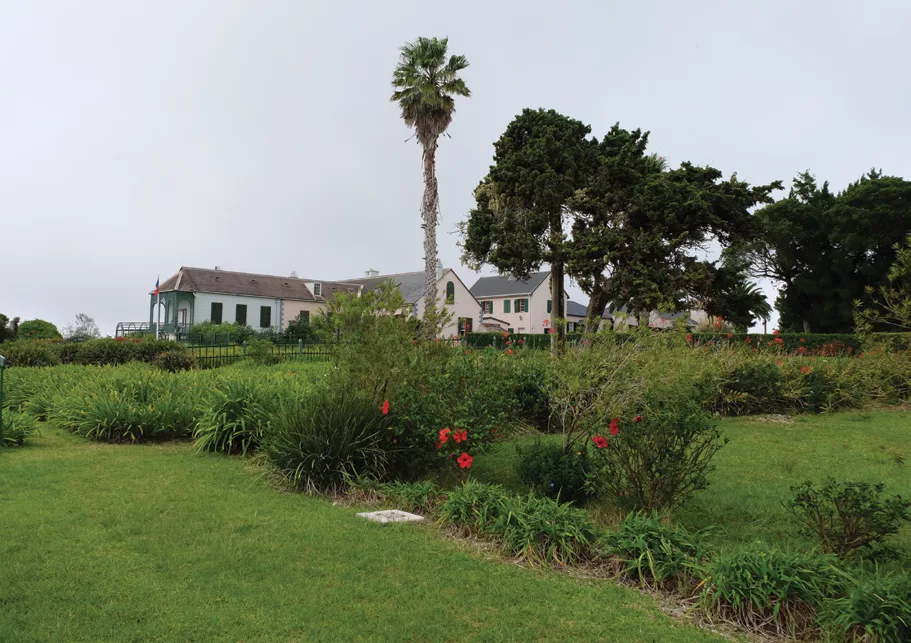
It’s starting to drizzle as we park outside St Paul’s Cathedral. So far, so London. Except this is 8,500km away from the English capital and the church outside the car windows here, while large by the standards of buildings on the island of St Helena, is probably about the same size as the canteen in the massive British institution.

In this instance, the structure is just the starting point for an adventure, however; one that will begin as soon as Martin Henry can manhandle two large, heavy bicycles out of his car.

Henry is St Helena’s Minister for Health and Social Care. He’s younger, fitter and a good deal chirpier than most would expect a government official to be and his diplomatic assignment for the day is to show an interested visitor (me) the wonders of his home island, ensuring that the outing involves good, healthy exercise and fresh air and – crucially – that I don’t fall over from city-boy fatigue.

In between his official duties, Henry likes to cycle and, as a social, talkative bloke, he also likes to host visitors as he takes in the dramatic landscape.

Happily, he offers user-friendly (in all senses of the term) e-bikes – bicycles with a small engine powered by a battery pack, which can be set at different levels to assist the effort the cyclist is putting in – as an option. And he’s a patient, friendly sporting companion, setting a chilled pace to begin with. The help from the motor means having a conversation is possible, which makes the experience considerably more enjoyable, setting up a positive cycle, as it were.

Surprise and satisfaction

Riding in the light rain keeps us cool, helping us to avoid sticky sweatiness, but the water does make the road surface slick in places, meaning that there is a need to use the brakes on both wheels to maintain traction on the many notable gradients and hairpin bends. St Helena’s roads are narrow, with constant twists and turns, but there is enough understanding and courtesy from local drivers to allow for passing to be relatively relaxed, with regular striking views meaning that pulling over to let traffic past is never a negative move.

Unsurprisingly in terrain that leaps from sea level to over 700m above that within short horizontal distances, there are some crazy hills to navigate, long and steep, that present a huge challenge for cyclists relying on mere muscle. As a training ground for serious athletes, this location would be a dream: short distances that are extremely demanding and always scenic, whether you’re taking a slow trundle or competing in a time trial. The narrow valleys make everything feel really compact. You can see a recognisable landmark on the opposite slope – the Boer Cemetery, for instance – from some distance away and then pass the entrance to the property just a couple of minutes later.

This makes for a headspace of almost constant surprise for the rookie rider as you pass each new marker, be it a village, a church, a geographical formation or a site of historical significance. You reach somewhere you know is on the other side of the island from where you started (because you noted that from the comfort of the back seat of a taxi beforehand) without feeling any discomfort; only the pleasant feeling of having had a pleasing leg and lung workout.

Talk it through

If you’re riding with Henry, your mouth will also get plenty of exercise, as he’s a man who loves both his country and the people who live there, most of whom he knows personally to some degree. As a result, he is never without a story (or nine) about what is currently going on around the island and what sort of effect all those interactions will have on everything else that’s going on around the island! He’s also happy to chat about his work as health minister, to ask for input and to listen to it, so who knows? You could have gone out for a bit of exercise and sightseeing and ended up having an effect on policy and matters of national importance.

You’ll also have more or less circumnavigated one of the most remote islands on earth in just a couple of hours, which is an amazing sentence to be able to tell people who aren’t aware of how tranquil an experience it actually is. It’s a brilliant way to see St Helena and easy enough to combine with a hike – more enthralling views; more bracing exercise – a visit to a coffee plantation, a swim or a dive into history.

Text and photography | Bruce Dennill, Shutterstock

For more information, go to sthelenatourism.com.
Read more

Silence on the frontier

The Kruger National Park’s wildest region is also its most peaceful

Most travellers think they know Kruger National Park. Wide-open savannahs, scattered bush camps and bleary-eyed breakfasts at Afsaal. But there’s a slice of Kruger that defies that idea entirely. In the northernmost reaches of the park is a concession so little-visited that it challenges everything you think you know about Kruger. This is Pafuri.

Pafuri isn’t easily reached, and it’s not meant to be. Here, the wilderness feels vast, raw and untouched – a frontier in every sense of the word. This 26,000ha area is owned by the Makuleke community, who were forcibly removed from the land in the 1960s and fought tirelessly to have it returned in 1998. Now, members of the community work as game rangers, trackers and staff at Pafuri Camp. The Makuleke community’s successful land claim is one of South Africa’s proudest conservation stories. Their ownership means that every visitor contributes to the preservation of the land and the empowerment of the local people. The pride in reclaiming their history runs deep. Every detail, from the guided walks to meals prepared around a boma fire, holds a piece of the Makuleke story, contributing to an experience that feels more rooted and authentic than anywhere else in Kruger.

Unlike the south of the park, Pafuri isn’t filled with vehicles jostling for prime views of lions and elephants. Instead, it offers something quieter and more reflective. While members of the public can drive along the stretch of main road that runs to the Pafuri gate, you’ll have to stay at one of the few camps in the huge area to explore any further.

Return Africa Pafuri Camp feels like a true hideaway. It’s tucked alongside the banks of the Luvuvhu River, disappearing into the bushveld around it. It’s not built to stand out but to settle in, which is part of the charm. The camp is simple yet elegant, with luxury tents and wooden walkways that keep visitors close to nature. 

But the real luxury is in its setting. It’s designed to blend into the landscape and its surrounds, which means that all you really focus on is what’s outside: the slow flow of the river from the open-sided pool and dining area, the chirps of the bushveld filtering in through the tent at dawn, and at night, the low, resonant grunt of hippos.

Historical refuge

Pafuri is one of South Africa’s richest birding destinations and a true paradise for enthusiasts. Here, you’ll find rare species like the Pel’s fishing owl – known for its striking orange plumage – and the grey-headed parrot. 

The Narina trogon, with its deep red belly and green back, is another gem seen in this region. Even if you don’t know your black-throated wattle-eyes from your racket-tailed rollers, it’s impossible to ignore the life and movement that fills the air.

The wildlife isn’t the only thing that sets this region apart from the rest of Kruger. Here, baobabs dominate the skyline, holding the stories of the Makuleke people who once lived among them. Some of the trees are thousands of years old, their hollow trunks gnarled and wide as they tower over the land. These giants have seen empires rise and fall, and walking among them, you feel that history. Some are hollow, once used as shelters by sangomas – traditional healers – before being left to stand silent and empty.

And while the south has its game-filled savannahs, Pafuri has the fever tree forest. Over 14km of yellow-green bark glow under the African sun. It’s the largest fever tree forest in Africa and the trees form an almost enchanted canopy, a shady refuge for elephants and buffalo on the hottest of days.

If you’re fortunate enough to spend a few contemplative days here, one of the views that will stay with you for a lifetime is that of Lanner Gorge. It’s almost completely unknown to the public, but the gorge is breathtaking – a dramatic canyon carved by the Luvuvhu River over thousands of years, with cliffs plunging steeply down to the riverbed below. Standing on its edge, looking out across the expanse, visitors receive another reminder that this part of Kruger has stayed wild, untamed and uncompromised.

A relaxed reality

Then there’s Crook’s Corner, where the Luvuvhu and Limpopo rivers converge. This spot was once notorious for smugglers and poachers taking advantage of the porous borders with Zimbabwe and Mozambique. Today, the lawless reputation is long gone. The only crowds are the crocodiles basking on the banks and countless hippos at their loudest as you join them at the watering hole for a sundowner.

Staying at the camp is worth more than a day or two. It’s an experience of immersion and the kind of restorative slow safari that can only be had far away from the madding crowd. You’re not here to tick off the Big Five or set off for a quick, two-night getaway from the city. There’s no rush to see it all. It’s about sitting with the land, letting it tell its story in its own time. You’ll see things differently here – the way the fever trees glow at sunset, the echo of elephants as they rumble past in the distance and the feeling of being a part of something old and sacred.

The experience is a departure from the typical safari-as-usual mindset. Pafuri Camp doesn’t try to offer a curated, polished, ‘guaranteed to see leopard’-type experience. And that’s why it matters. For those who are willing to wander beyond the well-trodden routes and want more than just another week in the bush, this is Kruger as it should be: wild, authentic and unforgettable. A last outpost holding tight to what wilderness truly means. And for that, it’s worth the journey.

Text and photography | Sophie Baker

For more information or to book a stay, go to returnafrica.com.

Read more
R100 million: The maximum amount of liability cover covered by A&G Professional Indemnity. AD 787: The year in which Pope Hadrian I banned tattoos of any kind. 40 minutes: The length of time sloths can hold their breath for if necessary.

Choose peace

Wildlife and guests find a place to experience tranquillity in and around luxury lodge.

Walking slap-bang in the middle of the road is a handsome male lion. Oblivious to the safari vehicle’s presence, he continues his stroll at a leisurely pace, pausing every so often to sniff the early morning air.

Field guide Marthus, from Founders Lodge by Mantis, follows him for a good while, and as the sun starts casting a golden glow around the cat, he stops in a clearing and lifts his head, allowing us to admire his magnificence. 

Known as the ‘Nomadic’ male, the lion is in his prime and is the best option to take over the Southern pride. At seven years of age, his mane is thick and lush, and his coat glistens in the sunlight. His dark quiff of hair extends to the front of his torso and ends halfway down his ribcage. We sit in quiet wonderment as he makes his way towards us, appreciating his grace and beauty.

Marthus has switched off the engine, turns towards us, and says: “This guy is currently without a pride. We have two prides on the reserve – the Southern pride with one male and the Northern pride with two males.”

Nomadic was brought in with the purpose of taking over the Southern pride. To change the genetics, he would have to fight the Southern male for territory and mating rights, but he’s currently not doing that. 

The Nomadic male comes from a family where his sister broke away and formed her own pride, leaving him out in the cold. We encounter the Southern male on a few different occasions, and although he might be considered ‘old’ in terms of lion longevity, he doesn’t look bad for his 13 years.

Finding him on our last morning, he has secured a spot overlooking the valley, and it’s clear that he has recently eaten. Telltale signs are a round belly, blood on his chin and the inability to stay awake for more than five minutes. As luck would have it, he sits up momentarily, seemingly ‘posing’ for us before he flops down on his side to resume his slumber.

Lion dynamics are fascinating. Both males seem strong and in charge, although the Nomadic male avoids confrontation by avoiding vocalising and not marking his territory, all signs of not wanting to be found. His face bears no scars, but his back legs tell a different story. The marks left were the result of a brawl between himself and the Southern male, where Nomadic showed submissive behaviour by not engaging in a fight and instead running away. A loner, Nomadic has little choice but to be an accomplished hunter, bringing down warthog, eland and, surprisingly, a big buffalo in order to sustain himself.

Mandy the miracle

Part of the lodge’s ethos is their rhino conservation and monitoring. A highlight is casting eyes on a number of these threatened species, one of them being a white rhino named Mandy. She has become a mother for the second time, and under the watchful gaze of her mom, the calf is thriving. Field guide Cillié takes us on a special drive to meet Mandy, and we admire her from a safe and respectful distance. The youngster is boisterous and playful, and we leave them to graze in peace on the surrounding greenery.

A poaching survivor, Mandy was shot in the head but fortunately survived before being relocated to Founders Lodge by Mantis for safety. It’s an outright miracle, as there are still bullet fragments somewhere in her body – when the vets came to ascertain where the shrapnel is located, she lay on her right side. They were unable to locate with a metal detector where the rest of it might be, but Mandy seems unbothered that she is a walking marvel.

Sitting at eye level with a large male rhino is not something that happens every day. Guests have a unique opportunity to observe these prehistoric-looking animals up close and personal through a 35m underground tunnel that emerges at a waterhole, a project that was designed by renowned wildlife photographer Nelis Wolmarans. Viewing them one afternoon coming in for a drink and a roll-around in the muddy water is a dream sighting, especially seeing the one almost completely immersed, his body covered in dark grey mud. The other one carefully ventures closer, dipping his horn in the soothing sludge, making for the most amazing photographs.

Returning promises

Five imposing blue gum trees are clearly visible when approaching the lodge. Spectacularly positioned at the top of a hill and the end of a winding gravel road, the venue houses seven suites as well as a renovated railway carriage.

In the private honeymoon pod, the interior is modern with accents of yellow, white, grey and black. Steeped in history, the property was once the home of founder and owner of the Mantis Collection, Adrian Gardiner.

More so than ever before, the success of a lodge is directly attributed to the guest experience, be it the accommodation, the cuisine or the staff. And when that is achieved successfully, it makes for the most unforgettable stay. To form a kinship with someone through travelling is not common, but the effervescence that the lodge managers display here is wonderful. The manageress’s bubbly personality is all the medicine guests need when returning from a game drive or for those who might be grumpy from a long day of travelling, and her sparkling smile is enough to disarm any bad mood. All of this makes it hard to leave, but the warmth and sincerity of her ‘see you again’ hug softens the blow.

Text and photography | Heléne Ramackers

For more information or to book a stay, go to mantiscollection.com.

Read more

Ard times

As he ventures into writing songs in a new language, Ard Matthews reflects on his musical history

When did your love for music originate?

Ard Matthews: Growing up, Nat King Cole, Louis Armstrong and some Elvis was about the only music that filtered into the house on one of these old flat cassette players. Even as a young kid, I was fascinated by the tones and timbre I heard. I’d try to mimic those legendary voices, and once I got a taste of that creative energy, I was hooked. It was never just background noise for me; it was a form of expression that felt completely natural.

When did you first realise that you have an amazing singing voice?

Ha ha! I never woke up one day and thought, “Wow, I have an amazing voice.” It was more of a slow realisation from people’s reactions when I sang. In school, I’d belt out these old songs I had learnt during breaks or mess around in the music room and teachers and friends would say, “You’ve really got something there.” Their feedback built my confidence. Over time, I thought, “Okay, maybe I can run with this.”

You’re able to play the drums, keyboard and guitar. Do you have a favourite instrument, and why?

Thank goodness I can sing and write songs, because with instruments, I’m definitely a master of none, sadly. I would say guitar is my comfort zone. There’s something about having an acoustic in my hands – it feels like an extension of myself. I did a Percussion Institute of Technology (PIT) drum diploma right after school, which was a great help for me to understand rhythm and note values. Piano is by far my favourite instrument, as it opens up tonnes of harmonic possibilities, but the guitar allows me to be both rhythmic and melodic in the simplest, most direct way. It’s also the instrument I’ve spent the most time writing on, so it has a special place in my heart.

Who were your musical inspirations?

There are many. South African artists like Johnny Clegg had a big impact with his blend of local sounds and cultural storytelling. Internationally, I’ve always been inspired by Stevie Wonder for his soul and vocal artistry, Led Zeppelin for their raw energy and boundary-pushing, and The Beatles for their melodic and universal appeal. Also bands like Pearl Jam, Counting Crows and Radiohead. They all taught me how powerful music can be when it’s genuine and soulfully delivered.

As a songwriter, what is your process?

It usually starts with a melodic idea or even just a chord progression that sparks something in me. Sometimes, a single phrase or a lyric snippet will pop into my head and I’ll just store it until it reveals itself. I tend to record voice notes on my phone wherever I am – on a walk, in the car, at home. Then I piece it all together, hashing out melodies on the guitar. It’s often messy and I like it that way. Creativity isn’t always neat. Once I have a basic structure, I refine lyrics and shape the song’s arc until it feels honest and complete.

You settled in Los Angeles for eight years, where you and Just Jinger performed. Take us back to that experience.

Moving to LA was both exhilarating and challenging. On one hand, there’s this vibrant music scene with endless opportunities. You’re rubbing shoulders with artists from all over the world. On the other, it’s hugely competitive. We played iconic venues like The Roxy, House Of Blues and The Viper Room and every show felt like a mission to prove ourselves. But those years taught us resilience, helped us refine our sound and broadened our perspective on the global music industry. By the time we returned, we had an entirely new appreciation for where we came from and what we had to offer as South Africans.

Returning to South Africa in 2009, how had the music scene changed for you as an artist?

When I came back, I noticed a real sense of pride in local music – more so than when we’d left. There were newer festivals, more diverse collaborations and people actively supporting homegrown artists. The internet and social media were also starting to influence how musicians could market themselves. But at its core, the warmth and passion of the South African audience was still there; it felt like coming home and it was comforting to realise that bond hadn’t changed.

You perform with Just Jinger and also enjoy a solo career. What are the benefits of ‘flying solo’?

The band is like family – I love the collaboration and shared energy. But, sometimes, you want to explore themes or styles that might not fit the band’s identity. Going solo allows me to take risks, follow creative tangents and shape a show exactly how I envision it. It keeps me growing as a musician and challenges me to stand on my own two feet without the safety net of the group. But trust me, I adore both avenues equally.

You released the Afrikaans song Die Rede in 2024 with Tanya van Graan. Has your Afrikaans improved since the two of you started dating?

Well, let’s say I’m definitely more confident attempting the language now! Tanya is very patient with me. Writing and singing in Afrikaans was a new challenge but also a lot of fun. It gave me a deeper respect for the language and how beautifully it can express emotion. So, yes, my Afrikaans vocab has grown – but I still get corrected a fair bit.

Exciting projects on the horizon?

I’m currently working on my third solo album in my ‘dungeon studio’. I’m really enjoying the freedom of working around the clock, often going tech-free for stretches to fully channel the music. There’s something magical about immersing myself in that creative flow without distractions, and I can’t wait to share what comes out of it.

Text | Heléne Ramackers

Photography | Marcos Cruz

For more information, go to ardmatthews.com.


Read more
18kg: The weight of the adult Australian trumpet snail. 4: The number of states visitors can see from the top of the Willis Tower in Chicago. 68.7%: The percentage of fresh water on Earth stored in glaciers.

Amid the action

Visitors to Sandton’s business district have a new space to rest and reflect on their day’s work

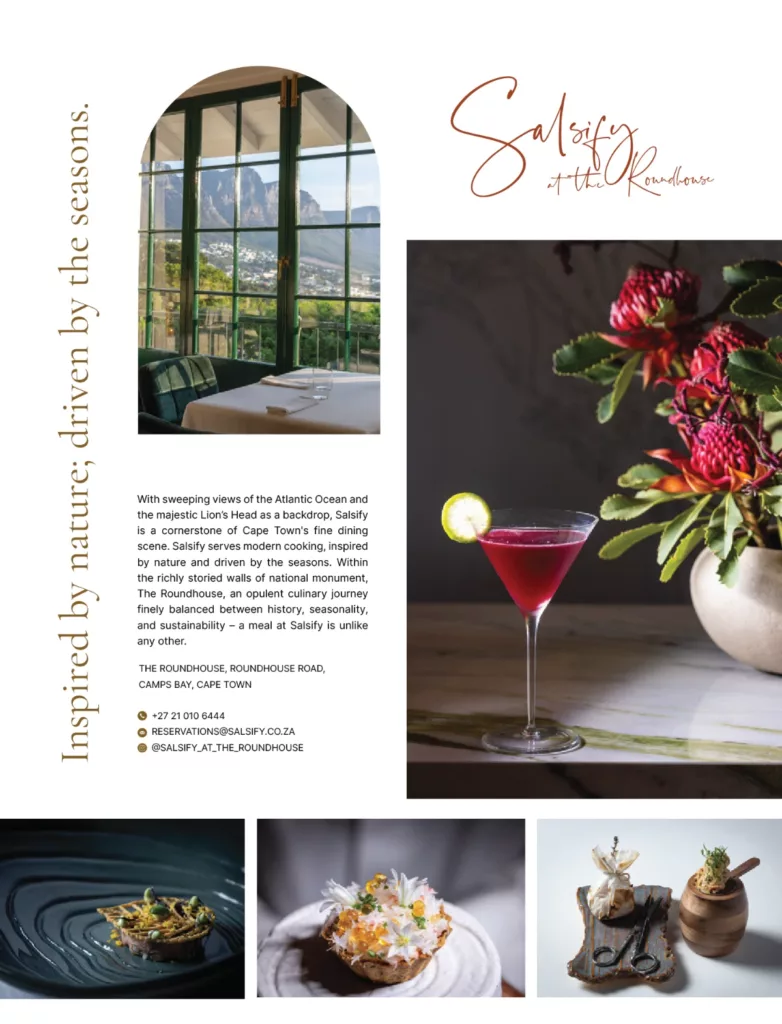
A central Sandton building that always looked too striking for the financial institution it used to house now has a more fitting purpose – providing accommodation for business travellers coming into Johannesburg (and, perhaps, for the odd staycationer).

A striking colour palette and some cheerful details, including a waffle station as part of the breakfast buffet, help to create a space that offers real respite from boardrooms and conference centres. 

Speaking of the latter, this hotel, the Hampton by Hilton Sandton Grayston, is brilliantly situated for its purpose – a five-minute walk from any major institution in Sandton and a three-minute drive from the highway. It’s also more or less around the corner from the Morningside Clinic, which is useful if you’re visiting the area for a reason that’s neither business nor pleasure.

If you don’t want to leave the precinct – the hotel is part of a collection of mixed-use buildings – to eat at one of Sandton or Rivonia’s excellent eateries, breakfast and dinner are served in-house. But for variety, there are two Chinese restaurants across the parking lot, meaning that visitors need never leave the property to enjoy a little culinary adventure.

Space to decompress

The rooms are modern and simple with clean lines. After a day of meetings and deadlines, they are a comfortable space to retreat to, with a fold-out desk – a clever design; when out of the way, it makes up part of the surroundings of the large TV – available if there is still work to do after hours.

And if the thought of typing or filling spreadsheets on your own feels less than thrilling, there’s a super-stylish, cushioned pod in the downstairs common area that adds both novelty and privacy closer to the coffee station and the food and drink (and allows for a great people-watching opportunity).

Not all of Johannesburg offers the sense of staying in a big city, but here in Sandton, there is a pleasing inner-city feel. It’s not quite like being surrounded by New York’s skyscrapers, but you’re surrounded by blue-chip firms and the imposing architecture of their headquarters, which adds interest to the views from the rooms or the deck.

Interestingly, the hotel is also pet-friendly, with a ‘designated litter area available’ and the obvious rules applying to anyone who brings in a furry companion (hopefully it’s implied that fur is allowed while scales are… more carefully considered).

Text | Bruce Dennill

Photography | Supplied

For more information or to book a stay, go to hilton.com.
Read more

Why athletic genes don’t guarantee gold medals

Sporty parents are only part of the puzzle when it comes to making an Olympic champion

During the 2016 Summer Olympics in Rio, I was on a family hiking holiday in Yorkshire. In the evenings, after a meal and a couple of drinks in the pub, we would sit down to watch the coverage of the day’s events. My favourite was track cycling.

If you’ve never watched a bunch of athletes, all of whom have thighs that are thicker than a supermodel’s waist, racing around a polished wooden track at ridiculous speeds, on bikes that only have one gear and no brakes, I can highly recommend it. It’s a sport that the UK excels at.

We even have our own ‘golden couple’ of track cycling, Jason Kenny and Laura Trott, who, at the time, were engaged to be married. Sir Jason and Dame Laura Kenny, who were knighted in 2022, have an unbelievable 12 Olympic gold medals between them.

On this particular evening, Laura had already completed her events and was cheering Jason on to winning his third and final Rio gold. As the crowd, and we in our small Yorkshire hotel room, roared Jason across the finish line, Laura tweeted: “Arghhhh! I love him to bits! Our kids have to get some of these genes, right?”

Naturally, this piqued the interest of the geneticist in me. What are those odds? Will their offspring be sporting superstars, or will they be watching future Olympic Games on the sofa with the rest of us?

Laura has good reason to be hopeful. The chances of her and Jason’s combined genes producing children who are not only athletic but potential Olympians are a lot higher than for the rest of us.

It’s the same as fast bowler Stuart Broad having a better chance of becoming a star cricketer because his father Chris batted for England. Or British middleweight boxing champion Chris Eubank Jr being more likely to become a top boxer than his friends, due to his father’s skill in the ring. Or long-distance runner Eilish McColgan thanking her Olympic-medallist-mother Liz for her athleticism. Likewise, any of Laura and Jason’s children (they have two now) will have a huge genetic head start.

But, while there are some human traits (such as those that control hair colour, lactose intolerance and the ability to tan) that can be tracked down to single genes, it’s not that simple when it comes to one’s possibility of becoming an Olympic athlete.

My own field of expertise is the genetics of body weight, where we know of the involvement of over 1,000 genes. Consider some of the characteristics needed to be an elite cyclist. You’d need the right mix of ‘fast-’ and ‘slow-twitch’ muscle fibres, great balance, a high aerobic capacity, a fast recovery speed, a high pain threshold and the ability to focus – just to name a few.

One can only imagine the genetic complexity underlying the confluence of these multiple traits. With so many genes involved, it’s currently impossible to make exact predictions about how talented Laura and Jason’s kids will be.

These complex traits always come down to an ideal combination of genes and environmental factors, plus a dash of plain luck.

Being brought up in a household with two multiple gold-medal-winning cyclists would have a powerful influence on their children. They’ll grow up in a highly competitive environment and are likely to be heavily involved in sports in their daily lives.

Similarly, the type of food that such children eat is going to be better than most. Two Olympians such as Laura and Jason, with nutritional advisers coming out of their ears, are unlikely to feed their children junk.

But, however helpful or unhelpful your environment, you still need the right genes to flourish. That’s why, across all areas of life, we see examples of dazzling genes passing down through generations – musical parents often breed musical children and good looks pass from parent to child.

The question is how the child handles the genes they’re given. They can either use them to their advantage or not. To use a poker analogy: you can have a good hand or a bad hand in terms of genes and you can only blame your folks for that. 

But, like in poker, you can still win with a bad hand and still lose with a good one, depending on how you play the game.

So, nothing is certain, and there will come a day, perhaps in the next 20 years, when we’ll understand exactly how our genes make us fat or thin, or fast or slow, or govern how we look, perform or behave.

For now, though, it’s safe to say that Laura and Jason’s kids will have such a genetic and environmental head start that you probably wouldn’t want your kids lining up against them on sports day.

Text | Giles Yeo

Prof Giles Yeo (@GilesYeo) is a professor at the University of Cambridge, researching food intake, genetics and obesity. He is also a broadcaster and author. His latest book is Why Calories Don’t Count.

This article appears in Very Interesting #81. Please click here to receive the current VI issue digitally for free! 

Read more

An African immersion

Wildlife photographer and author Scott Ramsay delves into the magic of the continent in his book Spirit of Africa, explaining why nature is sacred

Did you have an influence in your youth that shaped your career path?

Scott Ramsay: Growing up in Cape Town, my parents used to take me and my sisters to the Kruger Park for our winter holidays. We’d drive up to see my oupa and ouma in Joburg, then carry on to Kruger for two weeks. I’ll never forget standing at the braai with my dad, turning the lamb chops on the grid while he had a cold beer in his hand and listening to hyenas howling and lions roaring.

You went from a career in the corporate world to the bush, working as a photographer, explorer and writer. Talk about worlds apart! What sparked that change?

I felt trapped and extremely claustrophobic. I hated sitting inside an office building all day, at a desk, behind a computer, dressed in a suit and tie. I fell into a huge depression, and for some reason, I kept daydreaming of elephants and baobab trees. That vision prompted me to get the hell out of the corporate world and immerse myself in wild Africa.

Your travels on the African continent – has there been an experience that has had a profound impact on you?

There are many. Sitting at the feet of a bull elephant in Mana Pools was the closest I’ve been to an experience with God. Terrifying, but unbelievably powerful. Camping solo in the Kalahari for a few weeks with no other people around, and after a few days, I seemed to merge with my surroundings. It was a deeply meditative and spiritual experience. Every time I sleep outside under the stars in the African wilderness next to a small campfire, I feel that life makes sense, and I’m recalibrated back to my essential self.

How far off the beaten track have you gone, and do you have any harrowing tales about it?

Walking with some local guides into a remote part of the forest during a big project in the Congo, we came to another village, and the men there were angry that we hadn’t asked for their permission first. They started fighting with my guides, and things got a bit hairy. While they sorted things out between themselves, I went to hide behind a tree while things calmed down! Discretion is the better part of valour, right?

I know it’s like asking a parent who their favourite child is: do you have a most-loved country in Africa and why?

That’s a hard one. I don’t have a favourite, but if I had to choose, I’d say my own country of South Africa. I’ve spent three years travelling to all of South Africa’s parks and did my first book on that. SA is so diverse – scenically, biologically and culturally. I love all the different landscapes, oceans and languages. There’s a surprise around every corner, and the spirit of South Africa is irrepressible. We never give up. I love that!

And wildlife that you’re particularly drawn to?

I’m drawn to all animals, but I love showing the animal in context of the landscape. I want people to feel the spirit of the land, to feel what it’s like to actually be there, immersed in the moment. When I look at all my photos from the past 15 years, somehow elephants seem to be a regular subject. That wasn’t intentional, but perhaps I’m subconsciously drawn to them in some way, especially the old big bull elephants.

Your photographs are incredible. Looking at the cover of Spirit Of Africa, with an elephant dwarfed by albida trees – how do you go about selecting a cover image from what I can only guess are thousands of photos taken in the field that have a wow factor?

The cover image is my kind of image. An elephant – the biggest mammal on Earth – dwarfed by the trees and landscape. There’s vulnerability and awe in the image. That for me is what Africa’s about. Feeling vulnerable and being in awe. A vast, pristine landscape with wild animals roaming wild and free. Africa is incredibly rich in these scenes and we ought to be very proud that our continent still has them. I’m proud to be African, and I’m so grateful that I was born on a continent that is showing the rest of the world how to conserve and protect wild nature.

How long does it take to put a book together like this?

The photos come from the past 20 years of my work and travels around Africa. Much of the text in the book has been on my mind for several years. From the start of writing to design, printing and distribution, the whole project took about two years.

The book isn’t only a photographic journey – it’s beautifully complemented by your storytelling of the people and places. What is the message you are hoping to portray by putting so much of yourself into this stunning product?

My message is simple: Nature is sacred. It is precious beyond measure and it is healing to the human soul. It certainly gave my life meaning. Wild Africa is our original home. Everyone on Earth has their origins in African wilderness. And all wild animals and wild places have a right to exist on their own terms, without humans always taking from nature. The Earth hasn’t been given to humans to use and abuse. We are visitors on the planet for a brief time, on the only planet in the universe we know of that has life. And what life! It is a truly spiritual experience to be alive and healthy on this wondrous planet. We should honour it by being extremely mindful of our individual and collective impacts on the rest of life on Earth.

Text | Heléne Ramackers

Photography | Scott Ramsay

For more information, go to scottramsay.africa

Read more
10118: The zip code for the Empire State Building. 1676: The year in which astronomer Edmond Halley set up an observatory on St Helena. 2,500km: The length of the coastline of Mozambique.

On the surface

Everyone – regardless of age, gender or skincare concerns – can take steps to enjoy healthier and happier skin.

If you can only manage one skin goal, make it applying SPF every day. The sun causes not only accelerated ageing but also DNA damage, hyperpigmentation and even skin cancer. Apply broad-spectrum sunscreen to exposed areas daily and reapply throughout the day, even when it is cold or overcast. UVA rays are dangerous even during winter.

Double cleansing is one of the most underrated skincare steps. It involves cleansing your skin twice with two different products before applying any serums or moisturisers. When you double cleanse, you remove dirt, oil, makeup and impurities far more effectively than when washing your face with one cleanser. Not only does this additional step help to keep your pores clear and prevent build-up, but it also allows your serums to penetrate better.

Your pillowcase is a breeding ground for bacteria. Oils, dirt and makeup from your skin and hair can build up on your pillowcase, leading to clogged pores and breakouts. Change it more regularly to protect your skin while you sleep and maintain a clearer complexion.

Topical skincare is key to a beautiful complexion, but it can’t be the only action you take. 

You need to take a holistic approach, which includes taking into account what you consume, as well as other lifestyle factors. Drink plenty of water, eat fresh foods rich in antioxidants, quit smoking, limit alcohol and caffeine intake, exercise regularly and get enough sleep.

Stay realistic

Whether you fell asleep on the couch watching a movie or got back late after a night out, sometimes it can feel like an impossible chore to remove makeup and do a skincare routine before bed. But going to sleep with makeup on is awful for skin. It can lead to dryness, breakouts and accelerated ageing.

Social media is largely to blame for unrealistic beauty standards. How often have you seen your favourite celebrity or influencer’s flawless skin and wished yours could look the same? The truth is that they don’t look like that. All skin has texture and flaws, and these are easily camouflaged by filters and Photoshop, supporting an illusion that the rich and famous are seemingly perfect.

We carry plenty of dirt and bacteria on our hands, and every time we touch our faces, it increases our risk of developing breakouts. It can be difficult to stop touching your face, but try to make a conscious effort to stop yourself every time. Similarly, stop picking at or squeezing your breakouts. This can lead to infection, and you may also end up with scarring, known as post-inflammatory hyperpigmentation.

Skincare is a complex science that requires many years of research and development. As tempting as it may be to try out DIY treatments seen on TikTok, the potential repercussions may not be worth it (as many of these home treatments may be harmful to your skin).

Text | Judey Pretorius

Photography | Max Kegfire

Dr Judey Pretorius is founder of Biomedical Emporium.

For more information, go to biomedicalemporium.com.


Read more

Please see attachment

The bonds between parents and children are built around trust and security.

Back in my psychology days, I poured over theories about attachment, eager to understand the science behind our earliest bonds. It was fascinating on paper, an exploration of how a child’s connection with their caregiver could set the stage for a lifetime of trust, love, and resilience.

But the real power of attachment theory became clear when I became a mother, cradling my two boys, holding their little hands and hearing their giggles and cries. Suddenly, what had once been concepts in a textbook transformed into a sacred journey that unfolded in our everyday together.

Attachment theory, pioneered by psychologist John Bowlby, speaks of the ‘secure base’ a child needs – a haven that gives them the courage to explore the world, knowing they can always come back to someone they trust. Back in those study days, I understood it intellectually. But as a mother, it became so much more. I realised I was that secure base for my boys. I was the comforting arms they could run to after a fall, the steady eyes they searched for in a crowded room. Being their secure base wasn’t just a theory to me – it was an honour, a daily commitment to being their home in a world that could feel so big.

Mary Ainsworth, who followed in Bowlby’s footsteps, demonstrated how children’s responses to separation and reunion with their caregivers reveal their attachment style: secure, anxious or avoidant. I remember studying the labels and scenarios in class, finding it all interesting but a bit abstract. Now, as a mother, I see these attachment styles in real-time, every time my boys hesitate to leave my side or joyfully greet me after being apart. Every giggle, every tight hug, every time they run toward me, I see that trust we’ve built – the trust that makes them feel safe even in separation, knowing I’ll always return.

Around and around

And then there’s the idea that has come to mean the most to me: the ‘circle of trust’. This idea illustrates a child’s natural cycle between independence and connection, a delicate dance of security and exploration. At the centre of this circle is the parent or caregiver, a steady presence. The child circles outward, stretching their wings, testing their limits and exploring their world. But when something startles them, or they simply want to share a moment, they return to the centre, seeking comfort and validation. It’s a rhythm that builds their confidence and courage while keeping the bond alive and thriving.

As I watch my boys play and grow, I see this circle in action daily. They’ll venture off, excited by a new discovery – perhaps a fascinating bug or a funny sound. And they look back to find me, their faces lighting up as they seek my smile, my silent assurance that I’m here, that I’m proud. When they stumble, whether it’s a scraped knee or a disappointed heart, they come running, searching for my arms and a soft voice to soothe them. This circle of trust is more than a concept; it’s a shared heartbeat, a dance of closeness and independence. In each step, I see their resilience blossom and their sense of safety solidify.

For parents, this circle of trust feels deeply rooted in our everyday lives. We’re raising our children in a land of vibrant diversity, where the world can be both breathtaking and, at times, uncertain. Our little ones, under six and still so fresh to the world, take in every sight, every sound, every feeling with wonder and sometimes with a bit of hesitation. In these early years, our role is to be their constant, to be the faces they search for when they feel a bit lost and the hands they reach for when the world feels a bit too big.

Freedom in security

In our everyday moments, this circle plays out. At the playground, I see them dashing off with boundless energy, pausing to glance back to make sure I’m still watching. During bedtime stories, they curl up close, seeking the warmth of familiarity before drifting into dreams. And when they’re overwhelmed – when frustration, fear or a tumble catches them off guard – they run back to me, knowing I’ll catch them, steady them and gently send them out again.

In these moments, I realise that building a secure attachment is not about grand gestures or perfect parenting. It’s in the countless little acts – the quiet moments of holding, comforting, listening and just being present. It’s when they look to us as if to say, “Are you still there? Do you still believe in me?” And we respond with a steady gaze, a smile and the assurance that yes, we’re here and always will be.

These early years, these first steps in their journey, are precious. They’re about so much more than milestones or achievements. They’re about laying a foundation of love and trust that will carry them through a lifetime. What I once studied as theory has become the heartbeat of my family, a bond that grows stronger with every goodbye and hello, every tear and every laugh.

As parents, especially of little ones, we may sometimes feel overwhelmed or wonder if we’re doing enough. But when we show up, day after day, with a gentle hand and a listening heart, we’re giving our children the most beautiful gift of all: a foundation they can always return to; a circle of love and trust that will hold them steady as they venture out to discover the world.

Text | Kelly Eyre

Photography | Evgeny Atamanenko

Kelly Eyre is Quality and Pedagogy Lead at Dibber South Africa.

For more information, go to dibber.co.za.


Read more

Go deep with conservation

Saving the oceans requires working backwards from the required goal to the real heart of the matter.

One theory goes that human beings are psychologically incapable of caring about an event they’ve been told will be catastrophic but will happen far in the future. Without the tangible and the immediate, most of humanity muddles along and doesn’t fret about the future because the brain is wired to help us survive in the moment and can’t compute distant consequences.

That’s deeply unhelpful in the age of climate change and especially when it comes to protecting the health of the ocean, which is literally and figuratively the lungs of our world. As Dr. Judy Mann-Lang, executive for strategic projects at Cape Town’s Two Oceans Aquarium Foundation, points out, the ocean produces almost every second breath we take. It provides more oxygen than all of the world’s trees combined.

But for those who haven’t seen below the surface, the ocean is an abstract place. How do you get people to care enough about the overfishing, plastic pollution, ocean acidification, warming, and other threats to make the necessary behavioural changes that will mitigate the harm to the sea?

Start with your end goal, says Mann-Lang, who is part of the International Union for the Conservation of Nature’s Behaviour Change Task Force and has been researching how people use knowledge about the ocean since she started working at the South African Association for Marine Biological Research in Durban way back in 1992.

Facilitate connection

“If you keep on saying to people ‘you must do this, you mustn’t do that’, people start to switch off. They’re getting tired of being told what they should not do, they want to know what they can proactively do to make a difference,” says Mann-Lang. There have to be systems in place that will enable the behaviour change before attempting to change the way people behave.

As a real-life example, the People and Oceans unit of the Foundation is involved in a project with the V&A Waterfront to try to ensure that the dozens of restaurants in its precinct and in the new Granger Bay expansion are serving sustainable seafood. 

Following two panel discussions and much behind-the-scenes research, the sustainable seafood programme is launching in earnest. “But what we’re looking at is not just saying to visitors ‘choose sustainable seafood,’ because when they walk into a restaurant they’ve got a whole lot of unsustainable choices.”

To take the next step, by going backwards in the chain of events, “What are we going to do with the chefs?” Mann-Lang says. “How are we going to persuade the chefs to sell primarily sustainable seafood? And that’s hard because they’re dealing with customer demand and also with their suppliers. So now what we’re saying is that we need to work with the suppliers, and that’s going to be a focus.”

There’s still got to be a knowledge component, though, Mann-Lang says. “You’ve got to know that something exists before you can even start to engage.”

Then comes the strong emotional component “and that’s getting out into nature, that’s seeing a fish and experiencing whatever it is that helps people realise their interconnectedness with nature and the ocean,” Mann-Lang says.

Text | Renée Bonorchis

Photography | BearFotos

For more information, go to aquarium.co.za/foundation.

Read more

Step up your self-care

Smelly feet can be embarrassing – but also a marker of a health issue.

At least 10% of the population suffers from foot odour – more in certain types of weather. Warm weather or constantly wearing closed shoes on colder days means more sweating, more bacterial growth, and more smelly feet.

This can make for an uncomfortable situation for the sufferer and those in the vicinity when you remove your shoes. Fortunately, there are a few effective ways to prevent foot odour.

If your foot odour is a concern, try soaking your feet for 20 minutes in warm water mixed with half a cup of Epsom salt. Doing this once a week will help remove moisture from the skin, preventing bacteria from thriving. You should also wash your feet daily with soap, preferably an antibacterial soap.

Bacteria that cause foot odour thrive in moisture, so it’s best to keep your feet dry wherever possible. It might be worth keeping an extra pair of socks handy so you can swap them out if the first pair get too sweaty. It is also important to air dry your shoes after taking them off and before putting them away. Another great option is applying a dedicated foot powder to your shoes.

When you get home, remove your socks and shoes so that your feet get some fresh air. You can opt for sandals on hot days and avoid wearing closed shoes as much as your lifestyle and the weather will allow. Remember, however, that you mustn’t walk barefoot in communal places that are wet, such as showers in gyms.

Create a routine

If possible, don’t wear the same shoes for two days in a row. Rather, let one pair air out while wearing another. You should also clean out your insoles to improve the smell and consider using a disinfectant spray to kill off any bacteria.

When selecting your shoes, remember that natural fabrics like cotton and leather breathe, whereas most synthetic materials used to make shoes will not allow the shoes to breathe, resulting in bacterial build-up. You must also ensure that your shoes fit correctly. If they’re too tight, your feet are unlikely to breathe.

Alongside the foot soak and antibacterial scrub, other hygiene practices can also help smelly feet. Scrubbing your feet with a pumice stone will remove dead skin cells that bacteria feed on. When cleaning, remember to scrub between the toes where bacteria love to hide. It’s also important to clean and trim your toenails – another place bacteria will take up residence.

Remember that if you can’t seem to solve the odour problem with these practices, it’s best to consult a medical professional, as prescription medication might be needed.

Text | Lynsey Hammond

Photography | Andrey_Popov

Lynsey Hammond is MD of Kroko. For more information, go to kroko.co.za.

Read more
33%: The percentage of the world’s socks made in China’s Datang District. 40%: The percentage of the world’s coffee produced in Colombia and Brazil. 16 years: The length of time for which the Statue of Liberty functioned as a lighthouse.

Invisibility here we come!

Material science often lacks the glamour of other technologies – and yet it could be an exciting field to watch over the next 25 years. Perhaps one of the simplest yet most promising new materials is self-repairing concrete.

Self-repairing is a ‘biomimetic’ process – one where technology is developed inspired by the capabilities of the natural world – as it echoes the abilities of living tissue to repair damage.

We can expect most concrete of the future to heal itself, using, for example, dormant bacteria that produce calcium carbonate when water gets into the material. Or even filler-like healing agents that are released when microcapsules are broken as the material shifts.

In sci-fi, we often see exotic material that can reshape itself when needed (think Terminator 2’s T-1000 melting through prison bars and taking the forms of its various victims). Programmable substances might have more positive uses in the real world. For example, stadiums could be programmed to provide new seating on demand so that no one has to miss Taylor Swift’s next Eras tour.

Current attempts often make use of ‘solid-liquid phase change pumping’, where a material shifts between solid and liquid states, reshaping before solidifying. To date, this has only been possible on a small scale but, over the next 25 years, we could see the approach expand to a practical level.

Perhaps the most exciting new materials, though, are metamaterials. Designed with unusual structures made to hijack quantum phenomena, they can gain unexpected super-abilities.

At the simpler end, these metamaterials might improve safety helmets by changing how much pressure they can resist. On the more spectacular end, scientists are working on honest-to-goodness invisibility cloaks. The metamaterial in these cloaks can bend the light around them, preventing objects underneath from being seen. Currently, the cloaks have only worked on small items, illuminated with non-visible, infrared light but, by 2050, we can expect materials capable of making small items disappear in visible light.

Text | Brian Clegg

Photograph | Alamy

Brian Clegg is an award-winning science writer and the author of over 40 books.

This article appears in Very Interesting #81. Please click here to receive the current VI issue digitally for free! 

Read more

Quiet boldness

Strong design features mark SUV from new marque in South African market.

Initially sceptical about a Chinese car that I didn’t know much about, I was pleasantly surprised, as the GAC Emkoo impresses on almost every level. To begin with, it has striking looks, with the exterior design being a head-turning conversation starter.

So many people came over to ask, “What car is this?” The GAC is all about bold angles, which gives it a commanding presence on the road. It appears sleek and robust without looking chunky or squared off and is definitely designed to stand out.

The interior has a Sino-inspired design. Read ‘bling’ but not too in your face. A touch of super-shiny chrome and a sparkly crystal gear selector stand out against a sleek dark grey console. Colour-changing LED lights line the cab on start-up and can even be programmed to change and pulse in time to your music. And yet, the flamboyance works. The cab does not look cheap or plasticky and is well-designed, with plenty of storage space and easy access to USB ports, a wireless charging pad, and coffee cup holders. And the front, back and boot are all very spacious.

The Emkoo has a 1.5l, 4-cylinder, turbo-petrol engine, putting out 138kW. It sports a 50l tank and a claimed fuel consumption of under 6l/100km. This was easily achievable while driving in Eco mode on the open road. It was slightly higher, though, at about 7l/100km, in the madness of city traffic.

Fun and control

The drive quality of this vehicle is exceptionally smooth and the noise-cancelling technology works well, leaving the cabin peacefully devoid of road noise. The funky interior and exterior door handles (the outer handles are invisible when driving) are interesting and fun. The front seats are heated and ventilated, and it’s likely that, once you’ve discovered this cooling option, you’ll use it all the time.

There are also plenty of safety features, and the car will not move in drive or reverse if the driver’s seatbelt is not on. It’s a bit control freaky but in a good way – though it is slightly annoying when you just want to move the car in your driveway.

With all of these bells, whistles, and tech, this high-end SUV still comes at an affordable price, plus a new lifetime engine warranty (if you are the car’s first owner). The warranty is also subject to reasonable conditions like the car being serviced at a registered GAC dealer and not being used as a taxi or for motorsport. Fair enough!

Is there a downside to this vehicle? Let’s nitpick. When parked in the sun, the cab is a heat magnet, and the interior becomes incredibly hot very quickly. This could be remedied by some sort of sun screen or perhaps a stronger tint on the windows. That said, the air conditioning is powerful and controls the internal temperature to a manageable level in under a minute.

Some of the few other complaints are that the blind spot indicators on the mirrors do not always work, which is a pity, as this is a game-changing safety feature for many drivers – and the touch screen menu is not as intuitive as other cars. But once you get it figured out, everything you need is there.

In all, this car is fantastic to drive, good-looking and competitively priced. While new to the South African market, the brand appears committed to establishing itself here. GAC, by the way, stands for Guangzhou Automobile Group Co Ltd.

Text and photography | Di Brown

For more information, go to gacmotorza.co.za

Read more

New spaces, new rules

Working towards the same goals from different locations requires rules that apply to everyone.

Professionalism, etiquette, dress codes and time zones are challenges facing companies as they manage remote working frameworks and the current culture of always-on access to employees.

In 2020, the world of work changed, but not forever. At first, remote was expected to remain the undisputed leader of working frameworks but, over the past few years, it has been gradually replaced with a preference for hybrid working. There are several reasons for this shift – not just suspicious managers concerned about productivity – but one of the most commonly cited is the need for more cooperation and communication. Another study found that 35% of those surveyed felt that these two factors were their biggest challenge, alongside burnout, prioritising time, project management and technology.

In addition to remote and hybrid working frameworks, there is also a growing need to ensure that customer experiences and service remain exceptional. Customer stickiness is becoming increasingly important to business longevity – and customers aren’t loyal.

Hybrid and remote working environments create both opportunities and challenges for companies. While there are employees able to serve customers 24/7 across multiple channels, maintaining consistency, personal connection and service quality has become challenging.

Employees have to navigate technical hurdles, communicate effectively across time zones and recreate the spontaneity that comes in office settings while delivering empathetic, efficient support to customers who have rising expectations.

Aim for agility

So, what are companies to do? They need to invest in a delicate balance of technology for efficiency and connectivity while preserving the human touch, which is critical to delivering exceptional customer service and experiences.

The answer is never going to be as simple as investing in any one technology or conducting extensive training or simply reverting to tradition. It is a combination of factors that allows for companies to create an agile workforce that has the right skills and tools to manage their remote working and digital engagements.

Connectivity is, of course, the most important, to ensure employees are contactable. The second is to have access to a telephony platform that ensures employees can be reached regardless of device or location.

It is essential that people understand the rules of engagement when it comes to digital collaboration. What to wear, how to behave and what not to do. When people have these tools and the confidence to use them, the entire online dynamic changes because employees feel trusted and supported.

Another benefit of having access to an agile communications platform is that your business doesn’t sit on hold during breaks. Your employees can be contactable and you can run systems smoothly without disruption, while allowing for people to go on leave or change location. This taps into one of the primary benefits of remote and hybrid working – work from anywhere. It isn’t about expecting people to work all the hours, but rather giving them the space to work from anywhere to minimise burnout and enhance productivity.

Text | Natalie van der Merwe

Photography | Dejan Dundjerski

Natalie van der Merwe is Head of Telephony at Vox.

For more information, go to vox.co.za.


Read more

Mitigating risk as a professional

Warren Buffet famously said that “it takes 20 years to build a reputation and five minutes to ruin it”. Most people remember this line, but he also said something more about reputation that I find equally poignant: “Reputation is what makes people feel secure working with you.”

As an insurance professional, I find this so true, even in my own field. A mistake made, be it a decision, a statement or an action, could have significant negative consequences for my clients and the company. Given that everyone makes mistakes, it is highly probable that a mistake will be made and a client will suffer as a result. If that happens, there are two scenarios.

You don’t have professional indemnity insurance and the worst happens. Think of an attorney missing an important submission date, an accountant swapping two numbers around or an architect submitting the wrong version for a large project. Although your business may be small, the companies that you provide your services to are usually not. And the financial consequences that they may suffer because of your mistake can often be worth more than your business itself. They would hold you liable; issue suit. You may or may not be able to hire an attorney to defend you, but if you did, in fact, make the said mistake, damages would be awarded against you. The attorney that you hire is usually one that is affordable for you. Your business could shut down as a result of not being able to pay the damages that you are liable for. Your client will be understandably aggrieved in this scenario as they are not able to recover their loss. What do you think they will start saying about your business to anyone who asks and even those who don’t?

You have professional indemnity insurance and the worst happens. You receive a letter of demand or summons from your client holding you liable for the financial loss that they suffered as a result of your mistake. You forward it to your insurance company, and they take over. They liaise with your client going forward. They appoint an experienced attorney to handle your matter. The selection of the attorney would be based on the relevant expertise of that attorney in your particular field as well as the size of the amount being claimed. You carry on with running your business, and your insurer handles the claim and keeps you updated. If you are not liable, the insurer will cover the legal cost of your defence. If you are found liable, the insurer will cover the legal cost as well as the damages that are payable to your client. Here your client has been dealt with professionally, and if you are liable, they have received compensation for their loss. What do you think they will say about your business, and do you think they would work with you again?

We all make mistakes – it’s the ability to make good once that happens that is important. That could be the difference between your business thriving or closing.

Text and Photography | Supplied

To find out how Auto&General Professional Indemnity Insurance can help your business today, contact us on 0861 00 02 09 or at liabs@autogen.co.za.

Auto&General Insurance Company Limited is a licensed non-life insurer and financial services provider. T’s & C’s Online


Read more

Smart but suspicious

Are we surrendering too much control to our devices?

Smartphones and tablets have revolutionised the way we work, communicate and entertain ourselves. Enhanced by artificial intelligence (AI), these devices empower us with instant access to information and tools that make life smarter and more efficient.

From enabling remote work to streaming entertainment anywhere with an internet connection, personal technology has transformed our daily routines. Businesses, too, leverage this technology, using AI and smartphone data to analyse consumer behaviour and tailor marketing campaigns with unprecedented precision.

But this growing reliance on technology raises critical questions. Are the trade-offs worth the risks to privacy and autonomy?

Tracking technology is not new. In the early 2000s, Google used eye-tracking software to map user behaviour during online searches. The data revealed that most users focused on the top-left corner of screens, aligning with natural reading patterns. However, Google did not clearly disclose these practices, and many users unknowingly consented by agreeing to terms of service they had not read.

Today, this lack of transparency persists. Many users download apps without reading end-user agreements, inadvertently granting access to personal files, photos and even cameras. FaceApp, for instance, gained access to over 150 million users’ images under a broad, irrevocable licence. Such examples highlight how easily personal data can be exploited.

Potential problems

AI now extends far beyond passive data collection. Social media platforms and video-sharing sites use AI tools to monitor user reactions such as smiles or frowns to gauge content preferences. However, this approach often oversimplifies complex human emotions, leading to inaccurate assumptions.

Many apps also track users’ locations and transactions. Smartphones constantly log movements, enabling AI assistants like Alexa and Siri to learn patterns of behaviour, from shopping habits to personal conflicts. This data can lead to troubling profiling practices, categorising individuals based on their behaviours, purchases and social circles.

Governments and corporations could exploit this information. For example, China’s social credit system rewards or penalises citizens based on behaviour, affecting access to loans or travel. Similar systems could be used by employers or financial institutions, raising concerns about fairness and discrimination.

The vast amounts of data collected by smartphones and AI are vulnerable to misuse. Hackers could exploit these platforms to commit fraud, steal identities or blackmail individuals. High-profile figures, such as celebrities and influencers, are especially at risk of scandals or exploitation through data breaches.

This potential for abuse underscores the urgent need for safeguards. Who controls these AI platforms? Who can access the data? Without answers to these questions, the influence of technology companies over our lives will continue to grow unchecked.

Technology offers undeniable benefits, but its intrusion into personal boundaries is a growing concern. Addressing this issue requires transparency, stricter regulations and public awareness about the risks of data sharing. While smartphones, tablets and AI have enhanced our lives, it is critical to question whether the trade-offs are worth the erosion of personal autonomy.

Text | Ravin Baburam

Photography | Prostock-studio

Ravin Baburam is an Academic at Regent Business School.

For more information, go to regent.ac.za.


Read more

Up to code

New draft legislation focuses on fairness

The introductory section of the Draft Code of Good Practice on Dismissal states that employers and employees should treat each other with respect. It prioritises employment justice, satisfactory conduct and work performance, efficient operation of the business and speedy dispute resolution.

Employers may, in appropriate circumstances, depart from aspects of the draft code. Smaller employers in particular will be given more leeway as regards implementation of required procedures but will still have the onus of proving the fairness of all dismissals.

The draft code newly provides clarification that employers may use suspensions as part of their graduated disciplinary processes and that collective agreements take precedence over the code’s provisions. Also, smaller employers may use less formal disciplinary procedures and, in assessing whether dismissal is appropriate, arbiters should consider not only actual damage caused by the misconduct, but also the potential damage.

Reasonable cause

As regards the substantive fairness of dismissals for unlawful industrial action, this will depend on: 

  • The seriousness of the effect of the strike.
  • Attempts made to comply with the Labour Relations Act.
  • Whether the strike was in response to an unlawful, unreasonable or unfair act of the employer.
  • The actions of the parties and other actors involved.
  • The legitimacy of the strikers’ demands.
  • The duration and timing of the strike.

If striking employees reject the employer’s ultimatum, the employer may dismiss them, but only after considering the employees’ representations as to why they should not be dismissed.

As regards probation, its purpose is purely for the employer to evaluate the employee’s performance or suitability for the job. The code now appears to imply that ‘suitability’ may include the employee’s conduct.

The draft code newly provides that, where employees are incapacitated due to addiction (including alcoholism) or drug abuse, treatment and rehab may be appropriate. Also, imprisonment and incompatibility may constitute incapacity but will not merit dismissal in every case.

The document also reminds employers that they must avoid using pregnancy, union membership/activity or other discrimination as reasons for retrenchment. It further provides a template for the notification of possible retrenchments.

While the draft code provides the above clarity, employers need to ensure that they have clear policies and processes that reflect the code’s requirements and that their managers know how to implement these.

Text | Ivan Israelstam

Photography | Akira AB November8

Ivan Israelstam is Chief Executive of Labour Law Management Consulting.

Contact him on 011 888 7944 or 082 852 2973, or at ivan@labourlawadvice.co.za.

For more information, go to labourlawadvice.co.za.


Read more
416kg: The mass of the world’s heaviest padlock. US$2.50: The price of divorce papers from a vending machine in Utah in the 1800s. 65 years: The age of an Australian lungfish thought to be the oldest fish in the world.

Pocket change

Digital wallets are being developed and expanded as a valuable resource

As South Africa’s fintech landscape continues to mature, 2025 promises to be a pivotal year for digital wallet adoption and innovation. Beyond traditional banking alternatives, digital wallets are emerging as sophisticated financial management tools that address unique local needs while aligning with global technology trends.

Digital wallets are filling crucial gaps in South Africa’s financial landscape by serving the unbanked population, providing accessible financial tools for informal sector workers, enabling micro-transactions and tips, and facilitating peer-to-peer payments. As adoption increases, we are seeing decreased transaction fees, more competitive service offerings, enhanced features at lower costs and greater financial inclusion.

As South Africa rapidly catches up with more developed markets, this year will be characterised by the accelerated adoption of advanced digital wallet technologies. The combination of purpose-specific features, enhanced security and reduced costs will drive both consumer adoption and merchant acceptance. The key to success will lie in balancing innovation with accessibility, ensuring that new technologies serve the broader goal of financial inclusion while meeting the sophisticated needs of an increasingly digitally savvy population.

Specialised wallet proliferation will continue, with growth in purpose-built digital wallets and enhanced features for specific user segments. Infrastructure development will improve payment networks and interoperability between systems, while the user experience will evolve to include simplified onboarding processes and intuitive money management tools.

Multi-purpose tool

The most significant trend is the evolution of digital wallets from simple payment tools to purposeful money management solutions. South African consumers are increasingly demanding ‘compartmentalised’ wallets that allow them to create dedicated funds for specific purposes. Whether it’s stokvel savings, transport budgeting, grocery allocations or emergency funds, these solutions are revolutionising how people manage their money. This segmentation offers enhanced security and allows for better budgeting and financial management. 

In a country where cash security remains a significant concern, digital wallets continue to offer a safer alternative to physical currency. The ability to distribute risk across different ‘pots’ rather than keeping all funds in a single account linked to one card represents a significant security advancement. This security feature, combined with the convenience of digital transactions, is driving adoption across various demographics.

The agility of fintech businesses is enabling faster integration with commercial enterprises, creating a more connected financial ecosystem. The landscape will increasingly be shaped by the accelerated development of partnerships between fintech providers and traditional retailers, digital wallet services and transport providers, payment processors and small businesses, and cross-border payment networks. The market is also likely to see some consolidation through strategic mergers and acquisitions, leading to standardisation of core features and enhanced cross-platform compatibility.

Technological advances are rapidly transforming the digital wallet landscape. Enhanced biometric security, improved offline functionality, integration with emerging payment technologies and real-time cross-border capabilities are becoming standard features rather than luxuries. These developments are accompanied by clear signs of market maturation, including increased consumer trust, growing merchant acceptance, enhanced regulatory frameworks and broader ecosystem integration.

Text | Jonathan Holden

Photography | Prostock-studio

Jonathan Holden is the COO of SOLMate. For more information, go to solmate.co.za.

Read more

Live to learn

Continuing to seek and implement knowledge is a necessary part of growth, both personal and professional

“In the 20th Century the greatest handicap to development was illiteracy. In the 21st Century it will be the ability to learn.” These are the prophetic words of Jay Conrad Levinson.

I first read them in 1998 when I left a comfortable work environment to start my own business. Levinson was the founder of the Guerrilla Marketing Association, and I read his magnum opus written in 1993: Guerrilla Marketing Excellence: The 50 Golden Rules for Small-Business Success.

Of the rules he had, a few that I remember were essential at the time. One was having a fax machine in the office, which I have long since disposed of. Another was ‘Lifelong Learning’, which I have retained to this day.

Learning is a skill, like any other skill. We need to know how to learn how to learn, and like any other skill, we need to develop the skill as we move through business and life.

Sometimes we have to learn or die. My dad learnt how to swim when his dad tossed him over the side of a small boat in the harbour in his Scottish town. Soldiers in combat frequently have to learn or die. But that doesn’t apply to most of us. We need to have what Carol Dweck calls a ‘growth mindset’ — the desire to learn and the understanding or belief that we can. Some people have a fixed mindset. They think that they cannot learn. It’s too difficult. With others, it is the belief that they know it all already.

The whole picture

Knowledge is useful, but knowing is not enough. In the 21st Century we need to keep on expanding our knowledge because technology is moving at a rapid pace. Yesterday it was ‘the cloud’ and before that it was the personal computer. Today it’s about artificial intelligence (AI). If you want to stay with the game, you will have to learn how to use AI to your advantage. It will require a behaviour change.

David Kolb hypothesised the ‘Experiential Learning Cycle’. His learning cycle can be likened to a bicycle wheel; it has no beginning and no end. It starts with Concrete Experience. We have an experience or we have a vicarious experience by watching someone else, maybe watching a movie or a YouTube video. The experience can be good or bad.

The next step is ‘Reflective Observation’. That is, we reflect on the experience — what went wrong or what went right and why.

The third step is ‘Abstract Conceptualisation’ – having an idea about how to do what we have done better. The fourth step is to actively experiment (with that idea).

Kolb discovered through his research that some people like to learn from concrete experience, others from reflective observation and others from abstract conceptualisation (having ideas), while a fourth group like to learn from active experimentation. Sometimes we find people good at two parts of the cycle, occasionally three parts, but rarely do we find people good at all four parts. The accommodators, who feel and then do, are not good at assimilating, thinking and watching, and vice versa. The divergers are not good at converging and doing, and the convergers are not good at feeling and watching. To effectively learn, we need to engage all four parts of the cycle.

Steady progress

Much like eating, we need to digest learning one chunk at a time. If we overfill the mind with information, the process will rebel and collapse into misery or worse, nothing at all. Most of us are faced with information overload every day. As a comparison of information availability, I have read that in one copy of The New York Times today, there is as much information as the average citizen living in the 18th Century was exposed to in a lifetime.

That brings up an essential requirement to learning: know what it is that you need to learn and avoid distractions. This means creating a personal development plan. And be sure to make it a ‘SMART’ plan: Specific, Measurable, Actionable, Realistic and Time-bound.

Getting out of your comfort zone is a risk. Sometimes if the circumstances demand that we get out of our comfort zone, we give up. We complain that ‘It’s not in my job description’ or we reject new systems, procedures or technology as being ‘too demanding’. If you are one of these people, it’s time for a change in mindset.

Learning on your own is difficult. Learning with someone else can be like magic. Today there is a growing relevance of coaching and mentoring to be that ‘someone else’ in your learning journey, inspired in no small measure by the sports industry, where coaches and mentors are indispensable to sporting success.

Depth of mental processing requires reflection. It requires thinking. It requires following up on and following through on your subject matter. Dr Peter Honey introduced me to the Learning Log. I wasn’t all that enamoured with the idea at the beginning, but as time went by, I thought it might help. So I started keeping a Learning Log. By writing it up I was able to achieve some depth of mental processing. The log helps me when I have forgotten what I learnt, so I also use it as an offshore memory.

Aim to grow

Most people have heard of IQ – the Intelligence Quotient. Today we have the EQ – Emotional (Intelligence) Quotient and the CQ – the Curiosity Quotient. I first learnt about the Curiosity Quotient from Thomas Friedman. Friedman maintains that the CQ + PQ (Passion Quotient) is more valuable to your development than your IQ. And he backs this up with some evidence.

Some people are naturally curious; some are not. Most children are inherently curious, exploring all the time, but as we grow up, it is often lost. Sometimes it is lost because curious people are accused of ‘asking stupid questions’, and that discourages them from asking any more. Sometimes we are too shy to ask questions; many times we believe our ego is at risk.

Distractions have become the greatest threat to successful learning and to business of any kind. We are distracted by our mobile phones, we are distracted by incessant advertising, we are distracted by computer games and we are distracted by betting online. Games have evolved into a massive business, and they are addictive.

If you want to live a successful life, run a successful business and remain relevant and employable, it is imperative that you adopt a ‘lifelong learning’ mindset and encourage the people you lead to do the same.

Text | David Young

Photography | fizkes

David Young is the author of It’s Dead Simple, Really – Or Is It?

For more information, go to amazon.com.

Read more
14kg: How much bamboo a panda must eat per day to get enough nutrients. 150m: The average distance a flying fish can glide. 700: The number of different types of businesses that A&G Commercial Insurance provides cover for. 50: The estimated number of ships that have disappeared in the Bermuda Triangle.

Timetable Touring

The cost of out-of-office work is rising, but better planning is possible – and helpful

With business class fares jumping and flights packed, travel managers are facing tough conversations about rising costs. The data tells two stories. Yes, travel is getting more expensive, but it’s also becoming more predictable.

Travel managers who book ahead are saving on airfares and getting better hotel rates. The opportunity to be strategic with travel spend has never been greater.

Remember those ghost-town airports of 2020? Those days are long gone. Flights are packed to the rafters with an 86.2% load factor recorded. Global passenger demand was up 8.6% in August 2024 compared to 2023. Business class tickets are costing between 6 and 8% more compared to 2023, but there’s some good news – economy fares have dropped by between 1 and 4% versus 2023.

What does this mean in 2025? If you’ve been putting off booking important client meetings in London, New York or Dubai, now’s the time to get them in the diary. Those ‘last-minute-Larry’ days are behind us – the early bird really does get the window seat (and the better fare) now.

If you’re wondering why your hotel bills in Joburg are looking a bit steeper lately, you’re not alone. Room rates are up 14%, and if you think that’s eye-watering, spare a thought for colleagues heading to New York, where they’re looking at US$490 a night (up 15%). The average room rate is up in North America (6.8%), South America (25.4%) and Europe (5.3%), with a gentle softening of prices in Middle East/Africa, Asia and Australia.

What does this mean in 2025? It’s time to get savvy with those accommodation choices. Your usual hotel in Manhattan might need a rethink but remember – location isn’t everything. Some of the best business hotels are just a short ride from the city centre and they’re often better equipped for productive work.

Combine and Win

It gets more interesting for international business plans. Spots like Brazil and India are still seeing prices climb, even as the rand is working harder in some markets than others.

Think strategically about where and when you’re sending your teams. If you’re planning business expansions, factor in these regional cost differences. Sometimes it’s worth bundling several meetings in one trip – your budget will thank you.

Airlines are promising more seats for 2025 (1.8% more in the first half of the year and 2.1% more in Africa), but don’t break out the champagne just yet. More seats don’t automatically mean cheaper fares, especially with everyone eager to tie down those face-to-face meetings.

What does this mean in 2025? Keep an eye on new route announcements – they often come with decent corporate deals. And if you’re managing a travel programme, now’s the time to really get to know your airline reps or work with your travel management company (TMC). Those efforts and relationships can be worth their weight in air miles.

The companies winning at the travel game aren’t necessarily the ones with the biggest budgets – they’re the ones being clever about how they spend it.

Text | Bonnie Smith

Photography | PeopleImages.com – Yuri A

Bonnie Smith is General Manager of FCM South Africa.

For more information, go to www.fcmtravel.co.za.

Read more

Pay Heed

New technology is becoming part of the fintech industry as it evolves and faces different security challenges

The concept of applying new and emerging technologies to financial products, popularly known as fintech, is older than you might think. Technology has always played a role in the finance sector, while the term first came to prominence in the 1990s. But as our lives have become increasingly tech-centric, fintech has evolved into a category in its own right.

Embedded finance refers to integrating financial services like payments, lending and insurance into non-financial platforms, making transactions seamless within everyday apps and websites. Examples of embedded finance that people are probably most familiar with can be found on online retail sites and apps. Buy now, pay later (BNPL) services such as Mobicred and Payflex, which allow customers to purchase items and pay them off in instalments (often interest-free), are one example.

Other examples include the integration of loans and insurance into e-commerce platforms and the growing phenomenon of telecommunications companies offering a range of financial services, including mobile money transfers, micro-loans and insurance products, directly through their apps or platforms.

Artificial intelligence (AI) and machine learning are changing almost every industry. Among other things, these advanced technologies enable personalised customer experiences, fraud detection and predictive analytics to optimise financial decision-making. AI is also being used to automate stock trading through algorithms that use predefined strategies to take advantage of market opportunities. Those algorithms analyse historical market data to predict future trends and make informed trading decisions.

Keeping trouble out

Enhanced security measures like fingerprint scanning and facial recognition, coupled with blockchain and AI, protect against cyber threats and ensure data privacy. That’s critical because, while fintech products represent exciting steps forward for new and existing forms of financial transaction, they also represent rich new targets for cyber criminals.

In addition to implementing biometric security measures, fintechs are embracing advanced forms of encryption and leveraging AI and machine learning to ensure that their customers are as secure as possible. Given the IMF’s stark warnings about the effect cyber crime could have on the financial sector, all of those measures and more will be critical for consumer confidence and the sector’s ongoing growth.

Historically, making international money transfers hasn’t been a pleasant exercise. In fact, for most people, it still isn’t. Whether using a bank or a traditional currency exchange provider, the process is often slow, complex and opaque – especially when it comes to fees. On top of that, poor customer service is a common frustration for both individuals and businesses.

Fortunately, those experiences don’t have to be the norm. Technologies like SwiftPay and real-time payment systems, for example, enable faster, more affordable and transparent international money transfers. A growing pool of fintechs is also addressing many of the issues associated with traditional international money transfers through automation, transparency and expert-led customer service.

Text | Supplied

Photography | amgun

For more information, go to futureforex.co.za.

Read more

It’s all in the details

Apparently odd requests inform the real needs of business travellers

The business travel industry is growing, with 52% of companies planning to increase travel budgets in 2025, according to GBTA research. But it’s not just the number of trips increasing – it’s the expectations that come with them. Travellers want their work trips to align with their routines, priorities and the changing ways they approach work.

Travel managers are at the centre of these shifts. The requests they receive hold valuable insights into how business travel is evolving and where programmes and policies need to adapt. These aren’t just one-off asks – they’re signals about what matters to travellers.

So, what were people asking for in 2024? Travel managers’ stories highlight the trends shaping business travel and what companies can learn from them.

One traveller called their travel manager with an unusual request: a scale in their hotel room. It wasn’t for luggage. It was to track their weight as part of their fitness programme. This traveller wasn’t an outlier. More and more people are trying to stick to personal health goals while travelling for work, whether that’s through gym access, healthier dining options or simply maintaining balance. What this tells us about travellers: wellness matters. Travellers don’t want to leave their routines at home, and they expect business travel to accommodate their health as part of the experience.

How to adapt travel policies: personal goals are becoming a normal part of business travel. Companies should look at integrating wellness-friendly options into travel programmes. Choose hotels with gyms or health amenities and offer meal stipends that allow for healthier dining options. These details matter.

Specific preferences

Not all upgrades are welcome. One traveller declined a two-bedroom suite, saying it felt unnecessarily large for their solo trip. Another took extra steps to flag their airline meal requirements, saying they needed vegetarian food with no eggs or fish. What might seem overly specific is actually becoming more common. Travellers want their preferences to be understood, not as luxuries but as essentials for feeling comfortable and focused during their trips.

What this tells us about travellers: preferences, no matter how small, make a big difference in how supported travellers feel. The right meals, the right rooms – even the right itinerary structure – these details help build trust and reduce friction on the road.

How to adapt travel policies: take personalisation seriously by building smarter traveller profiles. Track preferences like room sizes, dietary needs and seating arrangements and update profiles regularly to make sure your programme stays relevant to each person.

Even experienced travellers can feel overwhelmed. One asked their travel manager if their 10pm flight time out of São Paulo was already ‘converted’ into the destination time zone. Another drove to the wrong London airport before frantically asking if the pilot could wait. These are examples of how travel stress or tight schedules can lead to logistical confusion, no matter how seasoned the traveller is

Schedules are overwhelming, and small details like flight times, terminal locations or airport choices add unnecessary stress if they aren’t made clear in advance.

How to adapt travel policies: clear communication solves most logistical frustrations. Automate reminders. Think airport terminals, updated flight times or even step-by-step directions for unfamiliar locations. Make life easier for your business travellers by reducing the need for constant clarifications.

A friendly voice

One traveller in London found themselves too overwhelmed to call their hotel’s front desk for luggage assistance. Instead, they phoned their travel manager in South Africa to help. On the surface, the request seems like overkill, but it highlights something all travellers face: stress.

What this tells us about travellers: it’s not just the big problems travellers want help with. Even small tasks can feel monumental when you’re tired, working late or far from home. Knowing someone is there to help is invaluable.

How to adapt travel policies: human-first support. Technology can handle bookings and reminders, but sometimes travellers need reassurance. Make sure your programme gives travellers access to real, empathetic assistance when they need it.

Text | Rategang Moroke

Photography | Estrada Anton

Rategang Moroke is Operations Manager at Corporate Traveller.

For more information, go to corporatetraveller.co.za.

Read more

Lights On

Proper planning allows for maximum effectiveness from solar power systems while homeowners are away

If you’re going away, as well as ensuring your home is secure and the fridge is emptied, don’t forget about your solar system. Proper preparation ensures the system runs smoothly, saves money and avoids any nasty surprises when you return.

Consistency is key. There’s no need to switch your system off or make drastic changes just because you’re leaving home. In fact, running your system as you normally would is the best approach. This consistency makes it easier to identify any unusual changes, should they occur.

Most solar systems come with monitoring apps, so you can check in remotely. This gives you peace of mind and allows you to address issues quickly. To make monitoring more reliable, consider investing in a small battery backup or power bank for your router or fibre devices. This ensures your internet connection stays active, enabling the monitoring system to keep working during potential power interruptions.

Don’t forget to load enough prepaid electricity units before you leave. While your solar system reduces your reliance on the grid, it’s always a good idea to have a backup in case of unexpected system failures or extended cloudy weather.

If your system is properly sized and has been running well, there’s no need to switch it off while away. However, if you’re concerned about your inverter failing or tripping while you’re away, consider installing an automatic changeover switch. This device seamlessly switches your power supply from the inverter to the grid if the inverter fails or trips.

Check it out

Just like you’d make sure your car is roadworthy before a long trip, it’s a good idea to have your solar system inspected before you go on holiday. Check that:

  • System settings are correct.
  • All connections are secure.
  • The overall health and layout of the system are up to standard.

One simple yet effective adjustment you can make is to increase the minimum on-grid state of charge (SOC) for your battery. This means your battery will retain more spare capacity, which can be invaluable during unexpected local power failures while you’re away. By doing this, you ensure that your system has enough stored energy to handle emergencies.

Even while on holiday, make it a habit to check your system’s performance using your app. Make sure someone you trust has access to your home and knows how to manage your solar system in case of an emergency. And if you notice any issues with your system, contact your installer or solar provider immediately for advice or assistance.

Text | Christiaan Hattingh

Photography | Jacktamrong

Christiaan Hattingh is Managing Director for AWPower.

For more information, go to awpower.co.za.

Read more

Looking to Improve

Having outputs recorded need not make employees feel like they’re being spied on

For many, the term ‘employee monitoring’ conjures images of surveillance, distrust and invasive oversight. This perception is outdated and misaligned with the evolving needs of modern workplaces.

Monitoring isn’t about policing – it’s about supporting management. It’s about bolstering employee focus, enabling efficiency and aligning individual efforts with organisational goals. Modern businesses face a common challenge: how to keep employees focused on tasks that truly matter while minimising the distractions of administrative burdens and inefficient processes. Without tools to provide context on how time is spent, organisations do not have all the information they need to assess productivity. Monitoring, when redefined as management, becomes a way to ensure that employees and businesses alike stay on track.

By 2025, 70% of large employers are expected to adopt monitoring systems. This signals a critical shift in how businesses manage their workforces. Employee monitoring, when reframed as a tool for supporting management, emphasises empowerment over oversight. This redefinition focuses on helping employees succeed.

Employee monitoring systems provide businesses with benefits like identifying inefficiencies, streamlining workflows and providing actionable insights that guide performance improvement.

It’s not about tracking every keystroke – it’s about understanding how time is spent and ensuring that efforts align with meaningful outcomes. 

Studies show that when monitoring is presented as a management tool and its purpose is clearly communicated, employees often adopt more organised and focused work patterns. They see these tools as allies in achieving their goals, rather than instruments of control.

New definition

Despite its potential, ‘employee monitoring’ remains a term steeped in scepticism. To change this, businesses must articulate the value these tools bring. Transparency is essential. Employees need to understand that monitoring is not about invading privacy but about enabling success.

For this shift to occur, companies must focus on meaningful metrics – measuring productivity and outcomes rather than resorting to intrusive methods like tracking personal data or video surveillance. The data collected should be used to support employee development, not as a punitive measure.

Yet, monitoring systems come with challenges, mainly due to privacy concerns, fear of eroding employee trust and concerns that monitoring will have the opposite effect of reducing productivity. 

Businesses must move beyond the traditional view of monitoring as a control mechanism and instead see it as a management tool that supports trust and productivity. Privacy boundaries must be respected. Monitoring should draw clear distinctions between work and personal activities, particularly in remote work settings. Legal compliance and robust data protection further ensure that employees feel safe and supported.

As remote work becomes more prevalent, the employee monitoring market is set to grow significantly. This growth underscores the need for a redefinition. When implemented thoughtfully, monitoring systems improve communication, reduce distractions and empower employees to focus on work that drives results. They create a workplace where everyone can thrive.

The term ‘employee monitoring’ no longer fits the modern workplace. It needs a new definition that reflects its potential to enhance management, build trust and support employees in achieving their best work.

Text | Warren Bonheim

Photography | ra2 studio

Warren Bonheim is co-founder of WorkStatz. For more information, go to workstatz.com.

Read more

Heavy duty

Accurate data around load measurements can help mining companies make the most of their resources

The South African mining industry is expected to experience notable advancements in 2025, particularly in the adoption of mining measurement technologies for loading equipment and the data generated from these systems.

With increasing demands for higher productivity, cost reduction and sustainability, mining companies are increasingly turning to technological innovations to optimise operations, enhance performance and ensure the longevity of equipment. 

This year, the use of advanced measurement technologies for loading equipment is central to improving efficiency in mining operations. Loaders, excavators and belt scales play a critical role in transporting materials within mining sites, and improving their performance can lead to significant operational gains. Technologies such as Load Weight Measurement Systems (LWMS) are becoming commonplace in South African mines and on quarries. These systems offer real-time data on payloads, enabling operators to ensure that each load is accurately measured to avoid underloading or overloading. Proper load management not only ensures equipment efficiency but also prevents unnecessary wear and tear, reduces fuel consumption and extends the life of the equipment.

By collecting real-time data from these systems, mining operators can maximise fleet management, making informed decisions on resource allocation, operational schedules and maintenance. Furthermore, this data is instrumental in streamlining operations, reducing downtime and improving the cost-effectiveness of mining activities.

Assisted by data

In addition to operational efficiency, the mining industry’s increasing reliance on data-driven technologies is also contributing to enhanced safety and environmental management. By monitoring equipment health and performance data, operators can proactively address potential safety issues and reduce the risk of accidents. Additionally, data can be used to track and manage environmental factors such as dust emissions and energy consumption, supporting sustainability efforts and regulatory compliance.

Despite these advancements, the South African mining industry must navigate several challenges, including regulatory hurdles and fluctuating commodity prices. However, the focus on measuring technology and data presents a significant opportunity for resilience and growth. Companies that invest in these technologies are likely to gain a competitive edge, as they can adapt quickly to market changes and optimise resource management.

The South African mining industry’s outlook is characterised by the growing use of advanced mining measurement technologies for loading equipment and the data generated from these systems. These innovations are set to improve operational efficiency, reduce costs and enhance the sustainability and safety of mining operations, positioning the industry for future growth in an increasingly competitive and environmentally conscious market.

Text and photography | Supplied

For more information about Loadtech Load Cells, go to loadtech.co.za.

Read more

Expanding contracting

Flexible working has its perks, but it also requires constant input and effort

At a glance, contract workers seem to have it all. Higher earning potential, more flexible hours and the opportunity to work on an array of different projects and tasks. But these ‘perks’ don’t come easily. Successful contractors don’t just wing it, they work hard to maintain their careers, largely by following specific practices that not only keep work coming in but ensures their happiness too.

Many contractors who are new to the game end up going back to permanent roles because they don’t consistently achieve the great results they expect while working as a contractor. But often, this isn’t due to a lack of work but rather because their professional habits are working against them.

Taking on work haphazardly and overextending oneself are common habits among contractors starting out. However, if you want to make a career out of contract work, you need to have a plan. 

Successful contractors set out realistic and achievable goals for themselves. They know what they want to achieve in the long run, how many clients they need to hit a specific financial target and how many hours a day they need to dedicate to servicing all of their clients or projects adequately. Without a plan, things can quickly spiral out of control, with missed deadlines and burnout being the most common outcomes.

Even when things are going well, and you have a steady flow of work, it’s always a good idea to be proactive about the way you market yourself and your work. Getting clients through word of mouth is fantastic, but unfortunately, this doesn’t always last or remain consistent. This is why it’s crucial that you market yourself in other ways, such as through social media or on your own blog or website. Building your own brand is a key part of being a successful contractor.

Stay stable

Make sure you have a healthy work-life balance. As much as working on a variety of different projects and clients can be a huge positive, it can also quickly become a curse if one’s personal life is not prioritised.

Contract workers have a tendency to take on too much work. Sometimes this is for financial reasons, and other times, it’s because they don’t want to miss out on an exciting project. The problem comes in when contractors sacrifice their personal time to keep up with everything they’ve committed themselves to.

Working 16-hour days and not taking weekends off is not sustainable and can be hugely damaging to one’s mental and physical health. It’s crucial to maintain a healthy work-life balance.

When you’re not permanently employed, the idea of saying no to work can be a scary concept. Many contractors view saying no as a means of burning a bridge that they might need later if things quiet down on their side.

This is probably the most important habit you need to take on if you are going to make it as a successful contractor. Saying yes to every offer could see you working for a lower wage than you deserve, slogging through a project that you hate or working with a team that’s not a good fit.

Although saying no may hurt you financially in the short term, it will empower you to be more successful in the long term. Knowing your worth holds huge value, and being confident in what you want to achieve will help you build a career that you’re not only proud of but also love.

Keep learning

Successful contract workers don’t rest on their laurels because, after all, it’s a competitive world out there. Those who are willing to continuously learn and stay up to date with industry trends and developments are typically the contractors who walk away with the lion’s share of the work.

The more you know and the more you can offer, the better off you’ll be. For example, if you’re a developer, the more coding languages you know, the more contracts you’ll get. If you’re a UX designer, the more up to date you are with the latest user and design trends, the more likely you’ll be to get the contract over someone else.

The beauty of contract work is that it truly is a ‘what you put in is what you get out’ scenario. From financial goals to those driven by experience, you can pretty much achieve anything you set out to do as long as you plan, prioritise and keep putting in the work.

Text | Maggie Moonsammy

Photography | JKstock

Maggie Moonsammy is Sales Manager at Strider Digital.

For more information, go to striderdigital.co.za.

Read more

Trust the algorithm

Intelligent protection of digital assets involves delegating some of the responsibility to AI

Artificial intelligence is not just enhancing threats, it’s providing organisations with a smart line of agile and detectable defence. AI security tools are moving beyond traditional signature-based approaches and can now identify subtle patterns in digital behaviours.

These systems are capable of continuously learning from network traffic, users, systems and applications to establish behavioural baselines. Then, when anomalies occur – like an employee suddenly accessing a database at unusual hours, irregular login patterns or anomalous application behaviours – AI flags these deviations in real time.

Moreover, these solutions detect poor security behaviours and protect both businesses and users. An employee sending a spreadsheet of names and personal information to the wrong person or emails coming into the organisation from an unknown address are examples of situations that AI can detect quickly, alerting the relevant people to the potential risk. AI will alert the sender to the fact that the spreadsheet they’ve attached doesn’t have any relevance to the content of the email. It will flag an email coming in from an unknown address so the user approaches it with caution. In both instances, AI offers a rapid solution to a possible problem.

The solution is not invasive. It’s an alert. It’s a warning system that gives people the chance to relook at the content they send and receive and ensure they are not about to make an expensive mistake. The technology is designed to minimise the risk of identity fraud, phishing and ransomware through intelligent detection and alerts.

Outpace the issues

The World Economic Forum (WEF) defines cyber resilience as an integral part of an organisation’s operations, culture and teams. As the ecosystems defined by the relationships between suppliers and enterprises become increasingly interconnected, cyber resilience is falling behind and putting everyone at risk. The WEF also highlights the importance of leveraging artificial intelligence (AI) and machine learning (ML) tools to help companies build this resilience and respond to threats more effectively.

Machine learning algorithms are then used to correlate seemingly unrelated events across multiple systems, identifying a potential attack chain that a human analyst may miss. For example, a combination of failed login attempts followed by a successful login from a new IP address alongside unusual system file activity could flag a compromise in progress. AI has the ability to adapt and refine its understanding of normal versus suspicious behaviours, and this makes it increasingly difficult for bad actors to slip through the security nets.

Of course, the threat actors are creating their own AI-powered solutions designed to combat the measures put in place by the business, but the tools used by security companies are catching them. And they are catching them quickly.

This capability not only flags the value that AI provides in terms of how rapidly it can help companies and security organisations protect against attacks but also how it is always-on and always vigilant. Humans need to sleep; AI does not. One of the biggest advantages offered by AI-empowered security systems is their ability to take global threats and provide local relevance.

Text | Richard Frost

Photography | Metamorworks

Richard Frost is Head of Consulting at Armata Cyber Security.

For more information, go to armata.co.za.

Read more

A route to respect

Diversity, equity and inclusion (DEI) have become driving forces behind building thriving workplaces

Embracing diversity, equity and inclusion is not just a matter of ticking boxes or meeting compliance requirements; it is about cultivating a culture of respect, equality and innovation.

Creating a thriving workplace that values diversity goes beyond simply hiring a diverse workforce. It requires a comprehensive plan that addresses the needs and experiences of all employees.

Diversity refers to the presence of different individuals in a workforce, including people of different races, ethnicities, genders, sexual orientations and abilities. Equity focuses on ensuring fairness and equal opportunities for all employees, regardless of their backgrounds.

To truly understand the significance of DEI in the workplace, one must recognise the changing demographics of the workforce. With globalisation and technological advancements, organisations are increasingly operating in diverse markets and interacting with a diverse customer base. A diverse workforce reflects the diversity of the customer base, enabling businesses to better understand and cater to the needs of their target audience.

Satisfaction and safety

Crafting an effective DEI strategy is not just a matter of moral obligation; it is also a strategic imperative.

A diverse and inclusive workplace enhances employee engagement and satisfaction. When employees feel valued and included, they are more likely to be motivated, productive and committed to the organisation. This, in turn, leads to higher retention rates, reduced turnover costs and improved overall performance.

Such a workplace brings forth a multitude of benefits for both organisations and their employees. Firstly, diversity fosters a broader range of ideas and perspectives, which can lead to more innovative solutions and better decision making.

Secondly, an inclusive work environment promotes a sense of belonging and psychological safety. When employees feel safe to express themselves, share their ideas and be true to their authentic selves, they are more likely to contribute meaningfully and collaborate effectively. Inclusion also helps mitigate biases and stereotypes, creating a fair and equitable workplace where everyone has equal opportunities to succeed.

Thirdly, a diverse and inclusive workplace improves employee engagement and satisfaction. When employees see individuals who look like them or share similar backgrounds in leadership positions, they are more likely to feel that their contributions are valued.

Important facets

Here are some key elements to consider when developing a strategy:

  1. Leadership commitment: For any DEI strategy to succeed, it must have the full support and commitment of senior leadership.
  2. Inclusive hiring practices: Building a diverse workforce starts with inclusive hiring practices. Organisations should review their recruitment processes to ensure they are fair and unbiased.
  3. Equity in career advancement: Promoting equity in career advancement is crucial for creating a truly inclusive workplace.
  4. Inclusive work environment: An inclusive work environment is one where all employees feel respected, valued and supported.
  5. Data collection and analysis: To measure the effectiveness of the DEI strategy, organisations need to collect and analyse relevant data.

Shaping mindsets

Training and education programmes play a crucial role in promoting diversity, equity and inclusion in the workplace.

  1. Unconscious bias training: Unconscious biases are deeply ingrained stereotypes or prejudices that affect judgments and decision making.
  2. Cultural competence training: Cultural competence training helps employees develop an understanding and appreciation for different cultures, traditions and perspectives.
  3. Inclusive leadership development: Inclusive leadership development programmes focus on developing the skills and behaviours necessary to lead diverse teams effectively.
  4. Employee resource group support: Employee resource groups (ERGs) are voluntary, employee-led groups that bring together individuals with shared characteristics or interests.
  5. Mentoring and sponsorship programmes: Mentoring and sponsorship programmes can help underrepresented employees connect with senior leaders who can provide guidance, support and opportunities for growth.

Text | Supplied

Photography | LightField Studios

For more information, go to gestaldt.com.

Read more

Enjoying the next instalment

Alternative to a home loan helps independent earners make the most of property market

It’s not easy to get a mortgage on your dream home if you’re not employed full-time and earning a fixed salary. Freelancers, those working on commission or sourcing their income from gigs and many other independent earners, often find themselves facing a brick wall when applying for a home loan from banks.

However, more people than ever are becoming self-employed in these fields and are seeking easier alternatives to a traditional mortgage bond. Instalment sale agreements are steadily becoming popular not just among those who do not qualify for a bond but also many who do not fit the salaried mould for which the mortgage model was developed.

An instalment sale makes acquiring a home similar to buying a vehicle on hire purchase, with the company financing the purchase and the buyer repaying the value of the property in monthly instalments. 

Although the company holds the title deed, the buyer enjoys all the rights and responsibilities of ownership during the period of the contract. Once the purchase price is repaid in full, total ownership is transferred to the buyer.

On the surface, there is little difference between buying with a bond or via an instalment sale. The only practical difference is the procedure followed when the buyers do not pay their instalment, but even in that case, an instalment sale is to their advantage.

Greater flexibility

Because a freelancer or a self-employed person’s income may vary from month to month, the bank will only consider a portion of their earnings. So, even if they qualify for a home loan, they will likely have to settle for a cheaper property or fund any shortfall on the purchase price themselves.

Through an instalment sale, up to 100% of their income is assessed, giving the purchaser more freedom to choose a property they really want. An instalment sale allows a buyer to acquire a valuable asset sooner and improve their credit score in the process. As the property’s value increases and their financial position grows over time, they may become a more attractive borrower. And they do not risk being caught in a rent trap while the values of homes continue to increase.

When a borrower defaults on their mortgage, they face losing their property through a sheriff’s auction, having adverse judgements against them and being blacklisted for five years or more. However, with an instalment sale agreement, they have more options, including negotiating their position and, ultimately, selling the property to pay off their debt. Even then, they retain a clean record.

As with a mortgage, the contract is governed by the comprehensive National Credit Act. Another law, the Alienation of Land Act, also applies, ensuring the rights of the parties to the agreement are fully protected. Instalment sales are also registered against the title deed of the property.

Text | Renier Kriek

Photography | Roman Samborskyi

Renier Kriek is Managing Director at Sentinel Homes.

For more information, go to sentinelhomes.co.za.

Read more

Follow the trail

Some whistleblowers may be wasting everyone’s time, but it’s important to give reports due credence

Whistleblowing can be abused by those seeking to further their own ends or purposefully harm an individual or wider organisation. The protection afforded to whistleblowers by legislation such as the Protected Disclosures Act, 26 of 2000 (the PDA), provides certain whistleblowers with more confidence in their malicious pursuits.

As part of an investigation into whistleblowing (malicious or not), organisations must clearly understand their legislative obligations and what risks to keep an eye out for.

Malicious whistleblowing poses grave risks to a company’s reputation if not appropriately dealt with. These include risks such as sanctions, financial loss (considering the cost of an investigation and employee resources), reputational harm and compromised employee morale in the workplace. When faced with what may be a case of malicious whistleblowing, organisations are responsible for investigating reports to firstly help them meet all their regulatory reporting requirements and also to mitigate against the risks posed by malicious whistleblowing.

Organisations commonly investigate allegations made by a whistleblower against specific employees despite suspecting these are malicious and meritless. In such instances, the most commercially sensible approach is to launch a multi-phased inquiry into the allegation despite having such a suspicion. Formally engaging experts to assist in the investigation as one of these steps is most advisable. This is an effective method to manage cases of suspected malicious whistleblowing because it helps an organisation establish whether allegations are unfounded, financially manage the expenditure on such an investigation and determine what its regulatory reporting obligations are and how to best meet these

Something to work with

When faced with suspicion of malicious whistleblowing, leadership’s first steps should be considering whether the report has sufficient information to be treated as substantial. Experts can advise on this aspect considering their enhanced experiences with similar matters.

Next, if there is sufficient information to warrant further investigating, an organisation must consider their reporting and other legislative obligations such as those prescribed by the Prevention and Combating of Corrupt Activities Act, 12 of 2004 (as amended) (PRECCA), PDA and the Financial Intelligence Centre Act, 38 of 2001 (as amended) (FICA). Particularly because South Africa’s legislative obligations are far in scope and reach. For instance, PRECCA obligates any person in a position of authority when she or he knows, or ought to have known or suspected, that another person has committed certain offences involving an amount of R100,000 or more to report suspected or actual offences. These reports particularly relate to offences of corruption, fraud, theft, extortion, forgery and/or the uttering of a forged document that meets or exceeds the monetary threshold.

Expert forensic professionals guide organisations on how comprehensive an investigation should be. While in some instances a speedy conclusion is feasible and an expert can advise you as such, in other instances, a deeper dive and reporting obligations are required. However, how soon an organisation determines this can influence the spend and damage on such matters.

Aside from helping an organisation determine what they are dealing with and how to best respond to this, forensic professionals help an organisation determine the identity of a malicious whistleblower, which enables it to take disciplinary action against said person with the forensic professionals supporting the disciplinary process.

It is known that there are various considerations an organisation must take into account when managing a whistleblower’s report. Working with experts when considering how to navigate the investigation of the whistleblower report is critical.

Put a system in place

Malicious whistleblowers can cause significant internal and external instability if their reports are not adequately investigated. Organisations should work with experts to create an enabling environment that encourages legitimate whistleblowers to step forward while intensely pursuing false whistleblowing claims.

The best protection against such whistleblowing is ensuring that a robust and procedurally sound inquiry and investigation (if necessary) are undertaken. Given the legislative, procedural and more common internal policy demands, as well as the complexities of a high-quality investigation, organisations are encouraged to engage the services of experienced and credible forensic professionals to manage the risks associated with whistleblowing.

Text | Lionel van Tonder, Aaqilah Nagdee and Delon Small

Photography | Lightspring

Lionel van Tonder is a Director, Aaqilah Nagdee is a Senior Associate and Delon Small is In-House Counsel at Webber Wentzel.

For more information, go to webberwentzel.com.

Read more

Automate and accelerate

Combining technology with the human touch can help a business to get the best of both

When many of us think of automation, we think of machines’ speed and efficiency in accomplishing tasks. However, we also consider how this may lead to our eventual obsolescence and redundancy. Or how our colleagues and their unique traits and skillsets might be replaced with increasingly sophisticated machine-learning tools.

The truth, however, is that automation is far more of a benefit to workforces than a threat – an enhancement to working relationships and discussions rather than an impediment. Indeed, Accenture’s recent survey of global executives found that 98% agree that emerging technologies enable their organisation to have a broader and more ambitious vision.

Here, we’ll look at how automating much of a manager’s workload empowers them to build stronger and more effective relationships with teams and why this is so important for companies in an increasingly hybridised working world.

People provide the X factor that makes a company’s brand so effective. The processes and practices of management are crucial to enabling these employees to thrive. This goes far beyond maximising productivity. It also means helping teams feel happy, engaged with and rewarded by their work, something that’s much harder to accomplish when juggling contact time with heavy administrative workloads.

Within the core functions of management lies a multitude of mundane processes we are all too familiar with, from producing reports to scheduling and monitoring. These in turn require a number of time-consuming recurring tasks, like producing status and expense reports or creating workflows and milestones. Thankfully, many of these processes can now be automated, and more still will be subject to automation in the future. According to predictions by Gartner, up to 69% of a manager’s operational workload has the potential to be automated by this year.

Spread the load

When discussing the automation of business functions and processes, managers may worry (quite reasonably) about the loss of the human touch. But by removing the burden of repeatable processes, technology empowers management teams to invest more time, effort and attention in the people who make up their teams – and ultimately, their business.

According to a 2021 report by Gartner, “68% of HR leaders believe managers are overwhelmed. Yet, only 14% of organisations have redefined the manager role to reduce their responsibilities.”

Unless these roles and responsibilities are adapted, managers risk being overworked in ways that damage the quality and quantity of contact time they have with team members. Research by Asana adds weight to the case: 80% of global knowledge workers do indeed feel overworked or close to burnout, while 62% feel imposter syndrome and 26% have missed deadlines due to the distribution of their workloads.

By lightening operational workloads, technology has the power to prevent managers’ attention and skills from being overextended, making their working days more focused, enjoyable and rewarding.

A lighter administrative workload leaves managers with greater scope for developing their own skills (and saying goodbye to any lingering imposter syndrome) and those of their teams. As more organisations recognise the benefits of remote and hybrid working and move towards that model, the focus on improving ‘soft skills’ in particular continues to grow.

A Gartner survey of 75 HR leaders backed this up, with 84% of respondents saying soft skills (personal attributes that make for harmonious interactions with team members) were now especially important with employees not having the same immediate access to one another as they might in an office-only environment.

Connect with the workforce

Devoting more time to learning and deploying these skills can help managers forge stronger relationships with remote teammates by:

  • Managing difficult conversations remotely.
  • Actively listening to employees’ ideas, goals and pain points.
  • Developing creative solutions to operational challenges.
  • Responding to the personal and professional needs of team members.
  • Helping team members set professional goals in line with their ongoing course of CPD (continuous professional development).

Alongside using new software platforms for conferencing and collaboration, managers will increasingly need to relearn how to keep their teams engaged, incentivised, healthy and happy – wherever they happen to be working.

With the prevalent shift towards hybrid working environments, this relationship between employees and managers is arguably more important than ever. Your team embodies the values and ideals inherent in your company’s brand. Their skills, hard work, endeavour and personality help to make your company what it is. Automation can be a crucial aid in helping us adapt to hybrid working with confidence and trust.

Text | Supplied

Photography | Gorodenkoff

For more information, go to regus.com.

Read more

Corporate climate comfort

Leveraging remuneration systems to incentivise performance in the area of sustainability is important, but it’s only one aspect of a good plan

What metrics are companies using to measure their progress on climate mitigation? How do corporate approaches differ by industry or geography?

The fight against climate change is increasingly intertwined with corporate accountability as stakeholders push companies to align executive incentives with environmental goals. The 2025 GECN Global Trends in Stakeholder Incentives Report paints a complex picture of global efforts to use executive pay as a lever for environmental action.

One of the stark findings of the research is the disjunction between the proliferation of environmental measures and their actual impact on emissions. While 65% of global companies now incorporate environmental measures into their incentive programs, only 46% of companies reported a decrease in emissions over the past year. Even more striking, incentive payouts averaged 119% of the target, suggesting executives may be rewarded even when emissions increase – or perhaps executives are being rewarded for increasing emissions more slowly.

This misalignment highlights a critical flaw: many of the incentives are activity-based rather than outcome-driven. For example, payouts are often tied to disclosure or investments rather than tangible emissions reductions. This underscores the need for a paradigm shift toward outcome-based goals that hold executives accountable for measurable progress.

Room for improvement

South Africa, while trailing leading regions like Europe and the UK, has made strides in embedding climate measures in incentive plans. Some 62% of companies in South Africa incorporate environmental measures in their long-term incentives (LTIs), outpacing the global average of 42%. However, the use of emissions-specific incentives lags at just 27%, compared to 79% in Europe and 58% in the UK.

South Africa’s performance also reflects broader structural challenges, including reliance on carbon-intensive industries and slower transitions to renewable energy. Regional disparities highlight the varying degrees of stakeholder pressure, regulatory frameworks and availability of green technologies.

Despite the long-term nature of emissions reduction goals, most companies rely heavily on short-term incentives (STIs) to drive climate action. The report reveals that 80% of companies use environmental incentives in STIs, while only 42% incorporate them into LTIs. This is particularly problematic given that climate targets, including net-zero aspirations, are set for horizons like 2050. Paying executives for short-term actions risks creating a mismatch between immediate activities and the long-term outcomes needed to combat climate change.

The regional breakdown is equally revealing. European and UK companies lead in incorporating LTIs, with 68% and 56%, respectively, compared to just 10% in the US. This divergence reflects cultural differences in executive compensation structures and a greater emphasis on sustainability in regions with stricter regulatory frameworks.

Efforts without major rewards

There is a paradox of increasing environmental measures but limited emissions reductions. This could stem from low baseline ambition, where goals often focus on easily achievable milestones; measurement complexity, where many companies struggle with Scope 3 emissions, which involve upstream and downstream activities and are difficult to quantify; and short-termism, where incentives frequently emphasise immediate disclosures or initial steps rather than sustained reductions.

A deeper misalignment emerges when the timelines of climate goals and incentive structures are juxtaposed. Climate change is a marathon requiring systemic shifts, yet most incentive programmes are sprints.

Regions like Europe and the UK have outpaced others in embedding rigorous environmental targets within incentive frameworks. Around 94% of UK companies disclose net-zero commitments, compared to just 60% in Canada. South Africa sits in the middle of this spectrum, grappling with economic and infrastructural challenges that impede large-scale decarbonisation efforts.

Play the long game

The current reliance on activity-based incentives such as emissions disclosures must evolve toward outcome-based systems. Targets should be tied to absolute emissions reductions rather than intermediary steps. Companies must also set ambitious yet achievable thresholds to balance investor expectations with operational realities.

To align with the temporal nature of climate goals, corporations should integrate environmental measures into LTIs. This ensures accountability over multi-year periods and aligns executive priorities with the 2050 targets. LTIs could include performance conditions based on net-zero milestones, Scope 3 reduction strategies (reducing emissions that occur throughout a company’s value chain, including those from transportation, purchased goods and services), or energy transitions.

Regions like South Africa and the US can benefit from collaboration with Europe and the UK to adapt successful strategies for local contexts. Developing tailored policies that account for regional nuances such as energy dependency or economic structure can drive more effective climate action.

Greater transparency around incentive structures and their alignment with climate goals is crucial. Stakeholders need clear metrics to evaluate progress, such as science-based targets or third-party certifications like the Science Based Targets initiative.

As the most challenging aspect of emissions measurement, Scope 3 demands more robust frameworks and collaboration across value chains. Companies must invest in data systems, supplier partnerships and standardised methodologies to effectively track and reduce Scope 3 emissions.

The corporate world must recalibrate its strategies. By shifting toward long-term, outcome-driven incentives and fostering global collaboration, businesses can play a pivotal role in mitigating climate change. The stakes are high, and the time for bold, systemic action is now.

Text | Chris Blair

Photography | Zamrznuti tonovi

Dr Chris Blair is CEO of 21st Century.

For more information, go to 21century.co.za.
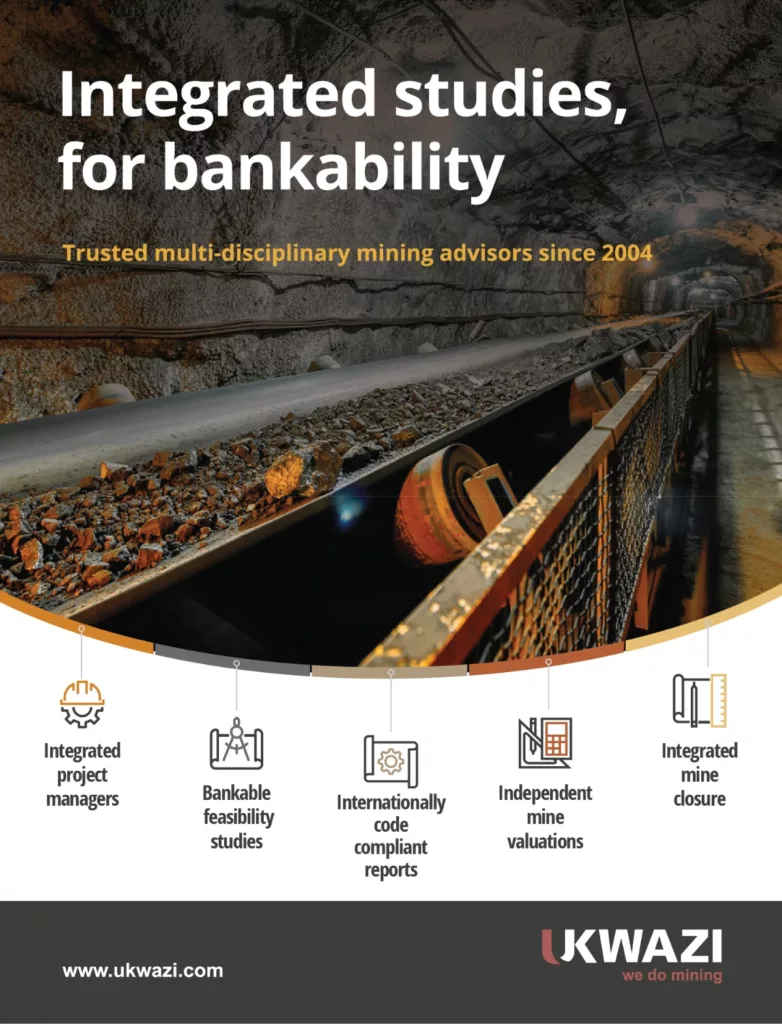
Read more

Better with bacon

Bacon is the ultimate flavour enhancer, turning even the simplest dishes into something extraordinary

Bacon-wrapped chicken breasts stuffed with sundried tomato, spinach and mozzarella

Serves two.

Ingredients

  • 2 whole chicken breasts
  • Salt and pepper to taste
  • 6 slices of bacon
  • A handful baby spinach leaves (you can use normal large spinach leaves)
  • 20g sundried tomatoes
  • 2 x 50g mozzarella sticks
  • 20ml oil
  • 40g butter
  • 1 sprig of rosemary

Method

  1. Lay out chicken breasts and butterfly them. To butterfly a chicken breast, you simply cut it in half. This helps to thin out the pieces and gives you a faster cooking time. Once you have cut your chicken breasts, season lightly with salt and pepper.
  2. Lay out some clingwrap on your counter or over your board and start the layering process. Lay down three slices of bacon side by side on the clingwrap. Place the butterflied chicken breast on top of the bacon slices.
  3. Place your spinach over the chicken, making sure to cover the whole chicken breast. Add your sundried tomatoes and lastly your mozzarella. Once all your toppings are done, start rolling, making sure all your fillings stay intact. The clingwrap will help you shape your bacon chicken roll. Set aside in the refrigerator for 30 mins.
  4. In a pan, heat up your oil, and start frying your bacon rolls. Once they start to turn a golden colour, add in your butter and rosemary and baste on a low heat for about two minutes.
  5. Place your bacon rolls onto a tray and place in the oven at 180°C to finish off. Once done, serve with a side of mash, chips or savoury rice. Once cooled and sliced, it is also a great addition to a salad.

Bacon pasta with a gingery soy cream sauce

Serves four.

Ingredients

  • 500g bacon, chopped
  • 500g pasta of choice
  • 100g red onions, diced
  • 10g fresh ginger, grated
  • 2g fresh rosemary
  • 100g cherry tomatoes
  • 50g spinach, chiffonade
  • 2g fresh basil
  • 30ml soy sauce
  • 300ml cream
  • 100ml stock (veg or chicken)
  • 100g cheese, grated (cheese depends on preference)
  • Salt and pepper to taste

Method

  1. Fry your bacon in a pan, on high heat, rendering out all the fat. Remove bacon from pan and set aside in a bowl.
  2. In another pot, heat water, until boiling. To this pot, add salt and a dash of oil. Once rapidly boiling, add in your pasta of choice and cook for roughly 7–8 minutes. Remove the pasta from heat and strain, rinsing down with water to stop the cooking process. Once pasta is rinsed, make sure to rub a bit of oil through it, to stop it sticking together.
  3. Using the remaining fat from your bacon (that you set aside earlier), on a medium heat, sauté your red onions, ginger, rosemary and cherry tomatoes. Bacon is generally salty and smoky, so do not season just yet. Once cooked off – about seven minutes – add in your spinach and fresh basil and then add your bacon pieces back in.
  4. Add in your soy sauce, let simmer for about two minutes and then add in your cream and stock. Continue to simmer for an additional five minutes, allowing the flavours to combine.
  5. Lastly, add in your cheese and season if necessary. Combine with your pasta and serve.

Text and photography | Supplied

For more information, go to grannymouse.co.za.

Read more

The appliance of pressure

The advice from all our machines is becoming a tidal wave of tension

My day starts at 4am with my coffee machine telling me what to do. She either requires me to add water, fill her bean counter, empty her tray or – if she’s feeling particularly spiteful – she’ll demand that I ‘decalcify’. “Decalcify what?” I always want to ask, but never do, either because I don’t really want to know, or because I’m concerned what it will look like to pets Gatsby and Penny who have joined me in the kitchen, hoping for a treat.

It doesn’t improve from there. The fridge reminds me, gently at first and then more urgently, if I have left it open, as if the 30 seconds it takes to take out the milk, pour it into a cup and return it, is going to have an irreparable impact on the fruit salad. And the microwave, which clearly feels like the middle child, beeps incessantly once its 30 seconds are done and until I pay it enough attention. At 4am, it’s only the old-school toaster that trusts me enough not to remind me that whatever has been trapped inside it is about to set the house aflame. And I can’t tell you how much I appreciate that.

My car unquestionably suffers from untreated anxiety. With safety being its number one concern, it nervously reminds me to fasten my seat belt before I have had the time to adjust the rearview mirror. It panics if it finds me wandering slightly out of the lane and keeps reminding me to look around me. And whereas I remember a time when the petrol light would illuminate at about 20km left to empty, so that we could play a game of ‘Will I or won’t I make it to the garage?’, it now starts the gentle ‘Maybe it’s time to consider filling up’ with 80km left to go. I swear I could drive to Polokwane with that amount in the tank!

A study should be done on the link between our machinery and our anxiety. Flashing seatbelt signs, smoke alarms and incessant notification pings – all are not-so-subtle reminders of the things that have the potential to harm us. And yet, what they neglect to factor in is the impact that they have collectively on our already stretched mental health.

A conversation with a particularly smart friend who had left his watch at work the day before went as follows: “I’m not feeling great today. I didn’t have my watch to tell me how well I slept.”

“But you said you slept!” I retorted. “Yes, but maybe I had too little REM or deep sleep. And now I’ll never know. I think that’s why I’m feeling anxious.”

My wife has her phone alarm remind her to hydrate, others have theirs vibrate when their watch decides they need to stand, and my (anxious) car tells me when it thinks I need to have a break because I have been driving for too long. If all this doesn’t push us over the edge, nothing will.

To be fair, whereas no one is impressed by the toaster that’s willing to burn the house down without so much as a hint, somewhere between that 1980s recklessness and 2025 anxious extreme must be the answer. And just to be clear, nowhere on that spectrum should any machine have the gall to tell us that we need to decalcify. No matter what it means.

Text | Howard Feldman

Photography | Powerlightss

Follow Howard Feldman on X: @HowardFeldman

Read more
Scroll to Top

Skyways delivers bespoke advertising campaigns for brands to real people. We connect the brand to the passenger at a unique moment in the sky where they have 50% higher recall. These campaigns sit across our award-winning magazines, digital, video and targeted digital solutions.

For all advertising Inquiries, contact Gill Johnston
at +27 83 455 2397 or gill@panorama.co.za