
insight for executives on the move
november 2026
Multi-faceted destinations Mbombela and Gqeberha now directly linked
Outlining the future
If we could accurately predict the future, fortune tellers would be routinely very rich and, well, they’re not (they should have seen that coming, right?). Approaching the business end of the working year before the lucky among us head off for December holidays, likely outcomes for 2027 are, at best, only hinted at for now.
On page 64, we have a beautiful picture essay about silhouettes and perhaps that’s what our planning looks like for now: some firm outlines seen against some reliable resources in the background, but with no colour or detail involved in the objects of our focus.
Here’s a suggestion: be okay with that. There are other bits and pieces that need our attention now – getting babies to sleep (page 38), trying to stay healthy (pages 44 and 56) or keeping our computers safe if the viruses are aimed there instead (page 76).
Those details aren’t often deemed as important as returnon-investment presentations or five-year personal plans, but those bigger jobs won’t get done unless we take care of the smaller stuff properly first.
Finish this year well – at your own pace.
Travel safely!
Bruce Dennill

PUBLISHER: Urs Honegger
EDITOR: Bruce Dennill
SENIOR SUB-EDITOR: Claire Rencken
SUB-EDITOR: Gina Hartoog
OPERATIONS AND PRODUCTION MANAGER: Paul Kotze
SENIOR DESIGNER: Annie Fraser
DESIGNER: Perpetua Chigumira
ADVERTISING: sales@panorama.co.za, +27 11 468 2090
NATIONAL SALES MANAGER: Gillian Johnston, +27 83 455 2397, gill@panorama.co.za
SUBSCRIPTIONS: subscriptions@panorama.co.za, Tel: 011 468 2090, Fax: 011 468 2091
Digital ezine available from skywaysmagazine.co.za
COMMENTS AND SUGGESTIONS: skyways@panorama.co.za
We value reader feedback. Please get in touch.
FINANCE: accounts@panorama.co.za
ISSN 1025-2657
Skyways magazine is published monthly and distributed via Airlink. All rights reserved. Reproduction of this magazine in whole or in part is prohibited without prior written permission of Panorama Media Corp (Pty) Ltd. Copyright © 1994-2024 Panorama Media Corp (Pty) Ltd. The views expressed in Skyways magazine are not necessarily those of Panorama Media Corp or Airlink, and the acceptance and publication of editorial and advertising material in Skyways magazine does not imply any endorsement or warranty in respect of goods or services therein described, whether by Skyways magazine or the publishers. Skyways magazine will not be held responsible for the safe return of unsolicited editorial contributions. The Editor reserves the right to edit material submitted and in appropriate cases to translate into another language. Skyways magazine reserves the right to reject any advertising or editorial material, which may not suit the standard of the publication, without reason given. Editorial material accepted for publication in Skyways becomes the property of Panorama Media Corp. Executive Briefs, Corporate Briefs, and Knowledge Profiles™ are solicited and paid for advertorial features in this magazine. Skyways magazine is published by Panorama Media Corp on behalf of Airlink.
When you lift the lid on your meal at 30,000 feet, you’re tasting the result of a partnership that began in 2009.
That’s when Siyathemba, a proudly South African in-flight caterer, first teamed up with Airlink. The mission then is the mission now: bespoke, high-quality meals made from locally sourced ingredients.
The vision is just as clear: to remain a proudly South African leader in inflight catering, recognised for excellence, innovation, food safety and service.
Airlink has been central to Siyathemba’s growth ever since. Together, they’ve developed catering that gets the details right, from presentation and freshness to the efficiency that keeps a busy schedule on time.
The partnership was tested during COVID-19, when catering was banned on all flights. Airlink kept ordering Siyathemba’s meals and handed them to passengers as they disembarked, helping the caterer survive an unprecedented crisis.
The relationship has paid off for both sides. Flying with Airlink has raised Siyathemba’s profile across the aviation and hospitality industries, strengthened its reputation for reliability and quality and put its food in front of both domestic and international travellers.
Siyathemba is now ISO 22000 accredited across all its units in Johannesburg, Cape Town and Durban, an internationally recognised standard for food safety management.
It also holds GFSI and Halaal certification, so whatever you’re served, you can trust how it was prepared.
Beyond the cabin, Siyathemba provides VIP charter catering, corporate and boardroom catering, cafeteria services and event catering. It is a Level 1 B-BBEE company and predominantly women-owned, with a firm commitment to local procurement, skills development and product innovation.
Its community work is just as consistent. Since 2012, Siyathemba has supported a children’s home in Boksburg with daily meals, an annual Christmas event and infrastructure upgrades. It has also worked with NGOs to rebuild and upgrade facilities for children and the elderly in Tembisa, Putfontein, Benoni and Brakpan.
Siyathemba has operated in Durban since 2022, and its recent expansion into Cape Town, along with new partnerships with additional airline operators, marks the next stage of its growth.
Wherever it opens a kitchen, it brings the same standard of excellence with it.
Text | Keamogetswe Masango
Photography | Supplied
For more information about Airlink’s The Link programme, go to flyairlink.com/sustainability/social-responsibility.
188 not out off 79 balls!
On Friday, 2 October 2026, under the lights at Mangaung Oval in Bloemfontein, 20-year-old Lhuan-dre Pretorius played an innings that no batter in the history of T20 cricket had played before. Turning out for the Momentum Multiply Titans against the Flexbrands Knights in the YesPlay Pro20 Cup, the left-handed batter and wicketkeeper finished unbeaten on 188 off 79 deliveries, the highest individual score ever recorded in the format, and in doing so passed the mark set by Chris Gayle.
The Titans won the toss and elected to bat first, and Pretorius wasted no time finding his rhythm. Opening alongside Sinethemba Qeshile, he set the tone from the first overs, and of the 112 runs the pair put on together, 98 came from his bat. It was an opening stand that gave the innings its platform, and it was only the beginning of what was to come.
From there, the in-form youngster took centre stage while the rest of the Titans batting order played a supporting role. He reached his half-century in just 24 balls, needed only 16 more to bring up his hundred and took another 18 to reach 150. Each milestone arrived faster than the last, and the innings never lost its tempo. By the time it was over, Pretorius had struck
15 fours and 13 sixes, which means 138 of his 188 runs came in boundaries, all at a strike rate of 237.97.
The numbers placed him in rare company. Gayle’s celebrated 175 came off 66 balls, with 17 sixes and 13 fours, and had stood as the benchmark for the format. Pretorius went beyond it by 13 runs, announcing himself not simply as a promising talent but as the name now sitting at the top of the T20 record books.
His brilliance carried the Titans to a formidable 267, leaving the Knights a daunting target of 268 to win. The chase never recovered from the scale of that total, and the Titans completed a commanding 124-run victory, a result worthy of the innings that shaped it.
Lhuan-dre Pretorius is a Titan and a Sky Blue, and on 2 October 2026, he showed the cricketing world exactly what that means. An innings like this will be spoken about for as long as the game is played.
Text and photography | Supplied
Beautiful lodge offers wildlife thrills for new visitors and safari regulars
Seated at the window of the Cessna Grand Caravan, the landscape below was lush and green, pointing toward the influx of rain that Botswana had experienced. Landing at Khwai private airstrip, the next mode of transport is waiting – a sleek blue helicopter!
Due to the excess of water making getting to the lodge rather tricky, a road transfer might involve getting stuck in the mud, which would not be a fortuitous start to the trip. Taking off in a Helicopter Horizons Robinson 44, the 10-minute hop is over way too soon, and commercial pilot Brett lands the chopper on a grassy patch with great expertise.
Guide NT is at hand next to the branded safari vehicle to take charge of the drive to camp, which is another 10 minutes, give or take, depending on what is spotted along the way. As the entrance to camp gets closer, singing is audible and cool refresher towels are handed out to wipe off any dust or mud that could have found its way onto your person.
An interest takes flight

The recently overhauled Sediba Sa Rona ticks all the right boxes – environmentally sound, eco-friendly and luxurious. Set on the banks of the Khwai River, the original lodge footprint remained during the rebuild, which highlights the company’s commitment to sustainable development.
Fifteen safari suites offer dreamy spaces, each one coming with a bedroom, bathroom and outside veranda. Spending time outdoors on the private deck is a wonderful way to cherish nature and can be enjoyed while attempting to distinguish the sights and sounds of the creatures that inhabit the aquatic channel flowing in front of the suites. Between the water hyacinth and lily pads, a shape is gliding along. Right next to it, white and purple water lilies hide the clandestine outline of its identification. Upon closer inspection, and after checking with NT, it is identified as a male African pygmy goose. He is striking, with a bright yellow bill.
While meeting fellow guests Mindy, Bianca and Mary Beth for lunch, a few unwelcome visitors try their luck with the delicious offerings from chefs KC and OT. A group of tree squirrels are hoping to be inconspicuous by running under the tables, and a couple of vervet monkeys are dangling from the tree branches, their goal to pilfer whatever they can lay their hands on. A bird flits across the room and connects with the canvas, startling Bianca. Admittedly, she has not yet come to fully appreciate the winged locals and has been rather fearful of them.
The joy of seeing her come to grips with the likes of white-faced whistling ducks flying in formation at sunset, a cattle egret balanced atop the back of a zebra foal, a Bradfield’s hornbill with his white belly and orange bill sitting on a tree branch and an African hoopoe having a sand bath in the middle of the road is truly heartwarming. Having conquered her fear of birds over the course of a couple of days, she announces that her all-time favourite is the stunning lilac-breasted roller with its iridescent plumage. She even takes a selfie with one perched in a tree behind her.
Open secrets

With the afternoon’s game drive introducing the fantastic prospect of discovering what wildlife inhabits the Khwai concession, NT whispers that a leopard has been spotted. By keeping mum about it, he is trying not to let the cat out of the bag. Yet. But he’s far too excited and feels the need to disclose why he will be driving faster than he usually does. Turning towards us, he smiles from ear to ear, divulging that the most requested target of them all has been found.
It is crystal clear where she is – there are safari vehicles everywhere, some trying their utmost to get as close as possible to where the rosetted beauty is lying fast asleep, draped across a branch, almost levitating. Patience is a virtue when it comes to wildlife sightings, and as luck would have it – or rather lack of it – the cat is facing the other way. Is it worth going around to the other side? Someone points out that everyone is looking towards the ground. NT cuts the engine. We watch. We wait. It’s her cub! Walking through the thicket, he effortlessly – as only a leopard can do – ascends the tree to greet his mom. A furtive head rub later, he too manages to drape himself over a branch a few safe metres away from her.
The morning game drive does not disappoint. A large hyena is having a siesta on the side of the road, possibly an indication that there are more hyenas in the vicinity. NT veers left, and there they are – a clan ranging in ages from adult to sub-adult to cubs of various sizes. These misunderstood scavengers are inherently curious, especially the youngsters. The smallest of them all scurries over with a fair amount of caution to take a closer look at us. He stops and stares. He has a cute face and the most endearing blue-brown eyes. His ears are like miniature satellite dishes, and before he gets too used to the visitors, NT decides it’s time to go. The cub hurries back to the safety of his siblings, where he will probably spend the day in and around the den site, waiting for their mother to return with something for supper.
Text and photography | Heléne Ramackers
For more information or to book a stay, go to desertdelta.com.
https://desertdelta.com

Lowveld lodge takes unexpected visual inspiration from its surroundings
Up ahead, in the middle of the dirt road, a huge elephant bull swaggers straight towards the vehicle. His temporal gland is streaming and urine is dribbling down his back leg. This is a bull elephant in musth, a hormonal condition known to cause highly increased levels of aggression and unpredictability.
Ranger Ryan Jack has been a guide at Royal Malewane for 25 years, so his reassurance is something to be implicitly trusted. “We’re fine as long as we give him his space,” Jack explains as the elephant turns to face us. “If we were now to start making a lot of noise by shouting, clapping our hands and revving the engine, we would make him excited and that is something we don’t want to do.”
Jack and Mumps Mathonsi, who has been tracking wild animals for over 30 years, exchange a few words. “ I think he is heading to that large torchwood tree.” Jack gestures to a tall tree just up ahead of us. “There might be some fruit lying on the ground that he is after.”
Sure enough, the bull makes a beeline for the burly base of the torchwood and gently moves the tip of his trunk over the soil. Not finding any titbits, he rests his forehead against the bark and starts pushing hard. His efforts pay off. After three or four attempts, the tree relents and, with the canopy shaking, a brief shower of fruit rains down on the ground.
It is the first morning at Masiya’s Camp, a tented camp located in the Greater Kruger National Park. This, though, is unlike most tented camps.
Bold colours, daring decor and an eclectic creative mix of African-European style constitute the immaculate tapestry of the extraordinary space with its bespoke vintage furniture, contemporary art, Persian rugs and sassy decor.
The camp is named after the legendary Wilson Masiya, who, with his family, fled his home in war-torn Mozambique on foot through the Kruger Park. He subsequently returned to his home to escort other members of his community to safety. Masiya found employment as a tracker and became the first ever Master Tracker in the Greater Kruger National Park until his untimely passing in 2015.
Sky-high expectations
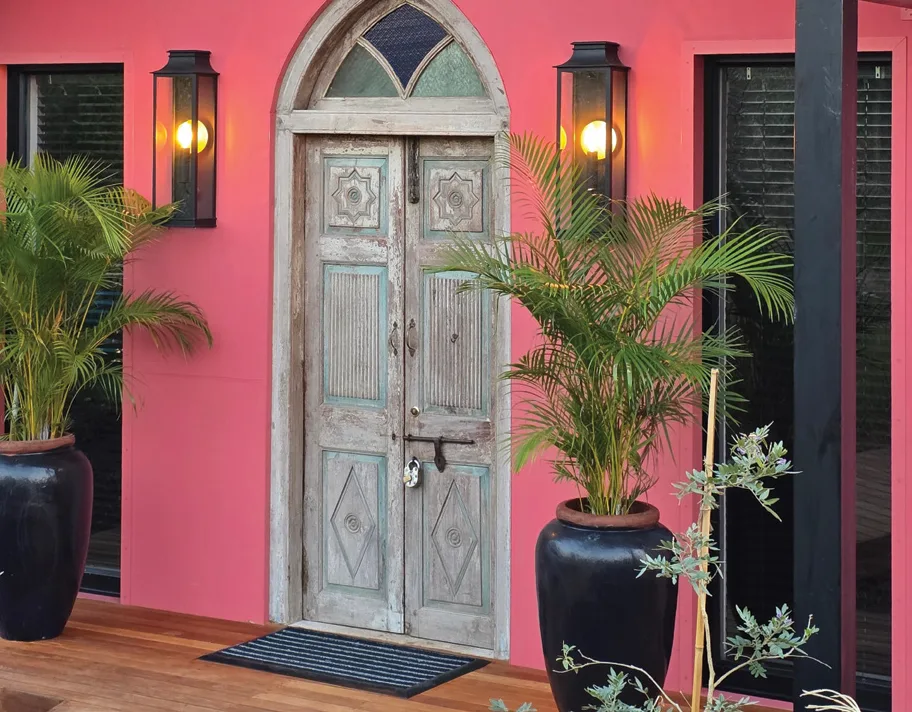
Masiya’s Camp comprises six ultra-luxury, vastly spacious, bright pink canvas-draped suites. A beautiful pair of Indian handcrafted wooden doors open up into the living area, where bold colours and tailored furniture mix with a sophisticated eye for detail. The bathroom and bedroom are on opposite ends, while the huge deck outside looks out over the bush and offers a heated plunge pool, soft cushioned sofa and romantic sala.
Upon first blush, the bright pink-coloured canvas walls appear almost brazenly out of place. However, when waking the following morning, it suddenly all makes sense. It is still semi-dark. The sky overhead is a muted lavender in colour, but, in the distance, a narrow band of shockingly bright fuchsia-pink stretches across the horizon. The Belt of Venus. And with a jolt, it becomes clear that is the theme of the camp – a glimpse of the intangible eternity of life.
Later that afternoon, there is another example of nature’s eternal cycle. That of life and death. A large herd of buffalo is traversing the sandy road, kicking up dust. Unbeknownst to them, they are moving in the direction where a number of lionesses have been seen earlier that day. Mathonsi uses hand signals to steer Jack offroad in a bid to go around the herd and track the pride, which, luckily, is quite nearby.
The lionesses have heard the bellowing of the herd and are up and alert. After about 20 minutes, the first buffalo appear. The lionesses have slunk away in different directions and are lying low.
Carnivore crescendo
As the minutes go by, more and more buffalo appear. Half an hour later, the car is surrounded by hundreds of the huge animals as they slowly move along. Just visible is the tawny fur of one lioness behind a thick shrub some 30m ahead. Jack points to a cute calf with a light-coloured coat staying close to its mother. “The best chance for these lions to successfully hunt is if they somehow manage to separate that young calf from its mother and the rest of the herd,” he says.
But the herd sticks together and it is now almost dark. The opportunity is seemingly lost.
Then, a short time later, while the vehicle is following a beautiful female leopard through some tall grass, there is a huge commotion to the east, where the lions were. A stampede of hooves, deep powerful grunts, snorts and terrified bellows pierce the clear, starry night sky.
By the time it is morning, we come across a few hooded vultures picking at a few scant remains, including a scrap of light fuzzy hide that used to coat a young buffalo calf. There is sadness for a creature seen alive only yesterday, but these are the ways of the wild.
We leave Masiya’s Camp with a heavy heart the following day, closing the magnificent hand-carved doors to the suite and walking back along the boardwalk to the lounge.
Text and photography | Fransje van Riel
For more information or to book a stay, go to theroyalportfolio.com.

Luxury lodge close to Johannesburg and Pretoria combines adventure with repose
For even the casual twitcher, the drive from Johannesburg to Bela Bela – along a highway all the way – involves wonderful sightings: in this instance herons, bataleur eagles and even a secretary bird! And a break at the Toeka Se Dae farmstall is a fascinatingly eclectic experience, not least when overhearing a patron at the restaurant ordering “bacon with extra fat” without a hint of humour.
Guests at Safari Plains do most of their safari drives in the Mabula Private Game Reserve, but the lodge has its own gate on a neighbouring game farm, and the drive from there to the entrance is satisfyingly long and winding – a metaphor for the profound pleasure of leaving work and stress behind and venturing deep into nature. The lodge blends into its surroundings until you’re right on top of it despite having a cavernous triple-volume bar-and-lounge and (separate) dining areas decorated in an attractive way that combines sumptuousness and ambition with disciplined simplicity. One example of this is the huge wall instalment behind the bar – impossible to ignore and yet comprising only three or four elements (and none of them the usual ‘bush chic’ wall hangings, sculptures and bric-a-brac).
The lavish Luxury Suites extend these sensibilities at a personal level. Outside, there is a short, raised boardwalk to a daybed on a shaded platform, with a cosy loveseat swing alongside the safari tent’s door. Inside, there is intelligent, generous use of space around a king-size bed in the centre.
Enormous… and absent
For the first game drive, some guests would like to see elephants, so the vehicle is aimed at a sector of the Mabula reserve where they are thought to be. Crossing from the Safari Plains side involves going through a gate, where there is a quick stop to carefully spray the tyres and get all passengers to dip their shoe soles in a prepared mixture – all part of preventing the spread of foot-and-mouth disease (visitors’ personal vehicles are also sprayed on arrival).
Elephants, the largest land animals on Earth, can be coquettishly coy, so they turn out not to be on the initial programme. But a spectacular selection of wildlife not being officially looked for does show up, most memorably a couple of unfeasibly massive eland bulls (a tonne if they’re a kilogram); a small pack of wild dogs skittering across a road and into long grass; a bustling porcupine; and a bushbaby with somewhere else to be.
At dinner, the armchairs around the tables make you feel like a lord at a royal banquet, with service to match – the four-course meal is ordered before leaving for the drive, so the dishes are ready to go at your whim. Ordering a cocktail not on the official list is not a problem, as the barman quickly does some research and improvises brilliantly with what’s available. The food for the initial meal – carpaccio, lamb shank and crème caramel (all of which sound absolutely typical for such a venue) – is astoundingly good. Chef Aubrey and his team (or Chef Judith and hers, depending on shifts) are so notably gifted that you want to shake the artist’s hand rather than just have your compliments relayed by your server. After dessert, you can finish your drink alongside a roaring fire lit by the multi-tasking waiter as the last of your cares fall away.
Hushed happiness
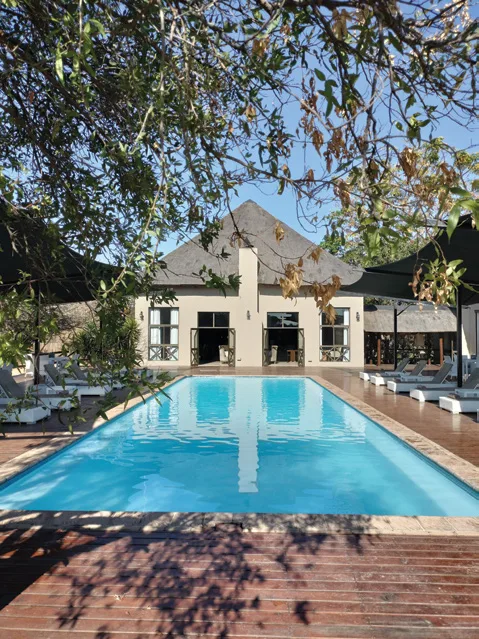
After a morning drive and a generous breakfast, there is an opportunity for downtime. It’s extraordinarily quiet, with just a few bird calls adorning a thick, heavy blanket of silence. The choice of spaces to relax around the suite provides every opportunity to just lie down and read or snooze, which may take some initial persuasion for those trained to fill every moment with messages, meetings and deadlines.
On the next drive, there is no agenda, so we head for a quiet corner of the reserve to avoid the heavier tourist traffic and see what appears, or doesn’t. As it happens, it’s an extravaganza – a dozen interesting bird species, a handsome rhino and, meandering through a hillside thicket, a group of elephants! They’re all bulls, including a youngster curious enough to encourage our guide to move off. The return route includes stopping for an unperturbed brown hyena sniffing through the undergrowth.
The following morning, there is a specific focus on the drive again, reintroducing the potential for failure. And given that the target is a lone black rhino, it’s not surprising that we do fail – but we have a glorious time in nature with a variety of birds and a calm, philosophical eland that seems to be considering our behaviour as much as we are his.
There is a repeat of the previous day’s lazy schedule. The lodge is set up to support a lifestyle of leisure: drive, eat, rest, eat, rest, drive, eat, rest and repeat. That this still somehow leaves you feeling tired is probably down to your body accepting the fact that, if only for a limited time, there is, for once, no need to be in charge of anything.
A natural narrative

It’s not clear if wildlife takes pleasure from confounding travellers on safari, but, when returning to the scene of the previous evening’s sighting, the elephants are gone. Additionally, they’ve left a parting gift: a dense thorn tree pushed over into the road at an angle that makes progress impossible. Ultimately, if a creature larger than a safari vehicle wants to put a hitch in the plans of those in the safari vehicle, the former is always going to win.
Dinner offers variety in a buffet, meaning no plating masterpieces. The food is no less superb, with (among much else) fillet medallions so tender they fall apart if you so much as glare at them and glazed carrots that may as well be dessert.
With no clouds, the night sky is so dark and clear that you can see the bright smudge of the Milky Way even while standing in the brightly lit pool area. That same area has further appeal in a large mob of banded mongooses that chirrup away in a satisfied manner underneath the deck where they enjoy shelter and security. During the day, they venture out to sip from the pool and sunbathe in messy comfort, draped over each other while one or two alert individuals keep an eye on human pedestrian traffic.
A final drive sees our guide reach a coveted milestone in his bird sightings list, ensuring a fittingly celebratory end to a remarkable stay.
Text | Bruce Dennill
Photography | Bruce Dennill and supplied
For more information or to book a stay, go to safariplains.co.za.

South Atlantic island has been kept safe by a number of forts over the centuries
St Helena is a tiny island situated far from pretty much anywhere. It’s been a British Overseas Territory since 1762 and, at its most populated, homed not quite 10,000 people in 1901. The island was used by Portuguese sailors as a water replenishment station and famously hosted a French exile and Boer War prisoners of war.
The 122km 2 territory has more disused cannon barrels than one can count and had no less than five forts, with multiple gun battery sites perched high on perilous cliffs. Early occupiers of the island needed to protect precious water supplies from possible invaders, while under British occupation there was a need to guard Napoleon Bonaparte during his six years on the island. During the latter part of the 18th Century, the British Empire guarded itself against threats to the monarchy with ‘fortification mania’ and eventually withdrew their military forces in 1906 after the dust from the Anglo-Boer War had settled.
The largest of the forts is High Knoll Fort, constructed in 1765 by the British to protect the newly claimed refreshment station. It was extended when Napoleon arrived, to prevent him from trying to escape while acting as a deterrent for anyone attempting to rescue the former emperor of France. The fort served as a temporary accommodation for some of the Boer War prisoners and later functioned as an animal quarantine station.
Strongholds in the city
The capital of St Helena Island has fewer than 1,000 occupants now. Many of the buildings in the main streets, which line a small valley, are Georgian in architecture and hark back to days when the Empire was mighty. Near the small harbour road, there is the broad stone wall of the James Fort, which was built soon after the English East India Company was given the charter to use the island in 1659. The wall is now used as a pathway, leading over the main gate to the town from the sea. The wall peters out near the landmark Jacob’s Ladder – a formidable stairway connecting the lower and upper parts of Jamestown. Tucked inside the wall are the administrative buildings and archives for the island. Alongside is the small but lush and well-tended Castle Garden.
At the top of Jacob’s Ladder you’ll find the Ladder Hill Fort, with its impressively long wall housing the island’s emergency services. Near the entrance you’ll find an excellent viewing spot to consider the harbour area and to ponder a descent of the 699 steps leading downwards.
Dotted around the island there are occasional cannons, gun mountings and small fortified walls to protect the island from approaching vessels. Some of these lookout or defensive spots are best seen from the sea, and there are several options for viewing the island from the water – simple boat rides, fishing expeditions and snorkelling trips.
From the sea, the valley wall of the Lemon Valley Fort is visible, with dry stonework walls to protect the island from invaders. The constructions were ordered after an attempted invasion by the Dutch in the late 1600s, and the space was repurposed in the mid-19th Century to temporarily house liberated slaves.
For the reader who’s counting, fort number five was the High Peak Fort, situated near the highest point on the island, Diana’s Peak. It’s reportedly been destroyed over time, with no ruins for a tourist to visit.
Road warriors
A final thought on the defenders of St Helena – you’ll be amazed at the number of Land Rover Defenders roaming the island. Many are owned by government agencies, as denoted by their SHG (St Helena Government) number plates, but many are in private use, maintained by their owners or one of the few mechanics on the island. Most of them are of the original shape and style of Defender and are in various states of restoration (or not). These vehicles are there to work, not to be pretty or to negotiate pavement parking at a fancy shopping mall. They cart building equipment, gardening supplies, people and perhaps a few tourists around the narrow roads leading in and out of the valleys. There’s even a rumour that the island’s residents hosted Land Rover Day in Decembers past.
Text and photography | Clare Manicom
For more information, go to livethejourney.co.za.
Getting children into good sleeping patterns means taking everyone’s needs into account
Building good foundations for sleep is important at a young age when children are more accepting of boundaries. Parents and the household in general can run more smoothly when everything gels well.
South Africa does not have a controlling body to govern safe sleep, but the American Academy of Paediatrics (AAP) recommends that infants sleep in their parents’ room until they are one year old to guard against sudden infant death syndrome (SIDS). However, they have since backtracked this statement to make way for further research, so the choice still lies with parents.
When room sharing, make it easy, comfortable and effortless. Move the cot furthest away from the mother’s side of the bed, potentially even to the foot of the bed. Use white noise so that when coming to bed later during the night, the baby is not disturbed. Make sure the bedroom is dark enough so that baby will not wake too early in the morning and also not nap too briefly during the day.
Babies thrive in their own environment. A prepared nursery should be used if effort has been put into creating it. Babies are likely to sleep longer stretches and be less restless, as there are far less disturbances than when room sharing. If a baby is still feeding during the night, then feed, change the nappy and place them back into the cot for the remainder of the night.
Always make sure that, no matter where your baby is sleeping, they are in a safe space. This means that there should be no pillows or blankets in the cot. Preferably remove cot bumpers. Mobiles and overhanging items should also not be reachable. As baby grows older, they will learn to stand up in their cots and could start to pull at these items. Observe the ‘ABCs of sleep’: A = Alone sleep; B = Back sleep; and C = Cot sleep.
Encourage the next step
Toddlers are a different scenario. Toddlers have big emotions and will argue about not getting their way. Encourage toddlers to sleep in their own room. Independent sleep is important. Make their rooms fun and reward them when they are good. However, also remember that disciplining toddlers is important, even when it comes to sleep.
They need to understand the rules of the house and when it is time to go to bed. If they were room sharing and it is now time to move them, speak to them. Help them to understand that this not because of something they have done, but rather that they are growing up and need their own space.
Many times, it is more convincing when they have a younger sibling and they are encouraged to be the big brother or sister, leading by making the move. Good parents want what is best for their families. Life so much simpler when children are in a good routine and sleep goes well.
Text | Jolandi Becker
Photography | People
Jolandi Becker is Managing Director at Good Night Baby. For more information, go to goodnightbaby.co.za.
Skin care while travelling requires an awareness of what impact different contexts along the way can have
While air travel can be exciting and is often something to look forward to, its impact on the skin is far less enjoyable. Between cabin pressure changes, low humidity and recycled air, flying creates a dehydrating environment for the skin. The earliest and most visible effects often show up in the most vulnerable areas of the face: the delicate skin around the nose and lips.
These areas are already more vulnerable than the rest of the face, but in-flight conditions intensify everything, stripping moisture, weakening the skin barrier and leaving behind tightness, flaking and irritation that can linger long after landing.
The combination of dry air and constant movement during travel makes matters worse, with frequent talking, drinking, wiping and even simple facial movement during long flights all increasing friction in already compromised areas.
Unlike the rest of the face, the lips do not contain oil glands, making them highly dependent on external moisture. The skin around the nostrils is similarly delicate and constantly exposed to airflow, tissue use and environmental changes. On flights, this vulnerability is amplified. Recycled cabin air reduces ambient moisture, while air-conditioning systems further dry out the skin surface. The result is often immediate discomfort: tight lips, peeling, redness around the nose and a compromised skin barrier.
People often underestimate how quickly dehydration happens in-flight. By the time you feel dryness, the skin barrier has already been affected.
A specific scenario
While many travellers reach for standard lip balms, these often provide only temporary relief and do not address the combined needs of the nose and lip area, especially during prolonged or repeated travel. This is where specialist care becomes important.
It is not just about moisturising. The goal is to restore and protect the skin barrier in areas that are constantly exposed to friction, dryness and environmental stress, which is exactly what happens during travel. In these cases, a targeted product can be particularly helpful – one that is formulated for the care and repair of the nose and lips across different needs and levels of sensitivity.
Different travellers experience these effects in different ways, which is why supportive care should be tailored to the condition of the skin rather than the journey alone. For those experiencing general in-flight dryness or irritation around the nose and lips, barrier support products can help ease discomfort while supporting the skin’s natural recovery process during and after travel.
In situations where the skin is more sensitive, for example, during acne treatments, where dryness and cracking of the lips are common, lighter formulations are often better suited, particularly for long periods of travel when the skin barrier is already under strain.
Families travelling with young children may also need to consider how quickly irritation can develop in delicate skin exposed to tears, congestion or drooling. In these cases, especially for infants from three months and older, paediatric products offer gentle, age-appropriate barrier support to help maintain comfort and avoid travel-related stress.
Ultimately, in-flight skincare does not need to be complicated, but it does need to be intentional. The key is consistency. Protect the skin before it becomes uncomfortable, support it during exposure and restore it afterwards. That is what keeps the barrier healthy, even when you are travelling frequently.
Text | Lauren Knight
Photography | PanuShot
Dr Lauren Knight is a dermatologist who specialises in medical, surgical and cosmetic dermatology. For more information, go to Ivohealth.co.za.
Classic tea has a number of advantages beyond easy availability and versatility
When most people think of ‘tea’, they picture a classic cup of black tea that many grew up drinking, brewed in the morning or enjoyed during afternoon catch-ups. Black tea has been one of the preferred hot beverages of choice in South Africa for generations, loved for its taste, affordability and accessibility. However, because it is such a part of everyday habits, its health benefits are often overlooked.
Black tea contains flavonoids and theaflavins, which are antioxidant compounds that help protect the body’s cells from oxidative stress. Research has associated regular black tea consumption, as part of a balanced lifestyle, with supporting healthy blood vessels and cardiovascular wellness.
Unlike coffee, black tea provides moderate caffeine balanced with an amino acid called L-theanine. This pairing promotes alertness while supporting calm, focused concentration. It’s a steady kind of energy – mental clarity without the spikes and crashes. That makes black tea ideal for workdays, studying or even that mid-afternoon slump.
Good in every situation
Natural compounds may also assist with digestive comfort and gut balance. Importantly, black tea offers these benefits without added sugars, syrups or artificial ingredients, which makes it a simple and accessible choice for everyday wellness.
Black tea is incredibly versatile, as it can be enjoyed plain, with milk, with lemon, iced or even incorporated into recipes. It pairs well with meals, supports hydration and fits seamlessly into daily routines.
It’s true that many people don’t always reach for black tea, given the known and appreciated qualities of green tea, chamomile and rooibos. But it is important to recognise the wide-ranging health benefits of the former and, in doing so, consider making a conscious effort to include it more regularly for focus, heart health and digestive support – benefits that are about both comfort and body function.
Text | Mbali Mapholi
Photography | New Africa
Mbali Mapholi is a Specialist Dietitian. For more information, go to joekels.co.za.
Research aimed at stopping mosquitoes from transmitting malaria could make an enormous difference to infection rates in the future
Across Africa, scientists are exploring new tools to reduce malaria, a disease that continues to claim hundreds of thousands of lives each year. At the 39th African Union Summit in Ethiopia, African heads of state and governments issued a unified call for a new era of malaria financing, warning that progress is at risk. The 2025 Africa Malaria Progress Report shows that AU member states accounted for 270 million malaria cases in 2024 – 96% of the global total. It cautions that without urgent and sustained investment, the continent could lose decades of hard-won gains.
The consequences of inaction have serious costs. The report indicated that a projected 30% reduction in funding could result in 640 million fewer insecticide-treated nets, 146 million additional malaria cases and nearly 400,000 more deaths – three-quarters of them children under five. Economically, this would translate into an estimated $37 billion loss in GDP by 2030.
In response to these challenges, African researchers are studying complementary and innovative approaches to strengthen malaria control. HE Samia Suluhu Hassan, President of the United Republic of Tanzania, highlighted the country’s investments in research and innovation: “Our approach has spanned the full spectrum of what it takes to beat this disease. Tanzania has invested in world-class research where our scientists are working at the frontier of new technologies. One of them is gene drive, an innovative approach that aims to ensure mosquitoes can no longer transmit the malaria parasite. This is African science, conducted by African researchers, addressing an African challenge.”
Targeted focus
Gene drive is a naturally occurring biological process that is being harnessed into the technology. In living organisms, gene drive increases the chance of inheritance of certain genes or traits. It is being researched to be a complementary tool to fight malaria in Africa, working alongside bed nets, insecticides, drugs and vaccines. By biasing the rate of inheritance of certain genes from one generation to another, gene drive can spread a modification to be passed on to the mosquito population.
There are two gene drive strategies currently under investigation among various research teams in the world: either to reduce the number of malaria-carrying mosquitoes or to stop the parasite from infecting the mosquitoes. Using the first approach, it is important to note that not all mosquito species are targeted – only the four Anopheles mosquito species are the main vectors of malaria in Africa.
Gene drive is not the same as genetically modified crops. While both involve genetics, gene drive research in malaria is focused on mosquito populations – not crops, not humans, and not livestock. Gene drive mosquitoes are being researched in controlled laboratory settings in Europe and the United States. There are currently no gene drive mosquitoes in contained laboratories in Africa, and none have been released in the wild.
There are more than 3,500 species of mosquitoes worldwide. Only Anopheles mosquitoes can transmit malaria – and then only three or four species. Gene drive research targets specific malaria-carrying species: An. coluzzii, An. gambiae, An. Arabiensis and An. funestus. The goal is not to eliminate all mosquitoes but to reduce the population of those species enough to stop the transmission of the disease.
Careful progress
Safety is the priority. Studies are performed in laboratories and insectaries to ensure the technology is safe and effective. Gene drive research follows international and national regulations, ethical review processes and international guidance. Before any future use, extensive testing, risk assessment, submissions of regulatory dossiers and community engagement would be required. All phases of the work, anywhere in the world, need to comply with the biosafety laws of the countries where research is conducted.
No release can take place without regulatory approval. At present, all gene drive research takes place in controlled conditions in the lab. It’s hoped that field trials can be conducted by 2030 in a malaria-endemic African country.
Malaria is the main cause of deaths for children under five and a huge economic burden on the countries where it is endemic. Despite tools such as insecticide-treated nets, indoor spraying, vaccines and medicines, malaria cases remain high. Insecticide resistance in mosquitoes and drug resistance in parasites are increasing concerns because they are rendering the current tools ineffective.
A new study published in the journal Nature projects that climate change could cause an additional 500,000 deaths and 123 million clinical cases of malaria in Africa over the next 25 years (by 2050), even if current global climate pledges are met. Researchers are exploring gene drive as a potential complementary tool, not a replacement, to strengthen existing malaria control efforts.
Science communication is not separate from public health: it is part of it. Clear, accessible information helps communities, policymakers and journalists make informed decisions.
When people understand how research works, how safety is assessed and who is involved, public dialogue becomes stronger and more constructive.
Text | Jonathan Kayondo
Photography | frank60
Dr Jonathan Kayondo is a Principal Investigator for Target Malaria. For more information, go to targetmalaria.org.
Aesthetic injectable treatments are on the rise in South Africa
South Africa needs no introduction to the seasoned traveller. Its wildlife is unrivalled, its wines are world-class and its coastline is extraordinary. Now, a growing number of international visitors are discovering another compelling reason to make the trip: South Africa has emerged as one of the world’s foremost destinations for aesthetic injectable treatments.
What sets it apart begins with regulation. South Africa operates one of the most stringent and robust regulatory frameworks for injectable aesthetics globally. Only qualified medical doctors and dentists registered with the Health Professions Council of South Africa (HPCSA) are legally permitted to purchase and administer injectables. Products must carry approval from SAHPRA, the South African Health Products Regulatory Authority, an authority increasingly recognised for setting international standards in patient safety. Against a global backdrop of rising illegal practice and unregulated practitioners, South Africa has drawn an unambiguous line: unregistered practice is a criminal offence. The result is an industry defined by accountability, clinical rigour and genuine professional excellence.
South Africa’s practitioners in this area are fully qualified medical doctors and dentists, trained to the highest academic and clinical standards, who have chosen to specialise in aesthetic treatments. That foundation of anatomy, pharmacology and patient≈care is what defines them in a global market where standards remain dangerously inconsistent.
Small changes
It is within this framework that South Africa’s practitioners have developed an approach to injectable aesthetics that is drawing global attention: advanced minimalism or the understanding that the most sophisticated result is one that is entirely imperceptible. Not a transformation, but a refinement. After years of over-processed outcomes driven as much by irresponsible patient demand as by poor clinical judgement, the global conversation has shifted. Patients now want subtle, precise, deeply personalised work targeting specific concerns: hollowing, laxity or fine lines. They want to look more rested, more vital, more themselves. South Africa’s leading practitioners have embraced this standard and helped define it.
South Africa’s aesthetic market reflects the confidence the world is placing in it. Valued at over R3.6 billion in 2024 and projected to reach R9.2 billion by 2033. It’s yet another reason to visit the country – or stay a little longer.
Text | Shahra Sattar
Photography | Bernardo Emanuelle
Dr Shahra Sattar is the founder of Eternal You. For more information, go to eternalyou.co.za.

The world’s ecosystems are filled with fabulous, fantastic life forms
Take a look at a Mary River turtle and it’s plain to see why they used to be so popular as pets. Tufts of grassy-green algae on their heads give them a look that’s more ‘aged punk rocker’ than regular reptile. These freshwater turtles are endemic to the Mary River in Queensland, Australia, where, 60 years ago, their nests were raided for the pet trade.
Thumb-sized hatchlings were sold in pet shops in Adelaide, Brisbane, Melbourne and Sydney as ‘saw-shelled snappers’ or ‘penny turtles’. The trade depleted the turtles in the wild and pushed the species towards extinction.
Despite being one of Australia’s largest freshwater turtles, with 40cm-long shells, scientists had never seen them in the wild. It was only the pet turtles that brought the species to the attention of Australian herpetologist John Cann. He spent most of the 1980s trying to track down their natural range and searched all over northern Australia until eventually tracing them to the Mary River. In 1994, he named them as a new species: Elusor macrurus.
As well as their punky hairdo, Mary River turtles have a distinctly long tail, which in males can be almost two-thirds of their entire shell length. They also have big, webbed feet for fast swimming and a pair of fleshy, finger-like projections under their chin, presumably for sensing prey.
Cann also named another species from Queensland, the Fitzroy River turtle, which shares an unusual way of breathing with the Mary River turtle. As well as using lungs, like most other reptiles, these river turtles can also do what’s known as ‘cloacal breathing’ – in other words, they can absorb oxygen through their hind openings, or cloacas, orifices normally reserved for reproduction and excretion. Specialised glands inside their cloacas allow these river turtles to stay fully submerged for three days at a time.
Further studies revealed the Mary River turtles are highly evolutionarily distinct. Their ancestors diverged from all other living species of turtles around 40 million years ago. This is why, in 2018, the species was added to a list compiled by the Zoological Society of London (ZSL) of ‘Evolutionarily Distinct and Globally Endangered’, or EDGE, reptile species. ZSL has published EDGE lists for various groups of animals, including amphibians, mammals, birds and corals, all of the species that are not only at risk of extinction, but also have few close living relatives on the tree of life.
On the reptilian EDGE list are such oddities as the Madagascar blind snake, which looks like a pink wriggling worm; the minute leaf chameleon, which barely reaches 3.5cm (1.4 inches) in length; and Williams’ dwarf gecko from the forests of Tanzania, which, like the Mary River turtle, has been overexploited for the pet trade because of its stunning turquoise blue colour. If any of these species go extinct, a huge amount of irreplaceable evolutionary history would be lost with them.
There’s no more pet trade in Mary River turtles, but it will take time for their numbers to recover, because they don’t reach sexual maturity until they’re at least 25 years old.
Photography | Nature
To serve customers, solve problems and grow, South African businesses need people who are ready to learn and contribute. More than five million young South Africans have already raised their hands to do exactly that. Bridging the distance between this talent and the employers who need it is where SA Youth comes in.
As South Africa’s largest online youth recruitment platform, SA Youth connects employers to more than five million registered young work-seekers. Businesses can use its always-on, self-service technology to match, assess and screen candidates more efficiently, gaining insight that extends beyond a traditional CV. Because the platform is data-free for young work-seekers and backed by dedicated employer support, it enables companies to discover and recruit entry-level talent wherever they operate.
Young talent is a business growth opportunity
Young South Africans aged 18–35 represent a valuable, motivated talent pool, offering businesses fresh perspectives, digital fluency and learnable skills that can be unlocked through meaningful entry-level opportunities.
Entry-level hiring is a workforce strategy
Rather than treating entry-level recruitment as a response to today’s vacancies alone, businesses can use it to build capability around their systems, service standards and growth priorities. Over time, that approach creates a pipeline of people equipped to progress into permanent, specialist and leadership roles.
Better information leads to better hiring
A traditional CV tells only part of a candidate’s story. Through the SA Youth CV, employers can consider formal and informal experience alongside behavioural screeners, problem-solving assessments, candidate voice notes and customised questions that reveal how an applicant thinks, communicates and approaches work.
According to Harambee Youth Employment Accelerator’s Breaking Barriers report, employers using signals such as behavioural screeners achieved up to a 50% increase in hires, together with a 5-6% increase in the inclusion of young people entering their first formal role. Better evidence makes capable entry-level talent more visible and supports stronger hiring decisions.
Recruit nationally. Hire for local growth
Taken together, the case for employers is compelling. South Africa has a large, ready pool of young talent, and SA Youth provides the insight, reach and support to turn that potential into business capability. Using the platform allows companies to meet immediate staffing needs with greater confidence while building an adaptable workforce able to serve customers, strengthen operations and support future growth.
Recruit on SA Youth at sayouth.co.za. It is fast to post, easy to use and built to help employers find the talent their businesses need today and tomorrow.
Text and photography | Supplied
Incorporating practical life skills into traditional school teaching can set up young learners for success
Resilience – the ability to adapt, recover and grow through challenge – is an essential life skill for today’s young people. With pressures ranging from academics to social and emotional demands, schools and families play a key role in nurturing this strength from an early age.
Across South Africa, educators are seeing the increasing importance of equipping children with practical tools to cope with change and uncertainty, weaving this into the fabric of daily learning. While each child’s journey is unique, research consistently points to several evidence-based strategies that help young people build confidence, adaptability and emotional balance. Resilience needs to be something that is nurtured daily, not taught in isolation. Children thrive when they’re supported to take small risks, work through challenges and discover their own strengths.
Children who believe abilities can be developed – rather than fixed – are more likely to persevere when tasks feel difficult. Teaching them to view setbacks as learning opportunities builds emotional flexibility and long-term motivation.
Stable, caring connections with teachers, parents and peers provide a secure base from which children can explore, take healthy risks and recover from disappointment. A strong sense of belonging at school is consistently linked to higher resilience.
A school community plays a vital role in helping young people feel seen and supported. When children know they belong, they are much more willing to persevere through difficulties.
Coping skills
Young people thrive when they learn to identify their emotions, calm themselves and think through challenges step by step. Simple strategies – such as breaking down problems, taking mindful pauses or brainstorming solutions – help them build confidence and independence.
Adults who respond to stress calmly and constructively demonstrate that challenges are manageable. When children observe problem-solving, positive self-talk and seeking support when needed, they are more likely to adopt these habits themselves.
Clear routines, consistent expectations and opportunities for creative exploration help children feel grounded and capable. Resilience grows when children know they are not facing life alone. The goal is to walk alongside them – offering structure, encouragement and the space to discover who they are becoming. Working together – schools, families and communities – can help young people face life’s ups and downs with confidence, optimism and a deep belief in their own ability to grow.
Text | Warren Venter
Photography | Prostock Studio
Warren Venter is Headmaster of St Martin’s School. For more information, go to stmartin.co.za.

Keeping healthy while travelling requires a little imagination
Business travel can quickly disrupt routine. With only two in 10 business travellers managing to exercise regularly when travelling, red-eye flights, late dinners, long days of meetings and limited space often push such considerations to the bottom of the to-do list.
Staying active while travelling is essential for managing stress, sleep, cognitive functioning and keeping your routine away from home. And it does not require a full gym session or specialist equipment.
A standard hotel room offers enough space for short, effective movement breaks. A 10-minute sequence to release stiffness after travelling or a day filled with long meetings can include slow, dynamic stretches to prepare; standing hip circles beside the desk; star jumps; running on the spot to get the blood flowing; and controlled squats. Diagonal wall push-ups engage the upper chest, triceps and core. Seated spinal twists on the edge of a chair are also good.
For muscle growth, complete these exercises after dinner, followed by a warm shower and rest. For weight management, perform them before breakfast. Aim for 2-6 sets of 10-15 repetitions per exercise, moving slowly and resting 30 seconds between sets.
A small, packed suitcase can double as effective resistance equipment:
Complete 4-6 sets of 10-15 repetitions, keeping movements controlled and intensity steady. Adjust according to your fitness level and recovery time.
Walk it off
Larger properties offer generous space that can double as a workout area. Instead of a steady stroll, try interval walking – two minutes of brisk walking, then one minute at a faster pace. Repeat for 15-20 minutes while exploring pathways, gardens or perimeter roads, elevating your heart rate without the need for a treadmill.
A purposeful 15-20-minute walk around the block, promenade or nearby precinct before dinner can also act as a reset walk. Maintain upright posture, walk with intention rather than speed and focus on breathing rhythm.
When outdoor activity is limited, quiet indoor exercises can help maintain momentum. Try walking lunges, performed slowly and mindfully, heel-totoe balance walks or controlled marching knee lifts. Complete 2-6 sets of 10-12 repetitions per exercise.
Small hotel gyms still provide everything needed for a strong, effective full-body workout. Rotate between treadmill walking, light dumbbells, resistance bands and bodyweight exercises.
Elsewhere, movement does not always need to look like exercise. Stretch while the kettle boils or coffee brews. Perform calf raises while brushing your teeth. Take phone calls standing or pacing. Consistency matters more than duration. Travel-friendly exercise is about adaptability rather than intensity.
Text | Eugine Shai
Photography | Boyloso
Eugine Shai is a Sales Executive at ANEW Hotels and Resorts. For more information, go to anewhotels.com.
Little-understood role has a huge impact on popular entertainment
A character steps onto gravel. We hear the crunch. A jacket sleeve brushes against fabric. A lighter flicks open in the silence, and the audience holds its breath. None of those sounds was captured on set. They were built later, in a studio, by people most audiences will never know exist. Among them is the Foley assistant, the quiet operator responsible for making film feel real.
The job is both physical and precise. The work is meant to be felt, not heard. If the audience notices the Foley, something has gone wrong. When it works, it becomes part of the story.
At its simplest, a Foley assistant supports the artist performing live sound effects to the picture. That means preparing props, resetting surfaces, swapping shoes for different characters, checking sync points and ensuring every on-screen movement has a believable counterpart. It is repetitive and detailed work that demands stamina. It also requires imagination.
In one session, the breaking of a delicate wine glass stem became a subtle motif for an antagonist. Each time the sound was heard in the background, the audience grew uncomfortable and restless, anticipating the antagonist’s presence. Most viewers would never consciously register it, but they would feel it. That is the craft at its best. This is storytelling through texture.
Controlled experimentation
Then there are the materials. A head impact might be recreated with a frozen cabbage. Crushed vegetables can stand in for broken bones. Layers of leather, sand and gravel are tested until footsteps carry the right emotional weight. It is imagination with purpose. Not chaos and certainly not guesswork. Think of it as controlled experimentation in service of the frame.
The job is also collaborative. A Foley stage can be intense. Timing must be exact. Performances are recorded live, often in multiple passes. If the rhythm is off by a fraction, the illusion collapses. Musical timing helps, and so does patience. Foundational audio training offered by recognised institutions matters. Understanding acoustics, signal flow, microphones and editing tools means you step into a session prepared rather than overwhelmed. You need to know why something works, not just that it works.
The discipline extends beyond the stage. Organisation is everything. Props must be catalogued. Surfaces reset. Sessions documented. A single oversight can cost hours in post-production. And yet, despite its demands, the role remains largely invisible.
If Foley disappeared from film tomorrow, audiences might not immediately know why something felt wrong. Scenes would seem hollow. Action would carry less weight. Characters would move like ghosts across silent floors. Half of what makes cinema immersive lives in these constructed sounds.
That is the paradox of the profession. The better you are, the less you are noticed. And that is the point. The reward lies in knowing that a moment landed exactly as intended, that a subtle texture deepened tension, that a footstep grounded a character and that an audience believed what they heard. Behind every convincing on-screen movement is a person who made it sound real.
Text | Sean Radford
Photography | Luciana C. Funes Dabove
Sean Radford is a lecturer at The Academy of Sound Engineering. For more information, go to ase.co.za.

Regular hearing tests can have helpful impact beyond just ensuring sounds are still clear
Hearing is about clarity and how efficiently our brains process sound. When hearing starts to change, people often do not notice it as a loss of sound but as increased effort. If you are having to work harder to follow conversations, feel drained after meetings or begin avoiding noisy environments because they feel fatiguing, this could be caused by your brain overcompensating.
Hearing well should feel natural, not exhausting, which is why checking your hearing is about protecting your energy, focus and overall performance, not only your ears.
Unlike a routine eye test, which many people are more likely to attend because declining vision is more noticeable, hearing loss often goes undetected because it is invisible. If your vision blurs, you notice it immediately. But with hearing, the brain adapts; you fill in gaps, you lip-read without realising and you blame background noise. It may feel manageable until it starts impacting everyday life. A simple hearing test checks clarity, speech, understanding and how well a person’s brain is processing sound. The impact of knowing your hearing status can be significant.
Hearing loss affects approximately one in three adults between the ages of 65 and 74, and more than 80% of those aged 85 years or older. And hearing loss is also no longer a challenge only faced by older adults. In fact, an estimated 17% of teenagers and 19% of people in their twenties will already be experiencing signs of hearing loss, much of which can be attributed to prolonged exposure to loud sounds – a risk that can be prevented by adopting safe listening habits and practising good hearing care.
Be proactive
An annual hearing test is important because hearing changes are usually gradual. A yearly check gives you a baseline and helps pick up small shifts early before they start affecting energy, communication or confidence.
Families often detect hearing changes before the individual notices them, and that’s not only in older adults. Sometimes younger people do not realise that their hearing is becoming impaired. They may just think others are mumbling, blame background noise or feel unusually tired after social events. Denial isn’t stubbornness; it’s human nature, and it’s hard to admit that hearing isn’t what it used to be.
Another challenge is that many people initially resist the idea of hearing aids, believing they are bulky or outdated. However, modern hearing aids are now discreet and come equipped with advanced, high-tech features. These innovations in hearing care can make an enormous difference in a person’s quality of life.
Family members should start by sharing observations in a caring way, focusing on how hearing impacts everyday life rather than pointing out a ‘problem’ and encouraging routine hearing checks.
Text | Olivia Blackbeard
Photography | Herlanzer
Olivia Blackbeard is Head of Spec-Savers Audiology. For more information, go to specsavers.co.za.

Letting young children figure out the world for themselves helps them learn to navigate their surroundings
A three-year-old pauses at the edge of a garden bed, watching a beetle make its careful way across a leaf. No adult has asked her to look. No one has handed her a worksheet. She crouches, absorbed. Then she looks up and says, “It has six legs. Why does it have six legs?”
That moment is not a distraction from learning. It is learning. It’s what happens when children are given the freedom and time to explore the world in their own way, at their own pace. It is also a reminder of something many adults forget when life becomes busy and achievement-focused: a good childhood isn’t something to rush through. It’s something to protect.
Early childhood is not a waiting room for Grade R or formal schooling. It’s where children build the foundations of who they will become: how they relate, how they cope, how they communicate and how they learn.
Before focusing on what children need to learn, it helps to begin with who they already are. Children arrive in the world with personality, preferences, curiosity and a deep need to feel safe and valued. They do not need to earn care through good behaviour or impressive performance. They deserve warmth, attention and respect simply because they are human.
When a child is consistently met with patience, predictability and genuine connection, something changes. They become more willing to try, ask and engage with the world.
Developing skills
The first years of life are marked by rapid brain development that will never be matched again. The skills and habits formed during this period become the building blocks of future learning and wellbeing – attention, language, self-regulation, confidence, resilience and social understanding. These do not develop best through pressure or early academic pushing. They develop best through safe relationships, rich experiences and the freedom to explore.
Play is the natural language of childhood. It is how children practise problem solving without fear of failure. It is how they learn to negotiate roles, take turns and build friendships. It is how they test ideas, copy what they observe and make sense of emotions. It is how they develop the muscles in their hands through cutting, moulding and building and how they build strength in their bodies through climbing, balancing and movement. It is also how they learn the quiet confidence of “I can do it”.
Play does not mean there is no structure. It means the structure supports children rather than rushing them. When children are allowed to be children, they develop something far more important than early achievement: they develop a strong sense of self.
Text | Supplied
Photography | Tatiana Mikhailina
For more information, go to dibber.co.za.

Copyright gets complex when AI tools are used during the process
Artificial intelligence (AI) and the way that it can be used is evolving at a rapid rate. Many South African businesses, including startups and SMMEs, already use AI tools, whether for process automation, increasing efficiency or obtaining data-driven insights.

Most are familiar with generative AI, which creates outputs (like text, images and code) in response to prompts typically made by humans – think ChatGPT and DALL-E.
The step up from this is agentic AI. Agentic AI builds on generative AI and is more proactive and autonomous, using human-esque reasoning to achieve specific goals and create outputs with minimal human input – think AutoGPT or Copilot agents.
But who owns these outputs? South African copyright law is primarily governed by the Copyright Act 98 of 1978 (the Act). Despite the age of the Act and the rapid advancements of technology over time, the Act gives a degree of legal certainty regarding the ownership of AI outputs. This is because the Act makes provision for computer-generated works. Computer-generated literary, artistic, musical and dramatic works are owned by the person who undertakes the arrangements necessary for the creation of the work.
Responsibility roll-call
Is the person who makes the necessary arrangements the AI system programmer? Or is it the person who created the prompt to generate an output from an AI system? Based on the Act, the AI system programmer is likely to be the author and the owner of any AI-generated outputs, provided that the AI output meets the other requirements of the Act. This may, however, not always be the case.
Even though the terms of use of most AI platforms state that users own the copyright in AI-generated outputs, these terms of use cannot override what is provided for under South African law. This discrepancy creates uncertainty when using AI-generated outputs in reality.
Using AI-generated content in business, without first confirming factual ownership of the copyright, poses several risks, including reputational, infringement, indemnity and liability risk. To mitigate these risks, businesses should implement robust AI governance and IP policies.
Text | Carla Dennehy
Photography | patpitchaya
Carla Dennehy is a Partner at Webber Wentzel. For more information, go to webberwentzel.com.
Pitching the correct number is crucial when beginning a professional relationship
For most candidates, the salary question feels like the riskiest moment in an interview: tense, awkward and full of second-guessing. Many approach it defensively, often lowballing out of fear or naming an overly ambitious figure without foundation. But understanding what the question is seeking to gauge is key to turning it from a potential pitfall into a powerful opportunity to strengthen your candidacy.
The salary discussion isn’t a side issue or a logistical check but rather one of the most revealing parts of the entire interview. It should be viewed and approached as a strategic opportunity that hiring managers use to evaluate not just affordability, but also your confidence, commercial acumen, self-worth and readiness to contribute real value. The question of salary warrants as much preparation as any other potential questions that are likely to arise.
Instead of evasion or guesswork, candidates must research and determine realistic salary expectations. This preparation includes both the determination of the desired salary, as well as the delivery during the interview.
The difference between a strong response and a weak one is stark. Hesitation, undervaluing yourself or anchoring on the top of the salary range without justification can signal desperation, poor preparation or an inflated view of your market position. Conversely, a calm, evidence-based answer – delivered as a thoughtful dialogue rather than a demand – reinforces every other strength you have shown.
With AI-powered benchmarking and formal salary surveys now readily available, candidates can enter the interview room much better informed than in the past. Even when the exact range can’t be pinned down, you can research market data, evaluate your skills and experience against the role and prepare a thoughtful justification – whether that means recognising you sit in the middle of the band, requesting an adjustment for industry differences or highlighting unique value-add that warrants the higher end.
One of the biggest missteps a candidate can make is to negotiate so aggressively that the employer feels squeezed. When a company senses they are overpaying from day one, expectations shift. You start on the back foot, with pressure to over-deliver just to prove you were worth it.
Keep it real
To effectively pitch yourself, frame your response as a reasoned business case, not a personal ask. Anchor expectations in objective market data rather than emotion or hope. Present a realistic range supported by clear reasoning instead of a single inflexible number. Highlight specific value you bring that differentiates you from others at the same level.
Acknowledge any gaps upfront and explain how they are offset by your strengths. And position the conversation as collaborative. Stay composed and concise – let evidence do the persuading. End by tying your ask directly back to the impact you will deliver in the role.
The candidates who impress most are those who treat the salary conversation as a professional dialogue. They come across as commercially astute, self-aware and ready to deliver value. That’s the difference between being remembered as a strong contender or someone who just quoted a number.
Text | Advaita Naidoo
Photography | DC Studio
Advaita Naidoo is Africa MD at Jack Hammer. For more information, go to jhammerglobal.com.
The human touch remains a strategic advantage in the marketplace
Digitalisation has brought, and continues to bring, sweeping advancements in how companies go to market and how customers engage with brands. Agentic AI is now poised to disrupt even these developments, creating a scramble among organisations anxious to invest in the ‘next big thing’ for fear of being left behind.
Yet, history has shown that the more speed becomes associated with winning, the more companies blur the line between operational effectiveness and strategy, copying the same best practices in pursuit of advantage and compromising the uniqueness they once stood for.
The values companies were founded on often fall away in this race to jump on the bandwagon of the newest technology trend. As digital tools proliferate, strategic differentiation collapses into imitation cycles where organisations appear different in branding but identical in execution. However, beneath the surface of today’s digital revolution is an even more important structural dynamic, which is often overlooked: technology accelerates competitive convergence. In hypercompetitive markets characterised by rapid innovation, collapsing entry barriers and continuous technological shifts, advantages erode quickly.
As organisations adopt the same tools, platforms and automated customer experiences, differentiation becomes increasingly difficult to sustain. Digitalisation enhances efficiency, but it also amplifies sameness.
Stay inimitable
This is the paradox of the modern competitive landscape, where technology expands possibilities on the one hand but compresses uniqueness on the other. Many organisations misinterpret this environment as one where speed itself equals strategy. They invest in more automation, more digital tools and more system integration at more pace, believing that motion is progress and more equals better. Yet, these actions, while valuable, remain squarely within the domain of operational effectiveness. Porter (1996) reminds us that strategy is about what you choose to do as a company, what sets of activities support that position (fit) and, possibly most importantly, what you choose not to do. Digital transformation accelerates the impact of these strategic choices. Technologies shape what organisations prioritise and enable certain behaviours while constraining others. Over time, this subtly shifts how companies make sense of themselves, how they co-ordinate and how they engage customers. By spending more on getting faster, there is potential for elements of the customer journey to fade into the background, particularly the messy and harder-to-control human elements.
That is where and why service, especially human service, has become more strategically significant. In a digital ecosystem where technologies diffuse rapidly and imitation cycles shorten, the only dimension of the firm that remains difficult to replicate is its humanity. Platforms can be cloned, algorithms can be trained and interfaces can be mimicked, but human discernment, contextual understanding, empathetic listening and relational trust cannot be reverseengineered at scale. Technology delivers speed. Humans deliver meaning.
Human service anchors the organisational values, stabilises behaviour in moments of uncertainty and protects the customer’s experience across the system. It is the part of the firm that remains recognisably ‘itself’ even as technology evolves. In a transient, digitally accelerated competitive landscape, humanity becomes the last defensible frontier of differentiation.
Text | Vivashan Muthan
Photography | Krakenimages.com
Vivashan Muthan is Head of Export Sales and Operations at RS South Africa. For more information, go to za.rs-online.com.
The ‘always on’ phenomenon can lead to employees making poor decisions
Digital anxiety is becoming a defining feature of modern work culture, as employees don’t disconnect even during their free time and vacations. According to Kaspersky research, 81% of respondents from South Africa keep an eye on work tasks outside working hours.
An overwhelming 79% reply to all work-related messages in instant messaging apps, while 85% check work emails during their time off and 79% admit they are responding to work emails while on vacation or in their personal time.
The pressure to remain constantly available is contributing to heightened stress levels in the workplace. Other sources of stress include work issues; for example, 47% of local respondents experience anxiety after accidentally sending a random message to a work chat. Interestingly, not all digital mishaps are perceived equally: 37% report that they take it calmly when they send an unfinished email, proving that some mistakes are considered less damaging than others.
Blurred boundaries between professional and personal life, combined with instant communication tools, are intensifying feelings of constant monitoring and fear of making digital errors. More than a third (42%) of respondents from South Africa say they feel extremely uncomfortable or even scared if their boss notices them scrolling through social media at work instead of working. The ‘always-on’ culture may undermine employee wellbeing, increase burnout risks and reduce overall productivity in the long term.
Create room to breathe
Digital anxiety doesn’t just affect employee wellbeing – it can also increase cyber-security risks for organisations. When people feel constant pressure to respond immediately to messages and emails, they are more likely to act impulsively, without carefully verifying links, attachments or sender identities. This urgency can make employees more vulnerable to phishing and other scams using social engineering techniques.
Employees should try to avoid digital anxiety and its associated cyber risks. Slow down before clicking or replying. Digital anxiety can trigger automatic reactions. A short pause to check sender details, URLs or attachments can prevent security breaches. Treat urgency as a red flag. Cyber criminals often exploit pressure and fear. Always verify unexpected or urgent requests before responding.
Avoid handling sensitive information on unsecured networks. Public WiFi, often used when working outside regular hours, increases exposure to cyber threats. Mobile networks and VPNs should be applied in such cases. Use technologies that will help reduce risks, including software with AI-powered anti-phishing features designed to help warn of potential threats.
Businesses can reduce cyber-security risks related to employees’ digital anxiety by providing regular cyber-security training that helps staff recognise threats and respond correctly even under stress. At the same time, organisations should use robust cyber-security solutions to minimise the impact of human error. Protection solutions for mail servers help to additionally decrease the chance of infection through a phishing email.
Text | Brandon Muller
Photography | DC Studio
Brandon Muller is a Technical Expert at Kaspersky. For more information, go to kaspersky.co.za.
Incanda brings thoughtful design and local craftsmanship into homes across the country
There is a particular pleasure in living with furniture that was made by hand. You feel it in the weight of solid wood, in the grain that no two pieces share and in leather that softens over the years.
This is precisely what Incanda has built its name on: craftsmanship and the finest natural materials available. The result is timeless furniture that’s made to last a lifetime.
It all begins in the workshop, where Incanda’s flagship designs are shaped by some of the country’s most capable hands. Solid wood is worked for its natural grain, full-grain leather is chosen for the way it ages, and each design is finished to be used every day rather than admired from across the room. Nothing is rushed, and it shows in the joinery, the stitching and the way a piece holds up to years of ordinary life. This is furniture with real character, inspired by the country it comes from.
That care runs through their entire curated range. From couches and dining tables to beds, storage and the smaller pieces that finish a room, the Incanda collection radiates warmth and South African style. The colours, the timbers and the shapes take their cue from the local landscapes we know, so each design feels truly at home here. Whether you are furnishing a first apartment or slowly replacing furniture you have outgrown, you’ll find a selection that’s as beautiful as it is cohesive.
And now there is one less thing to weigh up, because Incanda delivers for free on every order to main centres. With a few clicks you can have handcrafted furniture delivered to your door, at no extra cost. Whether you shop Incanda’s online store or visit one of their showrooms across the country, you’ll experience comfort and craftsmanship that are second to none.
Text and photography | Supplied
For more information, visit incanda.co.za.

Getting the best value out of work trips means incorporating reasonable time for rest
At first, out‑of‑town work trips might have felt like a promotion: you represented the company, were sent to ‘make things happen’, flew Premium Economy, stayed in a fashionable hotel, networked and, hopefully, secured new business.
But after some time, red-eye flights, quick turnarounds and other travel pressure started wearing thin. So, you start checking out mentally, wondering why this could not have been a Teams call. And why every ‘quick’ trip requires intense preparation, domestic juggling and days of unscheduled recovery time.
It all feels like it’s not on company time, it’s all on you. That’s because much of it is. Business travel has a tax and your staff are paying the heaviest price.
Tourism management expert, Professor Anneli Douglas from the University of Pretoria, has described business travel as a double-edged sword, linking travel stress to ‘presenteeism’ – being physically present but mentally absent. Citing an earlier Stats SA estimate that presenteeism costs the economy R89 billion a year, Douglas’s own research among 400 business travellers found that about 2.3 days are lost to presenteeism each month due to business travel stress draining capacity, output and judgement.
A recent burnout report from Mental Health UK shows that 79% of professionals report significant burnout symptoms, with frequent travellers at high risk of stress-related absence. And research linked to the International SOS Foundation shows business trips contribute to marked behavioural changes, with 45% of travellers reporting increased anxiety and emotional exhaustion.
Preparation pressure
This doesn’t only happen on the road. Douglas says the stress peaks before the trip, when travellers are managing their home life, work cover and admin, which then follows them on their travels. This pressure is often worse for travellers from the Global South, who are also up against distance, long-haul flights, safety concerns and travel disruption. Once they return, they encounter back-to-back meetings and time spent ‘catching up at night’, until it develops into burnout.
It’s not just the formal workload either. Studies on the division of labour and the domestic mental load show that co-ordinating childcare, school runs and household security from a different time zone can be particularly draining for parents. Add in general day-to-day expectations (keeping your normal inbox and outputs going while on the road) and you effectively have travellers doing two jobs at once.
Business travel fatigue isn’t a personal gripe, it is a management issue, affecting how people think, decide and represent the business away from home.
Organisations are now changing tack. They are much more deliberate about building resilience now. Where possible, clients are avoiding red-eye flights and back-to-back meetings, adding in time to reset because they’ve seen what exhausted travel does to performance, outcomes and especially to people.
Conscious changes
Combining business travel with downtime used to mean ‘make it a weekend, if you can’. In practice, most travellers can’t, because they have a life outside of work and limited leave.
The new approach is different. It treats recovery as part of the itinerary. Deloitte’s 2025 Corporate Travel Study notes a sharp turn from pure cost control towards ‘traveller experience’ to improve performance and retention, with multinationals like Citigroup experimenting with structured ‘reset’ periods and company-wide breaks to combat always-on culture.
Practically, that can mean:
There is a duty-of-care dimension as well. Industry bodies like the Global Business Travel Association (GBTA) say wellbeing belongs inside duty of care and risk management because mental and physical health affect safety, behaviour and work performance on the road. If risk management only covers disruptions and physical security, it misses equally important risks associated with fatigue and stress – impaired judgement, reduced concentration and the knock-on effects on productivity.
A reset day, when done properly, is about designing travel so that people can do the work they travelled to do – and ensuring their company gets full value from every trip.
Be more selective about designing travel. Reset time is not required for every domestic business trip, but it should be reserved for longer trips that are likely to have an impact on performance – those requiring overnight flights, multi-city schedules and trips that require critical engagement immediately upon arrival. In such cases, a buffer is often cheaper than the risk of diminished output and strained client outcomes.
Connectivity is part of the problem. Laptops, WiFi and mobile tools mean work doesn’t pause when someone is in transit; it follows them through airports, taxis and hotel rooms, putting travellers under more pressure.
Text | Mummy Mafojane
Photography | Master_1305
Mummy Mafojane is General Manager of FCM South Africa. For more information, go to fcmtravel.co.za.
Various kinds of malware are becoming more of a threat than ever
According to 2025 Kaspersky research, spyware – which is a type of malicious software installed on users’ devices to collect their data – showed the biggest year-on-year growth in detections among different analysed malware types in South Africa: the number of spyware attacks increased by 117%. Password stealers, designed to gather users’ account information, grew in the number of attacks by 116% times more often compared with the previous year.
Exploit attacks were detected 20% more often in South Africa. These are programmes designed by cyber attackers to take advantage of vulnerabilities in an application or operating system to gain unauthorised access to it and to cause unintended behaviour to occur on software. Ransomware, though targeted in distribution, remains a high-risk threat for organisations, who should also guard themselves from supply chain and trusted relationship attacks.
The number of backdoor attacks in the country grew by 63% year-over-year. Backdoors allow remote administration of a victim’s machine, including managing files and harvesting data from the computer.
Reduce the risk
Online threats typically include different types of malware attacks, for example, password stealers, exploits and spyware. Another 20 million on-device threats were blocked, including malware delivered via infected USB drives.
Interpol-led actions like Serengeti help to combat cyber crime across the African continent, but both organisations and individuals in the region should take proactive action, primarily by staying aware of the current threats they may face and maintaining strong cyber-security hygiene. Cyber-security solutions can also significantly help reduce cyber-security risks.
Malware often reaches a device through phishing messages and websites employing social engineering techniques. If an operating system, browser or application is outdated, attackers may exploit security flaws to install malware.
To significantly reduce the risk of infections with malware, individuals and organisations should follow sensible best practices. Be cautious with links and attachments received – verify the sender before opening files or clicking links. Download software only from official sources. Install updates for systems and applications as soon as they become available. Use strong, unique passwords and enable multi-factor authentication wherever possible. Install reputable security software that can detect malware before it compromises the system. And regularly back up important data.
Staying informed about current cyber threats and maintaining good digital hygiene helps keep devices and data safe.
Text | Robert Swanepoel
Photography | Janews
Robert Swanepoel is Technical Expert for the sub-Saharan region at Kaspersky. For more information, go to kaspersky.co.za.

South African hotels would do well to consider the long-stay market more intently
There is a version of the hospitality business that is entirely focused on the next check-in. Fill the room, turn it over, fill it again. It’s a model that has served the industry well for decades and it remains the dominant operating logic across most of South Africa’s hotel sector. The problem is that it leaves a substantial and growing segment of guests underserved.
South Africa is at the convergence of several powerful long-stay demand signals and the hospitality sector is not keeping up with any of them. The Digital Nomad Visa, formally implemented in March 2025, allows foreign remote workers to reside in the country for up to three years while earning income from international employers. Cape Town alone is projected to contribute approximately R60 billion to GDP this year through this segment. These are not transient tourists. They need accommodation that functions as a working home over months rather than days and a standard hotel room, regardless of its quality, does not answer that brief.
Corporate relocation adds further weight to the argument. Research by Crown World Mobility found that 89% of companies deploying assignees in Africa are doing so on long-term projects. The executives, consultants and specialists arriving in Johannesburg, Cape Town and Durban for weeks or months at a time are not looking for a room for the night. They are looking for a stable, functional base. Gauteng holds the largest share of South Africa’s hospitality market and business travel already generates a disproportionate share of revenue relative to its volume. The demand is already here. What is not here, in any meaningful way, is the product.
Different framing
The extended-stay market is not a niche. Globally, it is projected to reach R1.6 trillion by 2030, at a compound annual growth rate of 9.5%. In North America and Europe, extended-stay brands now account for roughly one third of the hotel construction pipeline. Extended-stay hotels have maintained an occupancy premium of around 12% above the overall hotel industry for four consecutive years and even during the contraction of 2020, their average occupancy held at roughly 60%.
South Africa’s hospitality sector has been largely absent from this conversation. Part of that is down to how most hotels measure performance. When your commercial model is built around average daily rate and short-stay occupancy, a guest seeking a monthly rate looks like a revenue dilution problem rather than an occupancy stability solution. That framing is worth examining. Extended-stay room revenues generated through traditional hotels have been found to run 21% higher than those from purpose-built extended-stay properties, suggesting that hotels prepared to adapt their offering can compete strongly in this segment without wholesale reinvention.
The product question matters too. Extended-stay guests require in-room cooking facilities, reliable high-speed connectivity, dedicated workspace and access to amenities that support a full daily routine. A hotel that offers none of these cannot simply adjust a rate band and position itself as an extended-stay option. The offer has to be genuine, making design and amenity decisions upstream, not retrofitting them.
Text | Anthony Batistich
Photography | Frame Stock Footage
Anthony Batistich is the General Manager of @Sandton Hotel. For more information, go to sandton-hotel.com.
Managing money in tough times requires discipline and imagination
South Africans are no strangers to disruption. From loadshedding and civil unrest to devastating floods, the challenges in recent years have been many. With the conflict in the Middle East showing no sign of abating, a new level of uncertainty is emerging.
Oil and transport costs are spiking, global trade policies are shifting rapidly, inflation is set to increase and GDP growth projections are trending downward.
Notwithstanding these challenges, South Africans are resilient. The goal is not to try to predict what will happen next but to build financial flexibility that can help in coping in turbulent times, even if resources are limited.
Build a shock-absorber fund. A small, consistent savings buffer can help you manage rising costs without turning to credit. Start by setting aside a small amount every month and build this to cover a few weeks’ essential expenses. Keep the money separate and accessible.
Be fuel-wise. Look into lift-sharing and public transport options. Service your car, check your tyres, reduce your load and plan routes so you can drive at a consistent speed. Prepare for rising food and household costs. Plan meals, buy in bulk where suitable and choose cheaper brands. Stock up on non-perishables, buying one or two extras per shopping order.
Be cautious with debt. Avoid taking on new, high-interest debt. Focus on keeping up with payments and reducing existing credit balances. Keep a small amount of cash for emergencies. Join a community-based savings club. Stokvels offer access to pooled funds and can support members facing unexpected expenses.
Stay calm
Avoid panicked investment decisions. Media headlines can create anxiety, but reacting impulsively, such as panic-selling shares, can cost you dearly. A seasoned financial adviser can provide perspective. Diversify income sources. Consider renting out part of your property. You could also explore earning a hard currency, such as US dollars, via platforms like Upwork and Fiverr.
Build offshore exposure. Gain access to international companies via investments in JSE-listed unit trusts or ETFs that track global markets. You can also use local investment platforms that exchange and invest rands in global portfolios, such as international equity or world index funds. Consider offshore investment and second residency. South Africans can invest abroad using the single discretionary allowance of up to R1 million per year, with no tax clearance needed. You can also consider a second residency or passport through an investment migration programme.
You may also obtain long-term residency, citizenship and a second passport through family heritage or by offering in-demand skills such as AI and machine learning, healthcare, engineering and skilled trades such as plumbing and electrical work.
Text | Sarah Nicholson
Photography | JD8
Sarah Nicholson is Head of customer experience at JustMoney. For more information, go to justmoney.co.za.

Business interruptions can cripple companies if not planned for properly
In a world where risk is constantly evolving, traditional approaches to business protection are no longer enough. Business interruption (BI) insurance has long been a cornerstone of resilience, designed to safeguard companies against financial loss when operations are disrupted by physical damage such as fire, floods or storms.
But recent years have shown that the most serious business threats can stem from grid instability, cyber-related shutdowns, supply chain failure, regulatory shutdowns, infrastructure collapse and large-scale communication outages.
As organisations grapple with the sheer scale of these events, it has become clear that BI coverage must evolve to meet the realities of a more interconnected, unpredictable and risk-exposed world.
BI insurance for both physical damage and non-damage triggers has been around for decades. A BI policy would step in to cover the income lost during downtime, and the model works well. However, the magnitude and scale of non-damage business interruption events often fall outside the intent and capacity of conventional covers, and that’s where the gap between insured and uninsured losses – the so-called ‘protection gap’ – is widening. While extensions exist, they were never built for events of this scale, and many businesses are finding themselves exposed.
To remain relevant, BI insurance must evolve to embrace a more flexible, functional approach that is complemented by a robust risk management strategy. This shift requires innovation in policy design, risk modelling and data analytics.
For example, a factory that is fully operational but unable to produce due to a key supplier’s shutdown still faces the same financial pain as if its own site had been destroyed.
Constant vulnerability
The current geopolitical landscape, large-scale cyber incidents and regulatory restrictions have laid bare just how vulnerable modern businesses are to non-damage disruptions. Industries dependent on complex global supply chains are hit hardest, as logistical bottlenecks cascade across markets. It highlights the fact that businesses need to spend time formulating a comprehensive insurance approach that will be able to protect the business in the next global shock.
Businesses must also embrace proactive risk management through consulting and scenario planning. Moving from a passive model of relying solely on coverage to an active model of building resilience means adopting business continuity plans (BCPs), stress-testing operations and using predictive analytics to anticipate vulnerabilities.
Advances in data and analytics are transforming risk management. Predictive modelling, AI-driven simulations and real-time monitoring tools provide valuable insights into potential disruption scenarios. For insurers, these technologies improve underwriting and help design more innovative products, while offering businesses visibility into weak points and early warning signs, enabling pre-emptive action before disruptions escalate.
At the same time, alternative capital sources and public-private cooperation will be critical in financing large-scale risks that exceed the capacity of traditional insurance markets. Building resilience at scale will require partnerships that bridge industries, governments and insurers.
Text | Milicent Msiza
Photography | Cagkan Sayin
Milicent Msiza is a Strategic Risk Consultant at Aon South Africa. For more information, go to aon.co.za.


Expanding production requires the discovery or development of new skills
Zambia is experiencing rapid growth in mining, driven predominantly by copper but also increasing interest in other minerals linked to electric vehicle (EV) battery and energy transition demand, including cobalt, nickel and lithium. New mining licences are being granted and existing mines are being expanded alongside plant upgrades and modernisation initiatives, which have created massive demand for skills across the sector.
However, the local skills base in Zambia has not kept pace with the demand for artisans, technicians and specialist professionals. As a result, mines are under pressure to find and retain the right people while paying rising rates for increasingly scarce skills. The challenge is not just hiring but planning, training and workforce development, which traditional recruitment alone cannot solve. To turn this challenge into an opportunity for future growth, mines need to rethink staffing and skills development across the project lifecycle, with a trusted workforce partner who can bridge immediate gaps while building a more sustainable talent pipeline.
Demand for mining skills has accelerated far faster than both industry and government anticipated, so Zambia is already facing a shortage of technical skills. This challenge is only going to become worse if it remains unaddressed. Zambia aims to significantly increase copper production by 2031 and authorities have recently issued many more mining licenses, particularly in the Copperbelt region.
This is putting pressure on an already limited pool of experienced personnel. It also means that existing skilled workers are now in high demand and can command much higher salaries, creating a talent squeeze. A shortage of experienced professionals with specialised skills is making the problem harder to solve and compounding its impact.
A range of gaps
The skills shortage spans the full mining workforce. At an operational level, there is strong demand for artisans and operators, including diesel mechanics, fitters, riggers and coded welders, as well as heavy equipment operators and drivers with experience in mining environments. There are also gaps in technical and compliance roles, such as instrument technicians and professionals working in environmental management and health and safety.
At a management level, mines are struggling to source experienced supervisors and project personnel, including section and shift bosses, as well as project managers and procurement specialists. More specialised roles are also in short supply, including mine engineers, geotechnical engineers, surveyors and professionals involved in mineral processing, resource estimation and mine planning. Modernisation is creating demand for new skills in areas such as automation, remote operations, high-voltage systems and data analysis.
Mines and contractors often wait too long before engaging on workforce requirements, relying on traditional hiring approaches. Projects do not go from licence to production overnight; there is usually at least an 18-month period before production begins – the ideal window for workforce planning.
Earlier engagement with a reputable workforce solutions provider helps mines to identify which roles will be needed and when, align hiring to project phases and begin building a candidate pipeline ahead of time. A partner with a presence in the region can also provide better access to local skills and resources.
Text | Jimmy Samuels
Photography | Aerial Viewer
Jimmy Samuels is a Growth Executive: Middle East & Africa at Workforce Staffing Africa. For more information, go to workforcestaffing.co.za.
Set your hospitality business up for a safe and successful busy period
Hospitality establishments across the country are preparing for an influx of guests as peak season approaches – but how prepared are they for the risks guests bring and encounter?
Owners of boutique hotels, guest houses, B&Bs and lodges across South Africa are eyeing a busy summer season, with guests ready to let their hair down after a busy year. As demand for space increases, operations ramp up to make sure each property is in peak condition – but preparing for challenges is as important as preparing for the influx of guests and the risks that come with them.
Cover the guest experience
Hospitality establishments face a unique set of risks that differ from those of many other businesses and the potential impact of unexpected events increases as visitor numbers grow.
A single incident during peak season can have significant financial consequences that last long beyond the last guests’ departure. Unforeseen – and uninsured – events like having to close rooms due to damage, replace stolen assets, repair critical equipment or attend to a liability claim involving a guest can have a negative impact on your hospitality business. It can impact not only your revenue but also your reputation during one of the most important trading periods of the year.
Operational readiness includes risk readiness
Many business owners assume that their existing cover will be sufficient, only to discover gaps in cover when they need it most. Building your bright idea into a successful establishment is one thing – then comes growth as that success delivers opportunities you never thought possible. You have trusted partners who have helped you build your business, and the best of those partners should continue to deliver advice and keep you informed of challenges you may face as you grow.
Reviewing your hospitality insurance cover before the busy season begins is essential, since there’s very little time to focus on anything beyond delivering the best for your guests under normal circumstances or doing your best to protect them in the face of a crisis.
Insurance as unique as your property
The best hospitality insurance is tailored not just to the unique needs of the industry but also to your specific property’s risks, assets and potential liabilities, providing cover for the assets and operations that keep your business running smoothly. A comprehensive review of your insurance portfolio can help ensure that every part of the business you’ve built is properly covered.
Auto&General Insurance is built and operated by people who understand the challenges and risks faced by hospitality businesses and offers cover that addresses the unique needs of the industry. We also provide a range of valuable extensions under certain sections of cover at no additional cost, enhancing risk protection and adding peace of mind.
Text | Supplied
Photography | Getty images
Get peak season insurance ready
Don’t wait until a claim to discover the gaps in your cover. Visit www.autogen.co.za or call 0861 333 877 to review your cover and ensure that your hospitality business is covered for the season ahead.
Work trips that include options for time with partners offer the best of both worlds
A consultant flies to a regional hub for a late‑week meeting. Their partner joins for the weekend; they use loyalty points to upgrade the room, book a romantic dinner on the Saturday evening and add a day of local exploring before flying home. This is business travel done right.
It’s an open secret that multi-day business travel is less ‘exciting time away in a new city’ and more ‘lonely and exhausted’. It’s a recipe for decreased productivity and, critically for business, a negative impact on mental and physical health.
There’s the usual drill: waiting at airports, transfers, delays, traffic jams, jet lag, long days in meetings and hotel food eaten alone. It’s a drag. Companies have woken up to this, and many are supporting employees who tack a few leisure days onto their business trip. Think: Monday is the new Sunday, and Thursday is the new Friday.
It’s not just about leisure time, though, but how you spend it. And crucially, with whom. Loneliness is now widely described as an epidemic, with younger men especially affected. There is strong evidence that close, in-person connection is protective for mental and physical health.
The English Longitudinal Study of Ageing, published in the UK’s BMJ Journals , for example, found that people with the highest loneliness have about a 30% higher risk of new cardiovascular disease and a 48% higher risk of related hospital admission than the least lonely. Additionally, a meta-analysis of 16 longitudinal studies published by the US’s National Library of Medicine found that loneliness and social isolation are associated with a 32% higher risk of stroke, which is on par with established risk factors like job stress.
In mental health terms, social support consistently predicts lower depression and anxiety.
Of course, business travel can offer its own social rewards – colleagues bonding over delayed flights, discovering hole-in-the-wall restaurants together and navigating foreign cities as a team. But an adventure with a loved one? Priceless.
Less stress
In a 2024 Deloitte corporate travel study, 41% of travellers said time away from loved ones was a top drawback of business travel. Simultaneously, research into work-life balance and satisfaction in romantic relationships suggests that spending quality time with a supportive partner significantly lowers the damage of high work stress. This supports the idea that using business trips as opportunities for couple time, such as a long weekend around meetings, can strengthen relationships, provided there is deliberate planning and partner inclusion.
Bringing a partner along on a work trip is both a rational choice and preventive care. It replaces evenings alone with shared experiences, turns anonymous hotel time into couple time and gives the travelling partner a built-in source of emotional support and stress-buffering presence.
Instead of date night, look at the possibility of a bleisure date-cation. Convert a solitary three-night trip into a shared experience.
Be transparent. A ‘stealth trip’ might be tempting – especially if you work remotely – but it can have huge duty-of-care ramifications. Instead, openly discuss your plans with your boss, team and travel management company (TMC). Your TMC will be able to use their buying power to secure the best rates and upgrades – and ensure details like travel insurance and visas don’t trip you up. Your employer is unlikely to pay for your partner’s flights and excursions – but loyalty points, special rates and negotiated fares can go a long, long way.
Block off relaxation
Plan the ‘relationship time’ properly. Your partner does not want to spend all their time on their own. Block out one or two non-negotiable windows for couple time, such as a dinner plus a morning walk and keep those off-limits for calls. Manage expectations. Here, transparency extends to your partner too – be honest about your workload, when you will be working and when you will be fully present.
Keep logistics as smooth as possible and choose accommodations and locations that serve both purposes. Research shows a shift towards central, amenity-rich hotels that are walkable to both meetings and restaurants or cultural sites, which is ideal for squeezing in a lunch or evening out.
Look for hotels with strong WiFi, quiet workspaces and late checkout but also easy access to romantic experiences (views, spas, wine bars or safe evening strolls) so you don’t waste limited shared time. If you can’t book chunks of couple time, use micromoments. Build small rituals into your day, even on days of back-to-back meetings: early morning coffee together, a sunset walk between sessions or room service dessert after you’ve logged off.
Once you’ve made your plans, protect your time. Don’t overschedule sightseeing on top of work and add your leisure days at the end of the trip so your break is not overshadowed by next-day presentations.
Text | Herman Heunes
Photography | Roman Chazov
Herman Heunes is GM of Corporate Traveller South Africa. For more information, go to corporatetraveller.co.za.
All corporate decisions must be considered in terms of their impact on natural resources
Environmental compliance has shifted decisively from a narrow operational concern to a matter of board-level accountability. Across industries, regulators, investors and insurers are demanding demonstrable responsibility for environmental impact, supported by evidence rather than policy statements alone.
Enforcement has become more proactive and increasingly sophisticated, with authorities relying on data, audits and inter-agency co-operation to identify non-compliance. For businesses, environmental risk is no longer theoretical – it is measurable, enforceable and financially material.
In South Africa, environmental compliance is anchored in the National Environmental Management Act (NEMA), which establishes the ‘duty of care’ principle. This principle imposes a legal obligation on businesses to take reasonable measures to prevent pollution and environmental degradation, even where harm is unintended or indirect. Importantly, liability is not limited to active wrongdoing. A failure to anticipate, prevent or mitigate environmental harm may be sufficient to trigger enforcement action. Similar duty-based frameworks exist in many jurisdictions, reflecting a global shift towards preventative environmental regulation.
Environmental impact assessments are no longer confined to large-scale infrastructure or extractive projects. Seemingly routine business decisions – such as expanding premises, introducing new production processes, altering land use or generating new waste streams – can trigger environmental authorisation requirements. Businesses that proceed without the necessary approvals risk stop-work directives, administrative penalties and, in serious cases, criminal prosecution of both the entity and responsible individuals. Directors and senior managers may be held personally liable where governance failures contribute to non-compliance.
Waste not
Waste management has emerged as a particular enforcement priority. Under South African waste regulations, generators retain responsibility for waste throughout its lifecycle, from generation to final disposal. Outsourcing waste removal does not transfer legal liability if waste is illegally dumped, misclassified or mishandled further down the chain. Regulators increasingly expect businesses to maintain waste manifests, service provider contracts and audit trails that demonstrate continuous oversight and compliance. A lack of documentation is often treated as a compliance failure in itself.
Environmental compliance also has direct implications for access to capital and commercial relationships. Financial institutions, insurers and institutional investors now conduct environmental due diligence aligned with environmental, social and governance (ESG) standards. Poor compliance histories, unresolved environmental risks or weak governance structures can lead to increased financing costs, restrictive insurance terms or outright exclusion from funding opportunities. For many businesses, environmental compliance has become a prerequisite for growth rather than a regulatory afterthought.
The direction of travel is clear. Environmental law is no longer reactive, symbolic or purely reputational. It is operational, financial and strategic. Businesses that embed environmental compliance into governance frameworks, risk management processes and procurement decisions are better positioned to operate with certainty, maintain stakeholder confidence and withstand regulatory scrutiny in an increasingly enforcement-driven landscape.
Text | Molisa Cheda
Photography | KAMONRAT
Molisa Cheda is founder and Managing Director of Vanguard Legal. For more information, go to vanguardlegal.co.za.
Clear understanding is needed for appropriate budgeting for healthcare
Many South Africans assume that belonging to a medical scheme means their hospital treatment will be fully covered. In practice, this is often not the case. Patients are increasingly encountering co-payments, specialist shortfalls and benefit sub-limits that leave them responsible for part of the bill.
This happens because medical schemes pay according to their own tariff structures, while specialists often charge significantly more than those tariffs, sometimes as much as 500% of the scheme rate. The difference between the scheme tariff and the provider’s invoice is then billed to the patient, and it can amount to tens of thousands of rands. Gap cover exists specifically to address these shortfalls by covering the gap between what medical schemes pay and what healthcare providers charge, offering peace of mind and greater financial certainty.
Medical inflation in South Africa has consistently outpaced general inflation. While many employees receive annual increases of around 4 or 5%, healthcare costs often rise by 9 or 10%. Hospital tariffs, specialist fees and the cost of advanced medical technology continue to increase each year.
Medical schemes therefore face a difficult balancing act: keeping contributions affordable while managing rising provider costs. To do this, schemes increasingly rely on co-payments, tighter benefit limits and reimbursement based on scheme tariffs. For members, this means that belonging to a medical scheme does not always guarantee that every medical expense will be fully covered.
Know your limits
One of the most common out-of-pocket expenses occurs when a healthcare provider charges more than the scheme rate. This can create confusion for members because policies often state that they pay ‘100% of the scheme rate’. In practice, this means the scheme pays up to its tariff limit, not the full amount charged by the provider. From a gap cover perspective, this tariff shortfall accounts for the majority of claims. In many cases, it represents roughly 78-80% of claims, making it one of the most common funding gaps patients experience.
Shortfalls are not the only challenge patients face – medical schemes increasingly rely on co-payments and sub-limits to manage rising healthcare costs. A co-payment is a fixed amount that the member must pay before treatment takes place. Depending on the procedure and scheme rules, these amounts can range from around R5,000 up to R30,000 and, in some cases, even higher. For many households, being asked to produce this amount upfront can create significant financial strain.
Sub-limits can create a similar problem. Even when a procedure is covered, schemes may limit how much they will pay for certain treatments, scans or specialist services. Once the limit is reached, the remaining cost falls to the patient.
Advisers need to explain clearly how medical schemes pay claims, particularly the difference between scheme tariffs and provider fees. When clients understand how these shortfalls arise, the role of gap cover becomes easier to understand. Rather than being seen as an optional extra, gap cover becomes part of the overall structure of healthcare cover alongside medical aid.
Text | James White
Photography | Teacher Photo
James White is Director: Sales and Marketing at Turnberry Management Risk Solutions. For more information, go to turnberry.co.za.
Court case underlines that a paid debt is a completed calculation
When a tax dispute is settled and paid, most taxpayers, whether corporates or individuals, assume the matter is closed. However, a recent court decision shows that this is not always how the South African Revenue Service (SARS) has approached matters in practice. This issue raises fundamental questions about certainty and fairness in tax administration.
At its core, a settlement should bring certainty. If a taxpayer pays what was agreed, they should be able to move on without the risk of ongoing interest being added behind the scenes.
The case of Inhlakanipho Consultants (Pty) Ltd vs CSARS involved a VAT dispute that was resolved through alternative dispute resolution (ADR). A formal settlement agreement was reached, confirming the final amount payable, and the taxpayer paid this amount in full.
Despite this, SARS continued to treat the liability as if it had not been fully settled. But how does this happen?
SARS applied its internal payment allocation rules in a way that prioritised interest and penalties over the original tax debt (the ‘capital’). This meant that, technically, part of the capital remained unpaid, even after the agreed amount had been settled, allowing interest to continue accruing.
This is what is often referred to as the ‘allocation game’. If payments are applied in a certain way, it can create the impression that a debt still exists, even when the taxpayer has paid exactly what was agreed. SARS relied on section 166 of the Tax Administration Act to justify this approach, a provision that allows SARS to allocate payments against different components of a tax debt.
No interest in interest
The Full Court firmly rejected SARS’s position, finding that the settlement agreement was “clear and unequivocal” and that SARS could not reinterpret the deal after payment in a way that undermines its purpose. In essence, a settlement is meant to bring finality to a dispute, not prolong it. The court made it clear that settlements are not just administrative steps – they are binding agreements. SARS cannot accept payment and then use internal mechanisms to effectively undo the finality of that agreement.
The court also dismissed arguments that system limitations justified SARS’s approach, reinforcing that administrative convenience cannot override legal obligations. Importantly, the judgment does not mean that interest is never payable. Interest that accrued before payment may still be due. However, what the court rejected was the idea that interest can continue to run after a taxpayer has already paid the agreed settlement amount in full.
The key distinction is timing. This case wasn’t about avoiding interest altogether – it was about stopping interest from continuing to accrue after the debt was settled.
This judgment is not a blanket rule for all settlements. Agreements differ, and some may explicitly address how interest and payment allocation must be handled. However, it does establish an important principle: where a settlement is intended to be final, SARS may not be entitled to rely on its standard allocation rules to extend the life of a tax debt.
Text | Nico Theron
Photography | Chay_Tee
Nico Theron is founder of Unicus Tax Specialists. For more information, go to unicustax.co.za.
Artificial intelligence can defame people, leading to some tricky legal situations
The rise of generative AI has also given rise to an increase in litigation based on false results that cause harm to a person’s reputation. Defamatory output is sometimes caused by generative AI and, at other times, AI can be used to create false impressions about a person, as in the case of deepfakes. If a person’s reputation or dignity is harmed, a cause of action arises in South African law.
AI-related defamation lawsuits are being brought with increasing regularity. One of the first, against ChatGPT, was introduced in 2023 in Australia. The Hepburn Shire Council Mayor, Brian Hood, launched a defamation lawsuit against OpenAI, the owner of ChatGPT. The lawsuit concerned a false result generated by ChatGPT that claimed the mayor had served time in prison for a bribery charge in relation to a matter where he was, in fact, the whistleblower. The lawsuit was resolved in early 2024 after corrections were made to the ChatGPT outputs.
Associated with crime
Another interesting case, this time in the USA, involved Robert Starbuck, an American filmmaker, journalist and activist. His complaint, filed on 29 April 2025, set the scene:
“Imagine waking up one day and learning that a multi-billion-dollar corporation was telling whoever asked that you had been an active participant in one of the most stigmatised events in American history – the Capitol riot on 6 January 2021 – and that you were arrested for and charged with a misdemeanour in connection with your involvement in that event. Further imagine that these accusations were completely false. Finally, imagine that the technology company continued to publish these and other lies about you for nine months after you first asked them to stop.”
This was the basis on which Starbuck brought a defamation lawsuit against Meta Platforms, Inc – the owner of the Meta AI chatbot. In August 2024, Starbuck discovered that the chatbot included these false and damaging statements about him in its outputs. According to his complaint, Starbuck “ did everything within his power to alert Meta about the error and enlist its help to address the problem”. However, despite his attempts to bring this to the company’s attention, the defamatory outputs reportedly continued. It seems that while all information relating to Starbuck was eventually erased from all text outputs, additional misinformation was added via the Meta AI voice feature, including claims that Starbuck had “pled guilty over disorderly conduct” relating to the Capitol riot and that he had “advanced Holocaust denialism”.
The question “who is to blame when AI defames?” may have been answered by the Delaware Superior Court in this case, but a public apology by Meta’s Joel Kaplan indicated that the “parties [had] resolved this matter” and that the parties were collaborating to mitigate risks relating to hallucinations.
Possible mistakes?
Another case, also in the USA, involved Mark Walters, a media personality, radio talk show host and Second Amendment (right to bear arms) advocate, who launched a defamation lawsuit against OpenAI in 2023. He claimed that Frederick Riehl – a journalist and editor of a news site focusing on Second Amendment rights – used ChatGPT, which produced statements about Walters being involved in embezzlement. Walters sued OpenAI.
However, the Superior Court of Gwinnett County in the State of Georgia ruled in favour of OpenAI in May 2025 on various grounds, one of which was that, as a public figure, Walters had to demonstrate actual malice (knowledge of falsity) on the part of ChatGPT. The court held that OpenAI could not be held liable; the key basis for the decision appears to be that the inclusion by ChatGPT of a disclaimer below the prompt bar meant that reasonable readers would know that ChatGPT makes mistakes. When considering whether the disputed output communicated a defamatory meaning as a matter of law, the court scrutinised this “hypothetical reasonable reader” test. The court identified that “ [d]isclaimer or cautionary language weighs in the determination of whether this objective, ‘reasonable reader’ standard is met”. Due to the recurrent disclaimers that applied, users of ChatGPT in Riehl’s position could not have believed that the output consisted of “actual facts” without venturing to verify the information. In the order, reference was made to Riehl’s testimony, in that he was “sceptical” of the output; knew that it “was not true” and consisted of “the wrong information”; and that he was cognisant of ChatGPT’s capability to produce hallucinations. Because Riehl did not believe the output, the court concluded that it could not have communicated a defamatory meaning as a matter of law. The court confirmed that this alone would have been adequate to find in favour of OpenAI and grant summary judgment.
In South Africa, while no cases have yet been decided, the AI platforms may not be as lucky as ChatGPT was in the Walters case. In South African law, the publication would likely be regarded as defamatory despite the disclaimer. Disclaimers are not ‘magic wands’ to cure defamatory speech. And if, as we believe likely, they are required to show that they acted without negligence, then a court will need to take a very close look at the systems and processes the platform has adopted. At the very least, it is likely that such platforms will have a duty to act reasonably once notified of the defamatory or unlawful content. As AI platforms operating in South Africa will soon see, there is nothing artificial about a defamation lawsuit.
Text | Dario Milo and Lia Wheeler
Photography | CL Stock
Dario Milo is Partner and Lia Wheeler is Candidate Attorney at Webber Wentzel. For more information, go to webberwentzel.com.
Firing whistleblowers can land corporations in legal difficulties
It is in the interests of all governments for employees to report illegal or irregular acts of their employers. For example, where an employee reports to SARS that the employer is evading tax payment, such report could result in SARS being able to collect more tax.
It is therefore no surprise that South Africa’s government implemented the Protected Disclosures Act 26 of 2000 (PDA). The PDA protects employees who blow the whistle on their employers and therefore helps to neutralise the potential threat of employers victimising employees for making protected disclosures. The PDA’s protections apply whether the disclosure in question is made to authorities within or outside of the employer entity.
Employees who make such disclosures are afforded double protection because, in addition to the PDA’s provisions, sections 186(2)(d) and 187(1)(h) of the Labour Relations Act (LRA) also protect whistleblowers. That is, the LRA effectively prohibits victimisation of whistleblowers by enabling such employees to claim automatically unfair dismissals or unfair labour practices.
Rules above rules
In the case of Abrahams vs National Student Financial Aid Scheme (Lex Info, 26 May 2026. Labour Court case no C 463/2024), the employee was fired ostensibly for breaching the employer’s Information and Communication Technology (ICT) policy.
Abrahams became aware that the employer had irregularly selected a new work premises despite the excessive and unnecessary costs of renting and refurbishing those premises. He had identified far more convenient and cost-effective premises, but the employer had ignored this in favour of the far more costly one. He had therefore reported these irregular actions of the employer internally and then later to the Special Investigating Unit (SIU). He had sent documentary evidence of his claims to his private email and from there to the SIU.
Abrahams was fired for breaching the employer’s ICT policy prohibiting the sending of business emails to private addresses. He lodged a dispute with the Labour Court for automatically unfair dismissal, claiming that the charge of breach of the ICT policy was a pretext and that he had really been fired for his report to the SIU.
The court noted that the employer’s investigation had not focused on any breach of the ICT policy but rather on how the SIU had found out about the employer’s questionable decision to move into the new premises. Despite protests by the employer that it had not fired Abrahams for making the protected disclosure, the court found in favour of Abrahams.
The employer in the above case was forced to reinstate a highly undesirable employee. It was also forced to pay him hundreds of thousands of rands in backpay and to pay his legal costs. This outcome is a warning to employers to train their decision makers on the importance of adhering to the requirements of labour law instead of trying to evade it.
Text | lvan lsraelstam
Photography | Tgregus
Ivan lsraelstam is Chief Executive of Labour Law Management Consulting. Contact him on 011 888 7944 or 082 852 2973, or at ivan@labourlawadvice.co.za. For more information, go to labourlawadvice.co.za.
Irresistible Black Friday deals, now with free delivery
For close to two decades, Cielo has been helping South Africans furnish homes that feel as good as they look. What began as one of the country’s first online furniture destinations has grown into a household name, with stores across the country, and a leading online store that reaches every corner of South Africa.
Extensive collections
Since day one, the brand has used premium furniture to live up to its promise of creating inspiring spaces. That philosophy shows in the range. Cielo brings a cosmopolitan, worldly sensibility to local living, drawing together contemporary design and genuine comfort across every room of the home. There are full-grain leather couches and deep fabric modulars for the lounge, upholstered beds and supportive mattresses for the bedroom and dining sets made for long, unhurried get-togethers. Rugs, lighting, mirrors and sculptural decor add those last interior layers before you step outside where the patio range takes over with lounge sets, hanging chairs and everything in between.
Black Friday countdown
There’s no better time to browse it all than this Black Friday. Cielo’s sale offers genuine markdowns across hundreds of irresistible designs. Furniture is a long-term investment, and Black Friday is when that investment is at its most enticing. Better still, every qualifying order to South Africa’s main centres now arrives with free delivery. It’s a welcome advent from Cielo because a delivery fee should never be the reason a beautiful piece stays in your cart instead of your home.
The smart approach to Black Friday is a little bit of planning. Build your wish list early, watch the delivery dates and be ready to act while stock is at its best. Browse online to compare at a glance or visit a showroom for a closer look and to feel the comfort in person. The most reliable way to stay up to date as the deals drop is to sign up for Cielo’s newsletter.
Whether you are furnishing a first apartment or reimagining a family home, you’ll find something that adds a touch of luxury to the way you live. Shop the Cielo Black Friday sale and let free delivery bring it home.
Text and photography | Supplied
For more information, visit cielo.co.za.
Adopting AI should involve integration of technology with existing skills and training
As artificial intelligence continues to reshape the workplace, many South Africans are asking the same question: Which AI jobs should I be preparing for? We’re not seeing a surge of entirely new AI job titles just yet. Instead, existing roles are evolving, and the people who stand out are those who are integrating AI into the work they’re already doing.
New AI-related career paths for professionals offer the best opportunities to leverage AI skills and stay ahead in a rapidly changing job market. Despite buzzwords like ‘prompt engineer’ and ‘AI designer’, companies are still primarily hiring engineers and designers but with AI fluency built in. And with AI, engineers can generate high-quality design outputs without always relying on designers – and designers can build functional coded prototypes independently. It’s making workflows faster and more efficient across the board.
This shift, however, is blurring traditional role boundaries. An emerging title gaining traction globally is ‘design engineer’, someone who understands both user experience and technical execution. Instead of looking for a new label, professionals should focus on becoming AI-natives in their current roles, as that’s what employers are really valuing right now.
Test cases
AI adoption is by no means limited to technical teams. Product managers and product owners are increasingly using AI tools to rapidly ideate, prototype and test ideas before handing them over to engineers. Project managers can use AI to build early-stage prototypes just to test whether an idea has potential. That’s powerful, because it reduces risk before serious development begins.
For product professionals, the ability to experiment quickly and visualise ideas using AI is becoming a key differentiator. Their roles are no longer just about writing detailed briefs for development teams; they’re about actively pressure-testing concepts early, building rough prototypes and validating ideas before significant time and resources are committed.
If there’s one skill that stands above the rest, it’s prompting. Knowing how to prompt AI effectively is key. It’s all about giving clear instructions, guiding responses and refining outputs to produce beneficial results. In essence, this involves learning how to communicate with AI so it delivers exactly what you need.
It’s important to realise that you don’t have to be building AI systems yourself to gain an advantage. A practical understanding of how these tools work, combined with hands-on experience applying them to real projects, is currently far more valuable than formal certifications.
AI is evolving too quickly: project-based experimentation is what sets candidates apart today. Certifications may become more important later as the field matures, but practical experience is what counts right now.
Increased speed
In South Africa, fintech is leading the charge. This industry is driving much of the demand because AI boosts speed and efficiency and reduces costs. But it’s not just big companies taking advantage. Smaller teams, freelancers and solo founders are also leveraging AI to scale their output without increasing headcount. In many cases, AI acts as a force multiplier, enabling lean teams to deliver work at a scale and speed that previously required far more resources. As a result, professionals who understand how to use these tools effectively are able to create a significant impact within their businesses.
One of the most persistent fears is that AI will replace engineers and designers entirely. Many worry that as AI takes over tasks, human roles will vanish. However, there is pushback on this narrative. AI isn’t eliminating jobs in these areas but rather changing the nature of them. Individuals who learn to work alongside AI aren’t being replaced; they’re gaining new ways to contribute, solve problems and create value. In other words, the opportunity isn’t disappearing – it’s simply evolving. The future won’t be defined by AI versus humans but rather by professionals who embrace AI to expand what they can do. Adaptable teams and individuals will lead the way this year and beyond.
So, are companies ready? If adaptability is the differentiator, the next question is whether businesses are creating room for that shift. While many companies are still experimenting with AI, most are ready at least at a foundational level. The advantage, however, will go to early adopters, the businesses and leaders actively building capability now, even if cautiously. Companies that are experimenting, upskilling their teams and integrating AI into workflows now are setting themselves apart. As AI matures, that early investment will pay off decisively.
Text | Nicolas Piquita
Photography | Summit Art Creations
Nicolas Piquita is an AI Design Engineer at Strider Digital. For more information, go to striderdigital.co.za.
Managing debts by accessing salaries early is a useful strategy, but it may come with its own challenges
Steep rises in living expenses are pushing more South Africans towards debt, with employees and employers experiencing more negative consequences. For employees, it’s the stress of growing debt and seeking higher-paying jobs and, for employers, the resulting absenteeism, lack of focus and poor retention as financial worries overwhelm their people.
For many, payday cannot come soon enough. According to Debt Busters, 57% of people in debt counselling rely on payday loans and 22% regularly use overdrafts. Credit cards and buy-now-pay-later loans also increase debt burdens and the most desperate turn to illegal loan shark lenders. Consequently, the average South African can be spending over half of their income just to settle debts.
There are several ways to tackle these challenges, including debt counselling, financial literacy and savings vehicles. A new and surprising option has joined that list: earned wage access (EWA).
Earned wage access lets employees immediately access portions of wages they have already earned. It’s a relatively new innovation made possible by modern payroll platforms that integrate with financial service providers. It delivers quick access to money for employees who interact directly through their banking app or a USSD service and employers can manage withdrawals by setting limits.
Resource getting refined
Since employees access a portion of money they have already earned, EWA is not a credit product and doesn’t require credit checks. The service integrates through a payroll platform with banks, so employers don’t have to manage requests and paperwork. This streamlined access helps employees access cash for emergencies or basic costs.
Some criticise EWA on the assumption that easy access to cash will only lead to spendthrift behaviour and smaller pay cheques, aggravating debt situations. But studies into EWA systems are finding the opposite results. The International Labour Organisation notes that this system can enhance workers’ financial wellbeing and “provides greater convenience and a sense of privacy and dignity compared to borrowing from family, friends or employers”. Many employees who use EWA experience no rises in overdraft debts or debt interest, at the least showing that it doesn’t contribute to debts. The most common uses for EWA withdrawals include paying for rent, utilities, fuel, prescriptions, auto repairs and credit card payments.
Earned wage access isn’t a silver bullet. It could lead to irresponsible spending, though the consequence is a smaller pay cheque, not a mountain of debt that keeps growing.
EWA is relatively new, emerging in 2012. There are still some concerns around its use, such as fees charged by some services or financial institutions. The overall impact on employees’ financial wellness is also still a mixed picture, though those with access to coaching, financial literacy resources and financial goal setting see the most benefits
Text | Bruce van Wyk
Photography | jd8
Bruce van Wyk is CEO of Deel Local Payroll. For more information, go to payspace.com.
Traditional ways of learning need to be combined with new technology to properly prepare youngsters for success
Today’s young people are navigating a world that is changing fast. From advances in AI and technology to the impacts of climate change and global politics, they’re preparing not just to face uncertainty but to shape what comes next. How effectively they do this will depend in part on their education.
Education is always evolving, but at this time of profound global change, is it keeping pace? Recently, the International Education group at Cambridge University Press & Assessment conducted a large-scale research study with over 3,000 teachers and almost 4,000 students across 150 countries, including in Africa, to find out how education is being experienced. Several priorities emerged in the Preparing Learners to Thrive in a Changing World study, highlighting a high degree of common thinking among students and teachers globally.
In an age where AI can deliver information within seconds, attitudes regarding the importance of subject knowledge are shifting. When presented with a list of skills categories, knowledge and values, both teachers (81%) and students (73%) considered subject knowledge to be critical for students’ next steps in education, but subject knowledge was the least selected option by both teachers and students when considering what is important for life beyond education.
This suggests that subject knowledge is often seen as a short-term asset for passing exams or progressing to higher education, rather than a lifelong asset. However, AI is not a shortcut to knowledge, and a solid foundation of subject knowledge is critical in helping students spot misinformation and use AI effectively.
To thrive, students need future-ready competencies such as adaptability and critical thinking – and here, subject knowledge and skills go hand in hand. Students need to see that subject knowledge is something concrete they will draw on in the future.
Staying regulated
Developing self-management skills – such as the ability to focus, prioritise tasks and regulate behaviour – emerged as a critical factor in helping students prepare for the future and adapt to changes in how we live and work. These skills can also solve some of the challenges created by digital technology, helping students to set boundaries for device use. While technology is embraced as a benefit to both teaching and learning, 70% of teachers said digital distraction and reduced attention span are challenges that technology creates in preparing students for the future. Students also voiced concerns about how their use of technology might affect them, with 66% worrying that they get distracted easily and 59% worrying about excessive screen time.
In Africa, the situation is complicated by inconsistent digital access. Many students are limited in opportunities to use technology to support learning, while those who have access, particularly via personal mobile devices, face the same struggle with distraction, such as access to social media, that students across the world are grappling with.
Technology has transformed communication, yet the need to communicate effectively in person is not diminished. The research found that both teachers and students view communication skills, including social skills and empathy, as critical.
However, the research also showed that concerns about getting communication wrong – which can be amplified in online spaces – are holding students back, with 61% of teachers saying fear of judgement is a challenge in helping students develop interpersonal skills. Interviews with students also revealed that they may avoid disagreement due to fear of social repercussions.
Schools can help students overcome these fears by creating a safe environment where they can develop communication skills and build meaningful relationships. Africa’s multilingual and diverse cultural contexts offer unique opportunities for developing communication skills.
Many African educational traditions emphasise oral communication, storytelling and collective knowledge sharing, which support the development of these skills in a familiar context.
Mismatched expectations
With so much change in the world, it is perhaps not surprising that the research revealed students feel underprepared for the future. Only 48% of students feel prepared for their next step in education and 45% for their future beyond it. Among teachers, 67% feel students are well prepared for their next step in education, and 59% say students are well prepared for life after education.
These findings have profound implications for workforce development across Africa, where youth unemployment remains high despite growing economies. If students don’t recognise their own readiness, they may not pursue opportunities they’re qualified for. The underestimation may arise because students do not always see the skills they are developing alongside subject knowledge, nor do they understand how their school experiences can translate into future success. To counter this, educators need to signpost students through learning so they recognise the skills they’re developing and understand how these skills might serve them.
With just under five years remaining to realise the 2030 education targets set by the United Nations, it is crucial that investments in education directly impact those goals. Learning quality remains a major concern, and most countries are off track to meet education targets for access, completion and learning outcomes. In sub-Saharan Africa, upper-secondary school completion rates are hovering at 28.9%, far from the targets identified in 2015.
The future of African education depends on embracing both the challenges and the unique opportunities presented by technology, evolving skill sets and the continent’s rich cultural diversity.
Text | Juan Visser
Photography | Fizkes
Juan Visser is Regional Director, Sub-Saharan Africa, International Education, Cambridge University Press & Assessment. For more information, go to cambridgeinternational.org.
Matters of leadership identity are important in maximising performance
For years, entrepreneurs have been told that success is a matter of strategy: the right funnel, the right marketing plan, the right productivity system. Yet, a growing body of behavioural and leadership research suggests something far more fundamental is at play and it has little to do with tactics.
Many high-achieving founders are discovering that their biggest barrier isn’t the market, the economy or even their skillset. It’s their identity – the internal patterns, emotional frameworks and subconscious safety mechanisms that quietly shape every decision they make. This phenomenon is increasingly referred to as identity friction: the invisible tension between the goals a person consciously wants and the identity their subconscious is programmed to protect. And it’s this friction, not strategy, that determines whether an entrepreneur accelerates or stalls.
Identity friction is the psychological equivalent of driving with the handbrake on. You can push harder, work longer and add more strategies, but the resistance remains. It shows up in subtle but predictable ways: hesitation before big decisions; shrinking after major wins; inconsistent revenue despite strong capability; burnout from overworking; and self-sabotage when momentum builds. Entrepreneurs often misinterpret these symptoms as a strategy problem. They are signs of an internal identity conflict.
Many business owners respond to friction with force: more hours, more intensity and more hustle. But effort applied against resistance doesn’t create speed, it creates heat. This is why so many entrepreneurs burn out despite doing ‘everything right’. They are trying to out-work their own psychology.
Behavioral science shows that when internal resistance is high, even the best strategy produces inconsistent results. When resistance is low, the same strategy produces exponential outcomes. The difference isn’t the plan, it’s the person executing it.
Looking within
One of the most overlooked drivers of entrepreneurial behaviour is self-worth. Self-worth behaves like a formula, a balance between how a person values themselves and how they believe others value them. When this equation is imbalanced, two emotional forces emerge:
Guilt – “I owe you” – leads to undercharging, over-delivering and people-pleasing. Shame – “I am unworthy” – leads to repelling success or sabotaging it when it arrives. Both create drag and distorted decision making, capping your growth.
Research supports this; studies show a statistically significant link between guilt over success and self-handicapping behaviours where high achievers subconsciously create obstacles to avoid scrutiny or pressure. Balanced self-worth, by contrast, creates equivalent exchange and the ability to give and receive value proportionately. Business leaders who operate from this balance tend to set healthier boundaries, make clearer decisions and attract higher-quality opportunities.
Another identity pattern that quietly limits growth is the ‘pedestal effect’, which is the tendency to elevate mentors, competitors or industry leaders while diminishing oneself.
Entrepreneurs often assume their heroes possess something they lack: discipline, intelligence, charisma and resilience. However, this perception is rarely accurate. Psychologically, the pedestal effect is a projection – when people admire traits in others that they have not yet owned in themselves. When they recognise that these traits exist within them in their own form, confidence increases and performance expands.
Maybe next time?
One of the most common traps entrepreneurs can fall into is strategy addiction, the belief that the next tactic, tool or course will unlock growth. But most entrepreneurs don’t lack strategy, they lack internal alignment. When identity and self-worth are misaligned, even the best strategy won’t be executed consistently. However, when identity is aligned, even a simple strategy becomes powerful. This explains why two entrepreneurs can receive the same advice and produce dramatically different outcomes.
Another widespread misconception is the belief that success will arrive ‘eventually’ if one keeps working, but time does not fix misalignment, it will only amplify it. Entrepreneurs can find themselves years behind their goals because they rely on time instead of identity-based leverage. They may wait for clarity, confidence or capacity, not realising that these qualities emerge from alignment, not time. Time doesn’t heal a business, it decays it, unless its identity evolves.
‘The saboteur’ is a psychological pattern that activates when success exceeds a person’s internal identity setting. It’s not self-destruction, it’s self-protection. It shows up as procrastination; overthinking; emotional spirals; shrinking after big wins; and creating unnecessary obstacles. The saboteur’s job is to keep a person safe by keeping them familiar, but familiarity and growth rarely coexist.
Every entrepreneur eventually reaches a psychological crossroads. Path A sees the continuation and repeating of familiar patterns – overworking, delaying decisions and relying on willpower. Path B is a shift toward identity-based change – reducing friction, increasing alignment and accelerating progress. This decision point often determines whether a business continues plateauing or begins compounding. The research is clear: when internal friction decreases, external progress accelerates. Identity is not a soft concept; it is the foundation of sustainable performance.
As the pressures on entrepreneurs intensify, the conversation around performance is shifting. Strategy still matters, but identity matters more. Entrepreneurs who understand and address their internal patterns are discovering that they make decisions faster; they recover from setbacks more easily; they execute more consistently; they experience less burnout; and they achieve more with less force.
Text | Grant Sherwood
Photography | Krakenimages.com
Grant Sherwood is a business strategist and identity success coach. Follow him on Instagram: @GrantSherwood.
Entrepreneurs have a number of added items on their list when managing their money and risk
Financial planning is often viewed as a standard process: earn an income, save consistently and invest for retirement. In practice, however, effective financial planning begins with understanding how income is generated and the risks attached to it.
Entrepreneurs and salaried employees face different financial realities. Income stability, tax complexity, liquidity requirements and succession considerations all influence how wealth should be structured and protected. As a result, financial planning strategies that work well for employees may be ineffective or even risky for business owners.
At its core, financial planning is about managing cash flow under uncertainty. The nature of that uncertainty differs significantly between these two groups. Salaried employees typically earn a predictable monthly income, often supported by benefits such as retirement fund contributions, medical aid subsidies and group risk cover. This stability enables structured budgeting, automated investing and relatively reliable long-term financial projections.
Planning priorities for employees therefore tend to focus on retirement adequacy, efficient debt management and building inflation-adjusted investment portfolios capable of replacing income after retirement.
Entrepreneurs, by contrast, operate in an environment where income can fluctuate materially due to business cycles, client concentration and changing economic conditions. Personal earnings are frequently linked directly to business performance, introducing both cashflow timing risk and income uncertainty.
For entrepreneurs, financial planning shifts from straightforward wealth accumulation to financial resilience. Separating business and personal finances, maintaining adequate liquidity buffers and paying oneself a consistent ‘salary equivalent’ can help stabilise household finances despite irregular income patterns.
Banking on business
Employees largely operate within the PAYE system, which limits opportunities for structural tax planning. Their focus is typically on maximising retirement fund contributions, utilising tax-free investment accounts and managing available deductions efficiently.
Entrepreneurs face a more complex environment, navigating both corporate and personal tax systems. While this increases administrative responsibility, it also creates opportunities for strategic planning. Decisions around salary versus dividend extraction, the timing of profit recognition and provisional tax management can significantly influence long-term wealth outcomes.
For business owners, tax planning becomes a multi-year structural exercise rather than a compliance-driven annual event, often incorporating trusts, succession considerations and capital gains tax planning ahead of a potential business exit.
Most salaried employees build retirement wealth through regulated savings vehicles such as pension or provident funds, retirement annuities and discretionary investments. Success is measured by achieving sustainable income replacement throughout retirement.
Entrepreneurs frequently view their businesses as their primary retirement asset. While a successful business can generate substantial wealth, this approach introduces concentration and liquidity risk. Business equity may be difficult to sell, valuations depend on market conditions and industry disruption can materially affect exit outcomes.
Where the value of a business depends heavily on the owner and on goodwill, this asset may be less valuable than anticipated and may not generate sufficient capital to fund retirement. Exit strategies often require phased transitions to ensure that business value is preserved.
A more balanced approach involves systematically extracting surplus profits into diversified personal investments rather than relying solely on a future business sale. Regular independent business valuations and conservative exit assumptions can help reduce overreliance on uncertain liquidity events.
Ranked risk
Liquidity planning also differs significantly between the two groups. Employees typically require emergency savings covering three to six months of expenses, supported by insurance protection against income interruption caused by disability or retrenchment.
Entrepreneurs face broader risks, including revenue contraction, client default, regulatory change and economic downturns. As a result, liquidity planning must extend beyond personal savings.
A robust approach includes maintaining personal emergency reserves, business operating buffers, access to credit facilities and asset-backed liquidity options. Importantly, entrepreneurs must also plan for tax liquidity to meet provisional tax, VAT and dividend tax obligations. Poor liquidity management remains one of the leading causes of business distress, even where profitability exists.
For employees, risk management generally centres on life cover, disability protection and income protection to safeguard earnings. Entrepreneurs face additional enterprise risks, including key person dependency, liability exposure and operational disruption.
In businesses with multiple shareholders, properly structured and funded buy-and-sell agreements are essential to ensuring ownership continuity if a partner dies or becomes disabled. Risk cover for entrepreneurs should therefore form part of broader business and shareholder planning rather than being implemented in isolation.
Succession planning for salaried employees typically focuses on wills, beneficiary nominations and ensuring sufficient estate liquidity for dependants. For entrepreneurs, succession planning extends to business continuity, ownership transition and estate duty funding. Where business equity represents a significant portion of personal wealth, insufficient estate liquidity may force heirs to sell assets under pressure. Structures such as trusts, shareholder agreements and insurance-funded liquidity solutions can help preserve business value while enabling smooth intergenerational wealth transfer.
Allowing for all aspects
Behavioural tendencies also influence financial outcomes. Entrepreneurs often demonstrate higher risk tolerance and reinvest heavily in their businesses, sometimes at the expense of diversification. Employees, meanwhile, may favour stability and under-allocate to growth assets.
The difference between financial planning for entrepreneurs and salaried employees is not about income level but about income structure, risk concentration and asset liquidity.
Employees benefit from disciplined accumulation within structured systems. Entrepreneurs require integrated planning that incorporates liquidity management, tax structuring, risk protection and succession design.
Both paths can lead to financial independence. However, sustainable wealth creation ultimately depends on diversification, disciplined cash flow management and co-ordinated planning across investments, tax, risk and estate considerations – ensuring personal wealth remains protected regardless of how income is earned.
Text | Ettienne Bezuidenhout
Photography | Crizzy Studio
Ettienne Bezuidenhout is a Wealth Manager at Alexforbes. For more information, go to alexforbes.com.
Extra depth of flavour, a nutritional boost, a sense of fullness and a punch of crunch
Serves six.
Ingredients
Dressing
Crispy rice
Salad
*Gochujang is a spicy, fermented chilli paste used in Korean cuisine. It is readily available at all Asian supermarkets.
Method
For the dressing
For the crispy rice
For the salad
Text and photography | The South African Mushroom Farmers’ Association
For more information, go to mushroominfo.co.za.
There is a magic to an unscheduled break in regular programming
It was never going to snow in Johannesburg. I knew this because nothing kills the possibility of snow quite like half the city staring out the window waiting for it to fall.
There are certain immutable laws of the universe. A watched pot never boils. The queue you’re standing in is always the slowest. The lane you leave immediately starts moving. And if millions of Johannesburg residents spend three days refreshing weather apps and forwarding satellite images from “a friend whose cousin knows Simon Gear”, the snow simply isn’t going to arrive.
For a brief, glorious moment, however, Johannesburg lost its collective mind when snow was a possibility. And the excitement made me think about something else. What if it had? What would we have done? Would we have looked out of the office window, smiled, taken a photograph for Instagram and then gone back to our spreadsheets?
Or would we have done something completely irrational? Phoned the school and said, “The children won’t be in this afternoon. We’re going chasing snow.” Would you have cancelled the meeting, packed a flask of coffee, thrown everyone into the car and driven south until the grass turned white?
Because that’s the sort of thing children remember.
They remember madness. They remember getting home from school to find the suitcases already packed. They remember ice cream in winter. They remember taking the long way home because somebody spotted giraffes. They remember the day the grown-ups unexpectedly stopped behaving like grown-ups.
It sometimes feels that adulthood is simply the gradual replacement of spontaneity with calendar invitations. When everything has to be scheduled. We’ve become frighteningly good at protecting routine. School attendance. Gym sessions. Meetings. Homework. Another birthday party at Bounce, where all the adults pretend they’re having fun while secretly checking how much battery is left on their phones.
Maybe that’s why the possibility of snow captivates us. It isn’t really about frozen water falling from the sky. Rather, it’s about permission to abandon the ordinary, to be slightly irresponsible, to create the kind of day that gets retold for the next 30 years.
Which raises an even more important question. Why are we waiting for snow? Why does something extraordinary have to happen before we allow ourselves to do something extraordinary? Why not leave work early one afternoon just to watch the sunset? Why not take the grandchildren on a completely unnecessary road trip? Why not decide that today is the day everyone eats dessert before lunch?
Children don’t need perfect parents. They need stories. They need moments that become family folklore. They won’t remember whether you insisted they never miss a day of school, but they will remember that one Wednesday when you packed everyone into the car, chased the snow, got hopelessly lost, drank terrible coffee from a garage somewhere near Harrismith and laughed all the way home.
And if there wasn’t actually any snow? Even better. Because the best family stories have never depended on the destination. Only on somebody deciding that today was worth remembering.
Text | Howard Feldman
Photography | Volodymyr TVERDOKHLIB
Follow Howard Feldman on X: @HowardFeldman
Skyways delivers bespoke advertising campaigns for brands to real people. We connect the brand to the passenger at a unique moment in the sky where they have 50% higher recall. These campaigns sit across our award-winning magazines, digital, video and targeted digital solutions.
For all advertising Inquiries, contact Gill Johnston
at +27 83 455 2397 or gill@panorama.co.za