




insight for executives on the move

september 2026

Southern African wildlife and destinations remain global favourites

Wildlife babies • Drakensberg delight • Golf in Mauritius• Language diversity • Resilience debt• Banking apps •

Table of Contents


Spring: Into action

Global warming is rather ruining all the metaphors that used to be most potent at this time of year – emerging from the chrysalis as the cold weather recedes and all that… But the beginning of a new season, however nominal it is, remains a good time to take stock of current and potential future scenarios and what exciting developments might be coming next.

One particularly big deal involves, ironically, a place where temperate, pleasant weather has long been a constant – Mauritius. With the opening of a new direct route from Cape Town to the alluring Indian Ocean island on 2 October, South Africans will have a dependable, comfortable new way of accessing a consistently desirable holiday destination – scores of magnificent beaches and hotels across the luxury spectrum – that is also increasingly attractive to operators wishing to run or expand businesses in the region.

So, back to those spring metaphors. New growth? Check. Burgeoning beauty? Check. Joy? If you put in leave and book your tickets now? Definitely.

Safe travels!

Bruce Dennill

Editor

Read more

PUBLISHER: Urs Honegger
EDITOR: Bruce Dennill
SENIOR SUB-EDITOR: Claire Rencken
SUB-EDITOR: Gina Hartoog
OPERATIONS AND PRODUCTION MANAGER: Paul Kotze
SENIOR DESIGNER: Annie Fraser
DESIGNER: Perpetua Chigumira
ADVERTISING: sales@panorama.co.za, +27 11 468 2090
NATIONAL SALES MANAGER: Gillian Johnston, +27 83 455 2397, gill@panorama.co.za
SUBSCRIPTIONS: subscriptions@panorama.co.za, Tel: 011 468 2090, Fax: 011 468 2091
Digital ezine available from skywaysmagazine.co.za
COMMENTS AND SUGGESTIONS: skyways@panorama.co.za
We value reader feedback. Please get in touch.
FINANCE: accounts@panorama.co.za
ISSN 1025-2657

Skyways magazine is published monthly and distributed via Airlink. All rights reserved. Reproduction of this magazine in whole or in part is prohibited without prior written permission of Panorama Media Corp (Pty) Ltd. Copyright © 1994-2024 Panorama Media Corp (Pty) Ltd. The views expressed in Skyways magazine are not necessarily those of Panorama Media Corp or Airlink, and the acceptance and publication of editorial and advertising material in Skyways magazine does not imply any endorsement or warranty in respect of goods or services therein described, whether by Skyways magazine or the publishers. Skyways magazine will not be held responsible for the safe return of unsolicited editorial contributions. The Editor reserves the right to edit material submitted and in appropriate cases to translate into another language. Skyways magazine reserves the right to reject any advertising or editorial material, which may not suit the standard of the publication, without reason given. Editorial material accepted for publication in Skyways becomes the property of Panorama Media Corp. Executive Briefs, Corporate Briefs, and Knowledge Profiles™ are solicited and paid for advertorial features in this magazine. Skyways magazine is published by Panorama Media Corp on behalf of Airlink.

Beyond Mandela Day

Airlink’s enduring commitment to Bula Mahlo

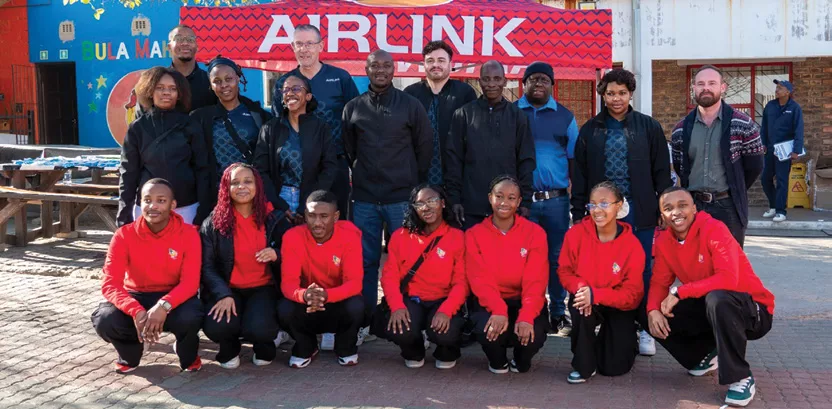
In celebration of Nelson Mandela Day, Airlink reaffirmed its commitment to community development through a meaningful outreach initiative at Bula Mahlo Home and Day Care Centre in Tembisa on 17 July 2026. Led by the Corporate Services Department, the visit brought together Airlink employees, CEO de Villiers Engelbrecht and Corporate Services Executive Manager Dr Namhla Tshetu in a day dedicated to service, compassion and social impact.

As part of the initiative, Airlink donated brand-new mattresses, toiletries and grocery supplies to support the daily needs of the children living at the centre. In true Nelson Mandela Day spirit, employees also dedicated two hours of their time to cleaning and maintaining the facility. The effort reflected Airlink’s belief that meaningful through donations but also through hands-on involvement and genuine human connection.

Founded in 1989 by Regina Sekgobela, Bula Mahlo Home and Day Care Centre began as a crèche and day-care facility serving the Difateng community in Tembisa. Over the years, it evolved into a safe haven for vulnerable children, including those who are abandoned, abused, orphaned or in foster care. Registered as a non-profit organisation in 2008, the centre currently provides care for approximately 40 children, including 20 children in day care and 20 in full-time residential care, ranging in age from 2-21 years.

The organisation’s mission is to create a safe and nurturing environment where children can heal from trauma, access education and grow in an atmosphere of love and support. Beyond providing residential care, Bula Mahlo offers safe care for children brought in by law enforcement authorities and advocacy promoting children’s access to healthcare, education and other essential services.

Long-term view

For Airlink, the visit represented more than a once-off act of charity. During the event, Engelbrecht highlighted the importance of giving back and explained why the airline approaches community investment with a long-term mindset.

“The most important thing about today is the acknowledgement of what a privilege it is to give,” he said. “When you buy an aircraft, you look at the next 12 years at least to get a return on that investment. Equally, on the CSI side, we don’t believe in making short-term investments. The only way we can make a real difference is to be there when people need us.”

He added that sustainable impact requires consistency and humility. “It is important to be humble in business as well. These are the moments that bring us back to reality. Our support must be relevant, it must be enduring and it must be there for the long run.”

A key outcome of the visit was Airlink’s decision to formally adopt Bula Mahlo Home and Day Care Centre as one of its long-term CSI partners. This commitment signals the beginning of an ongoing relationship focused on strengthening the organisation’s ability to provide quality care and support to vulnerable children. Reinforcing this commitment, Dr Namhla Tshetu outlined Airlink’s vision for the partnership. “We are going to adopt Bula Mahlo, we are going to empower Bula Mahlo and we are going to make Bula Mahlo sustainable,” she said.

Text | Keamogetswe Masango 

Photography | Supplied

For more information, go to flyairlink.com

Read more

Island connections

TRAVEL

Airlink inaugurated its year-round Johannesburg – Zanzibar service earlier this year, connecting travellers with one of the Indian Ocean’s most iconic island destinations. Known for its spice-scented markets, turquoise waters, rich history, marine life, white sandy beaches, beach resorts and UNESCO-listed Stone Town, Zanzibar continues to capture the imagination of leisure travellers, families, honeymooners and business travellers alike.

The response has been exceptional, and Airlink will add a third weekly Johannesburg – Zanzibar flight between 15 December 2026 and 13 January 2027 for the peak summer holiday season.

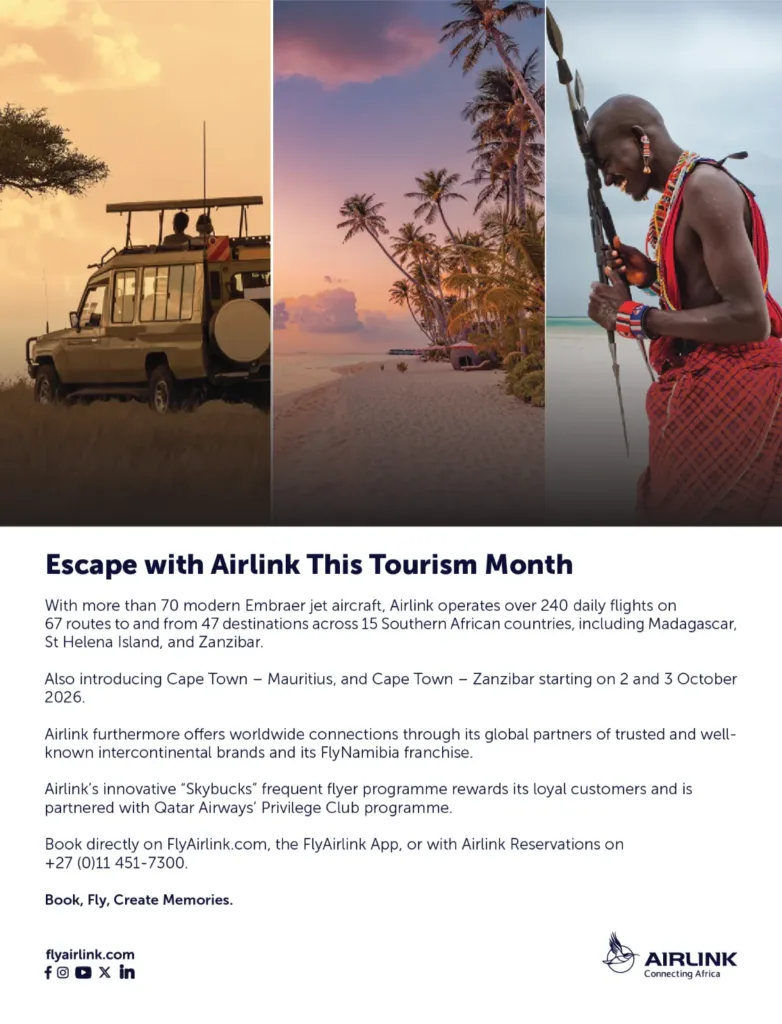
Additionally, Airlink is launching the first-ever direct non-stop Cape Town – Zanzibar service from 3 October 2026.

Airlink will also launch direct Cape Town – Mauritius flights from 2 October 2026, opening another sought-after Indian Ocean escape for holidaymakers and corporate travellers.

Source: flyairlink.com

Read more

High compassion levels

HEALTH

In 2026, the Cape Town International Kite Festival, Africa’s oldest of its kind, returns with a colourful new theme and an invitation for everyone to #ColourTheSky. #ColourTheSky is a celebration of hope, connection and the unique role each of us plays in creating brighter, more supportive communities and raising mental health awareness. The festival, which will raise funds for Cape Mental Health to support essential free mental health services and promote mental wellness across the Western Cape, takes place from 24-25 October at Youngsfield Military Base, Ottery. Alongside the breathtaking displays, visitors can enjoy family entertainment, interactive activities, tasty food and plenty of opportunities to experience the joy of kite flying while supporting a meaningful cause.

Source: capementalhealth.co.za/ColourTheSky

Read more

Airlink to launch Lanseria – Harare flights

TRAVEL

Airlink will launch three times weekly flights between Johannesburg Lanseria and Harare from 15 November 2026. Bookings are now open for flights on the route, which will be the first-ever scheduled airline service between the privately owned airport north-west of Johannesburg and Zimbabwe’s capital.

The new service will provide an alternative convenient point-to-point connection for people wanting to travel from Lanseria International Airport. This world-class, modern facility is ideally located to serve communities and businesses on the western side of Gauteng and the North-West Province. This new route will also be Airlink’s first scheduled Lanseria service and will be operated by an Embraer E190 aircraft.

“Johannesburg – Harare is one of the busiest routes in southern Africa and saw demand averaging around 60,000 seats a month in 2025. A significant percentage of this market comprises people within Lanseria’s catchment area and Airlink is able to better serve these customers by augmenting our existing services, which operate out of OR Tambo, with the new Lanseria flights,” said de Villiers Engelbrecht, Airlink CEO.

Flights on the route will depart Lanseria on Mondays, Thursdays and Saturdays at 7:00am and return on Wednesdays, Fridays and Sundays at 17:45pm.

Source: flyairlink.com

Read more

BIRD OF THE MONTH

Ground woodpecker

When looking for woodpeckers, one expects to see them in trees, hammering away. This hammering makes them somewhat easy to locate. However, three species of woodpeckers worldwide are ground dwellers. One of these can be found on boulder-strewn slopes of hills and mountains in Lesotho and South Africa. A good place to observe the region’s largest woodpecker is at the top of Sani Pass, which can be accessed via Himeville, a small village in KwaZulu-Natal.

Nearest Airlink airport: Pietermaritzburg

Source: sacrp.org

dr.bobgraham@gmail.com

Read more

Twice as impressive

TRAVEL

Asia Pacific dominated the ranking of the world’s busiest airport pairs, with Jeju International Airport – Seoul’s Gimpo International Airport (CJU-GMP) remaining the most popular route globally, with 13.3 million passengers travelling between the two airports. In the top 10, only one airport pair – Jeddah’s King Abdulaziz International Airport – Riyadh’s King Khalid International Airport (JED-RUH) – was outside the Asia Pacific region. All of the top 10 busiest airport pairs were domestic connections.

Cape Town International Airport – Johannesburg’s OR Tambo International Airport (CPT-JNB) was Africa’s busiest airport pair in 2025, with 3.4 million passengers. Bogotá’s El Dorado International Airport – Medellín’s José María Córdova International Airport (BOG-MDE) was the busiest airport pair in Latin America with 3.5 million passengers.

Barcelona’s Josep Tarradellas-El Prat Airport – Palma de Mallorca (BCN-PMI) remained the busiest airport pair in Europe with 2.1 million passengers. New York’s John F Kennedy International Airport – Los Angeles International Airport (JFK-LAX) was the busiest domestic airport pair in North America with 2.2 million passengers.

Source: iata.org

Read more

Conservation with depth

ENVIRONMENT

Conservation with depth

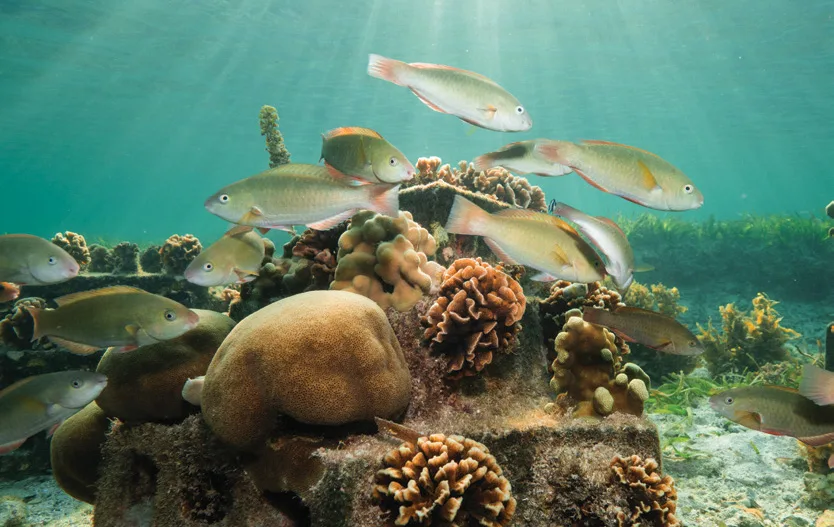
Marine Protected Areas (MPAs), often referred to as the ‘nature reserves of the sea’, are ecologically significant areas that protect vulnerable marine ecosystems, habitats and species, while supporting the people who depend on them. Launched in South Africa on 1 August 2021, MPA Day aims to drive awareness of these areas dedicated to ocean – and planetary health – with the 2026 edition garnering support from the United Nations.

MPA Day now forms part of the Ocean Decade as an Activity under the United Nations Decade of Ocean Science for Sustainable Development (2021-2030). This propels the initiative onto an international platform, reinforcing its role in advancing global ocean conservation.

The United Nations Decade of Ocean Science for Sustainable Development was established to support transformative action for a healthy and sustainable ocean. MPA Day is recognised for its contribution to raising awareness about ocean conservation, promoting ocean literacy, encouraging public participation and supporting international efforts to protect marine ecosystems.

Source: MPADay.org

Read more

Market revved up

MOTORING

South Africa’s new vehicle market continues to outperform expectations, with June 2026 recording the strongest sales performance for the month since 2007 and keeping the industry firmly on track to surpass 600,000 new vehicle sales in 2026.

According to naamsa, The Automotive Business Council, 54,482 new vehicles were sold during June, representing an increase of 15.3% compared with the same month last year. Passenger vehicle sales reached 38,393 units, up an impressive 18.1% year-on-year.

Year-to-date, the market has reached 315,303 units, 12.9% ahead of the corresponding period in 2025, while passenger vehicle sales have grown by 14.2%.

Source: naamsa.net

Read more

Leading the way

Nedbank Commercial delivers banking that builds businesses

A business director or CFO of a mid-sized business could request asset finance from any commercial bank, and, in return, they’d probably receive a quote. The reality is most banks offer similar off-the-shelf products – so many businesses end up shopping for the lowest fees.

This may seem logical, perhaps, but it’s also short-sighted – because commercial banking should offer much more than off-the-shelf products at affordable prices. It’s about delivering real value to the middle commercial market that goes way beyond the transactional to help them turn ambition and drive into action and sustainable growth.

You’ll find this growth-through-value commitment at the heart of everything Nedbank Commercial Banking does. Which is why, if you approach them with the same request for asset finance, the response won’t be a quote. It will be a meaningful conversation around the reasons for the finance, the best way to structure it to maximise cost- and tax-efficiencies and value-boosting options like deferred or staggered repayments.

Differentiation

According to Mark Rose, Executive Head: Strategy and New Business Development at Nedbank Commercial Banking, this is where real differentiation happens in any banking relationship and where the essence of commercial banking value is truly to be found.

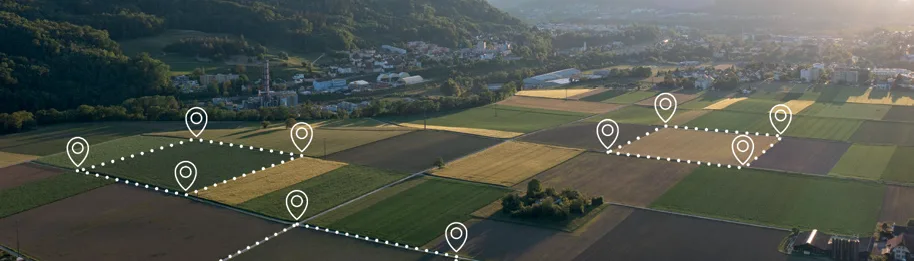
What sets Nedbank Commercial Banking apart is its commitment to genuine sector specialisation. Rather than adopting a one-size-fits-all approach, the bank has developed dedicated teams that focus exclusively on specific industries – from agriculture and retail to manufacturing and beyond.

In agriculture, for example, Nedbank Commercial’s approach recognises the sector’s inherent seasonality and risk profile. The bank understands that agricultural lending often means providing upfront funding for inputs and waiting 18-24 months for crop harvesting before seeing returns. This requires a fundamentally different risk assessment and structuring approach.

Similarly, in the retail franchise sector, Nedbank Commercial has built deep relationships with major franchise groups, understanding the standardised processes and proven models that underpin successful franchise operations. This knowledge enables the bank to offer more favourable, often unsecured lending terms, rather than traditional security-backed credit, based on the strength of established franchise models and the franchisee’s good financial standing.

Beyond the traditional

Perhaps most significantly, Nedbank Commercial has evolved beyond traditional transactional banking into what Rose describes as a strategic growth partnership approach. “We really want to provide advice that’s indispensable to our clients,” he explains, “and we’re succeeding in doing so, as evidenced by feedback from many of our clients that consider us to be an extension of their management teams.”

This strategic partnership approach manifests in several ways. The bank leverages sophisticated data analytics to proactively identify client needs, enabling relationship managers to approach clients with relevant solutions – often before they even realise they need them.

“We’ve deliberately moved away from being order-takers,” says Rose. “With the data we have and the models we’ve built, we can anticipate what a client might need next, and we reach out first. That completely changes the dynamic.”

Core principles

Central to Nedbank Commercial’s value proposition are three core principles: personalisation, value addition and simplicity.

Personalisation comes through deep industry knowledge and bespoke structuring on a client-by-client basis. The bank adds value through an array of advisory services, ranging from sustainability, ESG compliance and digital transformation.

Simplicity is delivered through platforms like Nedbank Business Hub – a self-service digital platform that covers both domestic and international transactions. It’s available 24/7 and designed to reduce friction by allowing clients to manage accounts, apply for new services and execute key transactions without having to pick up the phone.

Rose points out that its collaborative approach has proven particularly valuable. Cross-border expansion, for example, sees many mid-sized businesses looking to establish operations in new territories, especially Africa. Here, Nedbank’s experience helps navigate regulatory hurdles and support clients with in-country guidance.

Similarly, sustainability and ESG compliance present opportunities that are often disguised as challenges. When manufacturers invest in cleaner production processes, the upfront costs are significant, but Nedbank Commercial structures flexible repayment terms that align with the long-term benefits.

“We have partnered with specialists to provide advisory services that go well beyond traditional banking, helping clients understand and implement sustainability frameworks that will underpin their resilience and growth well into the future,” Rose explains.

Sharing knowledge

Digital process automation represents a commercial development theme, according to Rose, adding that Nedbank’s own digital and automation journey provides invaluable insights for client transformation. “When businesses want to invest in operational efficiency through technology, Nedbank Commercial doesn’t just fund the initiative – we share knowledge from our own digital evolution to optimise the outcomes and maximise the return on investment.”

Nedbank Commercial’s approach reflects a fundamental understanding that commercial banking success requires a long-term, partnership-based perspective. Companies experience both growth phases and challenging periods, and Nedbank positions itself as a partner through these cycles.

Independent verification of the value of this philosophy is found in the results of independent assessments that show Nedbank Commercial ranked in tied first place in overall delivery of commercial banking services, with particular strength in staff knowledge and expertise. The bank has also maintained Net Promoter Scores well above the industry average for three consecutive years.

Text | Supplied 

Photography | Shutterstock and Getty images

Read more

The edge of paradise

Kindness, comfort and exploration on the tip of a tropical island

Driving from Zanzibar City on the south of the island to Nungwi on the north involves an introduction to the local travel philosophy, which appears to involve owning the part of the road you are currently occupying with the greatest degree of confidence. In addition, many cars have tinted headlights – blue or purple – that give them a unique look while also making them considerably less obvious in the gloom.

Alongside the road, houses are generally larger than those in similar areas on the rest of Africa’s east coast, with imposing high-apex corrugated iron roofs. And even though it’s early evening by the time we get to Nungwi, the town’s main street is buzzing and brightly lit, with shops and eateries open and busy.

The gate to the Nungwi Dreams by Mantis Hotel is a tasteful trellis right on a quiet side street and it’s just a few steps from there to the reception, on the bottom floor of a building with a Skybar on the roof. It’s a long, open space, with all of one side looking out over the hotel and its twin pools to the beach and, beyond that, the Indian Ocean.

Dinner on the patio above one of the pools is an instant bar-setter for the atmosphere guests will enjoy at the hotel, with excellent food paired with the athletic exertions of a troupe of dancer-acrobats who build intensity from shuffling dances and tumbling somersaults to feats of strength and balance with props. Less strenuous is ending the evening with a drink at the Skybar, looking out at the curiously dark ocean: the area in front of the hotel is a natural lagoon with a reef some distance out, so there are none of the expected twinkling lights of fishing boats. The young barman provides thoughtful entertainment as he shares his journey – learning more languages so that he can better serve more guests and so become ever more indispensable; a smart head on young shoulders.

Sunrise and spice

After arriving in the dark, opening the curtains on an east-facing sunrise view guarantees a glorious prologue to the day, with a vibrant colour palette – a green strip of plant life on the rocks closest to the beach, then a further dark grey-brown band of rocks before the brightening turquoise of the lagoon and the soft, ripening peach of the cloud-clad horizon. On the way out, consider leaving the large door tag advising the staff that you want to entirely skip a daily clean in order to save water and other materials; what feels like a genuine effort at resource conservation rather than the “put your towel in the bath if you want it washed” option.

The breakfast area, three floors up, means you maintain the view while fuelling up for your day, with the length of the room meaning that one trip back to the buffet offers enough exercise to work off the doughnut you enjoyed in round one.

Save some room for a visit to Tangawizi Spice Farm, just off the road back to the capital. A first glance as you begin a walking tour takes in apparently nondescript, scruffy layers of contrasting green foliage, but with the help of a guide – in this case, friendly, knowledgeable Elly – your surroundings come fascinatingly alive.

Above and to one side are red (yes!), sweet bananas. Over there, a small, marula-esque fruit high in a tree turns out to be nutmeg. It’s good for, among other things, indulging in what Elly calls, “that lovely activity” – the first of a few giggly, context-appropriate references to sex (another is “for when you have an appointment”). Draped over forked sticks and other contraptions, strands of vanilla await patient human pollination, one flower at a time. Large, mature cocoa pods grow directly out of the trunk of the tree, with tiny flowers and the initial phases of the pods dotted elsewhere on the bark.

Turmeric, cinnamon, pepper, cloves – suddenly every seed, fruit and root passed is a valuable crop partially responsible for shaping the history of the region. You need to look down as well as ahead and up, with cardamom lying on the surface of the soil and ginger just below it. A willing young guiding assistant demonstrates how another fruit, its insides mashed with a finger, becomes an immediate and vivid source of bright red make-up before a powerful, agile coconut wrangler scales a 20m-high tree to serve up a fresh fruit that yields a cool, refreshing drink and tasty, tender flesh. That’s all a precursor to the visit’s final act – a tasting session of delicious fruits and spice-flavoured coffees and teas (Masala tea? Yes!).

All of the science about making the most of all of the wondrous qualities of plants follows you back to the hotel, where a full-body aromatherapy massage, with a soundtrack of a sweetly chirping flock of sparrows in the gardens outside the spa, is the perfect antidote to a second batch of transfers around the island.

Making the point

The section of Nungwi Beach outside and on either side of the hotel is a walker’s heaven. There’s great swimming, too, but beware the spiky sea urchins – make sure you have some protective footwear before wandering into the shallows.

To the east, a thin strip of white sand is bordered all the way by dramatic, jagged rocks in which the fossil outlines of coral can be seen. The beach widens into a huge sandbank at one point, allowing you to walk 100m or more out into the lagoon to get a different perspective on the coastline and enjoy the antics of schools of tiny fish in the shallows.

Heading west, a game of beach football is supported as enthusiastically as the World Cup final before a large wooden pier provides a striking focal point for a landscape photograph. Rounding the headland and passing a lighthouse, there is one of those random moments of achievement that travellers experience (crossing a famous line of latitude or similar) as you take in Zanzibar’s northernmost point. Ahead, there are stretches lined with small hotels, beach restaurants, small diving and fishing operators and… cows. At one point, a calf that has become separated from its mother suddenly realises that it’s alone and gallops back, hooves drumming out an urgent rhythm on the sand.

It’s a sign, perhaps, to head back yourself, at a much more sedate pace, to set exploring aside for a moment as you commit to a book and a cocktail around the pool or imagine yourself, for a moment, as part of the cast of The Wizard Of Oz, navigating Nungwi Dreams ́s yellow-painted pathways.

Text and photography | Bruce Dennill

For more information or to book a stay, go to nungwidreams.com.

Read more

Hazards in heaven

Golf on spectacular courses is a major attraction for visitors to Indian Ocean island

There are worse places to duff a seven-iron. At least, that’s what I tell myself as I put another ball down on the 17th tee of Paradis Golf Club. There’s a warm island breeze blowing; the rocky massif of Le Morne Brabant rears up behind me, and the gin-clear waters of the lagoon sparkle away to the right. And somewhere beneath those waves is my tee shot.

But it’s hard to feel too aggrieved at losing another ball when you’re playing one of the most beautiful golf courses imaginable. Mauritius has long been sold on its beaches and all-in packages, but over the past two decades it has also established itself as one of the leading golf destinations in the Indian Ocean. In 2024, the International Association of Golf Tour Operators named Mauritius the Tropical Island Golf Destination of the Year.

It’s not hard to see why. Along with accessible resort tracks, the island boasts a growing roster of championship courses laid out by some of the world’s most recognisable names in golf architecture. Today, for many travellers, packing the golf bag is as important as remembering the flip-flops.

Because many of the island’s leading courses are attached to resorts, travellers can move easily from the breakfast buffet to the tee box. Which is how I found myself on the first tee of Paradis Golf Club early one morning. Part of Beachcomber’s expansive resort in the south-west of the island, it’s a layout made for laid-back holiday golf. Styled as a tropical parkland course, its narrow fairways, hundreds of palm trees and abundant water hazards ensure it’s still a challenging track that rewards cautious course management.

That’s especially true on the back nine, where the layout takes full advantage of the coastal setting in a series of risk-and-reward holes. The signature 16th is one you won’t forget in a hurry. A par-5 curling around the lagoon towards a distant green, it gives you a simple choice: play safe along the fairway or cut the water and give yourself a chance at birdie. You know which option I took…

The 18th finishes just a few steps from my sea-view suite, driving home another advantage of resort golf in Mauritius. Minutes after stepping off the green, I was diving into the warm waters of the lagoon, debating which of the four restaurants to visit for lunch. On holiday there isn’t a minute to waste.

Double delight

Over on the east coast, Constance Belle Mare Plage offers similarly seamless access to your choice of two courses. The Legend Course sits right across the road from the hotel, making early tee times easy.

This Hugh Baiocchi layout has been part of the island’s golf landscape since 1994, hosting the Mauritius Open and, earlier this year, welcoming Mauritius’s first Ladies European Tour event.

It’s a challenging layout, threading through parkland and forest, with narrow fairways and heavy rough waiting to punish wayward drives. There’s water here too, most memorably on the par-3 17th, where only sea and mangrove forest separate tee box and green. Fall short and you’re in the drink. Overcook it and you’re in the woods. My eight-iron was the sweet spot. While the Legend Course is well worth adding to your island bucket list, my son and I preferred the Links Course nearby.

Unlike the flat ground of Legend, Links rocks and rolls across a landscape of grassy swales and Srixon-hungry volcanic outcrops. Designed by Rodney Wright and Peter Alliss, it’s enormously fun to play and another course that rewards discretion over valour. Sure, you could try to cut the corner on the 8th and drive the green, but the smart shot is a lay-up into the generous landing area. The back nine brings plenty of water into play, not least on the par-4 13th, where water wraps around the green. And perhaps your ball, if you top that second.

If you miss it on your first try, you can always come back and play another round. Guests at Constance Belle Mare Plage enjoy complimentary green fees at both courses.

Island to island

The same goes for guests at Four Seasons Resort Mauritius at Anahita, one of the smartest addresses on the east coast of the island. From the breakfast terrace at Chaloupe Restaurant, you’ll be able to see two courses to play during your stay.

On the mainland, Anahita Golf Club is an Ernie Els design. And if I never land in another Els bunker again, it’ll be too soon. Weaving between an upmarket residential estate and lush indigenous woodland, Els’s championship layout walks a careful line between challenging the low handicappers while leaving enough room for weekend golfers to play a round happily.

While some holes are long and the bunkers plentiful, the landing zones have enough elbow room that you’ll have to work hard to land out of bounds. Beyond the bunkers, there’s plenty to keep you entertained, from Els’s clever use of traditional stone walls to the dramatic oceanfront holes that form the signature views of Anahita. The par-5 4th is the showstopper, with a seaside green that will tempt you to be bold but punish your bravado. Do it anyway!

Across the water, Île aux Cerfs has long been one of the must-play clubs on Mauritius and is another track available to Four Seasons guests at no charge. Is there a more glamorous way to start a round of golf than a speedboat transfer to a palm-fringed island?

After hitting a few balls on the range, my teenage son and I teed up at the first for 18 holes that rank among the most challenging on the island. Here, Bernhard Langer seems to have combined all Mauritian golfing hazards into one: bunkers, water, palm trees, mangrove forests and the Indian Ocean.

But what fun it is to try to evade them, whether it’s a lofted drive over the water at the 16th – dubbed ‘Reach Me if You Can’ – or the pinpoint accuracy you’ll need to hit the green at ‘Tidal Pool’, the par-3 fifth. If it all sounds too challenging, don’t worry: four sets of tee decks offer plenty of options to shorten each hole, ensuring an enjoyable round for mid-handicappers.

And that’s perhaps the real joy of teeing up on Île Maurice. While accomplished players will find no end of challenge, those of us of more ‘limited’ talents are given plenty of room to enjoy the round. The fairways are clipped, the courses well conditioned and the water almost impossibly blue. And if your seven-iron does end up somewhere in the lagoon? Well, just remember, there are worse places to lose a ball.

Text | Richard Holmes 

Photography | Richard Holmes and supplied

For more information, go to beachcomber-hotels.com, constancehotels.com and fourseasons.com

Read more

Mountain redoubt

Drakensberg resort gives every visitor a choice of wonderful ways to fill a day

For travellers who are rubbish with directions, it’s useful to visit a resort at the literal end of a road. Turn neither to the left nor to the right and you can’t miss it. The first sign of the particular type of hospitality practiced here is that, when you confirm arrival time, you’re advised that check-in is at 2pm, but if you arrive at 12:30pm, you’re welcome to dive into the venue’s renowned buffet for lunch – at no extra charge.

That’s the sort of generosity that only avuncular grandparents usually display and it underlines the philosophy of the managers and staff.

There’s a decent chance of recognising someone as you walk in, as a huge chunk of the clientele are return customers – so much so that the establishment’s unofficial slogan, suggested by guests, no less, is ‘Many happy returns’. And once you’ve been there yourself, you’ll likely feel that any other response won’t make sense. The staff are warm and lovely, the rooms are comfortable and the scenery extraordinary, but there is more to it than that; a formula that’s lovely to live in, easy to acclimatise to and, very quickly, as comforting as a cat curled up in your lap.

Appetites satisfied

Everything revolves around food, provided as part of an all-inclusive package. There’s a parade – breakfast to tea to lunch to tea to dinner: comfort food, tasty food and hale and hearty, shareable food. Each guest or family gets assigned a dining room table for the duration of their stay and, if the weather is good, you can eat outside in the sun or under a tree – possibly a yellowwood!

Plant life is another major feature. There are huge and ancient trees, some endemic to the area or the culture – such as thorny aloe borders that have long been used in local villages to corral livestock – and others imported. The place is literally buzzing with life, with bees and butterflies pollinating the dozens of flowering species around the resort, up on the hills and in the valleys and – heaven for twitchers – scores of sunbirds and sugarbirds headlining a list of species city dwellers are unlikely to be too familiar with.

The very many South Africans milling around underline the local institution the Cavern has become, but there are plenty of international accents as well, with a number of Belgians sharing a trail on a hike noting that they experience more elevation here than they do in a decade of walking at home.

For guests wanting to make the most of their time – which seems to be most of them – there is a list of activities as long as your arm, from trails to tennis, ponies to pickleball and swimming to soccer. This means a range of things are possible. Kids can be kept safe and engaged for significant periods; activity ‘passports’ can be completed to earn points to exchange for anything from ice creams to pony rides. And wandering around in or near the resort can be as rewarding as planning a whole day trip or hiking around three quarters of the horizon to take in five local peaks.

Caving in

A hike to Echo Cave is one of the ‘long walk’ options, with a guide to show the way and hold forth on landmarks and fauna and flora. There are ferns, forest paths, bubbling brooks, montane grasslands and huge boulders and cliffs both low and high. Beautifully maintained pathways make it hard to get lost or slip or fall while retaining enough natural character to provide a challenge for muscles and joints, all of which receive a workout far in excess of the distance covered (only 7km, but more than three hours of effort).

The cave itself is a concave cliff face, long and spectacular, marked by dark bands of dripping moisture and stark white lines where calcium is being leached from the rocks. Several hikers, predictably, test out the cave’s acoustics, interestingly shouting the word ‘echo’ to see if it’s accurately named. A musician might call the result ‘reverb’ instead, but there is unquestionably a magnification of the voice that adds further to the sense of the scale of the place.

On the way back down the mountain, one of the resort dogs, which has come along for an extravagant walk, sees fit to approach a young eland bull standing some 50m off the path, until then peacefully watching the interlopers pass. The enormous antelope doesn’t give the slightest toss about the brash hound, not even deigning to turn its head until the dog is a couple of metres away, at which it does the equivalent of a pec flex, lowering its head and taking a couple of steps forward, at which the dog wisely retreats. It would not be a fair fight…

The Camel’s Hump hike takes you up steep, unforested slopes to Surprise Ridge. As you reach the crest, a widescreen view of Mont-aux-Sources and dwindling Drakensberg peaks into the far distance explodes into your vision – surprise! A low, unadorned fence delineates the edge of the Cavern property and the beginning of the Royal National Park, so named after England’s Royal family visited in 1947 and the future Queen Elizabeth II turned 21 during their stay.

Generational investment

Back in the valley, the extraordinary nature of family friendliness – and just general friendliness – is showcased again. All ages are well catered for, as evidenced by a group of four grandparents who have brought with them a whole flock of grandchildren and are managing well, knowing that there is childcare back-up if their energy starts to flag.

All the resort’s staff spoken to during this visit are from towns and villages in easy driving – or even walking – distance, meaning there is job security for both those people and the venue. The Cavern is already owned and run by the third generation of the same family and the same can be true for servers, cleaners, groundkeepers and guides.

It’s a big operation, but the management have a tremendous eye for detail: aloes along the pathways have their stabby points trimmed where people are going to walk; ice for sore post-hike knees arrives in buckets; and much more.

Goodbyes are a long and complex process, as you may need to greet friends visiting at the same time, new friends made during your stay and all the staff members you have interacted with. Whatever was done in developing the brand over the past several decades – including the decision to share what remains a family home with an ever-changing cast of strangers, offering the all-inclusive meal package and creating a system where travellers wanting romantic space and parents with their kids feel equally comfortable – the result is a scenario with unstoppable momentum. Every returning guest wants to return again, while also recommending the spot to friends and family. It’s a rare everyone-wins situation.

Text and photography | Bruce Dennill and supplied

For more information or to book a stay, go to cavern.co.za.

Read more

Land in the lake

Island resort in Lake Kariba is a beautiful base from which to explore the nearby wilderness

Lake Kariba comes into view as the tiny 12-seater plane bounces over the Matusadona mountain range. A vast expanse of water, as blue as the ocean, sparkling in the sunshine. The landing strip is inland, a rectangle of grassy space cleared out amongst thick green bush.

The pilot does a fly-by to ensure it’s clear of any animals before touching down gently. It takes just over an hour for the sprightly Cessna caravan to zip up from the bustle of Harare and the lack of crowds is obvious from the moment we arrive.

Two Land Rovers await, drinks on board. Once luggage is transferred and the little plane heads back into the sky, we make our way, beers in hand, across red-sand roads that weave through a forest of lush mopane trees. A troop of baboons, feasting in the boughs, watch cagily.

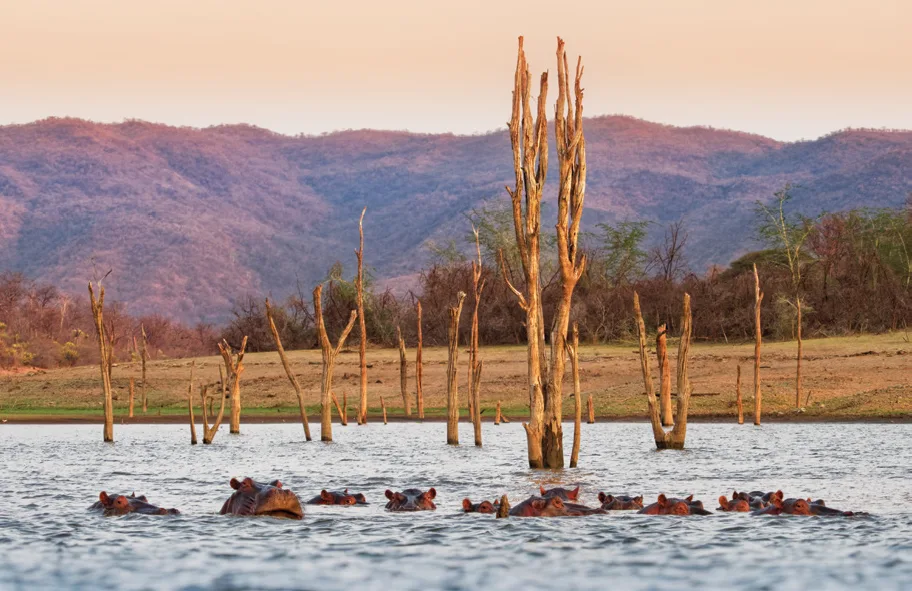
The road to the water’s edge cuts across a mustard-coloured savannah and then winds its way around the flood plain, all tones of muted pinks and shades of green. There are elephants and impala – but it is the sight of a hippo with her baby, both fat and glossy, on the shores of this great lake, that really marks our arrival.

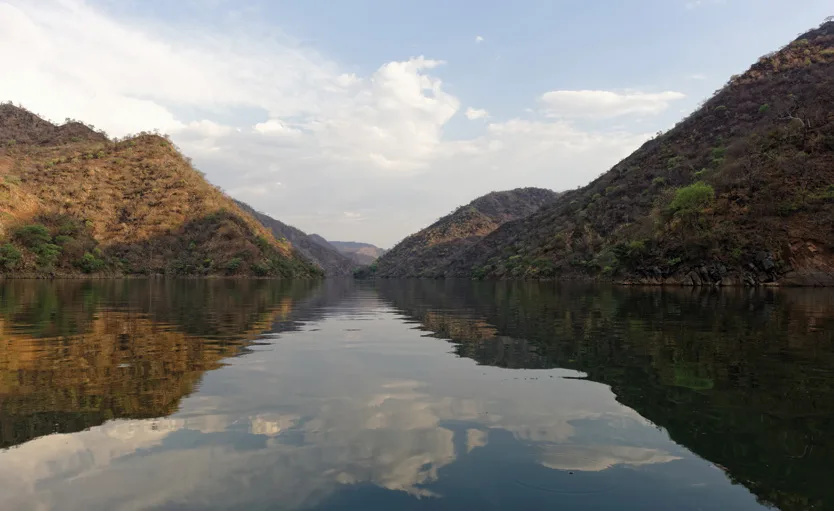
There is something magical about Lake Kariba, an enormous stretch of crocodile- and hippopotamus-filled water, cobalt blue, with white, petrified trees rising like ghosts from the shallows. It is this feature – the skeletons of long-dead trees, as hard as rock, reaching out from a watery grave – that give Kariba the backbone of its character. In their branches rest white-hooded fish eagles, magnificent birds with an unmistakable, piercing call, which are also symbolic of this place.

Shaped wilderness

Kariba looms large in my memory, a place recalled from childhood holidays as remote, exotic and peaceful. Twenty-five years after my last adventure here, little seems to have changed. Rather than hiring a houseboat, which is a popular way to experience this part of the world, there is land-based enjoyment at Spurwing Island Resort. There are other luxury resorts hidden in the bush, but few and far between. If you want to escape the bustling busyness of over-tourism, this is the place.

Created 70 years ago by damming the powerful Zambezi, a process of both triumph and tragedy, Lake Kariba is huge. Nearly 230km long, 40km wide and over 90m deep in some places. By volume, it is still the largest man-made body of water in the world. Fishermen love it for the opportunity to tussle with a tigerfish. Others love it for its serenity. For reasons that can’t quite be explained, it feels like coming home.

The resort is across the water from Kariba town, the dam wall and Sanyati Gorge, famed for its dramatic cliffs, concentration of crocodiles and birdwatching opportunities. While motoring up the river, which, in contrast to the lake itself, is opaque with mud, an elephant scrambles out of the water and up a steep bank. Hippos snort and sink invisibly beneath the surface. Crocodiles sunning themselves on the banks of a tributary also slither into the river and instantly disappear from view. There are strict instructions to keep hands inside the boat at all times.

Fishing is on the agenda, though it turns out it seems to mostly involve drinking, talking and waiting. The guide, Maxwell, manages everything. Between handing out drinks, he puts worms on hooks, helps people cast out and reel in, removes whatever is caught and throws back anything unwelcome. The target is bream, an eating fish, and almost entirely due to Maxwell’s knowledge and skill, several end up in the boat. They turn up at the bar later – filleted, battered and deep fried with fresh lemon – an evening snack to accompany pre-dinner cocktails.

The old guard

There are predators here too. Both lion and leopard can be seen on game drives. We come across the pride male – old and battle-worn, but still magnificent, asleep in the shade. He looks carefree, but the scars on his face tell a different story. When he awakens, he shoots the vehicle with a piercing look, his power palpable across the few metres that separate us. His throaty, throbbing roar shakes the ice in gin and tonics. A responding roar – too close for his comfort – rattles him, though, and he skulks off, tail low and limping slightly, into the trees. There is an ugly red gash on his shoulder that speaks of recent fights.
Guide Ben drives while listening to the calls of the lions as they taunt each other, pulling up just as two younger males, interloping brothers from another reserve, stalk their way purposefully out of the trees and across the plain. They scent opportunity and are quickly chasing down the pride lion. His fate is the subject of conversation over evening drinks. The rangers are convinced he will soon lose out. “It is the way of nature,” they say, with a touch of sadness. Still, when we leave two days later, he has fended them off. For now.

The icon animal of Kariba, though, besides the hippos and crocodiles, is the elephant. Red from the dust, large breeding herds with mothers in protective proximity to their offspring eat their way down to the water’s edge as day verges on dusk. Single bulls playfully tussle before making their way back to the safety of the trees.

The last night is on a boat watching the sun make its way down to the horizon, changing the character of the lake as it does. It is the beauty of the sunsets, a riotous cacophony of apricots and oranges, that remains long after our visit. The petrified trees go from white to grey to black silhouettes against a sky of vivid tangerine. The water turns dark and night, with a coat of shimmering stars, settles. What better way to say ‘until next t Martin Pelanek ime’ to Lake Kariba?

Text | Sharlene Zeederberg

Photography | Sharlene Zeederberg and Shutterstock

For more information or to book a stay, go to spurwingisland.com.
Read more

Over the moon!

Earth’s satellite is back in the spotlight, with a number of planned missions reconnecting mankind to our nearest neighbour

Roughly 384,400km from the pale blue dot we call Earth hangs an orb that has fascinated humanity for millennia. The moon is our planet’s only natural satellite and is about a quarter of Earth’s size. Only 12 people set foot on it between 1969 and 1972 but, more than 50 years later, the Artemis programme aims to add to that number.

In early March 2026, NASA’s Artemis II mission carried four astronauts on a lunar flyby during a 10-day trip, with later missions set to put feet back on the moon’s surface.

For Prof Amare Abebe, director of the Centre for Space Research at the North-West University (NWU) in South Africa and president of the African Astronomical Society, the renewed international momentum around lunar exploration is due to both strategic and scientific imperatives.

“I think it is now easier than it has ever been before because technology has advanced, the cost of travel has reduced significantly and the economic benefits are becoming clearer. The timing is also aligned with increasing international competition, with different countries starting space programmes. China and India have been catching up in what people call the ‘new space’ era, for example, along with many other countries. So, there is a renewed sense of competition, in addition to advances in technology and the decreasing cost of travel,” he explains, adding that although there are similarities to the space race of the Cold War, “let us hope that is not the case.”

Process with purpose

The Artemis II mission was the first step in renewed crewed lunar exploration and one giant leap towards sustaining it. “Artemis III and Artemis IV missions are already being planned after Artemis II. The first mission, Artemis I, was uncrewed and went closer to the moon. Artemis II was a crewed mission that orbited the moon, rather than landing on it, to test technologies and conditions that will support future missions. The next step is Artemis III, which is expected to land on the moon and explore the southern pole. Then, Artemis IV aims to establish infrastructure such as a lunar space station. These are sequential steps designed to ensure sustainable space exploration in the future. That is essentially the plan.

“This will bring a great deal of experience, learning and new knowledge, particularly in engineering, life-support environments and technological spin-offs. All of this will generate valuable experience and new knowledge about the engineering required, the environments needed to sustain life and other technological developments,” says Abebe.

Although Africa is not regarded as a major player in the modern space race, there is a wealth of opportunities that will be created for the continent’s scientists, institutions and its growing space sector.

“This renewed interest in space exploration is becoming a catalyst globally, especially for African countries that have historically lagged behind in space science.

Many are now working to catch up. You may have seen that the African Union launched the African Space Agency in 2025. That is a significant milestone. Several African countries are also establishing their own national space agencies. The African Astronomical Society has also been encouraging students and young researchers to get involved. The aim is to build a new generation interested in astronomy, space science and exploration.”

Adding Africa?

“Another important aspect is the Artemis Accords,” says Abebe. “Countries that sign these agreements gain access to data generated by Artemis missions. That is a major opportunity. A few African countries have already joined, although South Africa has not yet done so, which is surprising, given its strong astronomy and space research capacity.

“This means future African researchers – and young people in particular – will have increasing access to data, knowledge and technological developments linked to space exploration. The benefits for African science could be substantial.”

Here, North-West University’s Centre for Space Research has been positioning itself to contribute to the new era of lunar exploration. “Our researchers work on heliospheric physics – the effects of the sun on its environment – as well as atmospheric physics, particularly the ionosphere. We also conduct research on radiation protection. As humans travel further into space, solar radiation becomes a major challenge. Part of our work focuses on developing materials that are resistant to radiation in these environments,” says Abebe.

It is said that an infinite universe holds infinite possibilities, and Abebe is among those who are starry-eyed at the prospect of leaving the confines of our planet.

“There is so much beyond Earth that could benefit humanity,” he says. “At the moment, our economic and scientific engagement is largely limited to Earth. Exploring beyond Earth has been humanity’s dream for a very long time, and advances in science and technology that make this possible can only be positive. I think it can serve as an inspiring symbol for everyone.”

Text | Supplied 

Photography | Dylan Barnes

For more information, go to nwu.ac.za.

Read more

There’s another diabetes in town: here’s how to recognise it

Misdiagnosis rates for this rare type of diabetes could be complicating treatment for patients

You might be surprised to learn that there are more than two types of diabetes. We’re all familiar with types 1 and 2, but you may have seen another one – type 1.5 – making headlines recently.

Type 1.5 diabetes, or latent autoimmune diabetes in adults (LADA) to use its official name, is not a new form of diabetes, but it is somewhat rare. It’s been medically recognised as a distinct form of diabetes since 1993 and accounts for 3-12% of all cases of diabetes in adults.

But as LADA shares similarities with its two, more famous, cousins, it’s also trickier to identify. Hence, it’s often misdiagnosed. As many as 14% of people diagnosed with type 2 diabetes may actually have LADA, which is why it’s been in the headlines of late. Like type 1 and 2 diabetes, LADA is classed as a disorder of too much sugar, or glucose, in the blood.

When this occurs, it doesn’t matter what kind of diabetes you have, the symptoms remain the same: extreme thirst, frequent visits to the toilet, fatigue and unexplained weight loss. Diabetes UK, the leading UK charity for the disease, describes these as ‘the four Ts’: thirst, toilet, tired and thinner.

Once these symptoms appear, it’s important to seek a diagnosis as soon as possible. Untreated diabetes can lead to a host of severe complications, impacting the kidneys, eyes and feet, as well as the nerve cells in your body.

But if the symptoms for these diseases are all the same, how can experts tell which kind of diabetes you really have? And how does it affect the way you treat it?

How type 1.5 diabetes compares to types 1 and 2

Diabetes, in its many forms, has afflicted humans throughout history. A peculiar symptom often alerted healers in Ancient Greece, India and Egypt to the condition: the patient’s urine smelt sweet. Hence the scientific name Diabetes mellitus, taken from the Greek word diabetes, which means to pass through, and the Latin word mellitus, meaning sweet.

This aromatic side effect is caused by a build-up of glucose in the body. Glucose is meant to be broken down by a hormone called insulin, which is produced in the pancreas and converts glucose into a form that can be used as an energy source in cells.

A build-up of glucose happens when a person’s body either isn’t producing enough insulin (as is usually the case in type 1 diabetes) or isn’t reacting to insulin the way it should (as in type 2 diabetes).

In either case, a lot of extra strain is put on the kidneys, which try to reabsorb the excess glucose floating around in the blood. When the kidneys can’t remove any more glucose, the excess sugar spills into the urine, offering a sign of the disease. LADA shares a lot of similarities with these two main types of diabetes, but it has more in common with type 1 than type 2.

One of the main reasons people with type 1 diabetes don’t produce enough insulin is that their immune system attacks the cells in their pancreas that make the insulin. When a substantial number of these cells are lost, they can no longer make enough insulin to keep glucose levels in check.

The same is true in LADA – a swarm of immune cells attacks the pancreas, leading to a drop in insulin production, which causes glucose levels to steadily increase. The two differ, however, when it comes to how long the disease takes to have an effect.

Type 1 diabetes takes effect rapidly and is likely to be diagnosed in childhood or in a clinical emergency. LADA has a slower burn (hence the ‘latent’ in latent autoimmune diabetes) and doesn’t kick in until adulthood, commonly occurring in people above the age of 30 (hence the ‘in adults’).

As you age, a protective scaffold known as the peri-islet basement membrane forms around the insulin-making cells in your pancreas. Current thinking suggests that this scaffold helps to keep your immune cells from attacking your pancreas.

By the time that “autoimmunity starts in LADA, the pancreatic [cells] have already formed into larger structures, and they’re better protected. They’re better able to resist the immune attack,” says Dr Sarah Richardson, professor of cellular biomedicine at the University of Exeter.

The onset of LADA is therefore more similar to type 2, which usually rears its head during adulthood. It’s because of this similarity that up to 14% of people diagnosed with type 2 diabetes are actually misdiagnosed cases of LADA.

Why misdiagnosis matters

The first line of treatment for type 2 diabetes is a medication called metformin. Given in tablet form, metformin works in two ways. Not only does it stop the liver from producing too much glucose, but it also increases the body’s sensitivity to insulin.

There isn’t, however, a definite, agreed-upon way of managing LADA yet. Metformin can be prescribed, as can insulin replacement therapy. If a person is misdiagnosed with type 2 diabetes when they really have LADA, they could be put on a course of metformin when they really need insulin.

The longer a person takes the wrong medication, the higher their glucose levels can climb. Over the longer term, high glucose levels increase the risk of heart disease and stroke, eye problems (retinopathy), foot problems (which can range from infections and ulcers to a loss of sensation), kidney disease (nephropathy) and nerve disease (neuropathy). A 2018 study published in Diabetic Medicine found that people with LADA were more prone to developing severe neuropathy than people with type 2 diabetes.

LADA can also cause damage to small blood vessels, known as microvascular disease.

A 2020 study found that implementing strict glucose control from the time a person was diagnosed with LADA could significantly reduce the later risk of microvascular disease.

Cutting down rates of misdiagnosis is therefore crucial for people with LADA, and thankfully, there are a few key ways to tell it apart from type 1 and type 2 diabetes.

The first and most important thing doctors can do to differentiate the disease is to check for antibodies. These falsely tell immune cells to attack the insulin-producing cells in the pancreas. The presence of at least one antibody indicates autoimmune diabetes. If antibody levels are high, LADA may progress more quickly.

The same is true if multiple antibodies are found. In this case, insulin injections should be the first course of treatment, giving immediate and better control over glucose levels.

Doctors can also directly check a person’s insulin production. This is done by measuring a protein in their blood, called c-peptide, that’s made during pancreatic insulin production. Higher levels of c-peptide can be treated with metformin tablets, and very low or undetectable levels mean that insulin should be started immediately. In LADA, c-peptide levels decline with time – the current recommendation is to get them checked every six months.

A person’s body type can also be an indicator of LADA. If someone develops an increase in the ‘four Ts’ – thirst, toilet, tired and thinner – but has relatively low fat levels or body weight, they’re generally more likely to have LADA than type 2 diabetes. People with LADA also typically have better cholesterol, which can be used to narrow down a diagnosis.

Once the correct diagnosis has been made, LADA can be treated appropriately. It’s getting to this place, with the help of a medical professional, that’s critical.

Text | Prof Craig Beall 

Photography | Getty Images

Prof Craig Beall is the Diabetes, Obesity and Metabolic Health Research Theme Lead at the University of Exeter.

Read more

Just be tween!

Youngsters using beauty products designed for adults can result in damaged skin

Social media is filled with thousands of videos of children as young as 10 rushing into beauty stores to buy the latest skincare products, then showing off their ‘haul’ for the camera.

What is driving this phenomenon? In most instances, social media influence. Today’s adolescents have a heightened awareness of skin health, beauty and ageing. With impossibly high (and often unattainable) societal beauty standards, many young girls are conditioned to believe that they need beauty products to improve their appearance and to avoid ageing – even as tweens and teens.

Now, Italian authorities are the first in the world to officially launch a major investigation into several brands and stores for allegedly marketing adult beauty products to children. The Italian Competition Authority (AGCM) said the companies “may have failed to make clear” that the products they advertised were not intended for children and that important warnings “may have been omitted or presented in a misleading manner”.

The problem is not that tweens and teens are using skincare; in fact, using an age-appropriate basic cleanser, moisturiser and sun protection from a young age is safe and healthy for young skin. A problem occurs when children use skincare formulated for adult skin. Anti-ageing skincare products are exclusively intended for adults. They often contain potent active ingredients such as retinol (vitamin A), vitamin C and exfoliating acids. These ingredients are not safe for children’s skin, and using them could lead to irritation, allergic reactions, a compromised skin barrier and even permanent skin problems.

But the physical harm is not the only concern. Authorities are also worried about the psychological effect, ‘cosmeticorexia’, which refers to an unhealthy obsession with achieving so-called ‘perfect’ or ‘flawless’ skin. Not only can this lead to the use of inappropriate skincare products, but it can also lead to the compulsive use of skincare, as well as a host of psychological conditions.

Appropriate maintenance

Skincare professionals worldwide are reporting an increase in cases of children being brought to clinics for visible skin irritation, redness, dry skin or even burning after using inappropriate products or copying skincare routines seen on social media. According to a 2025 study in Paediatrics, some children and teens often use six or more skincare products in a single routine. Dermatologists have also reported an increase in cases where children present with eczema, rashes and allergic reactions after using adult skincare products.

Children should not be using any of the following skincare ingredients: chemical exfoliants, vitamin A and vitamin A derivatives, vitamin C, hydroquinone, brightening agents, fragrances and essential oils.

A child’s skin is biologically different to an adult’s skin. Their outer layer is thinner; they have less natural skin oil and experience greater water loss through the skin’s surface. Their skin is less resilient, dries more easily and reacts more strongly to irritants. There are several risks associated with children using adult-intended skincare products. Their skin may become more sensitive to sunlight, increasing their risk of developing pigmentation. Exposure to active ingredients also increases the risk of developing long-lasting cosmetic allergies.

Text | Judey Pretorius 

Photography | Lapina

Dr Judey Pretorius is an expert in biomedical science and the founder of the Biomedical Emporium. For more information, go to biomedicalemporium.co.za.

Read more

Between murals and jacarandas

Casting a visitor’s eye shows a city full of poetry and promise

In the highest city in Africa, gold now gleams in the vitality of its streets. Among neighbourhoods reinventing themselves, galleries born from old warehouses and trees that paint the spring violet, Johannesburg reveals itself as a metropolis of striking contrasts, where memory and modernity speak openly under the sky.

Johannesburg was born from a stroke of chance – a pickaxe striking red earth that unleashed a fever for gold and ambition. That improvised village quickly expanded to become the largest city in southern Africa, without a sea to frame it or a river to trace its course. Its geography is more emotional than natural, woven from the dreams of thousands who came in search of fortune. Today, more than a century later, the city’s light has changed: what shines now is not metal but creative energy.

The traveller who moves through it discovers a unique rhythm made of textures, accents and silences. The jacarandas, blooming from October to November, bathe the avenues in violet and offer an almost dreamlike image, as if the city dressed up to celebrate its own rebirth. On the streets, where traffic hums and the sky feels closer than anywhere else, the voices of history blend with the chords of a generation looking toward the future without nostalgia.

The Maboneng district is the clearest expression of that spirit. What were once abandoned factories and storage buildings have become a constellation of cafés, galleries and design shops where street art forms part of the landscape. Walking through its lanes is to witness a conversation between past and present: murals that reinterpret African heritage, the aromas of fusion cooking rising from makeshift stalls and terraces where jazz merges with local electronic beats. Everything feels effervescent, yet never loses its human warmth. In the craft markets, vendors tell their stories while carving wood or weaving natural fibres – the city becomes a living gallery.

Not far away, the Apartheid Museum provides the necessary counterpoint. There is no tourist artifice here, only a deeply moving narrative. Photographs, documents and recorded voices preserve a recent memory that still beats within the nation. Leaving that space means stepping out with new eyes – those of a country that learnt to heal without forgetting.

Voices, aromas and memories

There is a special pulse in Soweto, the area that holds South Africa’s emotional heart. The story of the 20th Century seems to converge in its streets: Nelson Mandela and Desmond Tutu, both Nobel Peace Prize laureates, once lived here, and it was here that the spark ignited to change the nation’s destiny. Today, Soweto is visited not only to understand the past, but also to feel the strength of its present.

On Vilakazi Street, the air fills with music and laughter. Children play before houses that were once symbols of resistance; visitors pause to admire murals portraying everyday heroes. In the shebeens – former illicit taverns turned family-run restaurants – pap, grilled chicken and local beer are served. There is no fixed menu; what’s cooked depends on the mood of the day, and that spontaneity becomes part of the charm.

The Hector Pieterson Museum, sober and moving, recalls the student protests of 1976. It’s impossible to leave untouched or not to admire the resilience of a people who celebrate life after hardship. Soweto teaches that joy, too, can be a form of resistance.

As evening falls, many return toward the centre to discover the city’s contemporary side. Sandton, with its mirrored towers and business rhythm, marks the country’s economic heartbeat. In Nelson Mandela Square, monumental sculptures share space with terraces serving Stellenbosch wines and menus that reinterpret local flavours with international flair. It’s where those arriving for work cross paths with those seeking leisure – where the clocks run fast, yet conversations linger to toast.

Johannesburg has the rare ability to be many cities at once: a metropolis of asphalt and a reservoir of humanity. In its cafés, art is something to be discussed. In its bookshops, African literature mingles with the global. In its streets, the language is a tempting cocktail – English, Zulu, Afrikaans, Portuguese, Xhosa – all floating together like notes in a single urban melody.

The horizon as promise

Beyond the urban rush, the city holds places where time seems to stretch. In Westcliff, a hillside neighbourhood of jacarandas and quiet gardens, the air slows. From the terraces of the Four Seasons Hotel, the view opens onto an immense urban forest – millions of trees disproving the myth of Johannesburg as a concrete jungle. Here, breakfasts are served with a view, and sunsets become silent ceremonies.

A few minutes away, Rosebank offers another kind of experience. It’s the domain of design, gourmet markets and hotels that reimagine colonial mansions. Among them, the Park Hyatt Johannesburg stands as a model of how the city blends discretion and modernity. Its interior courtyards, local art galleries and gardens blooming with bougainvillea seem to say that, in these latitudes, luxury is measured in calm and authenticity.

When night falls, the southern sky glows with a tone found only at this altitude. From a Maboneng rooftop, a glass of pinotage in hand, the traveller realises that Johannesburg seeks not to please, but to provoke. It’s a city that challenges preconceptions, that doesn’t offer easy postcards, but rewards those who look without prejudice.

By morning, the rhythm returns with undiminished energy. Markets open early, murals shift colour with the light and cafés prepare their first batch of Ethiopian coffee. From the Carlton Centre, the tallest viewpoint in Africa, the city stretches as far as the eye can see: endless avenues, red rooftops, a tapestry of trees covering the golden earth.

Those who leave do so with the feeling of having witnessed a city in perpetual transformation. Every corner holds a story; every conversation reveals another layer of its identity. With its mix of intensity and tenderness, of scars and promises, Johannesburg embodies the strength of a nation that has learnt to reinvent itself as many times as it needed to.

As the plane takes off, the city remains below, spread beneath a violet canopy of jacarandas. From the air, it looks like an immense symphony suspended in mid-note – the certainty that returning, someday, will be inevitable.

Text and photography Flavia Tomaello

Follow Flavia Tomaello on Instagram: @flavio.tomaello.

Read more

Bring out the big dogs!

Distinctive species is a visitor favourite and conservation centrepiece

Known for their distinctive patchy pelts and vocal chattering, African wild dogs are among the most sought-after sightings on the southern savannahs of the continent. Yet, the species – Lycaon pictus – has become increasingly difficult to spot as their numbers continue to dwindle. Once prevalent across much of sub-Saharan Africa, they are now largely confined to protected areas in South Africa, Botswana, Zimbabwe, Namibia and Zambia.

A recent article published in National Geographic highlighted how African wild dogs have undergone a remarkable transformation in public perception. Once regarded as pests or unwanted predators, they are now a coveted sighting for tourists. This growing interest is raising their value within safari tourism and opening new opportunities for tourism revenue to support conservation efforts and habitat protection.

The growing admiration for ‘painted dogs’ is both timely and encouraging. This emerging trend of wild dog tourism is extremely important. Wild dogs are highly endangered, and there are relatively few places able to host them. They require large roaming areas and move across vast territories, which means only a limited number of reserves can accommodate them. If suitable space is not available, they may move beyond protected areas and come into contact with farming communities, which can create conflict.

For that reason, tourism interest in wild dogs can become an important tool for conservation. If income can be generated through wild dog tourism, that revenue can be reinvested in conservation initiatives, including securing larger protected areas and supporting management programmes. It can also contribute to local communities, which is critically important in the South African tourism context. Communities must benefit from tourism and share in the economic opportunities it creates. At the same time, tourism revenue allows reserve owners and operators to strengthen their conservation efforts for wild dogs.

Set for success

South Africa’s established tourism infrastructure is ideally suited to support wild dog tourism and benefit from its growing appeal. The country is in a fortunate position in this regard, as it already hosts several reserves and protected areas where wild dogs occur, which provides a strong foundation for positioning the species as a strategic tourism drawcard. Wild dogs also appeal particularly to experienced safari travellers who are looking beyond the traditional Big Five and are interested in observing rarer and more specialised wildlife species.

There is also clear branding potential. South Africa could position itself as the wild dog capital of Africa, highlighting the success of its wild dog recovery programmes and the important role played by the private conservation sector. This offers a compelling narrative for marketing the country’s conservation achievements.

In addition, the private tourism sector can capitalise on this by offering premium wildlife photography experiences centred on wild dogs. Lodges and tour operators can market specialised photographic safaris in destinations where visitors have the opportunity to observe and photograph these unique animals in their natural habitat.

It is a win-win situation for country and canine alike, leaving conservationists smiling and painted tails wagging.

Text | Peet van der Merwe 

Photography | Ondrej Prosicky

Prof Peet van der Merwe is part of the Tourism Research in Economics, Environs and Society (TREES) research unit at the North-West University (NWU). For more information, go to nwu.ac.za.

Read more

Fluid dynamics

Keeping children well hydrated is good for both their bodies and their minds

While many adults are conscious of the need for regular fluid intake, hydration remains one of the most underestimated pillars of child health. Food often takes centre stage in nutrition discussions, but the role of hydration is every bit as important. From learning and mood to digestion, temperature control and physical activity, the body depends on adequate hydration to function properly.

Encouraging children to drink more doesn’t have to be a struggle, and enticing yet healthy options like rooibos tea, which is naturally sweet and caffeine-free, can make all the difference in helping little ones get enough to drink throughout the day. Children are physiologically more vulnerable to dehydration than adults, yet are often the least aware of their hydration needs. Building strong hydration habits early is one of the most valuable investments parents and caregivers can make in a child’s long-term health and wellbeing.

Rapid dip

Water makes up around 60-70% of a child’s body, and with the rising temperatures in the upcoming spring and summer, fluid intake needs to increase. This is because water plays a vital role in regulating temperature, digesting and absorbing nutrients, supporting kidney function and eliminating toxins, lubricating joints and supporting muscles and maintaining electrolyte balance and blood volume.

Children lose water more quickly due to their higher metabolic rate, smaller bodies and still-maturing kidneys. They also may not recognise thirst until they are already dehydrated. This means dehydration can occur easily, especially during illness, hot weather or active play.

Another significant risk of dehydration in children, which is often overlooked, is the impact it has on a child’s brain power. Even mild dehydration – which is just 1-2% body water loss – can affect concentration, learning and memory, visual processing, problem-solving and mood and emotional control.

For school-age children, hydration isn’t just a health concern; it affects classroom performance. Many children return from morning break already mildly dehydrated after running around outside, quietly reducing focus and energy for the rest of the day.

Incentive to imbibe

Children have small tummies, which means they fill up quickly. Drinking large volumes of fluid before meals can reduce appetite and nutrient intake. Rather offer your child regular sips between meals – not large gulps – and encourage them to drink fluids before and after active play.

Naturally sugar-free drinks should form their daily hydration base, with sweetened drinks only occasional treats. Children seldom choose healthier hydration options on their own. Parents need to make hydration enticing.

This can be done by making hydration fun: bright water bottles or favourite character cups, straws and fun-shaped ice cubes or accessible healthy drink options at the child’s height. Offering variety is advised, as is modelling the habit. Caregivers who choose healthy drinks create children who make healthy choices.

Certain foods help boost fluid intake naturally, and these should be added to daily diets. These include watermelon, oranges, berries, grapes, cucumber, tomatoes, yoghurt, soups and stews.

Home hydration stations can be created by making resources and practices visible, fun and independent for children to encourage regular fluid intake. Place healthy drinks in easy-to-reach locations; offer choices such as water, iced rooibos and fruit-infused water; keep kid-friendly cups and straws nearby; rotate fruit flavours and ice shapes to keep it exciting; and offer gentle reminders before and after playtime.

Text | Mbali Mapholi 

Photography | Pixel-Shot

Mbali Mapholi is a Registered Dietitian and Laager Rooibos partner. For more information, go to joekels.co.za.

Read more

What to look for

What are the early signs of mild to moderate dehydration?

  • Dry lips and mouth
  • Dark yellow urine
  • Tiredness, headache or dizziness
  • Irritability or mood swings
  • Trouble concentrating or focusing

What are the red-flag signs of severe dehydration?

These require medical attention immediately.

  • Sunken eyes
  • Very dry mouth
  • Rapid heartbeat or breathing
  • Very little or no urine output
  • Extreme fatigue, weakness or confusion

Can dehydration affect behaviour and performance?

Yes. Even mild dehydration can impact mood, energy levels and focus. Many schoolchildren return from morning breaks already slightly dehydrated, resulting in reduced classroom performance without parents or teachers realising why.

Hit the club!

Planned holiday programmes for children can add value on a number of levels

During school holidays, many parents face the challenge of finding meaningful ways to keep their children engaged and active, particularly as more households balance work and family life. According to local insights, school holiday care remains one of the biggest pressure points for working parents during peak holiday periods, with holiday clubs emerging as a practical and enriching solution that offers children experiences they’ll remember long after the holidays end.

The school holidays are an opportunity for children to break free from the routine of the school day, try completely new things and discover what they’re capable of. A well-designed holiday club doesn’t just entertain children – it keeps them active while developing lifelong social skills, from independence to resilience.

Holiday clubs provide children with a safe and engaging space to meet peers outside of their usual social circles. They get the opportunity to build on their confidence, work in teams and navigate shared challenges. Whether it’s collaborating on a creative task or tackling an obstacle course together, these small social interactions build emotional resilience and self-assurance in a supportive setting.

Such programmes give children a sense of independence. Following a schedule, keeping track of their belongings and making simple choices within a supervised environment strengthen their decision-making skills and self-belief.

Important interactions

Physical play is more than just fun. Climbing, balancing, running and problem-solving through obstacle challenges improve co-ordination, fitness and focus. Movement also reduces stress in children, boosts their mood and supports better sleep. This way, children feel refreshed and ready to learn.

Time off school can easily become a ‘device holiday’ where children get caught up watching TV or playing online games. Structured programmes like the holiday clubs provide a dynamic alternative where children stay mentally engaged without defaulting to digital entertainment.

A good holiday club combines movement with imagination and places skill drills and strength circuits alongside creative activities. Team games and friendly tournaments encourage communication, sportsmanship and leadership, while overcoming challenges helps children build resilience and confidence in their abilities.

Text | Dorita Correia 

Photography | Oksana Shufrych

Dorita Correia is COO of Total Ninja Group. For more information, go to totalninja.co.za.

Read more

Speaking of which...

What children are able to say makes a multi-faceted difference to their development

Language is more than words. It’s how children express feelings, understand the world and connect with others. A home that embraces language diversity powerfully supports a child’s development.

Children are naturally curious about words, sounds and meaning. When families nurture language diversity at home – through storytelling, songs or simple conversation – children grow up more confident, empathetic and open to the world around them. Homes are often a child’s first classroom, and supporting language diversity doesn’t require formal lessons or fluency. Rather, it happens through small, meaningful moments interlaced into daily life.

From chatting in multiple languages during routines to reading bilingual books or singing nursery rhymes from different cultures, these everyday practices help children develop flexibility in thinking, stronger memory and an expanded emotional vocabulary. The goal is not perfection but exposure – and joyful engagement.

Using your home languages freely and naturally helps children make important brain connections. And it also tells them that who you are, where you come from and how you express yourself matters deeply.

Play-based approaches work especially well. Labelling household items in different languages, using pretend play to introduce new vocabulary and turning learning into games or songs keep the process fun and pressure-free. A philosophy that encourages families to celebrate their cultural roots and make language a shared, emotional experience – whether it’s counting in isiXhosa, singing in Afrikaans or reading bedtime stories in English – is a good one.

Show the way

Patience is important. Children develop at their own pace. Some might mix languages or pause before responding, and that’s absolutely normal. The key is to stay supportive and engaged without rushing them.

Parents and caregivers play a crucial role in shaping how children experience language. By modelling curiosity and respect – greeting neighbours in their home language, learning a few new words together or showing interest in other cultures – families can help children develop a lifelong love of language.

Nurturing language diversity is about far more than communication. It’s about raising confident children who can connect with others, understand different perspectives and thrive in a multicultural world.

For parents wondering where to start, it’s simple: talk, read, sing and play. Children may not remember every word, but they will remember how language made them feel – curious, connected and seen.

Text | Ursula Assis 

Photography | Rawpixel.com

Ursula Assis is Country Director for Dibber International Preschools South Africa. For more information, go to dibber.co.za.

Read more

Play it cool

Driving in warmer weather adds a layer of necessary awareness for drivers

As temperatures rise with the arrival of spring in South Africa, the heat poses serious risks to both drivers and their vehicles. Taking the right precautions before, during and after your journey can mean the difference between a safe trip and a dangerous situation or breakdown.

Before you hit the road, start by giving your vehicle a thorough check. Inspect coolant levels and top up, if necessary, as your engine will be working overtime in hotter weather. Additionally, be aware that most modern systems are sealed, so if in doubt, visit your dealership or consult an expert.

Check your oil levels, since higher temperatures can cause oil to thin and lose viscosity.

Batteries are vulnerable during extreme heat, which speeds up degradation. Ensure that terminals are clean and connections tight. Conduct a tyre check, especially if you hit a pothole recently. Heat causes air to expand, which can cause blowouts if tyres are overinflated or worn.

Look after yourself

Drivers should adequately prepare for a hot day in the car as well, particularly if it’s going to be a long drive. Be sure to apply sunscreen: while windshields are relatively effective at blocking most UV rays, side and rear windows often do not. They allow harmful UVA rays to penetrate the vehicle, which increases skin cancer risk, particularly on the right side of the body of people who spend significant time driving.

Pack plenty of water and wear light, breathable clothing. Try to travel during cooler times of the day, like earlier in the morning or later in the afternoon, whenever possible. Check your route for rest stops and air-conditioned facilities. During your journey, keep your air conditioning (AC) running optimally by using it on recirculation mode rather than pulling in hot outside air. In older vehicles, give your AC occasional breaks for a few minutes every hour to prevent overheating. AC systems also require regular maintenance to optimise and prolong functioning.

Stay hydrated. Dehydration impairs concentration and reaction times. Take the recommended break every two hours for safety and use it to cool down too. Watch dashboard warning signs with extra vigilance. If your engine overheats, pull over safely and call a mechanic to avoid further damage to the vehicle.

Once you’ve reached your destination, park in the shade if possible. If you noticed any concerning symptoms from your vehicle during the journey, schedule a mechanic’s inspection promptly. Heat can accelerate wear and tear, potentially causing problems that worsen over time. Again, do not neglect yourself either. Rehydrate thoroughly but also be aware of signs of heat exhaustion, including dizziness, nausea or excessive fatigue.

Text | Eugene Herbert 

Photography | DimaBerlin

Eugene Herbert is CEO of MasterDrive. For more information, go to masterdrive.co.za.

Read more

Sea change

Kenyan ocean conservation organisation Oceans Alive makes change happen by including local communities at every step

Ensuring that communities in and around important ecosystems are partners in protecting those systems – and equipping them to be effective in that role – is crucial. But such “long-term, locally rooted stewardship” takes enormous patience.

Desmond Bowden Twenty years of experience in community-led marine resource management conservation has taught us that nature doesn’t work to election, donor or social media cycles. Coral reefs, fisheries and communities all recover at their own pace.

We don’t only restore and build reefs; we restore and build relationships. The reef is the visible outcome. The real work is building trust, strengthening local leadership, creating pride and ensuring that communities have the skills, rights and incentives to become long-term custodians of their own resources.

Success isn’t measured by how many coral fragments we plant in a year. We measure success when fishers become champions for conservation rather than opponents; when women develop new livelihoods linked to healthy ecosystems; when children who first visited our marine sanctuary return years later as conservation leaders; and when communities begin protecting resources because they see them as their own future, not because a project is paying them to do so.

Of course, we also measure ecological recovery. In Kuruwitu, we’ve seen fish biomass increase by around 400%, coral and seagrass recover and biodiversity return, and these local successes inspire a movement that now influences marine management across much of Kenya’s coastline. Those numbers matter because they demonstrate that patient community stewardship works.

But perhaps our greatest measure of success is this: if we disappeared tomorrow, would the community continue? If the answer is yes, then we’ve succeeded.

A mangrove forest or a coral nursery may not look glamorous. But they represent food security, climate resilience, biodiversity, cultural identity and hope. In an age of short attention spans, perhaps the greatest act of leadership is simply staying the course.

You’ve been running a ‘coral gardening’ programme since 2019. Please explain what’s involved, why it’s necessary and how the results directly impact the area in which you work?

We work with two types of coral restoration – passive and active. The best way is passive where an area is closed and it is allowed to recover over time. Active restoration through coral gardening is like running a tree nursery, but underwater. We collect small, naturally broken coral fragments – pieces that would often die – and we grow them in underwater nurseries until they are large and resilient enough to be transplanted back onto damaged reefs or artificial reef structures. Alongside this, we reduce the pressures that caused the damage in the first place by working with communities on sustainable fisheries, marine protected areas and better stewardship. Restoration without protection doesn’t last.

The reason we feel that it is important is that coral reefs are under enormous pressure from climate change, destructive fishing, pollution and warming seas. Coral reefs support around a quarter of all marine life, yet they cover less than 1% of the ocean floor. Along the Kenyan coast, they are also the foundation of local livelihoods, food security and coastal protection.

What excites us most is that coral gardening becomes much more than ecological restoration. It becomes a platform for education, employment and hope. Local women and youth become coral gardeners. Fishers become reef monitors. Students learn marine science in the sea, in our living classroom, rather than from a textbook.

You involve tourists in your programmes. These are visitors who want to get involved. What are your observations around this kind of tourism? What should be encouraged and where is caution advised?

Tourism is changing. Increasingly, people don’t just want to visit beautiful places – they want to understand them, contribute to them and leave something positive behind. Visitors these days are looking for authentic experiences. Rather than simply seeing a coral reef, they want to meet the people protecting it, help plant coral, learn about traditional fishing practices, spend time with local schools or join community restoration activities. They leave with a much deeper appreciation of both the ecosystem and the community that depends on it. If this is done well, this kind of tourism benefits everyone. Many of our visitors become long-term ambassadors who continue supporting our work.

The caution is that conservation should never become a performance for tourists. Communities shouldn’t have to change who they are simply to meet visitors’ expectations. Activities must always be designed around genuine conservation and community priorities, with tourism fitting into that framework, not the other way around.

Cultural change as a part of sustainable practices – from fishing to tourism and beyond – is exciting but impossible to design. Which historical local perspectives have you seen noticeably shifting?

Conservation isn’t really about changing culture, it’s about rediscovering and strengthening the values that already exist within communities. When we started, many people assumed conservation meant taking something away from fishers. Today, many of those same communities see healthy ecosystems as the foundation of their own prosperity. That’s a profound shift.

We’ve seen young people choosing careers in marine conservation where previously they might never have imagined it. We’ve seen Beach Management Units becoming stronger local institutions. Women fishmongers who were once excluded from many resource management discussions are now some of the strongest voices for protecting fish breeding grounds because they understand that healthy fisheries mean healthy families and secure incomes.

Working as part of the community has changed me. Initially, my instinct was to move quickly and follow a project plan. The community taught me that trust comes before timelines. Decisions are made through dialogue, consensus and building relationships. Sometimes what looks like slow progress is actually the process of building something that’ll last.

In our interconnected world, collective thinking is more vital than ever, so we must start to strive for win-win outcomes considering the communities, the ecosystems they live in and the structures needed for future generations to thrive. When we all pitch in, with nature teaching us, we hit the jackpot. A collaborative approach and care are essential in achieving a balance that can see sustainability.

Local ecological knowledge is incredibly sophisticated. Fishers know seasonal changes, spawning areas, currents and reef behaviour through generations of observation. Scientific monitoring is essential, but it is more powerful when combined with traditional knowledge rather than replacing it. Perhaps that’s the biggest lesson.

Text | Bruce Dennill 

Photography | Supplied

Desmond Bowden is the Director and CEO at Oceans Alive. For more information, go to oceansalive.org.

Read more

Playing chicken

Vet’s funny, insightful memoir is moving and entertaining

Growing up, I couldn’t decide if I wanted to be a vet or a writer. Most of the time veterinary science was in the lead, but when I finished school, and the application form for Onderstepoort arrived in the post, it was a daunting pile of paperwork. I skimmed over the list of subjects.

Principles of Veld Management. Comparative Anatomy. Livestock Breeding. Pathology. Toxicology. Pharmacology. Public Health. Microbiology and Parasitology. The list seemed to go on and on until my eyes snagged on one near the end – Poultry Health and Production.

“Chickens?” My dad peered over my shoulder, looking dubious.

“Ja.” I turned to meet his brown eyes and held up the page. He was a vascular surgeon, but being built like a piece of spaghetti with questionable fashion sense, he came across more like an eighties aerobics instructor. He also swore more than anyone else I’ve met, but in an entirely benign and conversational way.

He frowned. “So, like, chicken diseases?”

I frowned back. “I guess so.”

For some reason, studying chickens seemed like the last straw, enough to send me into a bachelor of arts. It was an expensive conversation because not only did it cost three years, it also used up my scholarship opportunity out of matric on a far shorter degree.

Also, any South African vet will tell you that Poultry Health and Production is by far the easiest subject of all. I only learnt later what is common knowledge at Onderstepoort: no one fails chickens.

Somehow, I found my way back to that decision three years later. Being a novelist sounded very romantic until I had to start doing it, and my dad’s perspective had changed too.

“You know, Caity,” he said, “no one can ever take away those letters after your name once you’ve got them.* Say you marry some oke who starts messing you around. If you’re a vet, you can walk out the door and get a job anywhere in the world tomorrow. I hope it never happens, but if it does,” he shrugged, “you’ll be okay.”

And so, after taking the scenic route, I was back on course. By this stage, the requirements had changed yet again, and there was the small question of getting in. My dad drove me to Gauteng and told me, not for the first time, that vets have a reputation for working hard and partying harder.

“You’re going to have to graft now,” he raised his eyebrows at me with a stern look. “Get in the tunnel, my girl. Blood, sweat and tears.” I knew he was right. It was crunch time.

* Actually, the South African Veterinary Council can strike you off the roll for malpractice, in which case those letters don’t count for much.

Text | Caitlin Venniker 

Photography | Shutterstock and supplied

Unleashed by Caitlin Venniker, published by Pan Macmillan, is available now. For more information, go to panmacmillan.co.za. This extract is published by permission.

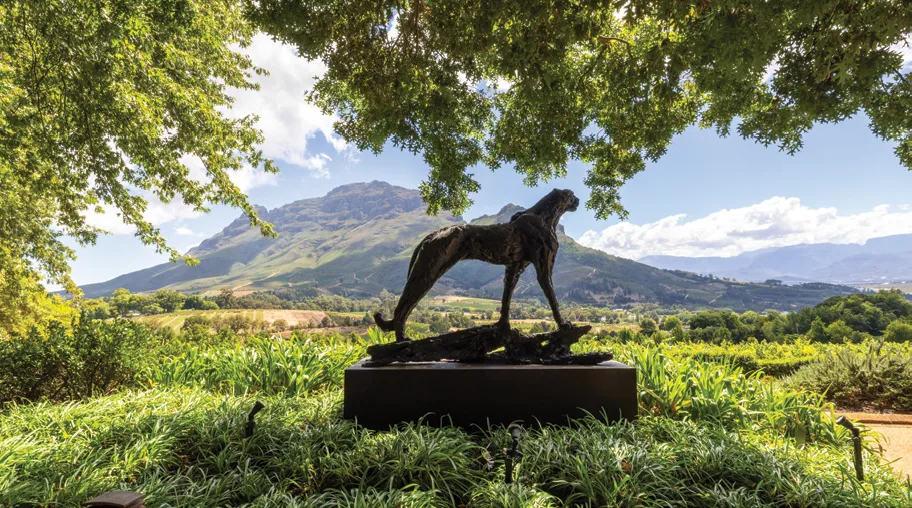
Read more

Centre of excellence

South Africa’s landscape and winemakers all play a role in the sustained high quality of the region’s output

November marks 10 years of Dan Really Likes Wine: a decade celebrating great South African wine, telling the stories behind it and raising a glass to the people who make up a vibrant, successful, passionate industry. So what does 10 years of adventure and discovery reveal about why South African wine is so consistently good?

At the simplest level, the Cape is just such a natural home for producing grapes. From the sunshine that takes our chenin blanc to an ethereal level, to the ancient soils that give such a rich foundation to the national vineyard (Vilafonté’s hugely successful ‘Seriously Old Dirt’ – left – is more than just a cool name), to the giant Atlantic Ocean air conditioner that gives the Agulhas Wine Triangle so much of its character, South African terroir is perfect for vines.

It’s also wonderfully varied. Stellenbosch has appreciable echoes of Bordeaux, with cabernet sauvignon that would get an approving nod from the Left Bank. The Hemel-en-Aarde strikes a Burgundian chord, producing world-class pinot noir and chardonnay – think Newton Johnson, Storm, Hamilton Russell, Bouchard Finlayson, Restless River, Creation and more. Constantia’s sauvignon blanc stands up to any around the world. And the Swartland, that vast, sweeping home to South Africa’s own take on the Rhône and more, has become the global wine lover’s great new pilgrimage.

The power of people

The sheer beauty of South African wine country also sets us apart. Stand on the deck of the tasting room at Bartinney, looking out across the Banhoek Valley. Take in the endless view from atop Taaibosch above the Heldeberg. Wander through the glorious gardens of Babylonstoren. Soak up the panorama that the heights of Porseleinberg offers. Take a thousand photos across Table Bay from Durbanville Hills. Jump on a safari vehicle for a romp through Klein Constantia. Do any of those, and you can only fall in love with South African wine country.

But what 10 years of hosting the show has driven home most forcefully is the element that really brings South African wine to life: the people. Winemakers like Duncan Savage, who are both naturally brilliant but also genuinely good people. Viticulturists like Nederburg’s Isabel Teubes, for whom work is a calling, not a job. Sommeliers like Lloyd Jusa at The Saxon, chasing a genuine smile and not just an extra dollar. Chefs like Pete Goffe-Wood, weaving a deep love of wine into their food philosophy. Proprietors happily embracing their labour of love, tasting room staff turning a visit to a wine farm into a piece of theatre, wine writers elevating a simple glass into poetry. The wine industry is a national treasure, but it is the people behind it that really make South African wine what it is.

Text | Dan Nicholl 

Photography | Gunter Nuyts

Dan Nicholl is the founder and host of Dan Really Likes Wine. Dan is a former PICA Magazine Columnist of the Year and has worked on television and radio and in print and online journalism.


Read more

South Africa Inc

Chartered accountant and author Yusuf Bodiat applies a CFO’s mindset to a whole country

What if we treated South Africa like a company – not in terms of ideology, but as a practical exercise in performance, accountability and financial discipline?

This is the thought experiment at the heart of how South Africa’s challenges can be re-examined through a strategic finance lens. The concept of ‘South Africa Inc’ is frequently referenced in headlines and commentary, typically to convey economic decline or governance failure. However, it also carries strategic potential: it is a call for leadership, accountability and disciplined execution. Here, it’s not just rhetoric. It’s a lens.

If we thought of the country more like a company (but without the aim of pursuing profit), we would think about leadership, performance and accountability in different ways. For instance, we might view the president as the CEO, ministers as the executive team, parliament as the board, the Minister of Finance as the CFO and citizens as the primary stakeholders.

Like any good CFO, the Minister of Finance wouldn’t just be balancing the books. The role should drive financial clarity, strategic investment and long-term sustainability, with the incumbent acting as a partner to the executive and helping the country navigate uncertainty, allocate capital wisely and rebuild trust with all stakeholders.

That framing isn’t perfect, but it forces better questions. Who holds leadership accountable? Are decisions grounded in data and delivery or only in ideology and optics? Are we getting value for money? Are citizens seeing returns – in terms of trust, opportunity and access, not only rands?

We are not reducing a nation to a balance sheet. Instead, we are expanding our lens: asking what would happen if we applied the same focus and rigour that a CFO brings to a struggling organisation and used it to guide how we govern, spend, invest and grow.

In business, when the numbers stop adding up, leaders don’t simply wait for the next quarter. They interrogate every cent of spending with intent, align their strategy to the reality of cash flow and hold their teams accountable for delivery. That urgency – and the clarity it demands – is often missing in how we manage public resources.

‘SA Inc’ is not a metaphor to suggest that citizens are customers or that government should chase profit. It’s a mental model to help us ask better questions – the kind that every finance executive has to ask when the stakes are high and the margins are thin.

This analysis, which is neither fiction nor a manifesto, invites you into that mental exercise. It’s a blueprint, anchored in strategic finance and grounded in real-world strategy, execution and results. It draws on five core levers, the same ones used in well-run organisations, now applied to a nation that needs to rebuild itself.

Each lever is introduced briefly here as part of a broader strategic framework for reform.

Lever 1: Plug the leaks

Improve cost control and reduce wasteful expenditure. Focus on value for money, not just compliance. When government departments spend without consequence – or worse, spend just to exhaust budgets – the national balance sheet bleeds slowly and invisibly. A CFO asks, “What are we really getting for this spend?” That mindset must become the norm, not the exception.

Lever 2: Broaden the tax base in a fair way

Simplify participation, close loopholes and digitise informal sector contributions. Fairness builds legitimacy. In South Africa, only a fraction of adults pay personal income tax.

Broadening the base isn’t about squeezing the poor. Instead, the aim is to make compliance simple, transparent and worthwhile and to restore the social contract. Contribution must feel fair.

Lever 3: Restore fiscal credibility

Ground budgets in realism, improve transparency and rebuild trust through predictable delivery.

Budgeting should not be political theatre.

When numbers are inflated, delayed or ignored, the market responds with downgrades, capital flight and investor hesitation. The JSE takes a knock and with it, the retirement savings of millions. Credibility buys time and confidence. Lose it and you lose flexibility.

Lever 4: Strengthen cash flow discipline

Ensure capital is allocated to high-impact projects with long-term value. Timing, execution and liquidity matter.

Cash flow failure isn’t just a technical issue. It delays service delivery, stalls infrastructure and erodes trust. When the system can’t pay on time – even when funds exist – it signals a deeper breakdown of urgency and execution.

Lever 5: Invest for strategic growth

Stimulate the private sector. Support SMEs, reform regulatory bottlenecks and scale infrastructure and skills. Growth must be a strategy, not an unintended consequence. The state’s role is not to simply reshuffle what already exists, but to enable productivity. Public investment should prioritise high-impact areas that unlock long-term value over short-term political optics.

The levers function as a set of interlocking tools, like LEGO blocks, and are designed to rebuild South Africa Inc from the ground up.

These levers don’t work in isolation. Like interlocking building blocks, they connect and reinforce one another, with each shaped to support the next one. A strategy that ignores even one weakens the whole. True turnaround requires all five, anchored in integrity.

These five levers aren’t just policy mechanisms: they’re signals of what we must prioritise as a country. They are rooted in financial discipline and designed to convert resources into real results.

Yet, they are often missing from public debate. Instead of interrogating how we spend, we debate how much more to tax. Instead of asking where to invest, we focus on who gets what. Growth is often mentioned but seldom unpacked. Cash flow is treated as a symptom, not a strategy.

Text | Yusuf Bodiat 

Photography | Supplied and Sasirin Pamai

The Bottom Line by Yusuf Bodiat is available now. For more information, go to yusufbodiat.com. This extract is published by permission.

Read more

Close to home

Prioritising local goods and services can bolster one of South Africa’s most potent economic drivers

Hospitality integrates multiple industries throughout its supply chain, from hotel decor and furniture to textiles, food, beverages and guided experiences. Each of these areas creates space to include local producers. Sourcing products and services from local suppliers strengthens domestic industries while ensuring that tourists receive an authentic South African experience.

Stats SA confirms that though the sector has not fully recovered to pre-pandemic levels, South Africa’s tourism sector continues to grow, with total arrivals reaching 8.92 million in 2024, marking an impressive 5.1% increase compared to 2023. The sector now contributes 8.8% to GDP and supports 1.68 million jobs, according to World Travel and Tourism Council (WTTC) estimates. This positive momentum underscores the resilience of the sector, despite global economic pressures. Yet the sector is often unfairly overlooked. The growth of tourism has the potential to serve as a powerful driver of SME development.

Through aggregating demand for locally produced goods and services, the hospitality industry can stimulate local enterprises and create a meaningful market throughout the value chain. When hospitality businesses prioritise local procurement, they create sustained demand that enables enterprises to grow.

South Africa is also in a unique global position because of its rich and diverse flora and fauna. Local communities possess long-standing knowledge of these resources, including their medicinal benefits. With the right support and sustainable practices, this knowledge can help build complementary ecosystems alongside hospitality, including opportunities within healthcare and wellness, with real benefits for communities.

Teamwork required

There are, however, barriers to deeper localisation. The influx of cheap, highly subsidised imports places pressure on local textile and manufacturing sectors. These imports are often available at price points that local industries cannot match, making them attractive to hospitality operators seeking to reduce input costs.

Addressing this requires a multipronged approach. Controls at customs and points of entry must be strengthened, and institutions such as the International Trade Administration Commission must apply appropriate trade measures to protect South Africa’s manufacturing capability. Businesses need to recognise that localisation is not only about short-term cost savings but also about long-term economic sustainability.

Localisation should not be viewed purely as a compliance requirement. It is a commercial decision that makes business sense. By increasing localisation, the hospitality sector stimulates entrepreneurial development and helps create future customers with disposable income. The long-term sustainability of hospitality is closely linked to the strength of the domestic economy. Investing in local supply chains is therefore also an investment in the sector’s own future.

If the hospitality sector fully embraces localisation over the next five years, the impact could be significant. Procurement expenditure in the sector runs into tens of billions of rands. Redirecting a greater share of that spending towards local enterprises could revitalise rural and township economies, create thousands of jobs and generate new economic activity.

Text | Happy MaKhumalo Ngidi 

Photography | Aria_Dsa

Happy MaKhumalo Ngidi is Chief Marketing Officer at Proudly South African and a Hostex ambassador. For more information, go to hostex.co.za.

Read more

Under cover

Reviewing your life insurance regularly is a necessary routine

Life insurance is a critical part of financial wellbeing, providing peace of mind and protection for loved ones. But as life and needs change, cover can quickly become outdated, leaving you vulnerable when you need support most.

Your life insurance offers a tangible way to provide for your family, even after you’re gone. It can make the difference between financial strain on the one hand and stability on the other. If you’ve experienced a major life event such as marriage, divorce or the birth of a child, it’s vital to update beneficiary nominations. Outdated information may delay or complicate access to funds when your loved ones need it most.

Just as life evolves, so do financial responsibilities. For instance, if you have a home loan held jointly with a spouse or partner, your cover should be enough for the full debt in the event of your passing. Without this security, a loved one may be forced to sell the family home.

If you have children, you’ll also want the reassurance that their education and other needs are covered. Don’t forget to include any other debts or ongoing financial obligations as part of the ‘cover needed’ calculations.

A new job, promotion or growing family may mean you need additional life insurance. This additional cover helps ensure loved ones can maintain their standard of living, even if you’re no longer there to provide.

Don’t leave it for later

Reviewing your estate planning in conjunction with your will provides a more complete picture of what will happen in the event of you or a spouse/partner passing away. Life insurance payouts can help cover estate duties and other fees and taxes, so you can leave the legacy you intended to. A financial adviser can recommend the appropriate level of cover needed to optimise your estate planning.

Life isn’t one-dimensional, so why should insurance be? A proper financial plan protects you on multiple fronts, not just against the risk of death. The key pillars of life insurance risk protection include:

  • Life cover – to provide for your loved ones after your passing.
  • Critical illness cover – to help you survive and recover if you’re diagnosed with a serious condition.
  • Disability cover – to support you while you adapt and rebuild your life if you’re unable to work.
  • Income protection – to ensure continuity when illness or injury stops you from earning.

Once your cover is in place, keeping it relevant is just as important as setting it up. A yearly review with a financial adviser helps ensure your plan evolves with your changing life, keeping everything aligned. Financial wellbeing is never a destination – it’s a journey. By taking stock regularly, you create the space to adapt, rebuild and stay on course, no matter what life brings.

Text | George Kolbe 

Photography | Mulad Images

George Kolbe is Head of Life Insurance Marketing and Enablement at Momentum Life Insurance. For more information, go to momentum.co.za.

Read more

Living the deal

The role products play in consumers’ lives has increasing value

South Africa’s consumer goods and services sector is entering a defining stretch. Product alone is no longer a differentiator. Experience has become the strategy. Consumers are not simply buying goods or services; they are assessing how easily a brand fits into their lives. Convenience, clarity and consistency now carry as much weight as quality or price. The brands that win will be those that design every interaction to feel intuitive, responsive and respectful of people’s time and realities.

AI is central to this shift. It is no longer a futuristic add-on in SA but a core capability shaping competitiveness. AI enables organisations to interpret demand signals faster, personalise engagement at scale and remove friction before frustration sets in. It supports better forecasting, smarter pricing and more relevant recommendations. In a market where loyalty is fragile and alternatives are one click away, intelligence at scale is becoming the difference between being considered and being ignored. For customers, large language model-driven search is becoming more conversational, intent-led and rooted in personal experience. In this context, credibility matters more than keywords or price comparisons – with decisions increasingly shaped by trusted reviews and consistent brand experiences.

South Africans are navigating rising costs, infrastructure instability, political noise and digital overload. Yet rather than lowering expectations, these pressures have sharpened them. Consumers are more deliberate, more research-driven and less tolerant of poor experiences. They are influenced by creators, reviews and global standards that continuously redefine what ‘good’ looks like. Relevance must now be earned, not assumed.

Make it last

A clear behavioural shift is emerging across categories. The old belief that cheapest wins is fading. In its place is a search for durable value: offerings that combine functional excellence, thoughtful design and reliability without unnecessary mark-ups. People want products that work the first time, services that keep their promises and experiences that feel seamless. They are willing to pay for confidence and convenience, but not for hype.

The divide between digital and physical has effectively disappeared, forming phygital. Consumers move fluidly between social discovery, online comparison, AI-assisted research and in-store confirmation. To them, it is one continuous journey. Brands that treat channels as separate projects create friction. Those that build connected ecosystems create momentum. Each touchpoint must recognise context, remember preferences and reduce repetition.

Trust has become a primary competitive advantage. Consumers reward brands that are clear about pricing, honest about delays and consistent in fulfilment. They look for proof of ethical sourcing and credible sustainability rather than marketing claims. They do not demand perfection, but they do expect transparency and accountability.

The next phase of change will be shaped by agentic commerce. As AI tools increasingly help consumers compare prices, monitor spending and automate replenishment, decision making will shift from persuasion to verification. Brands will not only need to appeal to people but also to the systems acting and selecting on their behalf. If information is unclear, stock unreliable or value difficult to justify, options will quietly disappear from consideration. In this environment, visibility itself becomes earned.

Text | Adheesh Ori 

Photography | AS photo family

Adheesh Ori is Consumer Goods & Services, Retail and Automotive lead for Accenture Song, South Africa. For more information, go to accenture.com.

Read more

What’s coming down the pipe?

Everyone needs to be involved if South Africa’s most precious resource is to be kept safe

As Johannesburg continues to grapple with ongoing water shortages and the strain of ageing infrastructure, there is an urgent need for community engagement and innovative solutions to safeguard the city’s water supply.

Climate variability, population growth, pollution and inconsistent monitoring are placing growing pressure on the city’s already fragile water systems. Part of the solution lies in an often-overlooked resource, with ordinary citizens being equipped with the knowledge and tools to monitor and conserve water. Empowering communities to actively engage in water monitoring can help fill critical information gaps and support faster, more effective interventions.

Equipping citizens with the knowledge and tools to collect water quality data can help bridge information gaps and inform faster interventions. The goal is to equip communities to recognise and respond to threats to water safety, transforming them from passive recipients of information into active participants in safeguarding their water resources.

Spread the word

South Africa’s water challenges remain significant. According to the Department of Water and Sanitation, nearly half of the country’s treated water is lost as non-revenue water, including leaks and system inefficiencies.

More than three million South Africans still lack basic access to water, and nearly one in five people does not have access to safely managed sanitation services.

What’s more, the divide between urban and rural areas is stark: 71.8% of urban residents have safely managed water services, compared with only 36.7% in rural areas, highlighting the need for improved monitoring, community engagement and long-term resilience strategies.

When participants are invested, they are more likely to share knowledge within their communities, creating a multiplier effect. This initiative not only enhances people’s understanding of environmental science but also fosters responsibility and advocacy for water conservation in their communities.

A centralised national database for citizen-collected water quality data is urgently needed. Currently, much of the information gathered by communities is not integrated into official monitoring systems, slowing responses to emerging risks such as pollution incidents or waterborne disease outbreaks. Beyond monitoring, everyday citizens can play a meaningful role in protecting Johannesburg’s water. Simple actions such as reporting leaks, reducing water waste at home, participating in community education programmes and understanding local water quality can collectively make a measurable difference.

Text | Linda Downsborough and Vanessa Stippel

Photography | SOLDATOOFF

Linda Downsborough is a lecturer and researcher and Vanessa Stippel is a Water Management lecturer at Emeris Ruimsig. For more information, go to emeris.ac.za.

Read more

Turning complexity into certainty

How IMT is helping shape the future of African mining

The newly restructured and rebranded IMT has entered an exciting chapter with the support of a black-owned, women-led investment consortium. CEO Gert Roselt shares how the business is evolving to help mining companies across Africa navigate increasing complexity with confidence.

Mining has never been more complex. Mining companies are under constant pressure to improve productivity, strengthen safety, reduce costs and meet increasingly demanding regulatory requirements, all while adopting rapidly evolving technologies. The challenge is no longer finding technology; it is integrating the right technologies, systems and expertise into one solution that delivers measurable operational outcomes.

That is where IMT – Integrated Mining Technologies – comes in. Formerly known as Probe IMT, IMT represents the evolution of a business that has spent years working alongside customers in some of Africa’s most demanding mining environments. The company’s new identity reflects a broader purpose and a clearer commitment: turning complexity into certainty.

The corporate restructure and rebrand marks a major milestone in the company’s journey. AIH Capital, Kleoss Capital and Ditiro Capital – three respected private equity firms that are black-owned, and in the case of AIH Capital and Ditiro Capital, women-led – have invested in IMT. They join existing management and the Gert Roselt Family Trust, which continues to hold a significant shareholding in the business.

For IMT Group CEO, Gert Roselt, the transformation is about far more than a new name or a new ownership structure. “This is far more than a shareholder transaction. It is a vote of confidence in our people, our strategy and the future we are building together. Our new shareholders have not changed who we are; they have strengthened what we are capable of becoming.”

The future is built on a clear vision

IMT is positioning itself as Africa’s trusted integrated productivity and safety solutions partner, helping mining companies integrate world-class technologies, engineering expertise, implementation capability and long-term operational support into one accountable solution.

Rather than supplying individual products, IMT works with customers to solve complex operational challenges through fully integrated solutions. Its capabilities span collision prevention systems, fleet safety, intelligent monitoring, mining lighting, cabin air safety, engineering solutions and technical field services, delivered in partnership with many of the world’s leading mining technology providers.

“Anyone can supply technology,” says Roselt. “Our responsibility is to integrate, implement and support it so that it delivers real operational value. We measure our success by safer operations, improved productivity and giving our customers the confidence to focus on mining while we simplify the technology that supports them.”

Looking towards Vision 2030 and beyond, IMT’s ambition is to become one of Africa’s most trusted partners for integrated mining technology solutions. Supported by strengthened governance, strategic investment and a clear long-term vision, the company is focused on sustainable growth, regional expansion and creating lasting value for its customers, employees, partners and shareholders.

For mining companies across Africa, IMT offers something increasingly valuable: one trusted partner accountable for integrating people, technology and execution into safer, smarter and more productive operations.

The name has changed. The commitment hasn’t.

Text and Photography | Supplied

Read more

IMT – Integrated Mining Technologies

: +27 (0) 86 045 3789

info@imtmining.co.za | www.imtmining.co.za

Why culture counts

The atmosphere in the workplace has a significant impact on employees’ performance

There’s a common thread running through many leadership conversations today: how do we improve performance, retain talent and keep people engaged, without burning them out? Too often, these are treated as separate challenges, each with its own checklist – one for performance reviews, another for motivation and yet another for employee engagement surveys. But in reality, these aren’t isolated issues.

They’re part of the same leadership solution. And if we want people to truly thrive, not just survive in the workplace, we need to connect the dots between how they perform, what drives them and how they feel.

What’s become clear is that peak performance, intrinsic motivation and authentic engagement are not standalone strategies; they’re deeply intertwined. And when one is missing, the others falter.

Performance is often misunderstood as a relentless pursuit of output. In truth, high performance is not about working harder; it’s about working smarter. Drawing from the research in Peak Performance by Brad Stulberg and Steve Magness, it’s possible to see that success depends on a simple yet powerful equation: stress plus rest equals growth. Just as athletes know that rest is a critical part of training, high-performing teams need rhythm. Too often, workplace culture rewards constant hustle while neglecting recovery. But performance is not a sprint. It’s about energy management. Leaders should think less about time in seats and more about how people cycle through focus, recovery and reflection. Without recovery, there is no growth, only fatigue disguised as productivity.

Create the space

But performance is only one piece of the puzzle. Sustainable excellence demands motivation and not the kind you try to manufacture with posters, pizza or empty pep talks. In Why Motivating People Doesn’t Work… And What Does, Susan Fowler presents a powerful idea: motivation isn’t something you give to people. It’s something you create the conditions for. At the core of optimal motivation are three psychological needs: autonomy, relatedness and competence. People thrive when they feel they have ownership over their work, meaningful connections in the workplace and the confidence that they are capable and improving.

This insight aligns perfectly with what is seen on the ground. Leaders who micromanage stifle autonomy. Teams that feel isolated, especially in hybrid work settings, struggle with relatedness. And if employees never receive feedback or opportunities to grow, their sense of competence withers. Motivation fades not because people are lazy but because their environment fails to support what drives them internally. A truly motivated team doesn’t need to be ‘pushed’. They move forward because they care and because their work matters.

‘Engagement’ is perhaps the most misused word in the leadership vocabulary. It’s often associated with fun initiatives or superficial incentives. But real engagement is far deeper than that. In The Truth About Employee Engagement, Patrick Lencioni argues that job misery, the opposite of engagement, has three causes: anonymity, irrelevance and immeasurement. People disengage when they feel invisible, when they don’t understand the impact of their work and when they have no clear sense of how success is measured.

Think about the power of those three ideas. If someone’s work feels unnoticed, unimportant or unclear, they disconnect. That’s not a ‘bad attitude’. It’s a rational human response to an environment that offers no recognition, purpose or direction. And no amount of team building or bonuses can fill that gap if leadership doesn’t address those core needs.

Make the links

Stepping back, the common thread becomes undeniable. For people to perform at their best, they need rest and rhythm. To stay motivated, they must have autonomy, connection and growth. To keep them engaged, they must feel seen, valued and understood. These aren’t separate programmes. They are different sides of the same leadership philosophy: treat people like people, not just like performers.

So, how is all of this brought together?

It starts with redefining what success looks like for leaders. It’s not just about hitting quarterly targets. It’s about creating an environment where success is sustainable, where people can bring their full selves to work without burning out. Leaders need to set the tone by normalising rest as part of performance, by designing work that allows for choice and accountability and by connecting every role to the organisation’s broader mission. Feedback should be frequent, specific and constructive, not reserved for annual reviews. Recognition should be personal and authentic. And culture should be built on real relationships, not just policies.

Some of the most effective leadership shifts happen in small moments. When a manager asks, “How can I support you this week?” rather than “Are you done yet?” When a team reflects on lessons learnt, instead of assigning blame. When feedback becomes a conversation, not a critique, these are not grand gestures but compound over time. They create the kind of workplace where people don’t just comply, they commit.

Thriving workplaces are not accidental. They’re designed. And that design is grounded in principles that honour human psychology, practical wisdom and emotional intelligence. If we focus only on output, we’ll get compliance. But if we align performance with purpose, motivation with meaning and engagement with recognition, we get something far more powerful: commitment.

Text | Carl Ranger 

Photography | Art_Photo

Carl Ranger is Head of Training at CEO SA. For more information, go to ceosa.org.za.

Read more

Bills of wrong

Expenses, debts and the cost of living are a psychological burden for employees

For many South African employees, the quiet dread of debt growing faster than income or of an unexpected expense unravelling everything does not stay at home. It follows them into offices, warehouses and shops, affecting focus, productivity and wellbeing. With fuel prices climbing, electricity costs rising and global tensions driving up living costs, the financial burden on employees is heavier than it has been in years.

Employees face multi-layered financial pressure. Many households struggle with debt repayments that consume large portions of take-home pay, rising grocery costs, high interest on bonds and vehicle finance and escalating utility bills. Income insecurity caused by unemployment, slow wage growth and organisational restructuring adds to the stress.

Financial pressure is no longer limited to lower-income households. Banking data shows that many customers across all income levels are either in overdraft or close to empty by payday. Even higher-income earners are borrowing to sustain themselves and support family members.

When employees are distracted by financial worries, their focus, engagement and performance are affected. Organisations must recognise that supporting employees through these pressures is essential for sustaining productivity and retention.

Onwards and upwards

South Africans have been hit with several fuel price increases and higher fuel levies have pushed up the cost of transport and goods. Adding to the pressure, Eskom and water tariffs rise regularly. Food prices, closely tied to transport and production costs, also increase.

Financial stress shows up in ways untrained managers often misread. Employees may call in sick because they cannot afford transport, appear distracted during meetings while calculating which debit order to delay or experience declining performance after sleepless nights spent managing creditors and family demands. Organisations may notice more bank orders, repeated salary advance requests, increased absenteeism, disengagement and higher staff turnover. Stress-related illness such as anxiety, depression and substance use is also rising. This is the human cost of sustained financial pressure without support.

Employers can support financially stressed employees while protecting productivity and organisational performance by committing to fair and equitable pay. This can be achieved by taking action such as conducting regular, transparent salary benchmarking to ensure pay levels are in line with industry standards, systematically reviewing salaries and benefits to address potential gaps and cost-effectively correcting historic disparities that may exist for similar roles or across demographic groups. Additionally, ensuring that remuneration is competitive for the work performed not only helps attract and retain talent but also demonstrates the organisation’s commitment to fairness and inclusivity.

Financial education is essential. Budgeting workshops, debt management guidance and retirement planning sessions delivered in plain language can help employees better understand and manage their money. Employers can also look at implementing earned wage access (EWA), a workplace benefit that allows employees to access a portion of the wages they have already earned before the regular payday.

Text | Lindiwe Sebesho 

Photography | Nenad Cavoski

Lindiwe Sebesho is Master Reward Specialist and Executive Committee Member at the South African Reward Association (SARA). For more information, go to sara.co.za.

Read more

Make a plan!

Being better organised means avoiding being caught short

Unpreparedness in your finances rarely announces itself with one dramatic event. More often, it shows up quietly – in the small decisions that feel harmless in the moment but become expensive over time. Skipping savings for ‘just this month’. Using short-term debt to cover predictable expenses and delaying planning because it feels easier not to look.

This is the moment when many people abandon their financial goals. Not because they lack ambition, but because the year started without a plan strong enough to survive real life. The cost of being unprepared is not only short-term pressure. It is the long-term damage caused when reactive decisions become patterns. Interest becomes a tax on future income. Catch-up spending becomes normal. The gap between what you earn and what you keep widens quietly.

The truth is that financial strain is not a surprise. Expenses arrive with consistency. Debit orders return every month. Prices move regardless of your intentions. Recovery starts with clarity. Before chasing new income ideas or ambitious investment targets, you need to stabilise your base. Map what leaves your account each month. Identify what is fixed and what is flexible and where you underestimated. When you see the numbers plainly, anxiety loses some of its power and decisions become practical again.

Unpreparedness also creates an opportunity cost. When money is tied up in debt repayments and urgent fixes, you lose the ability to act when opportunities arise. You cannot invest consistently. You cannot benefit from compounding. You cannot build buffers that give you options. You become reactive instead of strategic.

Begin – and continue

From there, focus on rebuilding small buffers. Even modest consistency changes outcomes over time. A realistic savings amount that actually happens beats a perfect plan that never does. The goal is not perfection. It is regaining control.

This is also where education matters. Financial confidence is built by understanding how money decisions compound over weeks, months and years. When people learn in low-pressure environments, they make calmer choices when real money is involved. Practising strategies, testing ideas and asking questions before committing funds builds resilience that carries through volatile months. Preparedness is also about building skills, not just balancing budgets. Learn how markets work without putting your money at risk. Using a demo environment allows you to practise in real market conditions without trading live capital. Short workshops and platform-based training can help you understand risk management, market moves and how to build a simple strategy.

The market does not pause for personal budgets. Interest rates, inflation expectations, currency movements and global sentiment continue to evolve. Even if you are not actively trading, understanding these forces helps you make better decisions about debt, savings and long-term planning. Awareness is part of preparedness. You either let financial strain dictate the rest of your story or you reset deliberately.

Text | Zihaad Israfil 

Photography | Prostock Studio

Zihaad Israfil is CEO of CFI Financial Group South Africa. For more information, go to cfi.trade.

Read more

Qualified acceptance

Strident background checks – over and above CVs – are a must for responsible employers

In today’s highly regulated business environment, employee screening is no longer just a best practice. In some instances, it is a legal obligation. For organisations that qualify as “accountable institutions” under the Financial Intelligence Centre Act 38 of 2001 (FICA), robust employee screening is essential to mitigate the risks associated with money laundering, terrorist financing and fraud.

FICA, particularly through Directive 8 and Public Compliance Communication 55 (PCC 55), requires accountable institutions to screen prospective and current employees for ‘competence and integrity’. This may involve conducting checks on qualifications, employment history and criminal records. The level and frequency of checks should be aligned to the risk profile of each role.

Under the Immigration Act 13 of 2002, employers are obliged to verify that all employees, including foreign nationals, are legally permitted to work in South Africa. Section 38(2) requires a good faith effort to verify immigration status, while Section 49(3) imposes criminal penalties on employers who knowingly employ undocumented workers. Similarly, under the National Qualifications Framework Act 67 of 2008 (NQF Act), recent amendments introduced criminal sanctions for persons who misrepresent their qualifications. Once section 32A of the NQF Act comes into effect, it will become mandatory to verify employees’ qualifications against the National Learners’ Records Database.

Better filters

The importance of thorough screening, especially for senior roles, was recently underscored in the high-profile case of Anushka Bogdanov, a former independent non-executive director at EOH Holdings. In July 2025, it was reported that the Johannesburg Stock Exchange had fined Bogdanov for misrepresenting her academic qualifications, specifically claiming a PhD in International Finance from the London Business School that she did not possess.

The Protection of Personal Information Act 4 of 2013 (POPIA) applies to the processing of employees’ personal information and generally requires that consent be obtained. However, POPIA contains certain caveats that permit processing without consent when necessary for the conclusion or performance of a contract or compliance with a legal obligation, among others.

Screening forms an integral part of the recruitment process and should be provided for in recruitment and selection policies. Any adverse screening results must, however, be assessed in context, particularly considering whether the adverse finding materially impacts the employee’s ability to perform their duties.

Importantly, employers must ensure that their policies and screening practices align with the Employment Equity Act 55 of 1998. As recently emphasised by the Labour Court in O’Connor vs LexisNexis (Pty) Ltd (2024) 45 ILJ 1287 (LC), not all adverse findings justify dismissal – employers must demonstrate that the adverse screening results relate directly to the inherent requirements of the job in line with the Code of Good Practice on the Integration of Employment Equity into Human Resource Policies and Practices.

With increased scrutiny on internal controls and ethical standards, employers must take a proactive and compliant approach to employee screening.

Text | Neil Coetzer and Nicola Watson 

Photography | DC Studio

Neil Coetzer is Head of Employment and Nicola Watson is a Senior Associate at Cowan-Harper-Madikizela. For more information, go to chmlegal.co.za.

Read more

Secure gateways

Technology is constantly evolving, but the agreements governing its actions should be carefully considered

Fintech businesses are built on collaboration. Payment gateways integrate with platforms. Wallet providers connect to merchants. Software developers partner with banks, insurers, retailers and telecom operators to deliver seamless financial experiences. The technology may be innovative, but the relationships behind it remain contractual.

In fast-moving environments, legal terms are often treated as a formality to be concluded once the product is live. That approach creates friction later. Clear contracting at the outset does not slow innovation; it protects it.

Fintech agreements frequently describe services in broad terms such as ‘payment facilitation’ or ‘technology enablement’. Ambiguity becomes expensive when disputes arise around service scope, performance standards or responsibility for failed transactions.

Contracts should define exactly what the product does and does not do, which party owns the customer relationship and who controls user communications and branding. Clarity at this level reduces operational disputes and protects customer trust.

Chargebacks, system downtime, fraud losses and integration failures are commercial realities. The legal question is not whether they will occur, but who carries the financial exposure when they do. Liability clauses should reflect practical control. If one party controls transaction authentication, it may be commercially reasonable for that party to bear related loss. If infrastructure hosting is outsourced, uptime commitments and service credits must align with customer-facing obligations.

Balanced risk allocation strengthens partnerships because expectations are predictable.

Notice the details

Fintech value often lies in code, algorithms, user interfaces and data architecture. Yet, many early-stage collaborations rely on informal understandings about ownership. Agreements should address ownership of newly developed features; licensing rights to pre-existing technology; restrictions on reverse engineering; and rights to use anonymised performance data. Without explicit terms, businesses risk losing control over the very assets that differentiate them in the market.

Scalable products evolve. New jurisdictions, additional features and expanded user bases change the commercial landscape. Contracts drafted only for the initial phase may restrict growth unintentionally. Termination clauses, assignment rights and change-of-control provisions deserve careful attention. A fintech business seeking investment or acquisition must ensure that its key commercial agreements remain intact under new ownership.

Investors routinely scrutinise contractual frameworks during due diligence. Poorly structured agreements can delay or derail transactions.

Terms and conditions, privacy notices and merchant agreements should mirror how the product actually functions. If the onboarding flow suggests instant access but the contract allows discretionary suspension without explanation, inconsistency creates reputational and legal tension. In digital products, legal design matters. Language should be clear, accessible and aligned with the interface users engage with daily.

Fintech is often described as disruptive. In reality, its long-term success depends on stability. Strong legal foundations do not inhibit innovation; they enable it. When partnerships are structured thoughtfully, intellectual property is protected and risk is clearly allocated.

Text | Molisa Cheda 

Photography | Metamorworks

Molisa Cheda is Founder and Managing Director of Vanguard Legal. For more information, go to vanguardlegal.co.za.

Read more

Buying the farm

Agribusiness financing is a complex, er, field

Agricultural ventures require capital for various purposes, including land acquisition, equipment purchases, working capital for seasonal production cycles and scaling operations. Capital sources range from commercial banks and development finance institutions to private equity, impact investors and government-backed programmes designed to support agricultural development and transformation.

What distinguishes agribusiness financing is the nature of the underlying assets and the regulatory environment. Agricultural projects depend on land tenure, water access rights, environmental compliance and market linkages. Each carries specific legal requirements that capital providers must and will verify before committing capital.

Understanding the distinction between funding and financing is essential when seeking capital. Financing involves debt-based capital, such as loans that require repayment with interest over specified periods, whereas funding comprises non-repayable capital provided through grants or donations, subject to conditions set by the granting institution to achieve specific development objectives. Financing is typically suitable for established operations with predictable cash flows and assets available as collateral, whereas funding through grants may be better suited for emerging farmers, transformation initiatives or projects with developmental objectives that align with government priorities.

Prerequisite preparation

Agricultural financing requires formal valuation by an independent professional valuator assessing land, buildings, equipment and biological assets. This establishes the loan-to-value ratio, provides objective collateral assessment and demonstrates the land’s ability to produce income.

Finance providers must obtain a confirmation letter from the Regional Land Claims Commission verifying the status of any land claims on the property being offered as security. Unresolved claims create ownership uncertainty and increase the risk of disputes that could affect loan repayment.

A valid water licence demonstrates compliance with the National Water Act 36 of 1998 and ensures legal permission to utilise water resources for irrigation, livestock watering or other agricultural activities. The authorised water allocation must be sufficient to support proposed operations. Entrepreneurs should engage with the water use authorisation process well in advance of seeking finance, as the process can extend over several months and may involve detailed applications, specialist assessments, public participation processes and the resolution of objections.

Depending on the project’s nature and scale, an environmental impact assessment (EIA) may be required under the National Environmental Management Act 107 of 1998. The assessment evaluates potential environmental effects and outlines mitigation measures. An environmental impact assessment demonstrates commitment to responsible practices and regulatory compliance.

Offtake agreements are contracts guaranteeing the purchase of agricultural products at predetermined prices and quantities. Finance providers require these to ensure steady income streams and to assess market demand and profitability. Strong agreements depend on buyer creditworthiness, clear pricing mechanisms and duration aligned with financing tenor.

Lenders require collateral to mitigate risk: land, equipment, livestock or other valuable assets. Security over land requires registration of a mortgage bond in the Deeds Office. Security over movable property requires notarial bond execution and registration. The loan-to-value ratio determines lending terms, with lower ratios resulting in more favourable interest rates. Beyond traditional financing, several government grant programmes support agribusiness development in South Africa, each with distinct focus areas and requirements.

Promoting inclusion

The AgriBEE Fund, administered by the Department of Agriculture, Land Reform and Rural Development, illustrates how legal requirements operate in practice. The fund supports previously excluded black farmers through equity acquisition in agricultural enterprises and agro-processing activities. Eligibility requires black-owned juristic persons with annual turnover up to R50 million, operating for at least three consecutive years. Applicants must be directly involved in the commodity and may acquire a maximum 49% shareholding in initial investments to ensure skills transfer. The fund excludes farms under land claim, passive investors, primary production infrastructure and 100% acquisitions.

Grant amounts range from R1 million to R5 million, requiring a 10% own contribution (20% for grants exceeding R5 million). Documentation includes business plans, three-year audited financial statements, tax clearance certificates, business valuation reports, offtake agreements and, where applicable, environmental impact assessments.

Progress granted

The Agro-Processing Support Scheme, administered by the Department of Trade, Industry and Competition, provides investment opportunities for agro-processing and agribusiness enterprises. This cost-sharing grant offers 20-30% cost-sharing, to a maximum of R20 million over a two-year investment period. The scheme enables businesses to increase capacity, create employment, modernise machinery and equipment and enhance competitiveness. Applications require a completed form, a business plan with detailed agro-processing activities, budget plans and projected financial statements for at least three years.

The Comprehensive Agriculture Support Programme (CASP) provides grant funding aimed at beneficiaries of land reform and producers who have acquired land through private means. The programme targets individuals involved with value-adding enterprises, domestic markets or exports and can be used to start, expand or improve agricultural businesses. Applicants must be black, Indian, coloured or Chinese South Africans aged 18 years or older. Funding amounts vary according to provincial allocations and project requirements. Applications are submitted through provincial Departments of Agriculture and require proof of land access, a business plan, proof of identity and evidence of farming activity. Applicants should note that CASP funding is allocated annually and is subject to budgetary constraints.

The EMIA Scheme, developed by the Department of Trade, Industry and Competition, aims to develop new exporters and support existing ones. The scheme assists businesses in identifying new markets and increasing competitiveness and growth by providing funding for overseas exhibitions and patent registration in foreign markets.

Text | Leigh Lambrechts and Nonyamezelo Phungula 

Photography | Runawayphill

Leigh Lambrechts is a Partner and Nonyamezelo Phungula is an Associate at Webber Wentzel. For more information, go to webberwentzel.com.

Read more

Over-investigation

All details must be taken into consideration when preparing to discipline a possibly wayward worker

Far too often, employers make the cardinal error of implementing discipline hastily, without proper investigation. Investigation is an exercise designed to test allegations or suspicions, to find out what really happened and to establish whether there are grounds for disciplinary action. If the investigation produces proof of guilt, the evidence gathered will be used to prepare and present the case against the employee at a disciplinary hearing.


There is no specified time period for completion of an investigation. However, the investigation must commence without undue delay and must only be halted when every stone has been turned over. Therefore, the length of the investigation depends on the nature of the case, the amount of evidence and the availability of witnesses and other evidence. Typically, a good investigator will find that the more evidence uncovered, the more leads there are. It is only when this process of following all lines of inquiry has been exhausted that the investigation can be halted.

Concluding an investigation that optimises the chances of a successful disciplinary hearing requires a great deal of skill. Investigators need to know how to identify relevant witnesses, documents and other evidence; engage with witnesses to elicit the true and complete facts; recognise a new lead when it arises; keep within the laws limiting the rights of an investigator; put all the facts gathered into a clear and comprehensive report; and question suspects without letting on that they are suspects.

Above all, the expert investigator is one who knows that a suspect is not automatically guilty merely because he is being investigated. Many properly conducted investigations reveal that there are no grounds for discipline. This saves the employer a great deal of time and money as well as the embarrassment and employee relations fallout that can result from charging an innocent employee.

Seeking evidence

In the matter between Minister of Police vs Pietersen (Lex Info 5 March 2026; Labour Court case number J1081/23), Pietersen, a police officer, was dismissed for handing confiscated cattle to the wrong person and attempting to sell a cow that did not belong to him.

As the arbitrator had found in favour of Pietersen, SAPS took the matter on review. The Labour Court noted that the cow in question had been bought not by Pietersen but by his co-accused, Mashego. Pietersen’s involvement ended when their superior ordered that Mashego must open a docket and investigate the matter. Pietersen’s subsequent actions related solely to helping to manage the sale of a different cow owned by his daughter. Therefore, the evidence presented by SAPS had provided no basis that he had committed any misconduct.

SAPS is an agency which, by its nature, is expected to have optimal expertise in investigating misconduct. Despite this, it appears to have failed to conduct an effective investigation into Pietersen’s actions. This resulted in SAPS having to reinstate him with 52 months ́ backpay.

This costly outcome shows that no effort must be spared in ensuring that the employer’s investigators are properly trained in investigation skills.

Text | lvan lsraelstam 

Photography | Sebra

lvan lsraelstam is Chief Executive of Labour Law Management Consulting. Contact him on 011 888 7944 or 082 852 2973, or at ivan@labourlawadvice.co.za.

For more information, go to labourlawadvice.co.za.

Read more

Equipping a future workforce

Theoretical knowledge is no longer enough for university leavers looking to begin careers

The classroom is undergoing its most profound transformation in generations. Today’s employers demand more: graduates who can do, think critically, adapt swiftly to change and collaborate effectively across teams and disciplines. This means universities must urgently work to close the gap between what they traditionally offered and what the future of work demands, an education expert says.

As artificial intelligence reshapes industries and the World Economic Forum projects that 39% of core job skills will shift by 2030, higher education institutions worldwide are racing to redesign curricula that prioritise real-world application over rote memorisation.

This shift is breaking down traditional disciplinary boundaries. Universities are increasingly blending fields to prepare students for complex, interconnected challenges: data science fused with business strategy, cyber security intertwined with legal frameworks, artificial intelligence integrated with ethics and engineering combined with entrepreneurial thinking.

At institutions like Wharton, MIT and emerging programmes across the US and Europe, interdisciplinary majors and concentrations in AI for business or ethical AI are surging in popularity, reflecting both explosive industry demand and the need for well-rounded professionals who can navigate technology’s opportunities and risks.

Alongside these technical hybrids, there’s a powerful resurgence of emphasis on distinctly human skills – critical thinking, emotional intelligence, communication and teamwork – that AI cannot easily replicate. These durable competencies are becoming core to curricula as employers seek resilient, adaptable talent amid rapid disruption.

Technology teamwork

Teaching methods themselves are evolving to match. Passive lectures are giving way to project-based learning, where students tackle authentic problems in teams: building prototypes, analysing real datasets and pitching solutions to industry partners. Assessment is shifting too – from high-stakes final exams to continuous, formative feedback that treats improvement as an integral part of the journey.

Modern attention spans and lifelong learning demands are also fuelling the rise of microlearning and sophisticated gamification systems that incorporate narrative, challenges, progression, badges and leaderboards to boost motivation and retention. These tools, once experimental, are now mainstream strategies helping institutions engage digital-native learners while bridging academia and the workplace.

AI and automation lie at the heart of this transformation. In classrooms, AI is building personalised learning pathways and adapting content to the needs of each student, providing instant feedback and deepening understanding. On the administrative side, AI is handling timetables, marking, admissions and data analytics, allowing academics to spend more time engaging with students rather than managing processes.

But AI is also unsettling old assumptions about assessment and academic integrity. Generative AI has reached a point where it can produce undetectable essays, code and even artistic work. This has made it clear that universities cannot rely on punitive measures alone. Instead, they are being compelled to rethink how they assess learning, shifting from a mindset of policing to one of guiding, by teaching students how to use AI responsibly, ethically and creatively.

This move comes with governance challenges. ‘Human in the loop’ has become a guiding principle: technology may assist, but it cannot replace human judgement, especially when academic outcomes and futures are at stake.

Text | Mario Landman 

Photography | Sophon Nawit

Dr Mario Landman is Executive: Educational Technology and Innovation at The IIE and ADvTECH’s Academic Centre of Excellence. For more information, go to iie.ac.za.

Read more

New learning realities

Training using new technologies can keep workers safer and make processes more efficient

Human capital development (HCD) in South Africa’s mining industry has long supported productivity, safety and compliance. But as operations become more complex and performance expectations increase, traditional classroom-based training alone is no longer enough.

Training solutions providers are helping organisations respond by combining practical, technology-enabled learning with performance data. The result is more effective skills development and clearer visibility into the real impact of training in the workplace.

Classroom learning remains important, especially for theory and compliance requirements. However, mining is a practical environment where employees must be able to apply knowledge in high-risk, high-pressure conditions. To address this, training providers are increasingly adopting a blended learning approach. Classroom instruction is supported by digital tools such as simulators, virtual reality (VR) and virtual and augmented reality (VAR). These technologies allow employees to practise tasks and procedures in environments that closely reflect real mining conditions.

Immersive technologies allow employees to experience operational scenarios before entering the workplace. This prepares them for the realities of the job while reducing exposure to risk during the learning process. Learners can repeat tasks multiple times, test their decision making and learn from mistakes without putting themselves, their colleagues or equipment in danger. Many systems also provide immediate performance feedback, including indicators related to efficiency, accuracy and productivity.

Building a knowledge base

One of the biggest advantages of technology-enabled training is the data it generates. Modern platforms capture detailed information about learner progress, behaviour and performance. This data helps identify skills gaps, highlight strengths and flag areas that require additional support. Instead of relying only on competency assessments, organisations gain a clearer view of how individuals are likely to perform in the workplace.

Supervisors can use these insights to manage risk and provide targeted support once employees are deployed. Training outcomes can also be linked to operational indicators such as productivity, equipment use, compliance with procedures and health and safety performance.

Access to learning data allows organisations to make better decisions about workforce development. Training programmes can be refined based on evidence, ensuring that time and resources are focused where they are needed most. Common gaps across teams or operations can be identified and addressed through targeted interventions. Training schedules can be planned to minimise operational disruption, while learning pathways can be aligned with operational priorities.

Data-driven training also helps answer a critical question for mining leaders: once a person is declared competent, how ready are they to perform safely and productively? With better insight into expected performance, organisations can deploy employees more effectively and plan development with greater confidence.

For employees, immersive learning provides clearer development pathways and faster skills acquisition. Ongoing feedback helps learners track their progress, while hands-on practice builds confidence in demanding roles. Most importantly, employees enter the workplace better prepared for real conditions, reducing risk and improving overall performance.

Text | Jacques Farmer 

Photography | Elizaveta Galitckaia

Jacques Farmer is MD at PRISMA Training Solutions. For more information, go to prisma.co.za.

Read more

Joint venture

A partnership that moves people: Freeway Fleet Systems and Unitrans Passenger

In passenger transport, reliability is everything. Behind every successful journey is a network of systems, people and processes working together to keep operations running safely, efficiently and consistently. That is what makes the partnership between Freeway Fleet Systems and Unitrans Passenger so valuable.

Freeway is a global asset and fleet management software provider specialising in the transport, logistics and passenger industries. Freeway offers comprehensive maintenance management tools, flexible integration capabilities and smart data capture processes that help operators stay in control of their fleets. If an asset requires routine maintenance, spare parts, defect tracking, resource consumption monitoring or day-to-day management, Freeway provides the tools to support it.

For Unitrans Passenger, that level of control is essential. Through brands such as Mega Bus, Unitrans Passenger has been delivering safe and dependable passenger transport solutions for more than four decades. Its role goes far beyond simply moving people from one place to another. It connects employees to workplaces, learners to schools, travellers to destinations and communities to opportunity. To do that consistently, Unitrans Passenger needs clear visibility across its fleet, reliable maintenance processes and the ability to keep vehicles safe, compliant and ready to perform every day.

That is where the relationship with Freeway becomes so important.

Business benefit

More than just a software provider, Freeway aims to work as a long-term partner to Unitrans Passenger, supporting them with the tools and processes needed to manage maintenance, improve visibility and keep operations running efficiently. This optimal partnership allows Unitrans Passenger a connected system for day-to-day fleet management, while Freeway continues to provide support, guidance and long-term value after implementation.

Video collaboration

In March 2026, Freeway and Unitrans Passenger collaborated on the creation of a case study video showcasing the relationship between the two businesses. Throughout the filming process, it became clear that the software is not simply present in the background; it is actively shaping workflows, improving visibility and making day-to-day tasks easier to manage.

For those working closest to the operation, that impact is felt in simple, practical ways. As Senzo Dladla, Unitrans Passenger Diesel Mechanic Artisan, explained, “On Freeway, what I can say is it makes life easier for us. I can say it’s simple and straightforward.”

Together, Freeway and Unitrans Passenger demonstrate what a strong partnership looks like in practice: shared commitment, ongoing support and a focus on keeping people moving.

To see more of this partnership in action, watch the Unitrans Passenger – Freeway Case Study video on YouTube.

Text and Photography | Supplied

For more information, Click Here or contact the Freeway team at sales@freewayfleet.com.

Read more

Conceptual cash

Digital wallets and other kinds of online transactions are gaining traction locally

New data reveals that South African consumers are increasingly embracing innovative payment technologies such as digital wallets, AI and cryptocurrency. While traditional payment methods continue to play an important role – with physical cards still regarded as the most preferred and convenient way to pay – South Africans are showing that trust and technology can go hand in hand, with consumers increasingly willing to adopt new payment solutions when they deliver both convenience and peace of mind.

This confidence is reinforced by the widespread adoption of advanced payment security tools. Biometrics are well entrenched – two-thirds of South African consumers already authorise payments using biometric authentication, such as fingerprint or facial recognition, suggesting a high level of comfort with secure, technology-enabled transactions. Digital wallets are gaining traction – nearly 39% of South Africans say digital wallets are the fastest payment option and more than a third would recommend them to others, signalling growing confidence in digital-first experiences. And among South Africans who have sent money abroad in the past, 57% say they would consider using stablecoins as a form of payment, highlighting a strong appetite for faster and more efficient cross-border transactions.

Buying into the system

South African shoppers are increasingly turning to AI to make shopping easier and more efficient and are signalling the importance of transparency as these tools become part of everyday life. Around 63% of South African consumers have used AI to assist with shopping-related tasks, including brainstorming gift ideas, researching products or communicating with customer service. As shoppers integrate AI into their routines, they’re setting clear expectations. Almost 45% believe that AI-powered tools are more likely to find the best possible price. However, nearly two-thirds prefer to speak with a human customer service representative rather than AI.

Security is the biggest consideration in choosing a payment method, with 88% of respondents calling it “extremely important”. Shoppers are taking responsibility but still rely on the industry. Consumers view banks and then payment networks as the primary guards against emerging security threats, but a strong majority feel that consumers themselves are “extremely responsible” for the detection of payment fraud and security threats. Half of those surveyed have enabled two-factor authentication and 40% regularly change their passwords.

AI security is still a concern, though – 60% of consumers are concerned about how their personal data is being used by AI-powered shopping and payment tools. But 42% say they are confident that they would be able to detect AI-driven payment scams.

Text | Lineshree Moodley 

Photography | LuckyStep

Lineshree Moodley is Country Manager at Visa South Africa. For more information, go to visa.co.za.

Read more

In TECH we trust?

When apps don’t work properly, relationships between banks and customers break down

When a banking app malfunctions or becomes unreliable, customers do not simply experience a moment of inconvenience – many reduce their usage, delay transactions or temporarily migrate to alternative digital channels. App traffic drops, engagement declines and trust begins to erode. This challenge reflects a broader set of pressures facing banks as they work to meet rising customer expectations while managing technological and security risks.

In a market where real-time payments, instant balance updates and frictionless transfers are expected, even brief disruptions can create frustration that lingers beyond the technical fix. Stability and usability are no longer differentiators; they are baseline requirements for sustained digital traffic.

At the centre of this issue is trust. South Africa’s digital banking landscape is relatively mature, with strong competition among major banks and a growing fintech presence. Customers are digitally active and increasingly discerning. However, trust remains sensitive to negative experiences. Service interruptions, slow response times or repeated login failures can undermine confidence quickly. At the same time, heightened awareness of digital fraud and cyber threats amplifies concerns about safety. When customers are unsure whether a malfunction is merely technical or potentially security-related, their willingness to engage frequently with the app declines.

Security, in this context, needs to be visible, intelligent and proactive. AI-driven fraud detection and real-time transaction monitoring are becoming central to protecting both customers and digital engagement levels. Advanced analytics can identify unusual transaction patterns, flag suspicious activity and intervene before financial losses occur. In the South African context – where phishing, social engineering and scam activity remain persistent – demonstrable security capabilities are essential in maintaining confidence.

Equally critical is platform resilience. Many banks continue to operate with legacy core systems that were not built for today’s always-on, high-volume digital usage. As more customers transact primarily through mobile apps, the strain on these systems intensifies. Cloud modernisation provides a pathway to improved scalability and reliability. Cloud-native architectures allow banks to manage peak traffic more effectively, reduce downtime and roll out updates with lower risk of destabilising existing services. A resilient technology foundation directly supports sustained app traffic by ensuring that performance remains consistent, even during high-demand periods such as month-end or promotional campaigns.

Clear pathways

User experience plays a decisive role in maintaining digital engagement. Seamless navigation, intuitive design and fast load times are fundamental to encouraging repeat usage. Data-led personalisation further strengthens engagement by making the app feel relevant to each individual customer. Customised dashboards, tailored financial insights and proactive notifications help customers manage their finances more efficiently. In a country where digital literacy levels and income segments vary widely, thoughtful design can improve accessibility and reduce abandonment caused by confusion or friction.

Regulatory compliance adds another dimension to digital platform management. South African banks operate within a robust framework that prioritises consumer protection, data privacy and financial integrity. As digital services expand, compliance requirements must be embedded into the design and operation of apps from the outset. This includes secure authentication protocols, responsible data usage and transparent communication with customers. Co-ordinated operating models that integrate technology, risk and compliance functions enable faster innovation without compromising regulatory standards.

Text | Nitesh Singh 

Photography | PeopleImages

Nitesh Singh is Financial Services and Communications, Media & Technology (CMT) lead for Accenture, South Africa. For more information, go to accenture.com.

Read more

Are you protected if the unexpected takes centre stage at an event?

Meticulously planning an event also means planning for the unexpected

Any successful event is built on a great idea, followed up by months of planning, co-ordination and attention to detail. Execution on the day can be flawless – but even the most carefully organised event can face unexpected incidents or events, which could result in damage, injury and costly claims.

Planning for the unexpected

Events liability insurance is designed to protect event organisers, managers and promoters against legal liability arising from accidental injury to third parties or damage to third-party property during an event.

No matter the scale of the event, it’s essential to have events liability insurance in place to provide valuable financial protection if things don’t go according to plan. Cover is more than just insurance protection against critical challenges – it’s an essential part of any event risk management strategy too.

Common risks faced by the events industry

Injuries to attendees are the most common – and are often the ones organisers have the least control over. A guest could slip on a damp surface, trip over or walk into equipment or décor and sustain an injury, resulting in costly medical bills and possibly even legal claims.

Suppliers, vendors and crew could inadvertently suffer an injury or property damage during setup, operation or a production strike – and you could be held liable.

Damage to third-party property can also be out of your control – event infrastructure, staging or suppliers’ equipment could accidentally cause damage to a venue or neighbouring property, leaving you responsible for repair costs and any legal action.

Why events liability insurance matters

Without adequate liability cover, a single claim could have a serious financial impact on your business. Legal expenses, medical and compensation costs – and the resulting business disruption – can threaten profitability or operations, along with potential reputational damage. Events liability insurance provides peace of mind, allowing event professionals to focus on delivering memorable experiences while knowing they are covered against an array of unforeseen injuries or damage claims.

Auto&General Insurance understands the unique risks faced by the events industry, which is why we offer events liability insurance with cover of up to R100 million to help event professionals protect themselves against potentially devastating claims. Whether you require cover for a single event or need the convenience of annual cover for multiple events throughout the year, we have flexible solutions designed to meet your needs.

Don’t let an unexpected incident put your event or your business at risk. Protect your business, protect your event and enjoy greater peace of mind with events liability insurance from Auto&General Insurance today!

Text | Supplied 

Photography | Getty images

Read more

Get an Auto&General events liability insurance quote

For more information or a quote for Auto&General events liability insurance, visit www.autogen.co.za or contact us on 0861 333 877.

Auto&General Insurance Company Limited is a licensed non-life insurer and financial services provider. Ts & Cs online.

Rush to conclusions

Terminal illness takes away any margins people feel they have in terms of planning for after they die

Most financial plans are built on hope – hope for long lives and long retirements; that children will grow up and become independent; that there will be enough time for investments to compound, businesses to mature and difficult decisions to resolve themselves gradually. A terminal diagnosis shatters that assumption in a single moment.

What once stretched across decades suddenly collapses into months, sometimes weeks. Planning designed for growth must be reshaped for transfer. Structures built for a future self must now protect the people who will be left behind.

When we imagine the end of life, we picture conversations, reconciliation and reflection with loved ones and friends. We imagine time to prepare loved ones emotionally, but often people tell no one. Few imagine the administrative consequences of death: frozen bank accounts, delayed pay-outs, outdated wills, offshore assets stuck in foreign legal processes and families searching for information.

Most of this is preventable, but only if one critical conversation happens early enough. Not with an attorney, an executor or family, but with your financial adviser. Yet advisers are often only informed after the funeral, when the opportunity has already passed. Grief is inevitable, but financial disorder is not.

Understandable reticence

Every financial plan rests on the assumption that there will be time: time for markets to recover, to review beneficiaries, to update a will and to restructure offshore assets ‘when things settle down’. A terminal diagnosis removes that time. The planning horizon contracts. Long-term strategies must deliver short-term certainty, and assets intended to support the retiree now need to support a surviving spouse. Structures designed for tax efficiency over decades must now prioritise liquidity and access.

Many people overestimate how ‘sorted’ their affairs really are. Having a will, life cover and investments does not guarantee a smooth outcome. A terminal diagnosis is not only a medical event. It is a financial pivot point, and when that is missed, the consequences fall on those left behind.

The reluctance to tell a financial adviser is deeply human, as they do not want pity, or they want to protect their families from fear. They might need time to process the diagnosis or believe their affairs are already in order and that there will be time to deal with the details later. But silence is costly. A will could be outdated, and beneficiaries no longer reflect reality. Retirement funds remain locked in structures that delay payouts. Offshore assets could have foreign probate, and straightforward policies are contested. Families encounter the most difficult and emotional period of their lives without the financial certainty they need.

Simplified structures

There is a belief that meaningful financial planning is not possible once a terminal diagnosis is delivered. The opposite is often true, and the remaining time can be a powerful planning window. An experienced adviser can simplify structures, redirect asset flows, secure liquidity, remove unnecessary delays and significantly reduce post-death administrative burden. The difference between telling an adviser early and/or too late can be the difference between an orderly estate and years of frustration. The window may be narrow, but it is not ineffective, and urgency often brings clarity.

A real example helps show what early disclosure makes possible. ‘Mark’ was 58 when he was diagnosed with advanced pancreatic cancer. Doctors spoke in months, not years. He told very few people. He was private and determined not to be defined by his illness. But he made one call that mattered. He contacted his financial adviser. The conversation was brief and difficult, but it gave his adviser the time to help. Within weeks, Mark’s financial affairs were restructured – not for retirement, but for his family’s security.

Discretionary assets that would have been frozen in the estate were transferred into his wife’s name, ensuring immediate access and avoiding unnecessary delays. His retirement annuity was converted into a living annuity with nominated beneficiaries, reducing the risk of lengthy trustee processes. An outdated will was rewritten to reflect his current family structure. Offshore cash that would have been subject to foreign probate was moved into a legacy structure designed for swift transfer. Life policies were pre-verified to avoid later disputes. Crucially, sufficient liquidity was secured so that his wife would not be cash-constrained in the weeks following his death.

Seven weeks later, Mark passed away. Funds were available to his wife within days. There were no disputes, no forced asset sales and no frantic searches for documentation. The estate administration progressed smoothly, and the offshore assets transferred exactly as intended. Later, his wife reflected on that period with quiet clarity: “He left me money, but the real gift was the absence of chaos.”

Financial planning is often framed as something for the future. At the end of life, it becomes something else entirely; it becomes an act of protection. It is not about returns or performance. It is about order, dignity and sparing loved ones unnecessary hardship at a time when they are least able to cope with complexity.

Telling a financial adviser about a terminal diagnosis is not surrender. It is not administrative housekeeping. It is a deliberate decision to lead, even at the most difficult moment. You may choose not to tell many people, and that is entirely your right. But do not let your adviser be the last to know.

Text | Greg Bradfield 

Photography | PintoArt

Greg Bradfield is a Wealth Manager at Alexforbes. For more information, go to alexforbes.com.

Read more

States of preparedness

South African companies must make changes to match AI readiness of other countries

While global benchmarks show South Africa is around 35-40% behind the United States in AI readiness, enterprise data reveals an even wider gap in execution, with AI implementation rates in South Africa sitting at roughly half the level of the US. This gap reflects not a lack of will, but differences in skills, data infrastructure, organisational alignment and the integration of AI into core business strategy.

South Africa’s AI challenge stems from a number of execution barriers, not a single missing piece. These barriers are well documented in recent national and academic analyses. In 2025, SAP, a multinational software company, reported findings that South Africa faces a critical shortage of AI-related skills, which threatens to limit the country’s competitiveness and the ability of organisations to realise value from AI technologies. Without coordinated investment in training, certification and workplace upskilling, this gap will widen rather than close.

Successful AI implementation is not simply about acquiring tools. It requires robust organisational infrastructure and data readiness. Research on AI adoption frameworks shows that readiness factors, including data quality, executive leadership support, IT capacity and available resources, are core determinants of whether AI initiatives succeed or fail. The study also shows that where organisations lack integrated data systems or strong governance structures, AI pilots often stall and fail to scale.

Even where business leaders recognise the benefits of AI, adoption lags. Studies of South African organisations reveal that many executives understand AI value in theory but are constrained in practice by limited IT maturity, risk aversion and organisational culture factors that inhibit more transformative adoption.

Advanced integration

US firms and institutions have aggressively pushed AI into operational workflows, talent development and business strategy. Even amid challenges, including debates about deployment scale and workforce impact, American companies maintain strong investments in practical AI applications, cross-functional teams and data architectures that support industrialisation.

In the US, a concerted focus on problem-first deployment, where AI is aligned to cost drivers and operational impediments, has influenced both innovation and productivity. While adoption is still uneven across sectors, the integration of AI into core functions such as supply chains, customer service and decision support is demonstrably more advanced than in South Africa.

South Africa cannot work from an aspirational future state. AI literacy at the executive and board level must improve, but this must be matched with practical implementation skills, from data engineers and machine learning operators to product managers who can translate business needs into technology outcomes. This country’s strongest opportunities lie in sectors such as financial services, healthcare, energy and logistics; areas where inefficiency is measurable, and improvements deliver real value. AI must address tangible, locally relevant problems that matter to the economy and citizens.

Filling the skills gap and strengthening data ecosystems requires coordinated action across all sectors. National initiatives that support training, certification and research collaborations can accelerate readiness and ensure South Africa’s workforce is prepared for the demands of AI-driven economic participation.

Text | Joshua Harvey 

Photography | Fabrika Simf

Joshua Harvey is Head of Growth at Specno. For more information, go to specno.com.

Read more

Straighten up and fly right

Misalignment can affect how difficult it is to get work done

It’s past the middle of the year. Goals that felt exciting now feel heavy, motivation is dipping, exhaustion is creeping in and many are beginning to wonder why hard work isn’t delivering better results. This isn’t a failure of discipline but a sign of misalignment.

We’ve been taught that success comes from grinding harder, pushing longer and doing more, but hustle without alignment puts your brain in survival mode, and a brain that’s trying to survive will never help you grow and succeed. Instead of relying on burnout-driven discipline, alignment activates the brain’s natural ability to recognise opportunities, make clearer decisions and sustain momentum without constant pressure.

The busiest people are often the most stuck. They’re busy, not effective. The issue isn’t effort, but internal conflict. When beliefs, values, identity and goals aren’t aligned, the brain works against you. Decision-making becomes harder, confidence drops and motivation must be forced. If hard work alone created success, construction workers would be billionaires. Effort matters, but alignment determines whether that effort compounds or drains you.

Be true to yourself

A simple neuroscience truth is that the brain follows identity before behaviour. Our brains are designed to conserve energy and repeat familiar patterns. When your goals don’t match who you believe yourself to be, your brain resists them, and that’s when everything feels heavy. Alignment removes that resistance. When actions are congruent with values and future identity, the brain rewards execution with clarity, focus and dopamine-driven motivation, not stress.

This also sharpens the brain’s internal filtering system, known as the reticular activating system (RAS). You start noticing opportunities that were always there, not because they magically appeared, but because your internal state finally allows you to see them. From a neurological perspective, burnout is not a lack of resilience. It’s a warning signal.

When people are misaligned, they operate from the amygdala, which is the brain’s fight-or-flight centre. Creativity shuts down, clarity disappears and dopamine drops, and you end up needing pressure, rewards or punishment just to perform.

In contrast, aligned individuals operate from the prefrontal cortex, or the executive centre responsible for strategy, creativity and long-term thinking. Aligned people seem calm, decisive and lucky, as their brains are finally supporting them.

Most people set goals without checking whether those goals match who they believe themselves to be. Instead of asking what you want to achieve, start by clarifying who you need to become and let actions flow from there.

Link tasks to your highest values, redesigning your role or delegating work that fundamentally conflicts with your strengths. Forcing yourself through resistance is the fastest route to burnout.

Start each day by reminding yourself of your long-term direction and ending it with reflection. Keeping your goals top of mind sharpens the brain’s natural filtering system for opportunities.

Text | Grant Sherwood 

Photography | Giulio Fornasar

Grant Sherwood is a business strategist and identity success coach. Follow him on social media: @GrantSherwood.

Read more

Central perks

Coal centre benefits from technical assistance available for its many mines

As South Africa’s coal industry navigates ongoing operational and environmental challenges, there is a renewed emphasis on practical, regionally focused support models developed by companies serving the mining sector, particularly coal. Mpumalanga province lies at the heart of this industry, contributing approximately 81% of the nation’s coal production and housing most of its active mines. To provide effective and timely support, establishing a service hub near key mines is vital.

Coal mines are complex, high-stakes operations that require a continuous flow of equipment and services to maintain productivity and safety. When issues arise, whether due to wear and tear, process bottlenecks or sudden failures, having reliable, nearby support can significantly reduce downtime, prevent costly delays and optimise overall plant performance. The ability to quickly access critical components, technical expertise and tailored solutions is essential for mines striving to meet production targets and improve safety outcomes while adhering to environmental standards. These factors are increasingly important.

Quick deployment of technicians and critical spare parts helps reduce downtime, supports prompt repairs and enhances first-time fix rates. Intelligent inventory management ensures essential components are readily available, allowing mines to respond swiftly to maintenance needs. Also, employing local technicians not only accelerates troubleshooting but also fosters stronger ties with the community, creating a sustainable support network aligned with regional economic development.

Data improves results

Coal mines face numerous process bottlenecks that require tailored equipment solutions to optimise performance and reduce downtime. Custom configurations help maintain product quality and minimise losses. Having access to spares is essential. Strategic inventory of components is crucial for ensuring continuous plant operation by minimising downtime.

Effective coal operations maintenance relies on detailed data collection and analysis. Techniques such as layered magnet systems and automated diversion controls allow for quick detection and address tramp-metal issues. Central to this approach are digital web-based monitoring platforms like Hawkeye, which gathers historic maintenance data to enhance future maintenance planning and performance. By allowing predictive maintenance and smarter planning, these help mines identify long-term trends, address root causes, improve reliability, reduce unexpected failures and optimise overall equipment performance.

Ongoing improvements to such scenarios include fast diagnostics of flowsheet equipment, pilot integration of predictive dashboards and expanded inventory management. A blend of technical service, fast response and embedded local knowledge is seen as increasingly valuable as coal sector stakeholders seek cost stability, data-driven decision making and adaptation to new environmental and production standards.

Text | Mike Meiring 

Photography | Parilov

Mike Meiring is Middleburg Branch Manager at Multotec. For more information, go to multotec.com.

Read more

Learning to pay

Financing school and university is not a short-term planning exercise

Education is arguably the most significant investment you will ever make towards your personal growth. It is the key that unlocks future earning potential and career mobility. However, the path to academic success is increasingly paved with rising tuition fees, expensive textbooks and the constant demand for updated technology.

As South African families who go through back-to-school season and students heading off to university will attest, times of great excitement can also bring deep financial anxiety.

Without a clear strategy, the cost of learning can quickly outpace your savings, leading to high-stress decisions and missed opportunities. The secret to navigating these costs isn’t just about having the money; it’s about having a plan. By mastering the art of budgeting and understanding how to leverage credit responsibly, you can ensure that financial hurdles never stand in the way of potential.

It’s important to have a deliberate approach. Education is a long-term commitment that requires a thoughtful financial roadmap. It’s easy to get overwhelmed by the immediate costs of fees and uniforms, but by slowing down, assessing your options and choosing credit solutions that are purpose-built for education, you can protect your cash flow and focus on what truly matters.

Prepare ahead of time

It’s never too early to start budgeting. Education isn’t just a January expense, but rather something to be budgeted for year-round. Many significant costs happen well after the first term, such as expensive winter uniforms, lost items and school excursions.

By setting aside a fixed amount every month and purchasing stationery or specialised tech items during seasonal sales, you spread the financial load and ensure that these inevitable costs don’t become a financial burden at the same time each year. Similarly, it is never too early to start factoring your child’s tertiary education into your savings and investment goals.

Separate school savings from daily spending. It is far too easy to dip into education funds when they sit in a single pot with money for groceries and other monthly expenses. You should create a dedicated savings plan or a separate sub-account specifically for education-related expenses. Keeping these funds tucked away provides a clear visual of your progress and ensures that vital tuition money isn’t spent unintentionally on anything from an emergency to entertainment.

Compare interest rates before you make a decision. If you need to bridge a financial gap, you should never rush into the first loan offer you receive. Take the time to consider different types of credit options available and the total cost of credit over the full term, including initiation and monthly service fees. A lower monthly instalment might look attractive at first glance, but if the term is unnecessarily long, you could end up paying significantly more in interest over time.

Change habits

Be realistic about once-off vs recurring costs. A common budgeting pitfall is only planning for the initial registration invoice. The best budgets account for once-off hits like registration fees and stationery kits, but they also factor in the recurring costs of transport, data for online learning and university textbooks. If your numbers only work when there are no surprises, the plan isn’t strong enough, so you should always build in a buffer for the unexpected.

Work on improving your credit score. This is essentially a financial report card that banks use to determine your reliability and your interest rate. Clients who pay existing accounts on time and in full have a better chance of qualifying for better rates, thus reducing the overall tuition costs. A healthy score can save you thousands of rands over the life of an education loan.

Review your spending habits. Do a thorough financial audit. Review your bank statements from the last few months to identify non-essential spending that could be redirected toward an education fund. Small daily adjustments in spending habits today can lead to significant long-term academic gains for you or the next generation.

Ultimately, funding an education is not a once-off transaction, but a series of choices made over time. The most sustainable plans are built on honesty about what you can afford, discipline in how you save and spend and restraint in how you borrow. When you approach the back-to-school season with clarity rather than urgency, money becomes a tool rather than a source of pressure. And in that space, learners and families are free to focus on what education is really meant to do: open doors, expand options and shape a more secure future.

Text | Wiehahn Koch 

Photography | SvetaZi

Wiehahn Koch is Capitec’s Head of Purpose Lending. For more information, go to capitecbank.co.za.

Read more

Carrying the load

Companies involved in moving key minerals around can have more impact through improved technology and good environmental practices

Infrastructure investment, economic stability and increased investor confidence have set the stage for a more resilient bulk logistics sector in South Africa and across the region. As mining output increases and trade corridors expand, the sector is playing a more strategic role in supporting this growth.

As the global appetite for key minerals – such as manganese, chrome and lithium – continues to grow, reliance on bulk logistics expands alongside it. Demand for critical minerals is expected to increase considerably by 2030 and possibly quadruple by 2040, and this growth will continue to place pressure on South Africa’s networks, with demand for reliable delivery from mine to port. The ability to move bulk commodities efficiently is vital to unlocking long-term value.

Floods are just one of the many examples of extreme weather patterns, only set to increase over the coming years. Adding in the ageing infrastructure and port congestion, logistical delays will become more commonplace if supply chain resilience isn’t addressed now.

The need for in-house control and rapid response capabilities is becoming increasingly evident to ensure supply chains keep moving despite external challenges. Operators with full internal maintenance operations, certified multi-disciplinary technical teams and 24-hour roadside assistance are better positioned to create resilient supply chains that safeguard delivery schedules. Likewise, improvements in port efficiency, rail reliability and energy security remain critical to building long-term industry resilience.

Green imperative

The adoption of forward-focused technology is now a necessity, with truck management systems, geofencing, employee tracking and live fuel monitoring enabling data-driven decision making. Artificial intelligence and IoT-enabled systems are optimising routes and predicting maintenance, preventing unnecessary breakdowns and schedule delays. Digital platforms used in the African Continental Free Trade Area are also reducing friction in cross-border trade by allowing faster customs processing and e-payments.

Technology is transforming how bulk transport is managed, allowing operators to move from reactive problem solving to predictive planning. Integrated fleet management and monitoring systems reflect this broader shift toward data-led operational control, with measurable impacts on efficiency and competitiveness.

The world has shifted from environmental performance as an ‘added value’ to a central theme across all operations. Globally, there is increasing demand from customers, investors and regulators for industries to display transparency in their carbon emissions and resource efficiency. Practical interventions such as fuel-efficient tyre systems, optimised fleet utilisation and water recycling bays across depots contribute to measurable reductions in carbon emissions.

Companies are now required to do more than just pledge, and this is particularly evident in the bulk logistics sector. Environmental accountability is a regulatory condition, customer demand and a bottom-line requirement.

Text | Supplied 

Photography | Mr. Tempter

For more information, go to reinhardt.co.za.

Read more

Mind the GAP

Resilience debt helps organisations keep up with increasingly aggressive cyber threats

Organisations have spent the last decade strengthening prevention capabilities by deploying advanced firewalls, endpoint protections, identity controls and now AI-powered threat detection. But even as security stacks grow more sophisticated, a subtle yet dangerous gap continues to widen beneath the surface.

It’s a gap between what organisations believe they can recover from and what they can actually recover from. That gap has a cost. And, like all unaddressed liabilities, it compounds over time. It’s called ‘resilience debt’ – the accumulation of operational risk created when recovery readiness does not keep pace with the growing complexity and sophistication of cyber threats – and it’s widespread and it’s accelerating.

On paper, global organisations look confident. Nearly every participant in the survey – 99% worldwide – reports having a formal cyber-resilience strategy in place. That should indicate maturity, but the data reveals a more complicated reality. Despite their stated confidence, 70% of South African IT leaders (global: 63%) believe their executives are overestimating readiness. That mismatch isn’t an abstract philosophical disagreement – it’s a leading indicator of resilience debt.

That’s because when leaders believe they are more prepared than they are, they stop asking the deeper operational questions. When was the last recovery test? Did we validate our backups – or just assume they’re clean? Have we tried restoring in a zero-trust or clean-room environment? Are we protecting the recovery path with the same rigour as the production path? When these questions go unasked, resilience debt accumulates silently.

Refresh yourself

Here’s the core issue: recovery readiness decays unless it is actively refreshed. Global results show that there are several patterns that create resilience debt.

Testing frequency declines, but risk increases. Organisations that test recovery monthly or more achieve a 55% success rate. Those that test infrequently fall to 35%. The longer you go without testing, the wider the resilience gap grows – quietly, predictably and dangerously.

Backups age into ‘assumed trust’. Global respondents admit that attackers increasingly target backup systems – corrupting snapshots, manipulating catalogues and exploiting configuration drift. Yet, many organisations still treat backups as sacred and immutable, rather than as assets requiring testing and validation.

Documentation stays static while environments change. Playbooks age. Personnel turn over. Infrastructure evolves. But resilience plans often lag by months and sometimes years. Every change that isn’t reflected in the recovery strategy adds to resilience debt.

Prevention overshadows recovery preparedness: 82% of South African organisations (global: 78%) invest more in preventing attacks than in preparing to recover from them. That imbalance leaves recovery underfunded, untested and under-prioritised, even as attackers shift upstream to compromise recovery paths directly. Prevention-only strategies don’t eliminate resilience debt; they accelerate it.

Plan to recover

Security debt (unpatched vulnerabilities, outdated controls) is widely recognised. But resilience debt is more deceptive because it remains hidden until the worst possible moment: when the organisation actually needs to recover.

At that stage, it’s too late to test; too late to update playbooks; too late to discover corrupted backups and too late to improvise new recovery workflows. Resilience debt doesn’t announce itself gradually. It reveals itself suddenly – through extended downtime, missed recovery time objectives (RTOs) and recovery point objectives (RPOs) and recovery failures that catch leaders off guard. And our global research shows that 56% of organisations did not recover as effectively as planned during their most recent incident or drill. That’s resilience debt coming due.

Resilience debt is preventable, but only with deliberate action. Organisations that treat recovery as a strategic capability rather than an operational afterthought dramatically outperform those that don’t.

To reverse resilience debt, mature organisations build isolated cyber vaults to protect critical data from ransomware and insider compromise. They use automated validation and AI/ML-driven clean restore techniques to ensure that recovery points are usable and run routine recovery tests that simulate real-world adversarial conditions. They also treat resilience as a board-level initiative, not simply a technical workflow. And they balance investments evenly between cyber prevention and cyber recovery.

This new mindset places recovery as a catalyst, not a cost centre. Organisations with mature resilience programmes don’t just recover better, they operate with more confidence. They innovate more freely. They embrace transformation more aggressively. They trust their infrastructure because they’ve validated it. And that’s the ultimate promise: when resilience debt is addressed, cyber resilience becomes more than a safety measure. It becomes a competitive advantage.

Text | Musa Masungwini 

Photography | Anton Vierietin

Musa Masungwini is a Data Protector and Cyber Defender at Dell Technologies South Africa. For more information, go to dell.com.

Read more

Directed towards digital?

Both communication and entertainment are tending towards artificial intelligence and virtual reality

Over the past 10 years, families have experienced shifts in structure and a perceived increase in fragmented interactions at home, largely driven by the pervasive use of technology and changing social norms.

According to a global survey by Kaspersky, an overwhelming 81% of people believe digitalisation will fundamentally alter families’ joint pastimes within the next decade. In South Africa, the figure is 90%. This shift points to a future where bonding is mediated by advanced technology, creating new rituals and challenges in equal measure.

In South Africa, 65% of survey participants envision AI-powered bedtime stories becoming a norm. Today, apps and smart devices offer AI-narrated tales with customisable characters and plot twists. For the busy parent, it presents a novel aid, for the child, an endlessly patient, interactive storyteller. Meanwhile, 44% of South Africa respondents anticipate children opting for digital pets over real ones.

It should be noted, however, that while AI has the potential to enrich a child’s life, it necessitates vigilance. When children interact with AI, for stories or learning, parents must be proactive. Select services with strong privacy policies that do not unnecessarily store or misuse a child’s data or voice interactions and further enhance control with digital parenting assistants to restrict content and balance screen time.

Parents should treat AI interactions as a new digital playground where they can use parental controls to limit session duration, choose vetted, age-appropriate AI story platforms and, most importantly, maintain an open dialogue about what these stories are and how they are created. Explain to children that an AI is a tool, not a friend, and encourage them to report any strange or uncomfortable interactions, just as they would in the physical world.

Online engagement

Another 51% of SA respondents predict family celebrations migrating to video call formats as a standard, not an exception, a trend accelerated by recent global events but now seen as a permanent fixture for dispersed families. Meanwhile, a third of locals surveyed can imagine taking family vacations entirely in virtual reality.

This fragmented outlook highlights that the future of family digital activity will not arrive as a uniform wave, but as a series of adoptions shaped by cultural openness and digital infrastructure.

Some 46% of South Africa respondents foresee home robots as family members. Moving beyond voice-activated personal assistants or autonomous vacuum cleaners, these would be embodied AI companions capable of tutoring, playing games or providing companionship.

In the eyes of hackers, however, every new device, from a VR headset to a robot nanny, is a potential entry point. To keep things secure, change default passwords immediately, ensure all device firmware is regularly updated and segment your home network.

As robots, AI and VR devices become part of the family circle, security must be foundational, not an afterthought.

Text | Supplied 

Photography | Abzuraimi

For more information, go to kaspersky.co.za.

Read more

A continental shift

A surge in African business travel requires some potential system updates

The last couple of years have been big for this continent. Africa’s economic growth, second only to Asia, is now outpacing the global average. According to the African Development Bank Group, 11 of the world’s 20 fastest-growing economies are in Africa, namely Niger (11.2%), Senegal (8.2%), Libya (7.9%), Rwanda (7.2%), Côte d’Ivoire (6.8%), Ethiopia (6.7%), Benin (6.4%), Djibouti (6.2%), Tanzania (6.1%), Togo (6%) and Uganda also at 6%.

Major airlines have launched new routes and South Africa hosted the first-ever G20 on African soil. Momentum is building and it’s hard not to feel bullish about business travel as passenger loads increase and countries across the continent invest heavily in meetings, incentives, conferences and events (MICE) infrastructure. Travel managers are operating in a dynamic landscape – with more choice and opportunity – and there are likely to be major shifts in how business travel Africa is going to change over the next five years.

The G20 effect (including sharpened international focus), post-COVID recovery figures and investment in MICE all bode well, but challenges remain. According to the Global Business Travel Association, the Middle East and Africa – as a region – has recovered to 111% when compared to 2019’s business travel spend. Saying that, recovery is uneven, there are still capacity constraints and travel managers need to navigate challenges that are perhaps unique to the continent.

Towards improvements

There are challenges, though, including route and capacity constraints, with key destinations still underserved by direct flights. Air service agreements were high on the G20 agenda. They are one of the top four tourism priorities, but there’s no doubt that new, strategic routes and seamless travel are critical in terms of economic growth and sustainable development.

Volatility in pricing is tough – with demand outstripping supply, flights into Africa remain expensive. But there are other factors at play, including lack of competition, high operational costs and high government fees and taxes. Hopefully, the next five years will see more regional co-operation. Strong intra-African routes with more choice and competition, safe, reliable carriers and far less volatility are needed.

Alongside less volatility, fewer regulatory barriers, including paperwork, visas and border bottlenecks, which all remain a headache for today’s business travellers, are needed.

‘Open skies’ still feel, in many ways, like a pipe dream. And yes, Africa is often at the mercy of political shocks and regional instability (with at least 10 military coups on the continent since 2020). But new airport developments and upgrades (including mega projects in Burkina Faso, Lagos, Uganda, Rwanda, Tanzania, Ethiopia, Ghana and Angola) hint at something special on the horizon.

There are massive airport projects happening across southern, eastern, western, central and north Africa. All of these are focused on modernising and streamlining the traveller experience, facilitating the passage of millions of travellers per year and creating more jobs and opportunities on the continent than ever before.

Businesses ready to take advantage should update their travel policies (especially if the company hasn’t revisited it in a few years) – and be willing to be a little flexible in their approach to business travel.

Change the focus

Strategies that could help in this regard include: booking early and bundling flights and hotels for best rates and availability; allowing for longer lead times, potential delays and shifting costs; and investing in travel tech that enables real-time reporting. There should also be focuses on evaluating and diversifying supplier relationships (be it air, accommodation or ground transport) and building strong relationships with destination experts; prioritising duty of care and working closely with risk management specialists who can provide risk management services (including pre-travel advice, travel alerts and emergency response and extraction); and thinking outside the box when it comes to travel and expense (T&E) policies and secure payment solutions (on a continent where cash is still king).

The Flight Centre Travel Group’s 2025 State of the Market survey is encouraging, showing that 46% of companies in Europe, the Middle East and Africa plan to increase their travel spend this year, with 36% expecting increases of up to 20%. This suggests that further growth, new direct routes, positive policy shifts and more investment in aviation infrastructure can be anticipated.

For travel managers, the opportunity is clear: build African expertise into your travel programmes now, not later. The organisations that will thrive are those who diversify suppliers, embrace innovation, look closely at new opportunities and secondary markets and treat the continent not as an emerging opportunity, but as a strategic imperative.

Text | Mummy Mafojane

Photography | Alexander Lukatskiy

Mummy Mafojane is General Manager at FCM South Africa. For more information, go to fcmtravel.co.za.

Read more

How much is too much?

Constructive dismissal requires genuinely intolerable circumstances

Receiving an employee’s resignation may appear to signal the end of an employment relationship. However, this may only be the calm before the storm – a case later referred as a constructive dismissal. In a conventional dismissal, it is the employer who puts an end to the contract of employment by dismissing the employee. Conversely, in a constructive dismissal, it is the employee who terminates the employment relationship by resigning due to the conduct of the employer.

The employee bears the onus of proving that resignation was not voluntary and that the employee never intended to terminate the employment relationship, showing instead that the employer made the relationship intolerable. The courts have identified this enquiry to be whether the conduct of the employer rendered continued employment ‘intolerable’ for the employee.

Be reasonable!

The Labour Court in Gold One Ltd vs Madalani (2021) 2 BLLR 198 (LC) and Others has stated that intolerability is a high threshold, far more than just a difficult, unpleasant or stressful working environment and not even caused by an obnoxious, rude and uncompromising superior who may mistreat employees. Intolerability entails an unendurable or agonising circumstance marked by the conduct of the employer that must have brought the employee’s tolerance to a breaking point. Even the Constitutional Court in Booi vs Amathole District Municipality and Others (2022) 43 ILJ 91 (CC) has stated that intolerability implies a level of unbearableness and must surely require more than the suggestion that the relationship is complex, fraught or even sour.

The Supreme Court of Appeal in Murray vs Minister of Defence (2008) 29 ILJ 1369 (SCA) has stated that there are many things an employer may fairly and reasonably do that may make an employee’s position intolerable. Essentially, the employer must be culpably responsible in some way for the intolerable conditions, such that the employer’s conduct must have lacked reasonable and proper cause. Then, once intolerability has been established, the question to be answered is: did the employer, without reasonable or proper cause, conduct him- or herself in a manner calculated to destroy or seriously damage the relationship of confidence and trust with the employee?

Kahanovitz AJ in SAMWU obo Bezuidenhout vs Khai-Ma Local Municipality (C08/24) [2025] ZALCCT 76 confirmed principles expounded in other landmark decisions, by delivering a decision ‘hot off the bench’ on 11 September 2025, stating that the cumulative effect of the conduct of the employer towards the employee must be such that the employee could not reasonably be expected to cope with it. The resignation must have been a reasonable step to escape intolerable working conditions. However, the judge further stated that unhappiness at work is by itself not intolerability, as employees, especially senior employees, are expected to have a thick skin.

Subjective views

When an employee resigns as a result of constructive dismissal, the employee is indicating that the situation has become so unbearable that the employee cannot fulfil what is the employee’s most important function, namely, to work. The employee acts on the subjective belief that the employer will not likely reform or abandon the pattern of creating an unbearable working environment. However, the employee must have lodged formal grievances of mistreatment to reach this breaking point and a failure to have done so may dissolve any belief in the employee’s allegations of intolerability.

If the employer proves that the employee’s subjective fears were unfounded, then the employee has not been constructively dismissed but has merely resigned. If one is simply dealing with a resignation, then any questions of the possible unfairness of a dismissal do not even arise. Kahanovitz AJ finally confirmed that the subjective state of mind of the employee is not a critical factor, as an objective test is used in the determination of the existence, or otherwise, of a constructive dismissal claim.

Text | Hemanth Haricharan 

Photography | PR Image Factory

Hemanth Haricharan is a Dispute Resolution Official at CEO SA. For more information, go to ceosa.org.za.

Tips

  • Maintain reasonable and proper conduct to avoid claims of intolerability.
  • Courts apply a high threshold for constructive dismissal. Employees must prove that conditions were objectively unbearable due to the employer’s actions. Employers should therefore ensure that their conduct is fair, transparent and not calculated to undermine trust or confidence in the employment relationship.
  • Encourage and address formal grievances early.
  • Employees are expected to raise grievances before resigning. Employers who provide clear grievance procedures, take complaints seriously and respond appropriately reduce the risk of a resignation later being framed as a constructive dismissal claim.
Read more

Pay up responsibly

How to meet budgets, reward great work and more are increasingly under the microscope

In keeping with global standards, South African employers are reassessing how pay and benefits decisions are made as cost pressure, governance scrutiny and transparency developments reshape reward strategies. Data from the latest Remchannel Employee Benefits Guide shows that this reassessment is translating into concrete trade-offs, with employers pulling back from broad, non-statutory extras and favouring total remuneration that can be measured, defended and linked to sustainable performance.

Employers aren’t walking away from ensuring competitive employee value propositions. They’re being challenged to prove it, not just for attracting and retaining talent by meeting their diverse needs, but to multiple stakeholders. Every element of remuneration, from guaranteed pay competitiveness and performance-based incentives to flexibility, wellness and parental support, now has to justify its cost, its sustainable impact and its risk.

What the data reflects is not a retreat from total reward investment, but a repricing after several years of disruption, as employers test which elements of the employee value proposition genuinely support productivity, engagement and delivery.

The shift does not reflect a single policy decision or a board-led reform agenda. Rather, it points to a system-wide response to tighter budgets and evolving regulation, including pending remuneration amendments in the Companies Act, which will sharpen remuneration committee accountability for pay and benefit decisions, especially in public and state-owned companies.

Management teams are revisiting reward structures under strategic and operational pressures that require skilled talent, while boards and remuneration committees act as the approving and accountable layer, asking harder questions about cost, value creation impact and reputational consequences.

Cash on delivery

The 2025 survey captures this recalibration across several dimensions of the employee value proposition. Underpinning it is a growing recognition that reward decisions now sit firmly within the governance framework of organisations, with consequences that extend beyond HR’s traditional mandate of attraction, motivation and retention of talent.

One of the clearest trends in the data is the decline of additional guaranteed, cash-like benefits that expanded rapidly during and immediately after the pandemic. According to the guide, formal sign-on bonus policies fell from 52.1% of participating employers in 2023 to 28.3% in 2025.

In practice, this has driven a shift away from paying for promise based on past experience towards paying for actual delivery. Up-front rewards are increasingly being replaced with incentives that vest only once performance against set targets has been demonstrated. Employers would rather reward after delivery of clearly defined performance outcomes. Shareholders, in particular, do not support payments for value that has not been created.

Interpreting these changes as cost-cutting for their own sake should be cautioned against, however. There is a shift towards disciplined execution. In some cases, sign-on bonuses were added quickly for talent attraction purposes without clear measures of impact or fairness, and employers are now correcting that.

That discipline is evident in what employers choose to remove and what they actively protect. Benefits that underpin employee wellbeing, such as access to healthcare or meaningful retirement provision, continue to be prioritised to mitigate longer-term risk. By contrast, there is a clear reduction in broad, untargeted perks and a reinvestment in benefits that support productivity, culture and retention.

Assumptions questioned

Cost pressure alone does not account for the changes reflected in the survey. Governance and transparency are playing a growing role, with tighter accountability under the Companies Act sharpening scrutiny of how pay and benefits decisions are made and defended. These decisions are now more visible, more contested and more likely to attract public and shareholder attention. There’s a lot that can go wrong and end up damaging trust, and no one wants to be associated with decisions that carry reputational risk. As a result, boards and remuneration committees are placing greater emphasis on measurable outcomes and clearer differentiation.

Hybrid work arrangements provide another example of how post-pandemic experimentation is being reassessed. According to the survey, 40.7% of hybrid organisations prescribed specific in-office days in 2023. By 2025, 67.4% required at least three days in the office and 41.3% had increased minimum office day requirements.

The early assumption that flexibility automatically equals productivity has weakened in some instances. Employers have become less confident that work-from-home arrangements consistently deliver the desired outcomes, particularly where accountability and performance measurement are unclear. This has prompted a shift towards clearer rules and stronger links between autonomy and output.

Well, well…

Despite constrained budgets, wellness has not been deprioritised. Employee wellness is ranked as the most important benefit category by perceived importance, according to the latest survey. What has changed is delivery. Health-related benefits are becoming more targeted, with increased focus on interventions such as cancer screening, fertility programmes and peri- and menopause support often delivered through medical aid structures or internal programmes. Inclusivity is being addressed more explicitly through policy, with growth in benefits such as same-sex medical aid cover and sick leave linked to gender transition procedures.

By contrast, traditional financial supports such as soft loans and cash advances declined from 40.4% of employers in 2023 to 31.7% in 2025, while 20% of participating organisations have implemented earned wage access, allowing employees to access a portion of wages already earned before payday as an alternative way of addressing financial stress or reducing reliance on expensive debt. Wellness is still seen as critical, but employers are being more deliberate about the solutions that have the greatest impact.

Better value

There were other key findings from the report:

  • Maternity benefits: Fully paid four-month maternity leave declined from 58.5% to 41.7%.
  • 13th cheques: Prevalence declined from 62.8% of employers in 2023 to 53.3% in 2025.
  • Notice periods: 66.7% of employers now differentiate notice periods by seniority, often extending beyond the statutory four weeks for senior management.
  • Overtime management: The survey introduced an overtime ratio to track overtime relative to regular hours, but only 11.7% of organisations currently set formal targets.

Taken together, the findings point to a shift in the fundamental question employers are asking about pay and benefits. It’s no longer, “What more can we offer?” but rather: “What value can we derive, protect and defend for each rand we spend?”

Text | Lindiwe Sebesho 

Photography | Andrii Yalanskyi

Lindiwe Sebesho is Managing Director of Remchannel. For more information, go to oldmutual.co.za.

Read more

BCO better bean salad

Light, fresh and full of flavour, this is the perfect complement to any braai or as a stand-alone summer salad

This salad features Boston green beans, edamame and broad beans, refreshed by the bold heat of Banhoek Chilli Oil and a burst of citrus. It serves 6-8 as a side dish. Preparation time is 15 minutes, and the cooking time is 10-15 minutes.

Ingredients

  • 1 lemon, chopped
  • 2 cloves garlic, sliced
  • 10g fresh chives, thinly sliced
  • 10g fresh dill, roughly chopped
  • 10g fresh flat-leaf parsley, picked from stems
  • 400g Boston green beans, topped and tailed
  • 1/3 cup Banhoek Chilli Oil
  • 1 tsp honey
  • 1 tsp chilli flakes
  • Salt, to taste
  • 200g edamame and broad beans (outer shell removed)
  • 1 x 700g jar cannellini beans, drained and rinsed

Method

  1. Chop the lemon and slice the garlic. Thinly slice the chives, roughly chop the dill and pick the parsley leaves from the stems. Top and tail the green beans, then lightly bash them with a rolling pin to open them up slightly.
  2. Place the green beans in a large mixing bowl. Cover with boiling water and add a pinch of salt. Let them sit for 2-3 minutes to take off the raw edge, but keep them crunchy. Drain and set aside.
  3. Heat a pan over medium heat and add the Banhoek Chilli Oil. Add the chopped lemons and sliced garlic, cooking until the garlic softens and the lemons become jammy and caramelised – about 5-7 minutes.
  4. Stir in the honey and chilli flakes. Allow the mixture to meld together for one to two minutes.
  5. Season with a pinch of salt.
  6. Drain the green beans and add them to a large bowl. Add the edamame and broad beans, cannellini beans and the chilli-lemon-garlic dressing. Toss everything together until the beans are well coated.
  7. Finish and serve. Add the chopped chives, dill and parsley to the salad. Toss everything gently to combine. Taste and adjust seasoning with additional salt or chilli flakes if desired. Serve chilled or at room temperature. This salad works great as a side for grilled meats, barbecues or as part of a light vegetarian spread.

Text and photography | Supplied

For more information, go to banhoekchillioil.com.

Read more
travel | leisure | lifestyle
REVIEWS

Media

This issue: Comedy, carnivores, magazines and meals

Directed by Bradley Cooper, Is This Thing On? on Disney+ is a far more intimate affair than Cooper’s best-known title behind the camera, A Star Is Born, but it overlaps with that piece in a number of ways. For one, it involves an art form as one of the threads that links the different parts of the story together, and for another, its major focus is the real, understated challenges and small, unexpected triumphs of a relationship.

In this case, the art form is stand-up comedy, and the relationship between Alex (Will Arnett) and Tess (Laura Dern) is crumbling, as the married couple have separated and are trying to come to terms with what a life apart from each other will look like.

Arnett and Dern both give consciously unflashy, considered performances while sharing an onscreen chemistry that makes both their connection to each other and their tendency to find something to argue about completely believable. Cooper also stars as Alex’s extraordinarily annoying brother-in-law, undercutting any expectations of A-lister ego in the project.

Performing stand-up comedy becomes an unexpected processing tool for Alex as he grieves his marriage and the life he expected to live. Of course, making real people or situations punchlines in jokes comes with its own hazards, and how this developing situation impacts all of Alex’s relationships is the core of the film.

Is This Thing On? is a small, intimate piece that doesn’t need special effects to make viewers think and feel deeply.

Read more

The New Yorker At 100 (PG13)


Available on Netflix, this documentary celebrates a print magazine still going strong after a century (something we at Skyways can get behind), but more than that, it commends a title that remains both a bastion for long-form journalism and an integral component of New York’s personality. While unpacking highlights of the magazine’s history and showcasing values that don’t exist in many parts of the media world anymore, the documentary also includes a willingness on the part of New Yorker editor David Remnick and others to both accept accusations of elitism and embrace being elitist if that is part of the definition of maintaining set standards in fact-checking and other areas.

Read more

The Ultimate Carnivore Lifestyle: A South African Guide & Cookbook By Hendrik Marais

 

The Carnivore Diet is the kind of eating plan most South Africans dream of, encouraging followers to drop the pretence of enjoying patty pans and cut to the chase: our love of steak. And chops. And fillet. And bacon. If you find yourself nodding, this book is for you. That’s also true if you’re “a relaxed carnivore”, in the parlance, or prefer a keto diet. There are no suggestions for making veggies more tempting, but you’ll be spoilt for choice if you love protein. It’s not all beef and lamb, though: you’ll find ideas for seafood, chicken taco bowl soup and even some sweet treats. The book includes handy meal plans too.

Read more

The Fast 800 Favourites by Dr Clare Bailey Mosley

 

The ‘Fast 800’ is a weight loss programme hinging on intermittent fasting and a daily intake of 800 calories. That might sound like a punishing restriction, but the recipes in this book prove otherwise. They’re full of punchy flavours, like Goan prawn curry with spinach, creamy broccoli, ginger and coriander soup and even classic burgers. In other words, you don’t have to be watching the scale to enjoy this book, but if you are, it’ll be an asset. And, if you are interested in embracing the lifestyle, there are loads of helpful hints to get you started. The ideas for adapting the diet so that you don’t have to cook separate meals for the family are useful too.

Read more

Madame Curry: Feast Pray Love by Yudhika Sujanami

 

The cuisines of other countries can be a little daunting. Such insecurities are not necessarily eased by the recipes in Madame Curry, but they certainly suggest that the challenge of venturing out of a culinary comfort zone is worthwhile. Author Yudhika Sujanami explains that this book is an ode to her heritage, a nod to the cooking traditions of South Africa’s Indian traditions, which also honours her personal passions. The result is a beautifully photographed exploration of dishes for all occasions, from meals served when you’d like to impress (like creamy masala raan) to Sujanami’s own favourites and true showstoppers: confectionery that regularly makes an appearance on special occasions (like jalebi cake or Turkish delight cake).


Read more

Gold, not old

It’s pointless living longer if there’s nothing to enjoy

I’ve started to worry that living a long life is becoming a full-time job. As someone who has recently burrowed deep into the rabbit hole of longevity, I am fast reaching the conclusion that getting older is honestly not what it used to be.

Take my late grandmother, for example. A tiny, smoking, gambling, feisty survivor. Her favourite saying, delivered whenever anyone offered to help her, was “I am old. Not sick!”

But then, at the age of 84, she found herself struggling to stand for too long at the one-armed bandits at Montecasino, which is when she decided she needed a hip replacement. Everything was on track until she met the anaesthetist, who told her in no uncertain terms that he would not allow the surgery to proceed unless she stopped smoking. “Really?” she asked, in her unmistakable German accent. “There is a chance I will die young?”

That aside, she stopped smoking. She had the surgery and then promptly announced that she was emigrating to Israel. It was a remarkable decision at her age. Yet, off she went on the next adventure of her already spirited life.

She lived to 94.

My grandmother never took an ice bath. She didn’t meditate. I’m fairly certain she never practised mindfulness, unless giving ‘helpful advice’ to someone in a supermarket queue counts. She wasn’t tracking her REM sleep. She didn’t wear a smartwatch that congratulated her for standing up. She never measured her protein intake. As far as I know, she wasn’t injecting peptides, boosting her NAD levels, swallowing creatine or discussing mitochondrial health over marzipan chocolate.

She just… lived.

Which brings me to my problem. The longevity industry has done something remarkable. It’s turned staying alive into a hobby. The deeper I venture into this world, the more it seems that extending your life expectancy leaves you with very little time to actually enjoy it. My day now appears to involve taking supplements before breakfast, supplements with breakfast, supplements after breakfast and supplements because I took the breakfast supplements. And drinking no less than my body weight by lunchtime. And because creatine demands liquid, apparently.

Then there is exercise. But not just exercise. Zone 2 cardio. Strength training. Mobility work. Recovery. Stretching. Pilates. Apparently, if I sit for too long, I’ll die. If I don’t lift heavy things, I’ll die. If I don’t sleep eight hours, I’ll die. If I sleep nine hours, I may also die.

Then there’s the cold plunge. The premise appears to be that voluntarily making yourself miserable somehow makes you healthier.

The irony is that many of us are working incredibly hard to add healthy years to our lives while simultaneously removing many of the things that make life enjoyable. The slice of birthday cake. Sleeping in. Sitting on the couch without your watch vibrating to remind you that you’ve been sedentary for 12 minutes.

I’m not dismissing the science. Much of it is compelling, and there is no doubt that eating well, exercising, sleeping properly and maintaining muscle mass dramatically improve both lifespan and healthspan.

But perhaps the goal isn’t to spend every waking moment trying to avoid death, but rather to make sure we’re still fully alive while we’re busy living.

I suspect my grandmother would have agreed.

Text | Howard Feldman 

Photography | oneinchpunch

Follow Howard Feldman on X: @HowardFeldman

Read more
Scroll to Top

Skyways delivers bespoke advertising campaigns for brands to real people. We connect the brand to the passenger at a unique moment in the sky where they have 50% higher recall. These campaigns sit across our award-winning magazines, digital, video and targeted digital solutions.

For all advertising Inquiries, contact Gill Johnston
at +27 83 455 2397 or gill@panorama.co.za