
Big cats take centre stage at game reserve just over the Botswana border from South Africa
Renowned for its unrivalled leopard sightings, Mashatu Game Reserve does not disappoint. The reserve comprises 42,000ha of diverse landscape and is situated in a remote eastern corner of Botswana. The area’s nickname, ‘Land of the Giants’, is a reference to the huge herds of elephants found on the reserve, as well as the towering mashatu trees that form part of the landscape.
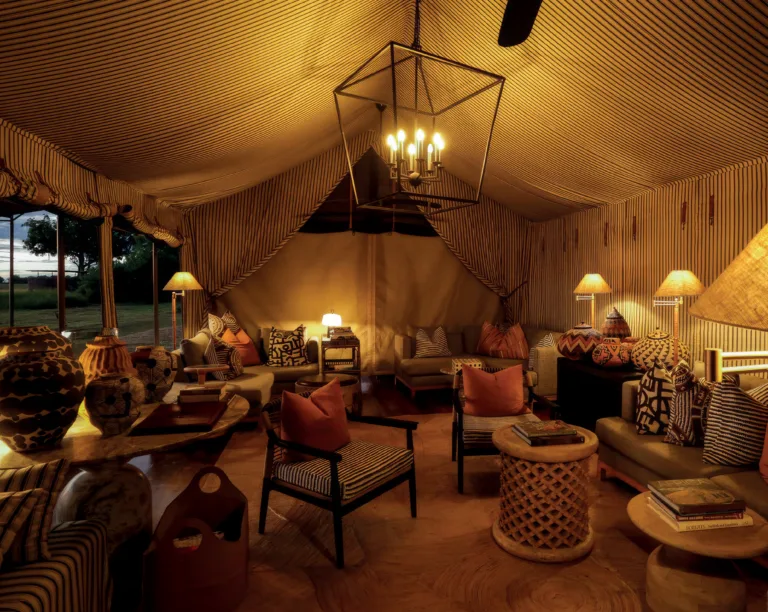
Staying at Mashatu Lodge, guests are offered home-away-from-home luxury, with 14 suites tastefully decorated in shades of white, brown and cream, with a private veranda that looks out over a watering hole. All suites have large, framed black and white prints displayed on the wall behind the bed of the wildlife that inhabit the region.
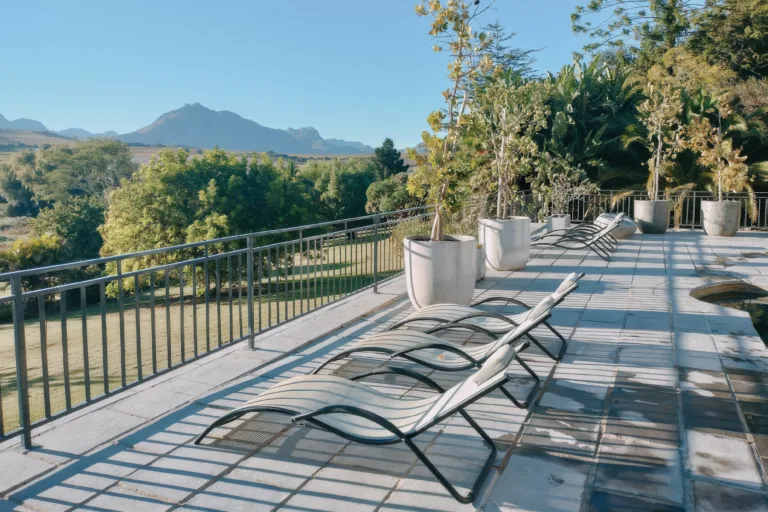
Meals are enjoyed in the main area adjacent to the pool, and a big drawcard is not only the traditional meals that are lovingly prepared but also the birds that have constructed their nests next to the sparkling water.
A delightful encounter involves standing a few metres away from the tiny nest of a family of African paradise flycatchers and watching both parents feed the three open mouths of their fledglings. The male, in spite of his small size, is spectacular, with long tail streamers making him seem double his proportions.
Branch managers

Departing on the afternoon game drive, field guide Goms, with the assistance of tracker KB, goes in search of what they can find. Things are done somewhat differently at Mashatu camps – the tracker sits in the back of the game drive vehicle, and his elevated seat definitely has its advantages when it comes to spotting wildlife.
Approaching an imposing nyala tree, also referred to as a mashatu tree, Goms nonchalantly murmurs, “Oh, there’s a leopard,” as though it’s a usual everyday occurrence. Clamouring for our cameras, we see a petite leopard has positioned herself on a fallen branch, and she is dwarfed by the sheer magnitude of the tree.
She is known as Mathoja, which means ‘the one that walks with a limp’ in Botswana’s Setswana language. The story goes that she was the last born of a three-cub litter and sustained a bad injury when she was little. Having to contend with two brothers, she was always the last to feed, hence her dainty frame. At 13 years old, she is the oldest female leopard at Mashatu and, according to Goms, has lost some of her bottom teeth but still manages to sustain herself by hunting impalas and baboons.

Mathoja starts yawning, a telltale sign that she’s about to vacate her comfortable vantage point and start moving, which she eventually does. The vehicle stays with her as she takes a leisurely stroll, stopping every so often to inspect the base of shrubs on the way, sniffing out any threats that may be lurking. Veering off into the bush, she pauses by another mashatu tree, which becomes her resting place for the remainder of the day.
On a branch to her left, a woodland kingfisher is vocalising his displeasure, even though she poses no danger to this striking bird with his red beak and bright blue back, wing panel and tail.
Not too far from where Mathoja is lying, we happen upon Lepako, a young male leopard, also in a mashatu tree. From being fast asleep among the leaves, he seems startled. His zest for life is evident as he scrambles from branch to branch, trying to catch a red-billed hornbill. He is a guest favourite because of his lively disposition, and he is gorgeous to look at.
Tough spot

We find another leopard, the Euphorbia male, looking decidedly uncomfortable. He has ascended a shepherd’s tree and looks to be hanging on for dear life. He has a zebra foal kill in another tree, but the hyenas that are lurking for scraps don’t inspire him to go back to his meal. Climbing higher up in what appears to be a precarious balancing act, he eventually settles on a branch and has a little nap while we patiently wait for him to descend.
Once the sun has started to set, he takes the opportunity to make a wide berth around the scavengers lying in wait, pausing at the base of the tree. This allows us to take in his magnificence. He is a prime specimen, and his green eyes glisten as he looks up to see if his meal is still safely stashed in the fork of the tree.
A sighting that has everyone oohing and aahing is spending time with the White Cliffs female and her cubs. As playful as any toddler, they chase and pounce until they are exhausted. While the youngsters are having fun and expending their energy, mom is elegantly eating the remains of a kudu calf carcass while she keeps a close watch over her boisterous girls.
She gently vocalises for them to dine with her, but they have other plans. Jumping onto a bare tree branch, the one cub seems intrigued by our presence, and as we look at one another, her unique yellow eyes combined with her rosetted beauty make her any guest or photographer’s dream sighting.
Text & Photography | Heléne Ramackers
For more information or to book a stay, go to mashatu.com.