There is still confusion in many people’s minds regarding the sustainability of wood-based products
Asked to rate the environmental friendliness of eight materials, only 24% of consumers see paper as the most environmentally friendly, whereas 56% consider wood to be among the most sustainable materials. Cue a raised eyebrow: paper is made from wood.
Conducted across key regions by Two Sides and Toluna, the global 2025 Trend Tracker survey examined the opinions of 12,400 consumers. Although the South African-focused research was a small percentage of this, it still provided revealing insights into what consumers believe about printing and paper products.
The disconnect is striking: wood is the raw material for paper, and when responsibly sourced, it supports a circular, renewable and sustainable production cycle. The contradictions are stark: half of respondents believe that paper and paper packaging are major contributors to global greenhouse gas emissions, and 45% consider the products harmful to the environment. Some 76% believe that electronic communication is more environmentally friendly; an assumption that conveniently ignores the carbon footprint of digital infrastructure.
Adding to the paradox, 77% of respondents acknowledge that planted forests are not bad for the environment. At the same time, 69% recognised the importance of using paper sourced from sustainably managed forests, demonstrating a growing awareness of sustainable sourcing and yet still failing to connect these dots in the paper lifecycle.
This is not the first time these contradictory statistics have been encountered. A survey conducted by the Paper Manufacturers Association of South Africa (PAMSA) in 2024 indicated that 61% believed electronic communication – such as emails, e-readers and online news – is greener compared to using print and paper. But 83% agreed that paper is a renewable resource.
See the full picture
These myths persist because of outdated beliefs, incomplete information and misleading ‘go paperless’ messaging (greenwashing). There is also a visibility bias. People are blind to the hidden environmental costs of digital use, such as the countless terabytes of cloud storage, electricity-hungry applications, messages and emails.
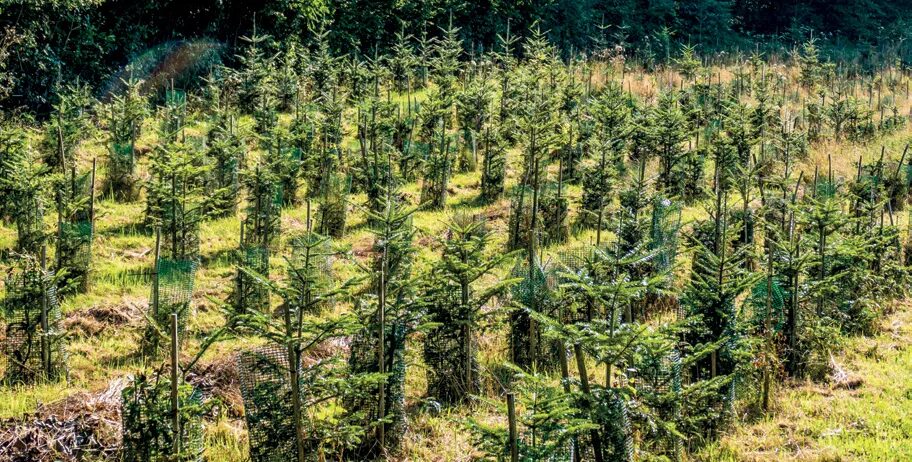
However, people will see forestry land being cleared of trees, whether legally or not. They can be forgiven for thinking this is ‘deforestation’ due to the lack of awareness about sustainable forestry. What many may not know, or even see, is that these plots of land will have new trees growing within 12 months.
Sustainable forest management is the opposite of deforestation, which is the conversion of forest to another land use – urban, agriculture or infrastructure. Deforestation specifically excludes areas where the trees have been removed as a result of harvesting or logging and where the forest is expected to regenerate naturally or with the aid of silvicultural (forestry) measures.
Any industry or product should be evaluated within the full lifecycle context – including energy sources, recycling practices and responsible manufacturing. When it comes to computers and devices, the embodied carbon – emissions from materials extraction and manufacturing – is often far greater than the emissions from actual device use.
Text | Supplied
Photography | Dietrich Leppert
For more information, go to thepaperstory.co.za.