
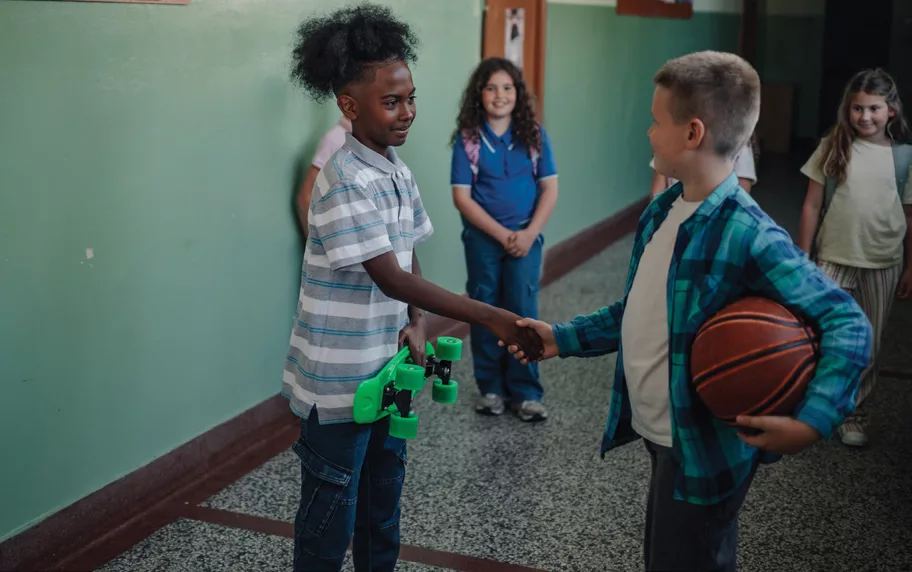
Teaching children to be caring and considerate needs to be modelled by parents and educators
Parenting doesn’t come with a manual, but it does come with a million opinions. Some days, it feels like you’re doing everything wrong – too soft, too firm, not enough of this, too much of that. But when you pause and look into your child’s eyes, when you see that little spark of love, mischief and curiosity all rolled into one, you remember what matters most: connection.
Raising kind, confident, respectful children isn’t about controlling their behaviour – it’s about walking alongside them, showing them what care and consideration feel like in real moments. Gentle parenting is not about being permissive. It’s about leading with calm authority and making space for emotions while still holding firm to values and limits.
Children explore boundaries to make sense of the world. They don’t need to be corrected – they need to be supported. A child who cries when they don’t get their turn or grabs a toy in frustration isn’t misbehaving – they’re still learning. When we respond with calm, get down on their level and say, “I see it’s hard to wait. Let’s try together,” we’re not fixing a problem – we’re guiding them through a moment of growth.
They’re always watching. They see how we respond when someone cuts us off in traffic, how we greet the lady at the till and how we treat our own parents. They learn more from how we speak in frustration than from any lesson we teach in calm. That’s why respect begins with us. Not in what we say, but in what we show, especially when things don’t go as planned.
Allow for choice
Children who are treated with respect begin to understand what it feels like to matter. When they feel heard and considered, they start to do the same for others. They share not because we told them to, but because they care. They say “sorry” not because they were forced to, but because they understand that someone else was hurt. And that kind of growth doesn’t come from punishment – it comes from experience and from being guided with warmth and trust.
Boundaries still matter. In fact, they’re essential. But they don’t need to come with fear. They can come with clarity, kindness and consistency. “I won’t let you hit. I’m here to help.” “You really want that toy, but we’re learning to wait.” When children hear these words often, in a calm tone, they begin to internalise self-regulation – not because someone made them, but because someone helped them.
When we let children choose between two healthy snacks or decide which book to read at bedtime, they’re not just making choices – they’re learning that their opinion counts. These moments may seem small, but they are powerful. They teach children to trust their voice. And when something feels off, they’ll know they’re allowed to speak up, even if an adult is the one who made them uncomfortable.
We don’t need to have all the answers. We just need to be present, consistent and kind.
Text | Kelly Eyre
Photography | Zamrznuti Tonovi
Kelly Eyre is Quality and Pedagogy Lead at Dibber South Africa.
For more information, go to dibber.co.za.