
Seasonal tented camp offers visitors the chance to connect intimately with the Kruger Park landscape
The set-up at Tshokwane River Lodge in the Kruger National Park includes access to the Ripape River’s dry bed, where there is a small raised pool (a boon in the Lowveld heat), around which a number of seats and bonfire platforms are arrayed.
All of this allows for the unbelievable privilege of sitting – outside and in the open – in one of the world’s great wilderness areas, at least until camp staff usher you inside the protection of the stout electrified fence inside which the camp has been laid out (after which all the chairs and umbrellas and so forth are brought inside so as not to be a full-time distraction for the animals trying to get on with their lives).

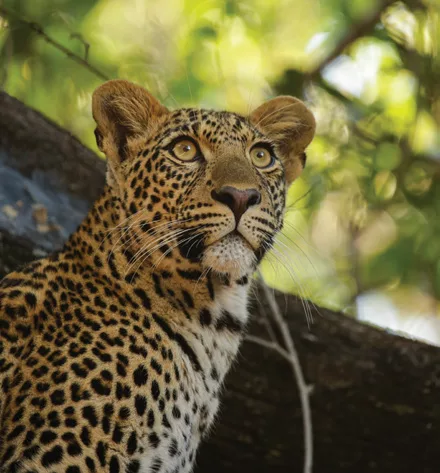
When heading out for a game drive, there’s a sense of being hidden in a concession somewhere for the early stages, but most of the drive is on the Kruger’s main roads, from which there is still plenty to see, from secretary birds to a huge herd of buffalo, a hyena mother with two pups, a male lion lazing in the centre of the road, and a leopard (seen earlier chewing on a kill in a large tree) that has come down to ground level for a while to fend off marauding scavengers – more hyenas.
Sundowners are enjoyed at Orpen Dam, one of the most peaceful spots in a vast, country-sized reserve with a thousand different viewing stops. Large numbers of bats dip and swirl, joined by an equal number of swallows in their quest for an insect meal.
A walk in the park

Guests enjoy their meal back at camp – a delicious, compact buffet offering – after which there are interactions with other visitors while sitting on giant beanbags before everyone takes cocktails down to the riverbed, where bonfires have been lit. After a relaxing time there, a minor bush walk awaits each guest, with those at the far extremes of the camp needing fully three or four minutes to get to their tents, possibly sharing the path with giant moths, geckos, and frogs.
Another of the fantastic features of these seasonal camps is the opportunity to set out, right from the camp gate, for a guided walk in the surrounding bush. At Tshokwane, with no water in the river, the sandy riverbed provides an easy surface underfoot for the first section. Further along, on the savannah section of the walk, any wildlife encountered is able to see walkers from a long way off. Initially, the animals – antelope, zebra, giraffe, and more – raise their heads in concern until they see how slow and poorly equipped we are to be any kind of danger (the guides have rifles just in case, but they’re never waved around) and go back to eating or loping lazily further away.
Strong and vital, two beautiful nyala bulls meander down the riverbed as we watch from the bank high above. Nearby, a huge kudu skull lies in the grass, stripped by predators but with its long, curling horns not yet reduced to bone, testament to one magnificent creature that lost out to another in the ever-unfolding drama of survival.
We’re back inside the protective boundary of the electric fence, having breakfast, when an enormous lone elephant wanders down the riverbed from the opposite side to where we approached. Everyone is glad to see him. Everyone is glad to have not encountered him on foot.
Aye, there’s the nap

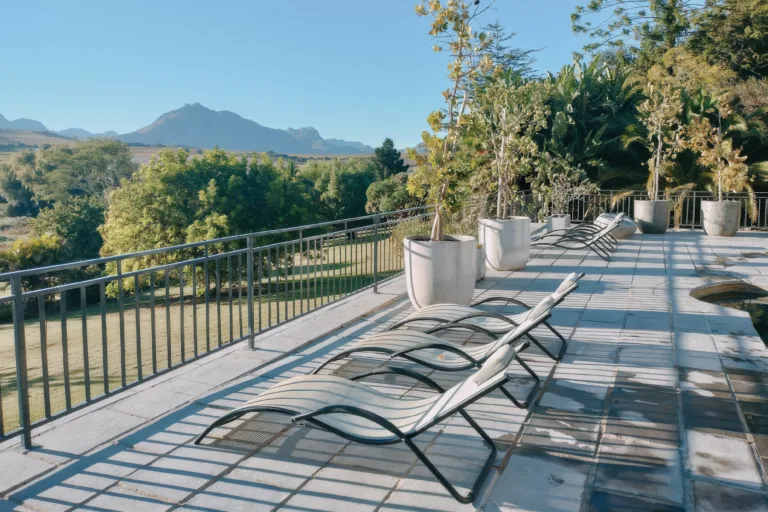
Having greeted a dainty bushbuck while returning to the tent to get changed into a swimming costume, we head to the curious little beach resort that is the pool and sunbeds out in the riverbed. Somehow, the water is freezing – brilliant to pop into to cool down after physical activity, but too close to Camps Bay-style numbness to be casually paddling around. Still, there are other ways to chill, tossing beanbags into holes in a board some distance away and snoozing to a soundtrack of woodpeckers drilling into a leadwood tree somewhere nearby.
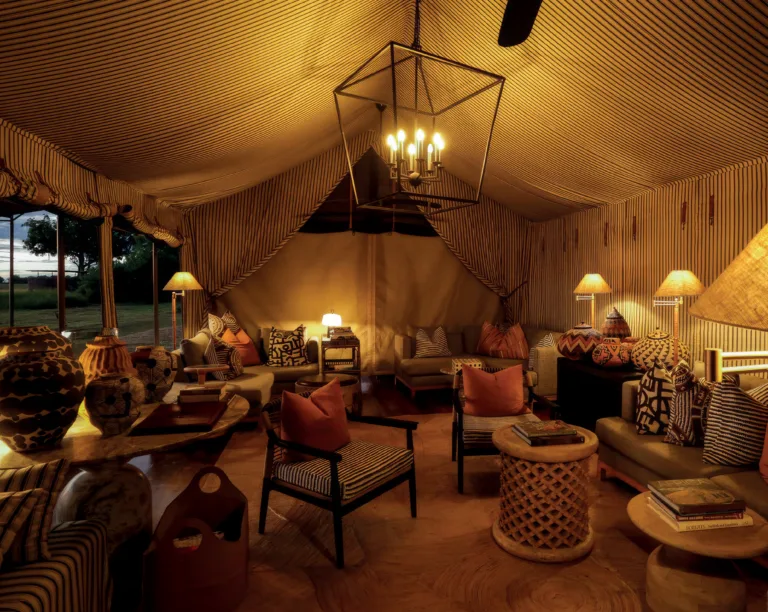
If more sleep is needed in the heat of the day, the tent is great, though the structures can get oppressively sweltering unless you open all the doors and windows to allow for some air movement. A tip for both getting you back on your feet and feeling refreshed as you head back to the main area for the evening game drive: order a coffee and then fill the cup with ice. It’ll perk you right up.
Taking the long view
As the sun begins to go down, we drive back south and east, seeing 130-plus elephants spread over a small area and watching a hyena cleaning the grill on a braai at the Tshokwane picnic site. A little further on, there is one of those classic Kruger Park dioramas near a dried-up waterhole: elephants, baboons, kudu, and impala spread out in front of the parked safari vehicle.

From the Nkumbe View Site, there is an even better view, a spectacular vista across the plains looking west, giving a sense of the scale of the landscape. Klipspringers pose on the rocks nearby, and a troupe of dwarf mongooses play on the road before a special sighting – a completely unfazed female leopard, walking along the edge of the tar as we drive back, apparently oblivious to the sounds of cameras and gasps of delight emanating from the vehicle.
Text & Photography | Bruce Dennill
For more information or to book a stay, go to krugeruntamed.com.