Acclaimed cartoonist shows off another, unexpected talent
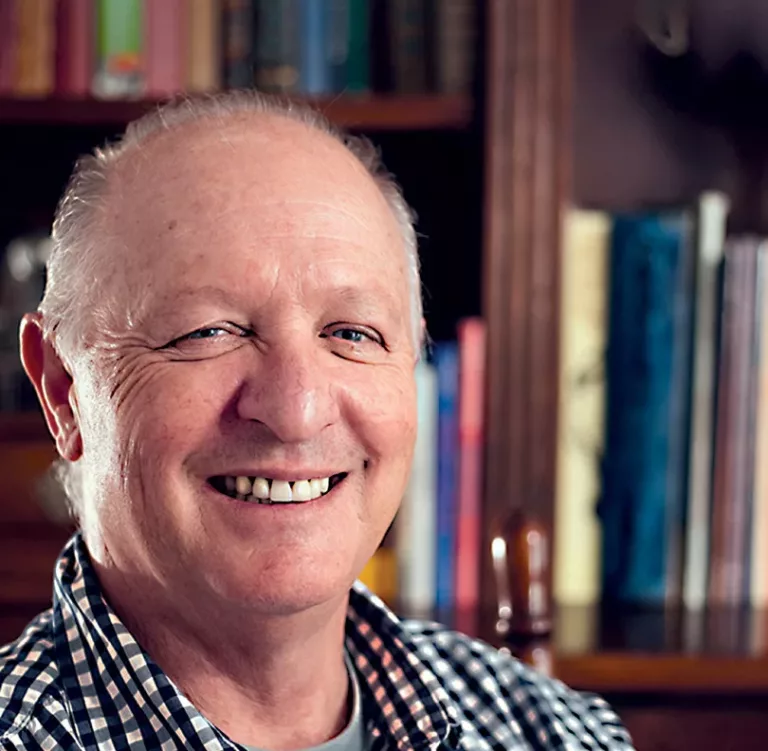
 Jonathan Shapiro, aka Zapiro, releases a collection of his political cartoons every year, so a fresh angle adds interest to a chat with the talented artist and satirist. As a precursor to this interview, Shapiro donned shorts and sports shoes, took his personal table tennis bat out of its bespoke cover and, ever the professional, managed to not look smug as he won five straight games before sitting down to answer questions.
So: you and… table tennis?
Jonathan Shapiro Yes! I made the South African Junior table tennis team and was awarded full colours at school. It was also part of my first experience of meeting a banned person – [trade unionist] Willie Hofmeyr. He was playing for the University of Cape Town while I was playing for Gardens. As a banned person, he could only speak to one person at a time.
In 1988, I was detained without trial because they thought I was on a committee organising a birthday celebration for Nelson Mandela – it was another Jonathan Shapiro; a case of mistaken identity. When I was being interrogated, I was put in a cell next to Willie in solitary. We were kept in the cells for 23 hours of each day, but somehow, through a visitor, we were able to get beach bats, so we’d spend 45 minutes of that free hour playing in the exercise area at Pollsmoor.
This is the 30th collection you’ve released – your pearl anniversary. What wisdom do you have to show for it?
I conceived of releasing my work as an annual right from the start, influenced by [British political cartoonist] Giles. In 1996, I managed to get an annual together, and it’s stayed in the same format since. The publisher initially offered to print 1,500 copies, but I wanted nothing less than 5,000. After some market research, we ended up printing 11,500, and we were able to get a quote from Madiba, a foreword from Evita Bezuidenhout and Desmond Tutu to do the launch.
Ever since, I’ve tried to find a story and a title with resonance. If you look at the titles without the artwork, it tells the story of our strange, quirky history. Now I always have schoolkids coming up to me and saying, “I have your stuff in my exams!”
With the Government of National Unity, the GNU, in place, was it a different sort of year for you, inspiration-wise?
The GNU wildebeest character was developed for the original GNU in 1994. This government is a coalition, not a real government of national unity, but I like the character. The temptations of being in power can make you beholden to lobby groups, and there’s a fine line between kowtowing and being corrupt – that kind of politics is different.
Having big personalities come and go: does that get annoying when they’re providing great material and then they leave the news cycle – Elon Musk, for example?
It was key when the focus was on ‘white genocide’ to have Musk in the spotlight, but using that phrase is triggering for a number of organisations. Some of the issue with taking satire as 100% fact is that a cartoon doesn’t have to be 100% correct. Rather, it was that their idea of what was behind the phrase was the issue.
Can you allow yourself a little satisfaction, as an observer, when it looks like justice has been served on someone you’ve included in your cartoons?
Very much so – cartoonists are allowed schadenfreude! It’s almost never a direct result of what you’ve done, but being part of a discourse is important.
Clarifying confusion – as you help to do regarding the National Dialogue in your latest collection: is that part of what you hope to achieve, or is it just a happy by-product?
I think the latter. The biggest point I was making was that the idea of talking – when we have already talked so much – was a waste of money and time when everybody already knows what needs to be done. Where we are now, we need to fill up what has been hollowed out by Jacob Zuma and others.
Text | Bruce Dennill
Photography | Janine Daniel and supplied
What Else Could Go Wrong? by Zapiro, published by Jacana, is available now. For more information, go to jacana.co.za.