
Author and journalist Mandy Wiener unpacks the lesser-known stories behind the formation and functioning of South Africa’s coalition government
 Can you talk through the process from noting all the minutia – from the minor participants and community halls where meetings happen to who sits in which negotiations and why that matters and all the important nuances of arguments – to making sense of them and somehow finding a way to tell a story? And how does all of this fit into your life beyond writing?
Mandy Wiener: It’s like putting together a jigsaw puzzle. By that time, I’ve loved – and hated – interviews with dozens of people and then begun to reconstruct the timeline. I’m interested in the minutia. It creates an immersive experience and puts people in the room. Many people’s memories of this subject matter have atrophied under stress, so sometimes the gaps need to be filled in.
I have several day jobs – my radio show, media training, conference speaking and even a Showmax show, Great African Crimes With Mandy Wiener. It’s a juggling act. When I have a book in progress, it’s like a pot that’s always bubbling. It can often be a slow burn, like a potjie that needs constant feeding, adding texture and layers. Radio is different – quick, like fast food.
With this book, I did have to write relatively quickly to keep it current. It is possible, though, to do parts of this job between other things – while on flights or in hotels or waiting for my daughter while she roller-skates!
What’s the importance of all of this effort in actual journalism – very little of what you write about was in mainstream news reports?
I wanted this to be the definitive record of this period. A lot of books give you one position; this one should stand the test of time. I wanted to write for people who don’t follow politics, in a sort of thriller format where you get to meet and know the characters – you can’t let readers get bored.
When you’re working on in-depth, investigative material, how do you get people to invest the time and effort needed to properly appreciate it?
We have incredible investigative journalists and independent media. Maintaining quality journalism is a global problem. Young journalists are too stretched, there is no budget and they are often parachuted into stories where they are not able to get to the bottom of what’s going on. Not enough people are buying books, which are crucial in terms of the debate between what is in the public interest and what’s just interesting. People tend to consume media that’s less labour-intensive, but important work needs to be supported.
The complexities of the Government of National Unity (GNU) process arguably passed most South Africans by. What’s good or bad about that – ignorance can be bliss?
Data shows that many people have chosen to not follow the news – it’s easier to live in a bubble. As South Africans, however, we need to know what elected leaders are doing on our behalf. In total, we have 30–40 people in charge of 62 million – this is one of the reasons I needed to write this book.
Achieving balance in a project like this, when you have different levels of access to the people you’re writing about – how difficult is that?
I really wanted to speak to everyone as much as possible, but some people were difficult – perhaps because they thought I was going to take a position. Some people say, “This is just the story of the ANC and the DA,” but it’s not that at all, which is why I spent as much time as possible doing interviews.
Is trust between politicians and journalists really possible, given the various agendas involved?
It is possible. It’s one of the reasons I was given so much access – my reputation opened doors. There was lots of talk off the record; another example of trust. And I also let people check their quotes.
Part of the book deals with what are considered African issues, solutions and compromises. How are these different to anywhere else?
We have a Mzansi-flavoured coalition. We had to elect a government in 14 days. In Belgium, they took a year and a half! Ours was an anomaly, but we pulled it off. But it’s a loose agreement, all on a handshake.
In terms of choosing personal power and riches over actual leadership, does the GNU make a significant difference or just cluster the silos?
In the book, Gayton McKenzie says, “If it’s not about power, they’re lying.” Theoretically, the GNU makes a difference, but a lot of old networks still observe. The true measure of success will be the improvement of lives, not who feels most powerful.
Text | Bruce Dennill
Photography | Supplied and Lisa Skinner
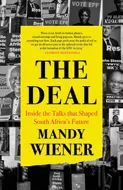
The Deal: Inside the Talks that Shaped South Africa’s Future by Mandy Wiener, published by Pan Macmillan, is available now.
For more information, go to panmacmillan.co.za.