
From the small screen to the page, Nicky Greenwall delights with her first novel
 You were an entertainment journalist and television presenter, and you’re now an author. How well do these careers correlate, or are there major differences?
Nicky Greenwall: When I was working in television, I was responsible for budgets, staff, scripts, equipment and time management. We had a high output of news content – 52 shows a year – including during the two years I was pregnant. After 15 years in the field, I wanted to work on something where the stakes felt lower and the work more meaningful. Which is not to say that writing novels isn’t difficult and demanding at times – but deadlines are not as immediate, and the content is naturally of a more personal nature.
What inspired you to write your first novel, A Short Life?
I’d written one novel that had been rejected by everyone I sent it to. The rejection forced me to relook at my motives and prompted me to enrol in a series of Curtis Brown creative writing courses to hone my skills and zero in on what I was trying to write about and how I needed to go about it.
What is your writing process?
For me, writing needs to feel urgent. When it feels like I can’t not write, that’s the time I’m most productive and closest to some level of truth. I write ideas in notebooks, so it feels more like doodling than work. I rarely go back to the notebooks, but using a pen does tend to free up my mind, especially when it comes to plotting. Once I have an idea, I write scenes on my laptop. I then use the notebooks to ask myself questions about the plot and hopefully answer them on the same page or at least let the question hover in my mind until I can come up with a solution. A Short Life had 17 drafts! The final stage involves removing overused words and phrases and, of course, a final spell check.
How much research was involved in writing your book?
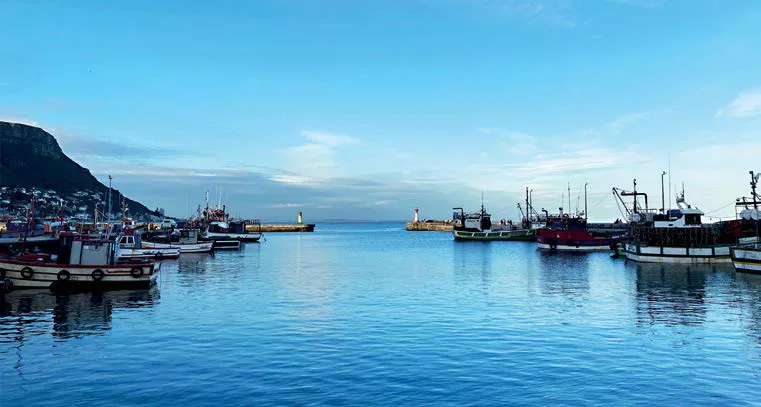
I live, and have grown up, in Cape Town, where the book is set, so there wasn’t much research in that sense, other than to check the accuracy of police procedure in the area. There was some research involved with one pivotal plot point that I can’t mention because it would be a spoiler!
Did you have challenges or obstacles when writing your book?
The greatest challenge is trying to experience the novel as a reader would experience it, for the first time. I’m lucky that I have some trusted, widely read readers in my circle who offered to read first drafts and gave me valuable feedback.
How did you come up with a plot gripping enough to keep readers riveted to the end?
I didn’t know the ending when I started writing. I only knew the moral conundrum I wanted to place the characters in. The story’s main issue revolves around one central premise: if you can love a child, a parent, a partner and a friend simultaneously, where will your loyalties lie when the people you love prove not to be on the same side? For me, piecing it together as I go is the only way to know I’m delivering unpredictable twists.
And the characters?
I’m certain every character carries some trait I recognise in myself. That’s not to say that every character is exactly me, but I do need to find empathy for each character in order for the reader to care about them, so it’s inevitable there will be some bleed-through…
Talk us through the fact that the story is deeply personal, despite it being fictional.
I’ve lost family and friends in all manner of ways. I’ve seen people I care about go through unimaginable grief and shock. Writing about these experiences in an abstract and fictional sense gave me the opportunity to explore some of my feelings around death. Hopefully, those conclusions will resonate with readers.
Do you suffer from writer’s block, and if so, how do you combat it?
Writing prompts have helped me in the past. I like doing short bootcamp writing courses where you have to work to a deadline with a group of other writers and share your work along the way. Again, for me, even though the process of writing a novel can feel slow, there has to be a sense of urgency to the writing. If I have too much time on my hands, things start to feel laboured.
Are you a procrastinator?
I’m focused when I need to be, and if anything, I tend to do too much too soon, rather than procrastinate. I wish I was more of a procrastinator. Mind you, I think housework is essential to the writing process. So, if ironing a few dishcloths is procrastinating, then maybe I do… But my mind works differently in those spaces, and I’m able to solve things in my head before I sit down to write.
Is there a new novel on the cards?
Yes, I have a few more in the works and one out on submission as we speak. Fingers crossed! I’ve learnt that nothing in life is guaranteed, least of all life itself, so I keep putting fingers to keys and hoping for the best.
Text | Heléne Ramackers
Photography | Danielle Klopper
A Short Life by Nicky Greenwall, published by Penguin Random House, is available now.
For more information, go to penguinrandomhouse.co.za