
Author John Stewart highlights the importance of prolific architect Sir Herbert Baker, whose buildings dot South Africa and beyond

How much did Herbert Baker benefit by being in the right place at the right time, being befriended by Cecil John Rhodes and having the backing of colonial Britain?
John Stewart: Baker was already a very experienced architect when he arrived in South Africa. His practice was struggling, though. When he had the opportunity to come to Cape Town to support his brother’s farming venture, he found himself at a dinner, seated opposite Rhodes, within three weeks of his arrival. He was starstruck, and so, was quiet, which intrigued Rhodes.
Then, while travelling around to look for a farm, he fell in love with Cape Dutch architecture and, amazingly, bumped into Rhodes again. This association led to Baker upgrading Groote Schuur, where Rhodes lived, and he soon became known as ‘Rhodes’ architect’. He started working on simple buildings but, within a few years, was commissioned to build a cathedral! And all the way along, he stepped up as a designer.
Legacy: Architects are able to leave something more concrete (pun intended) than many other people. Did that mindset inform Baker’s choices regarding which commissions he accepted?
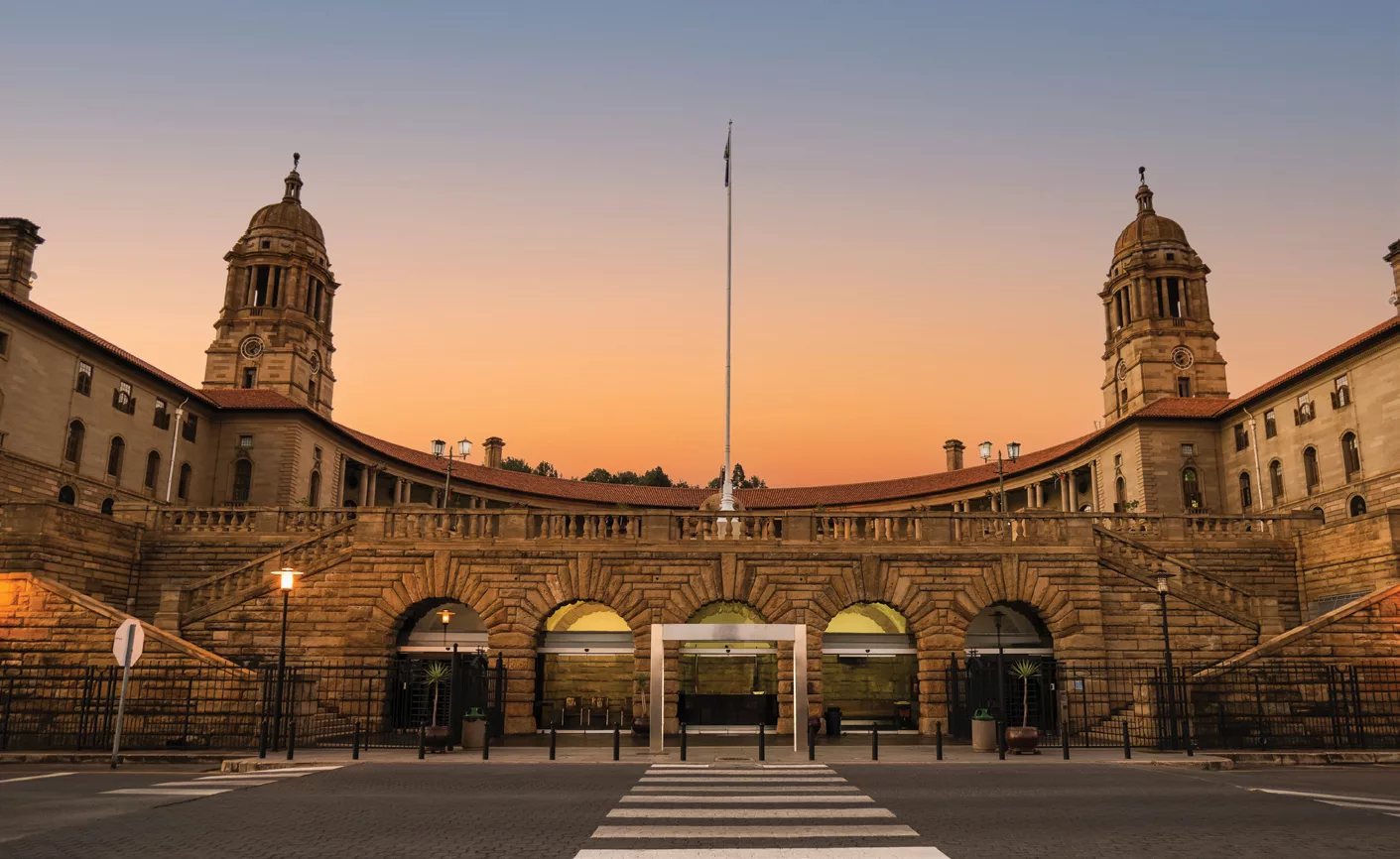
He wasn’t focused on that. As an architect, you always want to do major buildings – as Baker did with the Union Buildings, Imperial Delhi and others – as that’s what cements your reputation. And rebuilding the Bank of England in 1920s London was the job that everyone wanted. Major cultural institutions are what every architect is hoping to be involved in.
Baker was involved with politicians, but he was an architect first and foremost, and he had completed the Union Buildings for the government in South Africa. Where could he have gone from there if he had stayed? These other amazing commissions were just career progression.
Many South Africans are aware of Baker’s work – they’ve been to one of his churches, attended one of the schools he built or seen one of his monuments. Is he truly valued, though?
His reputation in South Africa is strong. He’s recognised as a leading architect here – but no longer in the UK, his home country. The reviews of his Delhi work by [one-time friend, colleague and superstar architect] Edwin Lutyens did incredible damage. And his work on the Bank of England was reviewed as “the worst architectural crime of the 20th Century” and he endured personal attacks. Also, his style has gone out of fashion to some degree. But this book has started to move the needle – Baker’s family have now started a Baker Society.
There’s an incredible level of detail in the research for this book. How did you go about tracking down all the information?
I’ve written a couple of architectural biographies before and found research data tough to come by. Here, I was overwhelmed by the availability of material. Baker’s grandson Michael has an incredible resource in his home, including a number of letters that Baker wrote. The Royal Institute of British Architects also has plenty to offer. And he had multiple professional partners who he worked with in South Africa, so there’s information from all of those sources too. I eventually had to start an Excel spreadsheet. I put all the dates into that and started making sense of everything from there.
In terms of architectural ‘language’, Baker wanted to represent the British Empire, to reinvent Cape Dutch architecture and more. Was he effective in that regard?
Again, his development in that area was mostly just part of his career progression. When he came to Johannesburg, for instance, a lot of his designs went back to the English Arts and Crafts style. He was part of a larger movement that had an interest in the work of Christopher Wren, Inigo Jones and others – architecture that was, for them, representative of the British character that played a role in expanding their empire around the world. Baker was subject to those trends, but the rate at which he developed his work was astonishing.
Some of the work he did had to be symbolic, such as the Honoured Dead Memorial in Kimberley, which was a symbol of Britain’s power as well as a monument. The Union Buildings are a symbol that’s also an office building, which means it needs to be comfortable. Baker really understood the South African climate and adapted his buildings to it. That’s one of the things that made him a suitable candidate for the huge project in India.
Would Baker and Edwin Lutyens have been as famous without the controversy around their relationship and the work on the New Delhi project?
For Baker, the Union Buildings took him into the top division of architects, which was backed up when he was picked by the War Crimes Committee to work on those huge memorials after the First World War – and then the Bank of England. Lutyens was already famous long before India. He’d built country houses for loads of influential people in England and designed the Cenotaph in London – the national memorial for the British who died in the First World War. And Lutyens was a genius – most of his buildings are flawless.
Text | Bruce Dennill
Photography | Supplied
Sir Herbert Baker: A Biography by John Stewart, published by Jonathan Ball, is available now. For more information, go to jonathanball.co.za.